
Cervical orthosis
cervical orthosis collar types immobilization
diagram of Cervical orthosis
cervical orthosis types diagram halo vest collar
Cervical Orthoses — Types & Images
1. Soft to Rigid Collars (Progression of Immobilization)
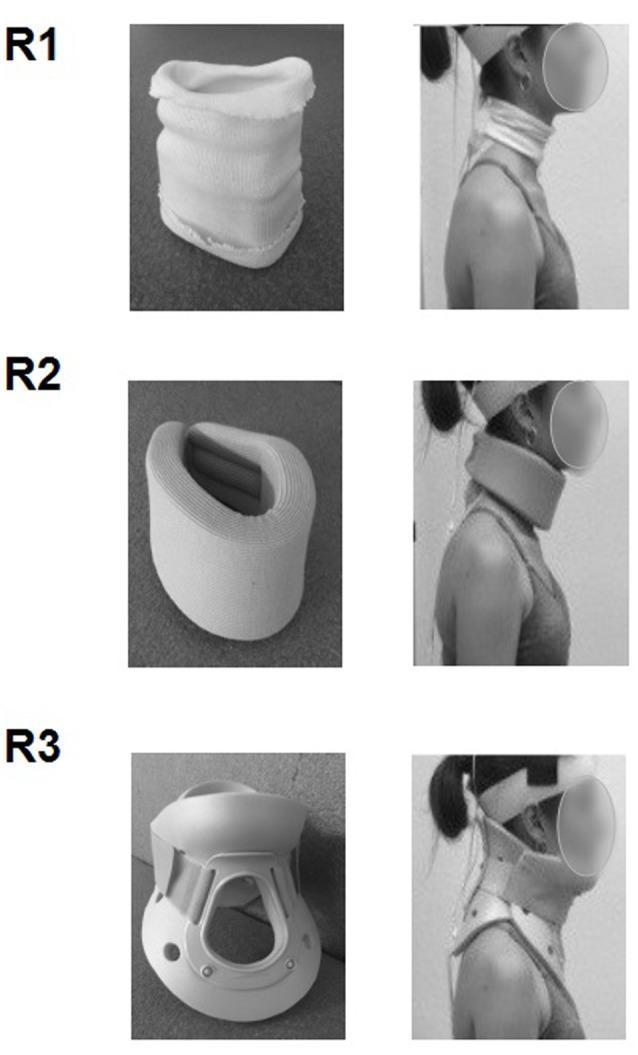
| Row | Device | Rigidity | Use |
|---|---|---|---|
| R1 | Jersey/tubular bandage | Minimal | Sprains, proprioception reminder |
| R2 | Soft foam collar | Low | Minor strains, transitional use |
| R3 | Philadelphia collar | Rigid | Stable fractures, post-op |
2. Halothoracic Vest — Components (Labeled)
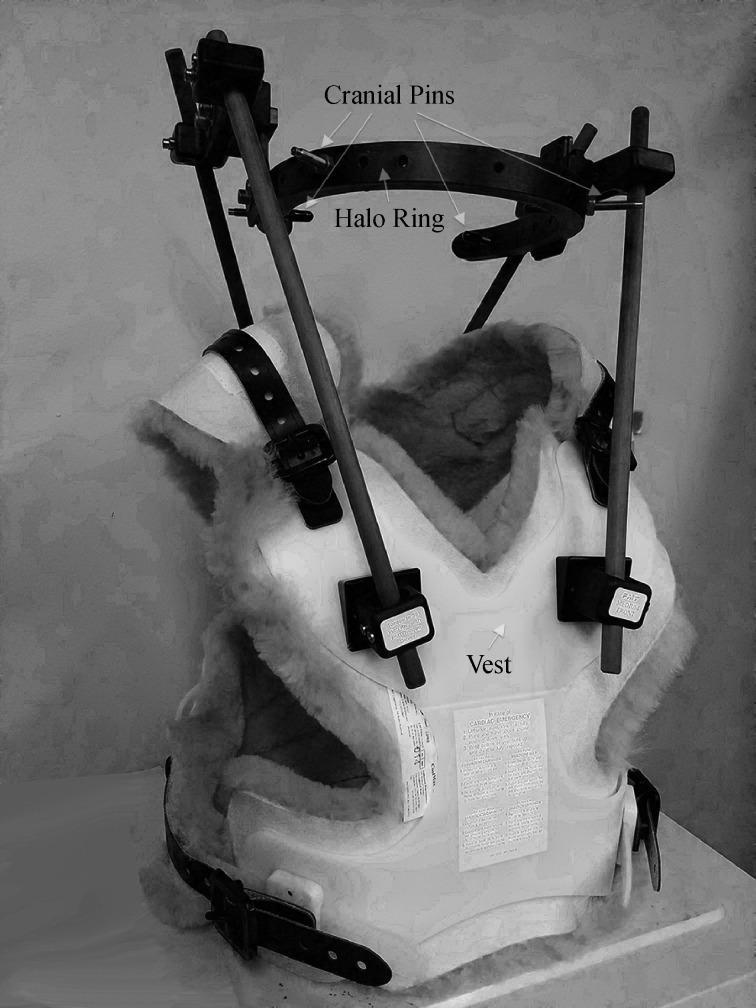
- Halo ring — circular frame secured to the skull via cranial pins
- 4 vertical uprights — rigid metal rods connecting ring to vest
- Thoracic vest — padded rigid shell extending to the xiphoid level
3. Halo Vest — Applied to Patient
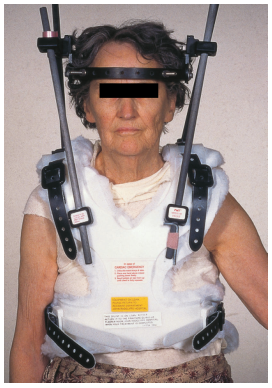
Classification by Immobilization Level
| Orthosis | Motion Restricted | Typical Indication |
|---|---|---|
| Soft collar | Minimal (reminder only) | Whiplash, sprains |
| Rigid collar (Miami J, Aspen, Philadelphia) | Moderate — flexion/extension > rotation | Stable C-spine fractures |
| Cervicothoracic orthosis (CTO) — Minerva, Yale brace | High — all planes, esp. cervicothoracic junction | Subaxial injuries, post-op |
| Halothoracic vest | Maximum — controls head, neck, upper thorax | Unstable fractures, pre-op stabilization |
To draw
Medical diagram showing the three main types of cervical orthoses side by side with clear anatomical labels. Left: soft foam cervical collar showing foam padding, velcro strap, chin support, and neck coverage. Middle: Philadelphia rigid collar showing two-piece molded plastic construction, anterior opening for trachea, mandible support, occipital support, sternal contact, and upper thoracic contact. Right: Halo vest orthosis showing circular metal halo ring fixed to skull with 4 cranial pins, 4 vertical metal uprights/rods, rigid thoracic vest extending to xiphoid level, anterior and posterior vest components. Arrows pointing to each labeled part. Below each device, a simple side-profile human figure wearing the device to show fit. Clean white background, medical illustration style, clear black labels.
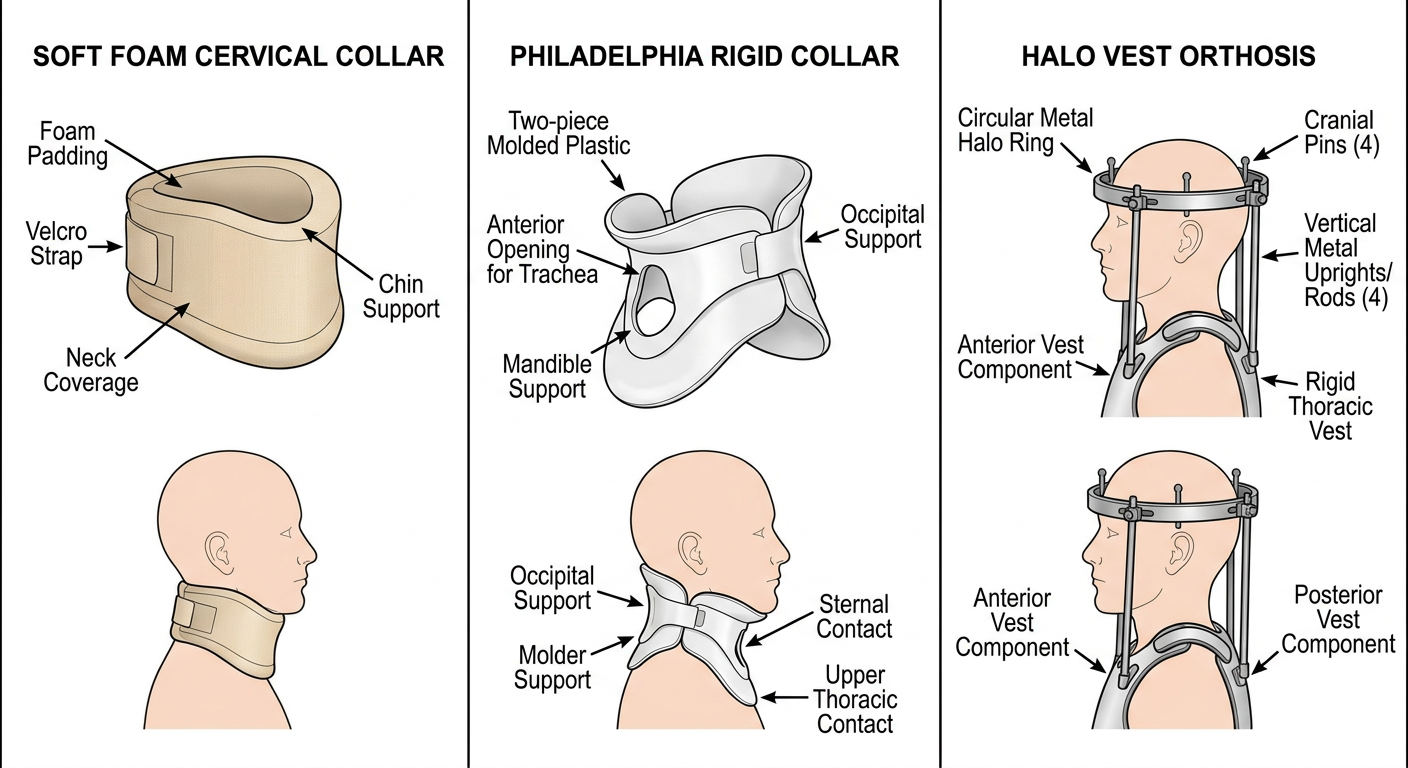
| Soft Collar | Philadelphia Collar | Halo Vest | |
|---|---|---|---|
| Material | Foam | Rigid plastic/foam | Metal ring + rigid vest |
| Fixation | Velcro strap | Two-piece snap | 4 cranial pins into skull |
| Immobilization | Minimal | Moderate | Maximum |
| Contact points | Chin → sternum | Mandible, occiput, sternum, thoracic spine | Skull + entire thorax |
To draw
What would you like me to draw?
Detailed medical educational diagram comparing all three main types of cervical orthoses, drawn in clean anatomical illustration style on white background. Panel 1 - SOFT COLLAR: Side view of human head and neck wearing a soft foam cervical collar. Labels pointing to: foam padding, velcro closure, chin support, sternal contact. Arrow shows minimal motion restriction. Panel 2 - PHILADELPHIA COLLAR (rigid): Side view of human head and neck wearing a two-piece rigid Philadelphia collar. Labels pointing to: rigid anterior shell, rigid posterior shell, mandibular support, occipital support, sternal notch contact, anterior tracheal window opening, hook-and-loop fasteners. Arrow shows moderate motion restriction. Panel 3 - HALO VEST ORTHOSIS: Full torso side and front view showing: circular metal halo ring around skull, 4 cranial fixation pins penetrating skull, 4 vertical metal support rods, padded rigid thoracic vest (anterior and posterior), shoulder straps, buckles, vest extending to xiphoid level. Labels on all components. Below all three panels: a comparison bar showing immobilization level — soft collar = LOW, Philadelphia = MODERATE, Halo vest = MAXIMUM. Title at top: "Types of Cervical Orthoses". Clean black label lines, professional medical textbook illustration style.
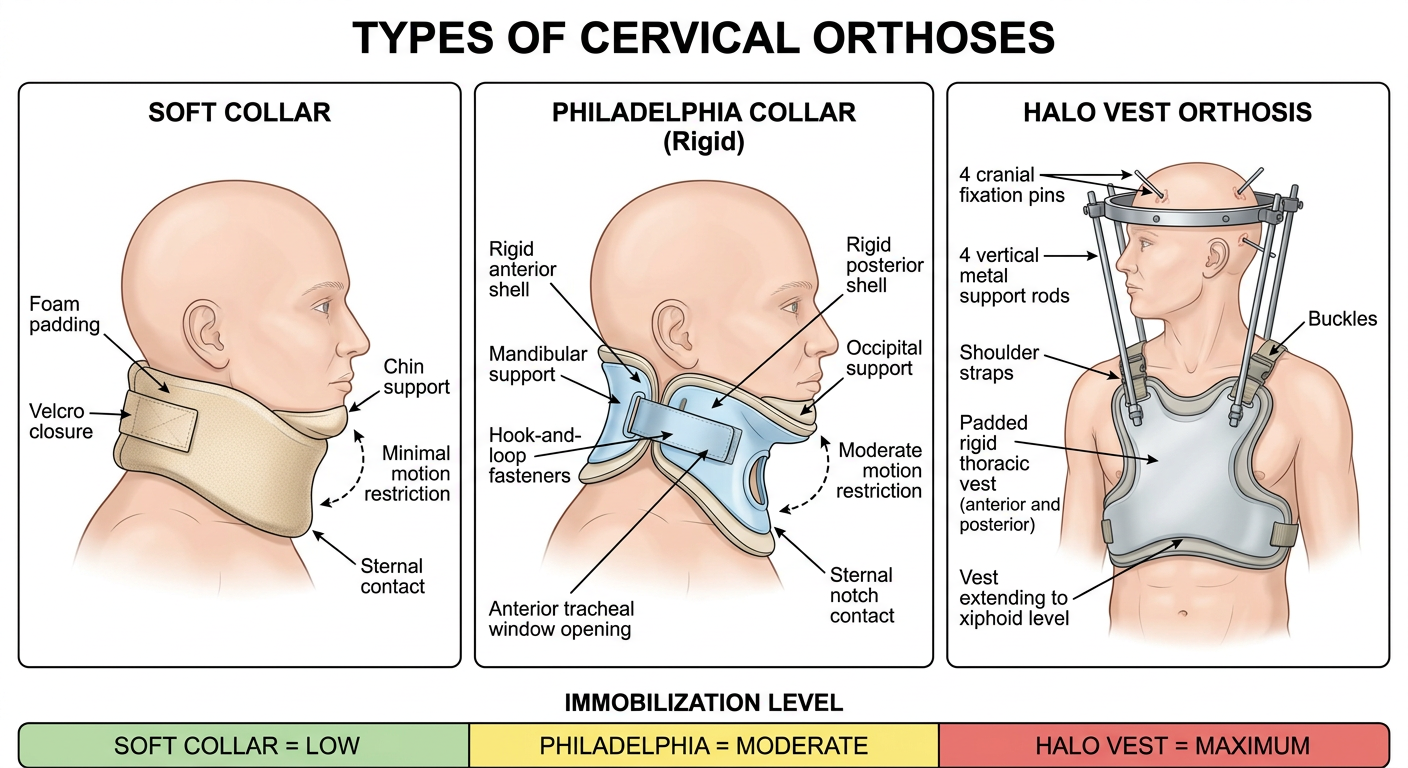
| Feature | Soft Collar | Philadelphia Collar | Halo Vest |
|---|---|---|---|
| Rigidity | Soft foam | Rigid plastic (2-piece) | Metal ring + rigid vest |
| Contact points | Chin, sternum | Mandible, occiput, sternum, thoracic spine | Skull (via pins), full thorax |
| Immobilization | Low | Moderate | Maximum |
| Best for | Sprains, strains | Stable fractures, post-op | Unstable fractures, pre-surgical stabilization |
| Key risk | Minimal | Skin pressure sores | Pin infection, increased mortality in elderly |
Cervico thoracic orthosis drawing
Detailed medical educational anatomical diagram of a Cervicothoracic Orthosis (CTO) shown from front and side view on a human figure outline. The CTO device includes: - Rigid chin cup / mandibular support piece at the front - Rigid occipital support at the back of the head - Rigid anterior chest plate extending from chin down to mid-sternum level - Rigid posterior thoracic plate extending from occiput down to mid-thoracic spine (T4-T6 level) - Lateral connecting straps/uprights on both sides linking cervical to thoracic components - Padded shoulder pieces resting on both shoulders - Adjustable velcro or buckle straps securing anterior and posterior plates together under the arms - Thoracic extension clearly going below the clavicle and covering upper chest Clear anatomical labels with leader lines pointing to: "Mandibular support", "Occipital pad", "Anterior chest plate", "Posterior thoracic plate", "Lateral upright straps", "Shoulder pads", "Thoracic extension", "Adjustable buckle straps" Two views shown: LEFT = front view, RIGHT = side/lateral view, both on simple human silhouette outline showing head, neck, and upper torso. At bottom: label "Cervicothoracic Orthosis (CTO) — restricts flexion/extension, axial rotation, and lateral bending across cervicothoracic junction" Clean white background, professional medical textbook illustration style, black ink labels.
No somi and minerva
Find images comparing SOMI, Minerva, and other CTO devices