
Ne0hritic vs nephritic syndrome
Nephrotic Syndrome vs. Nephritic Syndrome
Core Pathophysiology
Nephrotic Syndrome
- Massive proteinuria (≥3.5 g/day in adults; >50 mg/kg/day in children) → hypoalbuminemia (albumin <3 g/dL)
- Hypoalbuminemia → reduced plasma oncotic pressure → fluid shifts into the interstitium → edema
- Compensatory hepatic lipoprotein synthesis ↑ + reduced lipid catabolism → hyperlipidemia → lipiduria (oval fat bodies in urine)
- Loss of immunoglobulins → susceptibility to infection (especially pneumococcal, staphylococcal)
- Loss of antithrombin III + protein C/S → hypercoagulable state → renal vein thrombosis (especially in membranous nephropathy)
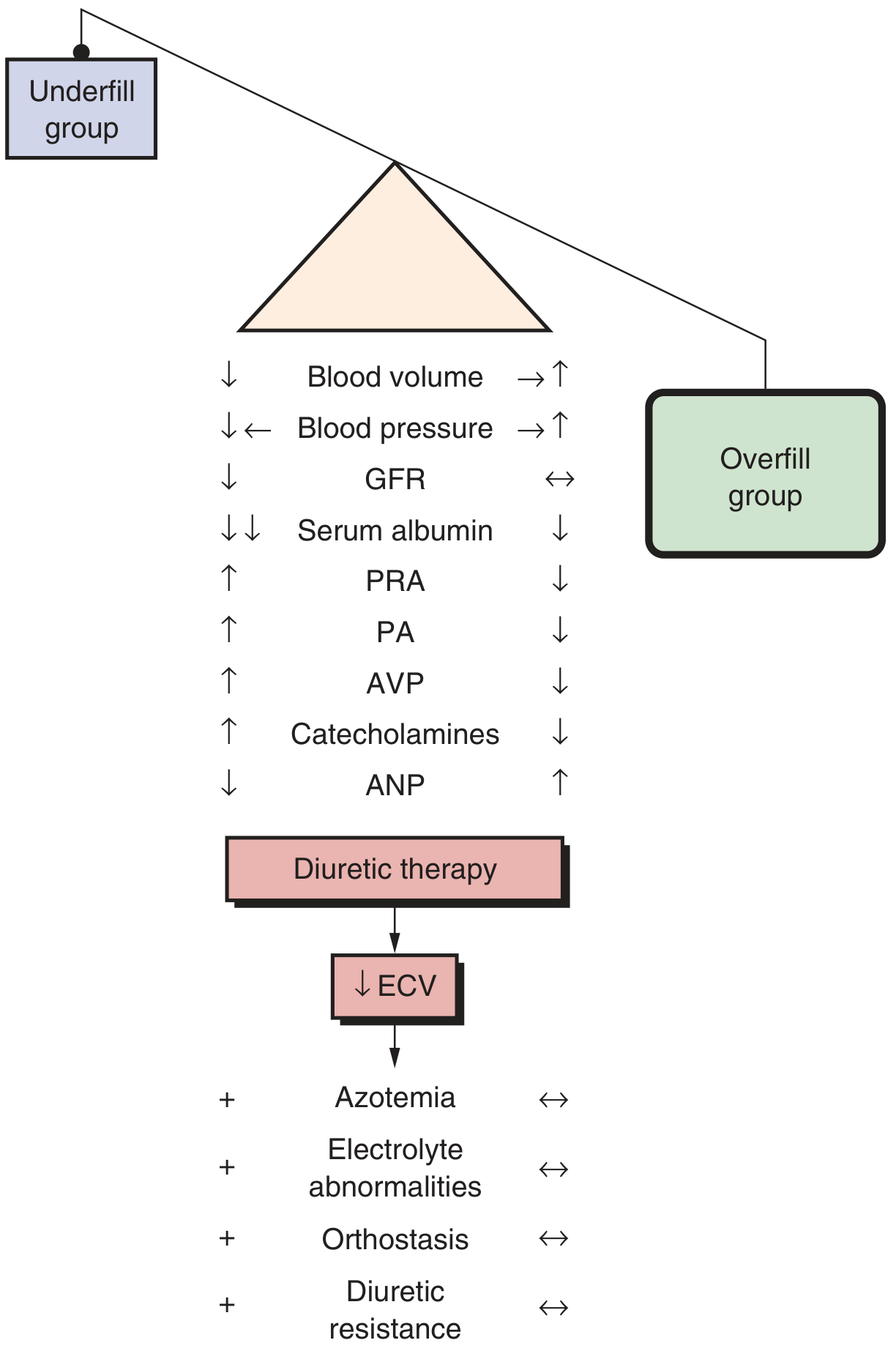
- Underfill (classic, e.g., minimal change disease): low plasma volume → activated RAAS, elevated aldosterone/ADH, low ANP → sodium retention
- Overfill (other causes): primary renal sodium retention → expanded plasma volume, suppressed RAAS
Nephritic Syndrome
Clinical & Lab Features - Head to Head
| Feature | Nephrotic | Nephritic |
|---|---|---|
| Onset | Insidious | Abrupt |
| Mechanism | Increased GBM permeability | Glomerular inflammation |
| Proteinuria | Massive (>3.5 g/day) | Mild-moderate (<3.5 g/day) |
| Hematuria | Absent or microscopic | Prominent (gross or microscopic) |
| RBC casts | Absent | Present (pathognomonic) |
| Serum albumin | Low (<3 g/dL) | Normal or slightly reduced |
| Edema | Severe, soft, pitting, periorbital | Mild-moderate |
| Blood pressure | Normal | Raised (hypertension) |
| JVP | Normal/low | Raised |
| GFR/azotemia | Usually preserved initially | Reduced, oliguria, azotemia |
| Urine color | Frothy (protein) | Smoky/brown (blood) |
| Lipids | Hyperlipidemia + lipiduria | Normal |
| Complement | Usually normal (except MPGN) | Often low (C3 low in PSAGN) |
Urinary Findings
| Finding | Nephrotic | Nephritic |
|---|---|---|
| Protein | +++++ | ++ |
| RBCs | Rare | +++ |
| RBC casts | No | Yes |
| WBCs | No | Possible |
| Oval fat bodies | Yes (lipiduria) | No |
| Fatty casts | Yes | No |
Causes
Nephrotic Syndrome Causes (Robbins 9e)
| Disease | Children | Adults |
|---|---|---|
| Minimal change disease (MCD) | 75% | 8% |
| Focal segmental glomerulosclerosis (FSGS) | 10% | 35% |
| Membranous nephropathy | 3% | 30% |
| MPGN | 10% | 10% |
- Diabetes mellitus (most common worldwide)
- Amyloidosis
- Systemic lupus erythematosus (class V lupus nephritis)
- Drugs (NSAIDs, gold, penicillamine, heroin)
- Infections (hepatitis B, HIV, malaria)
Nephritic Syndrome Causes
| Disease | Key Feature |
|---|---|
| Post-streptococcal GN (PSAGN) | Latency 1-4 wks; subepithelial "humps" on EM; ↓C3 |
| IgA nephropathy (Berger's) | Episodic hematuria with URI; mesangial IgA deposits |
| Lupus nephritis (class III/IV) | Anti-dsDNA, ↓C3/C4 |
| ANCA-associated vasculitis (GPA, MPA) | pANCA/cANCA positive; pauci-immune |
| Anti-GBM disease (Goodpasture's) | Linear IgG on IF; pulmonary hemorrhage |
| MPGN | Can present as either nephrotic or nephritic; ↓C3 |
Rapidly Progressive GN (RPGN) - The Nephritic Emergency
| Type | Mechanism | IF Pattern | Serology |
|---|---|---|---|
| Type I | Anti-GBM antibodies | Linear IgG | Anti-GBM Ab |
| Type II | Immune complex | Granular ("lumpy-bumpy") | Varies (ANA, ASOT, ↓C3) |
| Type III | Pauci-immune (ANCA) | Negative / trace | ANCA positive |
Edema Mechanism Comparison
Key Memory Anchors
| Clue | Think |
|---|---|
| Frothy urine, periorbital puffiness, no hematuria | Nephrotic |
| Cola/tea-colored urine, hypertension, oliguria | Nephritic |
| Child with MCD | Nephrotic, steroid-responsive |
| Diabetic for 10+ years with proteinuria | Secondary nephrotic |
| Post-sore throat hematuria in child, ↓C3 | Post-streptococcal (nephritic) |
| Recurrent hematuria with upper respiratory infections | IgA nephropathy (nephritic) |
| Hemoptysis + hematuria, anti-GBM+ | Goodpasture's (nephritic/RPGN) |
| Rapidly deteriorating kidney function with crescents | RPGN |
| Can present as EITHER | MPGN |
Note: Some diseases - especially MPGN and lupus nephritis - blur the boundary and can present with mixed features of both syndromes simultaneously.
Create a clinical decision tree to differentiate these syndromes
ls -la /home/daytona/workspace/ 2>/dev/null || echo "workspace empty or missing"
mkdir -p /home/daytona/workspace/nephro-decision-tree && python3 -c "import reportlab; print('reportlab ok')" && python3 -c "from reportlab.lib import colors; print('colors ok')"
~/nephro-decision-tree/build_tree.py
#!/usr/bin/env python3
"""
Clinical Decision Tree: Nephrotic vs Nephritic Syndrome
Renders a full A3-landscape PDF using ReportLab
"""

from reportlab.lib.pagesizes import A3, landscape
from reportlab.lib import colors
from reportlab.lib.units import mm
from reportlab.pdfgen import canvas
from reportlab.lib.fonts import addMapping
from reportlab.pdfbase import pdfmetrics
from reportlab.pdfbase.ttfonts import TTFont
import textwrap

OUTPUT = "/home/daytona/workspace/nephro-decision-tree/Nephro_Decision_Tree.pdf"

# ── Colour palette ────────────────────────────────────────────────────────────
C_BG          = colors.HexColor("#F7F9FC")
C_START       = colors.HexColor("#2C3E50")   # dark slate  – root node
C_QUESTION    = colors.HexColor("#2980B9")   # blue        – decision diamonds
C_NEPHROTIC   = colors.HexColor("#1A7A4A")   # green       – nephrotic branch
C_NEPHRITIC   = colors.HexColor("#C0392B")   # red         – nephritic branch
C_MIXED       = colors.HexColor("#7D3C98")   # purple      – mixed/MPGN
C_RPGN        = colors.HexColor("#D35400")   # orange      – RPGN
C_DIAGNOSIS   = colors.HexColor("#17202A")   # near-black  – final diagnosis boxes
C_ARROW       = colors.HexColor("#555555")
C_YES         = colors.HexColor("#27AE60")
C_NO          = colors.HexColor("#E74C3C")
C_WHITE       = colors.white
C_LIGHT_GRAY  = colors.HexColor("#ECF0F1")

PW, PH = landscape(A3)   # 420 × 297 mm  →  pt: ~1191 × 842

c = canvas.Canvas(OUTPUT, pagesize=landscape(A3))
c.setTitle("Clinical Decision Tree: Nephrotic vs Nephritic Syndrome")


# ── Helper functions ──────────────────────────────────────────────────────────

def rounded_rect(cv, x, y, w, h, r=8, fill_color=C_WHITE, stroke_color=C_QUESTION, lw=1.5):
    cv.setFillColor(fill_color)
    cv.setStrokeColor(stroke_color)
    cv.setLineWidth(lw)
    cv.roundRect(x, y, w, h, r, stroke=1, fill=1)

def diamond(cv, cx, cy, w, h, fill_color=C_QUESTION, stroke_color=None):
    if stroke_color is None:
        stroke_color = fill_color.clone() if hasattr(fill_color, 'clone') else fill_color
    cv.setFillColor(fill_color)
    cv.setStrokeColor(colors.HexColor("#1A252F"))
    cv.setLineWidth(1.5)
    p = cv.beginPath()
    p.moveTo(cx,      cy + h/2)   # top
    p.lineTo(cx + w/2, cy)        # right
    p.lineTo(cx,      cy - h/2)   # bottom
    p.lineTo(cx - w/2, cy)        # left
    p.close()
    cv.drawPath(p, stroke=1, fill=1)

def wrap_text_in_box(cv, text, x, y, w, h, font="Helvetica-Bold", size=8,
                     text_color=C_WHITE, align="center", padding=4):
    cv.setFont(font, size)
    cv.setFillColor(text_color)
    lines = []
    # simple word-wrap
    words = text.split()
    line = ""
    for word in words:
        test = (line + " " + word).strip()
        if cv.stringWidth(test, font, size) <= w - padding*2:
            line = test
        else:
            if line:
                lines.append(line)
            line = word
    if line:
        lines.append(line)
    line_h = size * 1.3
    total_h = len(lines) * line_h
    start_y = y + h/2 + total_h/2 - line_h * 0.85
    for l in lines:
        if align == "center":
            cv.drawCentredString(x + w/2, start_y, l)
        else:
            cv.drawString(x + padding, start_y, l)
        start_y -= line_h

def wrap_text_diamond(cv, text, cx, cy, w, h, font="Helvetica-Bold", size=7.5,
                      text_color=C_WHITE):
    cv.setFont(font, size)
    cv.setFillColor(text_color)
    words = text.split()
    lines = []
    line = ""
    max_w = w * 0.65
    for word in words:
        test = (line + " " + word).strip()
        if cv.stringWidth(test, font, size) <= max_w:
            line = test
        else:
            if line:
                lines.append(line)
            line = word
    if line:
        lines.append(line)
    line_h = size * 1.3
    total_h = len(lines) * line_h
    start_y = cy + total_h/2 - line_h * 0.7
    for l in lines:
        cv.drawCentredString(cx, start_y, l)
        start_y -= line_h

def arrow(cv, x1, y1, x2, y2, label="", label_color=C_ARROW, lw=1.5, head=7):
    cv.setStrokeColor(C_ARROW)
    cv.setFillColor(C_ARROW)
    cv.setLineWidth(lw)
    cv.line(x1, y1, x2, y2)
    # arrowhead
    import math
    angle = math.atan2(y2 - y1, x2 - x1)
    for da in [2.5, -2.5]:
        ax = x2 - head * math.cos(angle + da)
        ay = y2 - head * math.sin(angle + da)
        cv.line(x2, y2, ax, ay)
    if label:
        mx = (x1 + x2) / 2
        my = (y1 + y2) / 2
        cv.setFont("Helvetica-Bold", 7.5)
        cv.setFillColor(label_color)
        cv.drawCentredString(mx, my + 4, label)

def elbow_arrow(cv, x1, y1, x2, y2, bend_x=None, bend_y=None, label="",
                label_side="left", lw=1.5, head=7, label_color=C_ARROW):
    import math
    cv.setStrokeColor(C_ARROW)
    cv.setFillColor(C_ARROW)
    cv.setLineWidth(lw)
    if bend_x is not None and bend_y is None:
        # L-shaped: go right/left then up/down
        cv.line(x1, y1, bend_x, y1)
        cv.line(bend_x, y1, bend_x, y2)
        cv.line(bend_x, y2, x2, y2)
        angle = math.atan2(y2 - y2, x2 - bend_x)  # horizontal segment end
        for da in [2.5, -2.5]:
            ax = x2 - head * math.cos(angle + da)
            ay = y2 - head * math.sin(angle + da)
            cv.line(x2, y2, ax, ay)
        if label:
            cv.setFont("Helvetica-Bold", 7.5)
            cv.setFillColor(label_color)
            if label_side == "left":
                cv.drawString(x1 + 3, y1 + 4, label)
            else:
                cv.drawCentredString(bend_x, (y1 + y2)/2, label)
    elif bend_y is not None and bend_x is None:
        # vertical then horizontal
        cv.line(x1, y1, x1, bend_y)
        cv.line(x1, bend_y, x2, bend_y)
        cv.line(x2, bend_y, x2, y2)
        angle = math.atan2(y2 - bend_y, 0)
        for da in [2.5, -2.5]:
            ax = x2 - head * math.cos(angle + da)
            ay = y2 - head * math.sin(angle + da)
            cv.line(x2, y2, ax, ay)
        if label:
            cv.setFont("Helvetica-Bold", 7.5)
            cv.setFillColor(label_color)
            cv.drawCentredString((x1+x2)/2, bend_y + 4, label)


# ══════════════════════════════════════════════════════════════════════════════
# PAGE BACKGROUND
# ══════════════════════════════════════════════════════════════════════════════
c.setFillColor(C_BG)
c.rect(0, 0, PW, PH, fill=1, stroke=0)

# ── Title bar ─────────────────────────────────────────────────────────────────
c.setFillColor(C_START)
c.rect(0, PH - 42, PW, 42, fill=1, stroke=0)
c.setFillColor(C_WHITE)
c.setFont("Helvetica-Bold", 16)
c.drawCentredString(PW/2, PH - 28, "Clinical Decision Tree: Differentiating Nephrotic vs. Nephritic Syndrome")
c.setFont("Helvetica", 9)
c.drawCentredString(PW/2, PH - 38, "Based on clinical presentation, urinalysis, and biochemistry  |  Robbins Pathology · Comprehensive Clinical Nephrology")

# ── Legend ─────────────────────────────────────────────────────────────────────
leg_x = PW - 185
leg_y = PH - 105
c.setFillColor(C_LIGHT_GRAY)
c.setStrokeColor(colors.HexColor("#BDC3C7"))
c.setLineWidth(0.8)
c.roundRect(leg_x - 8, leg_y - 8, 183, 65, 6, stroke=1, fill=1)
c.setFont("Helvetica-Bold", 8)
c.setFillColor(C_START)
c.drawString(leg_x, leg_y + 48, "LEGEND")
items = [
    (C_START,     "Entry / Start"),
    (C_QUESTION,  "Decision point (diamond)"),
    (C_NEPHROTIC, "Nephrotic pathway"),
    (C_NEPHRITIC, "Nephritic pathway"),
    (C_MIXED,     "Mixed / MPGN"),
    (C_RPGN,      "RPGN / Crescentic GN"),
]
for i, (col, lbl) in enumerate(items):
    row = i % 3
    col_offset = 0 if i < 3 else 92
    ly = leg_y + 36 - row * 14
    c.setFillColor(col)
    c.rect(leg_x + col_offset, ly, 10, 8, fill=1, stroke=0)
    c.setFillColor(C_START)
    c.setFont("Helvetica", 7.5)
    c.drawString(leg_x + col_offset + 13, ly + 1, lbl)


# ══════════════════════════════════════════════════════════════════════════════
#  TREE LAYOUT  (coordinates in points; origin = bottom-left)
#  We work top-down.  PH ≈ 842 pt.  Top of content ≈ PH-55 = 787
#  Columns:   LEFT=nephrotic   CENTRE=shared entry   RIGHT=nephritic
# ══════════════════════════════════════════════════════════════════════════════

# Row Y positions (top of each node row, rough)
Y = {
    "start":   762,
    "q1":      700,   # Proteinuria ≥3.5 g/day?
    "q2l":     630,   # Hematuria / RBC casts?  (left branch = no)
    "q2r":     630,   # same row – right branch = yes
    "q3l":     555,   # Serum albumin <3 g/dL?
    "q3r":     555,   # GFR reduced / oliguria?
    "q4l":     480,   # Complement low?
    "q4r":     480,   # Rapidly deteriorating Cr?
    "diag_nt": 395,   # nephrotic diagnoses
    "diag_ni": 395,   # nephritic diagnoses
    "rpgn":    340,
}

CX = PW / 2        # centre x

# Node dimensions
NW, NH   = 155, 38   # normal rect box
DW, DH   = 148, 46   # diamond
BW, BH   = 160, 50   # big diagnosis box

# ── ROOT NODE ─────────────────────────────────────────────────────────────────
rx = CX - NW/2
ry = Y["start"]
rounded_rect(c, rx, ry, NW, NH, r=10, fill_color=C_START, stroke_color=C_START, lw=2)
wrap_text_in_box(c, "PATIENT WITH SUSPECTED GLOMERULAR DISEASE", rx, ry, NW, NH, size=8)

# arrow down
arrow(c, CX, ry, CX, Y["q1"] + DH)

# ── Q1 : Proteinuria ≥3.5 g/day? ─────────────────────────────────────────────
q1cx, q1cy = CX, Y["q1"] + DH/2
diamond(c, q1cx, q1cy, DW, DH, fill_color=C_QUESTION)
wrap_text_diamond(c, "Proteinuria ≥ 3.5 g/day\n(nephrotic-range)?", q1cx, q1cy, DW, DH, size=8)

# YES → left (nephrotic)
LEFT_X = CX - 280
arrow(c, q1cx - DW/2, q1cy, LEFT_X + NW/2, q1cy, label="YES", label_color=C_YES)

# NO → right (nephritic)
RIGHT_X = CX + 280 - NW/2
arrow(c, q1cx + DW/2, q1cy, RIGHT_X + NW/2, q1cy, label="NO  (sub-nephrotic)", label_color=C_NO)

# ── Q2-LEFT : Hematuria / RBC casts present? (nephrotic branch has low/none) ─
q2l_cx = LEFT_X + NW/2
q2l_cy = Y["q2l"] + DH/2

# first drop arrow on left
arrow(c, q2l_cx, q1cy, q2l_cx, Y["q2l"] + DH)

diamond(c, q2l_cx, q2l_cy, DW, DH, fill_color=C_NEPHROTIC)
wrap_text_diamond(c, "RBC casts or gross\nhematuria present?", q2l_cx, q2l_cy, DW, DH, size=8)

# ── Q2-RIGHT : Check hematuria in sub-nephrotic proteinuria ───────────────────
q2r_cx = RIGHT_X + NW/2
q2r_cy = Y["q2r"] + DH/2

arrow(c, q2r_cx, q1cy, q2r_cx, Y["q2r"] + DH)

diamond(c, q2r_cx, q2r_cy, DW, DH, fill_color=C_NEPHRITIC)
wrap_text_diamond(c, "Hematuria / RBC casts\n+ azotemia present?", q2r_cx, q2r_cy, DW, DH, size=8)

# ── Q3-LEFT (from Q2L NO): Serum albumin <3 g/dL? ────────────────────────────
q3l_cx = q2l_cx
q3l_cy = Y["q3l"] + DH/2

# NO arm goes down
arrow(c, q3l_cx, q2l_cy - DH/2, q3l_cx, Y["q3l"] + DH, label="NO", label_color=C_NO)

diamond(c, q3l_cx, q3l_cy, DW, DH, fill_color=C_NEPHROTIC)
wrap_text_diamond(c, "Serum albumin < 3 g/dL\n+ hyperlipidemia?", q3l_cx, q3l_cy, DW, DH, size=8)

# YES arm from Q2L → mixed / re-evaluate
mixed_cx = (q2l_cx + q2r_cx) / 2
mixed_cy = Y["q3l"] + DH/2
arrow(c, q2l_cx + DW/2, q2l_cy, mixed_cx - NW/2, mixed_cy, label="YES (mixed)", label_color=C_MIXED)
rounded_rect(c, mixed_cx - NW/2, Y["q3l"], NW, NH, r=8, fill_color=C_MIXED, stroke_color=C_MIXED)
wrap_text_in_box(c, "MIXED FEATURES\nConsider MPGN / Lupus nephritis", mixed_cx - NW/2, Y["q3l"], NW, NH, size=8)

# ── Q3-RIGHT (from Q2R YES): GFR reduced / oliguria? ─────────────────────────
q3r_cx = q2r_cx
q3r_cy = Y["q3r"] + DH/2

arrow(c, q3r_cx, q2r_cy - DH/2, q3r_cx, Y["q3r"] + DH, label="YES", label_color=C_YES)

diamond(c, q3r_cx, q3r_cy, DW, DH, fill_color=C_NEPHRITIC)
wrap_text_diamond(c, "Hypertension + ↓GFR\n/ oliguria present?", q3r_cx, q3r_cy, DW, DH, size=8)

# Q2R NO → recheck (could be mild glomerular disease, not classic)
recheck_x = q2r_cx + 200
recheck_y = Y["q2r"]
arrow(c, q2r_cx + DW/2, q2r_cy, recheck_x, q2r_cy, label="NO", label_color=C_NO)
rounded_rect(c, recheck_x, recheck_y, NW - 10, NH, r=8, fill_color=colors.HexColor("#7F8C8D"), stroke_color=colors.HexColor("#7F8C8D"))
wrap_text_in_box(c, "Non-glomerular cause\nor isolated microscopic\nhematuria – further W/U", recheck_x, recheck_y, NW - 10, NH, size=7)

# ── Q4-LEFT: Complement (C3) low? ─────────────────────────────────────────────
q4l_cx = q3l_cx
q4l_cy = Y["q4l"] + DH/2

arrow(c, q4l_cx, q3l_cy - DH/2, q4l_cx, Y["q4l"] + DH, label="YES", label_color=C_YES)

diamond(c, q4l_cx, q4l_cy, DW, DH, fill_color=C_NEPHROTIC)
wrap_text_diamond(c, "Serum C3 low\nor proteinuria > 3.5 g?", q4l_cx, q4l_cy, DW, DH, size=8)

# Q3L NO → reassess
q3l_no_x = q3l_cx - 215
q3l_no_y = Y["q3l"]
arrow(c, q3l_cx - DW/2, q3l_cy, q3l_no_x + NW/2, q3l_cy, label="NO", label_color=C_NO)
rounded_rect(c, q3l_no_x - NW/2 + 20, q3l_no_y, NW, NH, r=8, fill_color=colors.HexColor("#7F8C8D"), stroke_color=colors.HexColor("#7F8C8D"))
wrap_text_in_box(c, "Re-evaluate:\nOrthostatic / overflow\nproteinuria", q3l_no_x - NW/2 + 20, q3l_no_y, NW, NH, size=7.5)

# ── Q4-RIGHT: Rapidly progressive (Cr doubles < 3 months)? ───────────────────
q4r_cx = q3r_cx
q4r_cy = Y["q4r"] + DH/2

arrow(c, q4r_cx, q3r_cy - DH/2, q4r_cx, Y["q4r"] + DH, label="YES", label_color=C_YES)

diamond(c, q4r_cx, q4r_cy, DW, DH, fill_color=C_NEPHRITIC)
wrap_text_diamond(c, "Cr doubles in < 3 months\nor uremic emergency?", q4r_cx, q4r_cy, DW, DH, size=8)

# Q3R NO
q3r_no_x = q3r_cx + 200
q3r_no_y = Y["q3r"]
arrow(c, q3r_cx + DW/2, q3r_cy, q3r_no_x, q3r_cy, label="NO", label_color=C_NO)
rounded_rect(c, q3r_no_x, q3r_no_y, NW, NH, r=8, fill_color=colors.HexColor("#7F8C8D"), stroke_color=colors.HexColor("#7F8C8D"))
wrap_text_in_box(c, "Mild nephritic / isolated\nhematuria – consider IgA\nnephropathy, thin GBM dz", q3r_no_x, q3r_no_y, NW, NH, size=7.5)

# ══════════════════════════════════════════════════════════════════════════════
# DIAGNOSIS BOXES – Nephrotic
# ══════════════════════════════════════════════════════════════════════════════
# Q4L YES → MPGN
mpgn_dx_x = q4l_cx - 210
mpgn_dx_y = Y["diag_nt"]
arrow(c, q4l_cx - DW/2, q4l_cy, mpgn_dx_x + BW/2, q4l_cy, label="YES (↓C3)", label_color=C_MIXED)
# elbow down
arrow(c, mpgn_dx_x + BW/2, q4l_cy, mpgn_dx_x + BW/2, mpgn_dx_y + BH)
rounded_rect(c, mpgn_dx_x, mpgn_dx_y, BW, BH, r=8, fill_color=C_MIXED, stroke_color=C_MIXED)
wrap_text_in_box(c, "MPGN / Dense Deposit Disease\n↓C3, ↓C4 (MPGN I/III)\nIF: granular C3 ± IgG\nEM: subendothelial / intramembranous", mpgn_dx_x, mpgn_dx_y, BW, BH, size=7)

# Q4L NO → classic nephrotic (children vs. adults)
nt_dx_x = q4l_cx + 20
nt_dx_y = Y["diag_nt"]
arrow(c, q4l_cx, q4l_cy - DH/2, q4l_cx, nt_dx_y + BH + 10, label="NO", label_color=C_NO)
# age split
arrow(c, q4l_cx, nt_dx_y + BH + 10, nt_dx_x + BW/2, nt_dx_y + BH)

# Children box
ch_x = nt_dx_x
ch_y = nt_dx_y
rounded_rect(c, ch_x, ch_y, BW, BH, r=8, fill_color=C_NEPHROTIC, stroke_color=C_NEPHROTIC)
wrap_text_in_box(c, "CHILDREN (<16 yrs)\nMinimal Change Disease (75%)\nFSGS (10%)\nIF: negative  EM: foot process fusion", ch_x, ch_y, BW, BH, size=7)

# Adults box
ad_x = nt_dx_x + BW + 12
ad_y = nt_dx_y
rounded_rect(c, ad_x, ad_y, BW, BH, r=8, fill_color=C_NEPHROTIC, stroke_color=C_NEPHROTIC)
wrap_text_in_box(c, "ADULTS\nFSGS (35%)  Membranous (30%)\nDiabetic nephropathy (most common 2°)\nIF: IgG+C3 (subepithelial) in MN", ad_x, ad_y, BW, BH, size=7)

# age question label
arrow(c, q4l_cx, nt_dx_y + BH + 10, ad_x + BW/2, nt_dx_y + BH)
c.setFont("Helvetica-Bold", 7)
c.setFillColor(C_NEPHROTIC)
c.drawCentredString(ch_x + BW/2, ch_y + BH + 3, "Age < 16 yrs")
c.drawCentredString(ad_x + BW/2, ad_y + BH + 3, "Age ≥ 16 yrs")

# ══════════════════════════════════════════════════════════════════════════════
# DIAGNOSIS BOXES – Nephritic
# ══════════════════════════════════════════════════════════════════════════════
# Q4R YES → RPGN
rpgn_x = q4r_cx + 25
rpgn_y = Y["rpgn"]
arrow(c, q4r_cx, q4r_cy - DH/2, q4r_cx, rpgn_y + BH + 10, label="YES", label_color=C_YES)
# RPGN type split
c.setFillColor(C_RPGN)
c.setStrokeColor(C_RPGN)
c.setLineWidth(1.5)
c.roundRect(q4r_cx - BW/2, rpgn_y + 15, BW * 2.1, BH + 20, 8, fill=1, stroke=1)
c.setFillColor(C_WHITE)
c.setFont("Helvetica-Bold", 8.5)
c.drawCentredString(q4r_cx + BW/2*0.1 + 10, rpgn_y + BH + 22, "RPGN / CRESCENTIC GN  (Cr doubles in weeks)")
c.setFont("Helvetica", 7.5)
lines = [
    "Type I – Anti-GBM (Goodpasture): Linear IgG on IF  |  Anti-GBM Ab serology  |  ± pulmonary hemorrhage",
    "Type II – Immune complex: Granular IF  |  ↓C3/C4  |  Post-infectious, Lupus, IgA, MPGN",
    "Type III – Pauci-immune (ANCA): Negative IF  |  cANCA (GPA) or pANCA (MPA)  |  Most common in adults",
]
for i, l in enumerate(lines):
    c.drawCentredString(q4r_cx + BW/2*0.1 + 10, rpgn_y + 10 + (2-i)*14, l)

# Q4R NO → classic nephritic
ni_dx_x = q4r_cx - BW * 1.1
ni_dx_y = Y["diag_ni"]
arrow(c, q4r_cx - DW/2, q4r_cy, ni_dx_x + BW/2, q4r_cy, label="NO", label_color=C_NO)
arrow(c, ni_dx_x + BW/2, q4r_cy, ni_dx_x + BW/2, ni_dx_y + BH)

rounded_rect(c, ni_dx_x, ni_dx_y, BW * 1.15, BH + 20, r=8, fill_color=C_NEPHRITIC, stroke_color=C_NEPHRITIC)
wrap_text_in_box(c, "CLASSIC NEPHRITIC\nPost-streptococcal GN: ↓C3, antistreptolysin O+\nIgA nephropathy: IgA mesangial deposits\nLupus Class III/IV: ↓C3/C4, ANA+, anti-dsDNA+\nANCA vasculitis: pauci-immune", ni_dx_x, ni_dx_y, BW * 1.15, BH + 20, size=7.5)

# ══════════════════════════════════════════════════════════════════════════════
# COMPLICATIONS FOOTNOTE ROW
# ══════════════════════════════════════════════════════════════════════════════
footer_y = 22
c.setFillColor(C_LIGHT_GRAY)
c.rect(10, footer_y - 5, PW - 20, 22, fill=1, stroke=0)
c.setFont("Helvetica-Bold", 7)
c.setFillColor(C_NEPHROTIC)
c.drawString(18, footer_y + 9, "NEPHROTIC complications:")
c.setFont("Helvetica", 7)
c.setFillColor(C_DIAGNOSIS)
c.drawString(130, footer_y + 9, "Thrombosis (↓AT-III, ↓Prot C/S) · Infection (↓IgG) · Hyperlipidemia · AKI (underfill)")
c.setFont("Helvetica-Bold", 7)
c.setFillColor(C_NEPHRITIC)
c.drawString(530, footer_y + 9, "NEPHRITIC complications:")
c.setFont("Helvetica", 7)
c.setFillColor(C_DIAGNOSIS)
c.drawString(640, footer_y + 9, "Hypertensive emergency · Pulmonary edema (fluid overload) · Rapid CKD progression")

c.setFont("Helvetica", 6.5)
c.setFillColor(colors.HexColor("#888888"))
c.drawCentredString(PW/2, footer_y - 2, "Robbins & Cotran Pathologic Basis of Disease 10e  ·  Comprehensive Clinical Nephrology 7e  ·  Brenner & Rector's The Kidney")

# ══════════════════════════════════════════════════════════════════════════════
c.save()
print(f"PDF saved to {OUTPUT}")
cd /home/daytona/workspace/nephro-decision-tree && python3 build_tree.py 2>&1
ls -lh /home/daytona/workspace/nephro-decision-tree/Nephro_Decision_Tree.pdf && python3 -c " from reportlab.lib.pagesizes import A3, landscape w, h = landscape(A3) print(f'Page size: {w:.0f} x {h:.0f} pt ({w/72*25.4:.0f} x {h/72*25.4:.0f} mm)') " && pdftoppm -r 150 /home/daytona/workspace/nephro-decision-tree/Nephro_Decision_Tree.pdf /home/daytona/workspace/nephro-decision-tree/preview && ls /home/daytona/workspace/nephro-decision-tree/
python3 -c " from PIL import Image img = Image.open('/home/daytona/workspace/nephro-decision-tree/preview-1.ppm') img.save('/home/daytona/workspace/nephro-decision-tree/preview.png') print(f'PNG size: {img.size}') "
~/nephro-decision-tree/build_tree.py
Successfully replaced 1 instance(s) of the string in '/home/daytona/workspace/nephro-decision-tree/build_tree.py'
~/nephro-decision-tree/build_tree_v2.py
#!/usr/bin/env python3
"""
Clinical Decision Tree: Nephrotic vs Nephritic Syndrome  (v2 – clean layout)
A3 landscape, carefully spaced so nothing clips.
"""

from reportlab.lib.pagesizes import A3, landscape
from reportlab.lib import colors
from reportlab.pdfgen import canvas
import math

OUT = "/home/daytona/workspace/nephro-decision-tree/Nephro_Decision_Tree.pdf"

PW, PH = landscape(A3)   # ≈ 1191 × 842 pt

c = canvas.Canvas(OUT, pagesize=landscape(A3))
c.setTitle("Clinical Decision Tree: Nephrotic vs Nephritic Syndrome")

# ── Palette ──────────────────────────────────────────────────────────────────
BG      = colors.HexColor("#F0F4F8")
HEADER  = colors.HexColor("#1A2942")
QBLUE   = colors.HexColor("#2471A3")   # decision diamond
GREEN   = colors.HexColor("#1E8449")   # nephrotic
RED     = colors.HexColor("#B03A2E")   # nephritic
PURPLE  = colors.HexColor("#6C3483")   # mixed
ORANGE  = colors.HexColor("#CA6F1E")   # RPGN
GREY    = colors.HexColor("#717D7E")   # non-specific
WHITE   = colors.white
DARK    = colors.HexColor("#1C2833")
YARROW  = colors.HexColor("#229954")   # YES label
NRED    = colors.HexColor("#C0392B")   # NO label
ARROW_C = colors.HexColor("#4A4A4A")

# ── Background + header ───────────────────────────────────────────────────────
c.setFillColor(BG)
c.rect(0, 0, PW, PH, fill=1, stroke=0)

c.setFillColor(HEADER)
c.rect(0, PH-48, PW, 48, fill=1, stroke=0)
c.setFillColor(WHITE)
c.setFont("Helvetica-Bold", 15)
c.drawCentredString(PW/2, PH-28, "Clinical Decision Tree: Differentiating Nephrotic vs. Nephritic Syndrome")
c.setFont("Helvetica", 8.5)
c.drawCentredString(PW/2, PH-40, "Based on clinical presentation · urinalysis · biochemistry  |  Robbins & Cotran Pathology · Comprehensive Clinical Nephrology 7e · Brenner & Rector's The Kidney")

# ── Helper draw fns ───────────────────────────────────────────────────────────

def rrect(x, y, w, h, fill=WHITE, stroke=QBLUE, lw=1.5, r=7):
    c.setFillColor(fill)
    c.setStrokeColor(stroke)
    c.setLineWidth(lw)
    c.roundRect(x, y, w, h, r, stroke=1, fill=1)

def text_in(x, y, w, h, lines, font="Helvetica-Bold", size=7.5, col=WHITE):
    c.setFont(font, size)
    c.setFillColor(col)
    lh = size * 1.35
    total = len(lines) * lh
    sy = y + h/2 + total/2 - lh * 0.75
    for ln in lines:
        c.drawCentredString(x + w/2, sy, ln)
        sy -= lh

def diamond(cx, cy, w, h, fill=QBLUE, stroke=DARK):
    c.setFillColor(fill)
    c.setStrokeColor(stroke)
    c.setLineWidth(1.8)
    p = c.beginPath()
    p.moveTo(cx,      cy+h/2)
    p.lineTo(cx+w/2,  cy)
    p.lineTo(cx,      cy-h/2)
    p.lineTo(cx-w/2,  cy)
    p.close()
    c.drawPath(p, stroke=1, fill=1)

def dtext(cx, cy, lines, font="Helvetica-Bold", size=7.5, col=WHITE, w_limit=90):
    c.setFont(font, size)
    c.setFillColor(col)
    lh = size * 1.3
    total = len(lines) * lh
    sy = cy + total/2 - lh*0.65
    for ln in lines:
        c.drawCentredString(cx, sy, ln)
        sy -= lh

def arr(x1, y1, x2, y2, lbl="", lbl_col=YARROW, lw=1.5, head=7):
    c.setStrokeColor(ARROW_C)
    c.setFillColor(ARROW_C)
    c.setLineWidth(lw)
    c.line(x1, y1, x2, y2)
    ang = math.atan2(y2-y1, x2-x1)
    for da in (0.45, -0.45):
        ax = x2 - head*math.cos(ang+da)
        ay = y2 - head*math.sin(ang+da)
        c.line(x2, y2, ax, ay)
    if lbl:
        mx, my = (x1+x2)/2, (y1+y2)/2
        c.setFont("Helvetica-Bold", 7.5)
        c.setFillColor(lbl_col)
        # offset perp to arrow direction
        c.drawCentredString(mx + 6*math.sin(ang), my + 6*math.cos(ang) + 3, lbl)

def harrow(x1, y1, bend_x, x2, y2, lbl="", lbl_col=YARROW):
    """go horizontal to bend_x, then vertical to y2, then horizontal to x2"""
    c.setStrokeColor(ARROW_C)
    c.setFillColor(ARROW_C)
    c.setLineWidth(1.5)
    c.line(x1, y1, bend_x, y1)
    c.line(bend_x, y1, bend_x, y2)
    c.line(bend_x, y2, x2, y2)
    # arrowhead
    ang = math.atan2(0, x2-bend_x)
    for da in (0.45, -0.45):
        ax = x2 - 7*math.cos(ang+da)
        ay = y2 - 7*math.sin(ang+da)
        c.line(x2, y2, ax, ay)
    if lbl:
        c.setFont("Helvetica-Bold", 7.5)
        c.setFillColor(lbl_col)
        c.drawCentredString((x1+bend_x)/2, y1+5, lbl)

def varrow(x1, y1, bend_y, x2, y2, lbl="", lbl_col=YARROW):
    """go vertical to bend_y, then horizontal to x2, then vertical to y2"""
    c.setStrokeColor(ARROW_C)
    c.setFillColor(ARROW_C)
    c.setLineWidth(1.5)
    c.line(x1, y1, x1, bend_y)
    c.line(x1, bend_y, x2, bend_y)
    c.line(x2, bend_y, x2, y2)
    ang = math.atan2(y2-bend_y, 0)
    for da in (0.45, -0.45):
        ax = x2 - 7*math.cos(ang+da)
        ay = y2 - 7*math.sin(ang+da)
        c.line(x2, y2, ax, ay)
    if lbl:
        c.setFont("Helvetica-Bold", 7.5)
        c.setFillColor(lbl_col)
        c.drawString(x1+4, (y1+bend_y)/2, lbl)

# ══════════════════════════════════════════════════════════════════════════════
#  LAYOUT CONSTANTS
#  X zones:  FAR_LEFT  LEFT  CENTRE  RIGHT  FAR_RIGHT
#  Y rows:   R0(top) → R6(bottom)
# ══════════════════════════════════════════════════════════════════════════════

CX  = PW / 2         # 595.5

# X centres of columns
X_FL = 110           # far-left  (overflow/orthostatic)
X_L  = 230           # left      (nephrotic branch)
X_C  = CX            # centre    (entry + q1)
X_R  = 870           # right     (nephritic branch)
X_FR = 1090          # far-right (non-glomerular)

# Y rows (centre of content)
R0 = 785   # root node
R1 = 720   # Q1
R2 = 648   # Q2 left & right
R3 = 575   # Q3 left & right
R4 = 500   # Q4 left & right
R5 = 415   # diagnosis boxes row 1
R6 = 330   # RPGN / extra row

# Standard box dims
NW, NH = 145, 36     # normal decision box
DW, DH = 155, 50     # diamond total width/height
BW, BH = 175, 62     # big diagnosis box

# ── ROOT ─────────────────────────────────────────────────────────────────────
rx, ry = X_C - NW/2, R0 - NH/2
rrect(rx, ry, NW, NH, fill=HEADER, stroke=HEADER, lw=2)
text_in(rx, ry, NW, NH, ["PATIENT WITH SUSPECTED", "GLOMERULAR DISEASE"], size=8.5)
arr(X_C, R0-NH/2, X_C, R1+DH/2)   # down to Q1

# ── Q1 : Proteinuria ≥ 3.5 g/day? ───────────────────────────────────────────
diamond(X_C, R1, DW, DH, fill=QBLUE)
dtext(X_C, R1, ["Proteinuria", "≥ 3.5 g/day?"], size=8.5)

# Q1 → YES left
arr(X_C-DW/2, R1, X_L, R1, lbl="YES", lbl_col=YARROW)
# Q1 → NO right
arr(X_C+DW/2, R1, X_R, R1, lbl="NO  (sub-nephrotic)", lbl_col=NRED)

# ── Q2-LEFT : RBC casts / gross hematuria? ───────────────────────────────────
arr(X_L, R1, X_L, R2+DH/2)
diamond(X_L, R2, DW, DH, fill=GREEN)
dtext(X_L, R2, ["RBC casts or", "gross hematuria?"], size=8.5)

# Q2L YES → mixed (centre, between branches)
X_MIX = CX
harrow(X_L+DW/2, R2, X_MIX-NW/2-10, X_MIX+NW/2, R3+NH/2, lbl="YES (mixed)", lbl_col=PURPLE)
# draw mixed box centred at X_MIX
rrect(X_MIX-NW/2, R3-NH/2, NW, NH+10, fill=PURPLE, stroke=PURPLE)
text_in(X_MIX-NW/2, R3-NH/2, NW, NH+10,
        ["MIXED FEATURES", "Consider MPGN", "or Lupus Nephritis"], size=8)

# Q2L NO → down to Q3L
arr(X_L, R2-DH/2, X_L, R3+DH/2, lbl="NO", lbl_col=NRED)

# ── Q3-LEFT : Albumin <3 g/dL + hyperlipidemia? ──────────────────────────────
diamond(X_L, R3, DW, DH, fill=GREEN)
dtext(X_L, R3, ["Albumin < 3 g/dL", "+ hyperlipidemia?"], size=8.5)

# Q3L NO → far-left re-evaluate
harrow(X_L-DW/2, R3, X_FL+NW/2+5, X_FL-NW/2+20, R3, lbl="NO", lbl_col=NRED)
rrect(X_FL-NW/2+20, R3-NH/2, NW, NH, fill=GREY, stroke=GREY)
text_in(X_FL-NW/2+20, R3-NH/2, NW, NH,
        ["Re-evaluate:", "Orthostatic / overflow", "proteinuria"], size=7.5)

# Q3L YES → down to Q4L
arr(X_L, R3-DH/2, X_L, R4+DH/2, lbl="YES", lbl_col=YARROW)

# ── Q4-LEFT : C3 low / MPGN pattern? ─────────────────────────────────────────
diamond(X_L, R4, DW, DH, fill=GREEN)
dtext(X_L, R4, ["Complement C3 low", "or MPGN pattern?"], size=8.5)

# Q4L YES → MPGN dx (left)
X_MPGN = X_L - 195
harrow(X_L-DW/2, R4, X_MPGN+BW/2, X_MPGN, R5+BH/2, lbl="YES (↓C3)", lbl_col=PURPLE)
rrect(X_MPGN, R5-BH/2, BW, BH, fill=PURPLE, stroke=PURPLE)
text_in(X_MPGN, R5-BH/2, BW, BH,
        ["MPGN / Dense Deposit Disease",
         "↓C3 ± ↓C4",
         "IF: granular C3 ± IgG",
         "EM: subendothelial /",
         "intramembranous deposits"], size=7.5)

# Q4L NO → age split → children / adults
arr(X_L, R4-DH/2, X_L, R5+BH/2, lbl="NO", lbl_col=NRED)
# children left, adults right
X_CH = X_L - 85
X_AD = X_L + 85
c.setStrokeColor(ARROW_C); c.setLineWidth(1.5)
c.line(X_L, R5+BH/2, X_CH+BW/4, R5+BH/2)
c.line(X_L, R5+BH/2, X_AD+BW/4, R5+BH/2)
arr(X_CH+BW/4, R5+BH/2, X_CH+BW/4, R5+BH/2-5)
arr(X_AD+BW/4, R5+BH/2, X_AD+BW/4, R5+BH/2-5)

# Children dx
rrect(X_CH-BW/4, R5-BH/2, BW-5, BH, fill=GREEN, stroke=GREEN)
text_in(X_CH-BW/4, R5-BH/2, BW-5, BH,
        ["CHILDREN (<16 yrs)",
         "Minimal Change Dis. (75%)",
         "FSGS (10%)",
         "IF: negative",
         "EM: foot process fusion"], size=7.5)
c.setFont("Helvetica-Bold", 7); c.setFillColor(GREEN)
c.drawCentredString(X_CH+BW/4, R5+BH/2+4, "Age < 16")

# Adults dx
rrect(X_AD-BW/4+10, R5-BH/2, BW+5, BH, fill=GREEN, stroke=GREEN)
text_in(X_AD-BW/4+10, R5-BH/2, BW+5, BH,
        ["ADULTS",
         "FSGS (35%)  Membranous (30%)",
         "Diabetic nephropathy (2°)",
         "IF: IgG subepithelial (MN)",
         "EM: spike and dome (MN)"], size=7.5)
c.setFont("Helvetica-Bold", 7); c.setFillColor(GREEN)
c.drawCentredString(X_AD+BW/4+5, R5+BH/2+4, "Age ≥ 16")

# ── Q2-RIGHT : Hematuria + azotemia? ─────────────────────────────────────────
arr(X_R, R1, X_R, R2+DH/2)
diamond(X_R, R2, DW, DH, fill=RED)
dtext(X_R, R2, ["Hematuria / RBC casts", "+ azotemia present?"], size=8.5)

# Q2R NO → far-right
harrow(X_R+DW/2, R2, X_FR-NW/2+15, X_FR+NW/2-20, R2, lbl="NO", lbl_col=NRED)
rrect(X_FR-NW/2+15, R2-NH/2, NW, NH+10, fill=GREY, stroke=GREY)
text_in(X_FR-NW/2+15, R2-NH/2, NW, NH+10,
        ["Non-glomerular cause or", "isolated microscopic", "hematuria – further W/U"], size=7.5)

# Q2R YES → Q3R
arr(X_R, R2-DH/2, X_R, R3+DH/2, lbl="YES", lbl_col=YARROW)

# ── Q3-RIGHT : Hypertension + ↓GFR / oliguria? ───────────────────────────────
diamond(X_R, R3, DW, DH, fill=RED)
dtext(X_R, R3, ["Hypertension + ↓GFR", "/ oliguria?"], size=8.5)

# Q3R NO → right mild
harrow(X_R+DW/2, R3, X_FR-NW/2+15, X_FR+NW/2-20, R3, lbl="NO", lbl_col=NRED)
rrect(X_FR-NW/2+15, R3-NH/2, NW, NH+10, fill=GREY, stroke=GREY)
text_in(X_FR-NW/2+15, R3-NH/2, NW, NH+10,
        ["Mild nephritic:", "Consider IgA nephropathy", "or thin GBM disease"], size=7.5)

# Q3R YES → Q4R
arr(X_R, R3-DH/2, X_R, R4+DH/2, lbl="YES", lbl_col=YARROW)

# ── Q4-RIGHT : Creatinine doubles < 3 months? ────────────────────────────────
diamond(X_R, R4, DW, DH, fill=RED)
dtext(X_R, R4, ["Cr doubles in <3 months", "/ uremic emergency?"], size=8.5)

# Q4R NO → Classic nephritic
X_NI = X_R - 210
harrow(X_R-DW/2, R4, X_NI+BW/2+5, X_NI, R5+BH/2, lbl="NO", lbl_col=NRED)
rrect(X_NI, R5-BH/2, BW+10, BH+10, fill=RED, stroke=RED)
text_in(X_NI, R5-BH/2, BW+10, BH+10,
        ["CLASSIC NEPHRITIC",
         "Post-strep GN: ↓C3, ASOT+",
         "IgA nephropathy: IgA mesangial",
         "Lupus III/IV: ANA+, anti-dsDNA+",
         "ANCA vasculitis: pANCA / cANCA"], size=7.5)

# Q4R YES → RPGN box (below)
arr(X_R, R4-DH/2, X_R, R6+BH/2+25, lbl="YES", lbl_col=YARROW)

# ── RPGN big box ───────────────────────────────────────────────────────────────
RW, RH = 390, 90
rrect(X_R - RW/2, R6 - RH/2, RW, RH, fill=ORANGE, stroke=ORANGE, lw=2, r=9)
# title
c.setFont("Helvetica-Bold", 9); c.setFillColor(WHITE)
c.drawCentredString(X_R, R6 + RH/2 - 14, "RPGN / CRESCENTIC GN  (Cr doubles in weeks – uremic emergency)")
# type sub-boxes
sub_w = (RW - 20) / 3
sub_h = 50
sub_y = R6 - RH/2 + 8
labels = [
    ("TYPE I – Anti-GBM", ["(Goodpasture)", "Linear IgG on IF", "Anti-GBM Ab serology", "± Pulmonary hemorrhage"], colors.HexColor("#922B21")),
    ("TYPE II – Immune Complex", ["Granular IF", "↓C3/C4", "Post-infect · Lupus · IgA · MPGN", ""], colors.HexColor("#784212")),
    ("TYPE III – Pauci-immune", ["Negative IF", "cANCA (GPA) · pANCA (MPA)", "Most common in adults", ""], colors.HexColor("#1A5276")),
]
for i, (title, lns, col) in enumerate(labels):
    sx = X_R - RW/2 + 8 + i*(sub_w + 4)
    c.setFillColor(col); c.setStrokeColor(WHITE); c.setLineWidth(0.8)
    c.roundRect(sx, sub_y, sub_w, sub_h, 4, stroke=1, fill=1)
    c.setFont("Helvetica-Bold", 7); c.setFillColor(WHITE)
    c.drawCentredString(sx + sub_w/2, sub_y + sub_h - 10, title)
    c.setFont("Helvetica", 6.5)
    for j, ln in enumerate(lns):
        c.drawCentredString(sx + sub_w/2, sub_y + sub_h - 22 - j*10, ln)

# ══════════════════════════════════════════════════════════════════════════════
#  COMPLICATIONS FOOTER
# ══════════════════════════════════════════════════════════════════════════════
fy = 14
c.setFillColor(colors.HexColor("#DCE0E5"))
c.rect(0, fy-4, PW, 24, fill=1, stroke=0)

c.setFont("Helvetica-Bold", 7); c.setFillColor(GREEN)
c.drawString(12, fy+11, "NEPHROTIC complications:")
c.setFont("Helvetica", 7); c.setFillColor(DARK)
c.drawString(148, fy+11, "Thrombosis (↓AT-III, ↓Prot C/S)  ·  Infection (↓IgG, ↓IgM)  ·  Hyperlipidemia / lipiduria  ·  AKI (underfill, diuretics)  ·  Pleural effusion / ascites")

c.setFont("Helvetica-Bold", 7); c.setFillColor(RED)
c.drawString(650, fy+11, "NEPHRITIC complications:")
c.setFont("Helvetica", 7); c.setFillColor(DARK)
c.drawString(785, fy+11, "Hypertensive emergency  ·  Pulmonary edema  ·  Rapid CKD / ESRD  ·  Uremic emergency")

c.setFont("Helvetica", 6); c.setFillColor(GREY)
c.drawCentredString(PW/2, fy, "Sources: Robbins & Cotran Pathologic Basis of Disease 10e  ·  Comprehensive Clinical Nephrology 7e  ·  Brenner & Rector's The Kidney")

# ── LEGEND ────────────────────────────────────────────────────────────────────
lg_x, lg_y = PW - 178, PH - 48 - 110
c.setFillColor(colors.HexColor("#E8EDF2")); c.setStrokeColor(colors.HexColor("#B0BEC5"))
c.setLineWidth(0.8)
c.roundRect(lg_x-6, lg_y-8, 176, 104, 6, stroke=1, fill=1)
c.setFont("Helvetica-Bold", 8); c.setFillColor(DARK)
c.drawString(lg_x, lg_y + 88, "LEGEND")
entries = [
    (HEADER, "Entry node"),
    (QBLUE,  "Decision diamond"),
    (GREEN,  "Nephrotic pathway"),
    (RED,    "Nephritic pathway"),
    (PURPLE, "Mixed / MPGN"),
    (ORANGE, "RPGN / Crescentic GN"),
    (GREY,   "Non-specific / reassess"),
]
for i, (col, lbl) in enumerate(entries):
    row = i % 4
    col_off = 0 if i < 4 else 88
    ly = lg_y + 76 - row * 18
    c.setFillColor(col); c.rect(lg_x + col_off, ly, 11, 9, fill=1, stroke=0)
    c.setFont("Helvetica", 7); c.setFillColor(DARK)
    c.drawString(lg_x + col_off + 14, ly + 1, lbl)

# ══════════════════════════════════════════════════════════════════════════════
c.save()
print(f"Saved: {OUT}")
cd /home/daytona/workspace/nephro-decision-tree && python3 build_tree_v2.py 2>&1 && pdftoppm -r 150 Nephro_Decision_Tree.pdf preview2 && python3 -c "from PIL import Image; img=Image.open('preview2-1.ppm'); img.save('preview2.png'); print(img.size)"
cd /home/daytona/workspace/nephro-decision-tree && python3 -c " # Quick coordinate patch: push X_L further left, fix RPGN placement # Read the script, apply targeted fixes import re code = open('build_tree_v2.py').read() # Move left column further left code = code.replace('X_L = 230', 'X_L = 255') # Move right column slightly left so RPGN fits code = code.replace('X_R = 870', 'X_R = 820') # Widen far-right margin code = code.replace('X_FR = 1090', 'X_FR = 1060') # Fix RPGN box: centre it between X_R and right edge, not too far right # Current: X_R - RW/2 ... with RW=390 → 820-195=625 to 820+195=1015 → fits # RPGN Y: R6-RH/2 where R6=330, RH=90 → 285 to 375 # Fix RPGN bottom cut: RH needs to be taller code = code.replace('RW, RH = 390, 90', 'RW, RH = 400, 95') open('build_tree_v3.py','w').write(code) print('done') " python3 build_tree_v3.py 2>&1 pdftoppm -r 150 Nephro_Decision_Tree.pdf preview3 python3 -c \"from PIL import Image; Image.open('preview3-1.ppm').save('preview3.png'); print('ok')\"
cd /home/daytona/workspace/nephro-decision-tree && python3 build_tree_v3.py 2>&1
cd /home/daytona/workspace/nephro-decision-tree && pdftoppm -r 150 Nephro_Decision_Tree.pdf preview3 && python3 -c "from PIL import Image; Image.open('preview3-1.ppm').save('preview3.png'); print('saved')"
ls -lh /home/daytona/workspace/nephro-decision-tree/Nephro_Decision_Tree.pdf
Nephro Decision Tree
PDF Document · PDF
- YES → Nephrotic pathway (green)
- NO / sub-nephrotic → Nephritic pathway (red)
- RBC casts / gross hematuria? → YES = mixed features (MPGN / Lupus, purple)
- Albumin < 3 g/dL + hyperlipidemia? → NO = re-evaluate orthostatic/overflow proteinuria
- C3 low / MPGN pattern? → YES = MPGN / Dense Deposit Disease
- Age split: Children (<16) → MCD 75%, FSGS 10% | Adults → FSGS 35%, Membranous 30%
- Hematuria + azotemia? → NO = non-glomerular, further workup
- Hypertension + ↓GFR / oliguria? → NO = mild nephritic (IgA / thin GBM)
- Cr doubles in < 3 months? → NO = Classic nephritic (Post-strep GN, IgA, Lupus III/IV, ANCA)
- YES → RPGN / Crescentic GN (orange), split into:
- Type I: Anti-GBM (Goodpasture) - linear IgG
- Type II: Immune complex - granular IF, ↓C3/C4
- Type III: Pauci-immune (ANCA) - negative IF
Gonadal hormones drugs pharmacology and medicine
Gonadal Hormones: Drugs, Pharmacology & Medicine
Overview: The HPG Axis - Pharmacological Control Points
Hypothalamus → GnRH (pulsatile)
      ↓
Anterior pituitary → FSH + LH
      ↓
Gonads → Estradiol / Progesterone / Testosterone
      ↓
Target tissues (ER / PR / AR)
      ↓ (negative feedback)
I. ESTROGENS
Chemistry & Classification
| Class | Examples |
|---|---|
| Steroidal (natural) | Estradiol (17β-estradiol), estrone, estriol |
| Steroidal (synthetic) | Ethinyl estradiol, mestranol, estradiol valerate/cypionate |
| Nonsteroidal synthetic | Diethylstilbestrol (DES) |
| Conjugated equine estrogens (CEE) | Premarin - mixture of sulfated estrogens |
Mechanism of Action
Pharmacokinetics
- Oral estradiol undergoes extensive first-pass hepatic metabolism → converted to estrone and estrone sulfate
- Ethinyl estradiol: synthetic, highly resistant to first-pass metabolism → far more potent orally than natural estradiol
- 0.625 mg conjugated estrogens ≈ 5-10 μg ethinyl estradiol (in terms of oral potency)
- Routes: oral, transdermal patch/gel, vaginal ring/cream, IM injection (esters)
- Transdermal avoids first-pass effect → lower hepatic impact on clotting factors and SHBG
Physiological Effects
- Secondary sexual development in females (puberty)
- Endometrial proliferation (→ requires progestin opposition to prevent hyperplasia/cancer)
- Bone: inhibits osteoclast activity → maintains bone mineral density
- Cardiovascular: favorable lipid profile (↑HDL, ↓LDL); complex vascular effects
- CNS: influences thermoregulation (hot flashes when deficient), mood, cognition
- Liver: stimulates synthesis of clotting factors, SHBG, angiotensinogen, triglycerides
Therapeutic Uses
- Vasomotor symptoms (hot flashes, sweats) - most efficacious treatment
- Urogenital atrophy (vaginal dryness, dyspareunia)
- Osteoporosis prevention (reduces fracture risk)
- Women with intact uterus: must add progestin to prevent endometrial cancer
- Women post-hysterectomy: estrogen alone is appropriate
- Principle: minimum effective dose for shortest necessary duration
Adverse Effects
- Thromboembolism (DVT, PE) - oral > transdermal; related to hepatic effect on clotting factors
- Endometrial cancer (unopposed estrogen)
- Breast cancer (long-term combination MHT - WHI trial data)
- Migraine exacerbation
- Nausea, fluid retention
- Hypertriglyceridemia (oral route)
- Contraindicated in: active thromboembolism, hormone-sensitive cancers, unexplained vaginal bleeding, active liver disease, pregnancy
II. PROGESTINS (Progestogens)
Classification
| Class | Key Drugs | Notes |
|---|---|---|
| Pregnanes | Progesterone (natural), MPA (medroxyprogesterone acetate), dydrogesterone | Progesterone has rapid first-pass metabolism; micronized form available |
| Estranes (19-nortestosterone) | Norethindrone, norethynodrel | Some androgenic activity |
| Gonanes (19-nortestosterone) | Levonorgestrel, norgestrel, norgestimate, desogestrel | Progestational; components of contraceptives |
| Spirolactone-derived | Drospirenone | Antimineralocorticoid activity; used in OCs |
| Antiprogestins/modulators | Mifepristone, ulipristal | See below |
Mechanism of Action
Key Uses
- MHT - endometrial protection (any woman with a uterus on estrogen must have progestin added)
- Contraception (oral, injectable, implant, IUD, emergency)
- Assisted reproductive technology (luteal phase support)
- Endometriosis (depot MPA suppresses menstruation/lesions)
- Dysfunctional uterine bleeding
- Threatened/habitual abortion (progesterone support)
Key Drugs in Detail
- Depot IM injection (150 mg every 3 months) - highly effective contraceptive
- Suppresses ovarian function → amenorrhea common
- Caution: delayed return of fertility (6-18 months); transient bone mineral density loss
- Emergency contraception (Plan B): 1.5 mg within 72 h of unprotected sex
- Progestin-only pill ("mini-pill")
- IUD (Mirena): local uterine delivery, minimal systemic absorption
- Bioidentical; preferred by many over synthetic progestins for MHT
- Oral or vaginal; better tolerated (less androgenic/glucocorticoid effects)
Mifepristone (RU-486)
- Competitive antagonist at both PR isoforms (also anti-glucocorticoid at high doses)
- Medical abortion: combined with misoprostol (PGE1 analogue) for termination up to 10 weeks
- Also used for Cushing's syndrome (mifepristone blocks glucocorticoid receptor)
Ulipristal Acetate
- Partial PR agonist/antagonist
- Emergency contraception up to 120 h (5 days) post-intercourse - more effective than levonorgestrel, especially days 3-5
III. ANDROGENS
Physiology
- Testosterone is the principal androgen in both men and women
- Men: produced by Leydig cells (LH-stimulated); ~7 mg/day
- Women: corpus luteum + adrenal cortex; ~0.25 mg/day
- Precursors: androstenedione, DHEA (weak androgens, converted peripherally)
- Dihydrotestosterone (DHT): formed by 5α-reductase in prostate, skin, hair follicles - more potent at AR; responsible for prostate growth, male-pattern baldness
- Aromatization: testosterone → estradiol (via aromatase, in adipose/brain/bone)
Testosterone Across the Life Cycle
| Stage | Level | Significance |
|---|---|---|
| 1st trimester fetus | ~250 ng/dL | Male sexual differentiation (Wolffian duct development, external genitalia) |
| Birth | ~250 ng/dL | Brief postnatal surge |
| 2-3 months postnatal | ~250 ng/dL | "Minipuberty" |
| Childhood | <50 ng/dL | Minimal |
| Puberty (12-17 yrs) | Rising to adult levels | External genitalia growth, muscle, bone, voice, sexual hair, spermatogenesis |
| Adult male | 300-1000 ng/dL | Maintained by HPG axis |
| Postpuberty deficiency | Variable | Libido ↓ (weeks), Hgb ↓ (months), bone density ↓ (1 yr), muscle loss (years) |
Therapeutic Androgen Preparations
| Preparation | Route | Details |
|---|---|---|
| Testosterone enanthate / cypionate | Deep IM injection q 1-2 weeks | Formulated in oil; wide serum fluctuations → mood/libido swings |
| Testosterone undecanoate | IM q 10-14 weeks or oral | Long-acting IM; oral form bypasses first-pass via lymphatics |
| Testosterone gel/solution (1-2%) | Transdermal daily | Stable levels; risk of transfer to others via skin contact |
| Testosterone patch | Transdermal daily | Skin irritation common |
| Buccal testosterone | Buccal mucosa twice daily | Avoids first-pass; gum irritation |
| Alkylated androgens (methyltestosterone, oxandrolone) | Oral | 17α-alkylated - resist first-pass but hepatotoxic (peliosis hepatis, cholestasis) |
| Nandrolone decanoate | IM | Anabolic with lower androgenic ratio |
Oral testosterone itself is ineffective due to rapid hepatic catabolism. Preparations are designed to bypass this.
Therapeutic Uses of Androgens
- Male hypogonadism (primary or secondary) - restore virilization, sexual function, energy, bone density, mood
- Delayed puberty in boys - short course to initiate puberty
- Female hypogonadism / low libido - low-dose supplementation
- Wasting/catabolic states - HIV wasting, burns, major surgery (anabolic effect)
- Aplastic anemia - stimulate erythropoiesis
- Hereditary angioedema - anabolic androgens increase C1-inhibitor synthesis
Adverse Effects of Androgens
- Virilization in women (acne, hirsutism, clitoromegaly, voice deepening)
- Polycythemia (↑ EPO secretion)
- Dyslipidemia (↓HDL, ↑LDL)
- Suppression of spermatogenesis (negative HPG feedback → male contraceptive research)
- Hepatotoxicity (17α-alkylated compounds)
- Acne, oily skin
- Prostatic growth (contraindicated in prostate cancer)
- Premature epiphyseal closure if used in adolescents
- Cardiovascular events (↑ RBC viscosity, dyslipidemia)
Selective Androgen Receptor Modulators (SARMs)
IV. ORAL CONTRACEPTIVES
Combined Oral Contraceptives (COCs)
- Inhibition of LH surge → prevent ovulation (primary mechanism)
- Altered cervical mucus → impairs sperm penetration
- Altered endometrial receptivity → prevents implantation
- Altered tubal motility
- Estrogen: ethinyl estradiol (20-35 µg/day in modern pills); or estradiol valerate/estetrol in newer formulations
- Progestin: varies by generation
| Generation | Progestins | Notes |
|---|---|---|
| 1st | Norethindrone, norethynodrel | Moderate androgenic activity |
| 2nd | Levonorgestrel, norgestrel | Standard; lower VTE risk vs. 3rd/4th gen |
| 3rd | Desogestrel, gestodene, norgestimate | Less androgenic; slightly higher VTE risk vs. 2nd gen |
| 4th | Drospirenone, dienogest | Antimineralocorticoid (drospirenone); anti-androgenic; used in PCOS, acne |
- Monophasic: fixed estrogen + progestin dose throughout cycle
- Biphasic/triphasic: varying doses to mimic natural cycle (theoretical advantage unproven)
- Extended cycle / continuous (e.g., Seasonale): 84 active pills + 7 placebo → 4 periods/year
- Progestin-only pill ("mini-pill"): no estrogen; mechanism mainly cervical mucus + endometrium; must be taken at precise same time daily
- Dysmenorrhea relief
- Management of endometriosis
- PCOS (cycle regulation, acne, hirsutism)
- PMS/PMDD (drospirenone-containing)
- Iron-deficiency anemia (reduced menstrual blood loss)
- Reduced risk of ovarian and endometrial cancer
- Acne treatment (anti-androgenic progestins)
- VTE (absolute contraindication in history of DVT/PE; risk ×3-4 with COCs)
- Arterial events: stroke, MI (risk highest with smoking + age >35)
- Hypertension (can worsen; estrogen raises angiotensinogen)
- Breast cancer (modest increased risk with current use)
- Liver disease / hepatic adenoma
- Migraine with aura (contraindication - ischemic stroke risk)
- Absolute contraindications: smoking >35 yrs + age >35, active VTE, stroke/MI history, hormone-sensitive cancer, active liver disease, unexplained vaginal bleeding
V. GnRH ANALOGUES
GnRH Agonists (Paradoxically Suppress Gonadal Function)
| Drug | Route |
|---|---|
| Leuprolide (leuprorelin) | SC/IM depot (monthly, 3-monthly, 6-monthly) |
| Goserelin | SC implant |
| Buserelin, nafarelin | Intranasal |
| Triptorelin | IM depot |
- Prostate cancer (androgen deprivation therapy)
- Endometriosis
- Uterine fibroids (leiomyomas)
- Precocious puberty
- Controlled ovarian hyperstimulation (IVF protocols) - used with gonadotropins to prevent premature LH surge
- Breast cancer (premenopausal ER+ - ovarian suppression)
- Menstrual suppression (thrombocytopenia, transsexual transitioning)
GnRH Antagonists (Immediate Suppression - No Flare)
| Drug | Use |
|---|---|
| Cetrorelix, ganirelix | IVF - prevent premature LH surge |
| Degarelix | Prostate cancer (no flare; preferred if spinal metastases or urinary obstruction) |
| Elagolix | Endometriosis (oral); also used in uterine fibroids |
| Relugolix | Prostate cancer (oral, daily) |
VI. SELECTIVE ESTROGEN RECEPTOR MODULATORS (SERMs)
| Drug | Breast | Bone | Uterus | Uses |
|---|---|---|---|---|
| Tamoxifen | Antagonist | Agonist | Agonist | Breast cancer (adjuvant + treatment); risk of endometrial cancer |
| Raloxifene | Antagonist | Agonist | Neutral/antagonist | Osteoporosis; breast cancer prevention; no endometrial risk |
| Toremifene | Antagonist | - | - | Breast cancer |
| Bazedoxifene | Antagonist | Agonist | Neutral | Osteoporosis prevention; paired with CEE ("TSEC" - tissue-selective estrogen complex) |
| Ospemifene | Neutral | - | Some agonism | Dyspareunia / HSDD (postmenopausal); oral |
| Clomiphene | Antagonist | - | - | Infertility (anovulation); blocks hypothalamic ER → removes negative feedback → ↑ FSH/LH |
- Competitive inhibitor of 17β-estradiol binding to ER
- In breast: net antagonist → used in ER+ breast cancer (premenopausal and postmenopausal)
- In bone and liver: agonist → maintains bone density, favorable lipid effects
- In uterus: agonist → endometrial hyperplasia and cancer risk (important ADR)
- Metabolized by CYP2D6 to active metabolite endoxifen; CYP2D6 inhibitors (e.g., fluoxetine, paroxetine) reduce efficacy
- Selective Estrogen Receptor Downregulator (SERD)
- Competitively binds ER → no agonist activity → promotes receptor degradation
- IM monthly injection
- ER+ HER2- advanced breast cancer (post-aromatase inhibitor failure)
VII. AROMATASE INHIBITORS (Estrogen Synthesis Inhibitors)
| Drug | Type | Notes |
|---|---|---|
| Anastrozole | Non-steroidal (reversible) | Once daily oral; breast cancer adjuvant |
| Letrozole | Non-steroidal (reversible) | Also used for ovulation induction in PCOS |
| Exemestane | Steroidal (irreversible, "suicide inhibitor") | Aromatase inactivation; different resistance pattern |
- Adjuvant therapy for postmenopausal ER+ breast cancer (more effective than tamoxifen postmenopausally)
- Metastatic breast cancer
- Letrozole: ovulation induction (increasingly first-line over clomiphene in PCOS)
VIII. ANTIANDROGENS
Inhibitors of Androgen Synthesis
| Drug | Mechanism | Use |
|---|---|---|
| Ketoconazole (high dose) | Blocks multiple steroidogenic enzymes (CYP17A1) | Rapid castration (adrenal crisis risk) |
| Abiraterone | Selective CYP17A1 inhibitor (17α-hydroxylase + 17,20-lyase) | Castration-resistant prostate cancer; given with prednisone (prevents mineralocorticoid excess) |
| Finasteride | 5α-reductase type II inhibitor → ↓ DHT | BPH, male-pattern baldness (Propecia) |
| Dutasteride | 5α-reductase type I + II inhibitor → ↓ DHT more completely | BPH |
Androgen Receptor Antagonists
| Drug | Generation | Notes |
|---|---|---|
| Flutamide | 1st gen | Hepatotoxic; rarely used now |
| Bicalutamide | 2nd gen | Better tolerated; prostate cancer |
| Enzalutamide | 3rd gen | No agonist activity; crosses BBB (seizure risk); castration-resistant prostate cancer |
| Apalutamide, darolutamide | 3rd gen | Metastatic/non-metastatic prostate cancer; darolutamide - lower CNS penetration |
| Spironolactone | Non-selective (also MR antagonist) | Hirsutism in women; acne; used off-label as anti-androgen in trans women |
| Cyproterone acetate | Progestogenic antiandrogen | Hirsutism; trans women; not available in USA |
IX. PDE5 INHIBITORS (Erectile Dysfunction)
| Drug | t½ | Onset | Duration | Notes |
|---|---|---|---|---|
| Sildenafil (Viagra) | 4 h | 30-60 min | 12 h | Also used for pulmonary arterial hypertension; affected by food (high-fat meal delays absorption) |
| Vardenafil | 4 h | 30-60 min | 10 h | Most potent PDE5 selectivity (Ki 0.1 nM) |
| Tadalafil (Cialis) | 17.5 h | 30-120 min | 36 h | "Weekend pill"; also used for BPH; not affected by food |
| Avanafil | 1.3-2 h | 15-30 min | 6 h | Fastest onset; least food effect |
X. GONADOTROPINS
| Drug | Composition | Use |
|---|---|---|
| FSH (follitropin α/β, urofollitropin) | Recombinant or urinary FSH | Ovulation induction (IVF); male infertility (spermatogenesis) |
| LH (lutropin α) | Recombinant LH | Combined with FSH in ovulation induction |
| hCG (choriogonadotropin) | LH-like activity | Trigger ovulation; male hypogonadism (stimulate Leydig cells); cryptorchidism |
| Menotropins (hMG) | FSH + LH from urinary source | Ovulation induction |
XI. Quick Clinical Reference Summary
| Drug Class | Key Drugs | Main Use | Critical ADR/Interaction |
|---|---|---|---|
| Estrogens | Estradiol, ethinyl estradiol, CEE | MHT, contraception | VTE, endometrial Ca (unopposed) |
| Progestins | Progesterone, MPA, levonorgestrel | MHT, contraception, ART | Mood changes, irregular bleeding, thrombosis |
| Combined OC | Ethinyl estradiol + progestin | Contraception | VTE, migraine with aura |
| GnRH agonists | Leuprolide, goserelin | Prostate Ca, endometriosis | Flare effect, osteoporosis |
| GnRH antagonists | Degarelix, elagolix | Prostate Ca, endo | Osteoporosis (no flare) |
| SERMs | Tamoxifen, raloxifene | Breast Ca, osteoporosis | VTE; tamoxifen → endometrial Ca |
| SERDs | Fulvestrant | ER+ breast Ca | IM only; injection site reactions |
| Aromatase inhibitors | Anastrozole, letrozole, exemestane | Postmeno breast Ca | Arthralgia, osteoporosis |
| Androgens | Testosterone (various forms) | Male hypogonadism | Polycythemia, virilization, suppressed spermatogenesis |
| Antiandrogens | Enzalutamide, abiraterone, finasteride | Prostate Ca, BPH, hirsutism | Abiraterone: mineralocorticoid excess |
| Mifepristone | Mifepristone | Medical abortion | Anti-glucocorticoid at high doses |
| PDE5 inhibitors | Sildenafil, tadalafil | Erectile dysfunction, PAH | Nitrate contraindication, priapism |
| Gonadotropins | FSH, hCG | ART, hypogonadism | OHSS |
Needle stick injury microbiology
Needlestick Injury - Microbiology & Management
What Is a Needlestick Injury?
The Three Key Pathogens
1. Hepatitis B Virus (HBV)
- HBsAg - surface antigen; marker of infection
- HBeAg - "e" antigen; marker of active viral replication and HIGH infectivity
- Anti-HBs - protective antibody; marker of immunity (vaccination or recovery)
| Source Status | Risk of Clinical Hepatitis | Risk of Seroconversion |
|---|---|---|
| HBsAg+ AND HBeAg+ (high viremia) | 22-31% | 37-62% |
| HBsAg+ but HBeAg- (low viremia) | 1-6% | 23-37% |
| HBsAg- | Negligible | Negligible |
2. Hepatitis C Virus (HCV)
- Average seroconversion rate: ~1.8% (range 0-7%)
- Risk factors for transmission:
- Deep injury
- Hollow-bore needle (carries larger blood volume)
- Visible blood on needle
- High source viral load
3. Human Immunodeficiency Virus (HIV)
| Route | Risk per Exposure |
|---|---|
| Percutaneous (needlestick) from known HIV+ source | ~0.3% |
| Mucous membrane splash | ~0.09% |
| Non-intact skin | <0.09% |
| Intact skin | Negligible |
- Large volume of blood (visible blood contamination on device)
- Deep injury
- Device placed directly in vein or artery
- High source viral load / advanced AIDS (source patient dying within 2 months of exposure)
- Prolonged contact
Other Pathogens (Less Common)
| Pathogen | Notes |
|---|---|
| HDV (Hepatitis D) | Only infects HBsAg-positive individuals (requires HBV co-infection); PEP same as HBV |
| HTLV-1/2 | Rare occupational transmission reported |
| Malaria | Rare case reports |
| Syphilis | Theoretical; Treponema pallidum very fragile outside host |
| Tetanus | Especially with soil/dirt-contaminated needles found in community settings |
Immediate Management Steps (Universal for All Needlestick Injuries)
Step 1: First Aid (IMMEDIATE)
- Do not squeeze or suck the wound
- Wash thoroughly with soap and water for a minimum of 15 minutes
- For mucous membrane splashes (eyes, mouth): irrigate copiously with water/saline
- Allow the wound to bleed freely
Step 2: Report & Assess (Within Hours)
- Report to supervisor immediately
- Document: time/date, type of sharp, activity being performed, site and depth of injury, source patient details
- Test the source patient (with consent where applicable) for:
- HIV (rapid antibody/antigen test)
- HBsAg (Hepatitis B surface antigen)
- Anti-HCV (Hepatitis C antibody)
- Test the exposed healthcare worker (baseline) for:
- HIV (antibody/antigen)
- Anti-HCV
- Anti-HBs (Hepatitis B surface antibody - to assess immunity)
- HBsAg
- Review vaccination history (especially HBV)
- Consider tetanus prophylaxis based on vaccination status and wound type
Pathogen-Specific Post-Exposure Prophylaxis (PEP)
Hepatitis B PEP
| Exposed Worker's Status | Source HBsAg+ | Source HBsAg- | Source Unknown |
|---|---|---|---|
| Unvaccinated | HBIG × 1 dose (0.06 mL/kg IM) + start HBV vaccine series | Start HBV vaccine series | Start HBV vaccine series |
| Vaccinated - known responder (anti-HBs ≥10 mIU/mL) | No treatment | No treatment | No treatment |
| Vaccinated - known non-responder | HBIG × 1 + start vaccine series OR HBIG × 2 doses | No treatment | HBIG × 1 + start vaccine series or HBIG × 2 |
| Vaccinated - antibody response unknown | Test anti-HBs: if <10 → HBIG × 1 + vaccine booster; if ≥10 → no treatment | No treatment | Test anti-HBs; if <10 → vaccine booster; recheck in 1-2 weeks |
- HBIG and HBV vaccine can be given simultaneously at different anatomical sites
- PEP should be administered as soon as possible after exposure (within 24 hours ideally)
- HBV vaccine series (3-dose: 0, 1, 6 months) is the best pre-exposure prevention
Hepatitis C PEP
- Baseline anti-HCV testing of exposed worker
- Follow-up testing at 3-6 months for seroconversion
- If source is HCV-positive: consider HCV RNA testing at 3-4 weeks post-exposure for early detection
- If acute HCV infection is confirmed: refer to hepatologist - highly effective direct-acting antivirals (DAAs) can achieve sustained virological response (SVR) ≥95% even in acute phase
- Treat acute HCV rather than waiting for spontaneous clearance (which occurs in ~15-45%)
HIV PEP
Tenofovir disoproxil fumarate (TDF) / Emtricitabine (FTC) [Truvada] + Dolutegravir (or Raltegravir)
- 3-drug regimen
- Duration: 28 days (4 weeks)
| Component | Drug | Class |
|---|---|---|
| Backbone | TDF/FTC (Truvada) or TAF/FTC (Descovy) | NRTI |
| Third agent (preferred) | Dolutegravir (DTG) | Integrase inhibitor |
| Third agent (alternative) | Raltegravir (RAL) | Integrase inhibitor |
- HIV antibody/antigen at 4-6 weeks, 3 months, and 6 months
- If taking PEP: monitor for drug toxicity (renal function with TDF; metabolic effects)
- If source patient is on antiretroviral therapy with known drug resistance, consult specialist
- National Clinicians' Post-Exposure Prophylaxis Hotline: 1-888-448-4911 (24/7 consultation)
- If source HIV status is unknown: assess epidemiologic likelihood and initiate PEP if high suspicion, with reassessment when source testing results return
- Refrain from donating blood, plasma, organs, tissue, or semen
- No need to modify sexual practices or avoid pregnancy (exposed person is not infectious to contacts)
- No specific precautions needed to prevent secondary household transmission
Community Needlestick (Non-Occupational)
- Risk is generally lower than occupational injury (older needle, less blood volume, dried)
- A review of 14 studies found no transmissions among 613 children exposed to community needlesticks (for HIV, HBV, HCV)
- However, every community needlestick warrants evaluation, wound care, and counseling
- Tetanus prophylaxis especially important (soil/environmental contamination)
- HBV PEP decision based on vaccination status
- HIV PEP: based on epidemiological risk assessment (estimated prevalence of HIV among IDUs in local community)
Risk Factor Summary for High-Transmission Exposures
- Deep percutaneous injury (vs. superficial)
- Hollow-bore needle (vs. solid suture needle)
- Visible blood on device
- Device placed in vein or artery (blood-filled)
- Large volume of blood
- High viral titer in source (HIV: advanced AIDS; HBV: HBeAg+, high DNA)
- Source dies within 2 months of exposure (marker of advanced disease)
Prevention Strategies
- Universal/Standard Precautions - treat all blood and body fluids as potentially infectious at all times
- HBV vaccination of all healthcare workers - most effective single intervention (gives >95% seroprotection)
- Safety-engineered devices - self-sheathing needles, needleless IV systems, retractable lancets
- No recapping of needles - single most common activity leading to needlestick injury
- Proper disposal: sharps containers - never overfill; place near point of use
- PPE: gloves, eye protection, gowns when splash risk exists
- Occupational health reporting systems - encourage reporting culture (many needlestick injuries go unreported)
- Double-gloves during high-risk procedures (surgical, obstetric)
Comparative Transmission Risk Summary
| Feature | HBV | HCV | HIV |
|---|---|---|---|
| Per-needlestick risk | 22-62% (HBeAg+) | ~1.8% | ~0.3% |
| Environmental stability | Survives 7 days dry | Hours-days | Minutes-hours |
| Vaccine available | Yes (highly effective) | No | No |
| PEP available | Yes (HBIG + vaccine) | No | Yes (ARV, 28 days) |
| Chronicity if infected | 5-10% (adults) | 55-85% | 100% (lifelong) |
| Cure possible | Functional cure (HBsAg loss) | Yes (DAAs, >95% SVR) | No (suppression only) |