
How human body cutted into half
The human body can be divided into halves in several anatomical planes. Here's a quick overview:
- Sagittal plane - cuts left and right halves (median/midsagittal = equal halves)
- Coronal/Frontal plane - cuts front (anterior) and back (posterior) halves
- Transverse/Horizontal plane - cuts upper (superior) and lower (inferior) halves
Searching sources...
Reading File
Finding Sources
Searching the Web
anatomical planes human body sagittal coronal transverse sections diagram
Finding Sources
Loading Image
Reading File
Reading File
Loading Image
Here is a complete, textbook-based explanation of how the human body is divided into halves using anatomical planes. These are imaginary flat surfaces used in anatomy to describe body sections.
Anatomical Planes - How the Human Body is "Cut" in Half
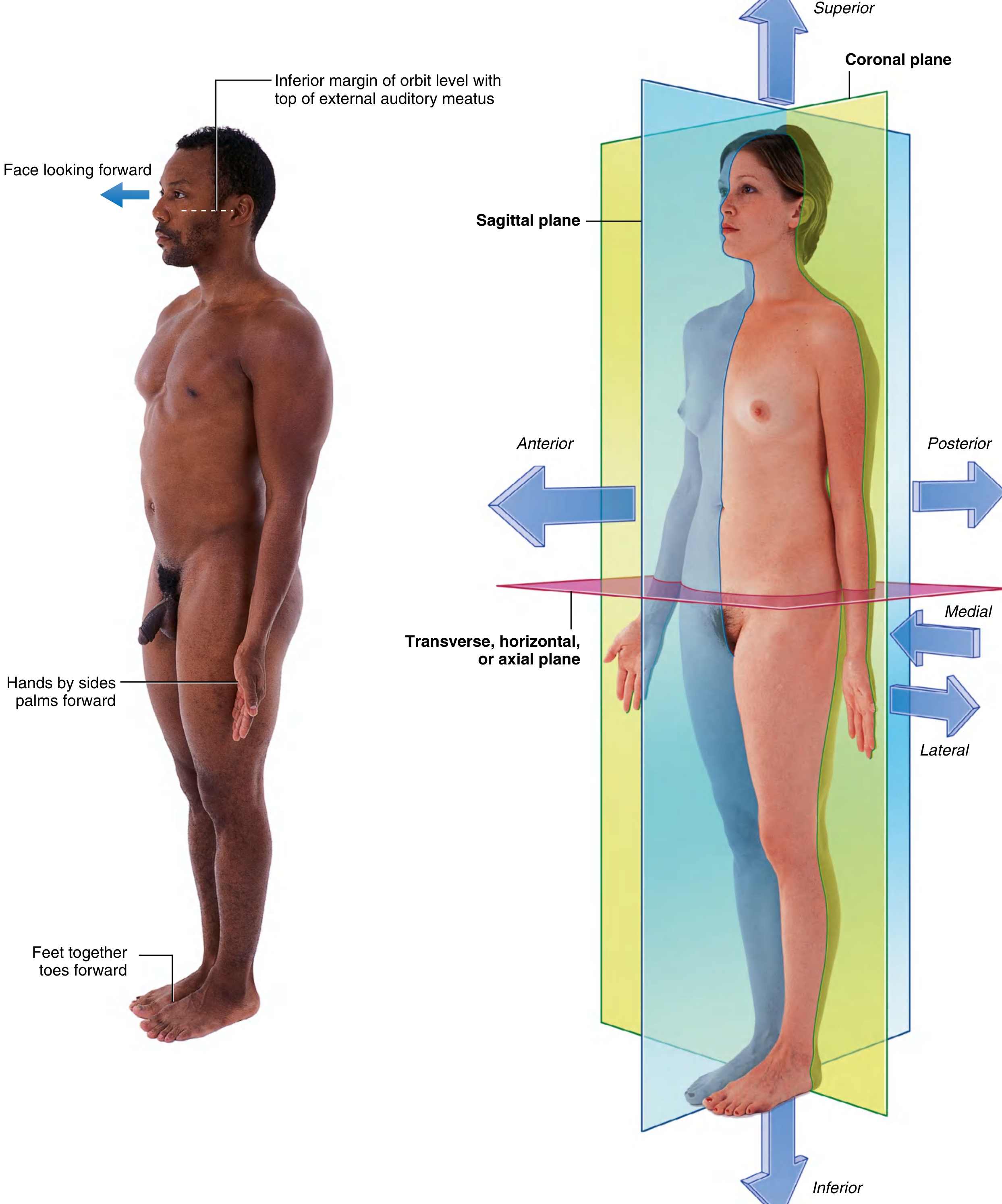
From Gray's Anatomy for Students - The Anatomical Position, Planes, and Terms of Location
There are 3 major planes through which the body is divided:
1. Sagittal Plane (Left / Right halves)
- Direction: Vertical, runs from front to back
- Divides into: Left half and right half
- Special version - Midsagittal / Median Plane: Passes exactly through the midline of the body, creating equal left and right halves (through the nose, navel, and spine)
- Any plane parallel to this, but off-center, is called a parasagittal plane
"The plane that passes through the center of the body dividing it into equal right and left halves is termed the median sagittal plane."
- Gray's Anatomy for Students
2. Coronal (Frontal) Plane (Front / Back halves)
- Direction: Vertical, runs side to side
- Divides into: Anterior (front) half and posterior (back) half
- Named after the coronal suture of the skull
- Example: A cut through the shoulders dividing you into a front and back section
"Coronal planes are oriented vertically and divide the body into anterior and posterior parts."
- Gray's Anatomy for Students
3. Transverse (Horizontal / Axial) Plane (Upper / Lower halves)
- Direction: Horizontal, like a belt around the waist
- Divides into: Superior (upper) half and inferior (lower) half
- Perpendicular to both the sagittal and coronal planes
- This is the plane used in CT scans and MRI axial images
"Transverse, horizontal, or axial planes divide the body into superior and inferior parts."
- Gray's Anatomy for Students
Quick Summary Table
| Plane | Also Called | Direction | Divides Into |
|---|---|---|---|
| Sagittal | Median (if midline) | Vertical, front-to-back | Left and Right |
| Coronal | Frontal | Vertical, side-to-side | Anterior (front) and Posterior (back) |
| Transverse | Axial / Horizontal | Horizontal | Superior (upper) and Inferior (lower) |
The 3 Body Axes
Each plane is also associated with a body axis (an imaginary line):
- Vertical (longitudinal) axis - runs head to toe, at the intersection of sagittal and coronal planes
- Sagittal axis - runs front to back, at the intersection of sagittal and transverse planes
- Transverse (horizontal) axis - runs side to side, at the intersection of coronal and transverse planes
(Source: THIEME Atlas of Anatomy - General Anatomy and Musculoskeletal System)
Why Does This Matter?
These planes are used every day in medicine:
- Surgeons plan cuts along specific planes
- Radiologists describe CT/MRI images as axial (transverse), sagittal, or coronal views
- Anatomists describe the location of organs and structures relative to these planes
In simple terms like anterior or dorsal
Here's a simple breakdown of the key anatomical direction terms used when the body is divided:
Anterior vs. Posterior (Dorsal)
| Term | Meaning | Example |
|---|---|---|
| Anterior (= Ventral) | Front of the body | Chest, belly button, nose |
| Posterior (= Dorsal) | Back of the body | Spine, shoulder blades, buttocks |
Think: Anterior = front door / Posterior = back door
Superior vs. Inferior
| Term | Meaning | Example |
|---|---|---|
| Superior | Upper / toward the head | Head is superior to the chest |
| Inferior | Lower / toward the feet | Feet are inferior to the knees |
Think: Superior = higher up / Inferior = lower down
Medial vs. Lateral
| Term | Meaning | Example |
|---|---|---|
| Medial | Toward the midline | Nose is medial (center of face) |
| Lateral | Away from the midline | Ears are lateral (sides of head) |
Think: Medial = middle / Lateral = left or right side
Proximal vs. Distal
| Term | Meaning | Example |
|---|---|---|
| Proximal | Closer to the origin/body | Shoulder is proximal to the hand |
| Distal | Farther from the body | Fingers are distal to the elbow |
Mainly used for arms and legs
Superficial vs. Deep
| Term | Meaning | Example |
|---|---|---|
| Superficial | Near the surface of the body | Skin is superficial |
| Deep | Far from the surface | Heart is deep to the ribs |
Simple Visual Summary
         HEAD
          ↑
       SUPERIOR
          |
LATERAL ←-+→ LATERAL
(sides)   |   (sides)
       INFERIOR
          ↓
         FEET

FRONT = ANTERIOR (ventral)
BACK  = POSTERIOR (dorsal)
CENTER = MEDIAL
These terms are used together - for example, a doctor might say "the pain is in the anterior, inferior, medial region of the chest" - meaning the front, lower, center part of the chest. Once you know these 6 pairs of terms, you can locate any structure in the body precisely!
Cut into middle perfect all organs made half means how it is cutting
You're asking about the Midsagittal (Median) Plane - a cut straight down the exact middle of the body, making two equal halves with every organ split perfectly.
Finding Sources
Finding Sources
Searching the Web
midsagittal median plane cut human body equal halves organs brain heart spine diagram
Loading Image
Finding Sources
Loading Image
Great question! What you're describing is called the Midsagittal (Median) Plane - a single cut from head to toe, right down the exact center, making two perfectly equal halves.
The Cut: Midsagittal / Median Plane
        TOP OF HEAD
             |
    ← LEFT   |   RIGHT →
             |
        _____|_____
       |     |     |
       |  L  |  R  |
       |  E  |  I  |
       |  F  |  G  |
       |  T  |  H  |
       |     |  T  |
       |_____|_____|
             |
        FEET
The cut goes straight down the midline - through the nose, mouth, spine, navel - splitting the body into a mirror-image left half and right half.
What Happens to Each Organ?
Here's the key: the body has two types of organs - those that are paired (one on each side) and those that are single but symmetric (sit in the middle):
Paired Organs - Each Half Gets ONE Complete Organ
| Organ | Left Half Gets | Right Half Gets |
|---|---|---|
| Lungs | Left lung (whole) | Right lung (whole) |
| Kidneys | Left kidney (whole) | Right kidney (whole) |
| Eyes | Left eye (whole) | Right eye (whole) |
| Ears | Left ear (whole) | Right ear (whole) |
| Hands/Arms | Left arm (whole) | Right arm (whole) |
| Legs/Feet | Left leg (whole) | Right leg (whole) |
| Testes/Ovaries | Left gonad | Right gonad |
These organs are naturally on opposite sides, so each half gets a complete, working copy.
Single Central Organs - Cut Exactly in Half
| Organ | What Happens |
|---|---|
| Brain | Cut into Left hemisphere + Right hemisphere |
| Heart | Cut into Left side + Right side |
| Nose | Cut into Left nostril + Right nostril |
| Spine (backbone) | Cut down the middle, each half gets vertebrae halves |
| Spinal cord | Split into left + right halves |
| Tongue | Split into left + right halves |
| Lips/Mouth | Split down the center |
| Navel (belly button) | Split in two |
Organs That Are NOT Perfectly in the Middle (Asymmetric)
These are not cut equally because they sit more to one side:
| Organ | Where It Sits | Result |
|---|---|---|
| Stomach | Slightly left of center | Goes mostly to LEFT half |
| Liver | Mostly right side | Goes mostly to RIGHT half |
| Appendix | Lower right | Goes to RIGHT half |
| Spleen | Left side | Goes to LEFT half |
| Aorta | Slightly left of center | Split down its wall |
Simple Way to Picture It
Imagine taking a human body and cutting it like a book opened flat - the spine is in the middle, and you cut right down the spine's center. Both halves are like mirror images of each other.
LEFT HALF          RIGHT HALF
---------          ----------
Left eye     |     Right eye
Left nostril |     Right nostril
Left brain   |     Right brain
Left heart   |     Right heart
Left lung    |     Right lung
Left kidney  |     Left kidney  ← wait...
             |
  (stomach mostly on left side)
  (liver mostly on right side)
This is why the human body has bilateral symmetry - the outside looks like a mirror image, but the inside is slightly asymmetric because organs like the liver, stomach, heart tip, and spleen are shifted slightly to one side.
This is a shared conversation. Sign in to Orris to start your own chat.