
Paracetamol
Reading File
Paracetamol (acetaminophen) is a widely used analgesic and antipyretic. It works centrally by inhibiting prostaglandin synthesis in the CNS, lacks significant peripheral anti-inflammatory activity, and is generally well tolerated at therapeutic doses. Overdose causes hepatotoxicity via accumulation of the toxic metabolite NAPQI.
Searching sources...
Finding Sources
Finding Sources
Searching PubMed
paracetamol acetaminophen pharmacology
Now let me read the key textbook sections - Lippincott Pharmacology, Parikh's Forensic Medicine (for toxicity), and the Forensic Medicine Toxicology entry:
Reading File
Reading File
Reading File
Let me get the rest of the toxicology content and the image URL:
Reading File
Reading File
Now let me fetch the paracetamol metabolism flowchart image and also grab the stages of poisoning table:
Reading File
Loading Image
Reading File
I now have comprehensive information. Here is a full, well-organised summary of paracetamol from the textbooks.
Paracetamol (Acetaminophen)
Brand names: Tylenol, Ofirmev (IV formulation)
Class: Non-opioid analgesic / antipyretic
Metabolite of: Phenacetin
Mechanism of Action
Paracetamol works primarily within the CNS by inhibiting prostaglandin synthesis. Unlike NSAIDs, it has minimal peripheral anti-inflammatory activity. It also inhibits nitric oxide synthesis in murine spinal cord models. The CNS-central action accounts for its analgesic and antipyretic effects without the gastric or platelet-related side effects of NSAIDs.
Dosage
| Category | Adults | Children |
|---|---|---|
| Therapeutic dose | 500-1000 mg/dose (max 4 g/day) | 10-15 mg/kg/dose (max 60 mg/kg/day) |
| Toxic dose | ≥150 mg/kg (single ingestion) | ≥150-200 mg/kg |
| Lethal dose | >350 mg/kg | >250-350 mg/kg |
- The Essentials of Forensic Medicine and Toxicology, 36th ed., p. 543
Pharmacokinetics
- Rapidly absorbed from the GI tract; peak plasma concentration in 30-60 minutes
- Plasma half-life ~2 hours under normal therapeutic conditions
Metabolism Pathway
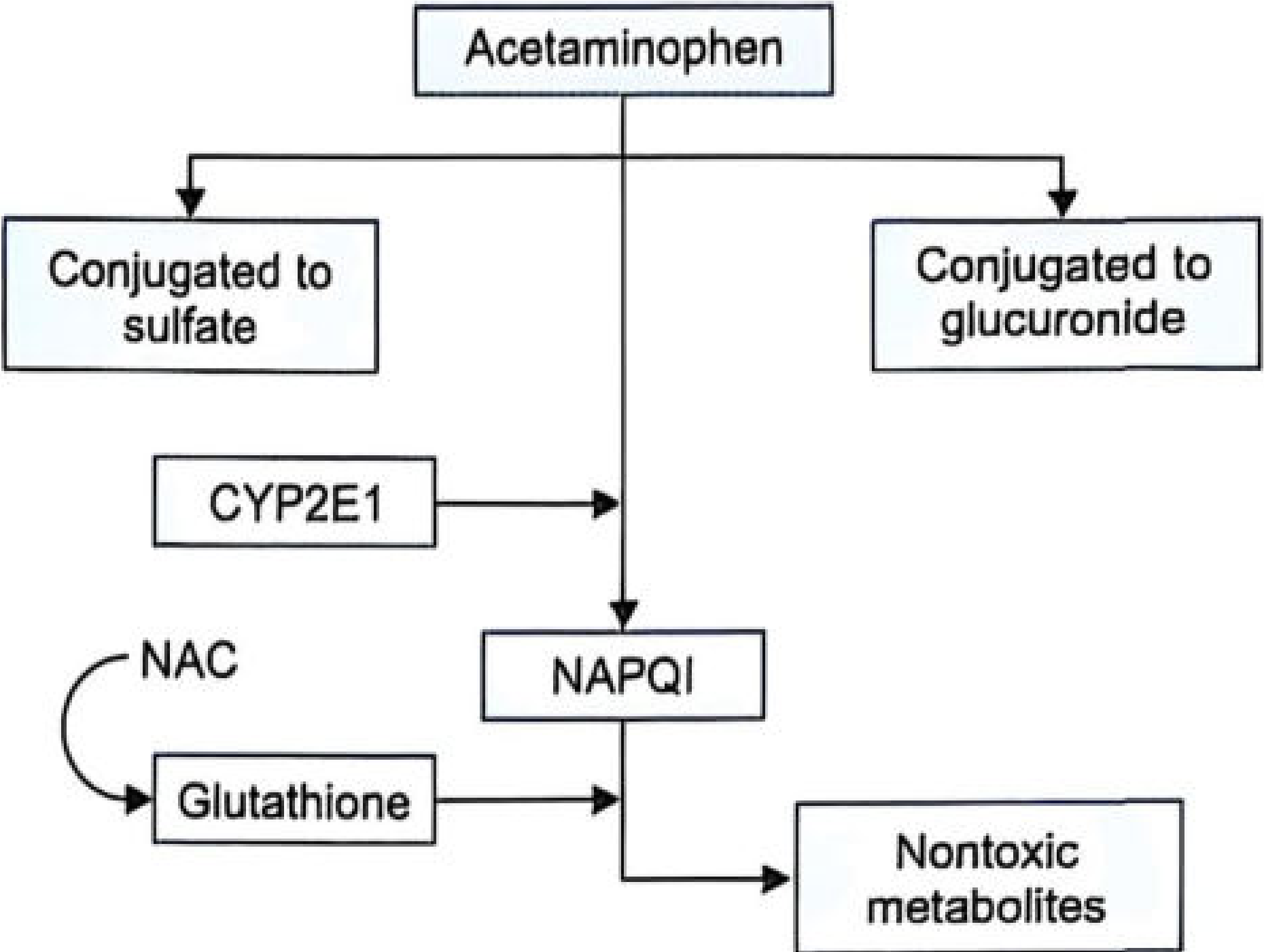
Fig. 31.1: Metabolism pathway of paracetamol - The Essentials of Forensic Medicine and Toxicology, 36th ed.
- ~90% - Conjugated with glucuronic acid and sulfuric acid → non-toxic metabolites (safe excretion)
- ~10% - Metabolized via CYP2E1 → NAPQI (N-acetyl-p-benzoquinone imine), a highly reactive toxic metabolite
Under normal conditions: NAPQI is neutralized by glutathione → cysteine and mercapturic acid conjugates (safely excreted)
In overdose: Hepatic glutathione reserves are exhausted → NAPQI accumulates → covalent binding to liver cell proteins, especially in the centrilobular region → oxidative stress and hepatocyte necrosis
Clinical Features of Paracetamol Poisoning
Stages
| Stage | Timeframe | Clinical Features |
|---|---|---|
| Stage I | 0-24 hours | Nausea, vomiting, anorexia, malaise, pallor, diaphoresis. Often asymptomatic; LFTs usually normal. Deceptively mild - can give false sense of security. |
| Stage II | 24-72 hours | Right upper quadrant pain, elevated LFTs (ALT, AST), bilirubin rises. Patient relatively pain-free despite ongoing liver damage. Anorexia, epigastric pain, malaise. |
| Stage III | 72-96 hours (peak hepatotoxicity) | Fulminant hepatic failure, coagulopathy, encephalopathy. Acute kidney injury, metabolic acidosis, hypoglycaemia, gastrointestinal haemorrhage, cerebral oedema, cardiomyopathy. |
| Stage IV | 4 days - 2 weeks | Recovery phase: if patient survives Stage III, complete resolution of liver injury typically occurs. |
Key point: In overdose, paracetamol does NOT affect acid-base balance, does NOT stimulate respiration, and does NOT have cardiovascular effects in the early stages - unlike aspirin poisoning.
Fatal dose: Ingestion of ~20 tablets of 500 mg (10 g) is usually fatal within 3-5 days.
Management of Paracetamol Overdose
-
Admission - All suspected overdose patients must be admitted, even if clinically well. A patient appearing well at 12 hours may die of acute hepatic failure up to 5 days later.
-
Gastric lavage - If admitted within 4 hours of ingestion.
-
Activated charcoal - Within 1-2 hours post-ingestion to limit absorption. Note: may reduce effectiveness of oral NAC if given together.
-
N-Acetylcysteine (NAC) - The antidote; most effective within 8-10 hours of overdose (effective up to 16-24 hours):
- Oral NAC: Loading dose 140 mg/kg, then 70 mg/kg every 4 hours. Duration 24-72 hours (6-18 doses). Dilute to ~5% solution.
- IV NAC (FDA-approved protocol): 150 mg/kg over 1 hour → 50 mg/kg over 4 hours → 100 mg/kg over 16 hours (21-hour regimen total). Recommended if vomiting prevents oral administration.
-
Methionine - Oral glutathione precursor: 2.5 g every 4 hours for 4 doses (10 g total over 12 hours). Useful if NAC unavailable.
-
Supportive care for hepatic necrosis complications: IV dextrose (hypoglycaemia), IV bicarbonate (metabolic acidosis), Vitamin K1, whole blood/plasma (coagulopathy). Fluid restriction to <2.5 L/day (paracetamol causes fluid retention).
-
Haemodialysis - For acute renal failure, or severe overdose with metabolic complications.
-
Liver transplantation - Indications: severe metabolic acidosis, prothrombin time >100 seconds, or serum creatinine >300 µmol/L (King's College Criteria).
Rumack-Matthew Nomogram - Essential tool for guiding treatment decisions based on serum paracetamol level and time since ingestion.
Postmortem Findings
- Remains of paracetamol tablets in stomach
- Centrilobular hepatic necrosis
- Acute tubular necrosis of kidneys
- Skin rashes, jaundice
- Petechial haemorrhages, GI bleeding
- Myocardial damage, cerebral oedema
Drug Interactions / Risk Factors for Increased Hepatotoxicity
- Isoniazid, rifampicin, barbiturates (enzyme inducers increase CYP2E1 activity → more NAPQI)
- Chronic alcohol use
- AIDS / immunocompromised states
- Long-term therapeutic use can cause toxic hepatitis in these high-risk groups
Medicolegal Notes
- Poisoning is usually accidental (overdosage, indiscriminate use as analgesic/antipyretic)
- More common in children
- Suicidal ingestion is notable because patients who attempt suicide with paracetamol often regret the choice due to the prolonged and painful course before death
- Common in USA and UK; relatively less common in India
Sources: The Essentials of Forensic Medicine and Toxicology 36th ed. (2026), p. 541-543 | Parikh's Textbook of Medical Jurisprudence Forensic Medicine and Toxicology, p. 714-715 | P C Dikshit Textbook of Forensic Medicine and Toxicology | Bailey and Love's Short Practice of Surgery 28th ed.
This is a shared conversation. Sign in to Orris to start your own chat.