Portal hypertension-Nelson
Portal hypertension -Nelson
"portal hypertension" AND "children"
python3 -c " import pdfplumber pdf_path = '/home/daytona/workspace/attachments/e5094feb-143c-412a-858e-a08466b51dce/Part XVI -The Digestive System - Nelson 2024 (1).pdf' with pdfplumber.open(pdf_path) as pdf: print(f'Total pages: {len(pdf.pages)}') # Search for portal hypertension section for i, page in enumerate(pdf.pages): text = page.extract_text() if text and 'portal hypertension' in text.lower(): print(f'--- Page {i+1} ---') print(text[:200]) print() "
python3 << 'EOF' from pypdf import PdfReader pdf_path = '/home/daytona/workspace/attachments/e5094feb-143c-412a-858e-a08466b51dce/Part XVI -The Digestive System - Nelson 2024 (1).pdf' reader = PdfReader(pdf_path) print(f'Total pages: {len(reader.pages)}') # Find pages with portal hypertension for i, page in enumerate(reader.pages): text = page.extract_text() or '' if 'portal hypertension' in text.lower(): print(f'Page {i+1}: {text[:100]}') EOF
python3 << 'EOF' from pypdf import PdfReader pdf_path = '/home/daytona/workspace/attachments/e5094feb-143c-412a-858e-a08466b51dce/Part XVI -The Digestive System - Nelson 2024 (1).pdf' reader = PdfReader(pdf_path) # Pages 290-295 (0-indexed: 289-294) cover Chapter 415 Portal Hypertension for i in range(289, 296): page = reader.pages[i] text = page.extract_text() or '' print(f'\n======= PAGE {i+1} =======') print(text) EOF
python3 << 'EOF' from pypdf import PdfReader pdf_path = '/home/daytona/workspace/attachments/e5094feb-143c-412a-858e-a08466b51dce/Part XVI -The Digestive System - Nelson 2024 (1).pdf' reader = PdfReader(pdf_path) # Page 289 (0-indexed 288) - the start of Chapter 415 for i in range(288, 291): page = reader.pages[i] text = page.extract_text() or '' print(f'\n======= PAGE {i+1} =======') print(text) EOF
portal hypertension varices children pediatric esophageal splenomegaly
Portal Hypertension and Varices
Definition
Etiology
Table 415.1 — Causes of Portal Hypertension
| Category | Causes |
|---|---|
| Extrahepatic (Prehepatic) | Portal vein agenesis/atresia/stenosis; Portal vein thrombosis or cavernous transformation; Splenic vein thrombosis; AV fistula (↑ portal flow) |
| Intrahepatic — Hepatocellular | Cirrhosis (most common); Viral hepatitis; Congenital hepatic fibrosis; Wilson disease; α1-antitrypsin deficiency; Glycogen storage disease type IV; Methotrexate/PN hepatotoxicity |
| Intrahepatic — Biliary | Biliary atresia; Cystic fibrosis; Choledochal cyst; Sclerosing cholangitis; Bile duct paucity |
| Intrahepatic — Idiopathic | Idiopathic portal hypertension; Noncirrhotic portal fibrosis |
| Postsinusoidal (Posthepatic) | Budd-Chiari syndrome; Sinusoidal obstruction syndrome (venoocclusive disease) |
- Portal vein thrombosis is the most common cause of extrahepatic portal hypertension. In neonates, causes include omphalitis, umbilical vein catheterization, dehydration, and sepsis. In older children: intraabdominal infection, IBD, celiac disease, PSC, and hypercoagulable states (Factor V Leiden, protein C/S deficiency).
- Cirrhosis is the most common cause of intrahepatic portal hypertension (biliary atresia, autoimmune hepatitis, Wilson disease, α1-AT deficiency, etc.).
- Budd-Chiari syndrome: obstruction of hepatic veins (efferent veins → IVC entry). Causes include inherited/acquired hypercoagulable states (antithrombin III deficiency, protein C/S deficiency, factor V Leiden, PNH, antiphospholipid syndrome), Behçet syndrome, IBD, sarcoidosis, IVC webs.
- Sinusoidal obstruction syndrome (venoocclusive disease): most common hepatic vein obstruction in children; classically post-BMT after total body irradiation ± cytotoxic drugs; also with azathioprine, 6-MP, thioguanine, pyrrolizidine alkaloids.
Pathophysiology
- Portosystemic collaterals develop but fail to fully decompress the portal system because portal flow increases simultaneously
- A hyperdynamic circulation develops: tachycardia, ↑ cardiac output, ↓ systemic vascular resistance, splanchnic vasodilation
- Hepatocellular dysfunction and portosystemic shunting → humoral vasodilators → ↑ plasma volume
- Collateral vessels preferentially form at junctions of absorptive and stratified epithelium (esophagus, anorectal region) → prone to rupture
- Congestive (portal hypertensive) gastropathy: abnormal submucosal AV communications in gastric wall → vascular ectasia → bleeding risk
Clinical Manifestations
| Feature | Details |
|---|---|
| GI Bleeding | Most common presentation (2/3 of children): hematemesis or melena from esophageal varix rupture. Less common: portal gastropathy, gastric antral ectasia, anorectal varices |
| Splenomegaly | Second most common finding; may be the first sign noticed on exam. Most asymptomatic. Beware: >50% of portal vein obstruction patients don't bleed until after age 6 |
| Ascites | Presenting sign in 7–21%; can develop with cirrhosis or new portal vein obstruction |
| Other | Growth impairment; minimal hepatic encephalopathy; impaired quality of life; portal hypertensive biliopathy (bile duct compression by cavernous transformation of portal vein) |
- Children with cirrhosis: 22% risk of first bleed; rises to 38% in those with known varices over 5 years
- Children with biliary atresia: 15–25% have bleeding on long-term follow-up
- NSAIDs and aspirin can precipitate hemorrhage (damage congested gastric mucosa, impair platelet function)
- Coughing during illness can also ↑ intravariceal pressure
Pulmonary Complications
- Hepatopulmonary syndrome (HPS): arterial oxygenation defect from intrapulmonary microvascular dilation (endothelin-1, NO). Occurs in ≥10% with portal HTN. Presents: dyspnea, cyanosis, clubbing, spider nevi.
- Portopulmonary hypertension (PP-HTN): PAP >25 mmHg at rest or LVEDP <15 mmHg. Presents with exertional dyspnea; histology shows pulmonary arteriopathy with laminar intimal fibrosis.
Diagnosis
| Investigation | Findings/Purpose |
|---|---|
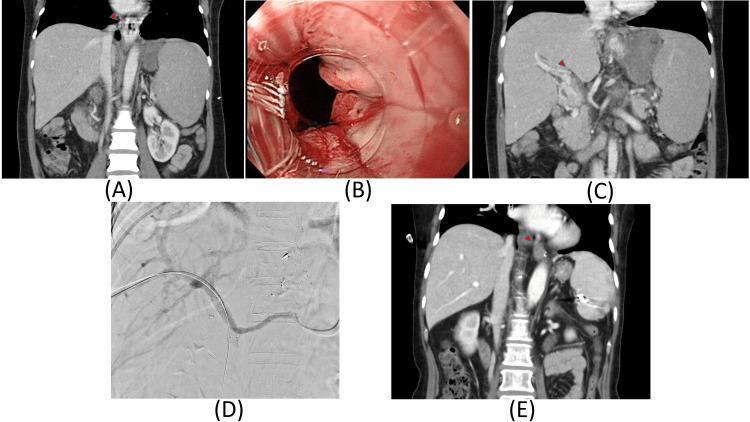
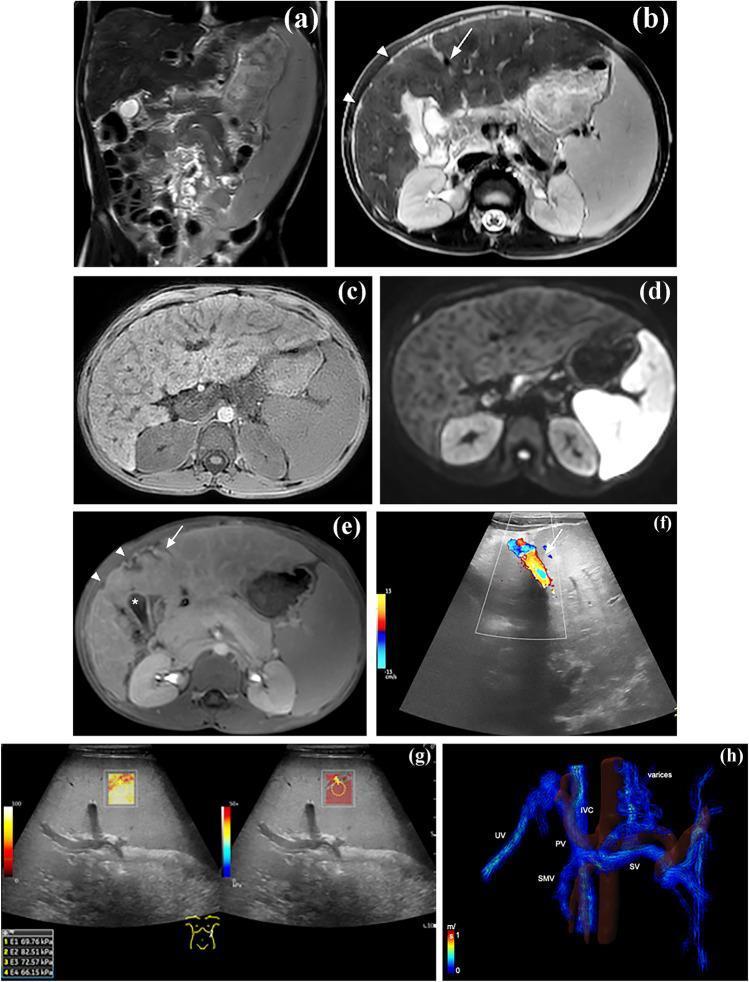
| Doppler ultrasonography | First-line. Demonstrates portal vein patency, direction of flow. Hepatofugal flow (reversal) → associated with variceal bleeding. Detects esophageal varices, cavernous transformation |
| CT / MR angiography | Further anatomical definition; similar information to US but used less often |
| Selective arteriography | Precise mapping of extrahepatic vascular anatomy; useful before surgical decompression planning |
| Endoscopy | Most reliable for detecting esophageal varices and identifying bleeding source. Red spots on varices = strong predictor of imminent hemorrhage. Note: up to 1/3 of bleeding children have a non-variceal source (portal gastropathy, GU ulcers) |
| Bubble echocardiography | For HPS: delayed left-heart appearance of microbubbles after peripheral saline injection demonstrates intrapulmonary shunting |
| Best noninvasive predictors | Platelet count + spleen length (ultrasound) + serum albumin |
Treatment
Acute Variceal Hemorrhage
- IV crystalloid resuscitation → RBC replacement
- Target Hb 7–9 g/dL (avoid over-transfusion — raises portal pressure)
- Correct coagulopathy: Vitamin K, platelets, FFP as needed
- Nasogastric tube (confirm blood, monitor bleeding)
- IV H2 blocker or PPI (reduce gastric erosion risk)
- IV antibiotics (high risk of infectious complications)
| Drug | Dose | Notes |
|---|---|---|
| Vasopressin | 0.33 units/kg bolus over 20 min → 0.33 units/kg/hr or 0.2 units/1.73 m²/min continuous | ↑ splanchnic vascular tone → ↓ portal flow. Side effects: vasoconstriction → impaired cardiac, bowel, renal perfusion; fluid retention |
| Octreotide (preferred) | 1 μg/kg bolus → 1.0–5.0 μg/kg/hr continuous IV | Somatostatin analog; ↓ splanchnic flow with fewer side effects |
15% of children with portal hypertensive bleed will have persistent hemorrhage despite splanchnic vasoconstriction.
- Variceal band ligation — preferred (more effective, fewer side effects than sclerotherapy in adults)
- Sclerotherapy — for smaller children where banding device cannot be used; intra- or paravariceal injection. Complications: bleeding, bacteremia, esophageal ulceration, stricture
- After ligation or sclerosis → repeat endoscopy until varices obliterated
- Sengstaken-Blakemore tube — mechanical compression of esophageal and gastric varices. Rarely used; high complication rate; high rebleed rate on removal; risk of aspiration. Requires sedation/intubation in children. Bridge to definitive procedure only.
Surgical Options
| Procedure | Details |
|---|---|
| Portacaval shunt | Diverts nearly all portal flow to IVC. Significant encephalopathy risk in parenchymal disease |
| Mesocaval / Distal splenorenal shunt | More selective; allows greater hepatopetal flow. Technically challenging in infants (shunt thrombosis risk) |
| Meso-Rex shunt | Superior mesenteric vein → left portal vein bypass. Restores physiologic portal flow. 84% success rate for idiopathic extrahepatic portal vein thrombosis. Improves growth and cognitive function |
| TIPS | Stent between right hepatic vein and right/left portal vein branch. Useful as bridge to transplant. Risks: hepatic encephalopathy, thrombosis |
| Liver transplantation | Definitive therapy for intrahepatic disease/cirrhosis and for HPS. Prior shunt surgery does not preclude transplant (but makes it technically harder) |
Prophylaxis
- β-blockers (propranolol): used extensively in adults — lower cardiac output, induce splanchnic vasoconstriction. Adults: reduces variceal hemorrhage and improves survival. Effect considered when pulse rate reduced by ≥25%. Limited data in children.
- Primary and secondary prevention of variceal bleeding: endoscopic band ligation program after obliteration.
Prognosis
- Portal hypertension from intrahepatic disease has a poor prognosis — usually progressive with deteriorating liver function.
- Focus: prompt treatment of acute bleeding + prevention of recurrence.
- Patients with progressive liver disease + significant varices → ultimately require orthotopic liver transplantation.
- Liver transplantation is the only effective therapy for HPS.
- Also indicated for hepatic vein obstruction and severe venoocclusive disease.