
how hypercalcemia is causing pancreatitis but in pancreatitic paients serum calcium lebal will be low?
Here's the quick answer while I pull up the detailed textbook content:
Hypercalcemia causes pancreatitis by activating trypsinogen prematurely within the pancreas (calcium activates trypsinogen → autodigestion). However, once acute pancreatitis sets in, calcium gets consumed/sequestered in the inflamed peripancreatic fat (saponification - calcium + fatty acids form calcium soaps), so serum levels DROP. The hypercalcemia caused it, but the pancreatitis then consumes the calcium.
Searching sources...
Reading File
Finding Sources
Finding Sources
Searching PubMed
hypercalcemia pancreatitis mechanism calcium
Now let me pull the key detailed passages from the most relevant textbooks:
Reading File
Reading File
Reading File
Excellent! I now have very rich textbook content including an important nuance from Sleisenger & Fordtran. Let me also fetch the pathology image showing fat necrosis/saponification:
Loading Image
Finding Sources
Now let me get the detailed trypsin/calcium mechanism passage from Yamada's:
Reading File
Reading File
I now have comprehensive textbook content from multiple authoritative sources. Here is the full, detailed answer:
Hypercalcemia Causing Pancreatitis - But Serum Calcium Being Low During Pancreatitis
This is a beautifully paradoxical concept that trips up many students. Here's the full explanation broken into two distinct parts:
Part 1: HOW Hypercalcemia CAUSES Pancreatitis
The key is that calcium is a direct activator of trypsinogen inside the pancreas. There are two well-established mechanisms:
Mechanism A - Premature Trypsinogen Activation
The trypsinogen molecule has two calcium-binding sites (Yamada's, p. 1701):
- Site 1 (N-terminal): When calcium binds here at HIGH concentrations, it stabilizes the trypsinogen activation region and facilitates release of the trypsinogen activation peptide (TAP) - this converts trypsinogen to active trypsin prematurely inside the acinar cell, before it even reaches the duodenum.
- Site 2 (opposite the catalytic site): Calcium binding here blocks the trypsin autolysis site - meaning trypsin can't destroy itself and remains active longer.
Normally, calcium levels inside acinar cells are kept very low precisely to prevent this. When serum hypercalcemia floods the extracellular space, high extracellular calcium overloads intracellular calcium pools during acinar stimulation, triggering premature intracellular trypsin activation - leading to autodigestion of the pancreas.
"High extracellular calcium levels can also cause intracellular trypsin activation, possibly by flooding the intracellular calcium pools during acinar cell stimulation."
- Yamada's Textbook of Gastroenterology, 7th ed.
Mechanism B - Calcium Salt Deposits in Pancreatic Ducts
Chronic hypercalcemia (especially from primary hyperparathyroidism) also promotes deposition of calcium salts in the pancreatic duct lumen, causing obstruction and back-pressure → triggering pancreatitis. This also contributes to chronic calcific pancreatitis over time.
"Proposed mechanisms include deposition of calcium salts in the PD lumen and calcium activation of trypsinogen to trypsin within the pancreatic parenchyma."
- Sleisenger & Fordtran's GI and Liver Disease
Mechanism C - Stimulation of Enzyme Secretion
Hypercalcemia also directly stimulates pancreatic enzyme secretion in both humans and animals, increasing the enzymatic load within the gland.
Important caveat: The incidence of pancreatitis is actually low in chronic hypercalcemia - it is acute elevations of serum calcium (e.g., acute calcium infusion in rat models converts trypsinogen to trypsin rapidly) that are more dangerous than sustained chronic elevations. Additional cofactors are likely needed for full-blown pancreatitis.
Part 2: WHY Serum Calcium is LOW During Active Pancreatitis
Once pancreatitis is triggered, serum calcium DROPS. There are two distinct mechanisms for this, and textbooks actually debate their relative importance:
Mechanism 1 - Fat Saponification (Classical Teaching)
The activated lipase released during pancreatitis causes fat necrosis in the peripancreatic fat, omentum, and mesentery. During this process:
"Fat necrosis, triggered by lipase activity, leads to saponification - a process in which fatty acids combine with calcium to form insoluble calcium soaps."
- Robbins & Cotran Pathologic Basis of Disease
The released fatty acids chemically bind serum calcium to form insoluble calcium soaps (calcium palmitate, calcium stearate), which precipitate out of the bloodstream as white chalky deposits (visible macroscopically as "chalky white flecks" in the abdomen). This sequesters calcium out of the circulation.
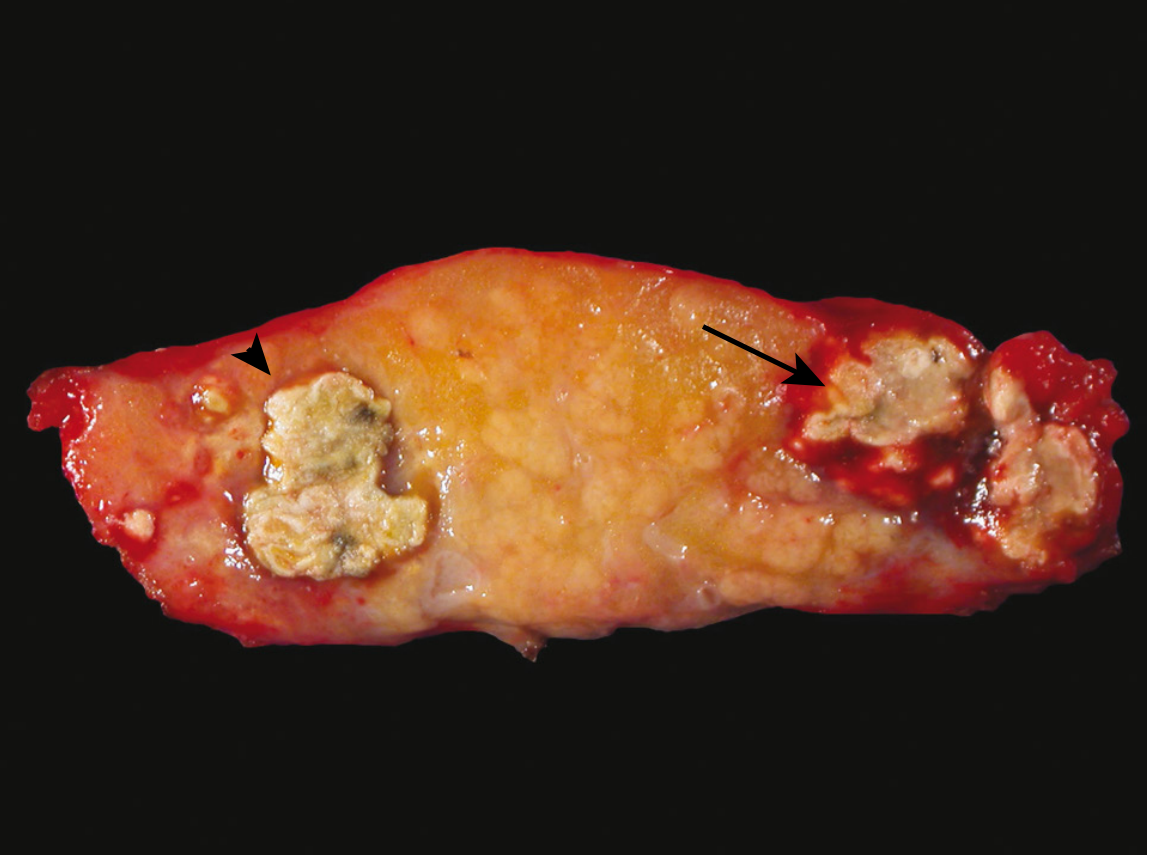
Mechanism 2 - Hypoalbuminemia with Third-Spacing (More Important per Sleisenger & Fordtran)
This is the more nuanced and arguably more important mechanism per Sleisenger & Fordtran:
"The decrease in serum calcium often seen in patients with AP is mainly related to the decreased serum albumin... the decrease in calcium is a marker of severity because it is carried bound to albumin-rich intravascular fluid that extravasates to the peritoneum. Decreased serum calcium is NOT from saponification."
- Sleisenger & Fordtran's GI and Liver Disease
In severe pancreatitis, massive third-spacing occurs - albumin-rich fluid pours into the peritoneal cavity. Since ~40-45% of serum calcium is bound to albumin, when albumin drops, total serum calcium drops proportionally. The ionized (free) calcium may remain relatively normal initially.
Summary Table
| Aspect | What Happens | Mechanism |
|---|---|---|
| Before pancreatitis | Serum Ca²⁺ HIGH (hypercalcemia) | Primary hyperparathyroidism, malignancy, sarcoid, etc. |
| Hypercalcemia triggers | Premature trypsinogen activation inside acinar cells | Ca²⁺ binds trypsinogen N-terminal site → releases TAP → active trypsin → autodigestion |
| Also triggers | Duct obstruction | Ca²⁺ salts deposit in pancreatic duct |
| During pancreatitis | Serum Ca²⁺ LOW (hypocalcemia) | 1. Fat saponification: Ca²⁺ + fatty acids → calcium soaps; 2. Hypoalbuminemia from third-spacing |
| Clinical significance | Serum Ca²⁺ <8 mg/dL = bad prognosis | Part of Ranson's criteria for severity |
Clinical Pearl - Ranson's Criteria
Hypocalcemia (serum Ca < 8 mg/dL at 48 hours) is one of Ranson's criteria for predicting severity of acute pancreatitis. So the very hypocalcemia that develops is a sign that the disease has become severe - it reflects massive fluid third-spacing and extensive fat necrosis/saponification.
Sources:
- Yamada's Textbook of Gastroenterology, 7th ed. - "Trypsin and calcium" section
- Sleisenger & Fordtran's GI and Liver Disease - "Hypercalcemia" and "Standard Blood Tests" sections
- Robbins & Cotran Pathologic Basis of Disease - "Morphology" of acute pancreatitis
- Henry's Clinical Diagnosis and Management by Laboratory Methods - Complications of AP
This is a shared conversation. Sign in to Orris to start your own chat.