
Why the eyes can be swollen
Swollen eyes (periorbital edema) can result from many causes, ranging from minor irritation to serious systemic disease. Here are the main categories:
Searching sources...
Reading File
Searching the Web
causes of swollen eyes periorbital edema
Finding Sources
Finding Sources
Reading File
Reading File
Loading Image
Here is a thorough breakdown of why the eyes can become swollen (periorbital/eyelid edema), drawing from multiple medical textbooks:
Why Eyes Can Be Swollen (Periorbital Edema)
The core mechanism is always the same: fluid accumulates in the loose connective tissue around the eye socket due to inflammation, infection, obstruction, or systemic fluid shifts. The periorbital tissue is especially prone to swelling because it is very loose and distensible.
1. Infections
These are among the most common causes, especially in children:
-
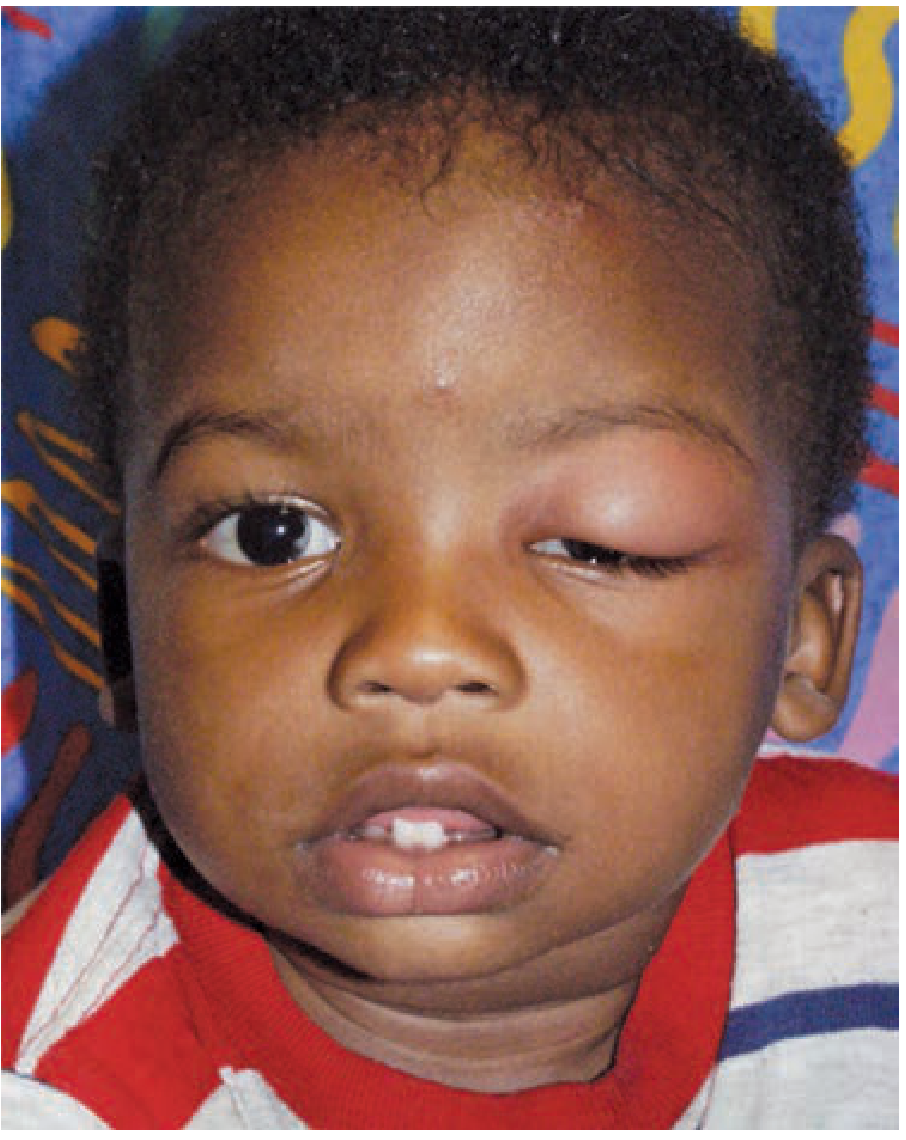
Periorbital (preseptal) cellulitis - Bacterial infection of the eyelid and skin around the eye, without involvement of the orbit itself. Causes erythema, warmth, tenderness, and swelling of the eyelid. Most common pathogens are S. pneumoniae and Streptococcus pyogenes. Can arise from conjunctivitis, insect bites, small scratches, dacryocystitis, or spread from sinusitis.Preseptal cellulitis - eyelid edema and erythema without orbital involvement (Tintinalli's Emergency Medicine)
-
Orbital cellulitis - More serious, deeper infection behind the orbital septum. Causes eyelid edema, erythema, warmth, tenderness, plus proptosis, restricted eye movements, and pain on attempted movement. Requires urgent treatment.
-
Conjunctivitis (pink eye) - Viral or bacterial inflammation of the conjunctiva causes redness, discharge, and eyelid swelling.
-
Hordeolum (stye) - Acute bacterial abscess (usually Staphylococcus) of an eyelid gland, causing a localized, tender swelling. Can progress to preseptal cellulitis.
-
Chalazion - Chronic, non-infectious inflammation from a blocked meibomian gland. Presents as a firm, often non-tender nodule within the eyelid.
-
Dacryocystitis / Dacryoadenitis - Infection of the tear sac or lacrimal gland, causing medial or lateral eyelid swelling respectively.
-
Sinusitis - Especially ethmoid sinusitis. Reactive edema of the eyelids can appear upon waking and regress during the day. Persistent unilateral periorbital edema suggests cellulitis.
-
Infectious mononucleosis - Can cause periorbital edema in early stages.
2. Allergic Reactions
- Allergic conjunctivitis - Triggers (pollen, dust mites, pet dander, cosmetics) cause mast cell degranulation, histamine release, and local vasodilation with fluid leakage, producing puffy, red, itchy eyes. Usually bilateral and associated with watery discharge.
- Angioedema - Sudden, deeper swelling from IgE-mediated or bradykinin-mediated mechanisms. Can be dramatic and rapid in onset.
- Contact dermatitis - Reaction to eye makeup, eye drops, or topical creams causes localized eyelid swelling and redness.
3. Trauma
- Any blunt injury near the eye socket causes capillary leakage and inflammatory fluid accumulation ("black eye" / ecchymosis with edema). Foreign bodies lodged in the fornix (especially in contact lens wearers) can also cause eyelid swelling.
4. Systemic / Medical Conditions
These cause bilateral periorbital swelling, often most prominent in the morning (because fluid redistributes when lying flat):
- Nephrotic syndrome - Massive protein loss in urine lowers plasma oncotic pressure, causing fluid to leak into tissues. Facial and periorbital swelling is a hallmark, contrasting with heart failure where swelling is predominantly dependent (ankles/legs). Harrison's Principles of Internal Medicine notes: "facial, eyelid, and periorbital swelling is observed in nephrotic syndrome."
- Heart failure - Fluid retention can eventually cause facial swelling, though dependent edema (ankles) is more typical.
- Hypothyroidism / Myxedema - Non-pitting edema due to glycosaminoglycan deposition in tissues, causing puffiness around the eyes.
- Graves' disease / Thyroid eye disease - Infiltrative immune-mediated inflammation of orbital fat and muscles causes periorbital edema and conjunctival swelling (chemosis), along with proptosis.
- Hypoalbuminemia (from liver disease, malnutrition) - Reduced oncotic pressure leads to tissue edema including periorbital area.
5. Parasitic / Tropical Infections
- Trichinosis - Violaceous (purplish) periorbital edema is a characteristic finding.
- Loiasis (Calabar swelling) - A filarial worm infection causing migratory localized swellings including around the eye.
- Gnathostomiasis - Another parasitic cause of eyelid edema.
(Fitzpatrick's Dermatology)
6. Tumors / Orbital Masses
- Orbital lymphoma, hemangioma, lymphangioma, schwannoma, mucocele - Can all cause periorbital swelling by occupying space within the orbit and obstructing venous/lymphatic drainage.
- Sebaceous carcinoma - Should be suspected in older patients with recurrent, unilateral chalazia or eyelid thickening.
7. Non-Medical / Lifestyle Causes
- Sleep deprivation and fatigue - Fluid shifts and reduced lymphatic clearance.
- Crying - Increased fluid production overwhelms drainage temporarily.
- High salt intake - Promotes fluid retention throughout the body, including periorbital tissue.
- Alcohol - Causes vasodilation and fluid retention.
- Aging - Weakening of orbital septum allows normal orbital fat to prolapse forward ("bags under the eyes") - this is not true edema but looks similar.
Key Points for Distinguishing Causes
| Feature | Suggests |
|---|---|
| Unilateral, red, warm, painful | Infection or trauma |
| Bilateral, morning predominance, worse when lying flat | Systemic (renal, cardiac, hepatic) |
| Itchy, watery, bilateral | Allergic |
| Violaceous (purple) | Trichinosis, dermatomyositis |
| With proptosis + restricted eye movement | Orbital cellulitis or orbital mass |
| Recurrent, non-tender nodule | Chalazion |
Sources: Tintinalli's Emergency Medicine, The Wills Eye Manual, Harrison's Principles of Internal Medicine (22nd ed.), Fitzpatrick's Dermatology, Schwartz's Principles of Surgery
This is a shared conversation. Sign in to Orris to start your own chat.