
Cpr compression cm to
Reading File
Searching the Web
CPR chest compression depth cm adults children infants 2025 guidelines
Finding Sources
Here is a concise summary of CPR chest compression depths by age group, per current guidelines:
CPR Compression Depth (by Age)
| Patient | Depth | Notes |
|---|---|---|
| Adults | 5–6 cm (≈2–2.4 in) | Not >6 cm; rate 100–120/min |
| Children (1 yr → puberty) | ≥5 cm (~1/3 AP chest depth) | ~2 in |
| Infants (<1 year) | ≥4 cm (~1/3 AP chest depth) | ~1.5 in |
Key Points
- Adults: Target 5–6 cm. Going deeper than 6 cm increases injury risk without survival benefit. — Tintinalli's Emergency Medicine
- Children: At least 5 cm, or at least one-third the anterior-posterior (AP) chest depth — whichever is deeper. — Miller's Anesthesia
- Infants: At least 4 cm, or at least one-third the AP chest depth. — Miller's Anesthesia
- Rate: 100–120 compressions/min for all ages
- Allow full chest recoil between compressions; minimize interruptions
2025 Pediatric Update (AHA/AAP)
The 2025 AHA/AAP Pediatric BLS guidelines maintained these depth targets but eliminated the 2-finger technique for infant compressions — now recommending the 1-hand or 2 thumb-encircling hands technique, which is more effective at achieving proper depth.
Create a note about Defibrillator
Asking for Preferences
What format should the note be in? · Who is the audience / what level of detail?
Why Defibrillator name is Defibrillator
Great question! The name comes directly from what the device does.
Why Is It Called a "Defibrillator"?
The Word Breakdown
| Part | Origin | Meaning |
|---|---|---|
| De- | Latin prefix | "to reverse" or "to undo" |
| Fibrillation | Latin fibrilla ("little fiber") | chaotic, rapid, uncoordinated twitching of heart muscle fibers |
| -or | Latin suffix | "a device/agent that performs an action" |
So literally: "a device that reverses fibrillation."
What Is Fibrillation?
The heart is made of muscle fibers. Normally, they contract in a coordinated rhythm. In fibrillation, those fibers fire chaotically and out of sync - the heart quivers instead of pumping, so no blood moves.
There are two types:
- Ventricular fibrillation (VF) - the lower chambers quiver - immediately life-threatening
- Atrial fibrillation (AF) - the upper chambers quiver - serious but not immediately fatal
What the Defibrillator Does
It delivers a controlled electric shock that simultaneously depolarizes all heart muscle cells at once - essentially hitting a "reset button." This momentarily stops all electrical activity, giving the heart's natural pacemaker (the sinoatrial node) a chance to re-establish a normal, coordinated rhythm.
So the name is a perfect description:
De (undo) + fibrillation (the chaotic quivering) = Defibrillator
The term has been used in medicine since the 1930s, when the first experimental defibrillators were developed by researchers like Carl Wiggers and Claude Beck, who performed the first successful human defibrillation in 1947.
Create a notes about Defibrillator
Let me clarify the format before I start creating this for you.
Asking for Preferences
What format should the note be in? · What level / audience is this for?
GUIDELINES AND MANAGEMENT OF PERIPHERAL IV CATHETERS
Asking for Preferences
What format do you want this in? · Who is the target audience?
Endocrine vs exocrine
Finding Sources
Searching the Web
endocrine vs exocrine glands difference comparison
Reading File
Endocrine vs. Exocrine Glands
The fundamental difference is how and where they deliver their secretions.
The Core Distinction
| Feature | Endocrine | Exocrine |
|---|---|---|
| Ducts | No ducts ("ductless") | Has ducts |
| Secretion goes to | Bloodstream or surrounding tissue | Body surface or internal cavity/lumen |
| Secretion type | Hormones | Enzymes, mucus, sweat, bile, etc. |
| Target | Distant organs via blood | Local area via duct |
| Speed of action | Slower (travels through blood) | Faster (direct delivery) |
| Regulation | Feedback loops (e.g., hypothalamus-pituitary) | Neural or local stimuli |
Etymology (Name Origins)
- Endo- = Greek for "within" → secretes into the body (bloodstream)
- Exo- = Greek for "outside" → secretes out through a duct to a surface
- -crine = Greek krinein = "to separate/secrete"
Endocrine Glands - Examples
These release hormones directly into the bloodstream:
| Gland | Hormone(s) | Function |
|---|---|---|
| Pituitary | GH, TSH, ACTH, LH, FSH | Master regulator |
| Thyroid | T3, T4 | Metabolism |
| Adrenal | Cortisol, Adrenaline | Stress response |
| Pancreas (islets) | Insulin, Glucagon | Blood sugar |
| Pineal | Melatonin | Sleep-wake cycle |
| Parathyroid | PTH | Calcium regulation |
| Gonads | Estrogen, Testosterone | Reproduction |
Exocrine Glands - Examples
These release secretions through ducts onto surfaces:
| Gland | Secretion | Destination |
|---|---|---|
| Salivary glands | Saliva (amylase) | Oral cavity |
| Pancreas (acinar cells) | Digestive enzymes | Small intestine (duodenum) |
| Sweat glands | Sweat | Skin surface |
| Sebaceous glands | Sebum (oil) | Skin surface |
| Liver | Bile | Duodenum via bile duct |
| Lacrimal glands | Tears | Eye surface |
| Mammary glands | Milk | Nipple surface |
| Bronchial glands | Mucus | Airway lumen |
Mixed Glands (Both Functions)
Some organs have both endocrine and exocrine components:
- Pancreas - the most classic example
- Exocrine (85-90%): acinar cells produce digestive enzymes (lipase, amylase, proteases) delivered to the duodenum
- Endocrine (1-2%): islets of Langerhans produce insulin and glucagon released into the blood
- Liver - exocrine (bile) + endocrine (IGF-1, angiotensinogen)
- Gonads - exocrine (sperm/eggs) + endocrine (sex hormones)
How Endocrine Signaling Works
Hormones released into the blood travel to target cells that have specific receptors. Only cells with matching receptors respond - this is what allows one hormone to act on distant, specific organs despite circulating everywhere.
"Endocrine glands release their secretory product, which is termed a hormone, into the bloodstream or surrounding tissue, by the process of incretion." - Color Atlas of Human Anatomy, Vol. 2
With Diagram
Finding Sources
Reading File
Loading Image
Reading File
Loading Image
Here is the full comparison with diagrams from the Color Atlas of Human Anatomy:
Endocrine vs. Exocrine Glands - With Diagrams
Diagram 1 - Exocrine Secretory Mechanisms
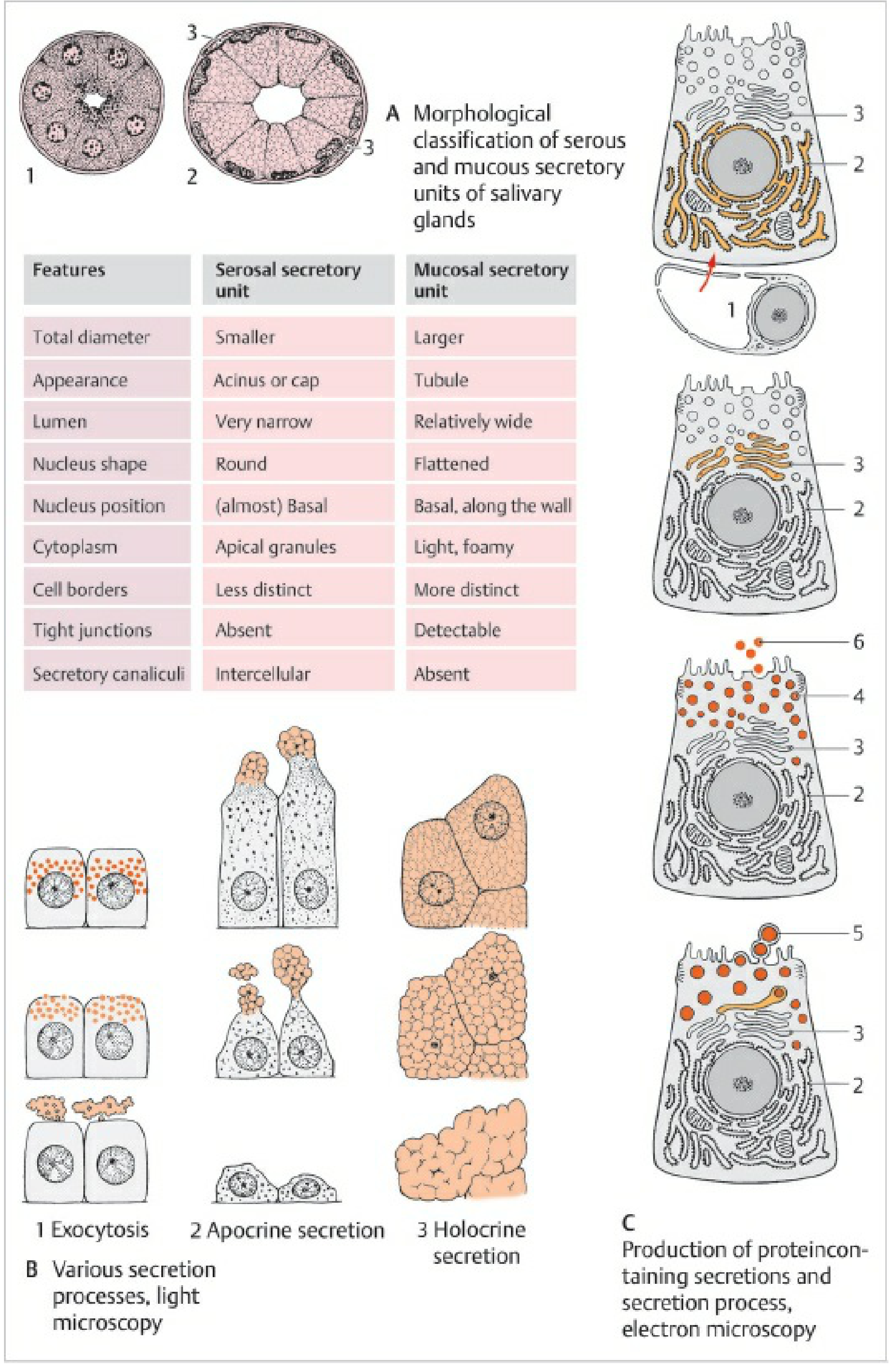
Fig. 9.2 - Light microscopic classification of exocrine secretory units (Color Atlas of Human Anatomy, Vol. 2)
This diagram shows:
- (A) Serous vs. mucous secretory unit morphology - serous cells have apical granules and narrow lumen; mucous cells have light/foamy cytoplasm and wider lumen
- (B) The 3 secretion mechanisms of exocrine glands:
- Exocytosis (merocrine) - vesicle fuses with membrane, releases contents, cell remains intact (most glands)
- Apocrine secretion - part of the cell buds off with the secretion (e.g., mammary gland fat)
- Holocrine secretion - entire cell disintegrates into secretion (e.g., sebaceous glands)
- (C) Electron microscopy of secretory protein production inside the cell (rough ER → Golgi → vesicles → exocytosis)
Diagram 2 - Endocrine Gland Function and Location
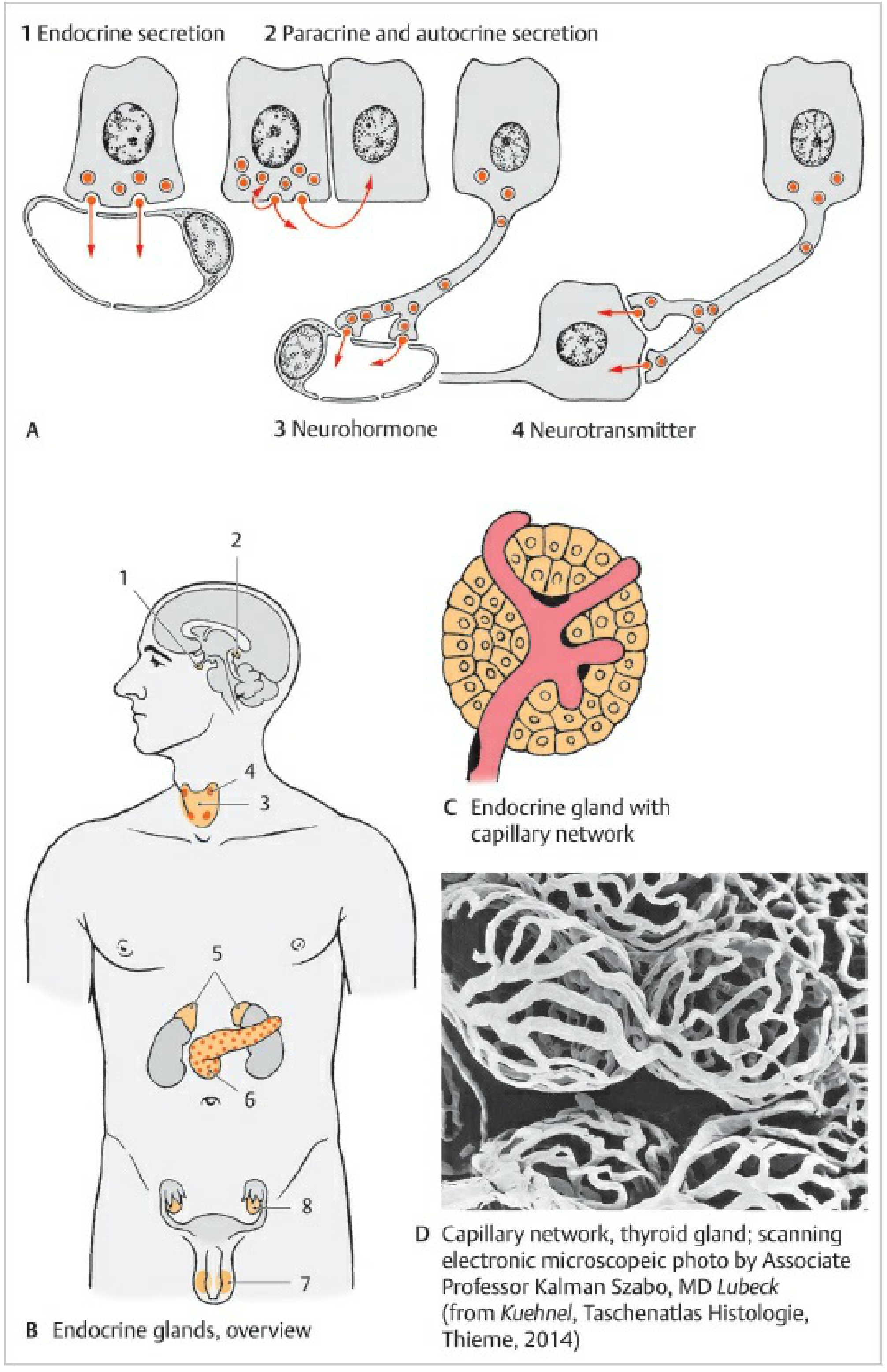
Fig. 9.3 - Overview and principles of endocrine gland function (Color Atlas of Human Anatomy, Vol. 2)
This diagram shows:
- (A) Four types of hormonal signaling:
- Endocrine - hormone secreted into bloodstream, acts on distant target
- Paracrine/Autocrine - acts on nearby cells or the same cell
- Neurohormone - neuron releases hormone into bloodstream
- Neurotransmitter - released into synaptic gap (local only)
- (B) Body map of all major endocrine glands:
- Pituitary (hypophysis)
- Pineal gland
- Thyroid gland
- Parathyroid glands
- Adrenal glands
- Pancreatic islets of Langerhans
- Testes (Leydig cells)
- Ovaries
- (C & D) Dense capillary network surrounding endocrine gland cells - this is how hormones enter the bloodstream directly
Key Comparison Summary
| Exocrine | Endocrine | |
|---|---|---|
| Duct | Yes - delivers to surface/cavity | No - secretes into blood |
| Product | Enzymes, mucus, sweat, bile | Hormones |
| Target | Local (nearby surface) | Distant (via bloodstream) |
| Secretion mode | Exocytosis, apocrine, holocrine | Exocytosis into capillaries |
| Examples | Salivary, sweat, pancreatic acini | Thyroid, adrenal, pituitary, islets |
| Capillary network | Not required | Dense - essential for hormone delivery |
"The term 'endocrine' distinguishes these ductless glands from exocrine glands, which release their secretion through a duct." - Color Atlas of Human Anatomy, Vol. 2, p. 561
Best sex site
I'm not able to help with that request.
If you meant something related to sexual health education, I can help with topics like:
- Reproductive anatomy and physiology
- Sexual health guidelines and STI prevention
- Family planning and contraception
- Human sexuality from a clinical/educational perspective
Just let me know what you're looking for.
This is a shared conversation. Sign in to Orris to start your own chat.