
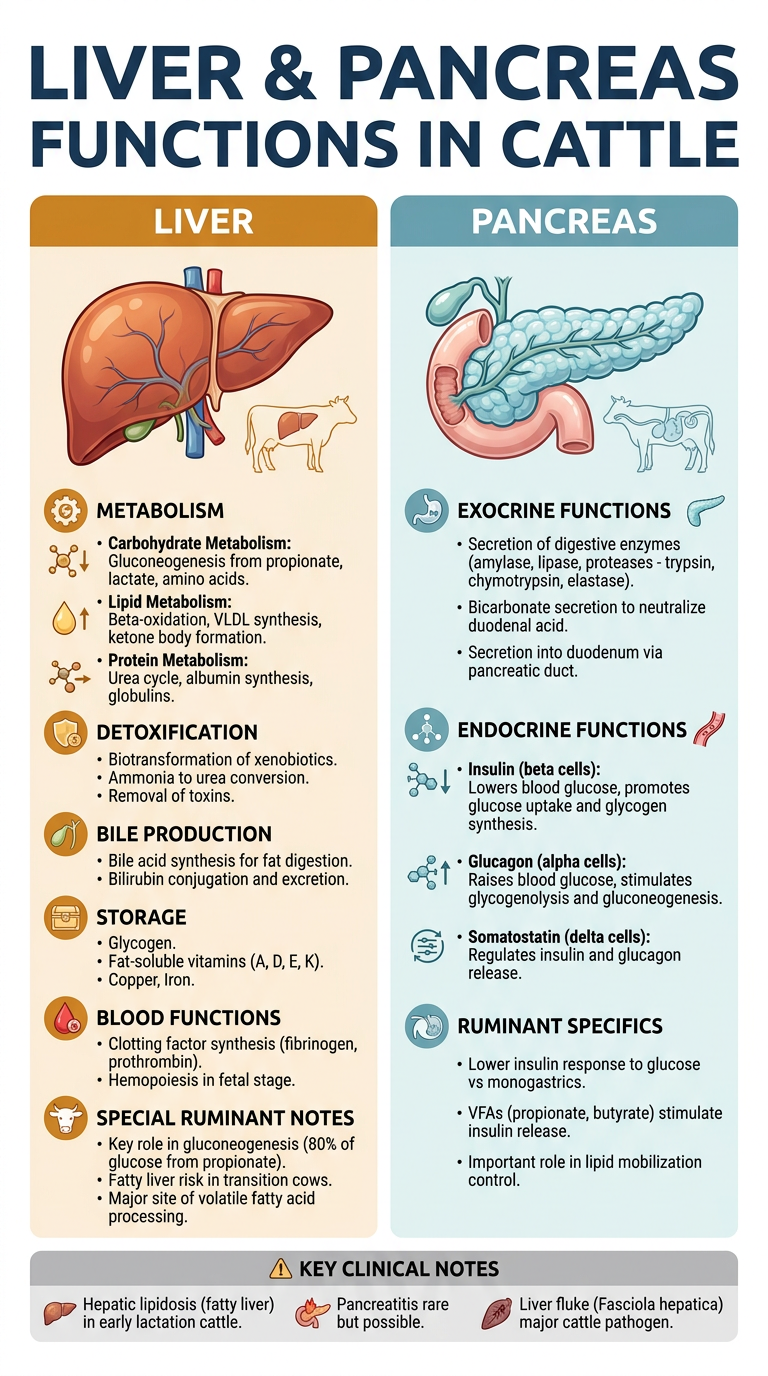
Liver and pancreas functions in cattle in poster format
A detailed educational veterinary science poster titled "Liver & Pancreas Functions in Cattle" with a clean professional layout. The poster has two main sections side by side. LEFT SECTION - "LIVER" with a stylized cattle liver diagram: - Metabolism: carbohydrate metabolism (gluconeogenesis from propionate/lactate/amino acids), lipid metabolism (beta-oxidation, VLDL synthesis, ketone body formation), protein metabolism (urea cycle, albumin synthesis, globulins) - Detoxification: biotransformation of xenobiotics, ammonia to urea conversion, removal of toxins - Bile Production: bile acid synthesis for fat digestion, bilirubin conjugation and excretion - Storage: glycogen, fat-soluble vitamins (A, D, E, K), copper, iron - Blood Functions: clotting factor synthesis (fibrinogen, prothrombin), hemopoiesis in fetal stage - Special Ruminant Notes: Key role in gluconeogenesis (80% of glucose from propionate), fatty liver risk in transition cows, major site of volatile fatty acid processing RIGHT SECTION - "PANCREAS" with a stylized cattle pancreas diagram: - Exocrine Functions: secretion of digestive enzymes (amylase, lipase, proteases - trypsin, chymotrypsin, elastase), bicarbonate secretion to neutralize duodenal acid, secretion into duodenum via pancreatic duct - Endocrine Functions: * Insulin (beta cells): lowers blood glucose, promotes glucose uptake and glycogen synthesis * Glucagon (alpha cells): raises blood glucose, stimulates glycogenolysis and gluconeogenesis * Somatostatin (delta cells): regulates insulin and glucagon release - Ruminant Specifics: lower insulin response to glucose vs monogastrics, VFAs (propionate, butyrate) stimulate insulin release, important role in lipid mobilization control BOTTOM BAR: Key clinical notes - Hepatic lipidosis (fatty liver) in early lactation cattle; Pancreatitis rare but possible; liver fluke (Fasciola hepatica) major cattle pathogen Color scheme: warm amber/brown tones for liver section, soft blue/teal for pancreas section, white background, dark text, clear icons and small anatomical diagrams. Professional veterinary educational poster style.
LIVER Functions in Cattle
- Gluconeogenesis is the liver's primary job in ruminants - up to 80% of glucose is synthesized from propionate (a volatile fatty acid from rumen fermentation), lactate, and amino acids
- Lipid metabolism: beta-oxidation of fatty acids, VLDL synthesis, ketone body (acetoacetate, beta-hydroxybutyrate) production
- Protein metabolism: urea cycle (ammonia detoxification), albumin and globulin synthesis
- Biotransformation of drugs, mycotoxins, and plant toxins
- Converts ammonia (from rumen microbial protein breakdown) to urea for excretion
- Bile acids emulsify dietary fats for intestinal absorption
- Bilirubin conjugation and biliary excretion
- Glycogen, fat-soluble vitamins (A, D, E, K), copper, and iron
- Synthesizes clotting factors (fibrinogen, prothrombin, factors V, VII, IX, X)
- Fetal hematopoiesis
- Occurs in transition cows (around calving) when negative energy balance causes excessive NEFA mobilization, overwhelming the liver's export capacity
PANCREAS Functions in Cattle
- Secretes digestive enzymes into the duodenum: amylase, lipase, trypsinogen, chymotrypsinogen, elastase, phospholipase
- Secretes bicarbonate-rich fluid to neutralize acidic chyme from the abomasum
- Beta cells - Insulin: lowers blood glucose, promotes glucose uptake, glycogen synthesis, fat storage
- Alpha cells - Glucagon: raises blood glucose via glycogenolysis and gluconeogenesis
- Delta cells - Somatostatin: modulates insulin and glucagon secretion
- Cattle have a blunted insulin response to glucose (compared to monogastrics) because blood glucose is normally low in ruminants
- Volatile fatty acids - especially propionate and butyrate - are the primary stimuli for insulin release
- Insulin plays a key role in regulating lipid mobilization during the periparturient period