
post operative pain: management and evaculation
"postoperative pain" AND management
pain assessment scales numerical rating visual analog Wong-Baker FACES
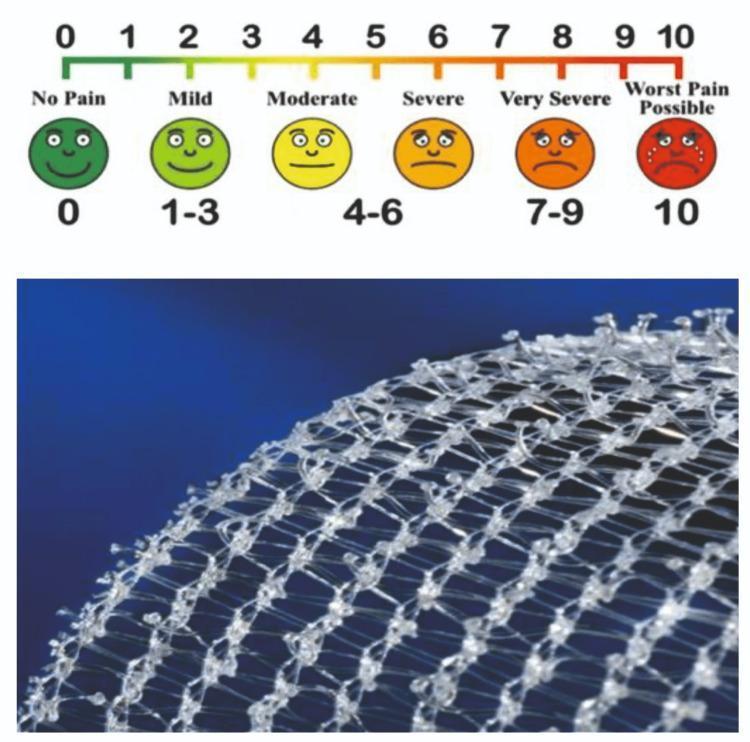
Educational medical graphic combining a pain assessment tool and surgical material. The top section displays a Visual Analog Scale (VAS) used for clinical pain measurement. The scale features a numeric rating from 0 to 10 correlated with descriptive labels and a Wong-Baker style faces scale: 0 (No Pain, dark green smiling face), 1-3 (Mild, light green smiling face), 4-6 (Moderate to Severe, yellow neutral to orange frowning faces), 7-9 (Very Severe, dark orange distressed face), and 10 (Worst Pain Possible, red crying face). Below the scale is a high-resolution photograph of a self-gripping prosthetic mesh used in surgical procedures like inguinal hernia repair. The mesh is composed of a translucent, white synthetic monofilament knit into a diamond-shaped grid. Characteristic micro-grips or bulbous nodes are visible at the strand intersections, designed for sutureless fixation to anatomical tissues. This comparison illustrates tools used for evaluating patient outcomes, specifically postoperative pain levels relative to surgical techniques and materials.
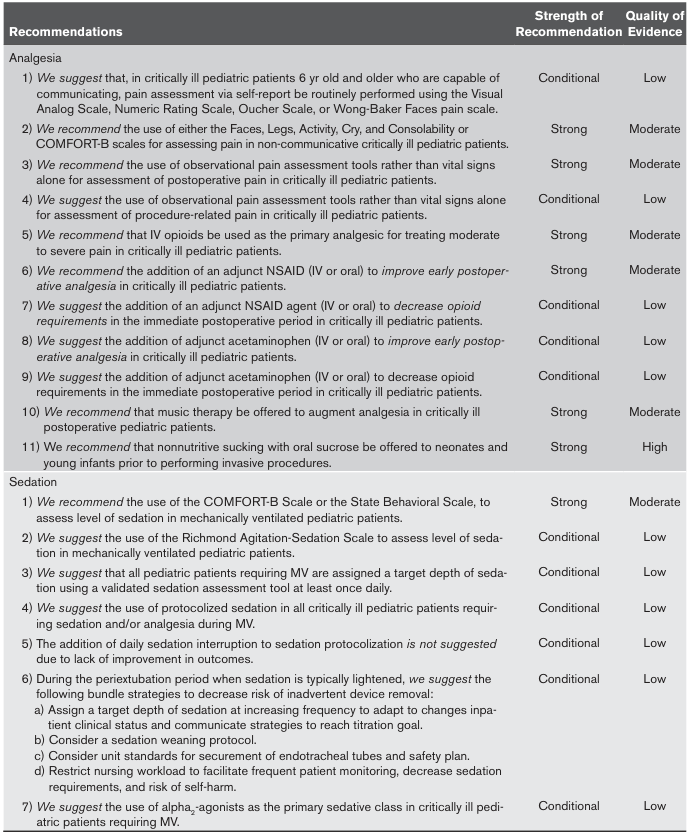
<table><thead><tr><th>Recommendations</th><th>Strength of Recommendation</th><th>Quality of Evidence</th></tr></thead><tbody><tr><td>Analgesia</td><td></td><td></td></tr><tr><td>1) We suggest that, in critically ill pediatric patients 6 yr old and older who are capable of communicating, pain assessment via self-report be routinely performed using the Visual Analog Scale, Numeric Rating Scale, Oucher Scale, or Wong-Baker Faces pain scale.</td><td>Conditional</td><td>Low</td></tr><tr><td>2) We recommend the use of either the Faces, Legs, Activity, Cry, and Consolability or COMFORT-B scales for assessing pain in non-communicative critically ill pediatric patients.</td><td>Strong</td><td>Moderate</td></tr><tr><td>3) We recommend the use of observational pain assessment tools rather than vital signs alone for assessment of postoperative pain in critically ill pediatric patients.</td><td>Strong</td><td>Moderate</td></tr><tr><td>4) We suggest the use of observational pain assessment tools rather than vital signs alone for assessment of procedure-related pain in critically ill pediatric patients.</td><td>Conditional</td><td>Low</td></tr><tr><td>5) We recommend that IV opioids be used as the primary analgesic for treating moderate to severe pain in critically ill pediatric patients.</td><td>Strong</td><td>Moderate</td></tr><tr><td>6) We recommend the addition of an adjunct NSAID (IV or oral) to improve early postoperative analgesia in critically ill pediatric patients.</td><td>Strong</td><td>Moderate</td></tr><tr><td>7) We suggest the addition of an adjunct NSAID agent (IV or oral) to decrease opioid requirements in the immediate postoperative period in critically ill pediatric patients.</td><td>Conditional</td><td>Low</td></tr><tr><td>8) We suggest the addition of adjunct acetaminophen (IV or oral) to improve early postoperative analgesia in critically ill pediatric patients.</td><td>Conditional</td><td>Low</td></tr><tr><td>9) We suggest the addition of adjunct acetaminophen (IV or oral) to decrease opioid requirements in the immediate postoperative period in critically ill pediatric patients.</td><td>Conditional</td><td>Low</td></tr><tr><td>10) We recommend that music therapy be offered to augment analgesia in critically ill postoperative pediatric patients.</td><td>Strong</td><td>Moderate</td></tr><tr><td>11) We recommend that nonnutritive sucking with oral sucrose be offered to neonates and young infants prior to performing invasive procedures.</td><td>Strong</td><td>High</td></tr><tr><td>Sedation</td><td></td><td></td></tr><tr><td>1) We recommend the use of the COMFORT-B Scale or the State Behavioral Scale, to assess level of sedation in mechanically ventilated pediatric patients.</td><td>Strong</td><td>Moderate</td></tr><tr><td>2) We suggest the use of the Richmond Agitation-Sedation Scale to assess level of sedation in mechanically ventilated pediatric patients.</td><td>Conditional</td><td>Low</td></tr><tr><td>3) We suggest that all pediatric patients requiring MV are assigned a target depth of sedation using a validated sedation assessment tool at least once daily.</td><td>Conditional</td><td>Low</td></tr><tr><td>4) We suggest the use of protocolized sedation in all critically ill pediatric patients requiring sedation and/or analgesia during MV.</td><td>Conditional</td><td>Low</td></tr><tr><td>5) The addition of daily sedation interruption to sedation protocolization is not suggested due to lack of improvement in outcomes.</td><td>Conditional</td><td>Low</td></tr><tr><td>6) During the periextubation period when sedation is typically lightened, we suggest the following bundle strategies to decrease risk of inadvertent device removal: a) Assign a target depth of sedation at increasing frequency to adapt to changes inpatient clinical status and communicate strategies to reach titration goal. b) Consider a sedation weaning protocol. c) Consider unit standards for securement of endotracheal tubes and safety plan. d) Restrict nursing workload to facilitate frequent patient monitoring, decrease sedation requirements, and risk of self-harm.</td><td>Conditional</td><td>Low</td></tr><tr><td>7) We suggest the use of alpha2-agonists as the primary sedative class in critically ill pediatric patients requiring MV.</td><td>Conditional</td><td>Low</td></tr></tbody></table>
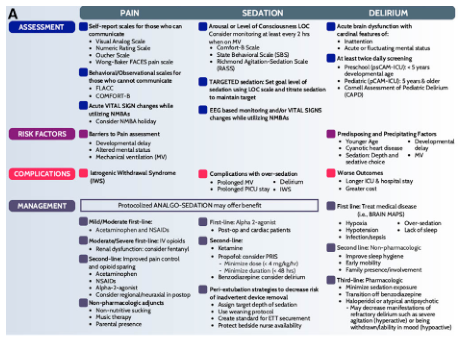
Summary : This figure presents a side-by-side comparison of pain, sedation, and delirium assessment and management in pediatric intensive care, organized into four main categories: Assessment, Risk Factors, Complications, and Management. Each category is subdivided for pain, sedation, and delirium, with specific tools, risk factors, complications, and management strategies listed for each. flowchart/table hybrid: # Overall Structure : • The figure is divided into three vertical columns: Pain, Sedation, and Delirium. • Four horizontal sections: Assessment, Risk Factors, Complications, and Management. • Each cell contains bulleted lists of tools, factors, or strategies. # Pain : ## Assessment : • Self-report scales for communicative children: Visual Analog Scale, Numeric Rating Scale, Oucher Scale, Wong-Baker FACES pain scale. • Behavioral/observational scales for non-communicative children: FLACC, COMFORT-B. • Acute vital sign changes with NMBA use; consider NMBA holiday. ## Risk Factors : • Barriers to pain assessment: Developmental delay, altered mental status, mechanical ventilation (MV). ## Complications : • Iatrogenic Withdrawal Syndrome (IWS). ## Management : • Mild/Moderate: Acetaminophen, NSAIDs. • Moderate/Severe: First-line IV opioids, consider fentanyl for renal dysfunction. • Second-line: Improved pain control and opioid sparing (acetaminophen, NSAIDs, alpha-2 agonist). • Non-pharmacologic: Non-nutritive sucking, music therapy, parental presence. # Sedation : ## Assessment : • Arousal/Level of Consciousness: Monitor every 2 hours when on MV. • Comfort-B scale, State Behavioral Scale (SBS), Richmond Agitation-Sedation Scale (RASS). • Targeted sedation: Set goal, titrate sedation. • EEG-based monitoring and vital sign changes with NMBA use. ## Risk Factors : • Complications with over-sedation: Prolonged MV, prolonged PICU stay, delirium, IWS. ## Complications : • Over-sedation: Prolonged MV, delirium, prolonged PICU stay, IWS. ## Management : • Protocolized analgo-sedation may offer benefit. • First-line: Alpha-2 agonist (post-op, non-cardiac). • Second-line: Ketamine, minimize dose (4 mg/kg/h), minimize duration (<48h), benzodiazepines for delirium. • Peri-extubation strategies: Assign wean target, use extubation protocol, create standard for ETT securement, protect bedside nurse availability. # Delirium : ## Assessment : • Acute brain dysfunction: Inattention, fluctuating mental status. • Acute daily screening: Preschool (psCAM-ICU-5), school-age (pCAM-ICU-5), Cornell Assessment of Pediatric Delirium (CAPD). ## Risk Factors : • Predisposing/precipitating: Young age, developmental delay, congenital heart disease, MV, sedative/analgesic use. ## Complications : • Worse outcomes: Longer ICU/hospital stay, greater cost. ## Management : • First-line: Treat medical disease (labs, brain MAPS). • Hypoactive: Over-sedation, lack of sleep. • Hyperactive: Infections. • Second-line: Non-pharmacologic (sleep hygiene, early mobilization, family presence). • Third-line: Minimize sedation exposure, avoid benzodiazepines, consider alpha-2 agonist, may need dexmedetomidine for withdrawal/mood (hypoactive). # Design Encodings : • Blue, purple, and pink colour coding for Pain, Sedation, and Delirium columns. • Section headers highlighted with background shading. • Bulleted lists for clarity. • Icons for assessment, risk factors, complications, and management. # Analysis : • The figure provides a comprehensive, parallel overview of pain, sedation, and delirium management in pediatric critical care. • Each domain is addressed with specific assessment tools, risk factors, complications, and management strategies. • There is emphasis on protocolized approaches, minimizing complications, and integrating non-pharmacologic interventions. • The structure facilitates rapid comparison and highlights the interconnectedness of pain, sedation, and delirium in clinical practice.
multimodal analgesia postoperative pain management diagram
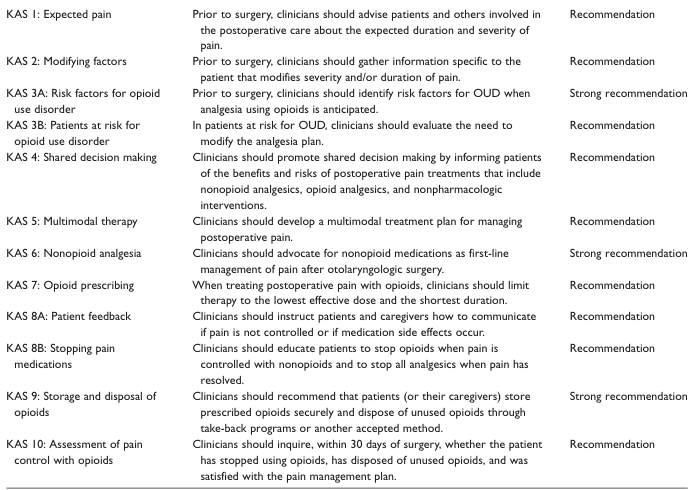
<table><thead><tr><th>KAS 1: Expected pain</th><th>Prior to surgery, clinicians should advise patients and others involved in the postoperative care about the expected duration and severity of pain.</th><th>Recommendation</th></tr></thead><tbody><tr><td>KAS 2: Modifying factors</td><td>Prior to surgery, clinicians should gather information specific to the patient that modifies severity and/or duration of pain.</td><td>Recommendation</td></tr><tr><td>KAS 3A: Risk factors for opioid use disorder</td><td>Prior to surgery, clinicians should identify risk factors for OUD when analgesia using opioids is anticipated.</td><td>Strong recommendation</td></tr><tr><td>KAS 3B: Patients at risk for opioid use disorder</td><td>In patients at risk for OUD, clinicians should evaluate the need to modify the analgesia plan.</td><td>Recommendation</td></tr><tr><td>KAS 4: Shared decision making</td><td>Clinicians should promote shared decision making by informing patients of the benefits and risks of postoperative pain treatments that include nonopioid analgesics, opioid analgesics, and nonpharmacologic interventions.</td><td>Recommendation</td></tr><tr><td>KAS 5: Multimodal therapy</td><td>Clinicians should develop a multimodal treatment plan for managing postoperative pain.</td><td>Recommendation</td></tr><tr><td>KAS 6: Nonopioid analgesia</td><td>Clinicians should advocate for nonopioid medications as first-line management of pain after otolaryngologic surgery.</td><td>Strong recommendation</td></tr><tr><td>KAS 7: Opioid prescribing</td><td>When treating postoperative pain with opioids, clinicians should limit therapy to the lowest effective dose and the shortest duration.</td><td>Recommendation</td></tr><tr><td>KAS 8A: Patient feedback</td><td>Clinicians should instruct patients and caregivers how to communicate if pain is not controlled or if medication side effects occur.</td><td>Recommendation</td></tr><tr><td>KAS 8B: Stopping pain medications</td><td>Clinicians should educate patients to stop opioids when pain is controlled with nonopioids and to stop all analgesics when pain has resolved.</td><td>Recommendation</td></tr><tr><td>KAS 9: Storage and disposal of opioids</td><td>Clinicians should recommend that patients (or their caregivers) store prescribed opioids securely and dispose of unused opioids through take-back programs or another accepted method.</td><td>Strong recommendation</td></tr><tr><td>KAS 10: Assessment of pain control with opioids</td><td>Clinicians should inquire, within 30 days of surgery, whether the patient has stopped using opioids, has disposed of unused opioids, and was satisfied with the pain management plan.</td><td>Recommendation</td></tr></tbody></table>
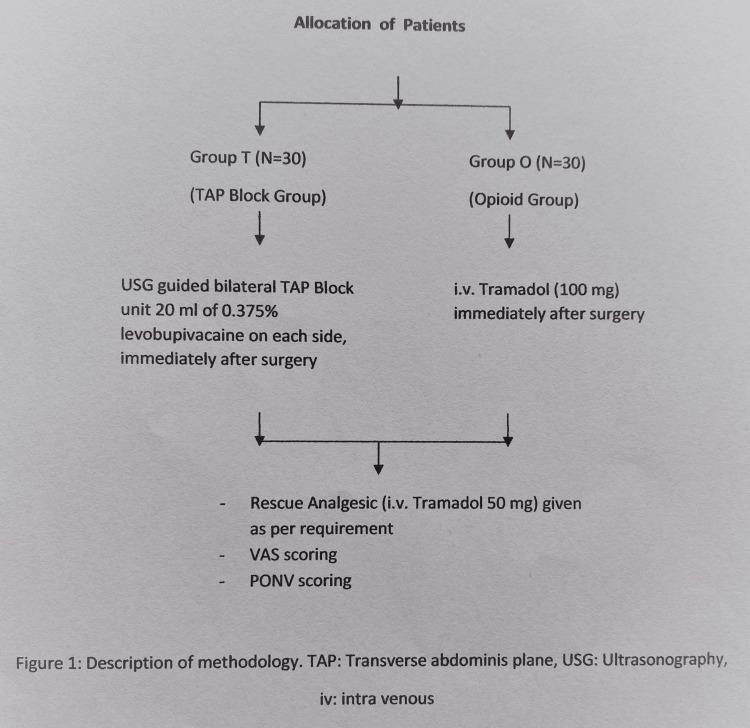
This clinical research flowchart outlines the methodology for a randomized comparative study in anesthesiology, focusing on postoperative pain management. The protocol begins with the 'Allocation of Patients' into two distinct cohorts of 30 subjects each. Group T (TAP Block Group) receives an ultrasound-guided (USG) bilateral transverse abdominis plane (TAP) block using 20 ml of 0.375% levobupivacaine per side immediately post-surgery. Group O (Opioid Group) receives 100 mg of intravenous (i.v.) tramadol immediately post-surgery. Both experimental pathways converge into a standardized follow-up protocol consisting of three components: administration of rescue analgesia (i.v. tramadol 50 mg) as required, Visual Analog Scale (VAS) scoring for pain assessment, and monitoring of Postoperative Nausea and Vomiting (PONV). This diagram illustrates a clinical trial design comparing regional anesthesia techniques against systemic opioid administration for efficacy in postoperative analgesia.
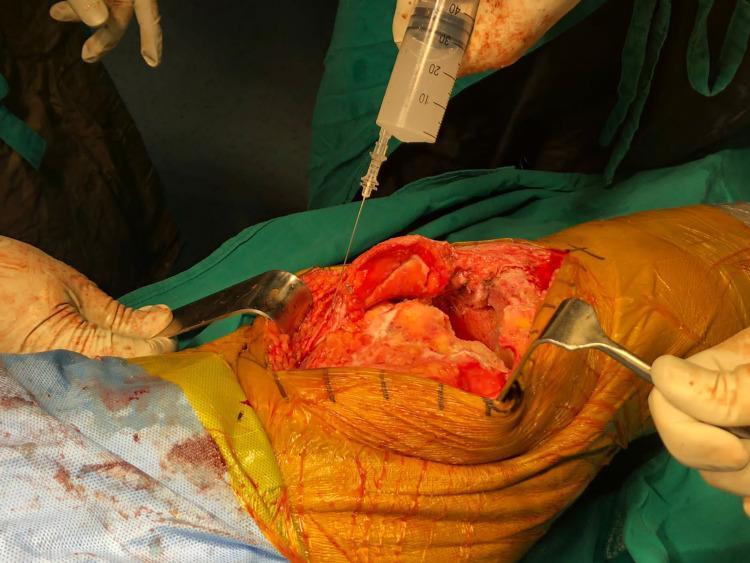
This clinical photograph captures an intraoperative surgical procedure on a human knee joint, likely during a total knee arthroplasty. The image displays an open surgical site with deep tissue exposure, where metallic surgical retractors are being used to maintain visualization of the periarticular structures. A clinician is performing a local infiltration analgesia (LIA) technique, utilizing a large-volume syringe (approximately 40-50 mL capacity) filled with a clear medicinal cocktail, such as ropivacaine. The solution is being administered via a long, thin-gauge spinal needle into the lateral sleeve of the joint capsule and surrounding soft tissues. The surgical field is prepared with sterile amber-colored iodine-based adhesive drapes and standard green and blue surgical draping. The hands of the surgical team are visible in sterile gloves, highlighting the precise administration of multimodal analgesia aimed at reducing postoperative pain and opioid consumption. This visual serves as a clinical demonstration of periarticular injection sites and surgical pain management protocols in orthopedic surgery.
Postoperative Pain: Evaluation and Management
1. Overview and Importance
- Barash Clinical Anesthesia 9e, p. 4565
2. Evaluation of Postoperative Pain
2a. Challenges in Assessment
- Severity varies among surgical procedures and anesthetic techniques
- Staff members often misjudge pain -- inexperienced nurses overestimate, more experienced nurses tend to underestimate pain
- Patients may be too sedated, fearful, or culturally restrained to fully express their needs
- A wide divergence can exist between a patient's cognitive perception of pain and their sympathetic response -- some have severe pain with minimal tachycardia/hypertension, others show hemodynamic changes with minimal verbal complaint
"The best measure of analgesia is the patient's perception. Heart rate, respiratory rate and depth, sweating, nausea, and vomiting all may be signs of pain, but their absence or presence is not in itself reliable as a measure of the presence of pain."
- Barash Clinical Anesthesia 9e, p. 4566
2b. Pain Assessment Scales
| Scale | Description | Best For |
|---|---|---|
| Numerical Rating Scale (NRS) | 0 (no pain) to 10 (worst possible pain) | Most routine adult use; requires patient cooperation |
| Visual Analog Scale (VAS) | 10-cm horizontal line; patient marks intensity | Simple, correlates well with other methods; research gold standard |
| Wong-Baker FACES Scale | Faces from smiling to crying; patient points to matching face | Children ≥3 years; patients with communication difficulty |
| McGill Pain Questionnaire (MPQ) | 20 sets of descriptive words; assesses sensory, affective, and evaluative dimensions | Chronic pain; complex pain characterization |
| FLACC Scale | Face, Legs, Activity, Cry, Consolability | Infants and non-communicative patients |
| COMFORT-B Scale | Behavioral scale for sedated/ventilated patients | Pediatric ICU |
- Morgan and Mikhail's Clinical Anesthesiology 7e, Chapter 47 (Pain Measurement)
2c. Psychosocial Evaluation
- Minnesota Multiphasic Personality Inventory (MMPI) -- confirms role of psychological factors
- Beck Depression Inventory -- identifies major depression (very common in chronic pain)
- Multidimensional Pain Inventory (MPI), SF-36, Pain Disability Index (PDI), Oswestry Disability Index (ODI) -- assess functional impairment and quality of life
3. Pharmacological Management
3a. Multimodal Analgesia (The Foundation)
"Multimodal analgesia combines different classes of medications that have different pharmacological mechanisms of action, resulting in additive or synergistic effects to reduce postoperative pain and its sequelae."
- Morgan and Mikhail's Clinical Anesthesiology 7e, p. 2117
3b. Analgesic Agents
1. NSAIDs (e.g., ketorolac, ibuprofen, diclofenac)
- Reduce pain intensity, opioid requirements, and opioid-related side effects (PONV, sedation, urinary retention)
- COX-2 inhibitors (celecoxib) reduce platelet and GI effects vs. non-selective NSAIDs
- Risks: GI/wound bleeding, reduced renal function, impaired wound healing, possible anastomotic leak (controversial)
- IV ketorolac: 0.5 mg/kg in neonates/infants; commonly used in adults for short-term acute pain
2. Acetaminophen (Paracetamol)
- Oral, rectal, or IV routes
- Analgesic effect ~20-30% less than NSAIDs, but has a safer pharmacological profile
- Significantly reduces pain and spares opioid consumption after orthopedic and abdominal surgery
- IV dose in older children/adults: 15 mg/kg; neonates: 10 mg/kg
- Combination with NSAIDs improves efficacy; allows NSAIDs to be reserved for breakthrough pain
3. Opioids
- Remain a cornerstone for moderate-to-severe surgical pain despite growing opioid-sparing strategies
- Patient-Controlled Analgesia (PCA): Provides better pain control, greater satisfaction, and fewer side effects vs. nurse-administered PRN dosing
- Morphine PCA: 20 mcg/kg/dose (children), 10-min lockout interval
- Hydromorphone PCA: 5 mcg/kg/dose
- Continuous infusions increase respiratory depression risk
- Common parenteral opioids: Fentanyl (1-2 mcg/kg), morphine (0.05-0.1 mg/kg), hydromorphone (15 mcg/kg)
- Oral opioids: Oxycodone or hydrocodone combined with NSAIDs or acetaminophen for transitional analgesia
4. Gabapentinoids (Gabapentin, Pregabalin)
- Single preoperative dose can decrease postoperative pain and opioid consumption in the first 24 hours
- Side effects: Sedation, dizziness -- caution in older adults (fall risk)
- Debate remains on optimal dosing and whether they reduce incidence of chronic post-surgical pain
5. NMDA Receptor Antagonists
- Ketamine: Low-dose perioperative ketamine (0.5-1 mg/kg bolus, followed by 2-10 mcg/kg/min infusion) significantly reduces pain, opioid consumption, and PONV
- Particularly useful in opioid-tolerant patients undergoing major surgery
- Monitor for CNS effects (sedation, nystagmus, hallucinations)
- Magnesium: May reduce postoperative pain and opioid consumption; risks include hypotension and potentiation of neuromuscular blockade
6. Alpha-2 Agonists (Dexmedetomidine, Clonidine)
- Dexmedetomidine reduces opioid requirements as part of multimodal analgesia
- Useful as adjuncts, particularly in the PACU and ICU settings
- Clonidine can be added to intraarticular injections to extend analgesic duration
7. IV Lidocaine Infusion
- Growing evidence for use in major abdominal surgery: faster return of bowel function, reduced hospital stay
- Dosing: 1.5-2 mg/kg/h intraoperatively, then 1 mg/kg/h postoperatively
- Requires continuous cardiovascular monitoring (CNS and cardiovascular toxicity risk)
3c. Summary Table of Analgesic Adjuvants
| Agent | Surgery Type | Route | Timing | Key Benefit |
|---|---|---|---|---|
| Lidocaine | Abdominal, thoracic, orthopedic | IV infusion | Pre/Intra/Post | Return of bowel function, opioid sparing |
| Ketamine | Cardiac, thoracotomy, major surgery | IV | Pre/Peri/Post via PCA | Opioid sparing, PONV reduction |
| Magnesium | Various | IV | Peri | Opioid sparing |
| Gabapentin/Pregabalin | Various | Oral | Preoperative | 24-h opioid reduction |
| Dexmedetomidine | Various | IV | Intra/Post | Opioid sparing, sedation |
- Morgan and Mikhail's Clinical Anesthesiology 7e, Table 48-4
4. Regional Analgesia Techniques
| Technique | Indication | Notes |
|---|---|---|
| Epidural analgesia | Thoracic, abdominal, lower limb surgery | Bupivacaine 0.1-0.125% + fentanyl 2-2.5 mcg/mL; infusion 0.1-0.4 mL/kg/h (peds) |
| Peripheral nerve blocks (single-shot or continuous) | Orthopedic, limb surgery | Continuous infusions particularly effective for ligament reconstruction |
| Intraarticular injection | Knee/joint arthroscopy | Bupivacaine/ropivacaine ± adjuvants (opioids, ketorolac, epinephrine, clonidine, neostigmine) |
| Local infiltration analgesia (LIA) | Total knee/hip arthroplasty | High-volume periarticular injection of local anesthetic cocktail |
| Transverse abdominis plane (TAP) block | Abdominal surgery | Ultrasound-guided; effective opioid-sparing technique |
| Erector spinae plane (ESP) block | Thoracic surgery | Paravertebral spread; emerging evidence |
| Wound infiltration | Various | Simple; local anesthetic directly into surgical site |
"Techniques that avoid large doses of systemic opioids have obvious appeal."
- Morgan and Mikhail's Clinical Anesthesiology 7e, p. 1518
5. Route-Specific Approaches by Age
Neonates and Infants (Barash Clinical Anesthesia 9e; Miller's Anesthesia 10e)
| Route | Agents |
|---|---|
| IV | Morphine, fentanyl, methadone; ketorolac 0.5 mg/kg; IV acetaminophen 10 mg/kg |
| Oral | Acetaminophen 10-15 mg/kg; ibuprofen 5-10 mg/kg; hydrocodone 0.1 mg/kg |
| Rectal | Acetaminophen 20-30 mg/kg (higher dose due to unreliable absorption); diclofenac |
| Regional | Caudal/epidural; nerve blocks |
Pediatric PCA (Morgan and Mikhail's Clinical Anesthesiology 7e)
- Can be used in children as young as 5 years old
- Morphine: 20 mcg/kg interval dose, 10-min lockout; continuous infusion 0-12 mcg/kg/h
- Hydromorphone: 5 mcg/kg interval dose; continuous infusion 0-3 mcg/kg/h
6. Special Populations
Opioid-Tolerant Patients
- Continue baseline opioids perioperatively (or substitute equivalent dose)
- Increased opioid doses required for adequate analgesia
- Multimodal regimen is optimal: epidural analgesia + increased systemic opioids + non-opioid adjuncts
- Methadone maintenance should not be interrupted
Obstructive Sleep Apnea (OSA)
- Opioid-sparing strategy strongly preferred
- Multimodal analgesia with NSAIDs (safe perioperatively), acetaminophen, ketamine, and dexmedetomidine
- Minimize systemic opioids to reduce respiratory depression risk
Cardiac/Vascular Surgery
- Epidural analgesia reduces major complications (infections, AKI, pulmonary/thromboembolic events, falls) vs. general anesthesia alone
- Thoracic epidural analgesia (TEA) is the gold standard for thoracotomy pain
7. Complications of Inadequate vs. Excessive Analgesia
| Inadequate Analgesia | Excessive Analgesia/Opioid Side Effects |
|---|---|
| Hypertension, tachycardia, dysrhythmias | Respiratory depression |
| Impaired respiratory effort (splinting) | Sedation, dizziness |
| Increased risk of chronic post-surgical pain | PONV |
| Patient dissatisfaction | Urinary retention |
| Prolonged PACU stay | Ileus, delayed bowel recovery |
| Sympathetic activation | Hypotension (in hypovolemic patients) |
8. Key Clinical Principles (Guideline-Based)
- Advise patients preoperatively about expected pain duration and severity
- Identify risk factors for opioid use disorder before prescribing opioids
- Develop a multimodal treatment plan -- not a single-agent plan
- Nonopioid analgesia as first-line where appropriate (strong recommendation)
- When opioids are needed: lowest effective dose, shortest duration
- Educate patients to stop opioids when pain is controlled with nonopioids, and to dispose of unused medications safely
- Follow up within 30 days to confirm opioid discontinuation and patient satisfaction
Recent Evidence
- A 2024 systematic review and network meta-analysis (PMID 39366846) confirmed the efficacy of non-opioid analgesics and adjuvants in reducing postoperative opioid consumption, particularly in obese patients
- A 2024 PROSPECT systematic review (PMID 39129451) for laparoscopic cholecystectomy recommends pre-incision dexamethasone, wound infiltration, and NSAIDs/acetaminophen as the core regimen
- A 2026 meta-analysis (PMID 39753290) comparing buprenorphine vs. full agonist opioids suggests buprenorphine is a viable alternative for acute postoperative pain management
- Morgan and Mikhail's Clinical Anesthesiology, 7e - Chapters 47, 48
- Barash, Cullen, and Stoelting's Clinical Anesthesia, 9e - Chapter 54
- Miller's Anesthesia, 10e - Chapters 49, 77
- SCHWARTZ'S Principles of Surgery, 11e
post operative pain :management and evaculation
Postoperative Pain: Evaluation & Management
PART 1 - EVALUATION (Assessment)
Why Assessment Is Challenging
- Pain severity varies by procedure and anesthetic technique
- Inexperienced nurses overestimate pain; experienced nurses tend to underestimate it
- Patients may be sedated, fearful, or culturally restrained from expressing pain
- Vital signs (HR, RR, BP, sweating) are unreliable as sole pain indicators -- the patient's own perception is the gold standard
- The Joint Commission mandates periodic pain scale documentation and an acceptable discharge score
"The best measure of analgesia is the patient's perception." - Barash Clinical Anesthesia 9e
Pain Scales
| Scale | Description | Best Used For |
|---|---|---|
| Numerical Rating Scale (NRS) | 0 (no pain) to 10 (worst pain) | Routine adult use |
| Visual Analog Scale (VAS) | 10-cm line; patient marks intensity | Adults; research settings |
| Wong-Baker FACES | Faces from smiling to crying | Children ≥3 yrs; communication-impaired |
| McGill Pain Questionnaire (MPQ) | Sensory, affective, evaluative word descriptors | Chronic/complex pain |
| FLACC Scale | Face, Legs, Activity, Cry, Consolability | Infants, non-communicative patients |
| COMFORT-B Scale | Behavioral; sedation/arousal integrated | Ventilated/ICU pediatric patients |
Psychosocial Evaluation
- Minnesota Multiphasic Personality Inventory (MMPI) - role of psychological factors
- Beck Depression Inventory - identifies depression (very common with chronic pain)
- Multidimensional Pain Inventory (MPI), SF-36, Pain Disability Index (PDI), Oswestry Disability Index (ODI) - functional impairment and quality of life
PART 2 - MANAGEMENT
The Core Principle: Multimodal Analgesia
Pharmacological Agents
1. NSAIDs (ketorolac, ibuprofen, diclofenac, celecoxib)
- Reduce pain intensity, opioid requirements, PONV, sedation, and urinary retention
- COX-2 inhibitors (celecoxib) spare GI and platelet effects
- Risks: GI/wound bleeding, impaired renal function, possible anastomotic leak (controversial), cardiovascular risk (cardiac surgery)
- IV ketorolac: 0.5 mg/kg (neonates); short-term adult use
2. Acetaminophen (Paracetamol)
- Oral / rectal / IV routes
- Analgesic effect ~20-30% less potent than NSAIDs, but safer profile
- Significantly reduces pain and opioid consumption after orthopedic and abdominal surgery
- IV doses: neonates 10 mg/kg; children/adults 15 mg/kg
- Best combined with NSAIDs -- synergistic effect
3. Opioids
- Still the cornerstone for moderate-to-severe surgical pain
- PCA (Patient-Controlled Analgesia): Better pain control, higher satisfaction, and fewer side effects vs. nurse-administered PRN opioids
- Morphine PCA: 20 mcg/kg/dose (peds), 10-min lockout; continuous infusion 0-12 mcg/kg/h
- Hydromorphone PCA: 5 mcg/kg/dose; continuous infusion 0-3 mcg/kg/h
- Continuous infusions increase respiratory depression risk
- IV opioids: Morphine 0.05-0.1 mg/kg; Fentanyl 1-2 mcg/kg; Hydromorphone 15 mcg/kg
- Oral transition: Oxycodone or hydrocodone + NSAIDs/acetaminophen
4. Gabapentinoids (Gabapentin, Pregabalin)
- Single preoperative oral dose reduces pain and opioid use in the first 24 hours
- Side effects: Sedation, dizziness -- caution in older adults (fall risk)
- Role in preventing chronic post-surgical pain is still debated
5. NMDA Antagonists
- Ketamine: Low-dose (0.5-1 mg/kg bolus + 2-10 mcg/kg/min infusion) significantly reduces pain, opioid consumption, and PONV; especially useful in opioid-tolerant patients
- Magnesium: Reduces opioid consumption; risks - hypotension, potentiation of neuromuscular blockade
6. Alpha-2 Agonists (Dexmedetomidine, Clonidine)
- Dexmedetomidine reduces opioid requirements in ICU/PACU settings
- Clonidine used as adjuvant in intraarticular/neuraxial injections
7. IV Lidocaine Infusion
- Evidence-based for major abdominal surgery: faster bowel return, shorter hospital stay
- Dosing: 1.5-2 mg/kg/h intraoperatively → 1 mg/kg/h postoperatively
- Requires cardiovascular monitoring (CNS/cardiac toxicity risk)
Analgesic Adjuvant Quick Reference
| Agent | Route | Timing | Key Benefit | Monitor |
|---|---|---|---|---|
| IV Lidocaine | IV infusion | Pre/Intra/Post | Bowel recovery, opioid sparing | CNS/CVS toxicity |
| Ketamine | IV | Pre/Peri/Post (PCA) | Opioid sparing, PONV reduction | Sedation, hallucinations |
| Magnesium | IV | Perioperative | Opioid sparing | NMB potentiation |
| Gabapentin/Pregabalin | Oral | Preoperative | 24-h opioid reduction | Sedation/falls |
| Dexmedetomidine | IV | Intra/Post | Sedation + opioid sparing | Bradycardia, hypotension |
Regional Analgesia Techniques
| Technique | Indication | Key Details |
|---|---|---|
| Epidural analgesia | Thoracic, abdominal, lower limb | Bupivacaine 0.1-0.125% + fentanyl 2-2.5 mcg/mL; 0.1-0.4 mL/kg/h (peds) |
| Peripheral nerve blocks | Orthopedic, limb surgery | Single-shot or continuous catheter |
| Intraarticular injection | Knee/joint arthroscopy | Bupivacaine/ropivacaine ± ketorolac, clonidine, epinephrine |
| Local infiltration analgesia (LIA) | Total knee/hip arthroplasty | High-volume periarticular injection |
| TAP block | Abdominal surgery | Ultrasound-guided bilateral |
| Erector spinae plane block | Thoracic surgery | Emerging evidence |
| Wound infiltration | General | Simple; direct local anesthetic |
Routes by Age Group
| Route | Neonates/Infants | Children | Adults |
|---|---|---|---|
| IV | Morphine, fentanyl; ketorolac 0.5 mg/kg; acetaminophen 10 mg/kg | Morphine, hydromorphone; ketorolac; acetaminophen 15 mg/kg | Morphine, fentanyl, hydromorphone; ketorolac; acetaminophen IV |
| Oral | Acetaminophen 10-15 mg/kg; ibuprofen 5-10 mg/kg | Hydrocodone 0.1 mg/kg; oxycodone 0.05 mg/kg | Oxycodone, hydrocodone + APAP/NSAID |
| Rectal | Acetaminophen 20-30 mg/kg; diclofenac | Acetaminophen suppository | Less common |
| Regional | Caudal, epidural | Epidural, nerve blocks | Epidural, PNB, LIA, TAP |
Special Populations
| Population | Key Consideration |
|---|---|
| Opioid-tolerant patients | Continue baseline opioids perioperatively; increased doses required; multimodal regimen essential |
| OSA patients | Opioid-sparing strategy mandatory; use NSAIDs, acetaminophen, ketamine, dexmedetomidine |
| Elderly | Avoid gabapentinoids cautiously (fall risk); reduce opioid doses; prefer regional techniques |
| Cardiac surgery | Caution with COX-2 inhibitors; TEA (thoracic epidural) reduces major complications |
| Pediatric | PCA feasible from age 5; nurse/parent-controlled PCA is controversial but used |
PART 3 - Consequences of Under- vs. Over-Treatment
| Undertreated Pain | Opioid Overuse / Over-sedation |
|---|---|
| Hypertension, tachycardia, dysrhythmias | Respiratory depression |
| Splinting → atelectasis, pneumonia | PONV |
| Impaired mobilization | Urinary retention |
| Prolonged PACU/hospital stay | Ileus, delayed GI recovery |
| Risk of chronic post-surgical pain | Hypotension (vasodilation in hypovolemia) |
| Patient dissatisfaction | Opioid use disorder risk |
PART 4 - Clinical Practice Recommendations
- Advise patients preoperatively about expected pain duration and severity
- Screen for opioid use disorder risk factors before prescribing
- Develop a multimodal treatment plan - not a single-drug plan
- Use nonopioid agents as first-line where appropriate
- When opioids are needed: lowest dose, shortest duration
- Educate patients to stop opioids when pain is manageable with nonopioids
- Ensure safe storage and disposal of unused opioids
- Follow up within 30 days of surgery to confirm opioid discontinuation
Recent Evidence (2024-2026)
| PMID | Study | Finding |
|---|---|---|
| 39366846 | Systematic review + network meta-analysis (Br J Anaesth 2024) | Non-opioid adjuvants in multimodal analgesia effectively reduce postoperative opioid consumption, especially in obesity |
| 39129451 | PROSPECT systematic review - laparoscopic cholecystectomy (Eur J Anaesthesiol 2024) | Recommends dexamethasone, wound infiltration, NSAIDs/acetaminophen as core regimen |
| 39753290 | Meta-analysis (Reg Anesth Pain Med 2026) | Buprenorphine is a viable alternative to full agonist opioids for acute postoperative pain |