
Pathology of diabetes
Reading File
Finding Sources
Finding Sources
Finding Sources
Finding Sources
Finding Sources
Finding Sources
Finding Sources
Now I have the key sections. Let me read the main Robbins pathology content on diabetes:
Reading File
Reading File
Reading File
Reading File
Reading File
Reading File
Reading File
Reading File
Reading File
Reading File
I now have comprehensive content. Let me fetch a few key images to include in the response:
Loading Image
Loading Image
I now have all the content needed for a comprehensive answer. Here is a thorough overview of the pathology of diabetes mellitus, drawn from Robbins, Cotran & Kumar Pathologic Basis of Disease and Robbins & Kumar Basic Pathology.
Pathology of Diabetes Mellitus
Diabetes mellitus (DM) is a group of metabolic disorders sharing chronic hyperglycemia caused by defects in insulin secretion, insulin action, or both. Chronic hyperglycemia causes secondary damage to the kidneys, eyes, nerves, and blood vessels — making DM the leading cause of end-stage renal disease, adult-onset blindness, and non-traumatic lower-extremity amputations in the United States.
Diagnosis
Blood glucose is normally maintained between 70–120 mg/dL. Diagnostic criteria (ADA/WHO):
| Criterion | Threshold |
|---|---|
| Fasting plasma glucose | ≥ 126 mg/dL |
| Random plasma glucose (with symptoms) | ≥ 200 mg/dL |
| 2-hr glucose during OGTT (75 g load) | ≥ 200 mg/dL |
| HbA1c | ≥ 6.5% |
Prediabetes: FPG 100–125 mg/dL, 2-hr OGTT 140–199 mg/dL, or HbA1c 5.7–6.4%. Up to 25% develop overt T2D within 5 years.
Classification
Type 1 Diabetes (T1D) — ~5–10% of cases
- Autoimmune destruction of pancreatic β cells → absolute insulin deficiency
- Most common in patients < 20 years; nonobese
- Progressive fall in insulin levels
- Circulating islet autoantibodies (anti-GAD65, anti-IA2, anti-ZnT8)
- Risk of diabetic ketoacidosis (DKA)
Type 2 Diabetes (T2D) — ~90–95% of cases
- Combination of peripheral insulin resistance + inadequate β-cell compensatory response
- ~80% are obese; increasingly seen in adolescents
- Early hyperinsulinemia, then relative insulin deficiency
- No islet autoantibodies
- Risk of nonketotic hyperosmolar coma
Other Types
- Monogenic (MODY): Loss-of-function mutations in glucokinase (GCK/MODY2), HNF1α (MODY3), HNF4α (MODY1), PDX1, HNF1β, NEUROD1, and others
- Gestational diabetes mellitus (GDM)
- Secondary causes: pancreatitis, haemochromatosis, drug-induced, endocrinopathies (Cushing syndrome, acromegaly)
Comparison Table: T1D vs T2D
| Feature | T1D | T2D |
|---|---|---|
| Onset | Childhood/adolescence | Adult (increasingly younger) |
| Body habitus | Normal/underweight | Obese (80%) |
| Insulin levels | Progressive decrease | High early; falls late |
| Autoantibodies | Present | Absent |
| HLA linkage | Yes (HLA class II; CTLA4, PTPN22) | No |
| Islet pathology | Insulitis, β-cell depletion | Amyloid deposition, mild β-cell loss |
| Acute complication | DKA | Hyperosmolar hyperglycemic state |
Pathogenesis of T1D
T1D results from a breakdown in self-tolerance to islet antigens, mediated principally by T cells:
- Genetic susceptibility: Strong linkage to MHC class II alleles (HLA-DR3, DR4, DQ variants); polymorphisms in CTLA4 and PTPN22 impair T-cell regulation
- Environmental triggers: Viral infections (enteroviruses), gut microbiome alterations, and dietary factors may trigger islet autoimmunity in genetically susceptible individuals
- Insulitis: CD8+ and CD4+ T cells and macrophages infiltrate the islets, directly killing β cells via perforin/granzyme and Fas-FasL pathways
- Autoantibodies: Anti-islet antibodies (anti-GAD65, anti-IA2, anti-ZnT8) appear years before clinical disease and serve as biomarkers
Histology: Reduction in islet size and number; mononuclear inflammatory infiltrate (insulitis); β-cell depletion with relative preservation of α, δ, and PP cells.
Pathogenesis of T2D
Two interrelated defects:
1. Insulin Resistance
Insulin target tissues (especially skeletal muscle, liver, adipose) fail to respond normally to insulin. Key contributors:
- Obesity (especially visceral adiposity): excess free fatty acids (FFAs) activate serine kinases that phosphorylate IRS-1, impairing downstream PI3K–AKT signalling
- Adipokines: Leptin resistance, reduced adiponectin, elevated TNF-α and IL-6 from adipose tissue promote hepatic gluconeogenesis and impair glucose uptake
- Lipotoxicity: Ectopic fat deposition in muscle and liver
- Metabolic syndrome: Insulin resistance + hypertension + dyslipidaemia + central obesity
2. β-Cell Dysfunction
- Initially, β cells hyperfunction to compensate for insulin resistance
- Eventually, β cells fail due to: lipotoxicity, glucotoxicity (chronic hyperglycemia), impaired incretin effect (reduced GLP-1 and GIP secretion), and islet amyloid polypeptide (IAPP/amylin) deposition
- Islet amyloid deposition is present in >90% of long-standing T2D islets, but whether it causes or results from β-cell burnout is debated
Histology: Mild reduction in β-cell mass; amyloid deposits replacing islet cells (congophilic material — amylin aggregates); no insulitis.
Pathogenesis of Chronic Complications (Glucotoxicity)
Persistent hyperglycemia damages tissues via at least four mechanisms:
1. Advanced Glycation End Products (AGEs)
- Nonenzymatic glycation of proteins generates AGE precursors (glyoxal, methylglyoxal, 3-deoxyglucosone)
- AGEs bind RAGE receptor on endothelium, macrophages, vascular smooth muscle → release of TGF-β, VEGF, ROS, and procoagulant factors
- Cross-link extracellular matrix proteins → trap LDL in vessel walls (accelerating atherosclerosis) and albumin in capillary walls (basement membrane thickening)
2. Protein Kinase C (PKC) Activation
- Intracellular hyperglycemia increases diacylglycerol (DAG) from glycolytic intermediates → activates PKC
- Downstream: increased VEGF (retinopathy), TGF-β (fibrosis), PAI-1 (thrombosis), reduced eNOS (impaired vasodilation)
3. Hexosamine Pathway
- Excess glucose shunted into hexosamine pathway → O-GlcNAc modification of transcription factors → abnormal gene expression, impaired insulin signalling
4. Polyol Pathway
- Aldose reductase converts glucose to sorbitol (consumes NADPH) → oxidative stress, depletion of glutathione → endothelial damage (especially in lens and peripheral nerves)
Morphologic Changes (Organ Pathology)
Pancreas
- T1D: Reduced islet number and size; insulitis (lymphocytic infiltrate); β-cell depletion; α, δ, and PP cells preserved
- T2D: Mild β-cell reduction; islet amyloid (amylin deposits, Congo red positive)
Vascular System
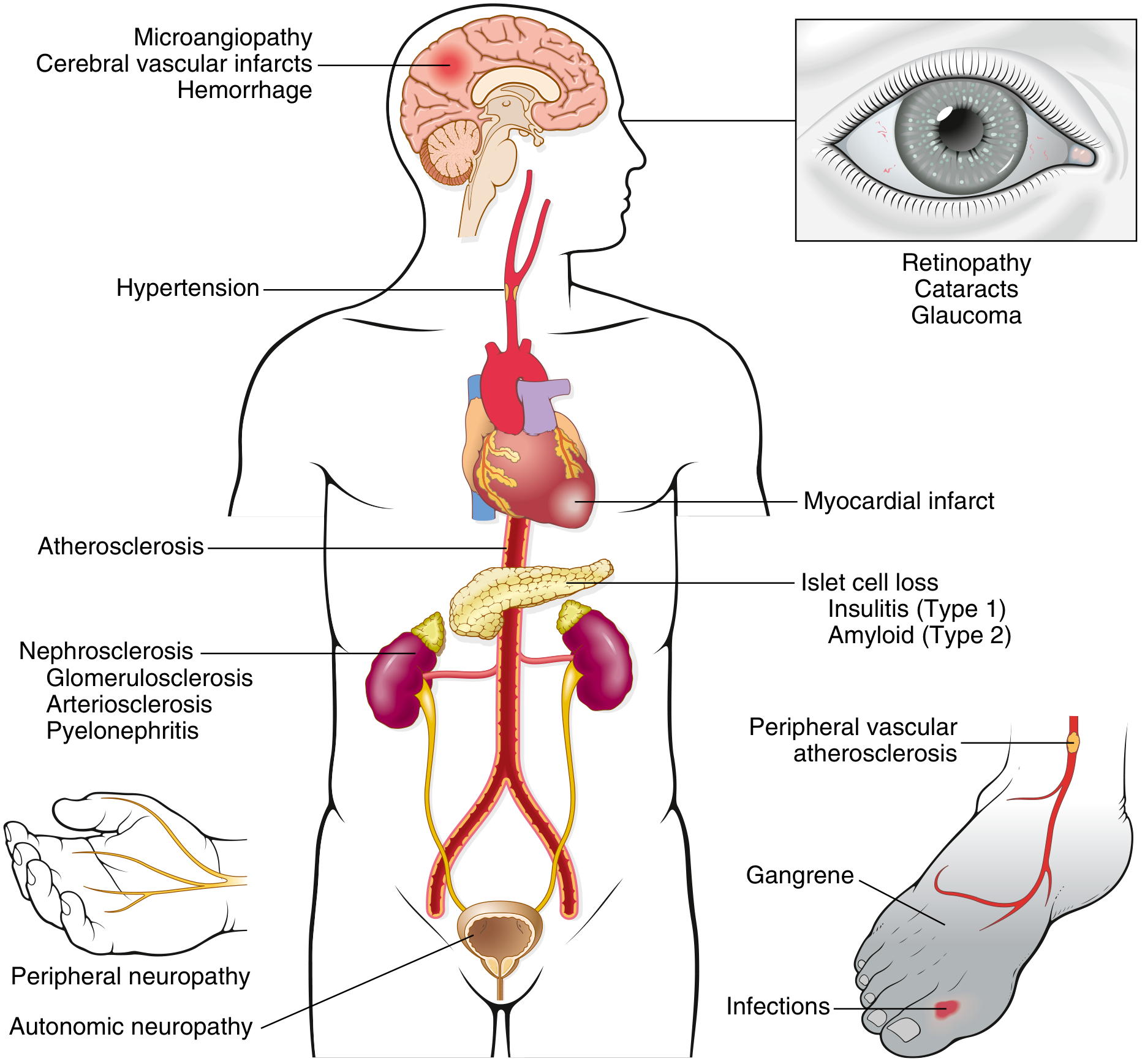
- Macrovascular disease (large and medium arteries): Accelerated atherosclerosis → myocardial infarction, stroke, peripheral arterial disease
- Microvascular disease (capillaries and arterioles): Basement membrane thickening; hyaline arteriolosclerosis (especially afferent and efferent renal arterioles); pericyte loss
Kidneys — Diabetic Nephropathy
Three cardinal lesions:
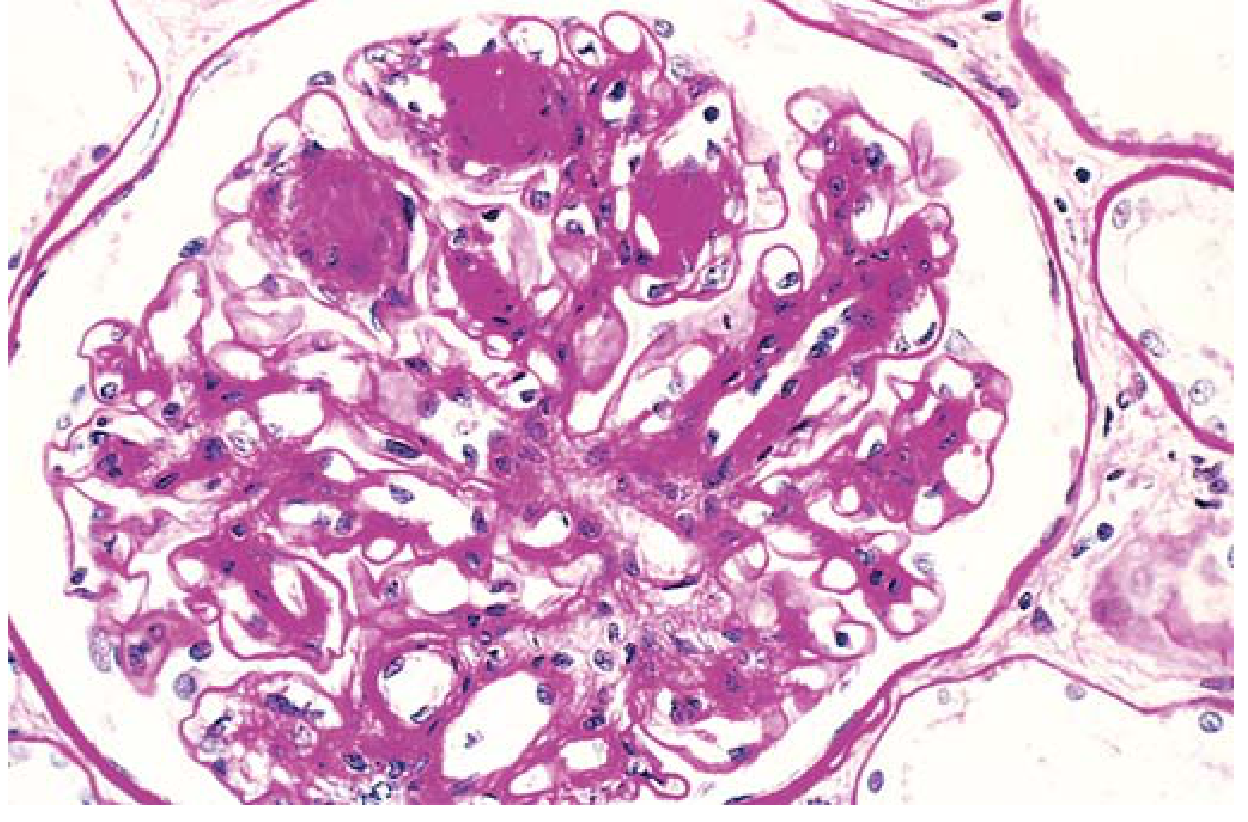
- Glomerular lesions: Diffuse glomerulosclerosis (most common — diffuse increase in mesangial matrix); nodular glomerulosclerosis (Kimmelstiel-Wilson nodules) — ovoid PAS-positive deposits in the mesangium, pathognomonic of diabetic nephropathy
- Vascular lesions: Hyaline arteriolosclerosis of both afferent and efferent arterioles (efferent arteriole involvement is virtually diagnostic of diabetes)
- Tubular lesions: Glycogen accumulation in tubular epithelial cells ("Armanni-Ebstein lesion"); thickening of tubular basement membranes
- Progression: microalbuminuria → macroalbuminuria → declining GFR → ESRD
Eyes
- Diabetic retinopathy: Background (preproliferative) retinopathy — microaneurysms, dot-blot haemorrhages, hard exudates, cotton-wool spots; Proliferative retinopathy — neovascularisation driven by VEGF, vitreous haemorrhage, retinal detachment
- Cataracts: Sorbitol accumulation in the lens (polyol pathway) → osmotic injury → lens opacification
- Glaucoma: Increased intraocular pressure → optic nerve damage
Nervous System — Diabetic Neuropathy
- Peripheral symmetric polyneuropathy (most common) — predominantly sensory loss in stocking-glove distribution
- Autonomic neuropathy — gastroparesis, orthostatic hypotension, bladder dysfunction, impotence
- Mechanism: microangiopathy of vasa nervorum + direct axonal damage from sorbitol accumulation and AGEs
Infections
- Increased susceptibility to bacterial and fungal infections (impaired neutrophil function, poor tissue perfusion)
- Particularly: foot infections, urinary tract infections, mucormycosis, malignant otitis externa (Pseudomonas aeruginosa), "emphysematous" infections (gas-forming organisms)
Long-Term Complications Overview
Acute Complications
| Complication | Mechanism | Type |
|---|---|---|
| DKA | Absolute insulin deficiency → lipolysis → ketogenesis | T1D primarily |
| HHS (Hyperosmolar Hyperglycemic State) | Extreme hyperglycemia (600–1200 mg/dL) + osmotic dehydration, no significant ketosis | T2D primarily |
| Hypoglycemia | Excess insulin dosing, missed meals, exercise | Both types on treatment |
Gestational Diabetes Mellitus (GDM)
- Glucose intolerance first detected during pregnancy (typically 2nd–3rd trimester)
- Caused by insulin resistance from placental hormones (human placental lactogen, progesterone, cortisol)
- Risks to fetus: macrosomia, neonatal hypoglycemia, respiratory distress syndrome
- ~50% of women with GDM develop T2D within 5–10 years postpartum
Sources: Robbins, Cotran & Kumar Pathologic Basis of Disease (pp. 1014–1026); Robbins & Kumar Basic Pathology (pp. 743–752)
This is a shared conversation. Sign in to Orris to start your own chat.