
Give a photo of one page notes on fever for opd treatment patient
A clean, professional one-page clinical reference notes sheet titled "FEVER - OPD Management Guide" for outpatient department use. The sheet is styled like a medical handout on white paper with a teal/blue header bar. It contains the following clearly organized sections with icons and colored subheadings: DEFINITION & GRADING (with a thermometer icon): - Normal body temp: 36.1–37.2°C (97–99°F) - Low-grade fever: 37.3–38.0°C - Fever: >38.0°C (>100.4°F) - High fever: >39.5°C | Hyperpyrexia: >41°C COMMON CAUSES (with a microscope icon): - Viral URTI, Influenza, COVID-19 - Malaria, Dengue, Typhoid - UTI, Pneumonia, Cellulitis - Drug fever, Post-immunization RED FLAG SIGNS - REFER TO ER (in red box): - Temp >41°C or <35°C - Febrile seizure or altered consciousness - Petechial/purpuric rash - Severe headache + neck stiffness - Infant <3 months with any fever - Immunocompromised patient ASSESSMENT IN OPD: - Duration, pattern, associated symptoms - Travel, exposure, vaccination history - Vitals: HR, RR, SpO2, BP - Focused exam: throat, lymph nodes, abdomen, skin INVESTIGATIONS (as per clinical suspicion): - CBC with differential, ESR/CRP - Blood smear (if malaria suspected) - Urine R/M and culture - Blood culture (if sepsis suspected) - Dengue NS1 Ag / IgM, Widal test TREATMENT: Antipyretics: - Paracetamol 500–1000 mg PO q4–6h (max 4g/day) — FIRST LINE - Ibuprofen 400 mg PO q6–8h (avoid in dengue, peptic ulcer, renal disease) - Aspirin: AVOID in children <12 yrs (Reye syndrome risk) Non-pharmacological: - Tepid sponging (lukewarm water) - Light clothing, cool environment - Adequate oral hydration (ORS/fluids) DENGUE CAUTION (in orange highlighted box): - Avoid NSAIDs and Aspirin - Use only Paracetamol - Monitor platelet count FOLLOW-UP / ADVICE: - Review in 48–72 hrs if fever persists - Return immediately if red flag signs appear - Adequate rest and fluid intake - Antibiotics only if bacterial cause confirmed Footer: "For OPD Reference Use | Consult physician for persistent or high-grade fever"
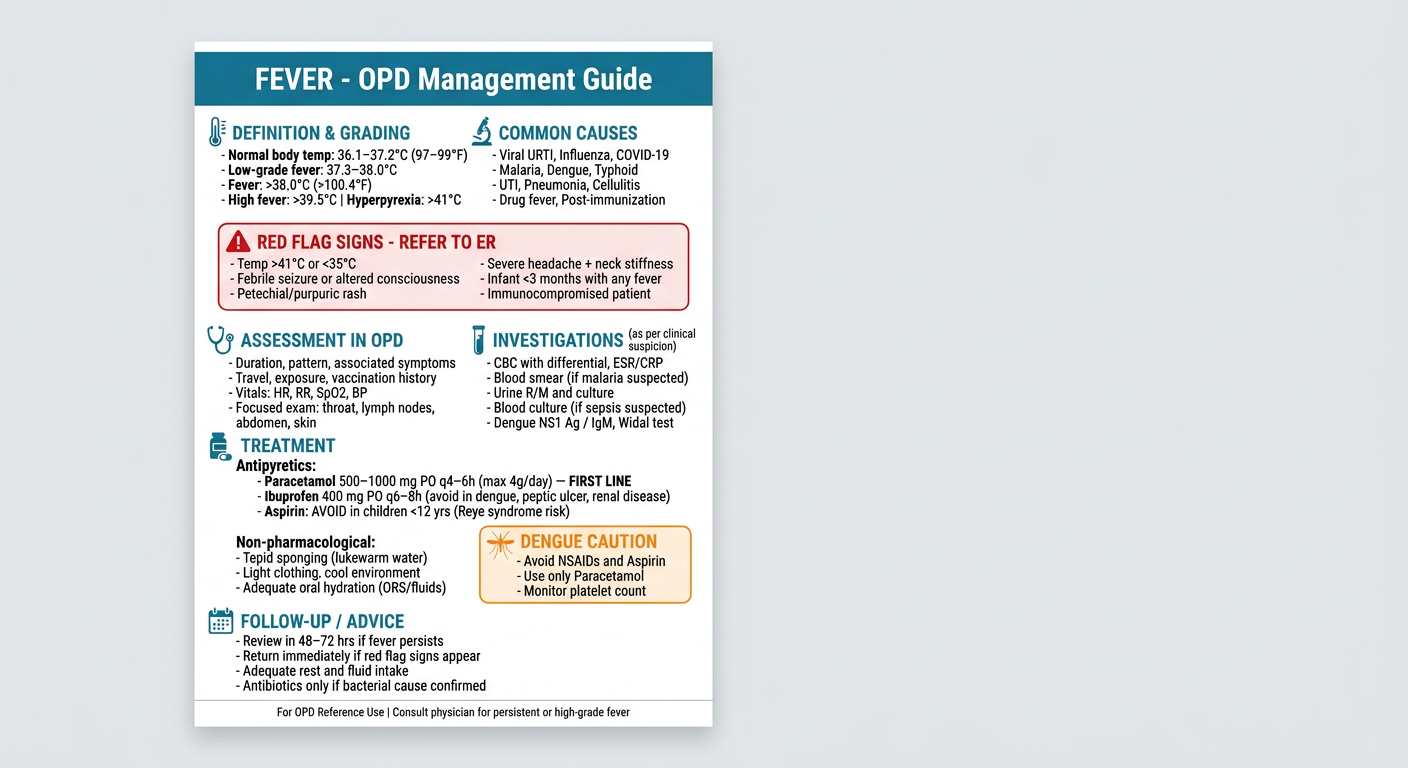
- Temperature grading - from low-grade to hyperpyrexia
- Common causes - viral, bacterial, parasitic, and drug-related
- Red flag signs - when to refer to the ER immediately
- Assessment checklist - history, vitals, and focused exam points
- Investigations - CBC, malaria smear, dengue serology, blood culture, etc.
- Treatment - Paracetamol as first-line, Ibuprofen indications and contraindications, non-pharmacological measures
- Dengue caution - avoid NSAIDs, use only paracetamol
- Follow-up advice - when to review and when to return urgently
- Paracetamol (500-1000 mg, max 4g/day) is the safest antipyretic for most patients
- Never use Aspirin in children under 12 (Reye syndrome risk)
- Avoid NSAIDs in dengue - risk of bleeding
- Any infant under 3 months with fever should be referred, not managed at OPD