
Chop wound images fmt
Reading File
Chop wounds are a type of mechanical injury caused by a heavy, sharp-edged weapon (e.g., axe, cleaver, dao). The user wants images from the medical library. Let me search for chop wound images in the textbooks.
Finding Sources
Finding Sources
Good - found relevant sections. Now let me read the main forensic medicine section on chop wounds to find all images.
Reading File
Finding Sources
Found dedicated "Chop Wounds" sections. Let me also read more of the first file and the dedicated sections.
Reading File
Reading File
Reading File
Now let me look for the Figure 6.32 image URL from the DiMaio text, and also check around line 8410-8420 to get the image URLs.
Reading File
Reading File
I now have all the image URLs. Let me fetch all the chop wound images in parallel.
Loading Image
Loading Image
Loading Image
Loading Image
Here are the chop wound images from the forensic medicine textbooks:
Chop Wounds - Forensic Medicine Images
Definition: Chop wounds (also called slash wounds) are deep, gaping wounds produced by a blow from the sharp-cutting edge of a heavy weapon - axe, hatchet, sword, dao, meat cleaver, or machete. The wound dimensions correspond to the cross-section of the penetrating blade portion.
Fig. 8.35 - Decapitation and Chop Wound (Face)
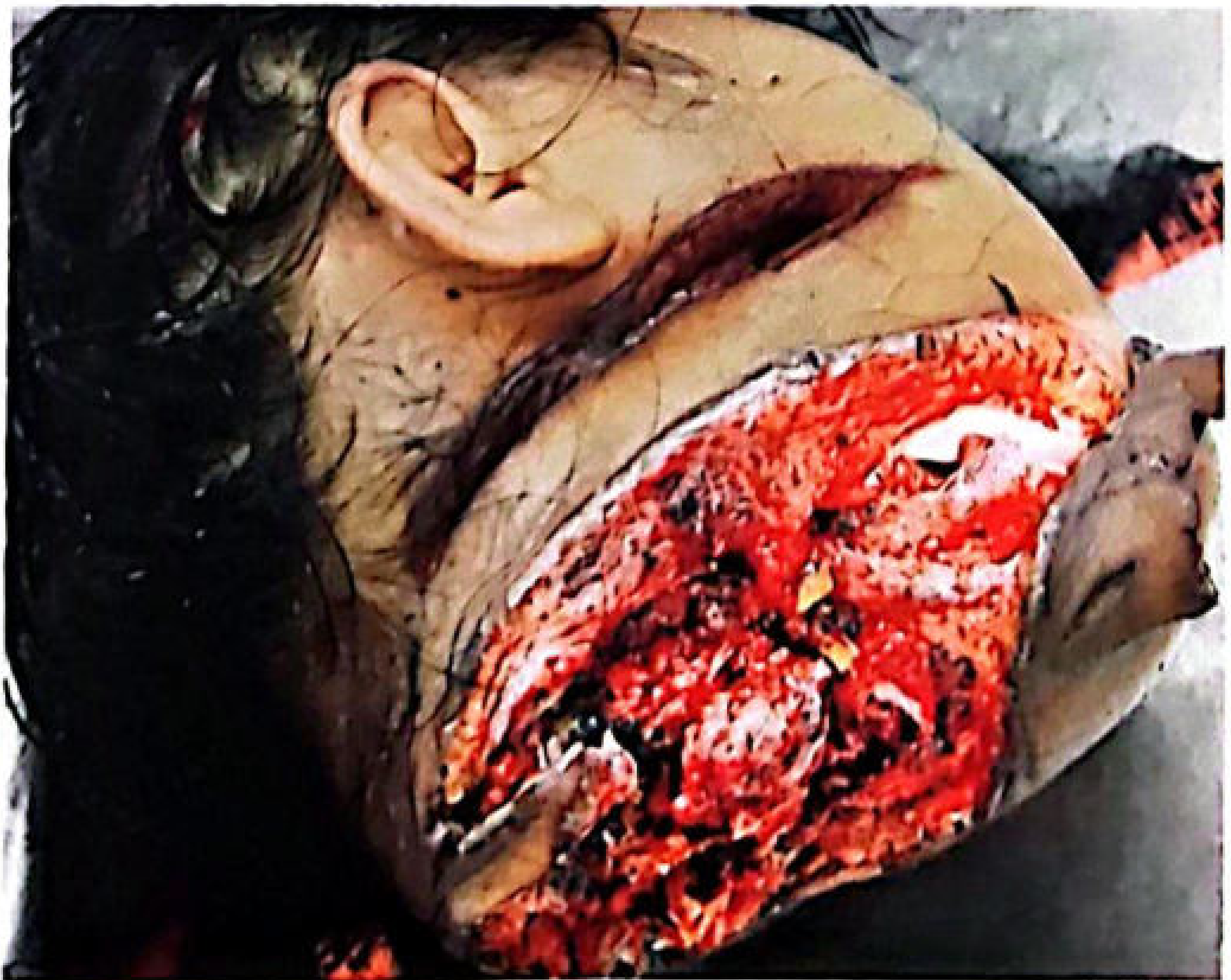
Extensive chop wound involving the lower face, showing the deep gaping nature with marked tissue destruction - characteristic of a heavy cutting weapon. Source: The Essentials of Forensic Medicine and Toxicology, 36th ed.
Fig. 8.36 - Chop Wound on Back of Neck
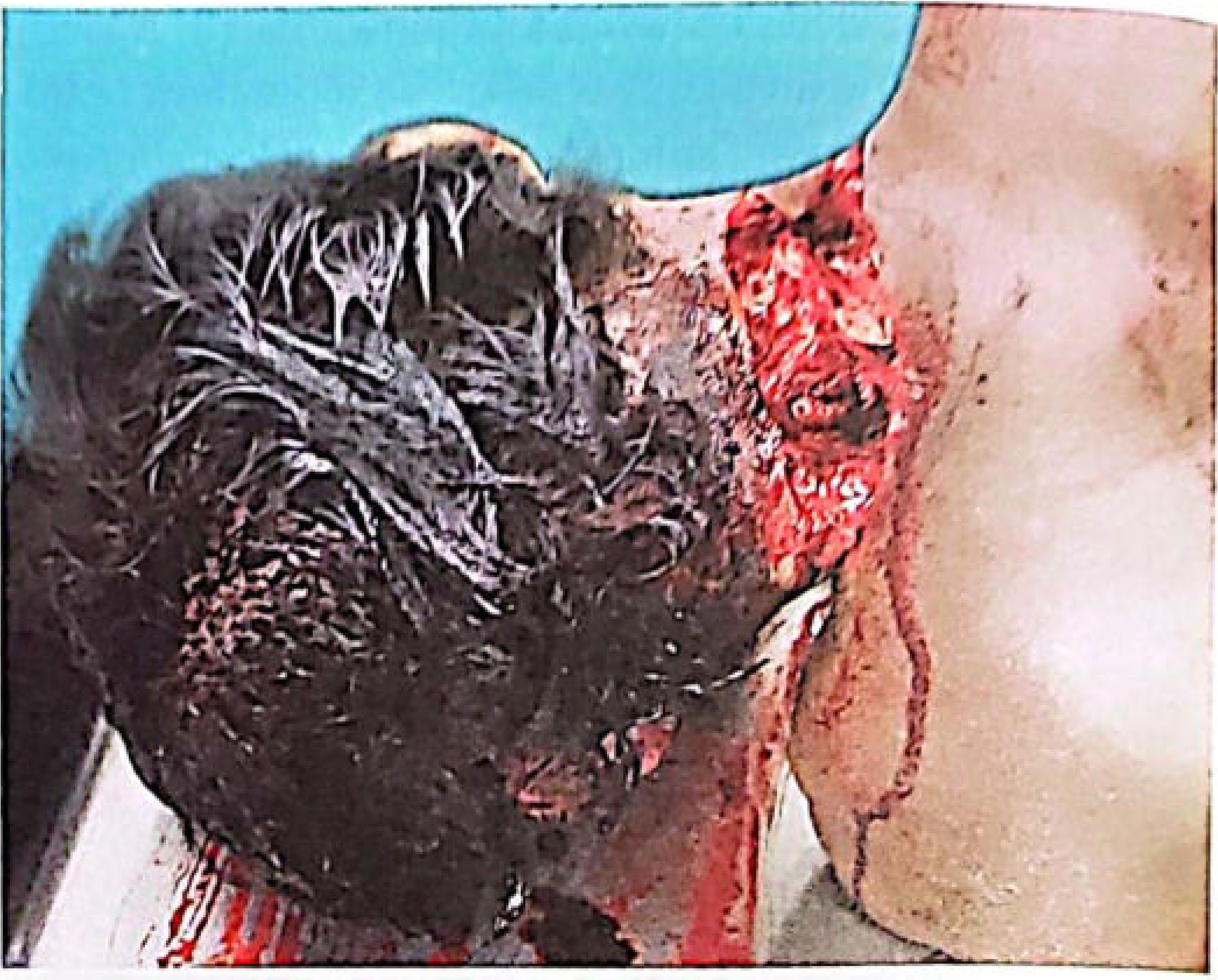
Deep chop wound to the posterior neck region. Note the typical features: sharp margins, deep penetration, and the gaping nature of the wound. Most such wounds are homicidal. Source: The Essentials of Forensic Medicine and Toxicology, 36th ed.
Fig. 8.37 - Cut Injury of Skull (Diagram)
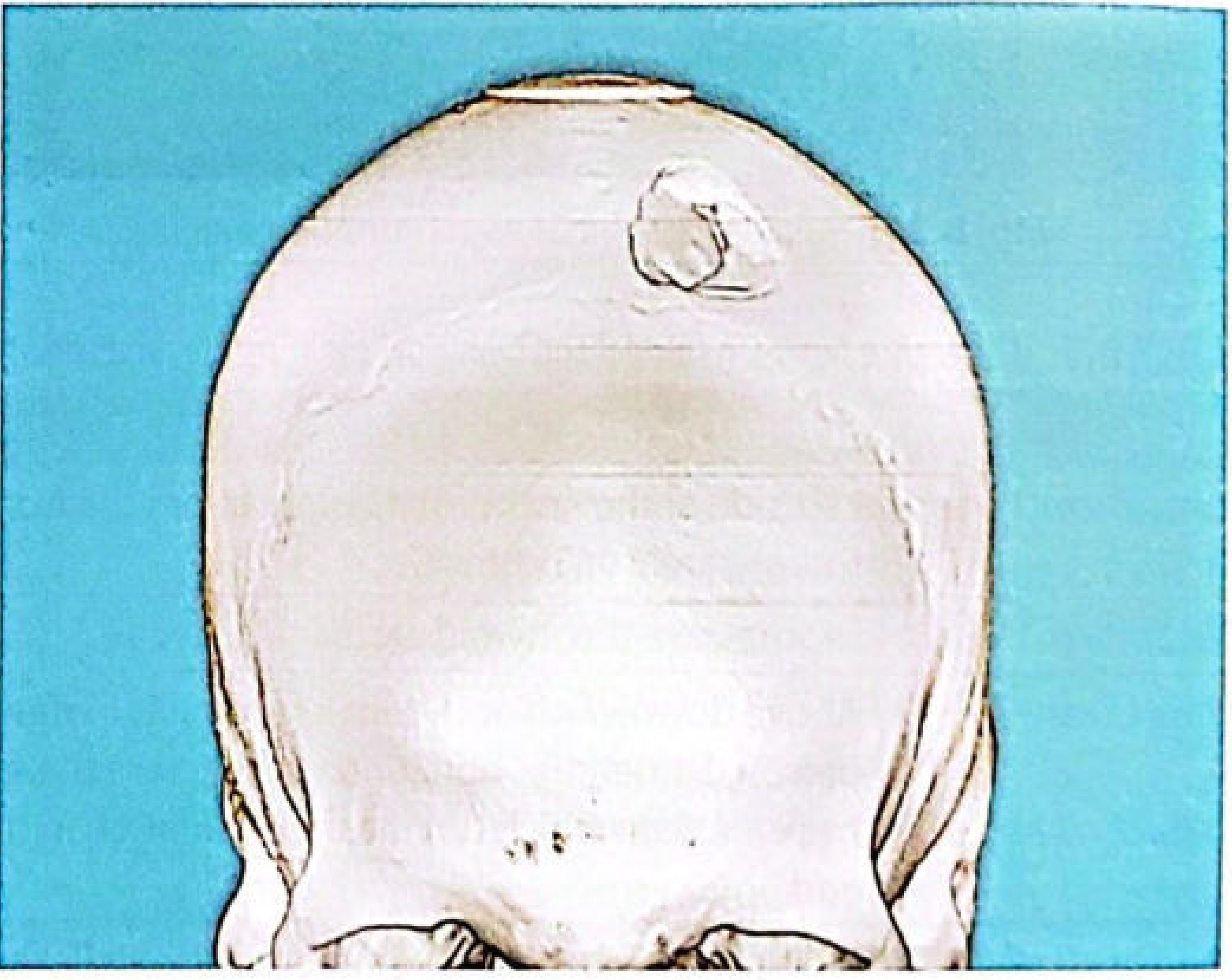
Diagram of skull cut injury. The wider gap anteriorly is caused by the heel of the axe during a frontal attack - this asymmetry helps determine the position of the assailant. Source: The Essentials of Forensic Medicine and Toxicology, 36th ed.
Fig. 6.32 (A & B) - Chopping Wounds from Machete (DiMaio)
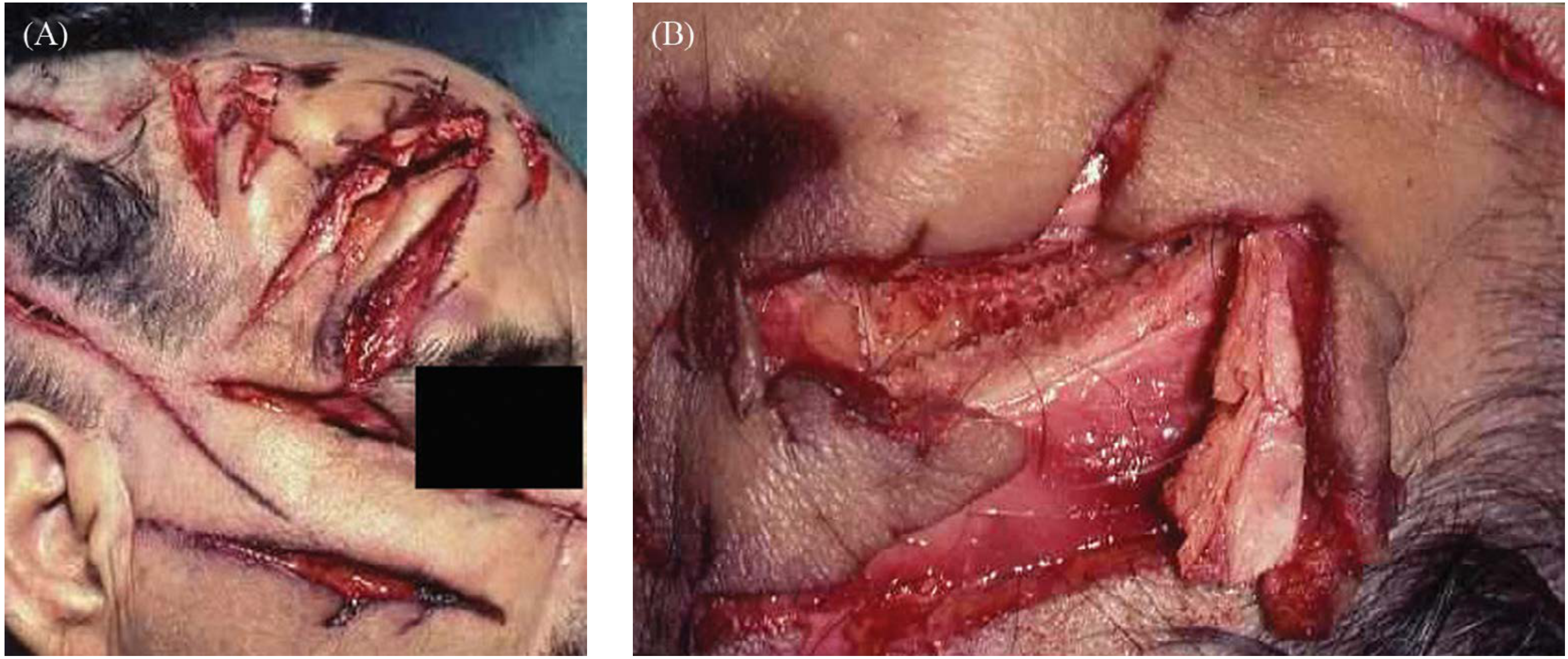
(A) Multiple machete chop wounds on the face/head - note the clean, incised-like margins (linear, sharp-edged) despite being inflicted by a heavy weapon.
(B) Close-up showing the depth of penetration and cutting of underlying soft tissue and bone. Source: DiMaio's Forensic Pathology, 3rd ed.*
Key Features of Chop Wounds (for exam/reference)
| Feature | Detail |
|---|---|
| Weapon | Heavy sharp-edged: axe, dao, machete, cleaver, sword |
| Wound margins | Sharp, may show slight abrasion/bruising at edges |
| Depth | Deep; wound dimensions correspond to blade cross-section |
| Underlying tissue | Marked destruction; bone may show clean cut on one side, rough fracture on other |
| Undermining | Occurs in direction of chop |
| Heel vs toe | Heel (lower end) strikes first - deeper end indicates assailant's position |
| Nature | Mostly homicidal; common sites - head, face, neck, shoulders, extremities |
| Key distinction | Incised wound of skin + comminuted fracture/groove in bone = chopping weapon |
- The Essentials of Forensic Medicine and Toxicology, 36th edition (2026)
- DiMaio's Forensic Pathology, 3rd Edition
This is a shared conversation. Sign in to Orris to start your own chat.