
How does sugar causes and what is normal levels of sugar
Reading File
Now let me search the medical library and web in parallel for blood sugar information.
Finding Sources
Finding Sources
Searching the Web
normal blood sugar levels fasting postprandial HbA1c 2024 guidelines
Now let me get more detailed content from the textbooks on diabetes causes and glucose levels.
Reading File
Reading File
Finding Sources
I have excellent content. Let me fetch the glucose tolerance curve image and read the causes of type 2 diabetes section.
Loading Image
Reading File
I now have excellent, comprehensive information from authoritative medical textbooks. Here is the full answer:
Blood Sugar (Glucose): How It Causes Disease and Normal Levels
What Is Blood Sugar?
Blood sugar (blood glucose) is the amount of glucose circulating in the blood. Glucose is the body's main energy source, derived primarily from carbohydrates you eat. The hormone insulin (made by beta cells in the pancreas) is the key regulator - it allows cells to take up and use glucose, keeping blood levels in a healthy range.
Normal Blood Sugar Levels
Based on the ADA 2026 Standards of Medical Care and authoritative textbooks:
| Measurement | Normal | Prediabetes | Diabetes |
|---|---|---|---|
| Fasting (8+ hrs no food) | 70-99 mg/dL (3.9-5.5 mmol/L) | 100-125 mg/dL | ≥126 mg/dL |
| 2 hrs after eating | <140 mg/dL (<7.8 mmol/L) | 140-199 mg/dL | ≥200 mg/dL |
| Random (any time) | <140 mg/dL | - | ≥200 mg/dL + symptoms |
| HbA1c (3-month average) | <5.7% | 5.7-6.4% | ≥6.5% |
- Guyton and Hall Textbook of Medical Physiology: fasting is normally 80-90 mg/100 mL, with 115 mg/100 mL as the upper limit of normal.
- Goodman & Gilman's Pharmacological Basis of Therapeutics: fasting plasma glucose <100 mg/dL (5.6 mmol/L) is normal.
How High Blood Sugar (Hyperglycemia) Occurs
Type 1 Diabetes - Absolute Insulin Deficiency
- The immune system destroys the pancreatic beta cells, so little to no insulin is produced.
- Without insulin, cells cannot take up glucose, so it builds up in blood.
- Plasma insulin levels are very low or undetectable, even after eating.
- The body breaks down fat for energy, producing ketones - leading to diabetic ketoacidosis (DKA) if untreated.
Type 2 Diabetes - Insulin Resistance + Progressive Beta Cell Failure
This is the most common type. It develops in two stages:
- Insulin Resistance - Body's tissues (muscle, fat, liver) become less responsive to insulin. The pancreas initially compensates by producing MORE insulin.
- Beta Cell Exhaustion - Over time, the pancreas cannot keep up with demand. Insulin output falls, and blood glucose rises - especially after carbohydrate-rich meals.
Key causes of insulin resistance (from Guyton & Hall):
- Obesity / overweight (especially excess visceral/abdominal fat) - the most common
- Excess glucocorticoids (Cushing syndrome or long-term steroid therapy)
- Excess growth hormone (acromegaly)
- Pregnancy / gestational diabetes
- Polycystic ovary syndrome (PCOS)
- Lipodystrophy (fat tissue disorders)
- Autoantibodies or mutations in the insulin receptor
- Genetic mutations (e.g., PPARγ, melanocortin receptor)
- Hemochromatosis (iron accumulation)
The Glucose Tolerance Curve
This diagram from Guyton & Hall shows what happens to blood glucose after drinking a glucose load in a normal person vs. someone with diabetes:
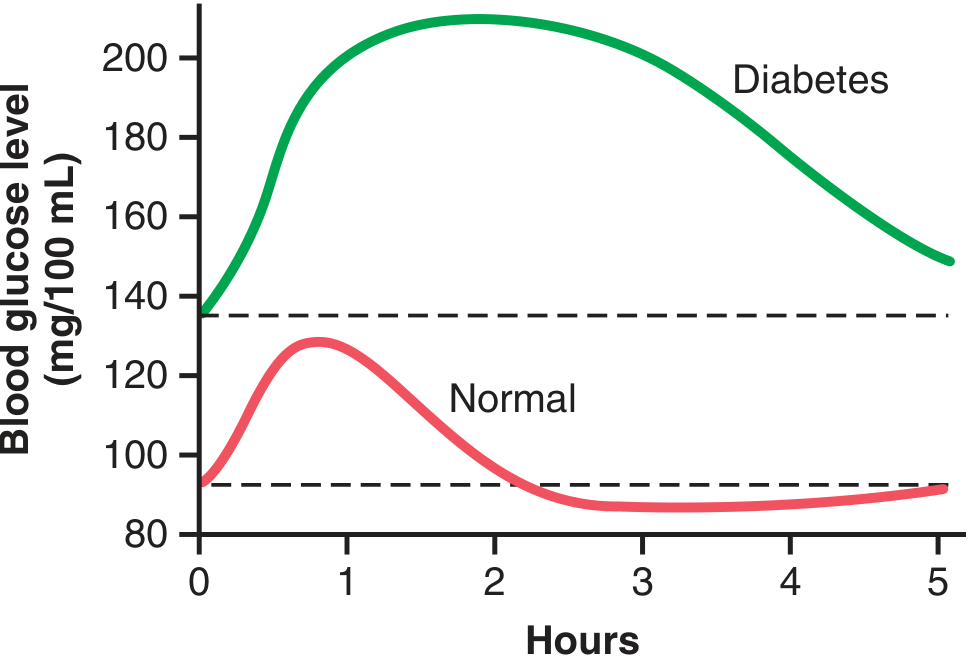
- Normal (pink): Glucose peaks at ~120-140 mg/dL around 1 hour, then returns to baseline by 2 hours.
- Diabetes (green): Glucose starts higher, spikes above 200 mg/dL, and takes 4-6 hours to come down - and never fully normalizes. This shows either insulin is not being secreted, or the body is not responding to it.
HbA1c - The 3-Month Average
When blood glucose stays high for weeks, glucose attaches to hemoglobin in red blood cells, forming HbA1c (glycated hemoglobin). Since red blood cells live ~120 days, HbA1c reflects your average blood sugar over the past 2-3 months. It is used for both diagnosis and monitoring of diabetes control.
| HbA1c | Interpretation |
|---|---|
| < 5.7% | Normal |
| 5.7-6.4% | Prediabetes |
| ≥ 6.5% | Diabetes |
| < 7% (in treated diabetics) | Good control |
Long-Term Consequences of High Blood Sugar
Persistently elevated glucose damages blood vessels and nerves through multiple mechanisms (glycation of proteins, oxidative stress), leading to:
- Microvascular: Diabetic retinopathy (eyes), nephropathy (kidneys), neuropathy (nerves)
- Macrovascular: Heart attack, stroke, peripheral artery disease
Low Blood Sugar (Hypoglycemia)
Blood glucose below 70 mg/dL is hypoglycemia. It can cause shakiness, sweating, confusion, and - if severe - loss of consciousness. It is most common in people taking insulin or certain diabetes medications.
Sources: Guyton and Hall Textbook of Medical Physiology | Goodman & Gilman's Pharmacological Basis of Therapeutics | Basic Medical Biochemistry (6th ed.) | ADA Standards of Medical Care 2026
This is a shared conversation. Sign in to Orris to start your own chat.