
Causes for pancytoniea with normochromic normocytic anemia
Reading File
Now let me search the medical library for pancytopenia with normochromic normocytic anemia.
Finding Sources
Finding Sources
Excellent results. Now let me read the key sections from Harrison's and Frameworks for Internal Medicine.
Reading File
Reading File
Reading File
Let me fetch the flowchart image and read additional content from Frameworks for the full cause list.
Loading Image
Reading File
Reading File
I now have comprehensive information. Let me also fetch the second flowchart image showing ineffective hematopoiesis.
Loading Image
Reading File
I now have thorough coverage from multiple authoritative sources. Here is the comprehensive answer:
Pancytopenia with Normochromic Normocytic Anemia - Causes
Pancytopenia is the reduction of all three cell lines (RBCs, WBCs, platelets) simultaneously. The associated anemia is typically normochromic normocytic when the underlying process is bone marrow suppression/infiltration or hypersplenism (as opposed to megaloblastic causes, which produce macrocytic anemia). The four major mechanisms are outlined below.
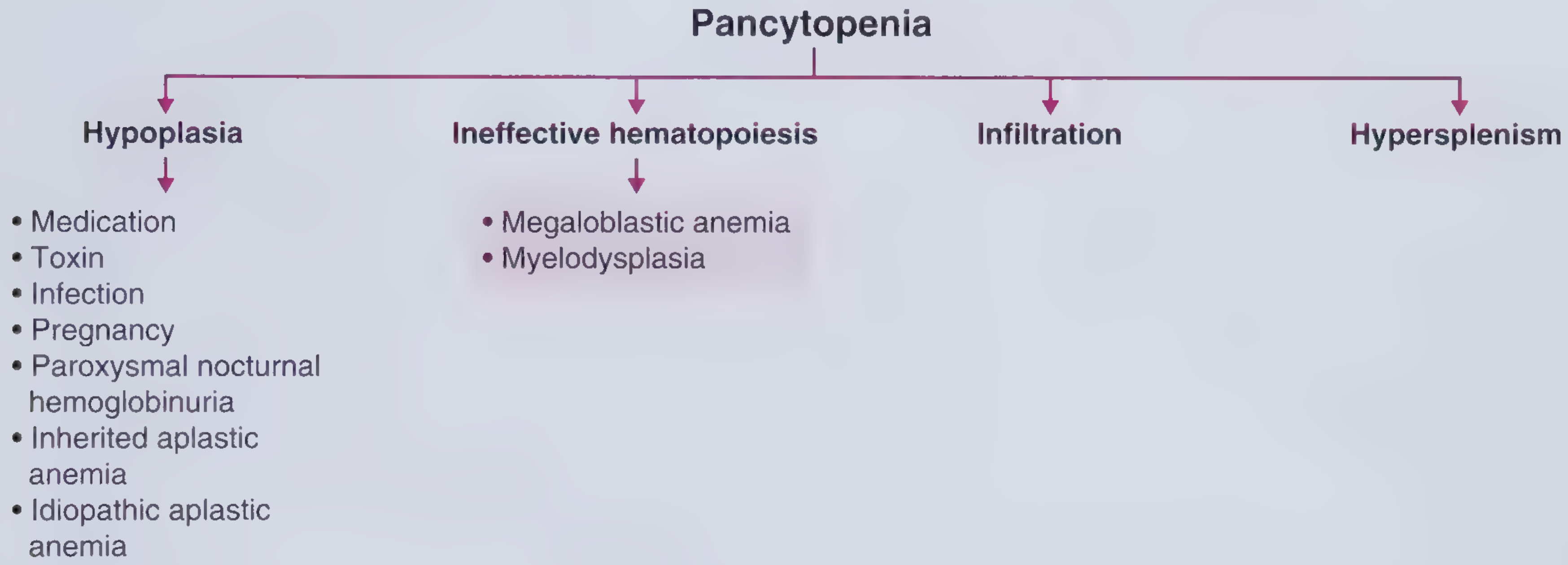
1. Bone Marrow Hypoplasia (Hypocellular Marrow)
The marrow fails to produce sufficient cells; hematopoietic stem cells are replaced by adipose tissue. This typically produces a normocytic normochromic anemia.
A. Acquired / Idiopathic
- Idiopathic (immune) aplastic anemia - the most common acquired form; T-cell mediated destruction of HSCs
- Paroxysmal nocturnal hemoglobinuria (PNH) - clonal stem cell disorder; also causes hemolysis and thrombosis
B. Medications (drug-induced marrow suppression)
- Chloramphenicol (classic; idiosyncratic and dose-related)
- Chemotherapeutic agents (doxorubicin, alkylating agents)
- Antithyroid drugs (methimazole, propylthiouracil)
- NSAIDs (indomethacin, formerly phenylbutazone)
- Anticonvulsants (carbamazepine)
- Linezolid, lithium
C. Toxins
- Benzene, insecticides
- Arsenic poisoning (also causes peripheral neuropathy and GI symptoms)
- Radiation (iatrogenic or environmental)
- Alcohol (direct marrow toxin + associated folate deficiency)
D. Infections
- Seronegative hepatitis (most common infectious trigger of aplastic anemia)
- Epstein-Barr virus, cytomegalovirus, HIV
- Parvovirus B19
- Miliary tuberculosis, dengue, leptospirosis
- Overwhelming bacterial sepsis (multifactorial)
- Hemophagocytic lymphohistiocytosis (HLH) - infection-triggered; bone marrow shows hemophagocytosis
E. Inherited causes
- Fanconi anemia (chromosomal fragility, radial ray defects)
- Telomere biology disorders (dyskeratosis congenita)
- Shwachman-Diamond syndrome, Diamond-Blackfan anemia variants
F. Other
- Pregnancy-associated aplasia
- Anorexia nervosa / starvation
- Q fever, Legionnaires' disease, atypical mycobacterium
- Copper deficiency
2. Ineffective Hematopoiesis (Cellular/Hypercellular Marrow)
The marrow is cellular but produces dysfunctional cells that are destroyed intramedullary. Note: B12/folate deficiency causes macrocytic anemia, so it is listed for completeness but is less associated with normocytic anemia.
- Myelodysplastic syndrome (MDS) - normocytic or macrocytic; progressive cytopenias, may evolve to AML; most common cause of pancytopenia in the elderly
- Vitamin B12 / folate deficiency (megaloblastic - typically macrocytic)
- Copper deficiency
3. Bone Marrow Infiltration (Myelophthisis)
Normal marrow replaced by pathological tissue, forcing extramedullary hematopoiesis. Peripheral smear shows leukoerythroblastosis and teardrop cells (dacrocytes). The anemia is typically normocytic-normochromic.
Malignant infiltration:
- Acute myeloid leukemia (AML) - most common malignant cause in adults; blasts seen on smear
- Non-Hodgkin lymphoma / bone marrow lymphoma
- Hairy cell leukemia
- Chronic leukemias
- Multiple myeloma
- Non-hematologic metastases (breast, prostate, lung, gastric cancers)
Non-malignant infiltration:
- Myelofibrosis - primary or secondary; "dry tap" on aspiration; teardrop cells prominent; normocytic normochromic anemia despite massive splenomegaly
- Miliary tuberculosis
- Leishmaniasis (kala-azar)
4. Hypersplenism
Enlarged spleen traps and destroys circulating cells, producing peripheral pancytopenia with a reactive, cellular (often hypercellular) marrow. Anemia is normocytic normochromic.
Common underlying causes:
- Liver cirrhosis / portal hypertension (most common cause of hypersplenism overall)
- Chronic infections (malaria - especially hyperreactive malarial splenomegaly, schistosomiasis, leishmaniasis)
- Lymphoma with splenomegaly
- Sarcoidosis
- Autoimmune conditions (SLE, rheumatoid arthritis / Felty syndrome)
- Gaucher disease
Harrison's Classification Summary (Cellular vs. Hypocellular Marrow)
| Pancytopenia with Hypocellular Marrow | Pancytopenia with Cellular Marrow |
|---|---|
| Acquired/immune aplastic anemia | Myelodysplastic syndromes |
| Constitutional aplastic anemia (Fanconi, etc.) | PNH |
| Hypoplastic MDS | Myelofibrosis |
| Rare aleukemic leukemia | Aleukemic leukemia / myelophthisis |
| Copper deficiency | Bone marrow lymphoma / hairy cell leukemia |
| SLE, hypersplenism, B12/folate, HIV, brucellosis, sarcoidosis, TB, leishmaniasis, sepsis |
- Harrison's Principles of Internal Medicine 22E, Chapter 107
- Frameworks for Internal Medicine, Chapter 27
Key Points for Approach
- Normochromic normocytic pattern points toward marrow failure/infiltration or hypersplenism - NOT iron deficiency or megaloblastic causes.
- Bone marrow biopsy is the cornerstone investigation - it distinguishes hypocellular (aplasia) from hypercellular (MDS, infiltration) marrow.
- A "dry tap" on aspiration suggests myelofibrosis.
- Leukoerythroblastic smear (nucleated RBCs + immature WBCs + teardrop cells) points to infiltrative causes.
- Abdominal ultrasound for spleen size is cost-effective as a first-line step.
- Flow cytometry + cytogenetics on bone marrow are essential when MDS or leukemia is suspected.
This is a shared conversation. Sign in to Orris to start your own chat.