
Cold abscess
Reading File
Now let me search the library for cold abscess content in parallel:
Finding Sources
Finding Sources
Searching PubMed
"cold abscess" tuberculosis
Good — several textbook sources found. Let me read the most relevant blocks in parallel:
Reading File
Reading File
Reading File
Reading File
Now let me fetch the most relevant images and read the Pott disease / spinal TB / psoas abscess section for more detail:
Reading File
Finding Sources
Loading Image
Let me fetch the key images (scrofuloderma and the cold abscess MRI):
Loading Image
Loading Image
Reading File
I now have comprehensive information from multiple authoritative textbooks. Here is the full synthesis:
Cold Abscess
Definition
A cold abscess is a collection of pus that develops slowly, lacks the classical signs of acute inflammation — redness (rubor), warmth (calor), and tenderness (dolor) — due to the low-grade, granulomatous nature of the underlying infection. The term "cold" reflects the absence of heat and the insidious clinical course, in contrast to a "hot" pyogenic abscess.
Pathogenesis
The paradigmatic cause is tuberculosis (TB), where Mycobacterium tuberculosis induces a granulomatous immune response. Instead of rapid neutrophilic destruction (as in pyogenic infections), TB provokes:
- Macrophage-dominated granuloma formation
- Central caseous (cheese-like) necrosis — liquefaction of the caseous material produces pus
- Accumulation in a well-defined, smooth-walled cavity with minimal surrounding inflammatory reaction
Because the host response is chronic and T-cell mediated rather than neutrophilic, there is little prostaglandin-driven heat, erythema, or acute pain — hence the abscess is "cold."
Common Sites & Clinical Presentations
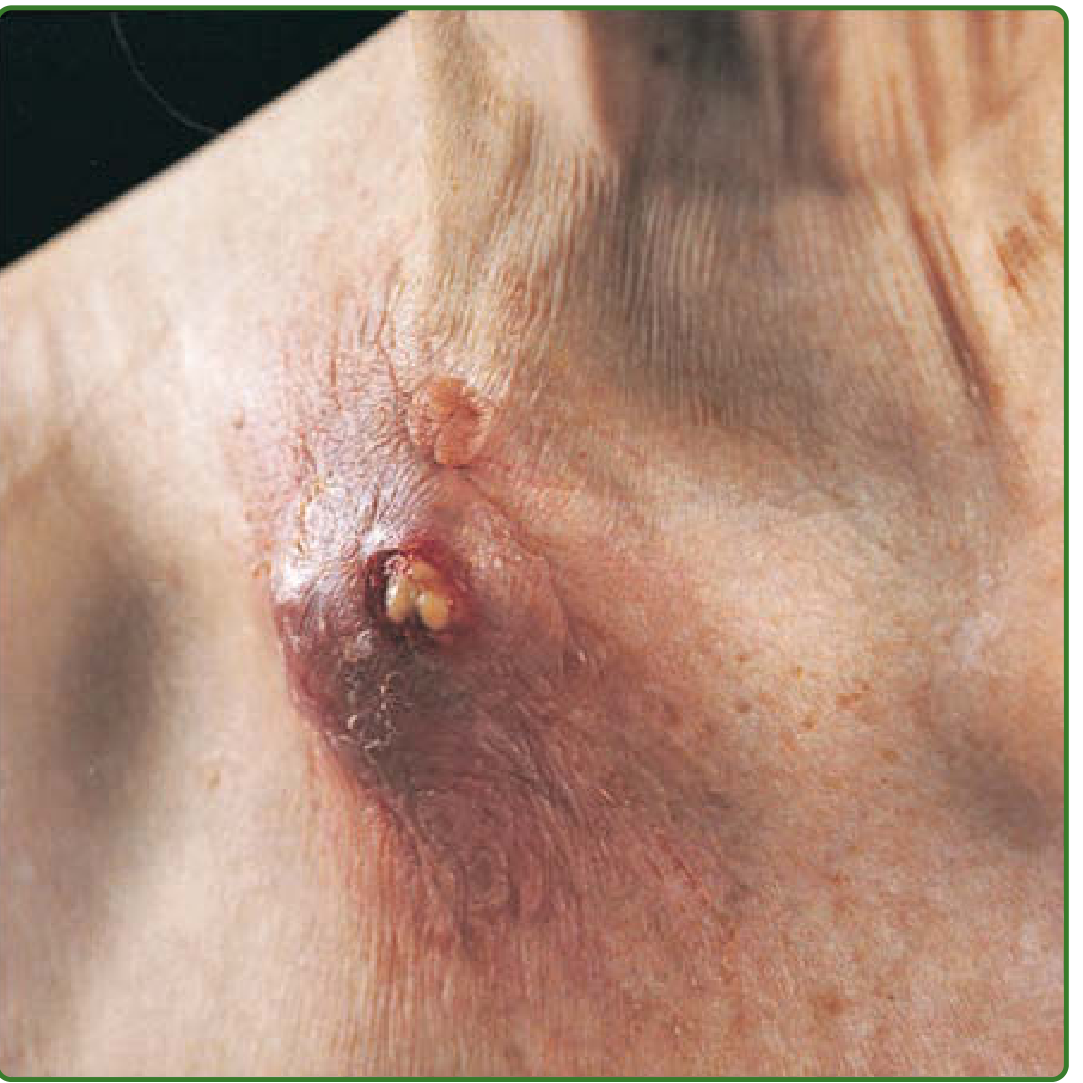
1. Scrofuloderma (Cutaneous TB)
Subcutaneous tuberculosis leads to cold abscess formation and secondary breakdown of overlying skin. It represents contiguous involvement of skin overlying another infected site — most commonly tuberculous lymphadenitis, TB of bones/joints, or tuberculous epididymitis.
- Most often in parotideal, submandibular, and supraclavicular regions (can be bilateral)
- Begins as a firm, well-defined, freely movable, asymptomatic subcutaneous nodule
- Gradually softens → liquefaction and perforation → ulcers and sinuses with linear or serpiginous undermined edges and bluish-purple skin
- Sinusoidal tracts undermine the skin; scar tracts bridge ulcerated areas
2. Mycobacterial Lymphadenitis (Scrofula)
Both M. tuberculosis and non-tuberculous mycobacteria (NTM) cause chronic cervical lymphadenitis presenting as a chronic, minimally tender "cold abscess" with overlying violaceous skin. Spontaneous drainage transforms it into a chronic draining sinus. — Tintinalli's Emergency Medicine
3. Spinal TB / Pott's Disease — Psoas Abscess
The most feared cold abscess. TB of the spine begins in the subchondral region of the vertebral body, erodes the intervertebral disc, and pus tracks along fascial planes:
- Along the psoas sheath → presenting as a groin mass (psoas/iliopsoas abscess)
- As paraspinal soft-tissue density on AP radiographs
- Can track far from the original lesion without warmth or acute tenderness
From Gray's Anatomy for Students: "The infected disc material extruded around the disc anteriorly and passed into the psoas muscle sheath… the pus spread within the psoas muscle sheath beneath the inguinal ligament to produce a hard mass in the groin. This is a typical finding for a psoas abscess."
4. Genital TB
In males, tuberculous epididymitis may manifest with a scrotal cold abscess. When it ruptures, it leaves a non-healing post-rupture sinus. — Comprehensive Clinical Nephrology
5. Other Locations
- Osteoarticular TB — any bone or joint; abscesses have smooth, thin walls
- Peritoneal/intra-abdominal TB — retroperitoneal cold abscesses
- Scrofuloderma from rib TB, sternal TB
Radiology
MRI Features (Tuberculous vs. Pyogenic)
| Feature | Pyogenic Abscess | Cold (Tuberculous) Abscess |
|---|---|---|
| Onset | Acute, severe | Insidious, chronic |
| Surrounding inflammation | Prominent, ill-defined | Minimal, well-defined |
| Abscess wall | Thick, irregular | Smooth, thin |
| Surrounding soft tissue | Widespread oedema | Little surrounding signal change |
| Sites | Usually single | Often multiple |
| Systemic markers | Elevated (high CRP, fever) | Less prominent |
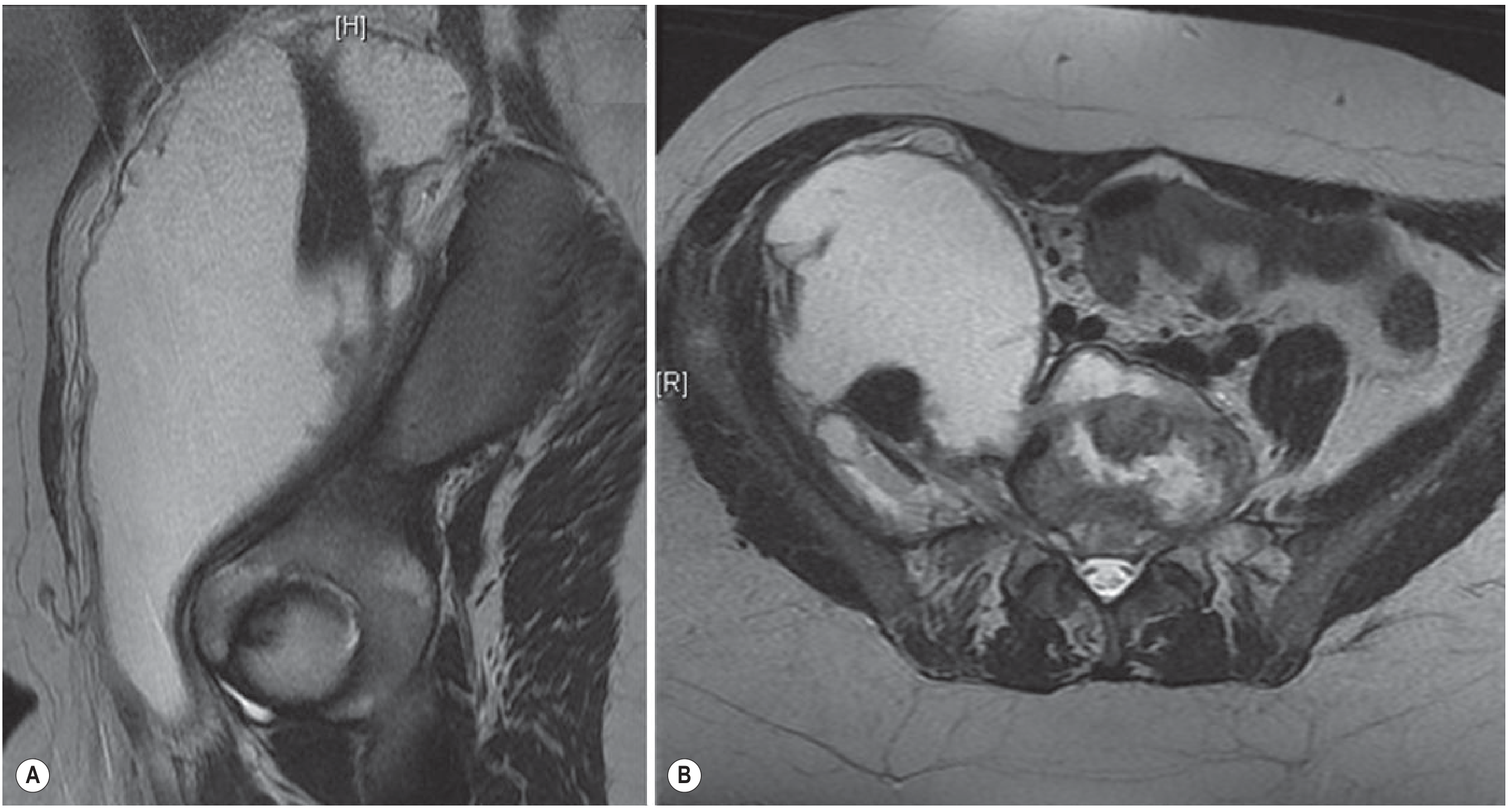
On plain radiographs of the spine, a cold abscess appears as paraspinal soft-tissue density. On CT/PET, foci of calcification within the abscess are characteristic of chronic TB cold abscesses. — Goldman-Cecil Medicine
Histopathology
- Central: massive necrosis and abscess formation (non-specific)
- Periphery / margins of sinuses: tuberculoid granulomas — the diagnostic finding
- Multinucleated Langhans giant cells surrounded by epithelioid macrophages and a rim of lymphocytes
Diagnosis
| Test | Utility |
|---|---|
| Tuberculin skin test (Mantoux) | Strongly reactive in TB cold abscess |
| Differential Mantoux (combined antigens) | Identifies TB vs. NTM in ~93% |
| Culture of aspirate | Gold standard; confirms diagnosis |
| AFB smear/NAAT (PCR) | Rapid identification of M. tuberculosis |
| Chest X-ray | Concurrent pulmonary TB in ~50% |
| MRI | Best for defining extent of soft-tissue abscess and bone involvement |
Treatment
| Cause | Treatment |
|---|---|
| M. tuberculosis | Standard 4-drug anti-TB therapy (HRZE) for 6–12 months |
| Non-tuberculous mycobacteria (NTM) | Surgical excision (lymphadenitis); NTM are more resistant |
| Psoas/large abscess | Radiologically guided percutaneous drainage + anti-TB therapy |
| Scrofuloderma | Anti-TB therapy; surgical debridement if extensive sinus tracts |
Treatment for NTM lymphadenitis is surgical excision; for tuberculous lymphadenitis, treat for 8–12 months with anti-TB drugs. — Tintinalli's Emergency Medicine
Key Distinguishing Features from a Hot (Pyogenic) Abscess
| Cold Abscess (TB) | Hot Abscess (Pyogenic) | |
|---|---|---|
| Pain | Minimal/absent | Severe, throbbing |
| Redness | None or violaceous skin | Erythema |
| Warmth | Absent | Present |
| Fluctuance | Present (late) | Present (early) |
| Systemic signs | Low-grade fever, night sweats, weight loss | High fever, rigors, leukocytosis |
| Pus consistency | Caseous / cheese-like | Creamy, purulent |
| Course | Months | Days |
Sources: Fitzpatrick's Dermatology (Vol. 1-2), Grainger & Allison's Diagnostic Radiology, Tintinalli's Emergency Medicine, Goldman-Cecil Medicine, Gray's Anatomy for Students
This is a shared conversation. Sign in to Orris to start your own chat.