
Bimalleolar fracture
I'll look this up in the medical library for you right away.
Reading File
Now let me search the medical library and web in parallel for bimalleolar fracture content.
Finding Sources
Finding Sources
Searching PubMed
"bimalleolar fracture" treatment outcomes
Excellent - I found a dedicated section in Campbell's Operative Orthopaedics. Let me read it along with the Tintinalli's section in parallel.
Reading File
Reading File
Let me fetch the bimalleolar fracture X-ray images and read more of the Campbell's section on surgical technique.
Loading Image
Loading Image
Reading File
Now let me read the operative technique section and Tintinalli's management section in parallel.
Reading File
Reading File
I now have comprehensive information from Campbell's Operative Orthopaedics and Tintinalli's Emergency Medicine. Let me also quickly check the Rockwood & Green's section on fixation of medial malleolus.
Reading File
I now have excellent, comprehensive information from three authoritative sources. Here is the full response:
Bimalleolar Fracture
Definition: A bimalleolar fracture is simultaneous fracture of both the lateral malleolus (fibula) and the medial malleolus (tibia). It disrupts both the medial and lateral stabilizing structures of the ankle joint, making it an inherently unstable injury.
Radiographic Appearance
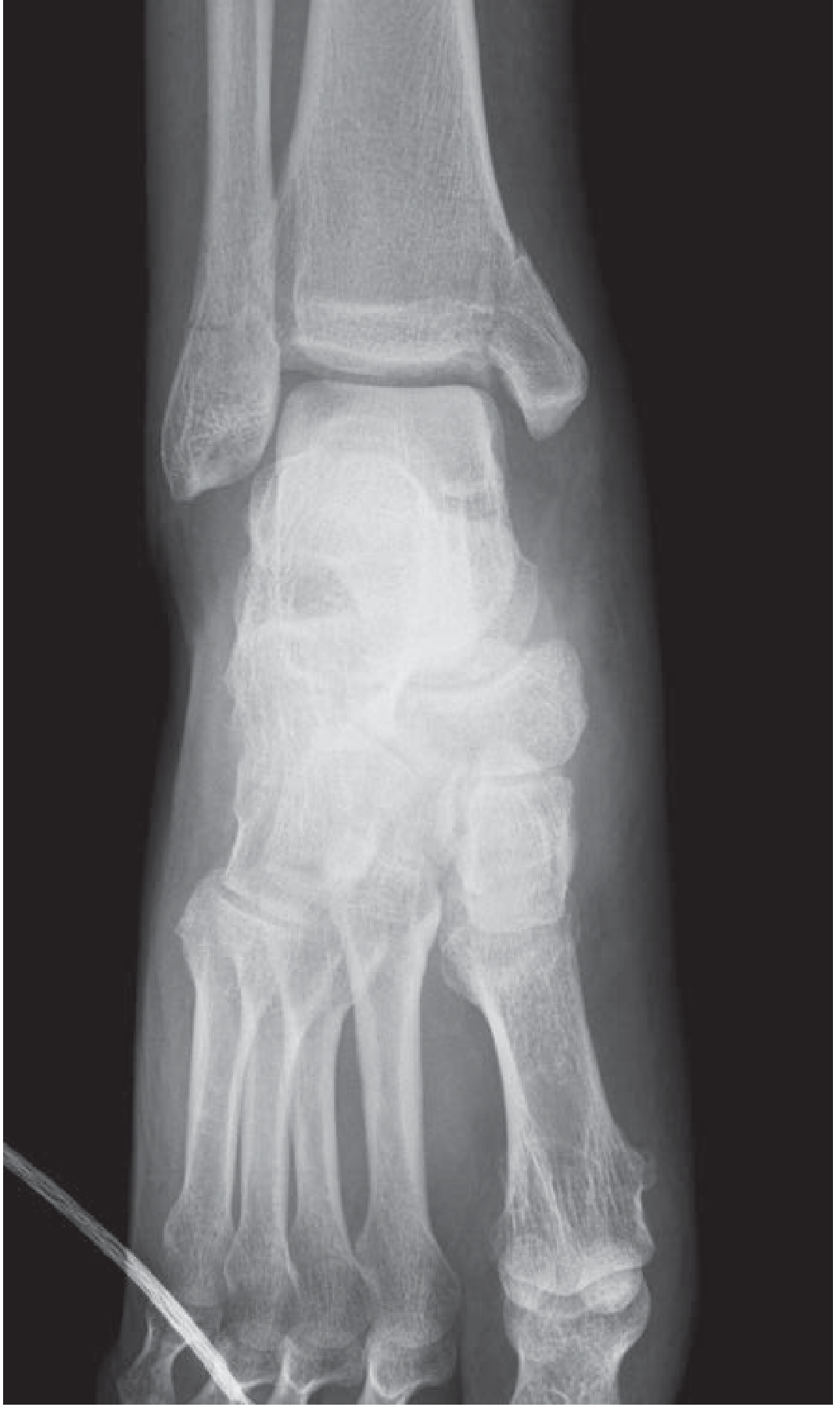
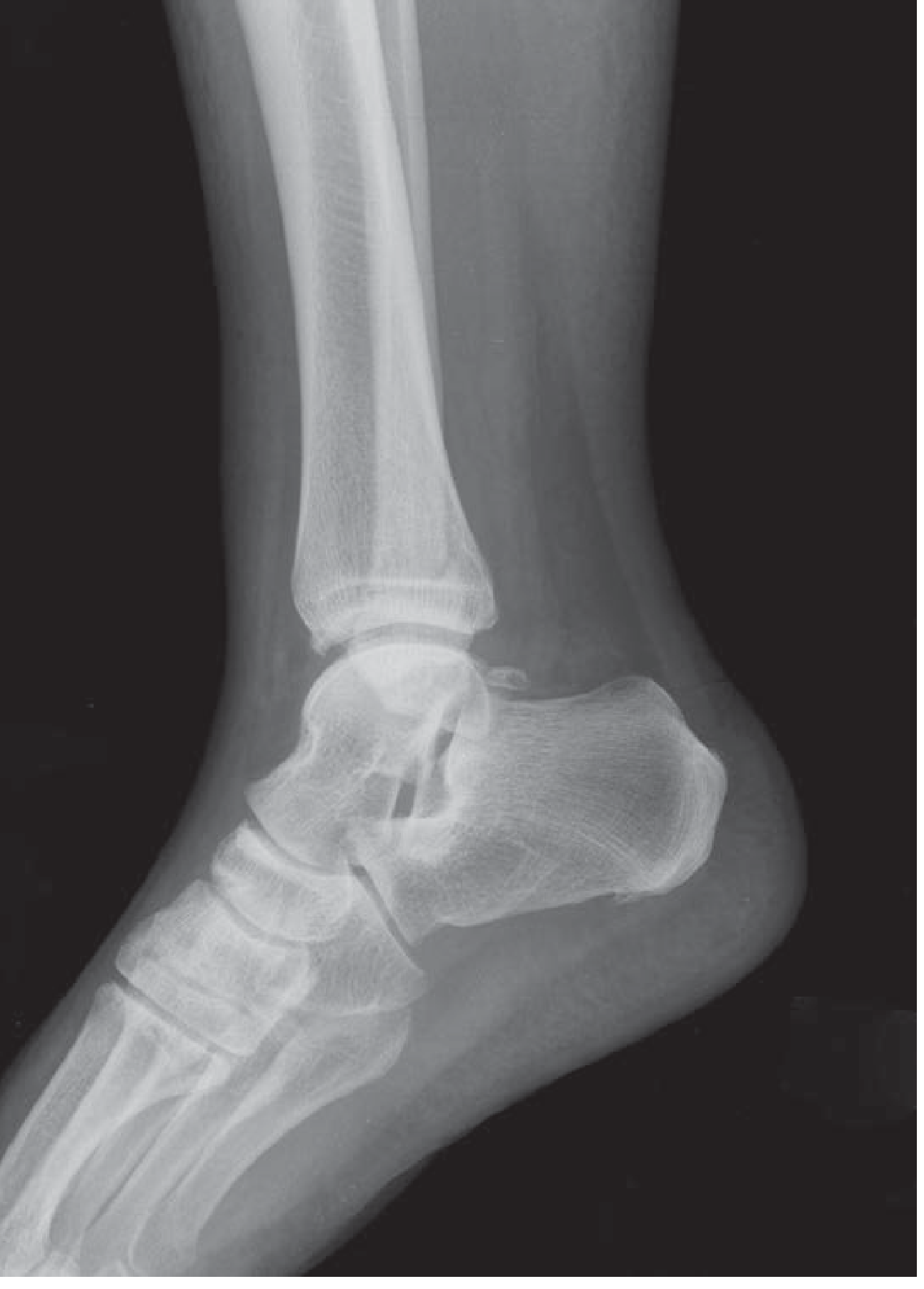
Figure 276-12. Bimalleolar fracture - AP and lateral views (Tintinalli's Emergency Medicine):
AP view:
Lateral view:
Anatomy and Mechanism
The ankle is best understood as a ring of bone and ligaments encircling the talus, composed of the tibia, tibiofibular ligament, fibula, lateral and medial ankle ligaments, and calcaneus. A single ring disruption is typically stable. Bimalleolar fractures disrupt two components and are therefore unstable.
A key principle from Yablon et al. (1977): "The displacement of the talus faithfully follows that of the lateral malleolus" - meaning restoration of fibular length and alignment is the most critical determinant of tibiotalar congruence.
Classification
Two systems are commonly used:
Danis-Weber Classification (based on fibular fracture level)
| Type | Level | Stability |
|---|---|---|
| A | Below syndesmosis | Stable (pronation injury) |
| B | At level of syndesmosis | Partially unstable |
| C | Above syndesmosis | Unstable, syndesmosis disrupted |
Lauge-Hansen Classification (based on foot position at injury)
Based on foot position + deforming force direction:
- Supination-Adduction (SAD)
- Supination-External Rotation (SER) - most common; SER Stage IV = classic bimalleolar pattern
- Pronation-Abduction (PAB)
- Pronation-External Rotation (PER)
Clinical Features
- Pain, swelling, deformity of the ankle
- Inability to bear weight
- Ottawa Ankle Rules guide radiograph ordering
- Always examine the proximal fibula (rule out Maisonneuve fracture)
- Check for: peroneal tendon dislocation, syndesmosis tear, osteochondral injuries
Key examination findings:
- Manual external rotation stress test
- Cotton test (lateral talar shift)
- Squeeze test (syndesmosis)
Why Closed Treatment Often Fails
- Displacement reduces tibiotalar contact area and alters joint kinematics
- Closed reduction can be achieved but not maintained as swelling subsides
- ~10% nonunion rate with closed methods
- 20% of bimalleolar fractures have intra-articular injuries to the talus/tibia that go unrecognized and untreated with closed methods
- Randomized prospective studies show superior results with operative over non-operative treatment
Treatment
Emergency Department Management
All bimalleolar fractures require immediate orthopedic consultation in the ED:
- Posterior splint + stirrup application
- Non-weight bearing
- Ice and elevation
- Analgesia
- If fracture-dislocation: urgent closed reduction even if definitive ORIF is delayed - mandatory to prevent skin necrosis
Operative Treatment - ORIF (Standard of Care)
Timing:
- ORIF is possible within the first 12 hours, or must be delayed 2-3 weeks until swelling resolves
- Immediate vs. delayed ORIF show equal functional outcomes, but immediate surgery has shorter hospitalization and less pain in some studies
- Delayed surgery is appropriate when fracture blisters or severe soft-tissue swelling is present
Surgical sequence: Lateral malleolus is fixed before the medial malleolus in most cases (exception: severe lateral comminution, which may cause overcorrection and prevent medial reduction).
Lateral Malleolus Fixation Options (Technique 59.1, Campbell's)
| Fracture Pattern | Fixation Method |
|---|---|
| Oblique, good bone stock | 1-2 lag screws (anterior to posterior), placed ~1 cm apart |
| Transverse | Intramedullary device (titanium elastic nail, interlocking fibular rod) |
| Simple oblique, young patient <50y | Lag screw-only technique (less implant prominence) |
| Osteopenic bone | 1/3 semitubular plate + K-wire augmentation |
| Standard | 1/3 semitubular 3.5 mm plate and screws |
| Weber B, antiglide approach | Posterior plating (avoids intra-articular screws, less palpable hardware) |
Important technical points:
- Lag screws must engage the posterior cortex but must not protrude into peroneal tendon sheaths
- Intramedullary devices must be contoured to avoid tilting the lateral malleolus medially (narrows mortise)
- Protect the superficial peroneal nerve during lateral approach
Medial Malleolus Fixation
- Fixation of the medial malleolus only is insufficient - fixation of the lateral malleolus more predictably restores tibiotalar congruence
- Medial fixation uses malleolar screws (usually 4 mm), tension band wiring for small fragments, or plate fixation
Syndesmotic Injury
- Present in most Weber C and some Weber B injuries
- If fibular fracture is above the distal tibiofibular joint, assume syndesmosis is disrupted
- Syndesmotic fixation is required if medial injury coexists and the disruption extends > 4.5 cm proximal to the ankle joint
- Assessed intraoperatively with external rotation stress test, Cotton test, and drawer examination under fluoroscopy
Special Populations
| Population | Consideration |
|---|---|
| Elderly (>65) | RCT (Willett et al.) showed equal 6-month outcomes for surgery vs. close-contact cast, but 25% conservative failure rate + 15% malunion; surgical wound complication rate ~10% |
| Osteoporosis/Diabetes/Neuropathy | Higher complication risk; K-wire augmentation of plating; may require prolonged non-weight bearing |
| Open fracture | Urgent debridement + definitive ORIF; even in high-risk patients (diabetes + neuropathy), internal fixation after debridement is appropriate |
Complications
- Post-traumatic arthritis (most common long-term complication, especially with malreduction)
- Nonunion (~10% with closed treatment)
- Wound complications / infection
- Implant prominence (especially lateral plate) - only ~50% get pain relief after implant removal
- Peroneal tendon injury (up to 30% after lateral plate removal, related to distal lag screw)
- Transient peroneal tendinitis (posterior antiglide plating)
- Syndesmotic malreduction
Outcomes
- Bimalleolar fracture outcomes are generally better than trimalleolar fractures
- Key determinant of outcome: anatomic reduction of the talus under the mortise
- Long-term follow-up confirms operative treatment superiority over non-operative for displaced fractures
- Supination-External Rotation Stage IV fractures also show superior results with operative treatment on long-term follow-up
Sources: Campbell's Operative Orthopaedics 15th Ed 2026, p. 3324; Rockwood and Green's Fractures in Adults 10th Ed 2025, p. 3312; Tintinalli's Emergency Medicine, p. 1910
This is a shared conversation. Sign in to Orris to start your own chat.