
Malnutrition
Reading File
The query "Malnutrition" is broad. Let me clarify scope before diving deep.
Asking for Preferences
What aspect of malnutrition are you interested in? · What is your context?
I'll provide a comprehensive overview. Let me search the medical library and recent literature in parallel.
Finding Sources
Searching PubMed
"malnutrition"[MeSH Terms] AND ("diagnosis" OR "management")
Searching the Web
malnutrition types causes clinical features diagnosis treatment 2024
Good results. Now let me read the most comprehensive sections — Robbins Pathology (core pathophysiology) and Sabiston Surgery (clinical management) — in parallel.
Reading File
Reading File
Finding Sources
Excellent content retrieved. Now let me read the Robbins Pathology section on SAM (kwashiorkor/marasmus) and the Lippincott Biochemistry comparison table in parallel.
Reading File
Reading File
Finding Sources
Now let me get the treatment/management section and the kwashiorkor continuation from Robbins:
Reading File
Reading File
Searching Images
kwashiorkor marasmus protein energy malnutrition children
I now have comprehensive information to write a thorough response. Let me also quickly check the morphology and treatment sections from Robbins.
Reading File
I now have sufficient comprehensive content. Here is a complete, textbook-grounded overview of malnutrition:
Malnutrition
Definition & Classification
Malnutrition is an imbalance between nutrient intake and the body's requirements, resulting in deficits that impair physiological function.
- Primary malnutrition: Dietary intake itself is insufficient (poverty, famine, food insecurity).
- Secondary (conditional) malnutrition: Dietary intake is adequate, but malnutrition results from malabsorption, impaired use/storage, excess losses, or increased requirements. Categories include:
- Gastrointestinal diseases (celiac, IBD, short-gut syndrome, pancreatitis)
- Chronic wasting diseases (cancer cachexia, tuberculosis, AIDS)
- Acute critical illness (burns, sepsis, major surgery)
Causes
| Category | Examples |
|---|---|
| Poverty & food insecurity | Refugees, war, drought, crop failure |
| Ignorance | Unrecognized needs of infants, elderly, pregnant women |
| Chronic excess alcohol use | Poor diet + impaired absorption of thiamine, folate, B6, vitamin A |
| Acute/chronic illness | Burns (BMR may double), advanced cancer, disseminated TB, AIDS |
| Self-imposed restriction | Anorexia nervosa, bulimia, restrictive diets |
| GI/malabsorption | IBD, celiac, short-gut, protein-losing enteropathy, nephrotic syndrome |
| Hospitalization | Fasting for procedures, catabolic hormones, drugs (corticosteroids, chemotherapy) |
Severe Acute Malnutrition (SAM)
The WHO defines SAM as weight-for-height ≥3 SD below the median, visible wasting, or nutritional edema. ~50 million children worldwide are affected; ~45% of deaths in children under 5 in low-resource countries are attributable to undernutrition.
SAM has two protein compartments affected differently:
- Somatic compartment (skeletal muscle) — more depleted in marasmus
- Visceral compartment (liver proteins, albumin) — more depleted in kwashiorkor
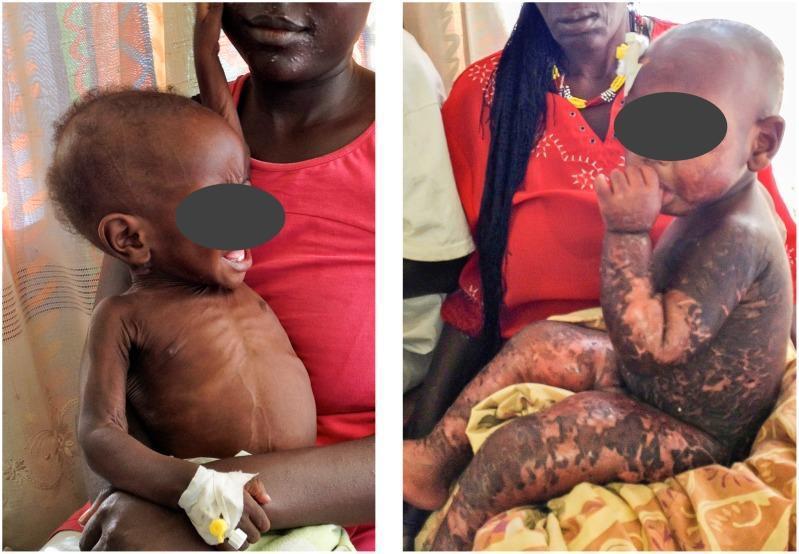
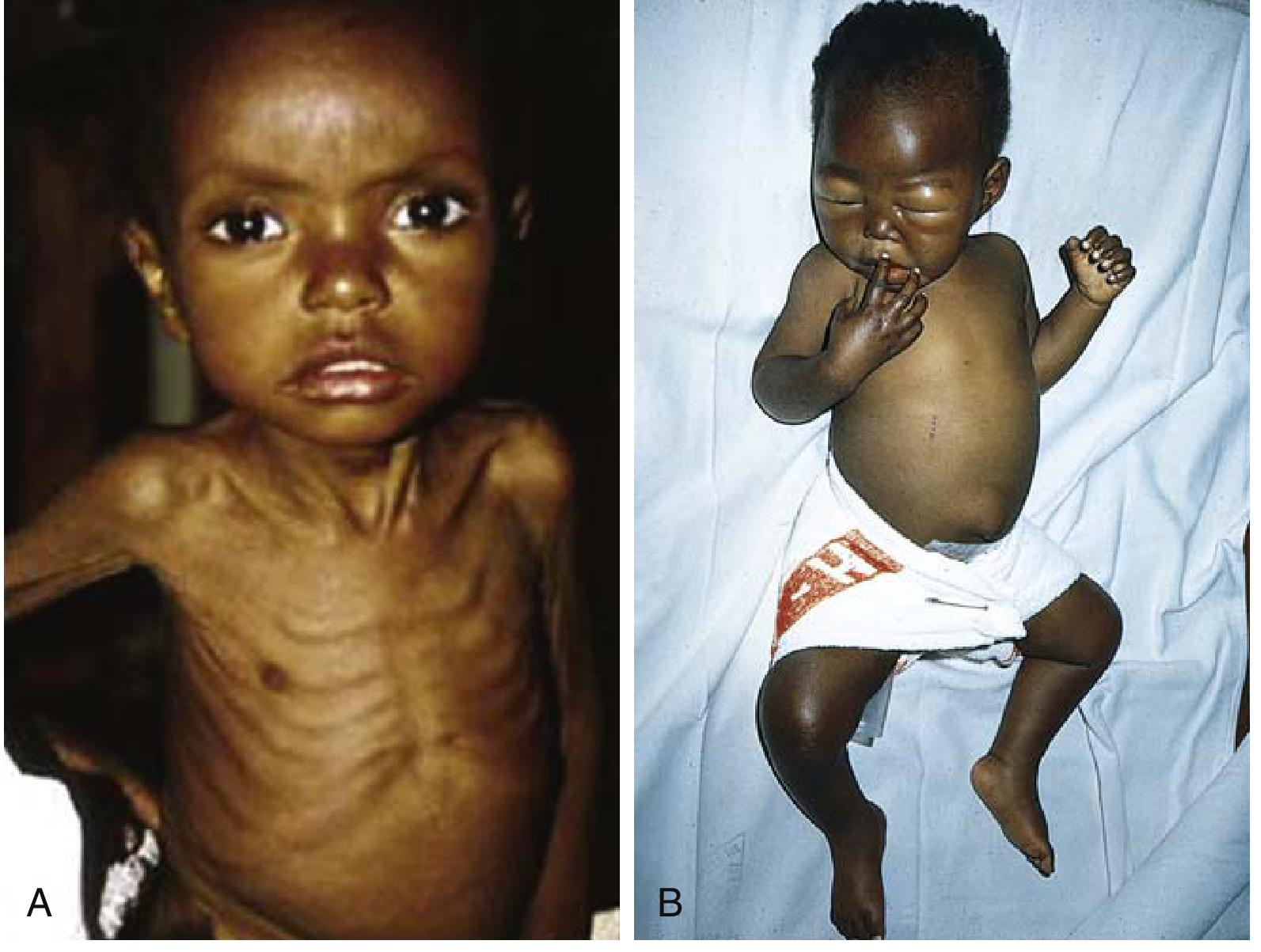
Marasmus vs. Kwashiorkor
| Feature | Marasmus | Kwashiorkor |
|---|---|---|
| Primary deficit | Severe calorie (and protein) deprivation | Protein deprivation relatively greater than calorie reduction |
| Weight for age | <60% of expected | 60–80% of expected |
| Edema | Absent | Present (bilateral pitting; ascites) |
| Muscle/fat wasting | Marked (emaciation, "old man" facies, "baggy pants" sign) | Relatively spared (masked by edema) |
| Serum albumin | Normal or near-normal | Markedly low (hypoalbuminemia drives edema) |
| Liver | Normal | Enlarged and fatty (impaired lipoprotein synthesis) |
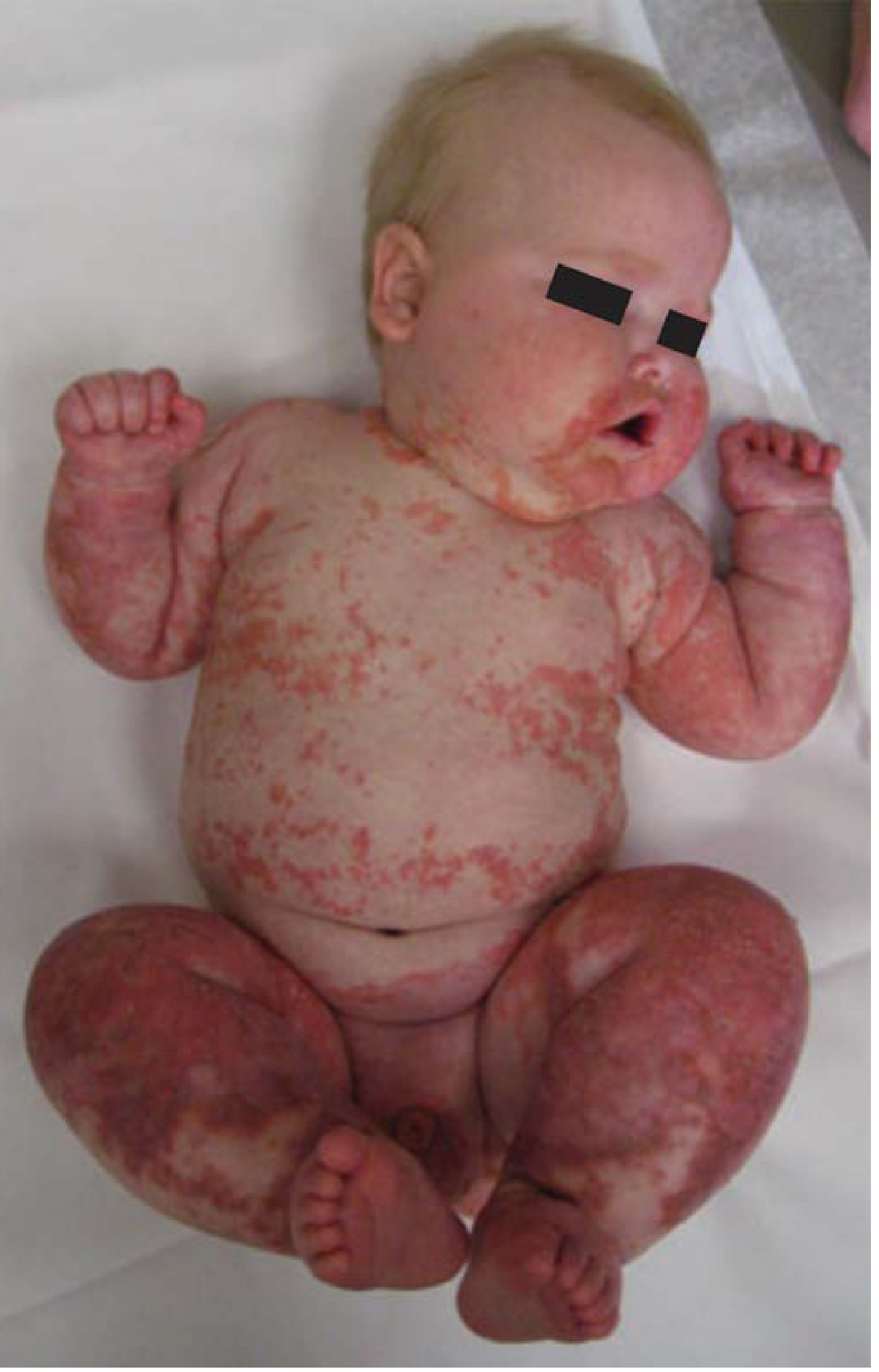
| Skin/hair | Less affected | "Flaky paint" dermatosis; depigmented hair; bands of pale/dark color |
| Behavior | Alert but weak | Apathy, listlessness, loss of appetite |
| Mechanism | Adaptive: cortisol + low leptin → lipolysis; somatic muscle catabolized for gluconeogenesis; visceral protein preserved | Non-adapted: insulin (from carb intake) suppresses lipolysis/proteolysis → visceral protein depleted; fatty liver |
Marasmic-kwashiorkor is a mixed form with features of both.
Pathological Changes (Morphology)
- Growth failure in both forms
- Peripheral edema in kwashiorkor; absent in marasmus
- Fatty liver in kwashiorkor (reduced apolipoprotein synthesis → impaired VLDL export → hepatic triglyceride accumulation)
- Small bowel atrophy: decreased crypt mitoses, villous atrophy, disaccharidase deficiency → lactose intolerance (reversible with treatment)
- Bone marrow hypoplasia: predominantly decreased red cell precursors → microcytic anemia (iron deficiency) ± macrocytic component (folate deficiency)
- Cerebral atrophy in infants: reduced neurons, impaired myelination (most critical in first 1–2 years of life)
- Thymic and lymphoid atrophy → impaired T cell–mediated immunity → susceptibility to secondary infections (helminths, TB, etc.)
- Secondary malnutrition signs: subcutaneous fat depletion (arms, chest, shoulders), quadriceps/deltoid wasting, ankle/sacral edema
Gut Microbiome
Recent evidence shows the gut microbiome is substantially altered in SAM — these changes appear to be not merely a consequence but may play a causative role in the pathogenesis of SAM. — Robbins & Kumar Basic Pathology
Secondary Malnutrition (Hospital & Chronic Illness)
More prevalent in high-income countries — >50% of US nursing home residents may be malnourished. Weight loss >5% due to malnutrition increases mortality risk ~5-fold.
Mechanisms in hospitalized patients (from Goldman-Cecil Medicine):
- Reduced food intake (anorexia, GI symptoms, procedure fasting)
- Increased catabolism: cortisol, catecholamines, glucagon, pro-inflammatory cytokines (IL-1, IL-6, TNF-α)
- Peripheral resistance to insulin and IGF-1
- Drug effects: corticosteroids, chemotherapy, diuretics
- Bedrest and immobility → muscle wasting
Screening & Diagnosis
Screening tools:
| Tool | Setting |
|---|---|
| NRS-2002 (Nutritional Risk Screening 2002) | Hospitalized adults — most widely used; predicts postoperative complications |
| MNA-SF (Mini Nutritional Assessment–Short Form) | Elderly / outpatient |
| SNAQ (Short Nutritional Assessment Questionnaire) | Predicts future involuntary weight loss |
| MUST (Malnutrition Universal Screening Tool) | Community settings |
| SGA (Subjective Global Assessment) | General, but limited in critically ill |
GLIM diagnostic criteria (Global Leadership Initiative on Malnutrition — current standard):
- Phenotypic criteria (≥1 required): unintentional weight loss, low BMI, reduced muscle mass
- Etiologic criteria (≥1 required): reduced food intake/assimilation, or high disease burden (inflammation)
- Severity: moderate or severe
Objective parameters:
- Skinfold thickness (fat stores)
- Mid-arm circumference (somatic protein/muscle mass)
- Serum albumin, transferrin (visceral protein compartment)
- Weight-for-height vs. standard tables
Management
1. Nutritional Rehabilitation
- Oral feeding is preferred; high-calorie, high-protein diet with vitamin and mineral supplementation
- Refeeding caution: Severely malnourished patients are at risk of refeeding syndrome — rapid carbohydrate administration drives phosphate into cells → severe hypophosphatemia; also hypokalemia and hypomagnesemia. Monitor and correct electrolytes before and during refeeding
- Kwashiorkor and lactose intolerance: Initial feeding should avoid full-strength milk-based diets due to disaccharidase deficiency; mucosal changes reverse with treatment
2. Enteral Nutrition
- Preferred over parenteral when GI tract is functional (tube feeding)
3. Parenteral Nutrition
- Reserved for patients with non-functional GI tracts; requires vitamin (especially thiamine) and mineral supplementation
4. Micronutrient Correction
- Vitamin C: 10–2000 mg/day reverses impaired wound healing
- Vitamin A: Corrects immune suppression; reverses steroid-impaired wound healing
- Zinc: Critical for RNA/DNA polymerase; supplement in burns, polytrauma, cirrhosis
- Iron: Correct iron-deficiency anemia
- Thiamine: Must be given before glucose in alcoholic malnourished patients to prevent irreversible Wernicke-Korsakoff syndrome
- Folate, B6: Especially in chronic alcohol use
5. Treat Underlying Cause
- Address GI disease, malignancy, infection, eating disorders, or psychosocial determinants
Special Scenarios
Anorexia & Bulimia Nervosa
Self-induced; clinical picture similar to SAM. Key features unique to anorexia: amenorrhea (low GnRH → low LH/FSH), bradycardia, cold intolerance (low T3), lanugo hair, decreased bone density, and risk of sudden cardiac death from hypokalemia (arrhythmia).
Cancer Cachexia
Driven by TNF-α, IL-1, IL-6 — distinct metabolic syndrome with anorexia, muscle wasting, and inflammation; not fully reversible with nutrition alone.
Wound Healing
Hypoalbuminemia (<2.0 g/dL) delays healing and promotes wound dehiscence. Protein supplements, vitamins A and C, and zinc are essential for wound repair.
Global Burden
- ~45% of under-5 deaths in low-resource countries linked to undernutrition
- ~50 million children affected by SAM worldwide
- Malnutrition increases susceptibility to infections (impaired cell-mediated immunity) and creates a vicious cycle: infection → catabolism → worse malnutrition
Sources: Robbins & Kumar Basic Pathology; Goldman-Cecil Medicine; Lippincott Illustrated Reviews Biochemistry; Sabiston Textbook of Surgery; Sleisenger & Fordtran's GI & Liver Disease
This is a shared conversation. Sign in to Orris to start your own chat.