
Search for microscopy images of epithelial types
Reading File
Now let me search for epithelial types in the medical library - this is a visual/histology query so image retrieval is the priority.
Finding Sources
Finding Sources
Junqueira's Basic Histology is the right source. Let me search for the epithelium classification sections and their images directly.
Finding Sources
Finding Sources
Reading File
Finding Sources
Let me now read the Histology textbook plates for epithelial types and Junqueira's epithelium sections to find image URLs.
Reading File
Finding Sources
Now let me read the plate sections from the Histology textbook (around line 1695 and beyond) which should contain microscopy images of all epithelial types.
Reading File
Let me search for the plates sections with actual microscopy images in the Histology textbook:
Finding Sources
Reading File
Excellent! I found images. Let me continue reading to get more plates and image URLs, and also read backward to find the full PLATE 5.1 section:
Reading File
Reading File
I now have multiple microscopy images across different epithelial types. Let me also quickly get the pseudostratified/stratified squamous sections and then fetch the most important images:
Reading File
I now have all the image URLs I need. Let me fetch the key microscopy images in parallel:
Loading Image
Loading Image
Loading Image
Loading Image
Loading Image
Loading Image
Loading Image
Loading Image
Most images are in thumbnail/grid layout format. The full composite plate (82ddde8...) came through beautifully showing multiple types. Let me also fetch the transitional epithelium image and check for the stratified squamous section:
Loading Image
Reading File
Now let me fetch the full composite plates that contain multiple epithelial types:
Loading Image
Loading Image
Loading Image
I have all the key images. Now let me compile a comprehensive, well-organized response with the microscopy images.
Microscopy Images of Epithelial Types
All images are from Histology: A Text and Atlas with Correlated Cell and Molecular Biology (H&E stains).
Classification Overview
Epithelium is classified by two criteria:
- Number of layers: simple (one layer) vs. stratified (two or more layers)
- Shape of surface cells: squamous (wider than tall), cuboidal (equal dimensions), columnar (taller than wide)
Special types include pseudostratified and transitional (urothelium).
PLATE 5.1 - Simple Squamous & Simple Cuboidal Epithelia
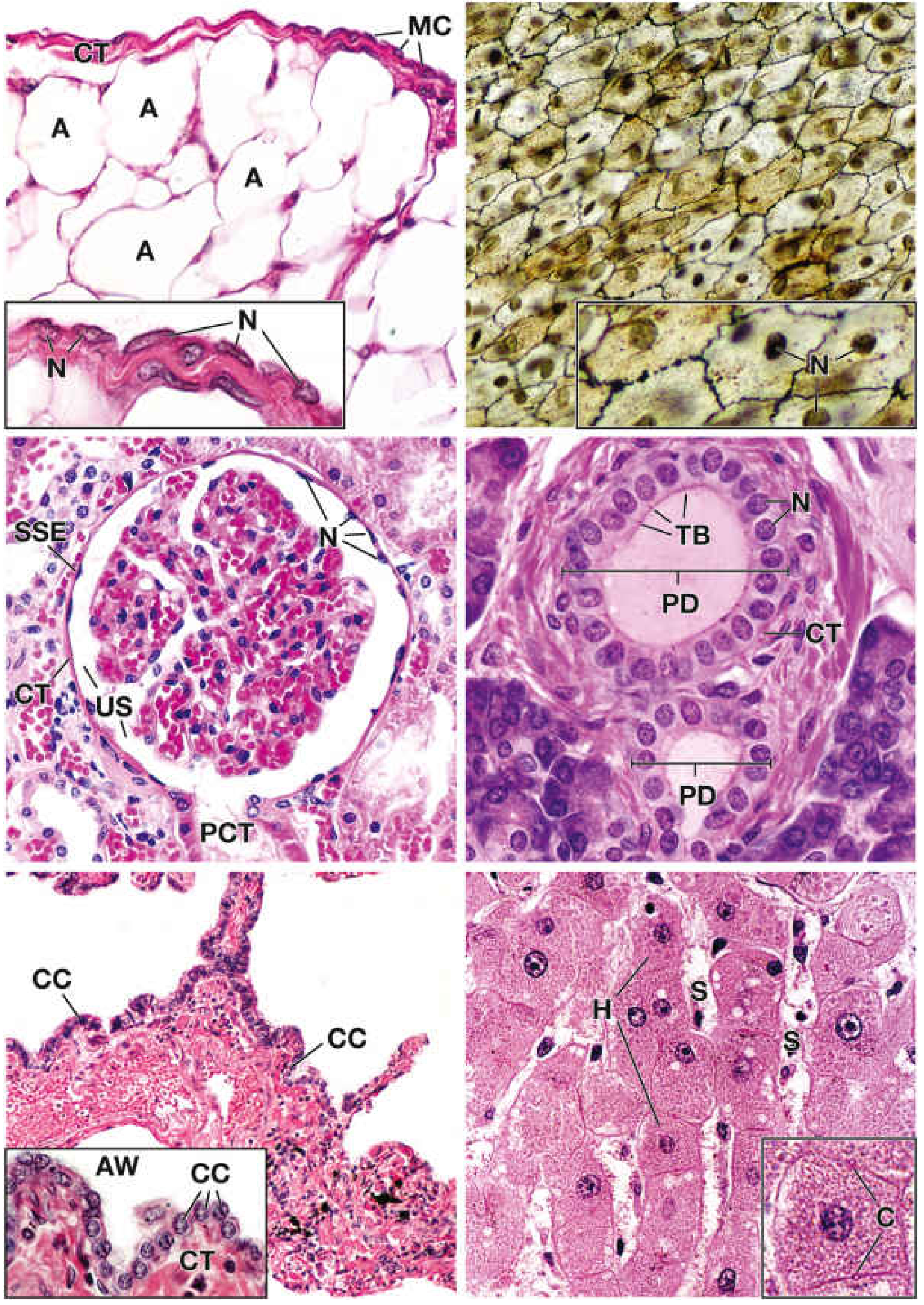
Top-left: Simple squamous epithelium (mesothelium) over adipose tissue (A). MC = mesothelial cell nuclei visible as a flat single layer. CT = connective tissue.
Top-right: Simple squamous endothelium shown with silver stain - individual cell borders and central nuclei (N) are clearly visible.
Middle-left: Kidney glomerulus with simple squamous epithelium (SSE) lining Bowman's capsule (urinary space = US). Proximal convoluted tubule (PCT) lined by simple cuboidal cells.
Middle-right: Pancreatic duct (PD) lined by simple cuboidal epithelium. TB = terminal bar (junctional complex) at apical cell borders. CT = surrounding connective tissue.
Bottom-left: Respiratory bronchiole (airway = AW) lined by cuboidal cells (CC) with an inset at higher magnification.
Bottom-right: Liver parenchyma - hepatocytes (H) are simple cuboidal cells arranged in cords separated by blood sinusoids (S). Inset shows bile canaliculus (C) between adjacent hepatocytes.
PLATE 5.2 - Simple & Stratified Epithelia (including Pseudostratified)
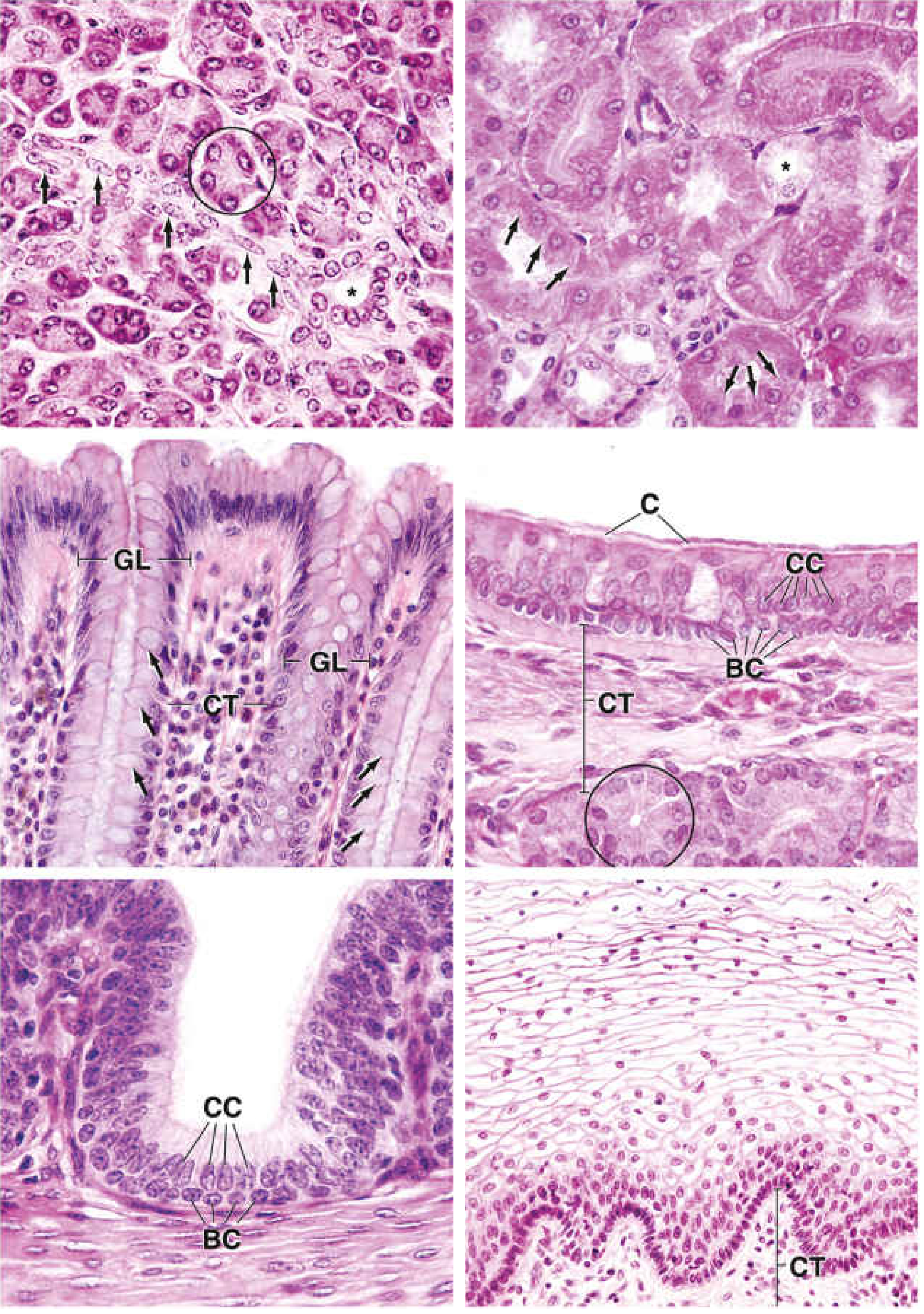
Top-left: Exocrine pancreas showing simple columnar/cuboidal arrangements. Arrows mark duct cells (simple squamous/cuboidal); circled acini show simple columnar secretory arrangement.
Top-right: Kidney tubules showing simple cuboidal cells (arrows mark lateral boundaries; asterisk marks smaller cuboidal tubule).
Middle-left: Simple columnar epithelium of the colon. Intestinal glands (GL) extend into the connective tissue (CT). Arrows point to goblet cells with their pale mucus cups.
Middle-right: Pseudostratified ciliated columnar epithelium (trachea). Cilia (C) visible at apical surface, columnar cells (CC) and basal cells (BC) both contact the basement membrane but create a false stratified appearance. Circle = tracheal gland (simple columnar).
Bottom-left: Pseudostratified columnar epithelium (epididymis). Two rows of nuclei - columnar cells (CC) and basal cells (BC) - all anchored to basement membrane. Note stereocilia (modified long microvilli) at apical surface.
Bottom-right: Stratified squamous nonkeratinized epithelium (vagina). Multiple cell layers, surface cells remain nucleated and squamous. Deeper basal cells are smaller and more crowded. CT = connective tissue.
PLATE 5.3 - Stratified Epithelia, Transitional & Epithelioid Tissues
Stratified squamous (esophagus) + stratified cuboidal (esophageal gland duct):
The esophageal wall (left of specimen) shows stratified squamous epithelium (SS). The esophageal gland duct (right) shows stratified cuboidal (StCu) - two layers with cuboidal surface cells. This side-by-side appearance in one section is a useful teaching comparison.
Stratified squamous keratinized (skin - epidermis):
Epidermis shows the full keratinization gradient: nucleated basal and spinous layers at the base progressing to the anucleate cornified squames at the surface.
Stratified columnar epithelium (anorectal junction):
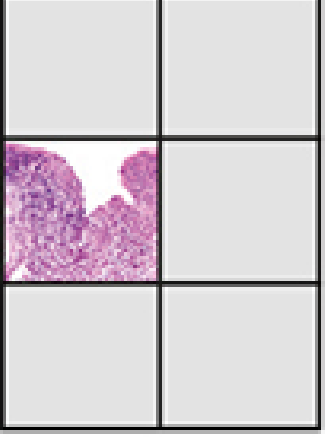
Abrupt transition (arrowhead) from simple columnar colon epithelium (left) to stratified cuboidal at the anal canal (right). This junction is a classic location to observe epithelial type switching.
Transitional epithelium / Urothelium (urinary bladder):
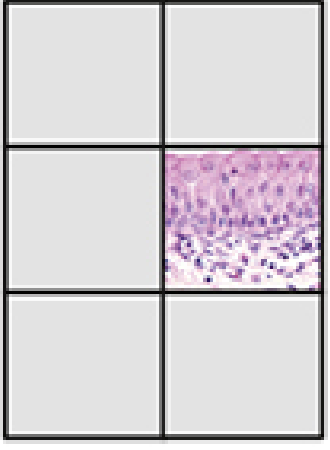
Non-distended bladder (4-5 layers thick). Dome-shaped umbrella cells (asterisks) occupy the surface. Intermediate cells are pear-shaped. Basal cells are smallest with closely-packed nuclei. On distension, surface cells flatten and total thickness reduces to ~3 layers.
Summary Table
| Type | Layers | Cell Shape | Key Locations |
|---|---|---|---|
| Simple squamous | 1 | Flat | Endothelium, mesothelium, Bowman's capsule, alveoli |
| Simple cuboidal | 1 | Equal dimensions | Kidney tubules, thyroid follicles, ducts, liver |
| Simple columnar | 1 | Taller than wide | GI tract, gallbladder, uterine tubes |
| Pseudostratified columnar | 1 (appears stratified) | Mixed heights | Trachea/bronchi (ciliated), epididymis |
| Stratified squamous nonkeratinized | Multiple | Squamous surface | Oral cavity, esophagus, vagina, cornea |
| Stratified squamous keratinized | Multiple | Squamous + keratin | Epidermis (skin) |
| Stratified cuboidal | Multiple | Cuboidal surface | Sweat gland ducts, esophageal gland ducts |
| Stratified columnar | Multiple | Columnar surface | Rare - large ducts, urethra |
| Transitional (urothelium) | Multiple (variable) | Dome-shaped surface | Renal calyces, ureter, bladder, proximal urethra |
Source: Histology: A Text and Atlas with Correlated Cell and Molecular Biology, Plates 5.1-5.3
Search for microscopy images of epithelial types
Finding Sources
Finding Sources
Reading File
I now have all the image URLs. Let me fetch all the key microscopy plates in parallel:
Loading Image
Loading Image
Loading Image
Loading Image
Reading File
Now I have all the image content I need. Let me fetch the remaining key plates in parallel:
Loading Image
Loading Image
Loading Image
I now have all the images retrieved. Here is the complete, organized reference with all the microscopy images from Histology: A Text and Atlas with Correlated Cell and Molecular Biology.
Microscopy Images of Epithelial Types
Source: Histology: A Text and Atlas with Correlated Cell and Molecular Biology — Plates 5.1, 5.2, 5.3. All stains are H&E unless noted.
Classification Primer
Epithelium is named by combining two descriptors:
- Layers: Simple (one cell thick) or Stratified (two or more layers)
- Surface cell shape: Squamous (wider than tall) / Cuboidal (equal dimensions) / Columnar (taller than wide)
Special types: Pseudostratified (looks stratified but all cells touch the basement membrane) and Transitional/Urothelium (changes shape with distension).
PLATE 5.1 — Simple Squamous & Simple Cuboidal Epithelia
| Panel | Type | Tissue | Key Features |
|---|---|---|---|
| Top-left | Simple squamous | Mesovarium mesothelium, H&E ×350 | Flat MC nuclei as single layer over adipose (A) |
| Top-right | Simple squamous | Mesentery endothelium, silver ×350 | Polygonal cell outlines, disc-like nuclei (N) |
| Middle-left | Simple squamous | Kidney Bowman capsule, H&E | SSE lines urinary space (US); PCT = proximal tubule (cuboidal) |
| Middle-right | Simple cuboidal | Pancreatic duct (PD), H&E | Cells equally wide and tall; terminal bars (TB) at apical junctions |
| Bottom-left | Simple cuboidal | Respiratory bronchiole, H&E | Cuboidal cells (CC) lining airway (AW) |
| Bottom-right | Simple cuboidal | Liver, H&E | Hepatocytes (H) in cords; sinusoids (S); bile canaliculus (C) in inset |
PLATE 5.2 — Simple & Pseudostratified & Stratified Squamous Epithelia
| Panel | Type | Tissue | Key Features |
|---|---|---|---|
| Top-left | Simple columnar / cuboidal | Exocrine pancreas, H&E ×450 | Acini (circled) = columnar; ducts and small tubules = cuboidal (asterisk) |
| Top-right | Simple cuboidal | Kidney tubules, H&E | Arrows = lateral cell boundaries; asterisk = smaller cuboidal tubule |
| Middle-left | Simple columnar | Colon, H&E ×350 | Tall cells with basal nuclei; goblet cells (pale cups, arrows); intestinal glands (GL) |
| Middle-right | Pseudostratified ciliated columnar | Trachea, H&E ×450 | Cilia (C) at apex; two rows of nuclei — columnar cells (CC) + basal cells (BC); all contact basement membrane; circled tracheal gland = simple columnar |
| Bottom-left | Pseudostratified columnar | Epididymis, H&E ×450 | CC + BC nuclei at two levels; long stereocilia (modified microvilli) at apex |
| Bottom-right | Stratified squamous nonkeratinized | Vagina, H&E ×225 | Multiple layers; surface cells remain nucleated and flat; basal cells small and crowded; glycogen-rich cytoplasm appears pale |
PLATE 5.3 — Stratified Epithelia & Transitional Epithelium
Stratified squamous nonkeratinized (vaginal wall) — close-up:
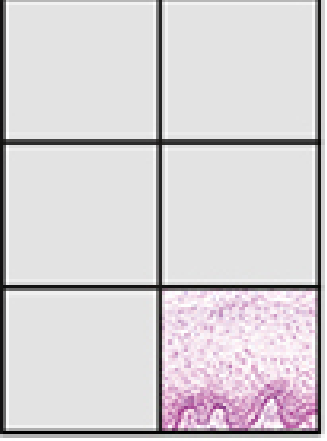
Multiple layers with flat nucleated surface cells. Basal cells (BC) are small with dense nuclei. The pale cytoplasm above the basal layer reflects glycogen that washes out during slide preparation.
Anorectal junction — epithelial transition (simple columnar → stratified cuboidal):
The abrupt transition (arrowhead) from simple columnar colon epithelium (left) to stratified cuboidal at the anal canal makes this a classic teaching specimen for comparing two epithelial types side-by-side.
Transitional epithelium / Urothelium (urinary bladder, non-distended):
Non-distended bladder shows 4-5 layers. Distinctive dome-shaped umbrella cells (asterisks) occupy the surface. Intermediate cells are pear-shaped. The smallest cells are at the base. On distension the umbrella cells flatten, total thickness drops to ~3 layers, and the entire epithelium appears stratified squamous.
Quick-Reference Summary
| Epithelial Type | Layers | Location | What to Look For |
|---|---|---|---|
| Simple squamous | 1 | Endothelium, mesothelium, Bowman capsule, alveoli | Flat cells; nuclei bulge into lumen |
| Simple cuboidal | 1 | Kidney tubules, thyroid follicles, liver, ducts | Cells as tall as wide; round central nuclei |
| Simple columnar | 1 | GI tract, gallbladder, uterine tube | Tall cells; oval basal nuclei; goblet cells in intestine |
| Pseudostratified columnar | 1 (appears ×2) | Trachea/bronchi (ciliated), epididymis | Two rows of nuclei; all cells on basement membrane |
| Stratified squamous (nonkeratinized) | Multiple | Oral cavity, esophagus, vagina, cornea | Flat nucleated surface cells; basal layer cuboidal |
| Stratified squamous (keratinized) | Multiple | Epidermis | Anucleate keratin squames at surface |
| Stratified cuboidal | Multiple | Sweat gland ducts, esophageal gland ducts | Two layers; cuboidal surface cells |
| Transitional (urothelium) | Variable (3-5) | Renal pelvis, ureter, bladder | Dome-shaped umbrella cells; changes with distension |
This is a shared conversation. Sign in to Orris to start your own chat.