
Explain each and everything about the anatomy of the ear. I want each minor detail as well. Also explain all the clinical correlates along the content
Reading File
Now let me search the library for comprehensive ear anatomy content in parallel.
Finding Sources
Finding Sources
Finding Sources
Excellent - I have Cummings Otolaryngology and Scott-Brown's. Let me now do a comprehensive parallel search across all ear anatomy topics.
Finding Sources
Finding Sources
Finding Sources
Finding Sources
I have excellent sources. Now let me read the most authoritative blocks in parallel - Cummings block28 (temporal bone/middle ear), block30 (external ear/tympanic membrane), Gray's block5 (cochlea/tympanic membrane), and Gray's block4 (temporal bone).
Reading File
Reading File
Reading File
Reading File
Good progress. Now let me read the key anatomy sections from Cummings block28 (the main ear anatomy chapter) and Gray's cochlea section in parallel.
Reading File
Reading File
Reading File
Reading File
I now have comprehensive data from all major sources. Let me fetch the key anatomical images and read the external ear + vestibular system sections in parallel.
Loading Image
Loading Image
Loading Image
Reading File
Excellent - I now have extremely rich content from Cummings, Gray's Anatomy, and Scott-Brown's, plus three beautiful anatomical images. I have enough to write a comprehensive, detailed response. Let me now compile the full ear anatomy explanation.Here is the complete, detailed anatomy of the ear with all clinical correlates, drawn from Cummings Otolaryngology, Gray's Anatomy for Students, and Scott-Brown's Otorhinolaryngology.
Complete Anatomy of the Ear - With Clinical Correlates
OVERVIEW
The ear is divided into three anatomical compartments:
- External (Outer) Ear - pinna + external auditory canal (EAC)
- Middle Ear - tympanic cavity, ossicles, Eustachian tube, mastoid
- Inner Ear - cochlea (hearing) + vestibular labyrinth (balance)
All three compartments sit within and around the temporal bone, which is the structural foundation of the entire auditory system.
PART I: THE TEMPORAL BONE
Osteology and Parts
The temporal bone is a complex, pyramidal-shaped bone that articulates with the sphenoid, parietal, occipital, and zygomatic bones, contributing to the cranial, skull-base, and facial structure. It consists of four embryologically distinct parts:
1. Squamous Part
- Forms the lateral wall of the middle fossa
- Has an anterior extension, the zygomatic process, which forms the bony roof of the glenoid fossa
- The temporalis muscle inserts onto the outer cortex; the masseter inserts on the zygomatic process
- A horizontal ridge, the temporal line, marks the most inferior temporalis insertion and is used surgically to estimate the location of the middle fossa floor (average offset = ~4.7 mm inferiorly)
Clinical Correlate: The temporal line is used as a surface landmark during mastoidectomy. Drilling superior to the temporal line risks entering the middle cranial fossa.
2. Mastoid Part
- A bulbous, pneumatized structure shaped by expanding air cells
- The sternocleidomastoid (SCM) and posterior belly of the digastric muscles elongate it inferiorly to form the mastoid process
- The mastoid cortex has multiple emissary vessels draining from the central air cell (the antrum)
- A depressed cribriform area at the anterior junction of the mastoid with the tympanic bone = MacEwen triangle (suprameatal triangle) - a surface landmark for the mastoid antrum, located about 1.5 cm deep to the posterior canal wall
- The sigmoid sinus sulcus is evident on the posteromedial aspect
- The stylomastoid foramen (where CN VII exits) is at the anterior limit of the digastric groove
- Medial and parallel to the digastric sulcus is the sulcus for the occipital artery
Clinical Correlate - Mastoiditis: When AOM spreads to mastoid air cells, it causes acute mastoiditis. The infection may spread via emissary veins to the periosteum (periostitis), then destroy bony septa (coalescent mastoiditis), forming a subperiosteal abscess that pushes the pinna forward. Bezold's abscess forms when infection tracks under the SCM along the digastric groove.
Clinical Correlate - Surgical landmark: The MacEwen triangle guides the initial entry point for mastoid surgery (cortical mastoidectomy).
3. Petrous Part
- The densest, hardest bone in the human body
- Contains the inner ear (cochlea and vestibular labyrinth), internal auditory canal (IAC), and the petrous apex
- The arcuate eminence on the superior surface marks the position of the superior semicircular canal - used as a surgical landmark in middle fossa approaches
- The tegmen tympani forms the roof of the middle ear; superiorly it is the floor of the middle cranial fossa
- The petrous apex contains air cells, marrow, or the petrous carotid canal
Clinical Correlate - Petrous apicitis (Gradenigo syndrome): Infection of petrous apex air cells causes a triad: otorrhea, retro-orbital pain (CN V1/V2 irritation), and abducens nerve palsy (CN VI). The abducens nerve runs in Dorello's canal near the petrous apex.
Clinical Correlate - Tegmen defects: Dehiscence of the tegmen tympani allows CSF otorrhea and can be a route for intracranial extension of cholesteatoma or otogenic meningitis.
4. Tympanic Part
- Forms the floor, anterior wall, and most of the posterior wall of the external auditory canal
- During infancy, the tympanic ring is not fully fused, leaving a defect anteriorly - the foramen of Huschke (may persist into adulthood in 4-5% of people)
Clinical Correlate - Foramen of Huschke: Provides a pathway for tumor spread from the EAC to the parotid gland (deep lobe). Also a route for spread of jaw infections into the EAC.
PART II: THE EXTERNAL EAR
A. The Auricle (Pinna)
The auricle is the visible, cartilaginous, skin-covered structure projecting from the side of the head. Its surface anatomy includes:
| Structure | Description |
|---|---|
| Helix | Prominent, curved outer rim |
| Antihelix | Inner curved ridge, parallel to helix; splits superiorly into two crura forming the triangular fossa |
| Tragus | Cartilaginous flap anterior to the meatus |
| Antitragus | Prominence opposite the tragus |
| Concha | Bowl-shaped hollow leading into the EAC; divided into cymba conchae (superior) and cavum conchae (inferior) |
| Lobule | Soft, fat-containing, cartilage-free inferior portion |
| Scapha | Groove between helix and antihelix |
| Triangular fossa | Depression between the two crura of the antihelix |
| Incisura (intertragic notch) | Between tragus and antitragus |
Auricular Cartilage
- The entire auricle except the lobule is supported by yellow elastic fibrocartilage (not hyaline), continuous with the cartilaginous EAC
- The cartilage is covered by tightly adherent perichondrium and skin
Embryology of the Auricle
- Derived from ectoderm and mesoderm of the first and second branchial arches and the first branchial groove
- Six distinct tissue condensations called the hillocks of His give rise to specific parts:
- First arch hillocks (1, 2, 3): tragus, helical crus, and helix
- Second arch hillocks (4, 5, 6): antihelix, antitragus, and lobule + inferior helix
Clinical Correlate - Preauricular sinuses/cysts: Result from incomplete fusion or duplication of the hillocks of His. They typically appear as small pits just anterior to the tragus, along the ascending helix. They are lined by squamous epithelium and prone to recurrent infection. First branchial cleft anomalies run in close relation to the facial nerve (Type I = ectoderm only; Type II = ectoderm + mesoderm).
Clinical Correlate - Microtia/Anotia: Failure of hillocks to develop properly. Graded I-IV (Marx classification). Often associated with EAC atresia and middle ear hypoplasia (can cause ~50-60 dB conductive hearing loss).
Clinical Correlate - Perichondritis/Chondritis: Infection of auricular cartilage (often Pseudomonas aeruginosa after trauma or piercing) causes exquisitely tender, erythematous swelling sparing the lobule. The lobule is spared because it contains no cartilage.
Auricular Muscles
- Three extrinsic muscles (anterior, superior, posterior auricularis) and intrinsic muscles - all rudimentary in humans
- Innervated by the facial nerve (CN VII)
Blood Supply of the Auricle
- Posterior auricular artery (branch of external carotid) - supplies most of the medial surface and posterior auricle
- Superficial temporal artery (branch of external carotid) - supplies anterior and superior auricle
- Occipital artery contributes to the medial surface
Sensory Innervation of the Auricle
- Auriculotemporal nerve (V3) - anterior and superior auricle, tragus, anterior EAC
- Greater auricular nerve (C2, C3) - lobule, lower 2/3 of medial and posterior surface
- Lesser occipital nerve (C2) - superior medial surface
- Auricular branch of vagus (CN X) / Arnold's nerve - posterior EAC and concha
- Facial nerve (CN VII) - small contribution via auricular branch
Clinical Correlate - Auriculocardiac reflex / Arnold's nerve reflex: Stimulation of the posterior EAC (cleaned with cotton bud, syringing) can trigger bradycardia, coughing, or even syncope via vagal reflex. This is why ear syringing can occasionally cause cough.
Clinical Correlate - Referred otalgia: Because so many nerves converge on the auricle/EAC, ear pain can be referred from distant sites - dental pathology and TMJ (V3), tonsils/tongue base (CN IX - Jacobson's nerve), larynx/hypopharynx (CN X - Arnold's nerve), cervical spine (C2/C3 via great auricular/lesser occipital). Any patient with otalgia and a normal ear examination requires evaluation of these sites.
B. External Auditory Canal (EAC)
Structure and Dimensions
- Total length: ~2.5 cm (1 inch) in adults
- S-shaped curve: initially directed medially and superiorly, then medially and inferiorly
- Outer one-third (~8 mm): cartilaginous - continuous with auricular cartilage
- Inner two-thirds (~16 mm): bony - formed by the tympanic part of the temporal bone
To straighten the EAC for otoscopy: Pull the pinna superiorly, posteriorly, and laterally (in adults); inferiorly and posteriorly in infants (because the bony canal is not fully developed).
Skin of the EAC
- Thicker in the cartilaginous portion (contains hair follicles, sebaceous glands, ceruminous glands)
- Very thin in the bony portion - tightly adherent to periosteum, no subcutaneous layer
- Skin migrates outward (lateral) naturally at ~1-2 mm/day (epithelial migration) - this self-cleaning mechanism begins at the umbo and radiates outward
Clinical Correlate - Otitis externa ("swimmer's ear"): Loss of cerumen (a natural antibacterial, acidic pH barrier), maceration of skin by water, or trauma from cotton buds disrupts the protective skin layer. Leads to infection, predominantly by Pseudomonas aeruginosa and Staphylococcus aureus. Pain is exacerbated by tragal pressure and pinna movement - a key clinical sign distinguishing OE from otitis media.
Clinical Correlate - Malignant (necrotizing) otitis externa: A dangerous extension of OE to the bony canal and skull base, almost exclusively in immunocompromised patients (especially diabetics). The bony-cartilaginous junction is where the granulation tissue pathognomically appears. It can track along fascial planes to the infratemporal fossa, jugular foramen, and petrous apex, causing CN VII, IX, X, XI, and XII palsies. Pseudomonas aeruginosa is the culprit in >90%. CT/Tc-99m bone scan/MRI are used for staging; treatment is prolonged IV/oral anti-pseudomonal antibiotics (ciprofloxacin).
Isthmus
- The narrowest part of the EAC is the bony-cartilaginous junction = isthmus
- This is the most common site for cerumen impaction and foreign bodies to become lodged
Anatomical Relationships of the EAC
- Anteriorly: Temporomandibular joint (TMJ) condyle - chewing can move the anterior bony canal wall (explains why TMJ pathology causes otalgia)
- Superiorly: Middle cranial fossa
- Posteriorly: Mastoid air cells
- Inferiorly: Parotid gland
Fissures of Santorini
- Natural defects in the cartilaginous anterior EAC wall
- Provide pathways for spread of EAC tumors, infection, and cholesteatoma to the superficial lobe of the parotid gland
PART III: THE TYMPANIC MEMBRANE (EARDRUM)
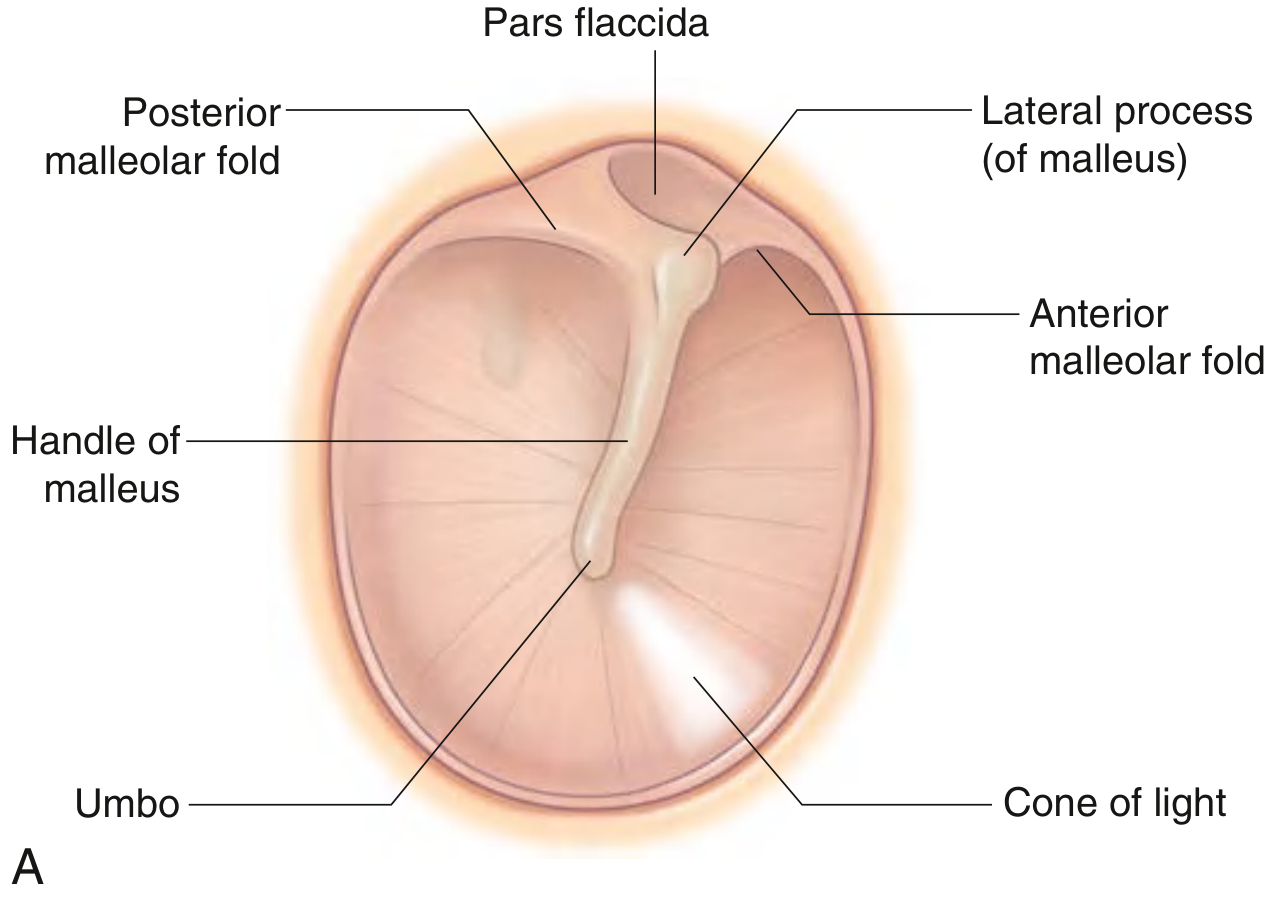
The tympanic membrane (TM) is a thin, semi-transparent, roughly oval membrane (~9 mm wide, ~10 mm tall) that forms the medial wall of the EAC and much of the lateral wall of the middle ear.
Orientation
- Set at an angle of approximately 55 degrees to the axis of the canal
- Slopes medially from top to bottom and posteriorly to anteriorly
- Therefore its lateral surface faces inferiorly and anteriorly
Layers of the Tympanic Membrane
The TM has four layers from lateral to medial:
- Squamous epithelium (outer layer, continuous with EAC skin)
- Outer fibrous (radiate) layer - fibers radiate from the manubrium of the malleus
- Inner fibrous (circular) layer - circumferentially arranged fibers, concentrated at the periphery
- Mucosal layer (medial, continuous with middle ear mucosa)
The two fibrous layers together constitute the lamina propria (fibrous middle layer).
Regions of the Tympanic Membrane
Pars Tensa
- The large inferior portion (~85% of the membrane area)
- Contains all four layers (the fibrous layers give it structural rigidity)
- Attached peripherally to the bony tympanic sulcus via the fibrocartilaginous annulus (annular ligament)
- The tympanic sulcus terminates superiorly at anterior and posterior spines (of Henle), where the fibrous layer attaches to form the anterior and posterior malleolar folds
Pars Flaccida (Shrapnell Membrane)
- Small superior portion above the malleolar folds, attached to the notch of Rivinus (deficiency in the tympanic ring)
- Contains only two layers - squamous epithelium and mucosal layer (lacks fibrous middle layer)
- This makes it thin, lax, and "flaccid"
Clinical Correlate - Cholesteatoma: The pars flaccida is the most common site for acquired cholesteatoma to begin. The lack of a fibrous layer makes it prone to retraction under negative middle ear pressure (Eustachian tube dysfunction). The retraction pocket accumulates desquamated keratin debris, forming an expanding keratin-filled sac that erodes bone by osteoclast activation and collagenase release. It can destroy the ossicles, erode into the facial nerve canal, labyrinth, tegmen, or sigmoid sinus. Cholesteatoma from the pars tensa (posterior-superior retraction) is also common.
Surface Landmarks of the TM (Otoscopic Anatomy)
| Landmark | Description |
|---|---|
| Umbo | Central concavity; where the tip of the malleus handle (manubrium) is attached |
| Handle (manubrium) of malleus | Visible as a whitish streak running superiorly from the umbo |
| Lateral process of malleus | Bony nubbin at the superior end of the handle, creating a small prominence |
| Anterior malleolar fold | Extends anteriorly from the lateral process |
| Posterior malleolar fold | Extends posteriorly from the lateral process |
| Pars flaccida | Small area above the folds |
| Cone of light (light reflex) | Bright triangular reflection in the anteroinferior quadrant - points toward the 5 o'clock position on the right, 7 o'clock on the left |
Clinical Correlate - Otoscopic assessment: Loss of the cone of light, a bulging or retracted TM, or fluid levels/air bubbles behind it indicate middle ear pathology. A blue/amber discoloration may indicate hemotympanum (blood) or a high-riding jugular bulb (blue).
Innervation of the TM
- Outer surface:
- Auriculotemporal nerve (V3) - primary supply
- Auricular branch of vagus (CN X) / Arnold's nerve - posterior portion
- Branches of facial nerve (CN VII) via Arnold's nerve
- Inner surface:
- Tympanic branch of glossopharyngeal nerve (CN IX) / Jacobson's nerve
Clinical Correlate: Jacobson's nerve runs on the promontory and contributes to the tympanic plexus. A glomus tympanicum tumor arises from paraganglionic tissue along this nerve on the promontory and appears as a pulsatile red/blue mass behind the intact TM (the "rising sun sign").
Blood Supply of the TM
- Outer surface: deep auricular artery and anterior tympanic artery (branches of maxillary artery)
- Inner surface: branches of stylomastoid artery (from posterior auricular) and anterior tympanic artery
PART IV: THE MIDDLE EAR
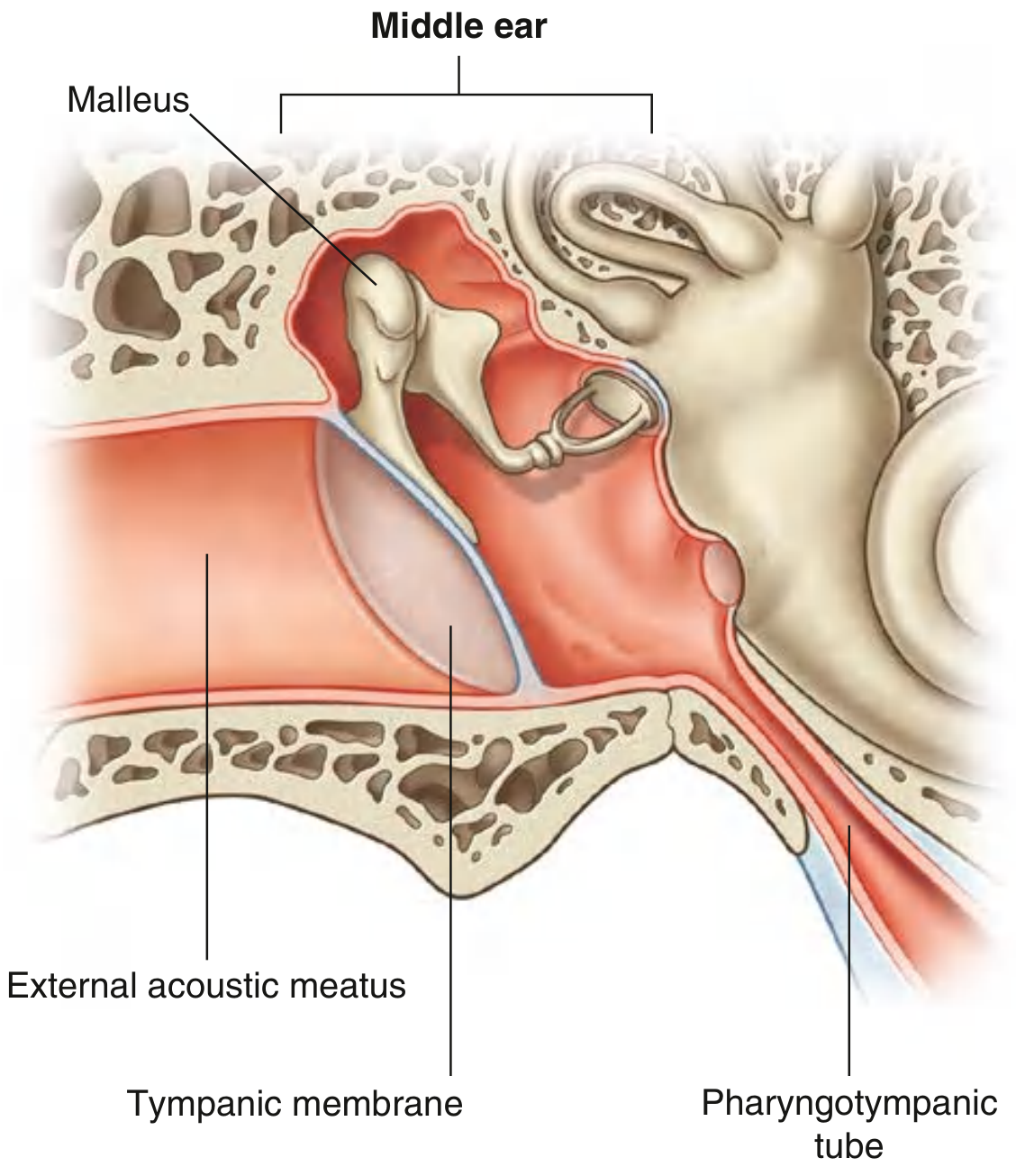
The middle ear (tympanic cavity) is an air-filled space within the temporal bone, roughly the size and shape of an M&M candy, containing the ossicular chain and communicating with the mastoid air cells posteriorly and the nasopharynx via the Eustachian tube anteriorly.
Regions of the Tympanic Cavity
The middle ear is conventionally divided into three levels relative to the TM:
| Region | Level | Contents |
|---|---|---|
| Epitympanum (Attic) | Above the level of the TM | Head of malleus, body and short process of incus, epitympanic recess |
| Mesotympanum | Level with the TM | Handle of malleus, incudostapedial joint, stapes, oval window, round window niche, promontory |
| Hypotympanum | Below the level of the TM | Jugular bulb, inferior tympanic artery |
Walls of the Middle Ear
Lateral Wall
- Formed primarily by the tympanic membrane and the bony tympanic ring
- The epitympanic recess extends superiorly above the TM
Medial Wall (Labyrinthine Wall) - Most Complex
Key features from anterior to posterior:
- Promontory - convex bony bulge overlying the basal turn of the cochlea. The tympanic plexus (Jacobson's nerve branches) runs over its surface
- Oval window (fenestra vestibuli) - kidney-shaped opening into the vestibule, closed by the footplate of the stapes + annular ligament; lies posterior and superior to the promontory
- Round window (fenestra cochleae) - circular opening into the scala tympani of the cochlea, covered by the secondary tympanic membrane (round window membrane); lies posterior and inferior to the promontory
- Facial nerve canal (Fallopian canal) - runs horizontally (tympanic segment) above the oval window, then descends (mastoid segment) at the posterior wall; the horizontal segment may be dehiscent (absent bony covering) in up to 50% of specimens
- Stapedius muscle - housed in the pyramidal eminence, its tendon inserts onto the neck of the stapes
Anterior Wall
- Contains the Eustachian tube (inferior opening)
- Above the tube: the semicanal for tensor tympani muscle (cochleariform process is its end, where the tendon turns laterally to insert on the malleus)
- The internal carotid artery is just medial to this wall (risk in cholesteatoma and surgery)
Posterior Wall
- Communicates with the mastoid antrum via the aditus ad antrum
- Contains the pyramidal eminence housing the stapedius muscle
- The chorda tympani nerve enters the middle ear through the posterior canaliculus, crossing the medial surface of the TM between the fibrous and mucosal layers
Superior Wall (Tegmen Tympani / Roof)
- Thin bony plate separating the middle ear from the middle cranial fossa
- Perforated by small vessels and nerves
Inferior Wall (Floor / Jugular Wall)
- Thin plate separating the middle ear from the jugular fossa (containing the jugular bulb)
- May be deficient with a high-riding jugular bulb
Clinical Correlate - High jugular bulb: Can appear as a bluish mass behind the inferior TM. Inadvertent puncture during myringotomy can cause catastrophic bleeding.
The Ossicular Chain
The three ossicles (malleus, incus, stapes) form the ossicular chain that transmits sound energy mechanically from the TM to the oval window (inner ear).
Malleus ("Hammer")
- Largest ossicle (~8 mm long)
- Parts: head, neck, manubrium (handle), anterior process, lateral process
- The manubrium is embedded in the TM; the head articulates with the incus in the epitympanum
- The tensor tympani muscle tendon inserts on the neck/superior manubrium
Incus ("Anvil")
- Parts: body, short process, long process, lenticular process
- The body articulates with the malleus (incudomalleolar joint)
- The long process descends parallel to the manubrium and ends in the lenticular process, which articulates with the head of the stapes
- The short process points posteriorly into the fossa incudis
Clinical Correlate - Vascular vulnerability of the incus: The long process of the incus has a single nutrient vessel and lacks collateral circulation. This makes it the most vulnerable ossicle to ischemic necrosis in chronic otitis media, resulting in ossicular discontinuity and conductive hearing loss. It is the most commonly eroded ossicle in cholesteatoma.
Stapes ("Stirrup")
- Smallest bone in the human body (~3 mm)
- Parts: head, neck, two crura (anterior and posterior), footplate
- The footplate fits into the oval window and is attached to its margins by the annular ligament (which acts as a flexible seal)
- The stapedius tendon inserts on the posterior neck of the stapes
Ossicular Joints
- Incudomalleolar joint: synovial joint (saddle type)
- Incudostapedial joint: synovial joint (ball and socket type)
Middle Ear Muscles
Tensor Tympani Muscle:
- Housed in a bony semicanal above the Eustachian tube
- Innervated by the medial pterygoid nerve (branch of V3)
- Contracts in response to loud sound or tactile stimulation near the face
- Pulls the manubrium medially, increasing TM tension
Stapedius Muscle:
- Smallest skeletal muscle in the body
- Housed in the pyramidal eminence
- Innervated by the facial nerve (CN VII)
- Contracts reflexively in response to loud sound (stapedius/acoustic reflex)
- Pulls the stapes posteriorly, stiffening the ossicular chain and reducing transmission of low-frequency sound
Clinical Correlate - Stapedius reflex testing: Used in audiological evaluation. Absence of the stapedius reflex with normal hearing points to facial nerve paralysis (proximal to the stapedial branch). Presence of the reflex in the presence of a conductive hearing loss suggests ossicular discontinuity vs. otosclerosis (reflex present in discontinuity but absent/elevated in otosclerosis).
Clinical Correlate - Hyperacusis in Bell's palsy: Facial nerve paralysis proximal to the nerve to stapedius causes loss of the acoustic reflex, resulting in hyperacusis (painful sensitivity to normal-volume sounds, particularly low-frequency ones).
Clinical Correlate - Otosclerosis: Abnormal bony remodeling (spongiosis) fixes the stapes footplate in the oval window, causing progressive conductive (later mixed) hearing loss. Sensorineural involvement occurs when the process spreads to the cochlear endosteum. Treatment is stapedectomy/stapedotomy with a prosthesis. Sodium fluoride can slow progression.
The Chorda Tympani Nerve
- A branch of the facial nerve, carrying taste from the anterior 2/3 of the tongue and parasympathetic fibers to the sublingual and submandibular glands
- Enters the middle ear posteriorly through the posterior canaliculus
- Crosses the medial surface of the TM, running between the fibrous and mucosal layers
- Passes between the long process of the incus and the handle of the malleus
- Exits anteriorly through the petrotympanic fissure (Glaserian fissure)
Clinical Correlate: The chorda tympani is at risk during middle ear surgery, stapedectomy, and mastoid exploration. Injury causes loss of taste on the ipsilateral anterior tongue and possibly dysgeusia (metallic taste). Patients often initially report a disturbing taste disturbance but most adapt over time.
The Eustachian Tube (Pharyngotympanic / Auditory Tube)
- Length: ~35 mm in adults
- Runs from the anterior wall of the middle ear to the nasopharynx, angled at ~45 degrees (horizontal in infants - explains their susceptibility to AOM)
- Lateral (tympanic) 1/3 (~12 mm): bony, always open
- Medial (pharyngeal) 2/3 (~23 mm): fibrocartilaginous, normally closed at rest; opened by contraction of the tensor veli palatini (primarily) and levator veli palatini muscles during swallowing and yawning
Functions:
- Pressure equalization between the middle ear and atmosphere
- Mucociliary clearance of middle ear secretions toward the nasopharynx
- Protection of the middle ear from nasopharyngeal secretions/pathogens
Clinical Correlate - Otitis media with effusion (glue ear / secretory OM): Eustachian tube dysfunction (ETD) causes negative middle ear pressure, leading to transudation of fluid. Common in children 2-6 years; most common cause of conductive hearing loss in children. The horizontal tube in infants (much less angled than in adults) and adenoid hypertrophy are key contributing factors.
Clinical Correlate - Patulous Eustachian tube: The tube fails to close properly, causing autophony (hearing one's own voice/breathing loudly - the "echo in your head"). Associated with weight loss, pregnancy, and oral contraceptive use.
Clinical Correlate - Barotrauma: Rapid pressure changes (flying, diving) that overcome the ability to open the tube can cause TM retraction, effusion, or perforation. The classic scenario is descent during flight.
Mastoid Air Cell System
The mastoid antrum is the central, largest air cell, communicating anteriorly with the epitympanum (attic) via the aditus ad antrum.
- The entire air cell system is lined by ciliated pseudostratified columnar epithelium
- The degree of pneumatization varies widely (well-pneumatized, diploic, or sclerotic)
- Poor pneumatization is associated with recurrent middle ear infections (cause or effect?)
Clinical Correlate - Cholesteatoma spread: The aditus ad antrum is the route by which cholesteatoma extends from the attic into the mastoid. Erosion of the bony walls of the antrum allows involvement of the posterior cranial fossa (sigmoid sinus, dura). The lateral semicircular canal is the most common site of labyrinthine fistula formation.
PART V: THE INNER EAR (LABYRINTH)
The inner ear is a fluid-filled system of bony and membranous tubes and sacs embedded within the petrous temporal bone. It has two functional components:
- Cochlea - hearing (audition)
- Vestibular labyrinth - balance (spatial orientation)
A. The Bony Labyrinth
The bony labyrinth is a series of cavities in the petrous bone:
- Cochlea (anterior)
- Vestibule (central)
- Three semicircular canals (posterior)
It is filled with perilymph (similar in composition to extracellular fluid: high Na+, low K+).
B. The Vestibule
- Central, ovoid chamber approximately 5 mm in length
- Communicates laterally with the middle ear via the oval window (stapes footplate)
- Contains the utricle (posterosuperior) and saccule (anteromedial) - both parts of the membranous labyrinth
- Communicates with the cochlea anteriorly (scala vestibuli) and the semicircular canals posteriorly
C. The Semicircular Canals
Three orthogonally oriented canals, each oriented approximately perpendicular to the others:
| Canal | Plane of Orientation | Function |
|---|---|---|
| Anterior (superior) | Sagittal plane | Pitching movements (nodding yes) |
| Posterior | Coronal plane | Rolling movements (nodding sideways) |
| Lateral (horizontal) | Horizontal plane | Yawing movements (shaking head no) |
Each canal forms roughly 2/3 of a circle and contains a membranous semicircular duct within it. Each duct has an ampulla at one end (anterior and lateral share a common crus at the non-ampullated end; posterior shares a non-ampullated end with anterior = common crus).
Clinical Correlate - BPPV (Benign Paroxysmal Positional Vertigo): The most common vestibular disorder. Dislodged otoconia (calcium carbonate crystals) from the utricle fall into the semicircular canal (most commonly the posterior canal), causing abnormal fluid displacement and transient vertigo with position change. Diagnosed by the Dix-Hallpike test (posterior canal) and treated with the Epley maneuver. The lateral canal variant is diagnosed by the roll test and treated with the Barbecue (Lempert) roll.
D. The Cochlea
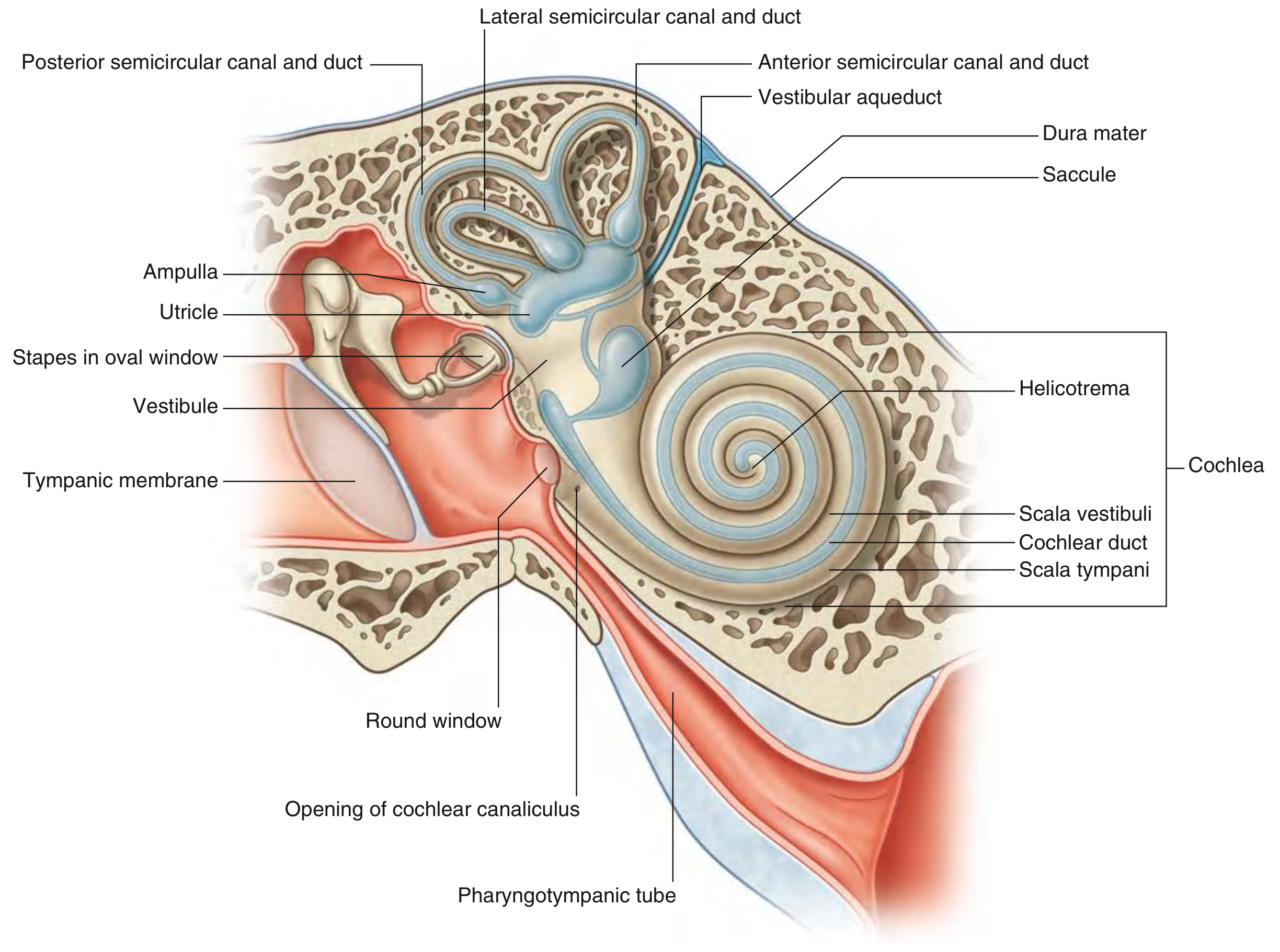
The cochlea is a snail-shaped structure that coils 2.5 turns around a central bony pillar called the modiolus.
- Base faces posteromedially toward the IAC
- Apex (helicotrema) faces anterolaterally
- The base of the modiolus is perforated by small canals for the cochlear nerve fibers to pass through
Osseous Spiral Lamina
- A thin shelf of bone that extends outward from the modiolus, spiraling with the cochlea
- Provides partial division of the cochlear canal into upper (scala vestibuli) and lower (scala tympani) chambers
- Wider at the base, narrower at the apex
The Three Fluid Compartments (Scalae)
| Compartment | Location | Fluid | Composition |
|---|---|---|---|
| Scala vestibuli | Above cochlear duct | Perilymph | High Na+, Low K+ |
| Scala media (cochlear duct) | Middle | Endolymph | High K+, Low Na+ |
| Scala tympani | Below cochlear duct | Perilymph | High Na+, Low K+ |
- Scala vestibuli and tympani communicate at the apex via the helicotrema
- The scala tympani terminates at the round window, closed by the secondary tympanic membrane
- Near the round window, the cochlear canaliculus (cochlear aqueduct) connects the perilymph space of the scala tympani to the subarachnoid space of the posterior cranial fossa
Clinical Correlate - Perilymph fistula: A tear in the oval window membrane (annular ligament) or round window membrane allows perilymph to leak into the middle ear, causing fluctuating sensorineural hearing loss and vertigo, typically after Valsalva maneuver, heavy lifting, or head trauma.
Clinical Correlate - Labyrinthitis ossificans: Following meningitis, bacterial labyrinthitis, or trauma, the perilymph spaces may become ossified (fibrous then bony), obliterating the scalae. This makes cochlear implantation technically demanding; CT is mandatory prior to CI surgery to assess the degree of ossification.
Scala Media (Cochlear Duct) and the Organ of Corti
The scala media is bounded by:
- Superiorly: Reissner membrane (vestibular membrane) - separates from scala vestibuli
- Inferiorly: Basilar membrane - separates from scala tympani
- Laterally: Stria vascularis (on the outer cochlear wall)
Stria vascularis:
- Highly vascularized epithelium on the outer wall of the cochlear duct
- Generates endolymph (maintains high K+ concentration = +80 mV endocochlear potential)
- Contains marginal cells, intermediate cells, and basal cells
Basilar membrane:
- Attached medially to the osseous spiral lamina, laterally to the spiral ligament
- Narrower and thicker at the base (responds to high frequencies ~20,000 Hz)
- Wider and thinner at the apex (responds to low frequencies ~20 Hz)
- This property is called tonotopy - the basis of frequency discrimination
The Organ of Corti:
- Sits on the basilar membrane within the scala media
- Contains the sensory hair cells - the true mechanotransducers of hearing
| Cell Type | Number | Location | Function |
|---|---|---|---|
| Inner hair cells (IHC) | ~3,500 | One row, medial | Primary afferent transduction (~95% of CN VIII afferent fibers synapse here) |
| Outer hair cells (OHC) | ~12,000 | Three rows, lateral | Mechanical amplification (cochlear amplifier); motility driven by prestin protein |
| Pillar cells | - | Between IHC and OHC | Form the tunnel of Corti (filled with cortilymph) |
| Deiters' cells, Hensen's cells | - | Supporting cells | Structural support, ionic homeostasis |
Tectorial membrane:
- Overlies the organ of Corti
- Stereocilia of OHCs are embedded in its undersurface
- Stereocilia of IHCs are thought to be stimulated by fluid shear (not directly attached)
Mechanism of Transduction (Brief)
- Sound waves → vibration of TM → ossicular chain movement → stapes footplate into oval window
- Pressure wave in perilymph of scala vestibuli → deflection of Reissner membrane and basilar membrane
- Traveling wave on basilar membrane reaches its resonant point (tonotopy)
- Basilar membrane deflection causes shearing between tectorial membrane and hair cell stereocilia
- Stereocilia deflection → opens mechano-electrical transduction (MET) channels → K+ flows into hair cell from endolymph (using the high endocochlear potential as a driving force)
- Depolarization of hair cell → glutamate release → action potentials in spiral ganglion neurons → cochlear nerve
E. The Membranous Labyrinth
The membranous labyrinth is a closed system of ducts and sacs, filled with endolymph and enclosed within the bony labyrinth (separated from its periosteum by perilymph).
Components:
- Cochlear duct (scala media) - hearing
- Utricle - linear acceleration (horizontal plane), gravity
- Saccule - linear acceleration (vertical plane), gravity
- Three semicircular ducts - angular acceleration
- Endolymphatic duct and sac - runs in the vestibular aqueduct; involved in endolymph resorption/immune function
Utricle and Saccule (Otolithic Organs)
- Contain the macula (sensory patch with hair cells)
- Overlying the macula is the otolithic membrane studded with otoconia (calcium carbonate crystals)
- Hair cells detect linear acceleration and head tilt (gravity)
Clinical Correlate - Otoconia: Calcium carbonate crystals that can become dislodged and fall into the semicircular canals, causing BPPV. Their density makes them responsive to gravity.
Endolymphatic Sac
- At the terminal end of the endolymphatic duct
- Sits in a bony fossa (vestibular aqueduct) on the posterior petrous face
- Functions in endolymph homeostasis and resorption
Clinical Correlate - Meniere's Disease (Endolymphatic Hydrops): Distension of the endolymphatic space (endolymphatic hydrops) causes the classic tetrad: episodic rotatory vertigo (20 min - 24 hrs), fluctuating sensorineural hearing loss (initially low-frequency), tinnitus, and aural fullness. Rupture of Reissner membrane (Lermoyez phenomenon) allows K+-rich endolymph to mix with perilymph, poisoning nerve fibers (explaining the sudden onset of vertigo). Treatment is dietary Na+ restriction, diuretics, betahistine; surgical options include endolymphatic sac decompression, gentamicin ablation, labyrinthectomy, or vestibular nerve section.
PART VI: INTERNAL AUDITORY CANAL (IAC) AND CRANIAL NERVE ANATOMY
Internal Auditory Canal (IAC)
- A short (~8-10 mm long) bony canal in the petrous bone
- Connects the inner ear to the posterior cranial fossa
- The falciform crest (transverse crest) divides the fundus into superior and inferior compartments
- The Bill's bar (vertical crest) further divides the superior compartment into anterior and posterior
Contents of the IAC (superior to inferior, anterior to posterior):
| Area | Nerve |
|---|---|
| Anterosuperior | Facial nerve (CN VII) |
| Posterosuperior | Superior vestibular nerve |
| Anteroinferior | Cochlear nerve (CN VIII) |
| Posteroinferior | Inferior vestibular nerve |
Mnemonic: Seven Up, Coke Down (VII = superior anterior; Cochlear = inferior anterior)
The Facial Nerve (CN VII) Within the Temporal Bone
The facial nerve has one of the most surgically important and complex intratemporal courses:
Segments (from medial to lateral):
- Meatal segment - in the IAC, superior and anterior
- Labyrinthine segment - from fundus of IAC to geniculate ganglion (narrowest bony canal, 0.68 mm); makes the first genu (turn) at the geniculate ganglion
- Geniculate ganglion - gives off the greater petrosal nerve (parasympathetic to lacrimal gland, via pterygopalatine ganglion)
- Tympanic (horizontal) segment - runs horizontally in the medial wall of the middle ear above the oval window; most likely to be dehiscent (up to 50%); second genu at posterior middle ear
- Mastoid (vertical) segment - descends to stylomastoid foramen; gives off nerve to stapedius and chorda tympani
- Extratemporal segment - exits stylomastoid foramen, passes through parotid gland, divides into temporofacial and cervicofacial divisions
Clinical Correlate - Facial nerve injury localization: Testing lacrimation (Schirmer's test), stapedius reflex, and taste helps localize facial nerve lesions. Lesions proximal to geniculate: all three lost. Lesions between geniculate and stapedial branch: stapedius reflex + taste lost, lacrimation preserved. Lesions between stapedial nerve and chorda tympani: only taste lost.
Clinical Correlate - Ramsay Hunt Syndrome (Herpes Zoster Oticus): VZV reactivation at the geniculate ganglion causes painful herpetic vesicles in the conchal bowl/EAC, facial nerve palsy, and often vestibulocochlear involvement (hearing loss, vertigo). The labyrinthine segment is particularly vulnerable because of its watershed blood supply (vertebrobasilar/external carotid) and the narrow bony canal, where nerve swelling causes entrapment and ischemia.
Clinical Correlate - Cholesteatoma and facial nerve: The horizontal (tympanic) segment, particularly above the oval window, is the most commonly eroded segment of the facial nerve canal by cholesteatoma.
Clinical Correlate - Surgical danger zones: The supratubal recess (anterior attic, superior to Eustachian tube opening) is where the geniculate ganglion (just deep to its medial wall) may be dehiscent and can be injured during blind surgical dissection or cholesteatoma removal.
PART VII: BLOOD SUPPLY OF THE EAR
External Ear
- Posterior auricular artery (ECA branch)
- Superficial temporal artery (ECA branch)
- Deep auricular artery (maxillary artery branch)
Middle Ear
- Anterior tympanic artery (maxillary artery branch)
- Posterior tympanic artery (stylomastoid artery from posterior auricular)
- Inferior tympanic artery (ascending pharyngeal artery)
- Caroticotympanic arteries (from petrous ICA)
- Petrosal branch of middle meningeal artery (to geniculate ganglion region)
Inner Ear
- Labyrinthine (internal auditory) artery - typically from the AICA (anterior inferior cerebellar artery); occasionally directly from the basilar artery
- This is an end artery with no collateral circulation
Clinical Correlate - Sudden sensorineural hearing loss (SSNHL): The labyrinthine artery is an end artery with no collaterals. Vascular occlusion (thromboembolism, vasospasm) can cause sudden, unilateral SSNHL. SSNHL is a medical emergency; oral corticosteroids (high-dose prednisolone) initiated within 2-4 weeks improve recovery. Intratympanic steroids are used as salvage or primary therapy. Workup includes MRI with gadolinium (to exclude acoustic neuroma), CBC, ESR, FBS, autoimmune panel, and hypercoagulation screen.
PART VIII: VENOUS DRAINAGE AND LYMPHATICS
Venous Drainage
- Superior petrosal sinus - drains middle ear and mastoid (to sigmoid sinus)
- Emissary veins - connect sigmoid sinus through mastoid to posterior auricular/occipital veins (external)
- Labyrinthine veins drain to the inferior petrosal sinus
Clinical Correlate - Lateral sinus thrombosis (sigmoid sinus thrombophlebitis): A complication of acute mastoiditis where infection tracks to the sigmoid sinus. Presents with high swinging fevers (picket-fence fever), ear pain, and neck stiffness. Jugular vein may be tender and thrombosed (Griesinger's sign - edema over mastoid emissary vein). Confirmed by contrast-enhanced CT/MRI. Treatment: mastoidectomy + antibiotics ± anticoagulation ± internal jugular vein ligation.
Lymphatics
- External ear drains to: preauricular (parotid), postauricular (mastoid), and upper deep cervical lymph nodes
- Middle ear has no lymphatics per se but can track via Eustachian tube
PART IX: EMBRYOLOGY (CLINICAL RELEVANCE)
| Structure | Origin |
|---|---|
| Pinna | 1st and 2nd branchial arch ectoderm/mesoderm (hillocks of His) |
| External auditory canal | 1st branchial groove (cleft) |
| Tympanic membrane (outer layer) | 1st branchial groove |
| Tympanic membrane (middle fibrous layer) | Mesoderm |
| Tympanic membrane (inner mucosal layer) | Tubotympanic recess endoderm (1st pharyngeal pouch) |
| Middle ear cavity + Eustachian tube | Tubotympanic recess (1st pharyngeal pouch) |
| Malleus + incus | 1st branchial arch (Meckel's cartilage) |
| Stapes superstructure | 2nd branchial arch (Reichert's cartilage) |
| Stapes footplate | Otic capsule (mesoderm) |
| Inner ear | Otic vesicle (ectodermal otocyst) |
Clinical Correlate - EAC atresia: Failure of the meatal plug (from 1st branchial groove ectoderm) to dissolve causes complete or partial EAC atresia - conductive hearing loss. HRCT of the temporal bone is required. Key features assessed include middle ear volume, pneumatization, ossicular morphology, and facial nerve course (which is often anomalous, overlying the oval window). Jahrsdoerfer grading system predicts surgical outcome (scores 10 features of the CT; score ≥5 considered for reconstruction).
PART X: CLINICAL CORRELATE SUMMARY TABLE
| Condition | Anatomical Basis | Key Clinical Feature |
|---|---|---|
| Cholesteatoma | Pars flaccida retraction, squamous epithelium invasion | Bone erosion, foul-smelling discharge, conductive HL |
| Otosclerosis | Stapes footplate fixation | Low-frequency conductive HL, Carhart notch at 2 kHz |
| BPPV | Otoconia in posterior SCC | Positional vertigo, Dix-Hallpike test |
| Meniere's disease | Endolymphatic hydrops | Episodic vertigo + SNHL + tinnitus + aural fullness |
| Glomus tympanicum | Paraganglia along Jacobson's nerve on promontory | Pulsatile tinnitus, red mass behind TM |
| Malignant OE | Extension from bony-cartilaginous junction | Granulation at junction, skull-base osteomyelitis |
| Acoustic neuroma (vestibular schwannoma) | CN VIII in IAC/CPA | Unilateral SNHL, tinnitus, imbalance |
| Bell's palsy / Ramsay Hunt | Geniculate ganglion/labyrinthine segment | Facial palsy ± vesicles ± hearing loss |
| Lateral sinus thrombosis | Sigmoid sinus adjacent to mastoid | Picket-fence fever, mastoiditis complication |
| Perilymph fistula | Round/oval window membrane tear | Post-Valsalva SNHL + vertigo |
| Referred otalgia | CN V, VII, IX, X, C2/C3 convergence | Otalgia with normal ear exam |
| Gradenigo syndrome | Petrous apicitis | Triad: otorrhea + retro-orbital pain + CN VI palsy |
Sources
- Cummings Otolaryngology Head and Neck Surgery - Chapters 126, 128, 135 (Temporal bone anatomy, external ear, imaging)
- Gray's Anatomy for Students - Chapter 8 (Ear, cochlea, tympanic membrane, inner ear)
- Scott-Brown's Otorhinolaryngology Head & Neck Surgery, Vol 2 - External ear, tympanic membrane perforations, mastoiditis
- K.J. Lee's Essential Otolaryngology - Tympanic membrane
---That's the complete, detailed anatomy of the ear. Here's a quick orientation to what was covered:
What Was Covered
This response systematically covered every anatomical component and its clinical significance, organized into 10 parts:
PART I - Temporal Bone: All four parts (squamous, mastoid, petrous, tympanic), surface landmarks, surgical correlates (mastoidectomy, petrous apicitis/Gradenigo syndrome, tegmen defects)
PART II - External Ear: Auricle surface anatomy in full detail (every named structure), auricular cartilage, embryology (hillocks of His), muscles, blood supply, innervation from 5 different cranial/spinal nerves, the EAC (dimensions, bony vs cartilaginous, skin layers, isthmus, Santorini fissures, Huschke foramen), clinical correlates: preauricular sinuses, microtia, perichondritis, otitis externa, malignant OE, referred otalgia, Arnold's reflex
PART III - Tympanic Membrane: Four layers, pars tensa vs pars flaccida, the annular ligament, all otoscopic landmarks (umbo, cone of light, malleolar folds, lateral process), innervation from 4 different nerves, blood supply, clinical correlates: cholesteatoma, TM perforation outcomes, glomus tympanicum
PART IV - Middle Ear: Three regions (epitympanum/mesotympanum/hypotympanum), all 6 walls and their contents in detail, ossicular chain (malleus, incus, stapes with all parts), ossicular joints, tensor tympani and stapedius muscles, chorda tympani nerve, Eustachian tube anatomy and function, mastoid air cells; clinical correlates: otosclerosis, hyperacusis in Bell's palsy, stapedius reflex testing, cholesteatoma spread, ETD, Meniere's, barotrauma
PART V - Inner Ear: Bony labyrinth, vestibule, three semicircular canals (orientation and function), cochlea (modiolus, osseous spiral lamina, three scalae, endolymph vs perilymph composition), scala media with Reissner membrane, basilar membrane tonotopy, stria vascularis, organ of Corti (inner vs outer hair cells, tectorial membrane), membranous labyrinth, utricle/saccule, otoconia, endolymphatic sac; clinical correlates: BPPV (Epley maneuver), Meniere's disease, perilymph fistula, labyrinthitis ossificans, SSNHL
PART VI - IAC and CN VII: Full facial nerve course through all 6 temporal bone segments, Bill's bar, falciform crest, nerve content arrangement; clinical correlates: Ramsay Hunt, facial nerve injury localization, cholesteatoma erosion patterns
PARTS VII-X: Complete vascular supply (including end-artery labyrinthine artery), venous drainage (lateral sinus thrombosis), embryological origins of every structure with congenital anomalies, and a master clinical correlates summary table.
This is a shared conversation. Sign in to Orris to start your own chat.