
Measles
Reading File
Measles is a highly contagious viral infection caused by a paramyxovirus, spread by respiratory droplets. It presents with fever, cough, coryza, conjunctivitis (the "3 Cs"), followed by a characteristic maculopapular rash. Koplik's spots (white spots on the buccal mucosa) are pathognomonic. Complications include pneumonia, encephalitis, and subacute sclerosing panencephalitis (SSPE). The MMR vaccine is the key preventive measure.
Searching sources...
Finding Sources
Searching PubMed
measles
Good - I have several strong sources. Let me read the main clinical and dermatology content in parallel.
Reading File
Reading File
Reading File
Reading File
I have rich content from multiple textbooks. Let me fetch the Koplik spots image and read more on treatment/management and SSPE.
Loading Image
Reading File
Reading File
Let me also fetch the measles rash clinical photo and the Warthin-Finkeldey giant cell lung image.
Loading Image
Loading Image
I now have all the content needed for a thorough, well-illustrated answer. Here is the full overview:
Measles (Rubeola)
Etiology & Transmission
Measles is caused by a single-stranded RNA virus of the family Paramyxoviridae (same family as mumps, RSV, and parainfluenza). There is only one serotype. It is among the most contagious pathogens known, transmitted almost entirely by the airborne route via aerosolized respiratory secretions. Incubation is 9-12 days. - Robbins, Cotran & Kumar Pathologic Basis of Disease
Pathogenesis
Three cell-surface receptors mediate entry:
- SLAMF1 (signaling lymphocyte activation molecule) - expressed on activated lymphocytes, dendritic cells, and monocytes - serves as the primary receptor
- Nectin-4 - found on the basal surface of epithelial cells, important for replication in the respiratory tract before aerosol spread
The virus replicates first in the respiratory epithelium, then spreads to local lymphoid tissues, followed by viremia and dissemination to the conjunctiva, skin, respiratory tract, urinary tract, small blood vessels, lymphatic system, and CNS.
A key feature is transient but profound immunosuppression - delayed-type hypersensitivity is reduced, leading to secondary bacterial and viral infections that account for most measles-related morbidity and mortality. - Robbins, Cotran & Kumar Pathologic Basis of Disease
Clinical Presentation
Prodrome (days 1-4 after symptom onset)
- High fever
- The classic "3 Cs": Cough, Coryza, Conjunctivitis
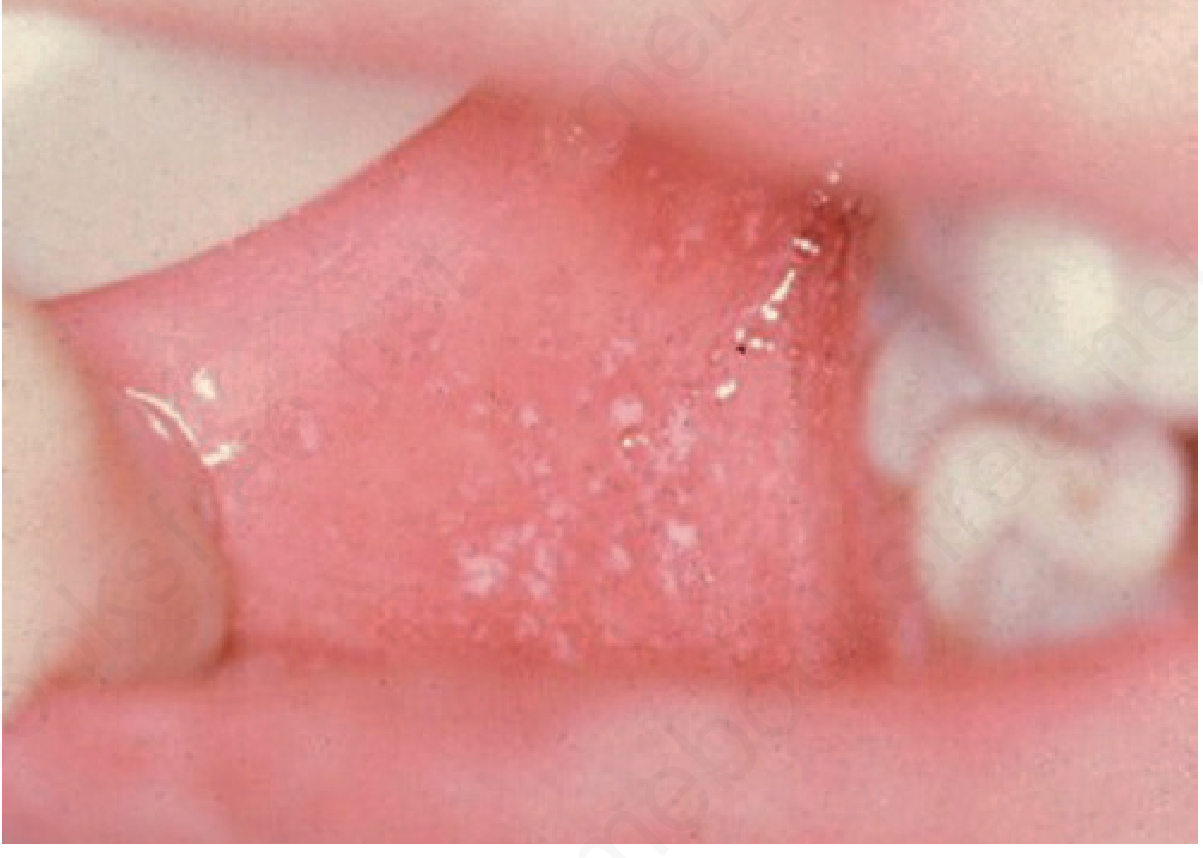
- Koplik spots - pathognomonic enanthem appearing during the prodrome; 1-mm white papules on an erythematous base, first on the buccal mucosa nearest the lower molars, potentially spreading to the pharynx
Exanthem (rash, appearing 1-7 days after prodrome)
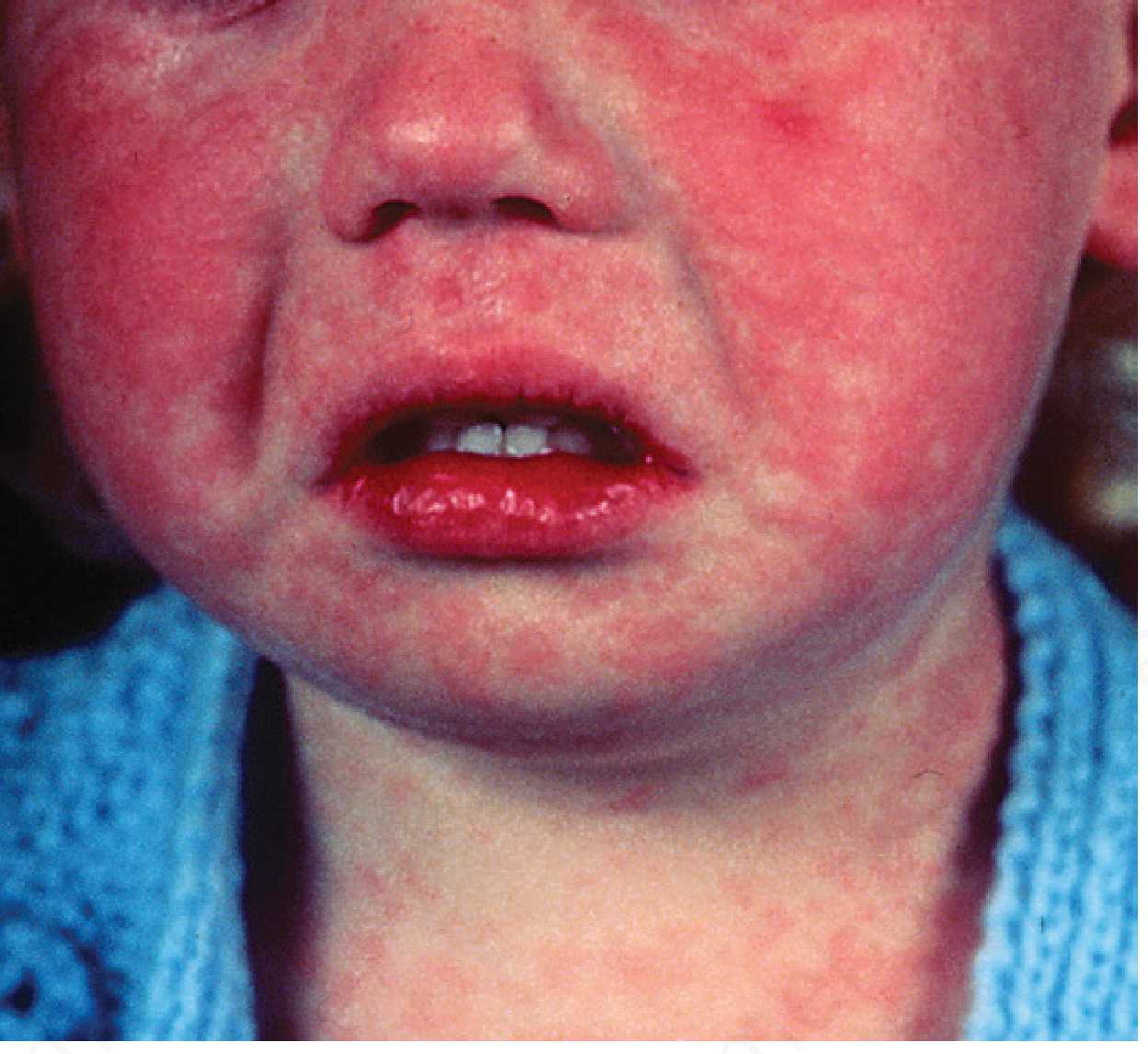
- Begins as macular/morbilliform lesions at the anterior scalp line and behind the ears
- Spreads cephalocaudally: face first, then trunk, then extremities over 2-3 days
- Unlike rubella, the spread is gradual (not rapid)
- Lesions become confluent in initially involved areas; more discrete distally
- Clears after 6-7 days, concurrent with fever subsidence
- Purpura may occasionally be seen on the extremities
Pathology / Histology
- Rash is caused by dilated skin vessels, edema, and a mononuclear perivascular infiltrate
- Koplik spots histologically show necrosis, neutrophilic exudate, and neovascularization near the Stensen duct openings
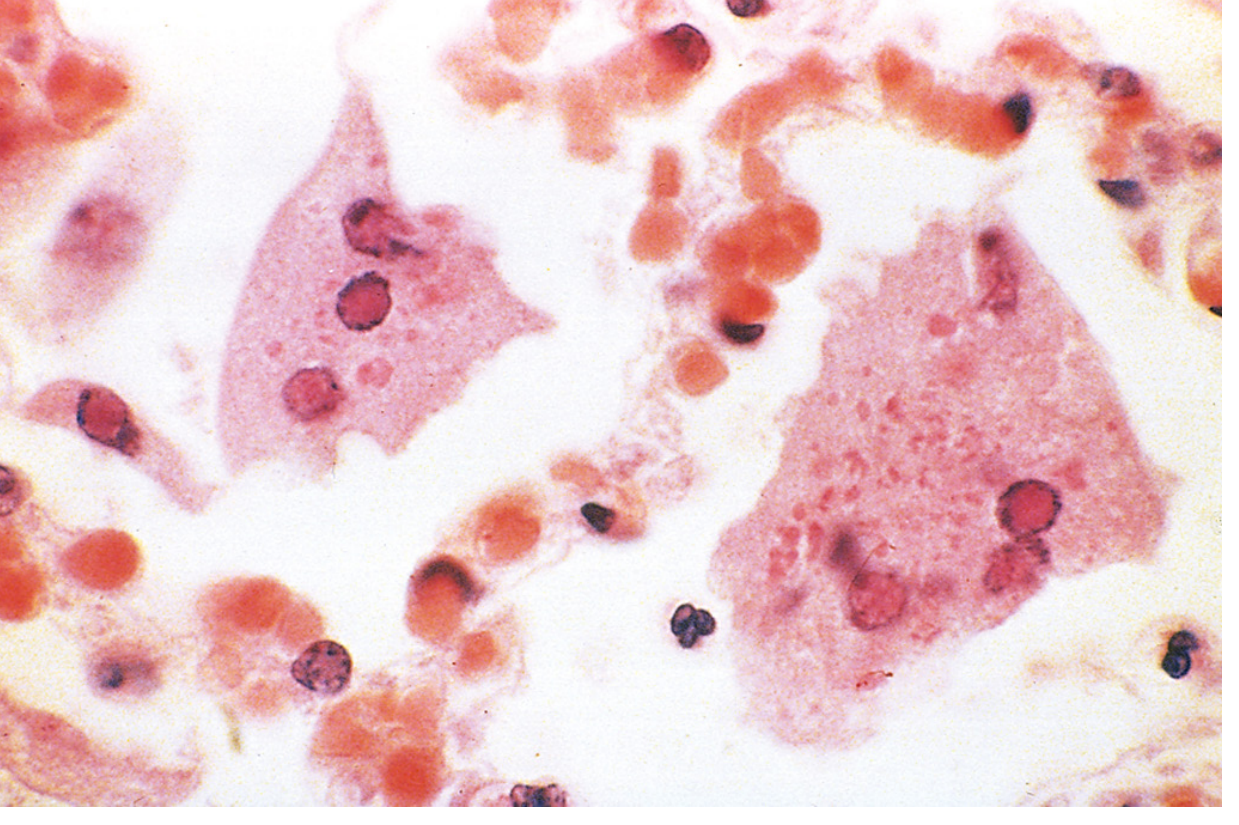
- Lymphoid organs show marked follicular hyperplasia and Warthin-Finkeldey giant cells - multinucleate giant cells with eosinophilic nuclear and cytoplasmic inclusion bodies, pathognomonic of measles, also found in lung and sputum
Complications
| Complication | Notes |
|---|---|
| Otitis media | Most common complication |
| Pneumonia | Giant cell (Hecht) pneumonia; high mortality in immunocompromised |
| Encephalitis | <1% of cases, can be fatal |
| Thrombocytopenic purpura | |
| "Black measles" | Rare DIC-like complication |
| Keratitis / blindness | Common in malnourished children in low-resource settings |
| Diarrhea / protein-losing enteropathy | |
| SSPE (subacute sclerosing panencephalitis) | Rare, late (years later); defective virus accumulates mutations, F-protein promotes cell-to-cell spread without receptor-mediated entry |
| Measles inclusion body encephalitis | Occurs in immunocompromised patients |
Children who are malnourished or have T-cell deficiencies (including HIV) face 10-1000x higher mortality. In HIV-infected children, the rash may be absent or less prominent. - Robbins, Cotran & Kumar
The neurology textbook specifically identifies four major CNS syndromes: acute encephalitis, postviral encephalomyelitis, measles inclusion body encephalitis, and SSPE. - Bradley and Daroff's Neurology in Clinical Practice
Diagnosis
- Clinical: high fever + Koplik spots + conjunctivitis + upper respiratory symptoms + characteristic exanthem
- Lab: lymphopenia, decreased WBC
- Serology: measles-specific IgM (detectable 5 days after rash onset; if done too early, may give false-negative - repeat if needed); acute and convalescent titers
- PCR: highly sensitive in urine, oropharyngeal secretions, and blood; especially useful in modified/vaccinated patients
- Biopsy: syncytial keratinocytic giant cells in skin lesions - Andrews' Diseases of the Skin
Modified Measles
A milder form occurring in partially immune hosts (prior infection, persistent maternal antibodies, or prior vaccination). Presents with an attenuated course. - Andrews' Diseases of the Skin
Treatment
There is no specific antiviral therapy. Management is mainly supportive:
- Bed rest, analgesics, antipyretics
- Vitamin A: two doses of retinyl palmitate 200,000 IU, 24 hours apart, recommended for:
- All children aged 6-24 months
- Immunodeficient children
- Malnourished children or those with vitamin A deficiency signs
- Recent immigrants from high-mortality areas
- Vitamin A supplementation reduces morbidity and mortality in hospitalized children - Andrews' Diseases of the Skin
Prevention & Vaccination
- MMR vaccine: live attenuated virus; first dose at age 12 months, booster at 4-5 years before school entry
- A faint maculopapular rash may occur 7-10 days post-immunization
- Achieving >95% two-dose vaccination coverage in a population leads to measles elimination
- Post-exposure prophylaxis: vaccination or immune globulin within the first few days of exposure can prevent secondary cases (prevented 80% of possible secondary cases in one Australian outbreak)
- Contraindications to MMR: pregnancy, severe immunocompromise (except non-severely immunocompromised HIV), history of anaphylaxis to a prior dose or vaccine component. Note: anaphylactic egg allergy is NOT a contraindication - vaccinate without prior skin testing - Goldman-Cecil Medicine
Who Needs Vaccination (Adults)
- All persons born 1957 or later without lab evidence of immunity, confirmed disease, or documented vaccination
- Two doses required for high-risk adults: healthcare workers, college students, international travelers
- Persons born before 1957 are generally presumed immune from natural infection - Goldman-Cecil Medicine
Global Burden
- WHO-led vaccination initiatives estimated to have prevented 56 million deaths between 2000 and 2021
- Still approximately 128,000 deaths in 2021, predominantly in low-resource countries
- The COVID-19 pandemic disrupted vaccination campaigns; by 2022 only 83% of children received one dose by age 1 - the lowest since 2008
- Outbreaks in high-income countries typically result from importation by travelers and subsequent spread in unvaccinated subpopulations - Robbins, Cotran & Kumar Pathologic Basis of Disease
Recent evidence note: A 2025 systematic review and meta-analysis (PMID 40601595) examined non-specific effects of measles vaccines on mortality and morbidity beyond measles itself - this is an active area of research and does not change the established benefit of vaccination. A 2025 systematic review on post-exposure prophylaxis (PMID 39787800) further supports the use of vaccination and immunoglobulin after exposure.
This is a shared conversation. Sign in to Orris to start your own chat.