
Bloating treatment
Reading File
Bloating (abdominal distension/gas) is treated based on the underlying cause. General approaches include dietary changes (low-FODMAP diet, reducing gas-producing foods), simethicone for gas, probiotics, and treating conditions like IBS, SIBO, or constipation.
Searching sources...
Finding Sources
Finding Sources
Searching PubMed
abdominal bloating treatment
Reading File
Reading File
Reading File
Finding Sources
Finding Sources
Reading File
Finding Sources
Finding Sources
Finding Sources
Reading File
Reading File
Loading Image
Here is a structured, evidence-based overview of bloating treatment:
Bloating (Abdominal Distension/Gas): Treatment
Effective management depends on identifying and addressing the underlying cause. The main categories are:
1. Dietary Modifications (First Line)
Low FODMAP Diet
This is the most evidence-based dietary approach. FODMAPs (Fermentable Oligosaccharides, Disaccharides, Monosaccharides, And Polyols) are poorly absorbed in the small intestine and fermented by gut bacteria, producing gas and osmotically active carbohydrates. A network meta-analysis of 13 RCTs found the low FODMAP diet superior to all other dietary interventions, improving bloating in 50-80% of IBS patients.
The low FODMAP approach is a 3-step process:
- Restriction phase (2-6 weeks): eliminate all five FODMAP subgroups (fructose, lactose, fructo- and galacto-oligosaccharides, polyols)
- Reintroduction phase: test individual FODMAPs to identify personal triggers
- Personalization phase: long-term maintenance based on individual tolerance
Note: Avoid this diet in patients with a history of eating disorders or avoidant/restrictive eating behavior.
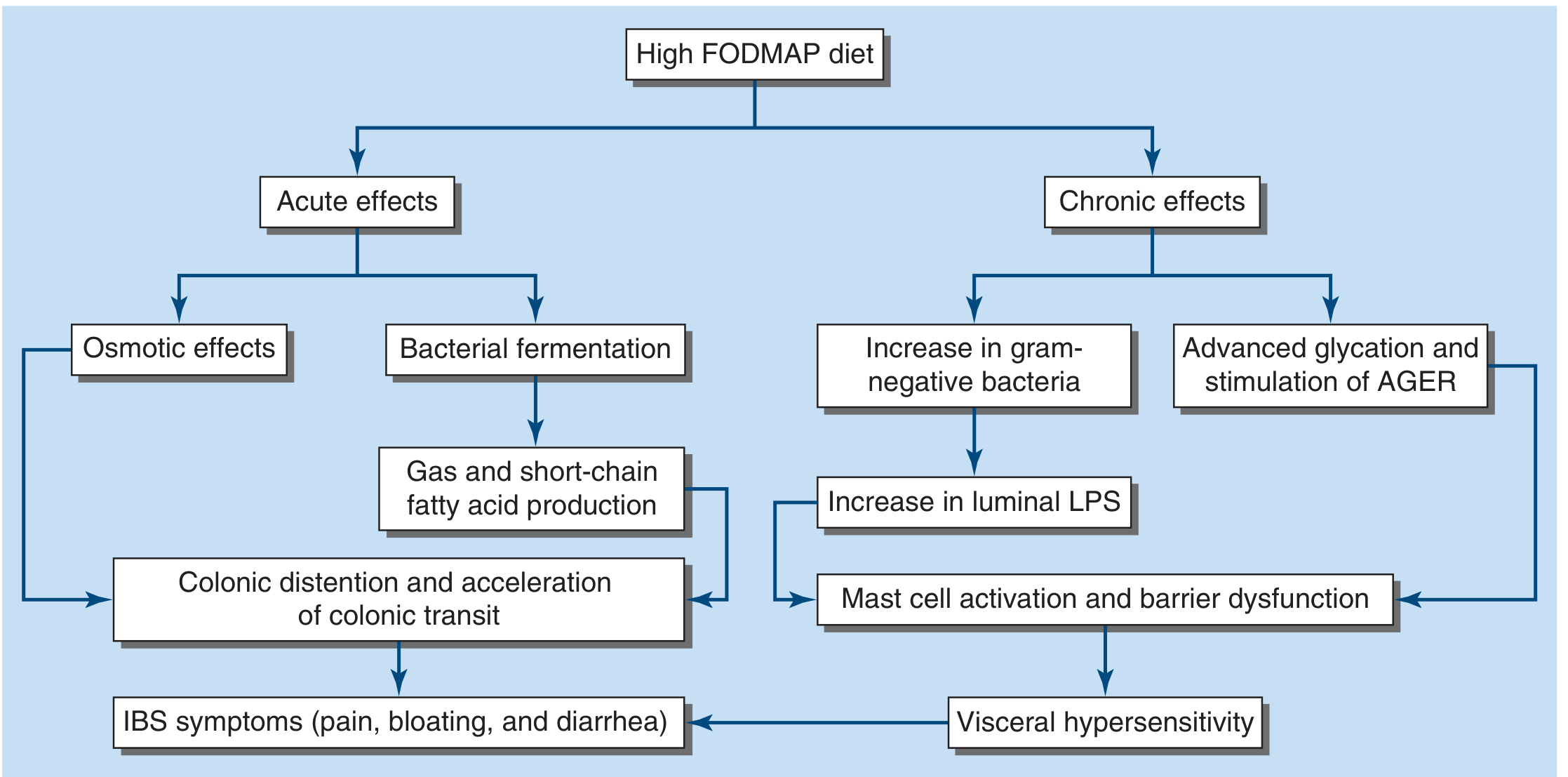
Other dietary advice:
- Eat slowly; avoid chewing gum and carbonated beverages (reduces aerophagia)
- Eliminate gas-forming foods: beans, cabbage, onions, Brussels sprouts, cauliflower, broccoli, dairy products (if lactose intolerant)
- Avoid excessive refined carbohydrates
- Regular physical activity and weight loss if overweight
2. Treating Specific Underlying Causes
| Condition | Treatment |
|---|---|
| Lactase deficiency | Lactase enzyme supplements before dairy; lactose-free diet |
| IBS | Low FODMAP, antispasmodics, antidepressants, rifaximin, probiotics |
| SIBO | Rifaximin 550 mg TID for 14 days (or alternative antibiotics) |
| Constipation | Osmotic laxatives (PEG), increased fiber, anorectal retraining if needed |
| Gastroparesis | Prokinetics (metoclopramide, erythromycin, domperidone) |
| Celiac disease | Strict gluten-free diet |
3. Pharmacological Treatments
Antiflatulence
- Simethicone (surfactant/defoamer): over-the-counter, helps break up gas bubbles - data is conflicting but widely used
- Activated charcoal: safe but unproven
- Beano (alpha-galactosidase): reduces rectal gas passage, though without significantly reducing bloating or pain
Antibiotics
- Rifaximin (non-absorbed antibiotic): a 2024 meta-analysis (PMID 37310270) confirms efficacy for bloating and distension. Especially useful in IBS-D and SIBO. Dose for IBS: 550 mg three times daily for 14 days.
Antispasmodics
- Hyoscine (scopolamine), peppermint oil: reduce abdominal pain and cramping associated with bloating
- Smooth muscle relaxants are superior to placebo for abdominal pain and distension in IBS - Sleisenger & Fordtran's Gastroenterology
Neuromodulators / Antidepressants
- Tricyclic antidepressants (TCAs) (e.g., imipramine, amitriptyline at low doses): slow intestinal transit, modulate visceral pain - beneficial in all IBS subtypes. Benefits appear independent of antidepressant effect and occur at lower doses.
- SSRIs: evidence is conflicting and heterogeneous
For IBS-D specifically
- Loperamide: reduces diarrhea but does NOT improve bloating
- Alosetron (5-HT3 antagonist): restricted use (FDA risk management program) due to risk of ischemic colitis; requires expert consultation
For IBS-C specifically
- Lubiprostone (chloride channel C-2 activator): effective in women; negative pregnancy test required
- Tegaserod (5-HT4 agonist): FDA-approved in 2019 for women <65 without cardiovascular risk factors; reduces bloating and constipation
Serotonin receptor modulators
- 5-HT4 agonists (prucalopride, tegaserod): exhibit prokinetic activity; clinically improve bloating compared to placebo
4. Probiotics
Multiple meta-analyses suggest probiotics may improve IBS symptoms including bloating; however, quality of evidence is low (small trials, short duration). The AGA currently makes no recommendation for probiotics in IBS due to lack of high-quality data. Bifidobacteria species show the most promise. - Harrison's Principles of Internal Medicine, 22E
5. Brain-Gut Behavioral Therapies
For functional bloating (especially IBS-related), psychological approaches targeting the brain-gut axis are effective:
- Cognitive behavioral therapy (CBT)
- Gut-directed hypnotherapy
- A 2024 systematic review & network meta-analysis (PMID 38777133) confirms brain-gut behavioral treatments reduce abdominal pain in IBS
6. When to Investigate Further
Bloating with the following features warrants investigation before empirical treatment:
- Diarrhea worsened by dairy, fruits, or juices (consider lactose/fructose intolerance)
- Accompanied by weight loss, rectal bleeding, or fever (exclude organic disease)
- Onset after abdominal surgery (consider post-surgical cause)
- Associated with steatorrhea (rule out celiac disease, pancreatic insufficiency, SIBO)
Key takeaway: The most effective first-line treatments are dietary (low FODMAP diet) combined with addressing any specific underlying cause. Rifaximin is the best-supported pharmacological option for functional bloating and IBS-related bloating, with a strong evidence base from a 2024 meta-analysis.
Sources: Harrison's Principles of Internal Medicine 22E | Swanson's Family Medicine Review | Symptom to Diagnosis 4th Ed | Goodman & Gilman's Pharmacology | Sleisenger & Fordtran's GI Disease
This is a shared conversation. Sign in to Orris to start your own chat.