
Treatment for lost herpes zoster opthslmicus
Reading File
Now I'll search the medical library and PubMed simultaneously for herpes zoster ophthalmicus treatment.
Finding Sources
Finding Sources
Searching PubMed
herpes zoster ophthalmicus treatment antiviral
Now let me read the most relevant sections from Wills Eye Manual, Kanski's Ophthalmology, Goldman-Cecil, and Tintinalli's:
Reading File
Reading File
Reading File
Reading File
Now let me read the Wills Eye Manual treatment section and Kanski's treatment section:
Reading File
Reading File
Let me continue reading both sections for more detail on specific ocular complications management:
Reading File
Reading File
Let me read the remaining Kanski treatment content and the Wills Eye Manual treatment table to get the full treatment for specific ocular complications:
Reading File
Reading File
I now have comprehensive information to write a thorough answer. Let me fetch one of the clinical images for the response:
Loading Image
Here is a comprehensive guide to the treatment of Herpes Zoster Ophthalmicus (HZO):
Herpes Zoster Ophthalmicus (HZO) - Treatment
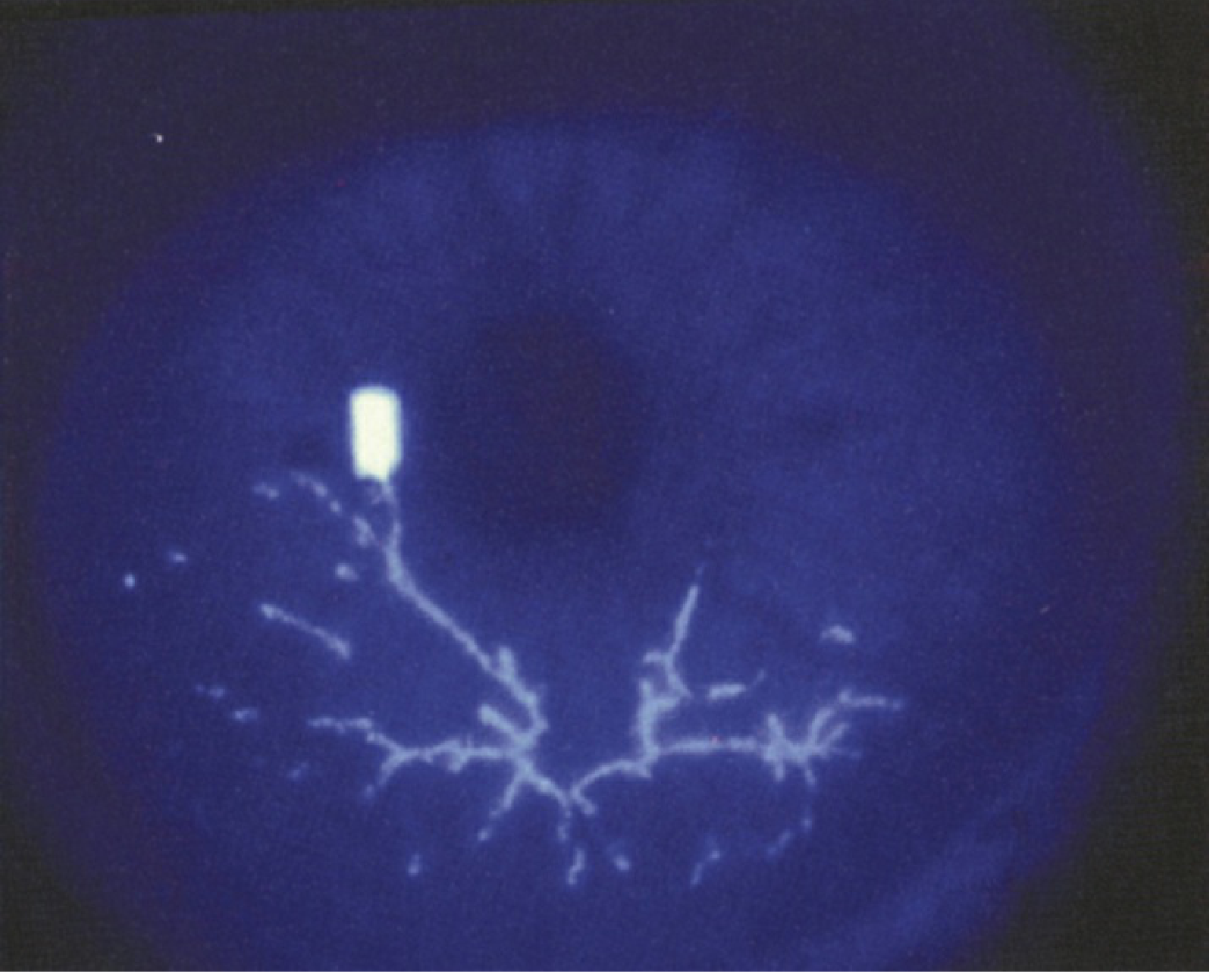
HZO is reactivation of varicella-zoster virus (VZV) in the ophthalmic division (V1) of the trigeminal nerve. It accounts for roughly 10-20% of all zoster cases. Ocular complications can follow the skin rash by days to years. Hutchinson sign (vesicles on the tip of the nose, from the nasociliary branch) signals higher risk of ocular involvement.
1. Systemic Antiviral Therapy
This is the cornerstone of treatment. Start within 72 hours of rash onset for best outcomes. Patients presenting later but still at the vesicular stage also benefit. Antiviral treatment reduces:
- Severity and duration of the acute episode
- Risk of post-herpetic neuralgia
- Incidence of late ophthalmic complications by ~50%
| Drug | Dose (immunocompetent) | Notes |
|---|---|---|
| Valacyclovir | 1 g p.o. three times daily x 7-10 days | Preferred - better bioavailability, convenient dosing |
| Famciclovir | 500 mg p.o. three times daily x 7-10 days | Equivalent efficacy to valacyclovir |
| Acyclovir | 800 mg p.o. five times daily x 7-10 days | Still effective; more frequent dosing |
| Brivudine | Available in some countries | Avoid with 5-fluorouracil (fatal interaction) |
IV Acyclovir (10 mg/kg q8h x 5-10 days) is indicated for:
- Immunocompromised patients (moderate-severe)
- Orbital involvement
- Optic nerve or cranial nerve involvement
- CNS involvement (encephalitis)
- Severely ill patients
Immunocompromised patients: Extended antiviral duration; IV preferred. Consult infectious disease. Avoid systemic steroids.
- Wills Eye Manual, p. 233; Kanski's Clinical Ophthalmology 10th, p. 242
2. Systemic Corticosteroids
Somewhat controversial but commonly used in moderate-severe disease. Always combine with an antiviral - never use alone.
- Prednisolone 60 mg/day for 4 days → 40 mg for 4 days → 20 mg for 4 days (tapering course)
- Reduces acute pain and accelerates skin healing
- Does NOT reduce the incidence or severity of post-herpetic neuralgia
- Contraindicated in immunocompromised patients
- Kanski's Clinical Ophthalmology 10th, p. 242
3. Skin Lesion Care
- Ophthalmic antibiotic ointment (bacitracin or erythromycin) to skin lesions b.i.d.
- Warm compresses to periocular skin three times daily
- Drying, antisepsis, and cold compresses for symptomatic relief
4. Ocular Complications - Specific Treatment
All patients with VZV ocular findings should receive 7-10 days of systemic oral antivirals in conjunction with the following condition-specific therapies:
Conjunctivitis
- Cool compresses + ophthalmic antibiotic ointment (bacitracin/erythromycin) b.i.d.
- No specific treatment needed in absence of corneal disease
Superficial Punctate Keratitis (SPK)
- Preservative-free artificial tears q1-2h + lubricating ointment at bedtime
Pseudodendrites / Corneal Mucous Plaques
- Preservative-free tears q1-2h + ointment at bedtime
- Antibiotic ointment to prevent bacterial superinfection
- Topical ganciclovir gel 4-5x daily for recalcitrant lesions
Immune Stromal Keratitis
- Topical steroid (prednisolone acetate 1%) 4-8x per day, adjusted by response
- Taper over months to years to less than daily dosing - relapses are common
Nummular Keratitis
- Develops ~10 days after rash onset at the site of prior epithelial lesions
- Treat with topical steroids if symptomatic (similar regimen to stromal keratitis)
Episcleritis
- Usually resolves spontaneously
- Mild NSAID (e.g., flurbiprofen 100 mg three times daily) if needed
Scleritis / Sclerokeratitis
- Oral flurbiprofen 100 mg three times daily for mild-moderate disease
- Oral steroids with antiviral cover for severe disease
Uveitis (Anterior)
- Topical steroid (prednisolone acetate 1%) 4-8x daily
- Cycloplegic drop (cyclopentolate 1% three times daily)
- Aggressive aqueous suppression for elevated IOP
- Avoid prostaglandin analogues
Neurotrophic Keratitis
- Mild: ophthalmic antibiotic ointment (erythromycin) and lubrication
- Moderate-severe: consider bandage contact lens, tarsorrhaphy, or amniotic membrane transplant
- Refer to corneal specialist
Elevated IOP (secondary to inflammation or steroids)
- Aqueous suppressants: timolol 0.5% daily/b.i.d., brimonidine 0.2% t.i.d., or dorzolamide 2% t.i.d.
- Oral carbonic anhydrase inhibitors if IOP >30 mmHg
- If steroid-induced with controlled inflammation: switch to fluorometholone 0.1% or loteprednol 0.5% and taper
- Avoid prostaglandin analogues in uveitis setting
Retinitis / Choroiditis / Optic Neuritis / Cranial Nerve Palsy
- IV acyclovir 10 mg/kg q8h x 1 week + prednisone 60 mg p.o. x 3 days, then taper over 1 week
- Acute Retinal Necrosis (ARN) or Progressive Outer Retinal Necrosis (PORN): may require intraocular antivirals
- Infectious disease + neurology consultation to rule out CNS involvement
- Note: severe disease can cause large-vessel cranial arteritis leading to CVA
- Wills Eye Manual, p. 233-236
5. Pain Management
- Acute pain (first 2 weeks) may require narcotic analgesics
- Gabapentin or pregabalin - useful for both acute pain and post-herpetic neuralgia
- Amitriptyline 25 mg t.i.d. - benefits both post-herpetic neuralgia and associated depression
- Topical capsaicin 0.025% or doxepin ointment applied to skin (not near eyes) t.i.d.-q.i.d. after rash heals
- Pain management specialist referral for persistent post-herpetic neuralgia
6. Children
- Acyclovir 20 mg/kg q8h (weight-based) for children <12 years or <40 kg
- Adult dosing for older/heavier children
- Co-manage with pediatrics and infectious disease for systemic spread
7. Prevention (Vaccination)
Two vaccines are approved for individuals ≥50 years:
- Zoster vaccine live (Zostavax) - attenuated live virus; efficacy decreases within 10 years
- Recombinant zoster vaccine (Shingrix) - requires 2 injections; ~10% local/systemic reactions; preferred for better durability
Follow-Up
- With ocular involvement: every 1-7 days depending on severity
- Without ocular involvement: every 1-4 weeks
- After acute resolution: every 3-6 months (every 3 months if on steroids) - relapses may occur months to years later, especially during steroid taper
Infection control: VZV is contagious to varicella-naive individuals (especially pregnant women) until all lesions have crusted.
Recent evidence note: A 2024 systematic review (PMID 37307095) examined antivirals vs. antivirals + steroids for HZO-related ophthalmoplegia, and a 2025 meta-analysis (PMID 40596424) further analyzed treatment efficacy in zoster ophthalmoplegia - these are consistent with current textbook guidance that combination antiviral + steroid is commonly used for neurological complications.
This is a shared conversation. Sign in to Orris to start your own chat.