


1000072184.jpg
1000072187.jpg
Check this report and say what is it
analyse_media
analyse_media
These are two Laboratory Reports from Obaid Specialized Hospital Al-Hassa, Saudi Arabia (Associated Medical Enterprise Co. Ltd.), both dated 01/08/2026, for the same patient:
Patient Details
- Name: Mullaji Mobeen Ali
- Gender: Male | Age: 55 years, 7 months
- Patient ID: 431152 | Iqama No: 2130988252
- Address: Hufuf, Saudi Arabia
- Requesting Physician: Dr. Maisoon Mustafa Ahmed (Outpatient)
- Verified By: Dr. Nedal Nasef
Report 1 - Complete Urine Analysis (Image 1)
| Test | Result | Normal Range | Status |
|---|---|---|---|
| Colour | Yellow | Yellow | Normal |
| Appearance | Clear | Clear | Normal |
| pH | 5.0 | - | - |
| Specific Gravity | 1.010 | - | - |
| Protein | NIL | NIL | Normal |
| Sugar | +3 | NIL | ⚠️ Abnormal |
| Ketone | NIL | NIL | Normal |
| Bilirubin | NIL | NIL | Normal |
| Urobilinogen | NIL | N/Trace | Normal |
| Blood | NIL | NIL | Normal |
| Nitrite | NIL | NIL | Normal |
| RBC | 0-1 /hpf | 2-4 | Normal |
| WBC | 0-1 /hpf | 2-4 | Normal |
| Epithelial Cells | NIL | Few | Normal |
| Cast, Crystal, Amorphous, Mucus, Bacteria, Yeast, LE | All NIL | NIL | Normal |
Key finding: Urine Sugar +3 (significant glycosuria - sugar in urine, suggesting possible uncontrolled diabetes or high blood glucose)
Report 2 - Blood Tests (Image 2)
| Test | Result | Normal Range | Status |
|---|---|---|---|
| Blood Urea Nitrogen (BUN) | 30.9 mg/dL | Male: 6.0-25 | ⚠️ HIGH |
| Serum Creatinine | 2.08 mg/dL | Male: 0.73-1.18 | ⚠️ HIGH |
| Sodium | 135 mmol/L | ~136-145 | Borderline low |
| Potassium | 3.28 mmol/L | ~3.5-5.0 | ⚠️ Slightly low |
| Chloride | 95.9 mmol/L | ~98-107 | ⚠️ Slightly low |
| CRP Quantitative | 55.90 mg/L | < 6.0 | ⚠️ HIGH |
Summary of Abnormal Findings
-
Elevated Creatinine (2.08) and BUN (30.9) - Both kidney function markers are significantly above normal, indicating reduced kidney (renal) function or chronic kidney disease (CKD).
-
Glycosuria (+3 sugar in urine) - Suggests uncontrolled diabetes mellitus or very high blood sugar level.
-
Elevated CRP (55.90 mg/L, normal <6) - Almost 10x the upper limit, indicating significant inflammation or active infection somewhere in the body.
-
Mild electrolyte imbalance - Slightly low potassium and chloride.
These results together suggest this patient likely has diabetes with kidney complications (diabetic nephropathy) and an active inflammatory/infectious process. The patient should follow up closely with their physician.
⚠️ This is an informational summary only. All results should be interpreted by the treating physician in the context of the patient's full clinical picture.
What do elevated BUN and creatinine levels indicate?
Elevated BUN and creatinine are the two most important markers of kidney function. When both are high together, it almost always points to the kidneys not filtering waste properly.
Searching sources...
Reading File
Finding Sources
Finding Sources
Reading File
Reading File
Reading File
Here is a thorough explanation of what elevated BUN and creatinine levels mean, grounded in authoritative medical textbooks:
What Are BUN and Creatinine?
Blood Urea Nitrogen (BUN)
- Normal range: Males 8-24 mg/dL, Females 6-21 mg/dL
- Ammonia is produced when the body breaks down proteins. The liver converts this ammonia into urea, which enters the blood and is filtered out by the kidneys. BUN measures the nitrogen portion of this urea in the blood.
- When the kidneys cannot filter efficiently, urea builds up - raising BUN levels.
Creatinine
- Normal range: Males 0.7-1.3 mg/dL, Females 0.6-1.0 mg/dL
- Creatinine is a breakdown product of creatine phosphate in muscle tissue. It is produced at a fairly constant rate (proportional to muscle mass) and is freely filtered by the glomerulus (kidney filter).
- Because production is constant, any rise in blood creatinine directly reflects a fall in the kidney's filtration rate (GFR). It is one of the most reliable markers of kidney function.
(Robbins & Kumar Basic Pathology, Laboratory Tests)
What Do Elevated Levels Mean?
When both BUN and creatinine are elevated together, the main interpretation is azotemia - the buildup of nitrogen waste products in the blood due to impaired kidney filtration. The causes are classified into three categories:
1. Prerenal (Before the Kidney)
The kidney itself is healthy, but is not receiving enough blood flow to filter properly.
- Causes: Dehydration, vomiting, diarrhea, blood loss, heart failure, shock, use of NSAIDs or ACE inhibitors
- Key clue: BUN/Creatinine ratio > 20:1 (BUN rises disproportionately because tubules reabsorb more urea when flow is slow)
- The kidneys try to hold onto water, so urine becomes very concentrated
2. Intrarenal / Renal (Within the Kidney)
The kidney tissue itself is damaged.
- Causes: Acute tubular necrosis (from toxins or ischemia), glomerulonephritis, interstitial nephritis, diabetic nephropathy, polycystic kidney disease
- Key clue: BUN/Creatinine ratio < 10-15:1 - both rise proportionally
- Urine is dilute (the damaged kidney cannot concentrate it)
3. Postrenal (After the Kidney)
Urine is blocked from leaving the urinary tract, causing backpressure.
- Causes: Kidney stones, enlarged prostate, tumors, urethral stricture
- Key clue: BUN/Creatinine ratio > 20:1, often with sudden onset
(Goldman-Cecil Medicine, Prerenal Azotemia)
The BUN/Creatinine Ratio - A Useful Tool
| Ratio | Suggests |
|---|---|
| > 20 : 1 | Prerenal (dehydration, low blood flow) OR Postrenal (obstruction) |
| 10-15 : 1 | Normal OR Intrinsic renal disease |
| < 10 : 1 | Liver disease, malnutrition, or rhabdomyolysis |
The normal BUN/Creatinine ratio is 10-15:1. This ratio is more useful than either value alone for pinpointing the cause. (Robbins & Kumar Basic Pathology)
In the Context of This Patient
This patient's values:
- BUN = 30.9 mg/dL (normal up to 25) - mildly elevated
- Creatinine = 2.08 mg/dL (normal up to 1.18) - significantly elevated
- BUN/Creatinine ratio = 30.9 / 2.08 ≈ 14.9 - this is within the intrinsic renal range
This pattern, combined with:
- Glycosuria (+3 sugar in urine) suggesting diabetes
- High CRP suggesting inflammation
- Low potassium and chloride
...strongly points toward chronic kidney disease (CKD) from diabetic nephropathy - long-standing damage to the kidney filters caused by high blood sugar. Patients with CKD typically show elevated creatinine, elevated BUN, electrolyte imbalances, and metabolic acidosis as disease progresses. (Symptom to Diagnosis, An Evidence-Based Guide)
⚠️ These results need to be reviewed by the treating physician. Additional tests like eGFR (estimated GFR), urine albumin-to-creatinine ratio, and kidney ultrasound would help fully evaluate the degree of kidney damage.
What are the possible medication
Based on this patient's lab findings (elevated BUN/creatinine, glycosuria, high CRP, electrolyte imbalance), the likely diagnoses are diabetic nephropathy with chronic kidney disease and active inflammation/infection. Let me search the medical library for current management.
Searching sources...
Finding Sources
Finding Sources
Searching PubMed
diabetic nephropathy chronic kidney disease treatment guidelines
Reading File
Finding Sources
Finding Sources
Reading File
Finding Sources
Reading File
Based on authoritative nephrology and internal medicine textbooks, here are the possible medications for this patient's condition (diabetic nephropathy / CKD with inflammation):
Possible Medications for This Patient
This patient has: Diabetic kidney disease (CKD) + elevated CRP (active inflammation/infection) + glycosuria + electrolyte imbalance
1. Kidney Protection (Nephroprotective) Agents
ACE Inhibitors or ARBs - First-Line
These are the cornerstone of treatment for diabetic kidney disease.
- Examples: Enalapril, Lisinopril, Ramipril (ACE inhibitors) / Losartan, Valsartan, Irbesartan (ARBs)
- How they work: Block the renin-angiotensin-aldosterone system (RAAS), reduce pressure inside the kidney's filtering units (glomeruli), and decrease protein leakage into urine
- Goal: Slow progression of CKD and protect cardiovascular health
- (Washington Manual of Medical Therapeutics)
SGLT2 Inhibitors - High Priority Addition
- Examples: Empagliflozin (Jardiance), Canagliflozin (Invokana), Dapagliflozin (Farxiga)
- How they work: Lower blood sugar by excreting it in urine, AND independently protect the kidney by reducing glomerular hyperfiltration
- Evidence: Multiple large trials (CREDENCE, DAPA-CKD, EMPA-KIDNEY) show they significantly slow kidney disease progression and reduce cardiovascular events - independent of blood sugar lowering
- Can be started at eGFR ≥ 30 mL/min (some approved down to 25)
- (National Kidney Foundation Primer on Kidney Diseases, 8e)
Finerenone - Newer Add-On Agent
- A non-steroidal mineralocorticoid receptor antagonist (MRA)
- Evidence: The FIDELIO and FIGARO trials (13,000+ patients) showed 18% reduction in CKD progression and 13% reduction in major cardiovascular events in diabetes + CKD patients
- Causes less dangerous potassium rise (hyperkalemia) than older MRAs like spironolactone
- (National Kidney Foundation Primer, 8e)
2. Blood Sugar Control Medications
| Drug Class | Examples | Notes for CKD |
|---|---|---|
| Metformin | Glucophage | Safe if eGFR ≥ 30; stop if eGFR falls below 30 |
| SGLT2 inhibitors | Empagliflozin, Dapagliflozin | Dual benefit: glucose + kidney protection |
| GLP-1 agonists | Semaglutide (Ozempic), Dulaglutide | Safe down to eGFR < 15; also reduce cardiovascular risk |
| DPP-4 inhibitors | Sitagliptin, Linagliptin | Low hypoglycemia risk; Linagliptin needs no dose adjustment in CKD |
| Insulin | Various types | Requires dose reduction as kidney function falls (kidney clears insulin) |
| Sulfonylureas | Glipizide (preferred) | Use with caution; some types build up in kidney disease, causing dangerous low blood sugar |
- Target HbA1c < 7% to slow kidney damage
- (National Kidney Foundation Primer, 8e)
3. Blood Pressure Control
- Target BP: < 130/80 mmHg in diabetes with kidney damage
- Medications:
- ACE inhibitor or ARB (first-line, as above)
- Diuretics (e.g., furosemide - especially useful if fluid retention is present in CKD)
- Calcium channel blockers (e.g., amlodipine) as add-on
- Often 2-4 medications are needed to reach target
- (National Kidney Foundation Primer, 8e)
4. For Elevated CRP (Inflammation/Infection)
This patient's CRP of 55.90 mg/L (normal < 6) is significantly elevated. Before attributing this purely to CKD, an active infection must be ruled out.
- If bacterial infection is confirmed: appropriate antibiotics based on the source and culture
- If it reflects sterile inflammation from CKD/diabetes: the nephroprotective medications above (SGLT2i, finerenone, ACE/ARB) will help reduce chronic inflammation over time
- Common sources of infection in diabetic CKD patients: urinary tract infections, skin infections, respiratory infections
5. Electrolyte & Metabolic Management
| Problem | Medication / Approach |
|---|---|
| Low potassium (3.28 mmol/L) | Oral potassium supplements (with caution - ACE/ARBs can raise K+) |
| Low chloride | Usually corrects with treating the underlying cause |
| Metabolic acidosis (expected in CKD) | Sodium bicarbonate supplements |
| Anemia (expected in advanced CKD) | Erythropoiesis-stimulating agents (ESAs), iron supplements |
| High phosphate (as CKD progresses) | Phosphate binders (e.g., calcium carbonate) |
6. Dietary Modifications (Non-Drug but Essential)
- Protein intake: Limit to 0.8 g/kg/day - reduces urea production (lowers BUN)
- Low sodium diet - supports blood pressure control
- Low potassium diet if levels rise (ACE/ARBs + CKD can worsen hyperkalemia)
- Avoid nephrotoxic drugs: NSAIDs (ibuprofen, naproxen), certain contrast dyes, aminoglycoside antibiotics
Summary - Priority Medications for This Patient
| Priority | Drug | Reason |
|---|---|---|
| ⭐ First | ACE inhibitor or ARB | Kidney protection, BP control |
| ⭐ First | SGLT2 inhibitor | Kidney + CV protection, glucose lowering |
| Second | GLP-1 agonist | Glucose + CV protection if not controlled |
| Second | Finerenone | Additional kidney/CV protection |
| As needed | Diuretic | BP + fluid control |
| As needed | Antibiotic | If infection confirmed (high CRP) |
⚠️ Important: All medications must be prescribed and monitored by the treating physician. Doses need adjustment based on the patient's actual eGFR (kidney filtration rate), which requires a blood test. Some medications (like metformin and certain diabetes drugs) can be dangerous in advanced kidney disease if not dosed correctly. The doctor will also need to investigate the cause of the high CRP before choosing the right treatment.
What may be cause of this problem
Based on this patient's full lab picture, the most likely cause is long-standing, poorly controlled diabetes damaging the kidneys. Let me search the medical library for a thorough answer.
Searching sources...
Finding Sources
Finding Sources
Finding Sources
Finding Sources
Reading File
Finding Sources
Loading Image
Finding Sources
Here is a comprehensive explanation of all the possible causes of this patient's abnormal lab results, tied directly to his specific findings:
What Is the Most Likely Underlying Problem?
Looking at this patient's full picture:
- Male, 55 years old
- Sugar +3 in urine (glycosuria - major red flag for diabetes)
- Elevated creatinine 2.08 and elevated BUN 30.9 (kidney damage)
- CRP 55.90 (active inflammation or infection - 10x normal)
- Low potassium, low chloride (electrolyte loss)
The most likely primary diagnosis is Diabetic Kidney Disease (Diabetic Nephropathy) - kidney damage caused by long-standing, poorly controlled diabetes mellitus.
How Diabetes Destroys the Kidneys - The Mechanism
Chronically high blood sugar damages the kidneys through several pathways:
1. Glomerular Hyperfiltration (Early stage)
- High glucose causes the kidney's tiny filters (glomeruli) to overwork and filter too much blood
- This "hyperfiltration" damages the filter membranes over time
2. Structural Damage (Progressive stage)
- Excess glucose binds to proteins forming Advanced Glycation End-products (AGEs), which thicken and stiffen the glomerular basement membrane
- The mesangium (supporting tissue of the glomerulus) expands - called Kimmelstiel-Wilson nodules (a hallmark of diabetic nephropathy on biopsy)
- This thickening makes the filter leaky and less effective
3. The Vicious Cycle of CKD - once kidney units (nephrons) are lost, the remaining ones overwork, causing more damage - a self-perpetuating cycle:
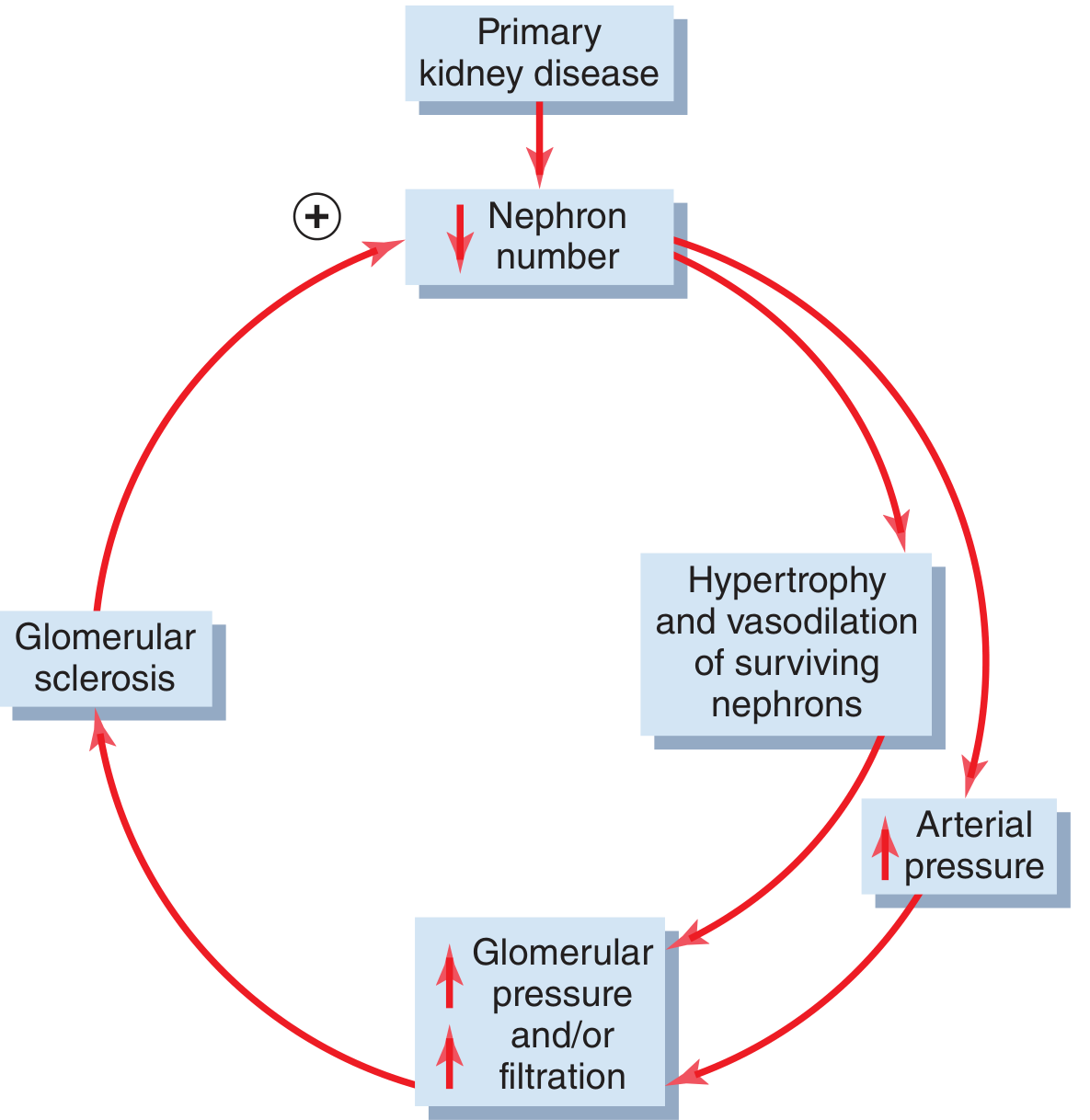
All Possible Causes - Organized by Category
Most Likely Cause: Diabetes Mellitus (Type 2)
- Urine sugar +3 strongly suggests uncontrolled blood glucose
- Diabetes + high BUN/creatinine = classic diabetic nephropathy
- Diabetes and hypertension together account for over 50% of all chronic kidney disease cases worldwide
- (Brenner and Rector's The Kidney; National Kidney Foundation Primer, 8e)
Contributing Cause: Hypertension (High Blood Pressure)
- Even without diabetes, hypertension alone causes kidney damage (nephrosclerosis)
- High blood pressure damages the small arteries feeding the kidney, reducing blood flow and filtration
- With diabetes, hypertension accelerates kidney damage dramatically
- This patient's electrolyte abnormalities (low sodium, potassium, chloride) can also be seen with hypertension medications or fluid shifts
Other Possible Causes of Elevated BUN & Creatinine
| Category | Cause | Clues |
|---|---|---|
| Metabolic | Diabetes mellitus | Urine sugar +3 ✓ |
| Metabolic | Obesity-related kidney disease | Common at 55 yrs |
| Vascular | Atherosclerosis of renal arteries | Common in diabetics |
| Vascular | Nephrosclerosis from hypertension | Very common |
| Immunological | Glomerulonephritis | Usually younger patients |
| Immunological | Lupus nephritis | More in females |
| Infections | Pyelonephritis (kidney infection) | High CRP supports this |
| Obstruction | Enlarged prostate (BPH) | Male, 55 yrs - possible |
| Obstruction | Kidney stones | Would cause pain |
| Drugs/Toxins | NSAIDs, contrast dye, heavy metals | History needed |
| Genetic | Polycystic kidney disease | Detected on ultrasound |
| Other | Amyloidosis | Rare |
(Guyton & Hall Medical Physiology, Table 32.4; Fischer's Mastery of Surgery)
Why Is CRP So High (55.90 mg/L)?
The very elevated CRP indicates active inflammation or infection. In this patient, the possible causes are:
-
Urinary Tract Infection (UTI) or Kidney Infection (Pyelonephritis)
- Diabetics are much more prone to UTIs due to high glucose in urine (which feeds bacteria)
- The urine analysis showed no bacteria, no WBCs - but this doesn't fully rule out early or upper tract infection
- A urine culture would be needed to confirm
-
Chronic inflammation from CKD itself
- CKD causes persistent low-grade inflammation that elevates CRP over time
-
Infection elsewhere (skin, respiratory, dental, etc.)
- Diabetics have weakened immune defenses and get infections more easily
-
Diabetic foot ulcer or soft tissue infection
- Very common in middle-aged male diabetics
Summary: The Chain of Events
Uncontrolled Diabetes (Blood Sugar)
         ↓
Glucose damages kidney filters (glomeruli)
         ↓
Kidneys become scarred and shrink (nephrosclerosis / glomerulosclerosis)
         ↓
Fewer functional nephrons → kidneys can't clear waste
         ↓
BUN ↑ + Creatinine ↑ (azotemia)
         ↓
Eventually → End-Stage Renal Disease (if untreated)
Simultaneously:
- High blood sugar → glucose spills into urine (glycosuria +3)
- Weakened immunity + glucose-rich urine → infection → CRP elevated
- Poor kidney function → electrolytes lost (low K+, low Cl-)
Risk Factors Seen in This Patient
| Risk Factor | Present? |
|---|---|
| Age 55 years | ✓ |
| Male gender | ✓ |
| Likely diabetes (glycosuria) | ✓ |
| Active inflammation (CRP 10x normal) | ✓ |
| Electrolyte imbalance | ✓ |
What Investigations Should Be Done Next?
To confirm the cause, the doctor should order:
- HbA1c - to confirm diabetes and assess long-term blood sugar control
- Fasting blood glucose - immediate blood sugar level
- eGFR calculation - to stage the kidney disease (CKD stage 1-5)
- Urine albumin-to-creatinine ratio (ACR) - to detect protein leakage from damaged kidneys
- Urine culture - to rule out infection (explains high CRP)
- Kidney ultrasound - to assess kidney size, rule out obstruction/stones/polycystic disease
- Lipid panel - dyslipidemia is common with diabetes and worsens CKD
- Blood pressure measurement - hypertension is nearly universal in diabetic nephropathy
⚠️ This analysis is based on the available lab results only. A full clinical history, physical examination, and additional tests are needed for a definitive diagnosis. Please follow up with the treating physician.
Is it a major problem or it can be recovered by medication
This is a serious but manageable condition - the key word is early action. Let me get the most accurate prognosis information from medical sources.
Searching sources...
Finding Sources
Finding Sources
Finding Sources
Finding Sources
Finding Sources
Finding Sources
Reading File
Finding Sources
Reading File
Here is an honest, clear answer based directly from authoritative nephrology textbooks:
Is This a Major Problem?
Yes - this is a serious condition. But it is NOT hopeless.
The honest medical answer is:
"Most patients with advanced-stage diabetic kidney disease are likely to die of cardiovascular disease or progress to end-stage kidney disease — even though treatment may slow progression." (Comprehensive Clinical Nephrology, 7th Edition)
However - and this is important - the right treatment can significantly slow the damage, preserve remaining kidney function for many years, and greatly improve quality of life.
Can It Be "Cured" by Medication?
Partially - here is the truth:
| What Medicine CAN Do | What Medicine CANNOT Do |
|---|---|
| ✅ Slow or halt further kidney damage | ❌ Reverse already-scarred kidney tissue |
| ✅ Bring creatinine down (if cause is partly reversible) | ❌ Regenerate destroyed nephrons (kidney units) |
| ✅ Control blood sugar, blood pressure, inflammation | ❌ Cure diabetes itself |
| ✅ Reduce cardiovascular risk (heart attack, stroke) | ❌ Guarantee the kidneys will not fail eventually |
| ✅ Delay or prevent dialysis for years to decades | ❌ Replace the need for lifestyle changes |
| ✅ Treat the infection causing high CRP | ❌ Undo years of past damage overnight |
Understanding Where This Patient Stands
Estimating His CKD Stage
Using his creatinine of 2.08 mg/dL at age 55, his estimated GFR (eGFR) is approximately 35-40 mL/min/1.73m² (using the CKD-EPI formula). This places him at approximately:
| CKD Stage | eGFR (mL/min) | Meaning |
|---|---|---|
| Stage 1 | > 90 | Normal/near normal |
| Stage 2 | 60-89 | Mildly reduced |
| Stage 3b | 30-44 | Moderately-severely reduced ← Likely here |
| Stage 4 | 15-29 | Severely reduced |
| Stage 5 | < 15 | Kidney failure (dialysis needed) |
He is likely at CKD Stage 3b - this is the middle of the disease. He has significant kidney damage, but he is not yet at dialysis level. This is still a window where treatment makes a real difference.
What Determines Whether He Gets Better, Stays Stable, or Gets Worse?
🔴 Factors That Make It Worse (Risks of Progression)
- Poor blood sugar control (uncontrolled diabetes)
- High blood pressure left untreated
- Ongoing infection (his CRP is very high - this must be treated)
- Taking NSAIDs (ibuprofen, diclofenac) - these damage kidneys
- High-protein diet (increases BUN, stresses kidneys)
- Dehydration
- Smoking
- Delaying treatment
🟢 Factors That Help Stabilize/Improve It
- Strict blood sugar control (HbA1c < 7%) - proven to slow kidney damage
- Blood pressure control (< 130/80 mmHg) - protects the glomeruli
- ACE inhibitor / ARB - reduces pressure inside kidney filters
- SGLT2 inhibitor - multiple large trials show it slows CKD progression even beyond blood sugar lowering
- Treating the current infection (the CRP must come down)
- Low protein, low sodium diet
- Weight loss and exercise
- (Comprehensive Clinical Nephrology, 7th Edition; KDIGO 2022 Guidelines)
The Steno 2 Trial - Real Evidence of Hope
A landmark study called the Steno 2 trial in patients with Type 2 diabetes and kidney disease showed that multifactorial treatment (controlling blood sugar + blood pressure + lipids + lifestyle) together:
- ✅ Lowered risk of cardiovascular disease
- ✅ Slowed nephropathy (kidney disease)
- ✅ Reduced eye disease (retinopathy)
- ✅ Even delayed death
This shows that with proper comprehensive care, outcomes can be dramatically improved.
What Happens If Left Untreated?
If this patient ignores these results and does nothing:
CKD Stage 3 (Now)
      ↓ (months to years)
CKD Stage 4 - severe kidney failure
      ↓
CKD Stage 5 - End Stage Renal Disease (ESRD)
      ↓
Dialysis (3x per week, for life) OR Kidney Transplant
Additionally, people with diabetic kidney disease are at very high risk of heart attack and stroke - cardiovascular death is actually more common than dialysis in CKD stage 3-4 patients.
Bottom Line - A Simple Summary
| Severity | This patient's situation |
|---|---|
| Is it serious? | Yes - this requires urgent medical attention |
| Is it reversible? | Partially - existing damage is mostly permanent, but further damage CAN be prevented |
| Can medication help? | Yes - significantly, especially with new drugs (SGLT2 inhibitors, finerenone) |
| Will he need dialysis? | Not necessarily - with good treatment, dialysis can be delayed for many years or avoided |
| What is the most urgent thing? | Treat the infection (high CRP), control blood sugar, start kidney-protective medications NOW |
⚠️ The most important message: The earlier treatment starts, the better the outcome. Every month of uncontrolled blood sugar and blood pressure causes more permanent kidney damage that cannot be undone. This patient should see a nephrologist (kidney specialist) and endocrinologist (diabetes specialist) as soon as possible. Do not delay.
This is a shared conversation. Sign in to Orris to start your own chat.