
Adult and children dose of phenetoin
Phenytoin dosing (quick answer):
- Adults: Loading dose 15-20 mg/kg IV (max 50 mg/min), maintenance 300 mg/day (or 4-7 mg/kg/day) in 1-3 divided doses
- Children: Loading dose 15-20 mg/kg IV, maintenance 4-8 mg/kg/day divided every 8-12 hours
- Therapeutic serum level: 10-20 mcg/mL
Searching sources...
Reading File
Finding Sources
Searching the Web
phenytoin adult pediatric dosing loading maintenance 2024
Reading File
Finding Sources
Finding Sources
Reading File
Finding Sources
Now I have comprehensive data from the Harriet Lane Handbook, FDA labeling, and the Family Medicine textbook. Here is the full, detailed answer:
Phenytoin Dosing
ADULTS
Status Epilepticus (IV)
| Parameter | Dose |
|---|---|
| Loading dose | 10-20 mg/kg IV (usual 15-20 mg/kg) |
| Max infusion rate | 50 mg/min (slower if elderly or cardiac risk) |
| Maintenance dose | 100 mg IV/oral every 6-8 hours |
Non-emergent Loading & Maintenance (IV/Oral)
| Parameter | Dose |
|---|---|
| Loading dose (oral, hospitalized) | 1000 mg divided as 400 mg, then 300 mg, then 300 mg q2h |
| Loading dose (IV) | 10-15 mg/kg IV at max 50 mg/min |
| Maintenance (oral capsules) | 100 mg 3 times daily (300 mg/day) or 300 mg once daily |
| Maintenance (IV) | 100 mg IV every 6-8 hours |
| Range | 200-500 mg/day, adjusted by levels |
Oral Maintenance by Weight
- 4-7 mg/kg/day in 1-3 divided doses (adjusted to therapeutic level)
CHILDREN (Pediatric)
Status Epilepticus (IV)
| Age | Loading Dose | Max Infusion Rate |
|---|---|---|
| All pediatric ages | 15-20 mg/kg IV | 1-3 mg/kg/min or 50 mg/min (whichever is slower) |
Maintenance Dose (Oral or IV)
| Age Group | Dose |
|---|---|
| Neonates | 5 mg/kg/day divided q12h |
| Infants/Children < 6 years | 5 mg/kg/day in 2-3 divided doses (max 300 mg/day) |
| Children > 6 years | 7.5-9 mg/kg/day in 2-3 divided doses |
| Adolescents | 300 mg/day (same as adult) |
Children generally require higher mg/kg doses than adults due to faster hepatic metabolism.
NEONATAL DOSING (from Harriet Lane Handbook)
- Loading dose: 15-20 mg/kg IV
- Maintenance: 5 mg/kg/day divided every 12 hours
- Rate: not to exceed 1-3 mg/kg/min
Therapeutic Drug Monitoring
| Level | Target |
|---|---|
| Total phenytoin | 10-20 mcg/mL (mg/L) |
| Free (unbound) phenytoin | 1-2 mcg/mL |
Monitor free levels in: hypoalbuminemia, renal failure, pregnancy, elderly patients (reduced protein binding)
Key Practical Points
- Non-linear (Michaelis-Menten) kinetics: Small dose increases near the therapeutic range can cause disproportionately large rises in serum levels - dose changes should be small (25-50 mg increments)
- IV rate warning: Rapid IV infusion causes hypotension, bradycardia, and cardiac arrhythmias - always monitor ECG and BP
- IM route: NOT recommended (painful, erratic absorption, crystal precipitation)
- Oral bioavailability: Capsules (sodium salt) and tablets/suspension (acid form) are NOT interchangeable mg-for-mg - 100 mg capsule ≈ 92 mg free acid
- Drug interactions: Numerous - enzyme inducer (CYP2C9, CYP3A4); levels altered by carbamazepine, valproate, fluconazole, and many others
- Fosphenytoin (prodrug): Dosed in phenytoin sodium equivalents (PE); can be given faster IV (150 mg PE/min in adults) and can be given IM
Sources
- The Harriet Lane Handbook, 23rd ed., p. 1888-1904 (pediatric/neonatal dosing)
- Textbook of Family Medicine, 9th ed., Table 41-12
- FDA Dilantin Label
- Drugs.com Phenytoin Dosage Guide (reviewed Mar 2026)
Status epilepticus
Status epilepticus (quick answer):
Status epilepticus (SE) is a seizure lasting >5 minutes OR two or more seizures without recovery of consciousness between them. It is a neurological emergency requiring immediate treatment. Management follows a time-based protocol: benzodiazepines first (0-5 min), then second-line IV antiepileptics (5-20 min), then anesthetic agents if refractory (>30-40 min).
Searching sources...
Finding Sources
Searching the Web
status epilepticus management guidelines 2024 2025
Reading File
Reading File
Reading File
Reading File
Reading File
Loading Image
Here is a complete, evidence-based overview of Status Epilepticus:
Status Epilepticus
Definition
A seizure lasting ≥5 minutes OR two or more seizures without recovery of consciousness between them. After 5 minutes, seizures are unlikely to self-terminate, are harder to control with antiepileptics, and begin causing neuronal damage. This is a neurological emergency - treatment should begin immediately.
After 20 minutes: hypotension, hypoxia, metabolic acidosis, hyperthermia, hypoglycemia, cardiac dysrhythmias, and pulmonary edema commonly develop.
Classification
| Type | Description |
|---|---|
| Convulsive SE | Tonic-clonic motor activity with altered consciousness |
| Nonconvulsive SE (NCSE) | Comatose or fluctuating mental status, no overt seizures - diagnosed by EEG |
| Refractory SE | Persists despite adequate doses of two antiepileptic agents (>60 min) |
| Super-refractory SE | Continues or recurs ≥24h after general anaesthetic agent initiation |
Common Causes
- Subtherapeutic antiepileptic drug levels (most common in known epileptics)
- Acute stroke or CNS injury
- Anoxia / hypoxia
- Metabolic abnormalities (hypoglycemia, hyponatremia, hypocalcemia)
- Alcohol or drug intoxication / withdrawal
- CNS infections (meningitis, encephalitis)
- Preexisting neurologic conditions
Immediate Stabilization (0-5 min)
- Airway: Position to maximize ventilation, prevent aspiration; nasopharyngeal airway if needed; consider intubation if prolonged
- Breathing: O2 by mask/nasal cannula; bag-valve-mask if inadequate ventilation
- Circulation: Large-bore IV access; cardiac monitor, pulse oximetry, BP monitoring
- Glucose: Bedside glucose immediately; give IV dextrose if hypoglycemic
- Labs: Electrolytes, calcium, magnesium, glucose, renal/liver function, CBC, toxicology screen, antiepileptic drug levels, pregnancy test (if applicable)
- Temperature: Monitor continuously; treat hyperthermia with cooling
- Do NOT perform LP during active SE; delay CT scan until seizures controlled
Treatment Algorithm
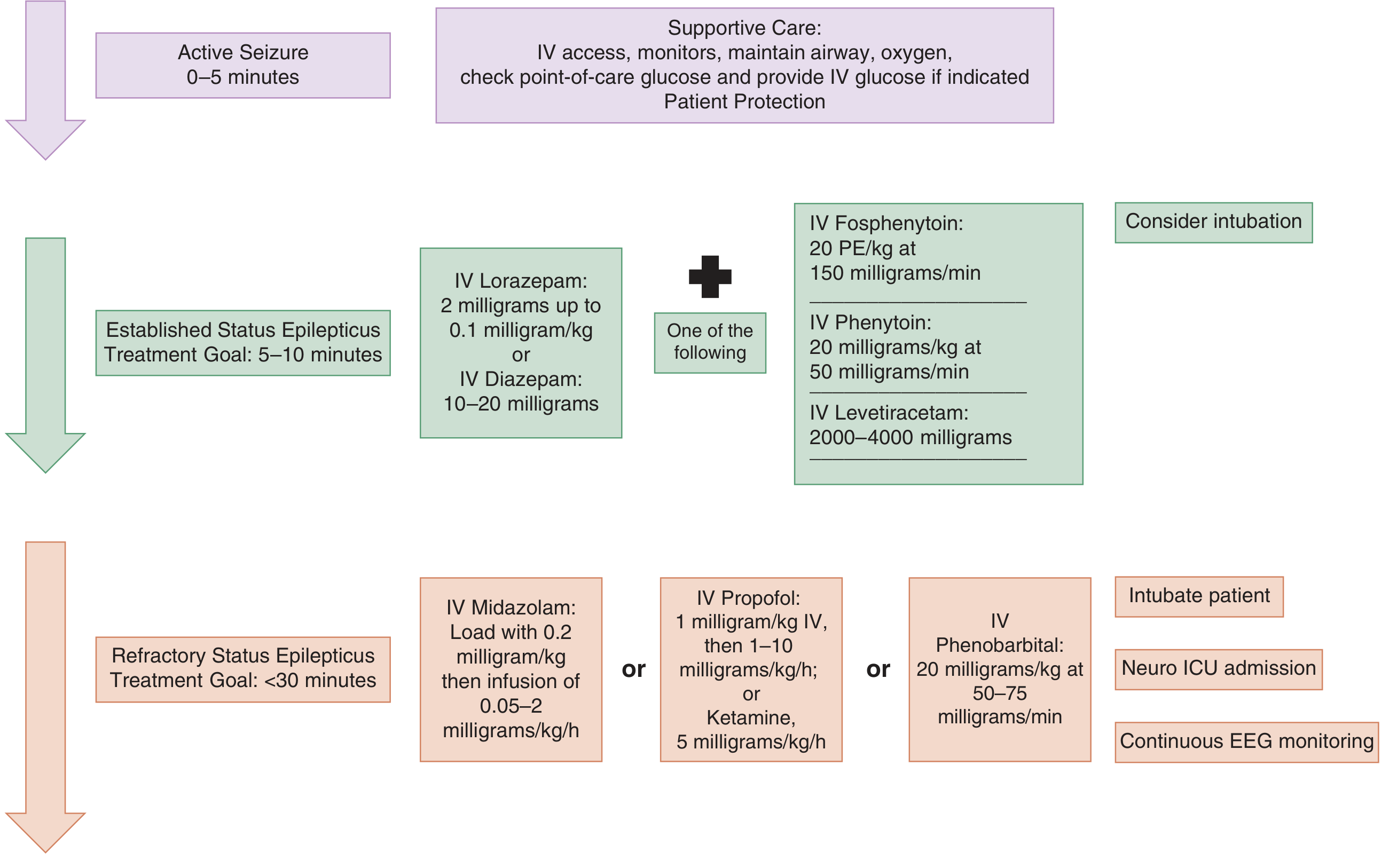
Phase 1 - First-Line: Benzodiazepines (0-10 min)
Terminate seizures 70% of the time. Give as early as possible - delays >10 min increase mortality, seizure duration, and complications.
| Drug | Adult Dose | Pediatric Dose | Route |
|---|---|---|---|
| Lorazepam (preferred if IV available) | 2-4 mg IV (0.1 mg/kg); repeat once in 5 min | 0.05-0.1 mg/kg IV | IV |
| Midazolam (preferred if no IV access) | 10 mg IM/IN | 0.2 mg/kg IM; 0.3 mg/kg IN | IM, IN, IV |
| Diazepam | 5-10 mg IV; repeat q5 min (max 30 mg) | 0.2-0.5 mg/kg IV (max 10 mg) or 0.5 mg/kg rectal | IV, rectal |
- Lorazepam: onset 3 min, duration 12-24 hours (preferred IV agent)
- Diazepam: onset 2 min, duration only 15-60 min (shorter - seizures may recur)
- IM midazolam = as effective as IV lorazepam in pre-hospital trials; preferred when no IV access
- Give second benzodiazepine dose only after 5 min of continued seizure activity after first dose
Phase 2 - Second-Line Antiepileptics (start within 20 min)
Start simultaneously with or immediately after benzodiazepines. No single agent is definitively superior.
| Drug | Adult Dose | Infusion Rate | Notes |
|---|---|---|---|
| Fosphenytoin (preferred over phenytoin) | 20 mg PE/kg IV | up to 150 mg PE/min | Can give IM; fewer cardiac/infusion side effects |
| Phenytoin | 20 mg/kg IV | max 50 mg/min (25 mg/min safer) | Not in glucose solutions; cardiac monitor mandatory |
| Levetiracetam | 20-60 mg/kg IV (typically 2000-4500 mg) | over 15 min | Fewest side effects, no interactions; rapidly gaining favor |
| Valproic acid | 20-40 mg/kg IV | 3-6 mg/kg/min | Contraindicated in liver disease, thrombocytopenia, suspected metabolic disease; not with phenytoin |
| Lacosamide | 200-400 mg IV | over 15 min | Alternative with limited data |
Phase 3 - Refractory SE: Anesthetic Infusions (<30-60 min target)
Requires intubation, Neuro ICU admission, and continuous EEG monitoring.
| Drug | Loading Dose | Infusion Rate |
|---|---|---|
| Midazolam | 0.2 mg/kg IV | 0.05-2 mg/kg/h, titrate to seizure cessation |
| Propofol | 1 mg/kg IV | 1-10 mg/kg/h (risk of propofol infusion syndrome at >40 mg/kg/h) |
| Phenobarbital | 20 mg/kg IV | 50-75 mg/min |
| Ketamine | - | 5 mg/kg/h infusion (emerging evidence) |
| Pentobarbital | 5-15 mg/kg | 0.5-5 mg/kg/h |
Pediatric-Specific Notes (Harriet Lane Handbook)
- Diazepam IV: Neonate: 0.1-0.3 mg/kg q15-30 min (max 2 mg); Child <5 yr: 0.2-0.5 mg/dose q2-5 min (max 5 mg); Child ≥5 yr: 1 mg/dose q2-5 min (max 10 mg)
- Rectal diazepam: 0.5 mg/kg; widely used by EMS in children
- Buccal midazolam: 0.5 mg/kg (max 10 mg) - more effective than rectal diazepam in children
- Children metabolize antiepileptics faster - weight-based dosing is essential
Nonconvulsive SE - Key Points
- Suspect in: prolonged postictal state, subtle motor signs (twitching, eye deviation, blinking), unexplained coma or confusion
- Diagnosis requires EEG
- Treat similarly to convulsive SE once diagnosed
Prognosis
Mortality increases with:
- Delayed diagnosis/treatment
- Age >60 years
- No prior seizure history
- Nonconvulsive SE (often missed)
- Underlying etiology severity
Sources:
- Tintinalli's Emergency Medicine, 9th ed., Ch. 171 (primary)
- Rosen's Emergency Medicine, 9th ed., Ch. 169
- Harriet Lane Handbook, 23rd ed. (pediatric dosing)
- 2025 Surgical Critical Care SE Management Guidelines
- ENLS Status Epilepticus Protocol v6.0, July 2024
Barbiturates
Barbiturates (quick answer):
Barbiturates are CNS depressants that act by enhancing GABA-A receptor activity (prolonging Cl⁻ channel opening duration). They range from ultra-short acting (thiopental - anesthesia) to long-acting (phenobarbital - epilepsy). Largely replaced by benzodiazepines due to narrow therapeutic index and high abuse potential, but still used for refractory SE, anesthesia induction, and raised ICP.
Searching sources...
Finding Sources
Searching the Web
barbiturates pharmacology classification mechanism uses 2024
Finding Sources
Reading File
Finding Sources
Reading File
Reading File
Reading File
Reading File
Reading File
Finding Sources
Reading File
Reading File
Excellent data collected from multiple authoritative sources. Here is the complete overview:
Barbiturates
History & Overview
Barbiturates are synthetic CNS depressants derived from barbituric acid (malonic acid + urea). The first, barbital (Veronal), was introduced in 1903. They were once the most widely used sedative-hypnotics but have been largely replaced by benzodiazepines due to their narrow therapeutic index, high abuse potential, and severe toxicity in overdose.
Mechanism of Action
Barbiturates act at the GABA-A receptor - benzodiazepine receptor - chloride ion channel complex:
| Drug | GABA-A Effect |
|---|---|
| Benzodiazepines | Increase the frequency of Cl⁻ channel opening |
| Barbiturates | Increase the duration of Cl⁻ channel opening |
At high/toxic doses, barbiturates can directly activate the chloride channel even without GABA - this explains their greater danger in overdose compared to benzodiazepines.
Additional mechanisms:
- Inhibit NMDA and AMPA receptors (glutamate antagonism)
- Reduce cerebral metabolic rate (CMRO2) and cerebral blood flow (CBF) - up to 50% reduction at burst-suppression doses
- Potent hepatic CYP450 enzyme inducers (accelerate metabolism of many drugs and themselves)
Classification by Duration of Action
| Class | Drug | Onset | Duration | Half-life | Key Uses |
|---|---|---|---|---|---|
| Ultra-short | Thiopental (Pentothal) | 5-15 min | 1-4 h | 6-46 h | Anesthesia induction, refractory SE, raised ICP |
| Ultra-short | Methohexital (Brevital) | ~1 min | <15 min | 3-6 h | ECT anesthesia |
| Short | Secobarbital (Seconal) | 10-15 min | 3-4 h | 15-40 h | Formerly insomnia |
| Intermediate | Pentobarbital (Nembutal) | 10-48 min | 3-4 h | 15-50 h | Refractory SE (barbiturate coma), raised ICP, euthanasia |
| Intermediate | Amobarbital (Amytal) | 60 min (oral) | 10-12 h | 8-42 h | Narcoanalysis, Wada test |
| Intermediate | Butalbital | 45-60 min | 6-8 h | 34-42 h | Tension headache (combined preparation) |
| Long | Phenobarbital (Luminal) | 60-120 min | 10-12 h | 80-120 h | Epilepsy, febrile seizures, alcohol withdrawal |
| Long | Primidone | - | - | - | Epilepsy (converted to phenobarbital) |
Therapeutic Indications
1. Epilepsy / Seizures
- Phenobarbital: Drug of choice for neonatal seizures; used for generalized tonic-clonic and partial seizures
- Dose: 1-3 mg/kg/day oral; 10-20 mg/kg IV for status epilepticus (max 50-75 mg/min)
- Phenobarbital for SE (refractory): 20 mg/kg IV at 50-75 mg/min - third-line after benzodiazepines and second-line agents
2. Anesthesia
- Thiopental: Classic IV induction agent (3-5 mg/kg); reduces ICP; used in RSI when propofol unavailable
- Methohexital: Preferred for ECT anesthesia (0.7-1.2 mg/kg IV); rapid onset/offset, low cardiac risk
3. Raised ICP / Barbiturate Coma
- Pentobarbital coma: Loading 10-15 mg/kg IV, then 1-4 mg/kg/hr infusion
- Reduces CMRO2 and CBF up to 50%; used in refractory intracranial hypertension after TBI
- Requires continuous EEG monitoring (target: burst suppression)
4. Alcohol Withdrawal / Sedative Withdrawal
- Phenobarbital (up to 1500-2000 mg/day) for alcohol withdrawal delirium as alternative to benzodiazepines
- Cross-tolerance with benzodiazepines and alcohol via shared GABA-A mechanism
- Barbiturate tolerance test: 200 mg pentobarbital or 30-100 mg phenobarbital test dose to assess tolerance level
5. Narcoanalysis / Wada Test
- Amobarbital (Amytal interview): IV 50 mg/min up to 500 mg - used for diagnosis of conversion disorder, mutism, malingering
- Wada test: Intracarotid amobarbital 100-200 mg to determine language/memory lateralization before epilepsy surgery
6. Preoperative Sedation / Anxiolysis
- Short-/intermediate-acting agents used historically; largely replaced now
Pharmacokinetics
| Parameter | Details |
|---|---|
| Absorption | Well absorbed orally |
| Protein binding | High (variable by agent) |
| Lipid solubility | Higher lipid solubility = faster onset, shorter action (thiopental > phenobarbital) |
| Metabolism | Hepatic (CYP450 - and barbiturates induce their own metabolism = autoinduction) |
| Excretion | Renal |
| pH effect | Urinary alkalinization increases phenobarbital excretion (used in overdose management) |
Adverse Effects
| System | Effects |
|---|---|
| CNS | Sedation, confusion, ataxia, nystagmus, dysarthria, paradoxical excitement (especially in elderly/children) |
| Respiratory | Dose-dependent respiratory depression - the primary danger; can progress to apnea |
| Cardiovascular | Hypotension, bradycardia (especially with IV administration) |
| Tolerance/Dependence | Develops rapidly; physical and psychological dependence |
| Withdrawal | Severe - can be fatal; seizures, delirium, hyperthermia (worse than benzodiazepine withdrawal) |
| Rare | Stevens-Johnson syndrome, megaloblastic anemia, neutropenia |
Overdose / Toxicity
1 g (10 standard tablets) = serious toxicity; 2-10 g can be fatal
Clinical features:
- Dysarthria, ataxia, incoordination
- CNS depression → coma
- Respiratory depression → respiratory acidosis → apnea (primary cause of death)
- Cheyne-Stokes respiration
- Hypotension, hypothermia, tachycardia
- Miosis, hyporeflexia/areflexia, oliguria
Management:
- Airway, ventilation - intubate if needed (no specific antidote)
- Activated charcoal (if airway protected, early presentation)
- Gastric lavage if very recent ingestion
- IV fluids + vasopressors for hypotension
- Urinary alkalinization (sodium bicarbonate) - increases phenobarbital renal excretion
- Forced diuresis if renal function intact
- Hemodialysis in severe cases
Contraindications
- Acute intermittent porphyria (barbiturates precipitate acute attacks - absolute contraindication)
- Impaired respiratory drive or limited respiratory reserve
- Severe hepatic impairment
- Pregnancy (teratogenic)
- History of substance abuse (relative)
Drug Interactions (CYP450 Induction)
Barbiturates induce CYP450 enzymes, reducing levels of many drugs:
- Anticoagulants (warfarin)
- Oral contraceptives
- Corticosteroids
- Antiepileptics (carbamazepine, phenytoin)
- Antidepressants, antipsychotics
- Opioids, antibiotics, antiarrhythmics, immunosuppressants
Barbiturates vs. Benzodiazepines
| Feature | Barbiturates | Benzodiazepines |
|---|---|---|
| GABA-A effect | Increase Cl⁻ channel duration | Increase Cl⁻ channel frequency |
| Therapeutic index | Narrow | Wide |
| Overdose fatality | Common (no antidote) | Rare alone (flumazenil antidote) |
| Abuse potential | High | Lower |
| Dependence | Severe, rapid | Slower |
| Withdrawal severity | Can be fatal | Rarely fatal |
| Enzyme induction | Strong CYP450 inducer | Minimal |
| Clinical use today | Limited | Broad |
Sources:
- Kaplan & Sadock's Synopsis of Psychiatry (Table 21-48, mechanisms, overdose)
- Kaplan & Sadock's Comprehensive Textbook of Psychiatry (Table 33.9a-1, full pharmacokinetic data)
- Miller's Anesthesia, 10th ed. (cerebral effects, neuroprotection)
- StatPearls - Barbiturates (FDA-approved indications)
Benzodiaxepines
Benzodiazepines (quick answer):
Benzodiazepines (BZDs) are CNS depressants acting on GABA-A receptors - they increase the frequency of Cl⁻ channel opening. They have anxiolytic, sedative-hypnotic, anticonvulsant, muscle relaxant, and amnestic properties. Much safer than barbiturates in overdose (wide therapeutic index), with flumazenil as a specific antidote. Key concern: tolerance, dependence, and potentially dangerous withdrawal.
Searching sources...
Finding Sources
Searching the Web
benzodiazepines pharmacology classification mechanism clinical uses 2024
Finding Sources
Finding Sources
Reading File
Finding Sources
Reading File
Reading File
Reading File
Reading File
Reading File
Excellent - I now have comprehensive data. Here is the full overview:
Benzodiazepines
Overview
Benzodiazepines (BZDs) were first introduced with chlordiazepoxide (Librium) in 1959, followed by diazepam (Valium) in 1963. They rapidly replaced barbiturates as the preferred sedative-hypnotics due to their superior safety profile, wider therapeutic index, and lower abuse potential. They remain one of the most prescribed drug classes worldwide.
Mechanism of Action
BZDs bind to an allosteric site at the junction of the α and γ subunits of the GABA-A receptor, enhancing the inhibitory effect of GABA:
| Feature | Benzodiazepines | Barbiturates |
|---|---|---|
| GABA-A effect | Increase frequency of Cl⁻ channel opening | Increase duration of Cl⁻ channel opening |
| Require GABA present? | Yes - only potentiate GABA | No - can directly activate at toxic doses |
| Ceiling effect? | Yes - cannot open channel without GABA | No - hence greater overdose danger |
| Therapeutic index | Wide | Narrow |
This ceiling effect explains why benzodiazepines alone are rarely lethal in overdose - without GABA present, the chloride channel cannot be opened regardless of dose.
Five pharmacological properties result from this mechanism:
- Anxiolytic - reduces anxiety
- Sedative-Hypnotic - promotes sleep
- Anticonvulsant - raises seizure threshold
- Muscle relaxant - via spinal cord and supraspinal effects
- Amnestic (anterograde) - blocks formation of new memories
Classification by Duration of Action
Long-Acting (half-life 30-200 hours)
| Drug | Brand | Dose Equivalent | Usual Dose (mg/day) | Key Uses |
|---|---|---|---|---|
| Diazepam | Valium | 5 mg | 2.5-40 | Anxiety, SE, alcohol withdrawal, muscle spasm |
| Chlordiazepoxide | Librium | 10 mg | 15-100 | Anxiety, alcohol withdrawal |
| Clonazepam | Klonopin | 0.25 mg | 0.5-20 | Panic disorder, seizures |
| Clorazepate | Tranxene | 7.5 mg | 7.5-60 | Anxiety, alcohol withdrawal |
| Flurazepam | Dalmane | 15 mg | 15-30 | Insomnia |
| Quazepam | Doral | 15 mg | 7.5-15 | Insomnia |
Diazepam is metabolized to desmethyldiazepam (t½ >120 h) → then to oxazepam → glucuronidation. Multiple active metabolites extend duration significantly.
Intermediate-Acting (half-life 8-30 hours)
| Drug | Brand | Dose Equivalent | Key Uses |
|---|---|---|---|
| Lorazepam | Ativan | 1 mg | Anxiety, SE, procedural sedation, alcohol withdrawal |
| Oxazepam | Serax | 15 mg | Anxiety, elderly, hepatic disease |
| Temazepam | Restoril | 15 mg | Insomnia |
| Estazolam | ProSom | 1 mg | Insomnia (6-8 hrs effective) |
| Alprazolam | Xanax | 0.5 mg | Panic disorder, anxiety |
Short-Acting (half-life <8 hours)
| Drug | Brand | Dose Equivalent | Key Uses |
|---|---|---|---|
| Midazolam | Versed | 3 mg | Procedural sedation, anesthesia induction, SE |
| Triazolam | Halcion | 0.25 mg | Insomnia (shortest acting) |
Triazolam has the shortest half-life (2-3 hours) - associated with rebound anxiety and anterograde amnesia
Pharmacokinetics - Key Points
- Absorption: Oral absorption rapid for diazepam, lorazepam, alprazolam; IM reliable only for lorazepam and midazolam (diazepam IM is erratic)
- Lipid solubility: Determines onset and offset after a SINGLE dose
- High lipid solubility (diazepam) = rapid onset, rapid offset after single dose (redistributes quickly out of brain)
- Low lipid solubility (lorazepam) = slower onset, longer single-dose duration (leaves brain slowly)
- Protein binding: 70-99% (proportional to lipid solubility)
- Metabolism:
- Most: Hepatic oxidation via CYP3A4 and CYP2C19 → active metabolites
- "LOT" drugs (Lorazepam, Oxazepam, Temazepam): direct glucuronidation - NO active metabolites - preferred in elderly, hepatic disease
- Active metabolites: Diazepam → desmethyldiazepam (t½ >120h) → oxazepam; flurazepam → desalkylflurazepam (t½ >100h)
- Steady state may take up to 2 weeks with long-acting agents - toxicity can appear after 7-10 days at a seemingly safe dose
Therapeutic Indications
1. Anxiety Disorders
- GAD: Highly effective for short-term relief; SSRIs/SNRIs preferred for chronic treatment; BZDs as adjuncts
- Panic disorder: Alprazolam and clonazepam are first-choice BZDs; often co-initiated with SSRIs for first 3-4 weeks
- Social phobia, PTSD: Adjunctive role
- Acute situational anxiety: Single-dose use (diazepam, alprazolam)
2. Insomnia
- Approved hypnotics: Flurazepam, temazepam, quazepam, estazolam, triazolam
- Maximum recommended use: 7-10 consecutive days (investigate underlying cause if longer needed)
- Temazepam or estazolam: reasonable compromise for most adults
- Avoid flurazepam in elderly (daytime cognitive impairment), triazolam (rebound anxiety, amnesia)
3. Seizures / Status Epilepticus
- First-line treatment for SE: Lorazepam IV (2-4 mg), diazepam IV, or midazolam IM/IN
- Clonazepam: Chronic anticonvulsant for absence, myoclonic, atonic seizures, panic
- Diazepam rectal gel: Used by EMS in children
- Buccal midazolam: More effective than rectal diazepam in pediatric SE
4. Alcohol Withdrawal
- Gold standard treatment: Diazepam or chlordiazepoxide (long-acting preferred - self-tapering effect)
- Lorazepam preferred in hepatic disease (LOT rule - no active metabolites)
- Prevent delirium tremens and withdrawal seizures
5. Anesthesia / Procedural Sedation
- Midazolam: IV/IM induction agent; anterograde amnesia makes it ideal for procedures
- Diazepam: Pre-procedure anxiolysis
- Combined with opioids for monitored anesthesia care
6. Muscle Relaxation
- Diazepam: Skeletal muscle spasm, spasticity (MS, spinal cord injury), tetanus
- Acts via spinal cord interneurons and supraspinal mechanisms
7. Catatonia
- Benzodiazepines (especially lorazepam) are the preferred treatment for catatonia
8. Other
- Akathisia (adjunct), acute mania (adjunct), ECT premedication, phobias, premenstrual dysphoric disorder (alprazolam)
Adverse Effects
| System | Effects |
|---|---|
| CNS | Sedation, cognitive impairment, psychomotor slowing, anterograde amnesia, ataxia, dysarthria |
| Respiratory | Respiratory depression (especially with COPD, sleep apnea, elderly); dangerous when combined with opioids/alcohol |
| Paradoxical reactions | Disinhibition, aggression, excitement, hostility (especially in elderly and children) |
| Cognitive | Memory impairment, dementia risk with long-term use in elderly |
| Others | Appetite stimulation/weight gain (alprazolam); teratogenicity (avoid in pregnancy/breastfeeding) |
Beers List: All benzodiazepines listed as potentially inappropriate medications in adults ≥65 years
Tolerance, Dependence & Withdrawal
| Feature | Details |
|---|---|
| Tolerance onset | Sedative/hypnotic effects: within days to weeks; anxiolytic effects: slower |
| Dependence | Physical and psychological; develops with regular use >2-4 weeks |
| Withdrawal risk | Higher with short-acting agents, high doses, abrupt discontinuation |
| Short-acting withdrawal | Rapid onset (within 24h), more severe; seizures, delirium may occur |
| Long-acting withdrawal | Delayed 1-2 weeks, generally milder |
| Alprazolam | Particularly severe, rapid withdrawal - requires very slow taper |
Withdrawal Syndrome features:
Anxiety, irritability, insomnia, hyperacusis, nausea, tremor, diaphoresis, restlessness, depersonalization, myoclonus, delirium, seizures
Tapering: Reduce by 25% per week; switch alprazolam to clonazepam (longer half-life) before tapering; carbamazepine 400-500 mg/day may facilitate discontinuation
Overdose / Toxicity
- Alone: Rarely fatal due to ceiling effect (no GABA, no channel opening)
- With other CNS depressants (alcohol, opioids, barbiturates): Can be fatal - synergistic respiratory depression
- Features: Excessive sedation → stupor → respiratory depression → coma
- Antidote: Flumazenil (Romazicon) - competitive BZD receptor antagonist
- Dose: 0.2 mg IV, repeat 0.3 mg then 0.5 mg at 1 min intervals; max 3 mg
- Duration: 30-60 min (shorter than most BZDs - resedation can occur)
- Caution: Can precipitate severe acute withdrawal/seizures in BZD-dependent patients
Drug Interactions
| Interacting Drug | Outcome |
|---|---|
| Alcohol, opioids, barbiturates, antihistamines | Dangerous additive CNS/respiratory depression |
| Lithium, antipsychotics | Ataxia, dysarthria |
| CYP3A4 inhibitors (azole antifungals, macrolides, grapefruit) | Increased BZD levels → excess sedation |
| CYP3A4 inducers (rifampicin, carbamazepine) | Reduced BZD levels → reduced efficacy |
LOT Rule - Safe in Hepatic Disease / Elderly
Lorazepam, Oxazepam, Temazepam - these three undergo direct glucuronidation only with NO active metabolites, making them safe when CYP450 oxidation is impaired (liver disease, elderly, neonates).
Flumazenil (BZD Antidote)
- Mechanism: Competitive antagonist at benzodiazepine receptor
- Indications: BZD overdose reversal, reversal of procedural sedation
- Onset: 1-2 minutes IV
- Duration: 30-60 min (re-dosing often needed)
- Contraindications: BZD-dependent patients (precipitates acute withdrawal + seizures); elevated ICP; tricyclic antidepressant co-ingestion (removes seizure protection)
Sources:
- Kaplan & Sadock's Synopsis of Psychiatry (Table 21-43, Table 21-44, pharmacokinetics, therapeutic indications, withdrawal)
- Miller's Anesthesia, 10th ed. (GABA-A receptor mechanism)
- StatPearls - Benzodiazepines
This is a shared conversation. Sign in to Orris to start your own chat.