
Drowning laq refer qautam biswas fmt
Reading File
The query appears to be in Bengali (or phonetically written Bengali/Hindi). Let me interpret it:
- "Drowning laq" = likely "Drowning-এর লক্ষণ" = Signs/features of drowning
- "refer qautam biswas fmt" = likely referring to Gautam Biswas FMT (Forensic Medicine & Toxicology textbook by Gautam Biswas)
This is a Forensic Medicine question asking about the signs/features of drowning from the Gautam Biswas FMT textbook.
Searching sources...
Finding Sources
Finding Sources
The library doesn't have Gautam Biswas specifically, but it has "The Essentials of Forensic Medicine and Toxicology 36th edition (latest 2026)" which is the K.S. Narayan Reddy / Gautam Biswas book. Let me read the drowning section from it along with PC Dikshit.
Reading File
Reading File
Reading File
Reading File
Reading File
Reading File
Reading File
Reading File
I now have comprehensive content. Let me compile the full answer from The Essentials of Forensic Medicine and Toxicology (36th ed.) - the Gautam Biswas / KS Narayan Reddy textbook.
Drowning - Signs & Postmortem Appearances
Source: The Essentials of Forensic Medicine and Toxicology, 36th Ed. (Narayan Reddy / Gautam Biswas)
Definition
Drowning is a form of asphyxia due to aspiration of fluid into the air-passages, caused by submersion in water or other fluid. It is a non-violent form of mechanical asphyxia. Complete submersion is not necessary - submersion of the nose and mouth alone for a sufficient period can cause death.
Fatal Period: Death usually occurs in 4-5 minutes in fresh water, and 8-10 minutes in sea water.
Types of Drowning
| Type | Mechanism | Frequency |
|---|---|---|
| Typical (Wet) Drowning | Water enters lungs, cardiac arrest/VF | Most common |
| Dry Drowning | Laryngeal spasm - no water enters lungs | 10-20% cases |
| Secondary / Near-Drowning | Survival >24 hrs, then complications | ~20% die after resuscitation |
| Immersion Syndrome (Hydrocution) | Vagal inhibition from cold water | 1-2% cases |
Postmortem Appearances
External Signs
-
Clothing - wet; skin is wet, cold, moist and pale (vascular surface contraction)
-
Foreign material - mud, silt, sand, seaweed, algae, small aquatic life in mouth, nostrils, ears
-
Postmortem lividity - light pink in color (resembles CO poisoning) due to unreduced hemoglobin in superficial vessels from cold; may also be dusky/cyanotic; found on face, upper chest, hands, forearms, feet and calves (body floats face down, buttocks up)
-
Face - may or may not be cyanotic; conjunctivae sometimes congested with few petechial hemorrhages under lower eyelids
-
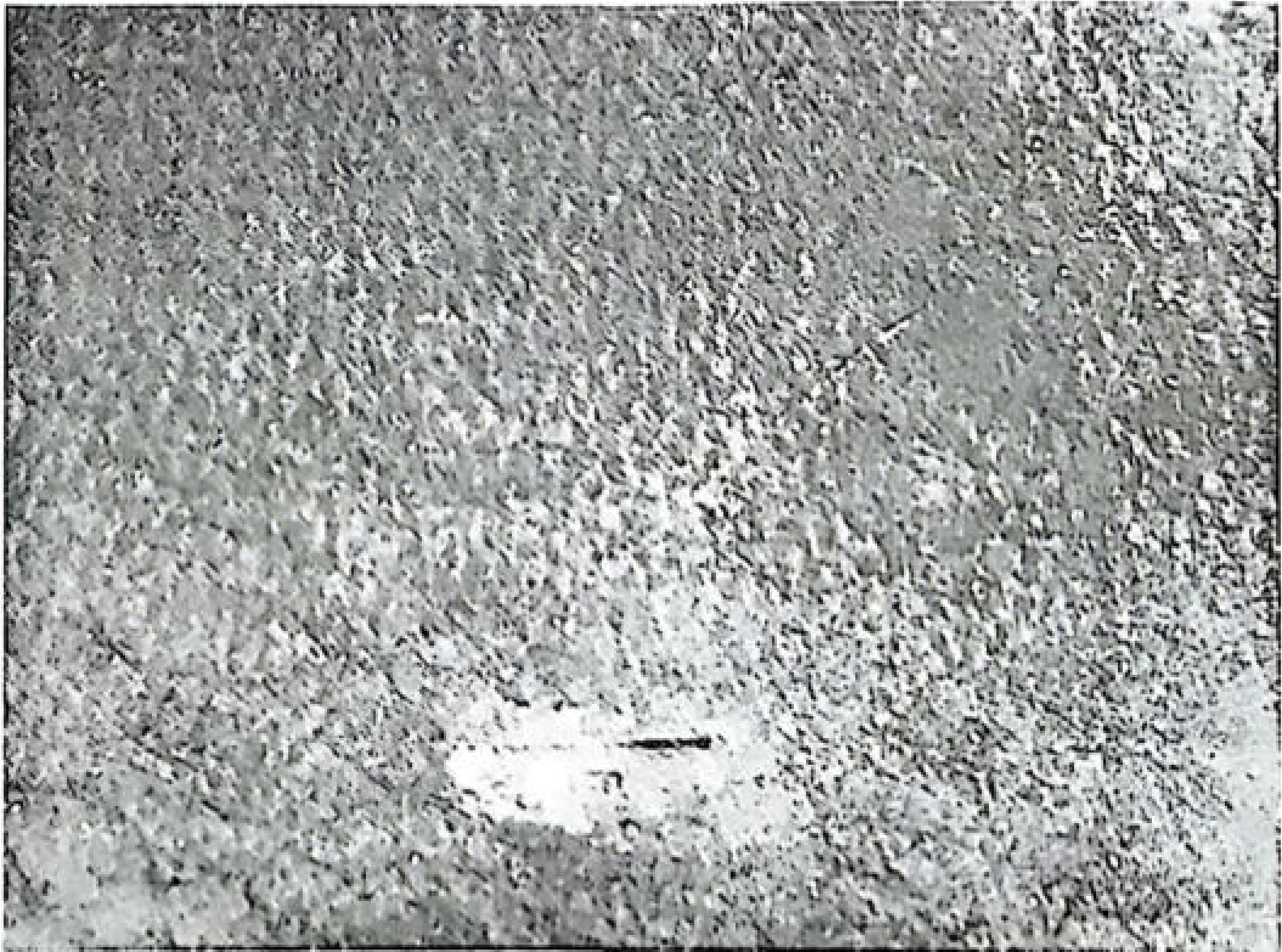
Froth at mouth and nose - fine, white, persistent, mushroom-shaped froth due to mixture of air, water and mucus beaten by respiratory movements
- Appears within 2 minutes of drowning
- Persists for several days unless washed away
- May be blood-stained in sea water drowning
-
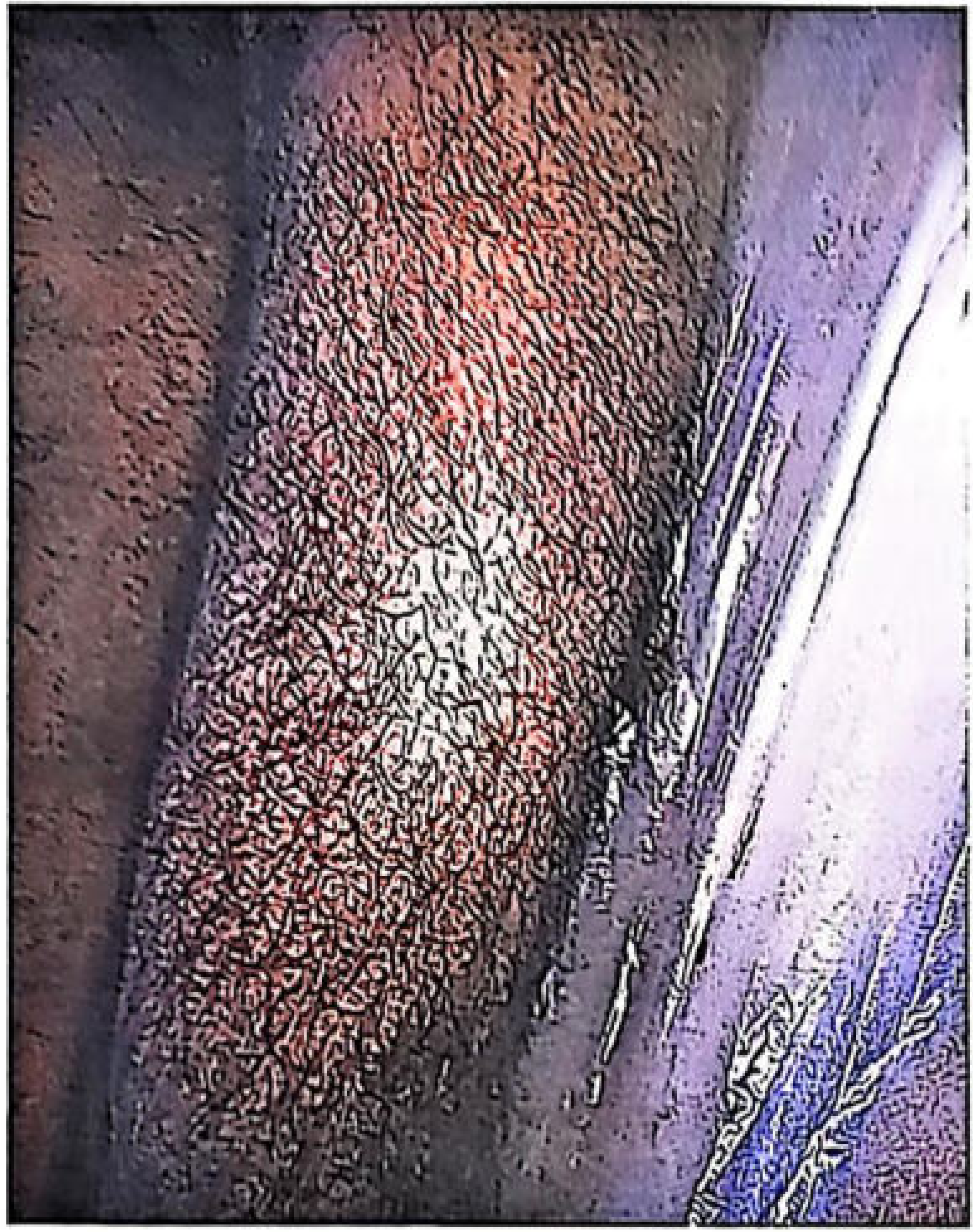
Cutis anserina (Goose skin) - caused by contraction of arrector pili muscles from cold water stimulation; not exclusively a sign of drowning
-
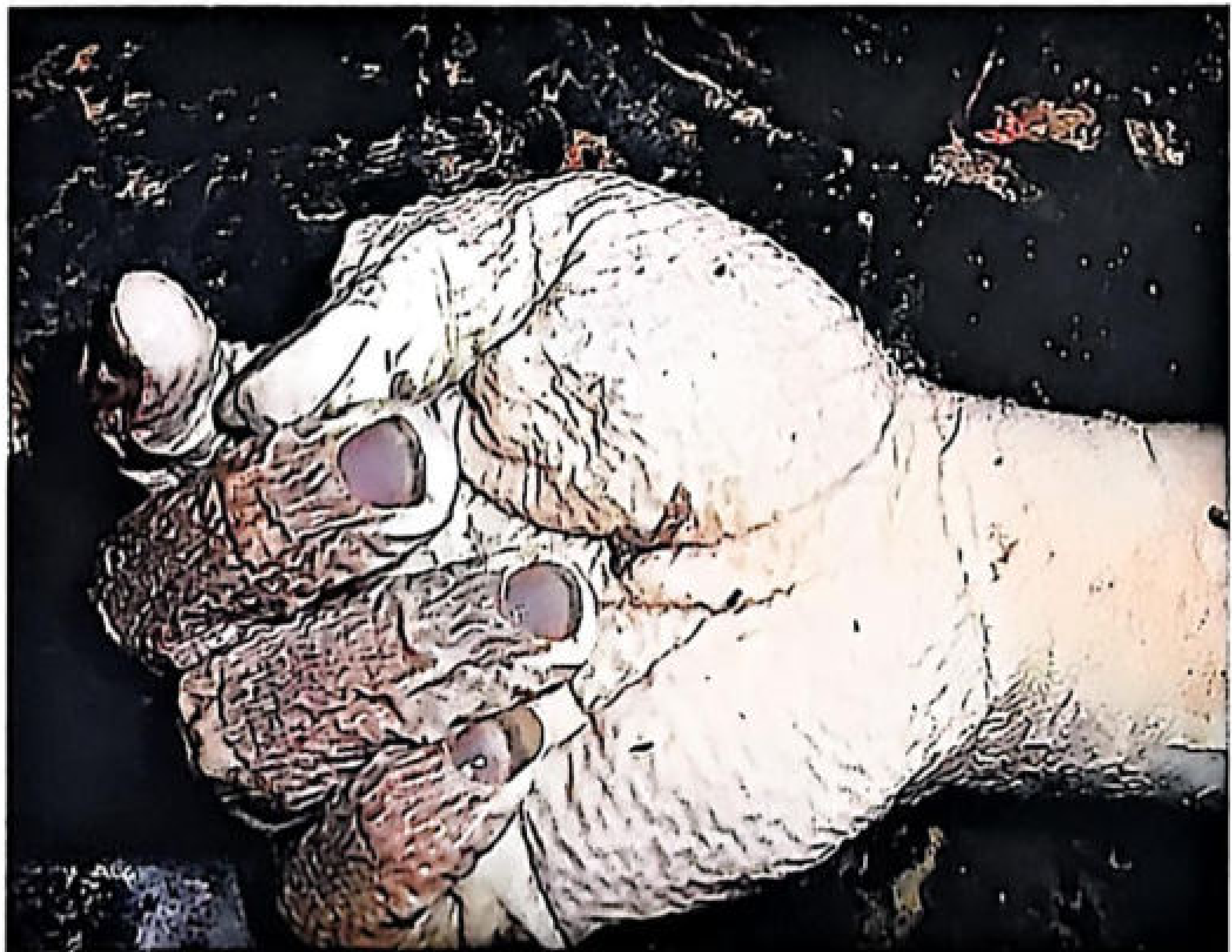
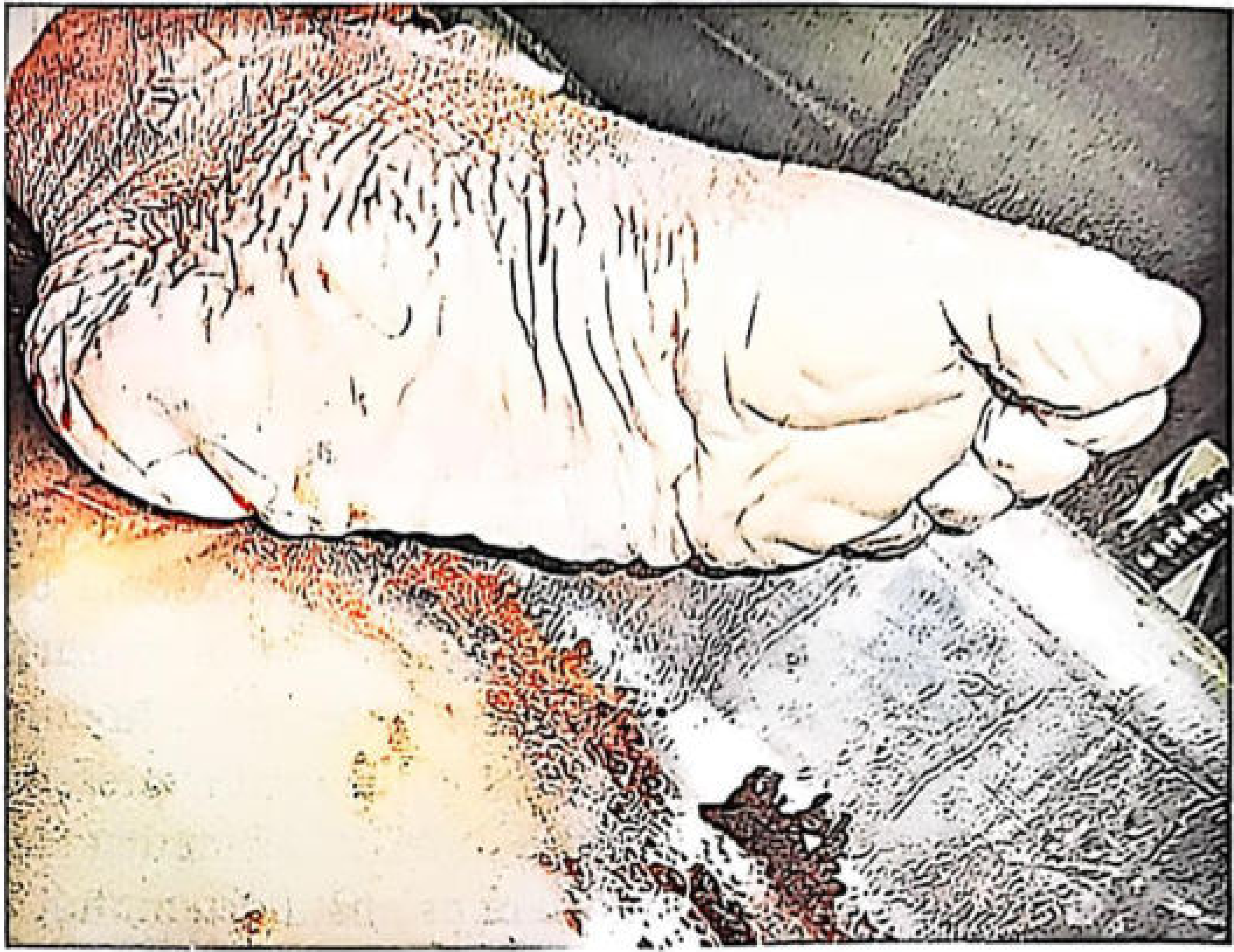
Washerwoman's hands/feet - skin soddening, wrinkling, thickening, bleaching due to water absorption:
- Fingertips: 2-4 hours
- Palms and dorsum: ~24 hours
- Full washerwoman appearance: ~20 hours
- Feet take about twice as long when shoes are worn
-
Cadaveric spasm / Death grip - hands may tightly grasp weeds, grass, sand, mud; highly significant sign as it indicates the person was alive when entering the water
Internal Signs
Lungs:
- Voluminous, over-distended (emphysema aquosum), covering the heart and overlapping at the front
- Waterlogged, heavy, pits on pressure, do not retain shape when removed
- Froth in air passages; copious fluid pours from cut sections
- No crepitus on sectioning
Difference - Fresh Water vs Sea Water Lungs:
| Feature | Fresh Water | Sea Water |
|---|---|---|
| Size & Weight | Ballooned but light | Ballooned and heavy |
| Color | Pale pink | Purplish/bluish |
| Consistency | Emphysematous | Soft and jelly-like |
| Shape after removal | Retained; do not collapse | Not retained; flatten out |
| Sectioning | Crepitus heard; little froth, no fluid | No crepitus; copious fluid and froth |
Stomach & Intestines:
- Presence of water in stomach and intestines (swallowed during drowning)
Spleen:
- Small and anaemic due to vasoconstriction - Sabinsky's sign
- Drowning index = Weight of both lungs / Weight of spleen ≥ 14.1
Petechial hemorrhages:
- May be present in subepicardial region (posteriorly)
- Temporal bone/petrous bone hemorrhages also seen
Diatom Test (Most Reliable Confirmatory Test)
Diatoms are microscopic unicellular siliceous algae (class Bacillariophyceae) with a hard silica skeleton (frustule) that resists heat and acid. They enter the pulmonary circulation during drowning and are distributed to distant organs (liver, kidney, bone marrow, brain).
- Finding diatoms in bone marrow/internal organs = strong evidence of antemortem drowning
- Demonstrated by digestion with nitric acid + sulphuric acid (the tissue dissolves but diatoms survive)
- Negative results are more reliable than positive (deceased may have consumed water containing diatoms)
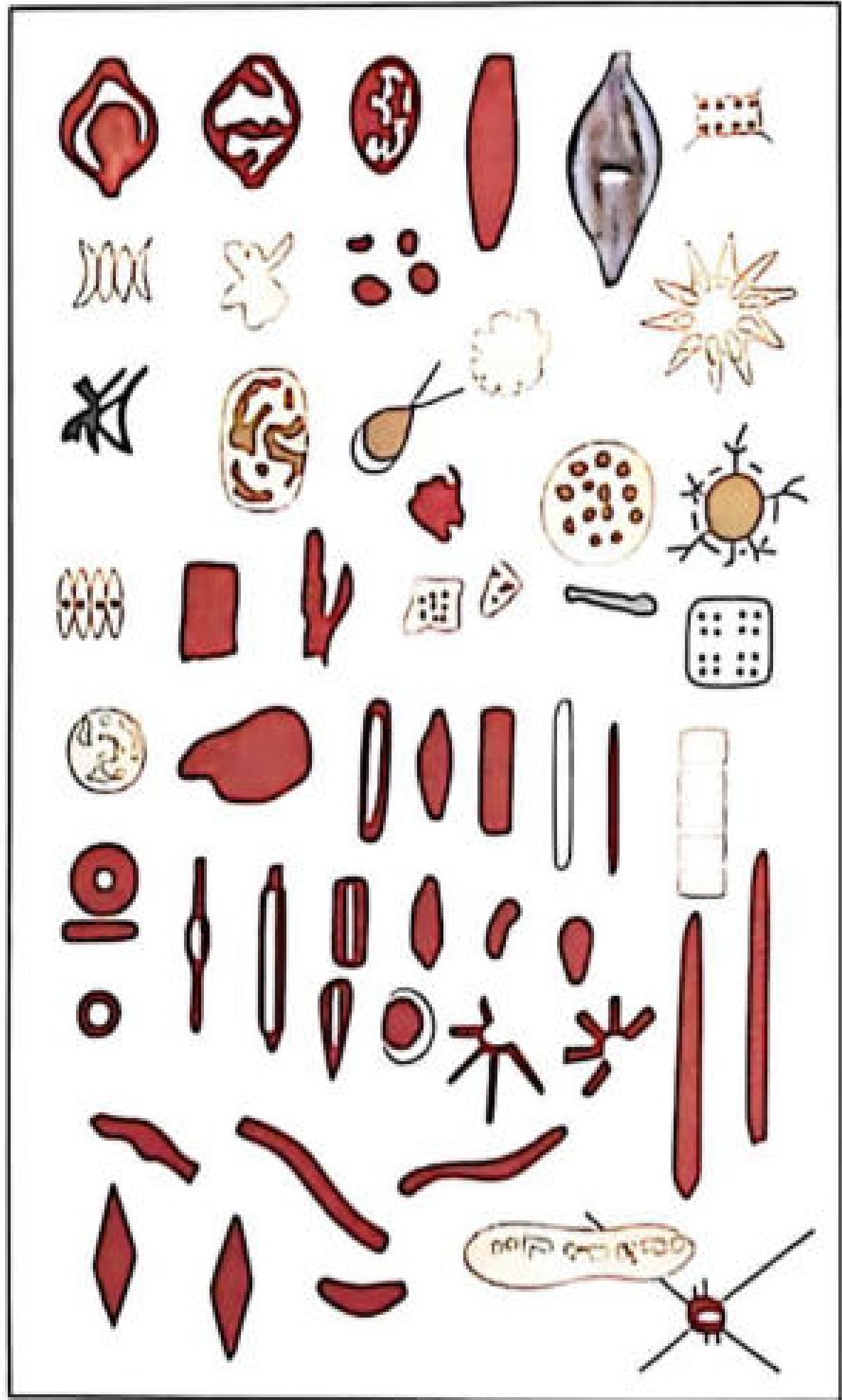
Reliable Signs of Drowning at Autopsy (Summary)
- Fine, white froth at the mouth and nose
- Weeds, sand, mud firmly grasped in the hands (cadaveric spasm)
- Weeds, sand, mud, fine froth in the lungs and air-passages
- Voluminous, waterlogged lungs (emphysema aquosum)
- Presence of water in the stomach and intestines
- Finding of diatoms in the tissues
Gettler Test (Blood Chloride Test)
- Normal blood chloride: ~600 mg/100 mL (equal in right and left heart)
- Fresh water drowning: Left heart chloride up to 50% lower than right (hemodilution)
- Sea water drowning: Left heart chloride shows 30-40% increase (hemoconcentration)
- A 25% difference in chloride is significant; but the test is of doubtful value
The Essentials of Forensic Medicine and Toxicology, 36th Ed. (Narayan Reddy/Gautam Biswas), pp. 359-367
Can u make bit short for laq and easy to learn
Drowning - লক্ষণ (Signs) 🌊
Easy to Remember Version
Definition (1 line)
Fluid aspiration into air-passages causing asphyxia = Drowning
Types - "WDSI" মনে রাখো
| Type | Key Point | |
|---|---|---|
| W | Wet (Typical) | Water enters lungs - Most common |
| D | Dry | Laryngeal spasm - No water in lungs (10-20%) |
| S | Secondary (Near-drowning) | Survives >24 hrs, then dies |
| I | Immersion syndrome | Vagal inhibition from cold water (1-2%) |
Postmortem Signs - "FWCWSD" মনে রাখো
| Letter | Sign | Detail |
|---|---|---|
| F | Froth | Fine white mushroom froth at mouth/nose - appears in 2 min |
| W | Washerwoman hands | Sodden, wrinkled, white hands/feet |
| C | Cutis anserina | Goose skin (cold water) |
| C | Cadaveric spasm | Tightly clutching weeds/mud in hands |
| W | Waterlogged lungs | Emphysema aquosum - big, heavy, wet lungs |
| S | Sabinsky's sign | Small, anaemic spleen |
| D | Diatoms | In internal organs = best confirmatory sign |
Washerwoman Timing (easy to remember)
2-4 hrs   → Fingertips
24 hrs    → Full hand (palm + back)
20 hrs    → Bleached, wrinkled appearance
Lungs - Fresh vs Salt Water (2 min table)
| Fresh Water | Salt Water | |
|---|---|---|
| Weight | Light | Heavy |
| Color | Pale pink | Purplish |
| Feel | Emphysematous | Jelly-like |
| Cut | Crepitus + | No crepitus |
| Fluid | Little | Copious |
Reliable Signs at Autopsy - "F-W-W-L-W-D"
- Froth at mouth/nose
- Weeds grasped in hands
- Weeds/froth in lungs
- Lungs waterlogged
- Water in stomach
- Diatoms in tissues
Key Numbers to Remember
| Fact | Number |
|---|---|
| Fatal period - Fresh water | 4-5 min |
| Fatal period - Salt water | 8-10 min |
| Drowning index (lungs/spleen) | ≥ 14.1 |
| Gettler test significance | 25% difference |
| Fresh water - chloride drops | 50% |
| Salt water - chloride rises | 30-40% |
Diatom Test - 1 Line
Silica skeleton → resists acid → found in bone marrow/kidney = antemortem drowning confirmed ✓
Source: Essentials of FMT, 36th Ed. (Narayan Reddy/Gautam Biswas)
This is a shared conversation. Sign in to Orris to start your own chat.