
Ant bite mark
Reading File
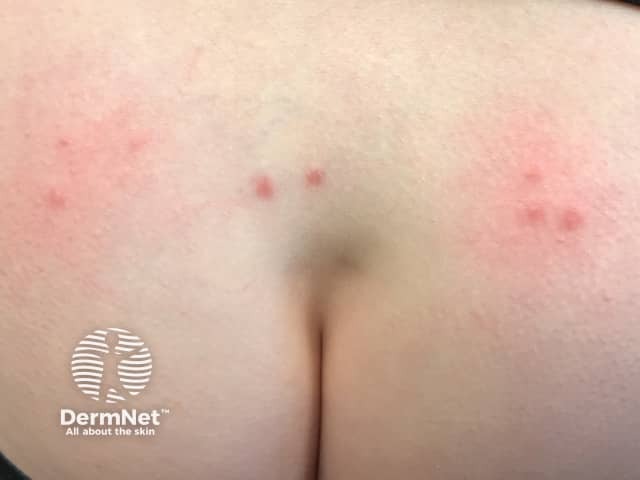
An ant bite typically appears as a small red papule or pustule at the site of the sting, often with surrounding redness and mild swelling. Fire ant bites classically form sterile pustules within 24 hours.
Searching sources...
Finding Sources
Searching the Web
ant bite mark appearance clinical features treatment
Reading File
Loading Image
Loading Image
Ant Bite Marks - Clinical Guide
What an Ant Bite/Sting Looks Like
Typical (non-fire ant) ant bites:
- Small red papules or raised bumps at the bite site
- Localized urticaria (hive-like wheal) that resolves within hours
- Mild surrounding redness and itching
- Often occur in clusters if multiple ants bite simultaneously
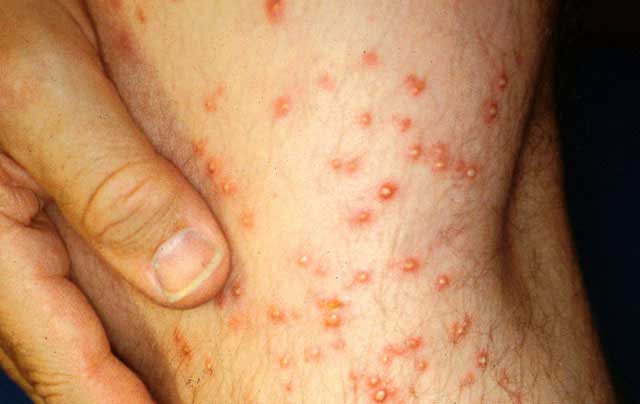
Fire ant (Solenopsis) bites/stings - the classic presentation:
Fire ants grip the skin with their mandibles, then sting repeatedly in a circular arc around the bite point. The venom is almost entirely an insoluble alkaloid (unlike bee/wasp venom which is protein-based).
- Immediate (0-1 hour): Intense burning pain, red spot with surrounding erythema
- Within a few hours: A tender, itchy sterile pustule forms at each sting site - this is the hallmark
- Pustule stage (24-72 hours): White or yellow-tipped pustules, often in a characteristic arc or ring pattern where the ant pivoted
- Resolution: Pustules can persist for several days to weeks; scratching risks secondary infection
Reaction Types
| Type | Features |
|---|---|
| Local | Single papule or pustule, resolves in hours to days |
| Large local | Edema, erythema, and induration extending from bite site; may last several days; lymphangitic streaks possible but infection is uncommon |
| Systemic/Anaphylactic | Rare (<1%), but can progress rapidly - urticaria, bronchospasm, hypotension |
Treatment
Mild local reactions:
- Wash the site with soap and water
- Cold compresses intermittently to reduce pain and swelling
- Oral antihistamines for itch
- NSAIDs for pain
- Elevate the limb if edema is significant
- Do NOT pop or scratch the pustules - this risks secondary bacterial infection
Large local reactions:
- Same as above; corticosteroids are sometimes prescribed but evidence of benefit is unclear
- Natural course: swelling increases over 1-2 days, resolves in 3-10 days
Anaphylaxis (emergency):
- IM epinephrine 0.3-0.5 mg (adults) / 0.01 mg/kg (children, max 0.3 mg) immediately
- Aggressive IV fluid resuscitation
- Antihistamines (H1 + H2 blockers) and systemic steroids
- Refer to allergist for venom immunotherapy after recovery - highly effective at preventing future reactions
When to Seek Medical Care
- Signs of anaphylaxis: throat tightening, difficulty breathing, dizziness, rapid heart rate
- Signs of infection at bite site: increasing redness, warmth, pus, fever
- History of prior systemic reaction to any insect sting
Sources: Tintinalli's Emergency Medicine (9e); DermNet - Ant bites and stings; Cleveland Clinic - Ant Bites
This is a shared conversation. Sign in to Orris to start your own chat.