
from Guyton and Hall textbook of medical physiology, 4th South Asia edition write a 5 mark short note on .Cushing Syndrome ,Clinical Feature
Reading File
Finding Sources
Finding Sources
Finding Sources
Finding Sources
Reading File
Loading Image
Reading File
I now have all the content needed from Guyton and Hall to write a complete, well-structured 5-mark short note. Here it is:
Cushing Syndrome - Clinical Features
Guyton and Hall Textbook of Medical Physiology, 4th South Asia Edition
Definition
Hypersecretion by the adrenal cortex causes a complex cascade of hormone effects called Cushing syndrome. Most features arise from excess cortisol, though excess androgen secretion also contributes. When caused by excess ACTH from the anterior pituitary, it is specifically called Cushing disease.
Causes
- Pituitary adenoma - secretes excess ACTH → adrenal hyperplasia (most common)
- Hypothalamic dysfunction - elevated CRH → excess ACTH release
- Ectopic ACTH secretion - e.g., abdominal carcinoma, lung carcinoma
- Adrenal cortex adenoma - primary cortisol overproduction (~20-25% of cases)
- Iatrogenic - prolonged therapeutic use of large doses of glucocorticoids (e.g., in rheumatoid arthritis)
Clinical Features
1. Fat Redistribution (Characteristic Appearance)
- Buffalo hump - fat mobilized from the lower body is deposited in the thoracic and upper abdominal regions
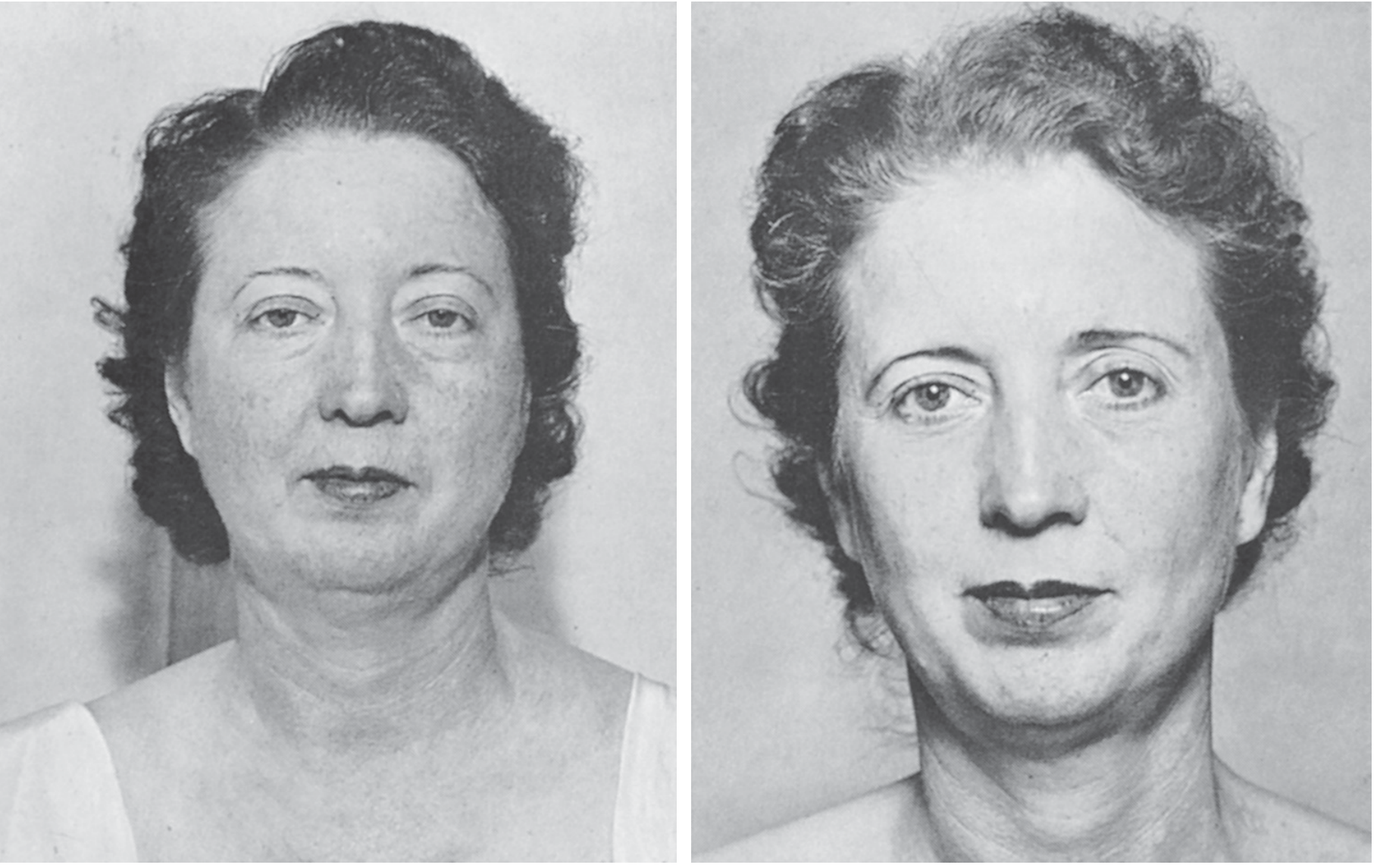
- Moon face - excess steroid secretion causes an edematous, rounded facial appearance (see figure below)
2. Androgenic Effects
- Acne and hirsutism (excess facial hair) due to the androgenic potency of some adrenal steroids
3. Hypertension
- Present in about 80% of patients, attributed to the mineralocorticoid effects of the excess cortisol
4. Carbohydrate Metabolism - Steroid Diabetes
- Blood glucose may rise to 200 mg/dL after meals (nearly twice normal)
- Results from enhanced gluconeogenesis and decreased glucose utilization by tissues
5. Protein Catabolism Effects
- Profound protein catabolism throughout the body (except liver and plasma proteins)
- Muscle weakness - loss of protein from skeletal muscles
- Immune suppression - loss of protein synthesis in lymphoid tissues → high susceptibility to infections
- Purple (purplish) striae - subcutaneous collagen fibers are diminished, causing tissues to tear easily, visible as large purplish stretch marks
- Osteoporosis - severely diminished protein deposition in bones leads to weak, fragile bones
Summary Table
| System | Clinical Feature |
|---|---|
| Fat distribution | Buffalo hump, moon face |
| Skin/androgenic | Acne, hirsutism, purplish striae |
| Cardiovascular | Hypertension (~80%) |
| Metabolic | Hyperglycemia (steroid diabetes) |
| Musculoskeletal | Muscle weakness, osteoporosis |
| Immune | Susceptibility to infections |
Source: Guyton and Hall Textbook of Medical Physiology, Chapter 78 - Adrenocortical Hormones, pp. 957-958
This is a shared conversation. Sign in to Orris to start your own chat.