
Development of spinal cord with diagrams
I'll read the medical library skill first, then search for spinal cord development content with diagrams.
Reading File
Now let me search the library for spinal cord development content and images in parallel.
Finding Sources
Finding Sources
Excellent finds. Now let me read all relevant sections in parallel - the main embryology book on spinal cord development, plus the THIEME atlas sections with diagrams.
Reading File
Reading File
Great content found. Let me read more of the embryology text and fetch the key diagrams in parallel.
Reading File
Loading Image
Loading Image
Loading Image
Excellent! Now let me fetch the remaining diagrams and continue reading the text for the myelination, positional changes, and congenital anomalies sections.
Loading Image
Loading Image
Loading Image
Reading File
Let me fetch the remaining key diagrams and read more text (positional changes, myelination, congenital defects).
Loading Image
Loading Image
Reading File
I now have comprehensive content and diagrams. Let me fetch the positional changes diagram and myelination diagram, and also get congenital anomalies content.
Loading Image
Reading File
I now have all the core content and diagrams needed. Let me compile the comprehensive answer.
Development of the Spinal Cord
Sources: The Developing Human: Clinically Oriented Embryology (Moore & Persaud); THIEME Atlas of Anatomy - General Anatomy and Musculoskeletal System
1. Origin and Overview
The spinal cord develops from the caudal part of the neural plate and the caudal eminence. Specifically, the neural tube caudal to the fourth pair of somites gives rise to the spinal cord. The process depends critically on retinoic acid signaling, which governs patterning and neurogenesis from the earliest stages.
2. Neurulation: Formation of the Neural Tube
Before the spinal cord forms, the neural plate folds and closes to create the neural tube. The neural groove folds away from the overlying dorsal ectoderm; cells at the lateral margins of the groove migrate away to form the neural crest on each side.
3. Wall Structure and Zones of the Developing Spinal Cord
Initially, the wall of the neural tube is a thick pseudostratified columnar neuroepithelium. As it develops, three distinct zones emerge:
| Zone | Former Name | Adult Derivative |
|---|---|---|
| Ventricular zone | Ependymal layer | Ependymal cells lining central canal |
| Intermediate zone | Mantle layer | Gray matter (neuronal cell bodies) |
| Marginal zone | - | White matter (axonal tracts) |
The diagram below shows this progression from ~23 days through 9 weeks:
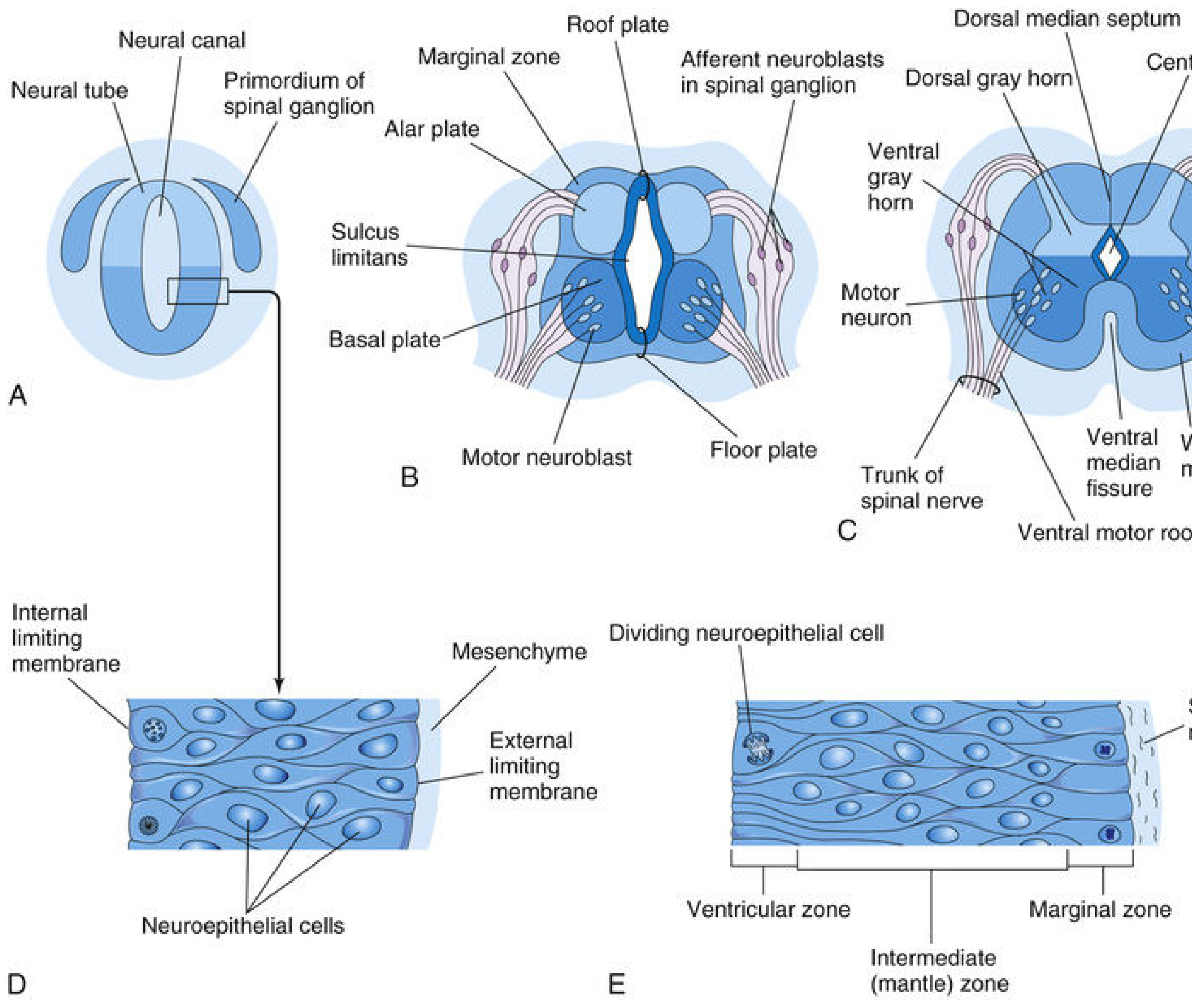
As the lateral walls thicken, the neural canal progressively narrows until only the tiny central canal remains by 9-10 weeks.
4. Alar Plate and Basal Plate: Sensory vs Motor Separation
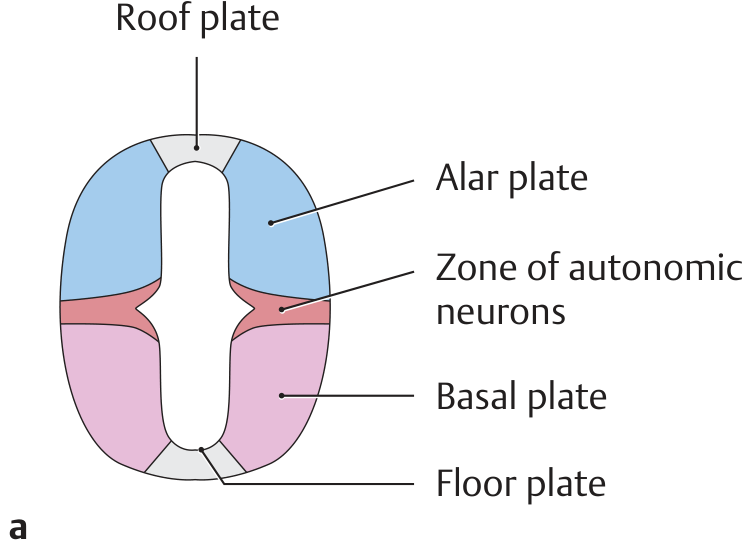
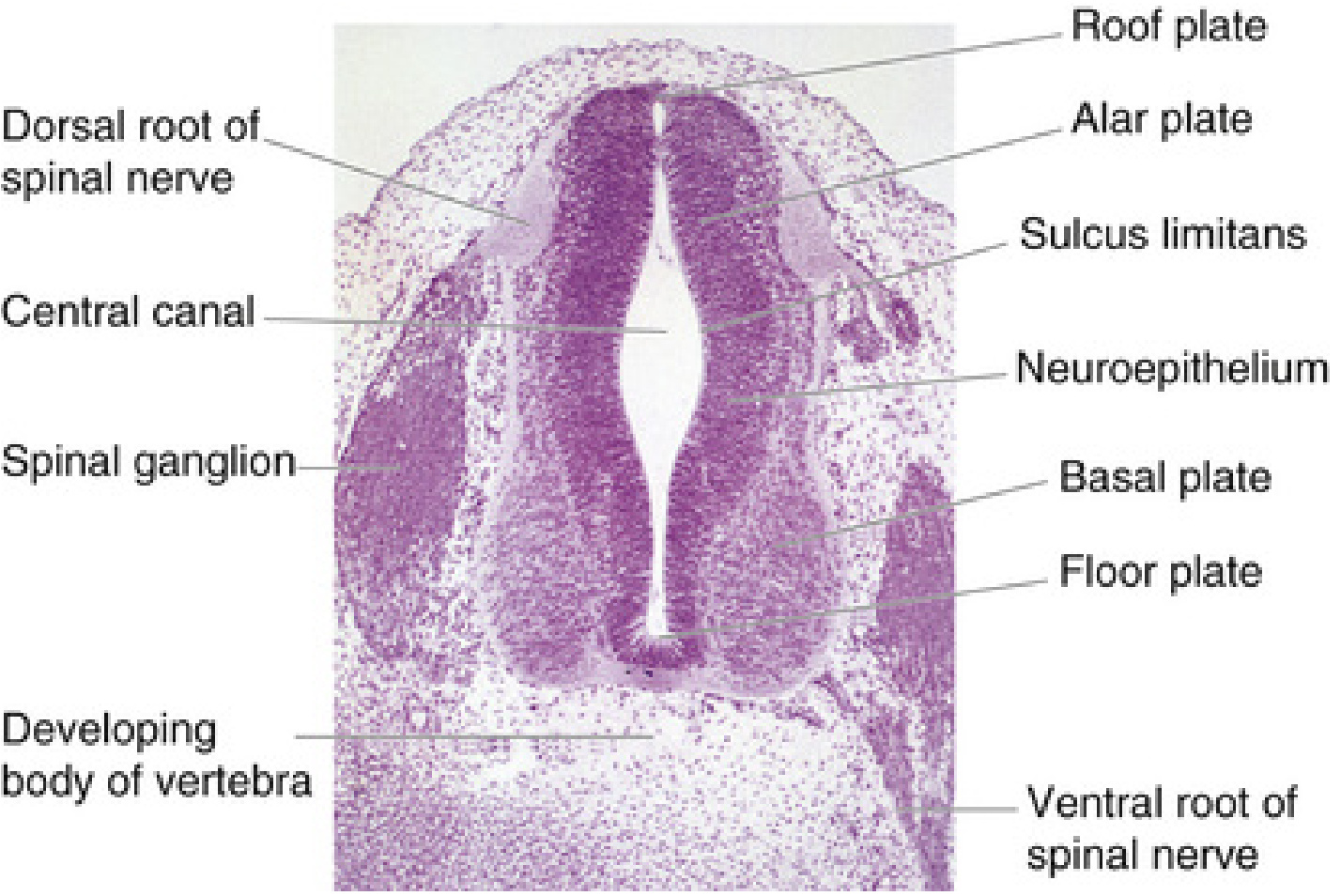
A critical developmental milestone is the formation of a shallow longitudinal groove on each side: the sulcus limitans. This divides each lateral wall into:
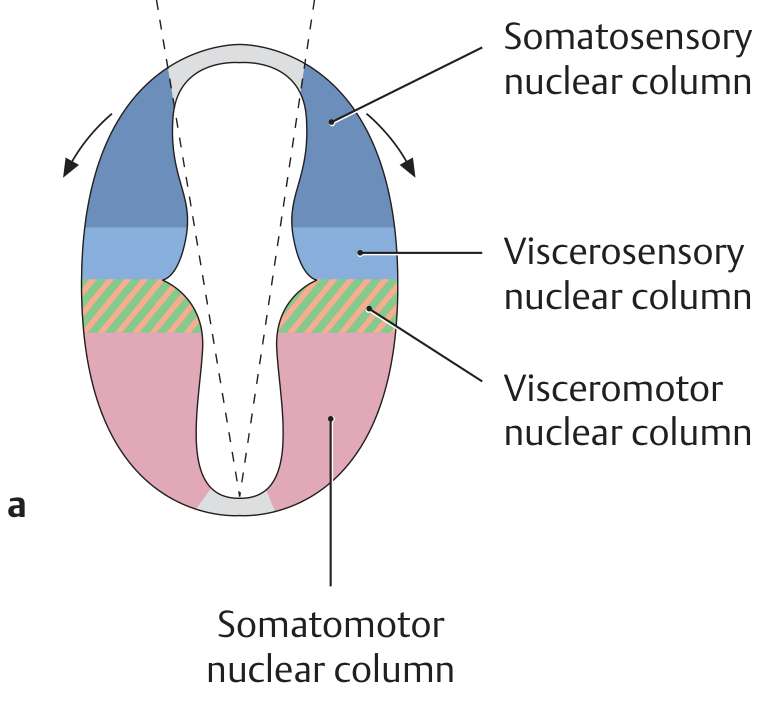
- Alar plate (dorsal) - gives rise to afferent (sensory) nuclei → dorsal gray horns
- Basal plate (ventral) - gives rise to efferent (motor) neurons → ventral and lateral gray horns
As basal plates enlarge, they bulge ventrally, forming the ventral median fissure. As alar plates enlarge, the dorsal median septum forms.
The nuclear column organization:
5. Histogenesis of CNS Cells
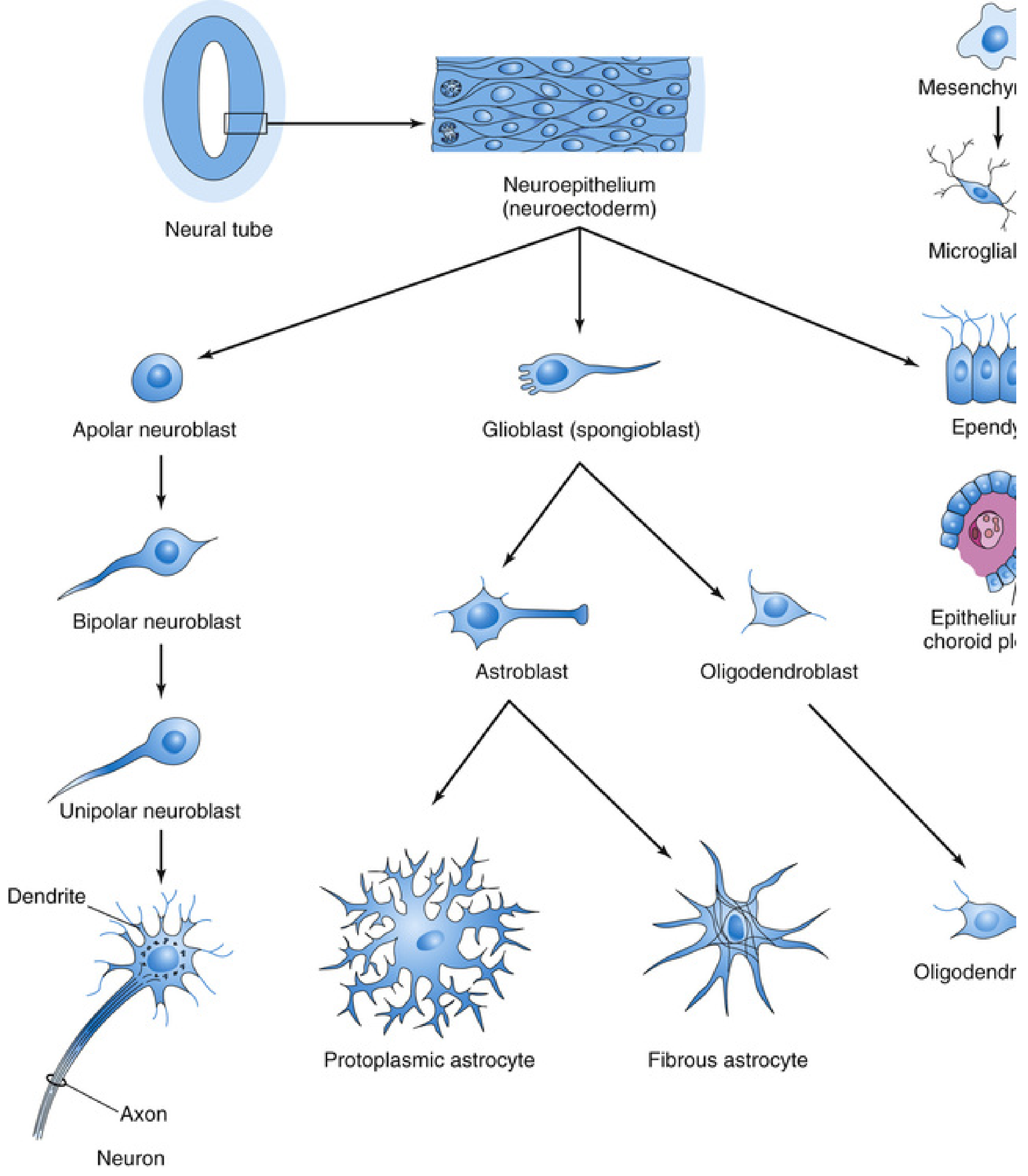
The neuroepithelial cells (ventricular zone) are the progenitors of all neurons and glial cells:
- Neuroblasts - form from neuroepithelial cells; migrate into intermediate zone; differentiate into neurons
- Apolar neuroblast → Bipolar neuroblast → Unipolar neuroblast → Multipolar neuron (with dendrites and axon)
- Glioblasts (spongioblasts) - form after neuroblast production ceases; migrate into intermediate and marginal zones
- Astroblasts → Astrocytes (protoplasmic or fibrous)
- Oligodendroblasts → Oligodendrocytes
- Ependymal cells - form when neuroepithelial cells cease neuroblast/glioblast production; line the central canal
- Microglial cells - derived from mesenchyme (bone marrow origin), not neuroepithelium; invade the CNS late in the fetal period via blood vessels
Molecular regulation: SHH and Olig2-bHLH signaling controls proliferation and patterning via GLI transcription factors.
6. Development of Spinal Ganglia (Dorsal Root Ganglia)
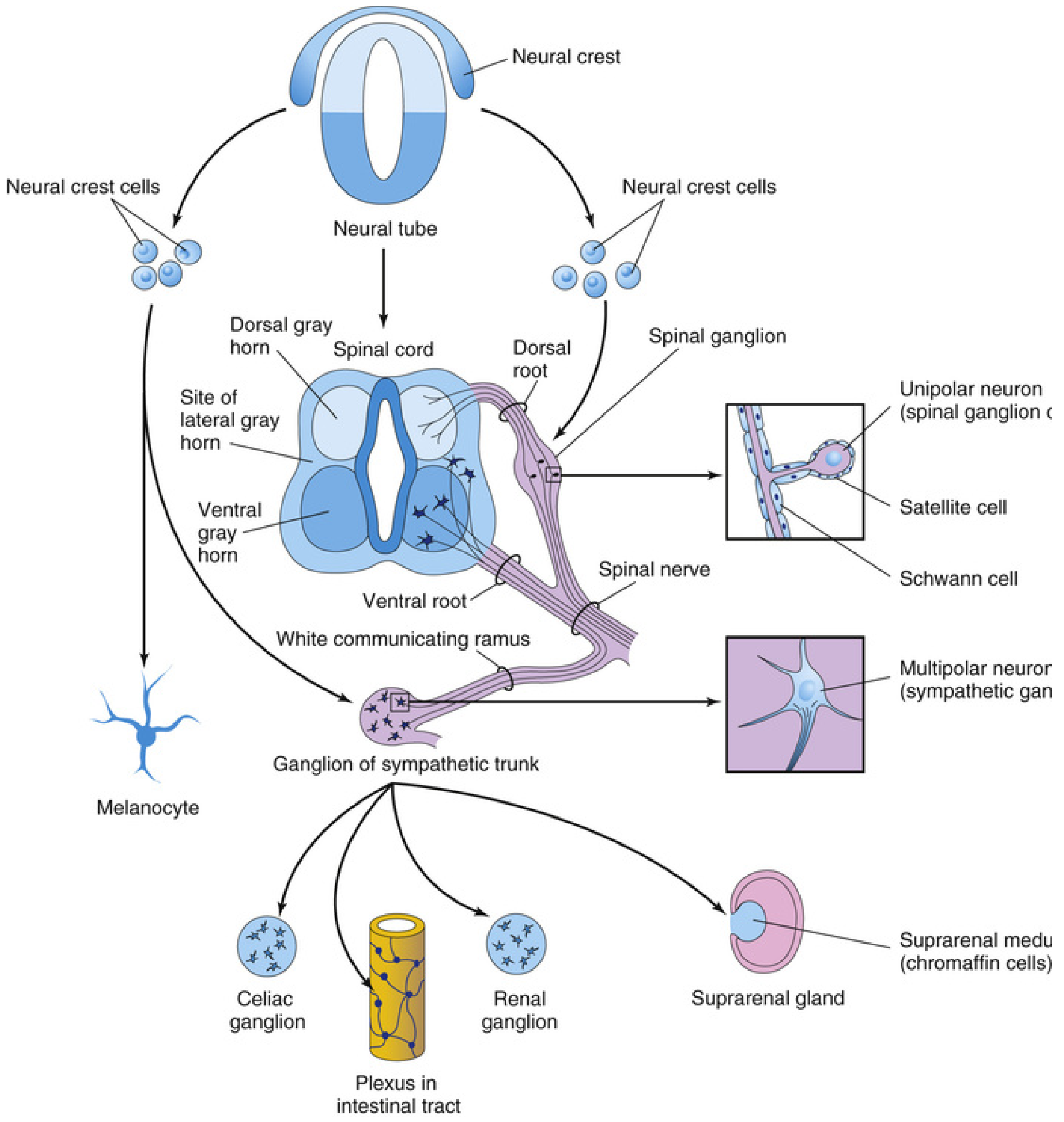
- Spinal ganglia are derived from neural crest cells (not from the neural tube)
- Initially the neurons are bipolar, but the two processes unite in a T-shaped fashion to become unipolar (pseudounipolar)
- Peripheral process - functionally a dendrite (conducts toward cell body); joins spinal nerve
- Central process - enters spinal cord as the dorsal root
- Neural crest cells also give rise to Schwann cells, satellite cells, melanocytes, and autonomic ganglia
7. Development of Spinal Meninges
- Meninges develop from neural crest cells and mesenchyme between 20 and 35 days
- These cells surround the neural tube and form the primordial meninges
- Outer layer thickens → Dura mater
- Inner layer (pia-arachnoid or leptomeninges) splits into:
- Pia mater (innermost)
- Arachnoid mater (middle)
- Fluid-filled spaces within leptomeninges coalesce → subarachnoid space
- CSF begins forming at week 5
8. Positional Changes of the Spinal Cord
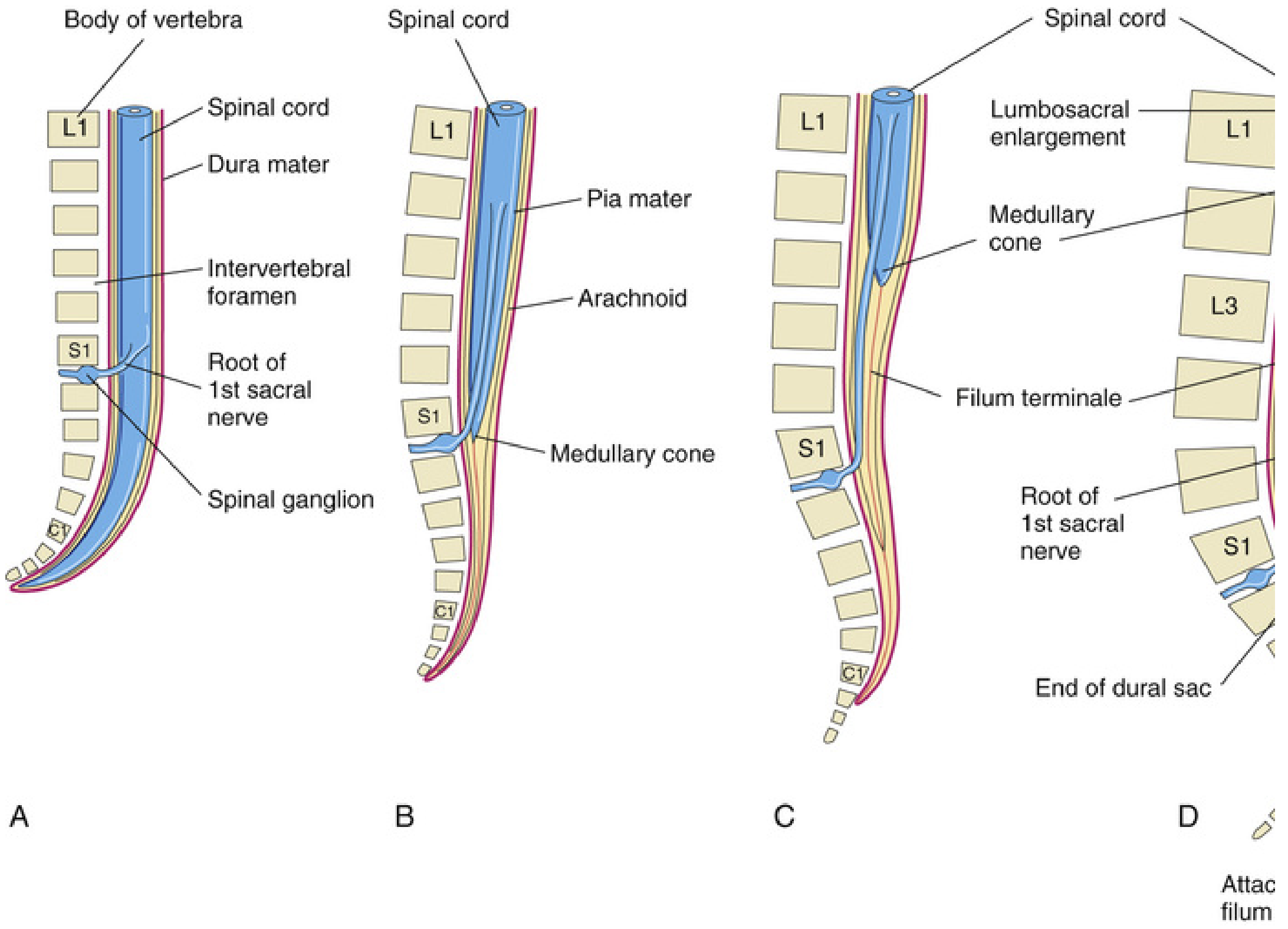
This is a clinically important topic. Early in development, the spinal cord extends the full length of the vertebral canal and spinal nerves exit horizontally. Because the vertebral column and dura grow faster than the spinal cord, the cord's caudal end progressively moves to higher levels:
| Stage | Level of cord termination |
|---|---|
| 8 weeks (embryo) | Extends entire length of vertebral canal |
| 24 weeks (fetus) | Level of S1 vertebra |
| Neonate | L2-L3 |
| Adult | Lower border of L1 (range: T12-L3) |
This discrepancy means lumbar and sacral nerve roots run obliquely downward within the vertebral canal, forming the cauda equina ("horsetail"). Below the cord's tip (conus medullaris), the pia mater continues as the filum terminale, anchoring to the periosteum of Coccyx 1.
9. Myelination of Nerve Fibers
| Feature | CNS | PNS |
|---|---|---|
| Myelinating cell | Oligodendrocytes (from neuroepithelium) | Schwann cells / neurilemma (from neural crest) |
| Timing begins | Late fetal period, continues postnatally | ~20 weeks gestation |
| Motor vs sensory | Motor roots myelinated before sensory roots | Same sequence |
- Myelin consists of layers of lipid and protein (myelin basic proteins)
- β1-integrins regulate myelination; Profilin 1 (PFN1) promotes cytoskeletal changes in oligodendrocytes
- Fiber tracts become functional at approximately the time they become myelinated
- In the PNS, Schwann cell membrane wraps around the axon (mesaxon elongation); cytoplasm condenses between layers
10. Congenital Defects (Spina Bifida)
Most defects result from failure of fusion of one or more neural arches of the developing vertebrae during the 4th week. Collectively called Neural Tube Defects (NTDs), they affect meninges, neural arches, muscles, and skin.
| Type | Description |
|---|---|
| Spina bifida occulta | Nonfusion of neural arch only; skin intact; clinically silent; tuft of hair may mark it |
| Meningocele | Neural arch + meninges protrude through defect; spinal cord remains in canal; skin covered |
| Meningomyelocele | Neural arch + meninges + spinal cord/roots protrude; most common severe form |
| Myeloschisis (rachischisis) | Most severe; cord open to surface; neural folds fail to fuse |
Risk factors include folate deficiency (folate supplementation before conception reduces NTD risk by ~70%). Severe NTDs are often associated with Arnold-Chiari malformation (downward displacement of cerebellum and brainstem).
Summary Timeline
Day 18    Neural plate forms from ectoderm
Day 20-21 Neural folds begin to elevate
Day 22-23 Neural tube closure begins (cervical region first)
Day 25    Rostral neuropore closes → brain develops
Day 27-28 Caudal neuropore closes → spinal cord primordium complete
Week 4    Alar/basal plates distinguish; neural crest migration
Week 5    Sulcus limitans forms; CSF begins
Week 6    Three-zone wall (ventricular/intermediate/marginal) established
Week 8    Cord extends full vertebral canal length
Week 9-10 Central canal narrows; gray/white matter distinct
Week 20+  PNS myelination begins (peripheral nerves)
Late fetal CNS myelination begins; continues through year 1
Neonate   Cord ends at L2-L3
Adult     Cord ends at L1 (lower border)
- The Developing Human: Clinically Oriented Embryology (Moore, Persaud & Torchia), Chapter 17, pp. 1028-1039
- THIEME Atlas of Anatomy: General Anatomy and Musculoskeletal System, pp. 93-94
This is a shared conversation. Sign in to Orris to start your own chat.