
A 3o yeaer old man cane with stiffness in both palm under influence of alcohol daily intake of 1 quarter .how to manage
Reading File
This is a clinical case of Dupuytren's contracture in a chronic alcoholic. Let me search the medical library for full management details.
Finding Sources
Finding Sources
Good - found Dupuytren's disease sections in Dermatology and Miller's Orthopaedics. Let me read those sections now.
Reading File
Reading File
Reading File
Let me read the full Dupuytren's section from Dermatology textbook and Campbell's Orthopaedics for complete clinical management.
Reading File
Finding Sources
Excellent - found Dupuytren's in Rheumatology textbook and Miller's Orthopaedics. Let me read those rich clinical sections.
Reading File
Reading File
Reading File
I now have comprehensive information to provide a detailed answer. Let me also fetch the clinical images.
Loading Image
Loading Image
I now have everything needed for a thorough, well-illustrated answer. Here is the full clinical response:
Dupuytren's Contracture (Palmar Fibromatosis) - Management
Diagnosis
This 30-year-old male with bilateral palmar stiffness and daily heavy alcohol use (~750 mL/day, "one quarter") most likely has Dupuytren's Disease (Dupuytren's Contracture). The association between chronic heavy alcohol use and Dupuytren's disease is well established - alcohol is one of the key risk factors.
Clinical images of typical Dupuytren's contracture:
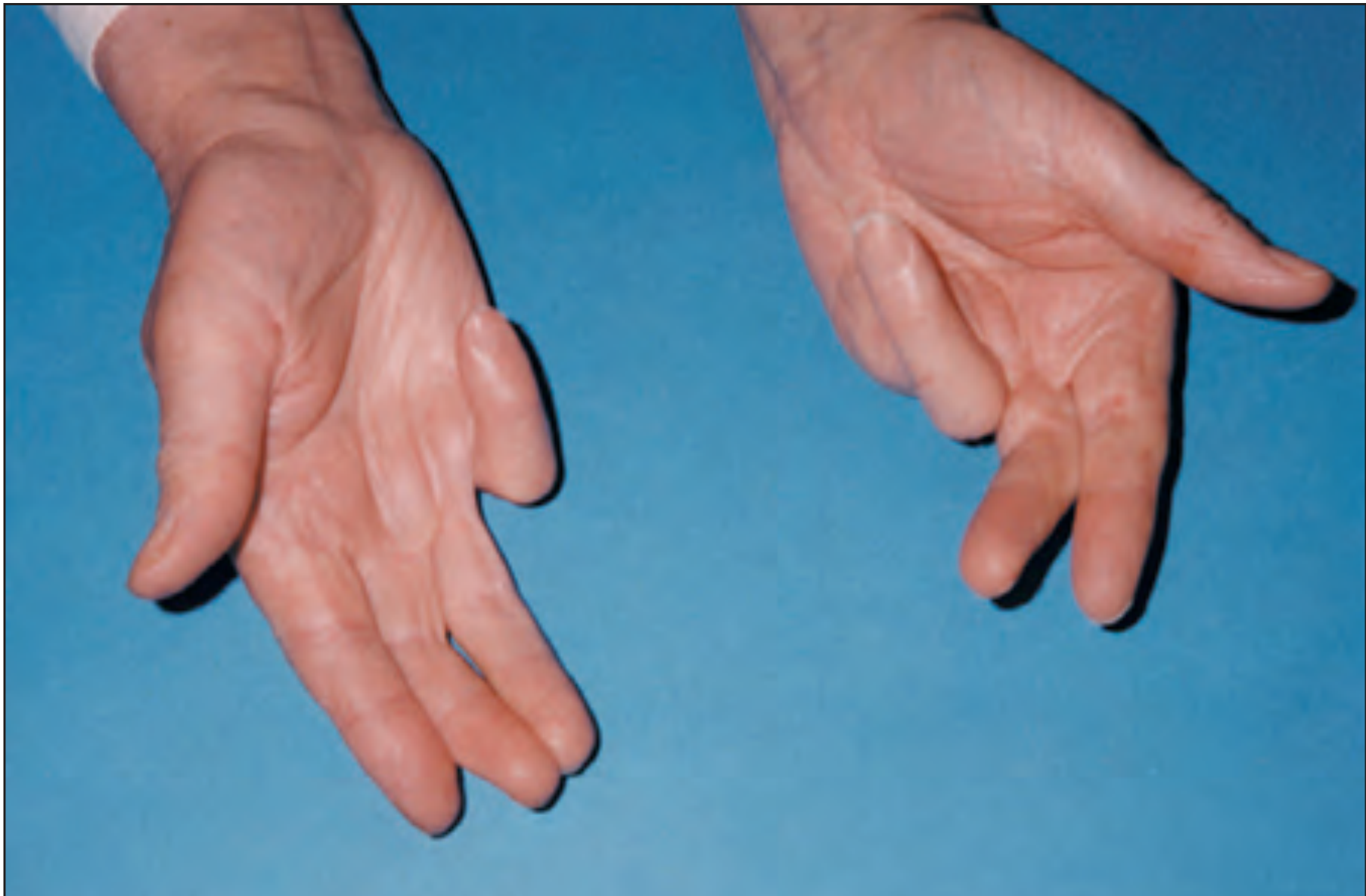
Fig. 81.13 - Bilateral Dupuytren's contracture with finger flexion deformity (Rheumatology, 2-Volume Set)
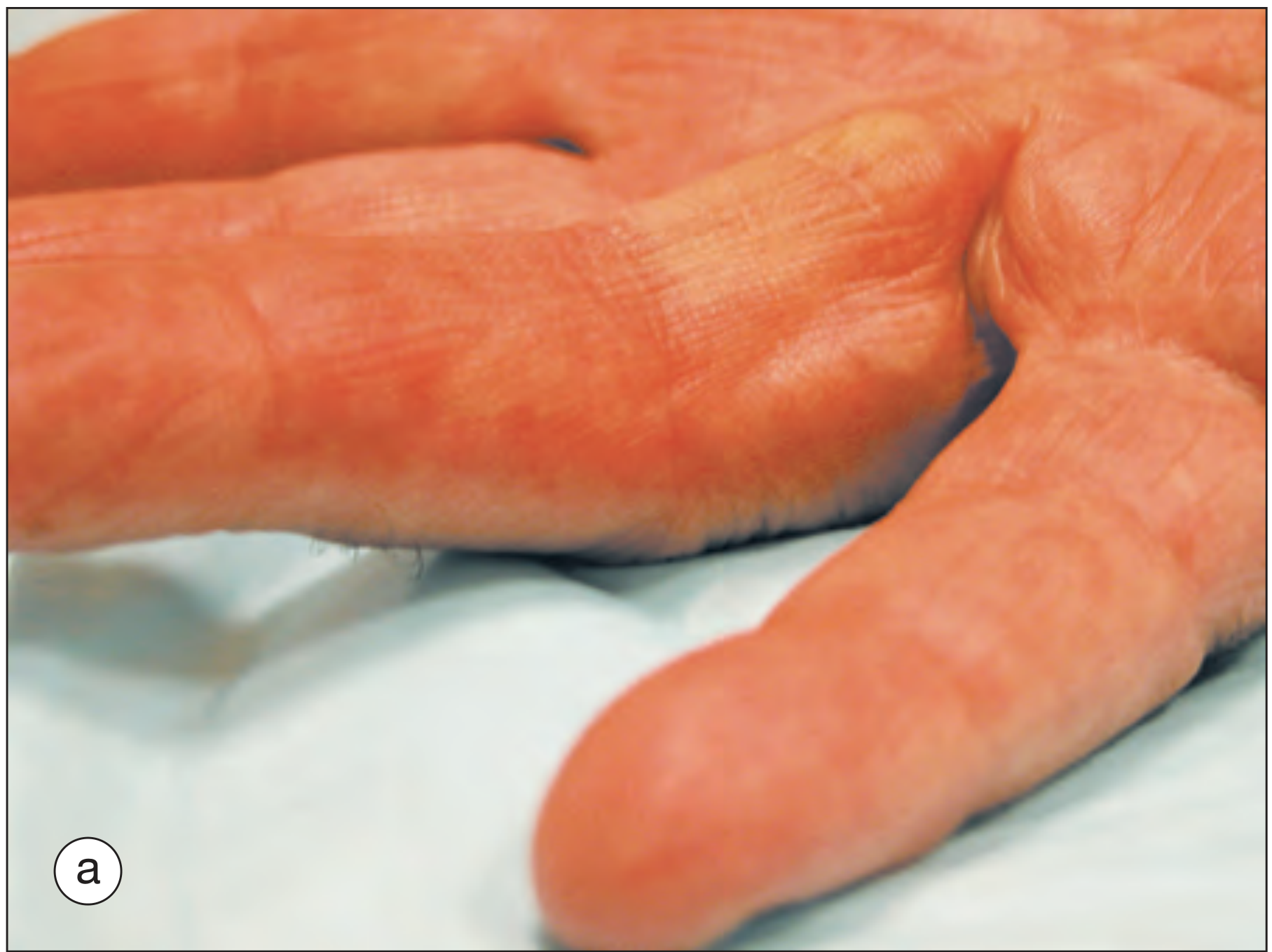
Fig. 81.14a - Skin pitting and longitudinal cord causing MCP flexion contracture (Rheumatology, 2-Volume Set)
What Is Happening (Pathophysiology)
- A benign fibroproliferative disorder of the palmar fascia (aponeurosis)
- Myofibroblasts are the predominant cell type - they contract within the palmar fascia, forming palpable nodules first, then fibrous cords
- Increased ratio of type III to type I collagen
- Cords progressively pull the digits into flexion, most commonly the ring finger, then small finger
- Grayson (volar) ligaments are involved; Cleland (dorsal) ligaments are not
- The tendons and joints themselves are NOT involved by Dupuytren tissue - the fascia overlying them is
Key risk factors in this patient:
- Chronic heavy alcohol use - a major associated risk factor
- Male sex - men are affected 7 times more often than women
- Earlier age of onset (30 years) suggests "Dupuytren diathesis" - a more aggressive form
Assessment Before Treatment
Hueston Tabletop Test: Ask the patient to place his hand flat on a tabletop. If he cannot, the contracture is functionally significant and treatment is indicated.
Surgical indications (any one of the following):
- Inability to place hand flat (positive Hueston test)
- MCP (metacarpophalangeal) flexion contracture > 30 degrees
- Any PIP (proximal interphalangeal) flexion contracture
- Functional impairment
Management
1. Address the Underlying Cause First
Alcohol cessation counseling is mandatory. Continued heavy alcohol use accelerates the disease and impairs wound healing if surgery is needed. Refer to:
- Brief motivational intervention
- De-addiction/psychiatry support
- Thiamine and nutritional supplementation (given heavy alcohol use)
2. Non-Surgical (Conservative) Management
Appropriate when contracture is mild (< 30 degrees) or disease is at the nodular stage without fixed cords:
| Treatment | Mechanism | Evidence Level |
|---|---|---|
| Heat therapy + stretching exercises | Softens fascia, maintains ROM | Supportive |
| Intralesional triamcinolone (10-40 mg/mL) | Inhibits fibroblast proliferation, reduces TGF-β1/β2, collagen synthesis | Level 1 |
| Silicone sheeting | Reduces collagen deposition via temperature/hydration | Level 2 |
| Pressure therapy | Pressure-induced hypoxia leads to collagen/fibroblast degeneration | Level 2 |
| Vitamin E (topical) | Antioxidant | Level 2 |
| Radiotherapy | Fibroblast apoptosis; restores balance of collagen synthesis/degradation | Level 2 |
Note: Splinting does not alter disease progression and is not recommended as standalone therapy. - Rheumatology 2-Volume Set
3. Minimally Invasive Procedures
When contracture is progressing or > 30 degrees:
a) Needle Aponeurotomy (Percutaneous Fasciotomy)
- Office-based procedure; needle used to cut the cord percutaneously
- Effective in the short term with smaller incisions
- Higher recurrence rate compared to surgery
- Increasing in popularity
b) Collagenase Clostridium histolyticum (CCH) Injection
- Injected directly into the cord to enzymatically weaken it
- 24-72 hours later, manipulation is performed to rupture the cord
- Shown to be as effective as open surgical excision
- Now adopted as first-line therapy by many practitioners
- Average correction: MCP up to 85%, PIP up to 60%
- Common side effects: pain, swelling, bruising (temporary); skin tears more common than flexor tendon rupture
- Source: Campbell's Operative Orthopaedics 15th Ed; Hurst et al., NEJM 2009
4. Surgical Management
Indications: MCP contracture > 30°, any PIP contracture, positive Hueston test, or failed non-surgical management.
Preferred technique: Open Limited Fasciectomy
- Gold standard
- Removes the diseased palmar fascia
- Can include skin grafting if skin is involved
- Total fasciectomy reserved for severe/diffuse disease
Complications to counsel the patient about:
- Recurrence - most common complication (especially in younger patients with bilateral disease, strong family history, fibrotic lesions elsewhere = "Dupuytren diathesis")
- Digital nerve injury (neurovascular bundle displaced centrally/superficially by spiral cord - at risk during surgery)
- Wound breakdown
- Disease in other digits
5. Post-Operative / Long-Term Care
- Hand therapy and range-of-motion exercises
- Extension splinting post-operatively
- Monitor for recurrence
- Continued alcohol abstinence - reduces disease progression and recurrence risk
Summary Table
| Severity | Treatment |
|---|---|
| Nodular stage, no cord/contracture | Observation + intralesional steroid for painful nodules |
| Mild cord, < 30° MCP contracture | Steroid injection, physiotherapy, heat, monitor |
| Moderate cord, > 30° MCP or any PIP contracture | Needle aponeurotomy OR collagenase injection |
| Severe/progressive, failed minimally invasive | Limited open fasciectomy ± skin grafting |
| Diffuse disease | Total fasciectomy |
Important Notes for This Patient
-
Age 30 with bilateral involvement is a red flag for Dupuytren's diathesis - a more aggressive, early-onset form associated with higher recurrence. Examine for fibrotic lesions on the soles (Ledderhose disease), knuckle pads (Garrod's pads), and penile fascia (Peyronie's disease).
-
Heavy alcohol intake (~750 mL/day) puts him at risk for liver disease, peripheral neuropathy, and nutritional deficiencies - all of which complicate management and recovery. A full systems review is warranted.
-
No definitive cure exists for Dupuytren's disease; treatment controls progression and restores function.
-
Rheumatology 2-Volume Set (Elsevier 2022), Ch. 81, p. 725
-
Miller's Review of Orthopaedics 9th Ed, p. 391
-
Campbell's Operative Orthopaedics 15th Ed 2026
-
Sabiston Textbook of Surgery
This is a shared conversation. Sign in to Orris to start your own chat.