
Obstructive jaundice in surgery
I'll start by reading the medical library skill, then search for comprehensive information on obstructive jaundice.
Reading File
Now let me run parallel searches across the library and PubMed simultaneously.
Finding Sources
Finding Sources
Searching PubMed
"obstructive jaundice" AND surgery
Excellent - strong hits. Let me now read the core surgical textbook sections in parallel.
Reading File
Reading File
Good content coming through. Let me read more sections covering investigations, complications, and surgical management.
Reading File
Reading File
Searching Images
obstructive jaundice biliary obstruction diagram ERCP
I have strong textbook data. Let me fetch the ERCP image and read the non-operative management section and complications.
Loading Image
Reading File
Reading File
Excellent - I now have very comprehensive data. Let me compile the full, detailed response.
Obstructive Jaundice in Surgery
Definition
Obstructive jaundice (posthepatic/cholestatic jaundice) is the clinical manifestation of impaired flow of conjugated bilirubin through the biliary tree into the duodenum. It results from mechanical obstruction at any level from the intrahepatic bile ducts to the ampulla of Vater. - Current Surgical Therapy 14e, p. 574
Pathophysiology
When bile flow is blocked:
- Conjugated (direct) bilirubin accumulates in blood - accounts for >50% of the total bilirubin elevation
- Bile salts fail to reach the intestine, impairing absorption of fat-soluble vitamins (A, D, E, K) - leading to coagulopathy
- Absence of bile in the gut produces clay-colored (acholic) stools and dark urine (bilirubinuria)
- Urinary urobilinogen is absent (unlike hemolytic jaundice where it is elevated)
- Cholestasis impairs clotting factors and immunologic responses, raising the risk for cholangitis
Causes
Malignant (painless, progressive jaundice - typical presentation)
| Cause | Key Feature |
|---|---|
| Pancreatic carcinoma | Most common malignant cause; "double duct sign" on MRCP |
| Cholangiocarcinoma (Klatskin tumor) | Hilar obstruction; intrahepatic duct dilation only |
| Ampullary carcinoma | Early obstructive jaundice, sometimes intermittent |
| Gallbladder carcinoma | Associated with Courvoisier's sign |
Benign (often painful, fluctuating jaundice)
- Choledocholithiasis - most common overall cause; 5-10% of laparoscopic cholecystectomy patients have CBD stones
- Primary or secondary sclerosing cholangitis
- Benign biliary strictures (post-surgical)
- Choledochal cyst
- Parasites (Ascaris, Clonorchis)
- Hemobilia
- Pancreatic pseudocysts
- Pseudotumoral chronic pancreatitis
- Duodenal diverticulum
Congenital
- Biliary atresia
- Caroli's disease
Clinical pearl: Painful obstructive jaundice = most likely stones. Painless, progressive jaundice = most likely malignancy. Fluctuating jaundice = characteristic of CBD stone. - Pye's Surgical Handicraft 22e, p. 285
Clinical Features
| Feature | Detail |
|---|---|
| Jaundice | Yellow discoloration of sclera and skin |
| Pruritus | Due to bile salt deposition in skin |
| Dark urine | Bilirubinuria (conjugated bilirubin) |
| Clay-colored stools | Absence of stercobilin |
| Fatigue | Common in cholestasis |
| Abdominal pain | RUQ - if stones; painless if malignancy |
| Fever/rigors | Suggests superimposed cholangitis (Charcot's triad: fever + jaundice + RUQ pain) |
| Courvoisier's sign | Palpable, non-tender gallbladder + painless jaundice = malignancy until proven otherwise |
Investigations
Laboratory Tests
| Test | Finding in Obstructive Jaundice |
|---|---|
| Serum bilirubin | Elevated direct (conjugated) >50% of total |
| Alkaline phosphatase (ALP) | 3-4× elevation in ~75% of patients |
| GGT / 5'-nucleotidase | Elevated (helps confirm hepatobiliary source vs. bone) |
| AST/ALT | Mildly elevated (markedly elevated suggests hepatocellular) |
| Prothrombin time | Prolonged (Vit K deficiency); responds to IV Vitamin K - distinguishes posthepatic from hepatic cause |
| Urine bilirubin | Positive |
| Urine urobilinogen | Absent |
| CBC | Leucocytosis (PMN) with cholangitis; eosinophilia with parasites |
| Tumor markers | CA 19-9 (pancreatic Ca); CEA; AFP (hepatocellular Ca) |
| AMA (anti-mitochondrial antibody) | Positive in primary biliary cirrhosis |
Vitamin K test: If PT is prolonged and returns to normal after IV Vitamin K → posthepatic jaundice. If no response → hepatocellular jaundice. - Pye's Surgical Handicraft 22e
Imaging (ordered by sequence)
1. Transabdominal Ultrasound (first-line)
- Dilated biliary system: entire system including GB dilated if obstruction at lower CBD; only intrahepatic ducts dilated if hilar obstruction
- Detects gallstones, liver masses, GB wall thickening
- Sensitivity for CBD stones: only ~21-63% - often insufficient alone
2. CT Scan (abdomen + pelvis with contrast)
- Highly sensitive for pancreatic tumors >2 cm
- Identifies level and cause of obstruction
- Assesses vascular invasion, lymphadenopathy, distant metastases
3. MRCP (Magnetic Resonance Cholangiopancreatography)
- Overall sensitivity ~95% for biliary obstruction - best non-invasive test
- Non-invasive "roadmap" of the biliary tree
- Test of choice for CBD stones (non-invasive) - but has no therapeutic capability
4. Endoscopic Ultrasound (EUS)
- Detects tumors at hepatic hilum, biliary ducts, ampullary region, pancreatic head
- Guides staging: vascular invasion, local spread, lymph node metastases
- Fine-needle aspiration (FNA): sensitivity 84-91%, specificity 71-100% for biliary strictures
5. ERCP (Endoscopic Retrograde Cholangiopancreatography)
- Primarily therapeutic rather than diagnostic
- Side-viewing duodenoscope cannulates the major papilla
- Identifies location, character, and length of strictures
- Can obtain bile, pancreatic juice, brush cytology in same session
- Cannulation success rate: >90%
- Cannot delineate upper biliary tract if obstruction is complete
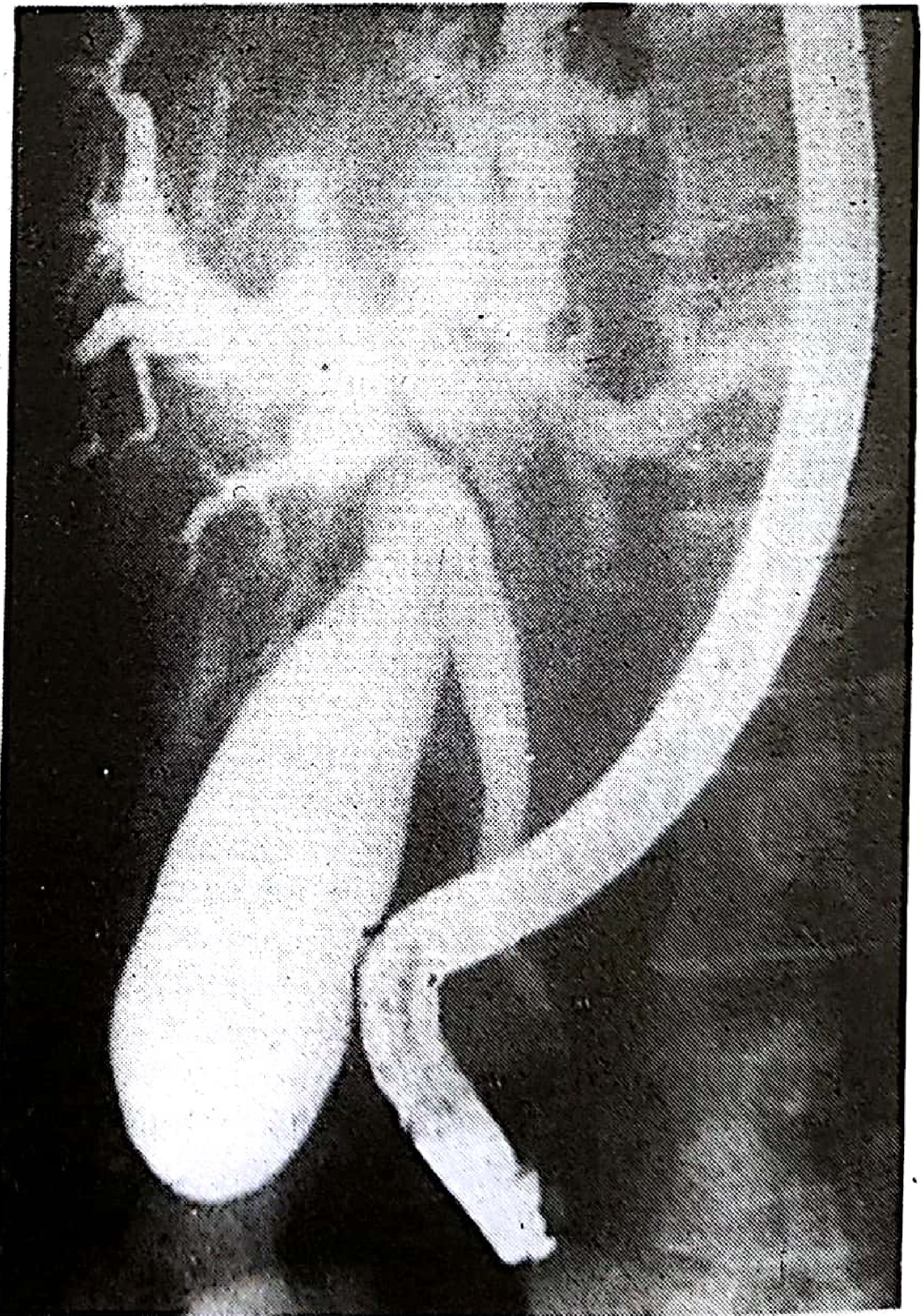
6. Percutaneous Transhepatic Cholangiography (PTC)
- Used when ERCP fails or anatomy is altered (e.g., post-Whipple, Roux-en-Y)
- Allows external biliary drainage, stent placement
- Higher complication rate than ERCP
7. Liver Biopsy
- Rarely required purely for jaundice diagnosis
- Contraindicated if: bleeding diathesis, PT prolonged and not correctable with Vit K, platelets <50,000/mm³
ASGE Risk Stratification for Choledocholithiasis
| Predictor Strength | Clinical Sign | Probability |
|---|---|---|
| Very strong | CBD stone on US; clinical ascending cholangitis; bilirubin >4 mg/dL | If any = High (>50%) |
| Strong | Dilated CBD >6 mm (GB in situ); bilirubin 1.8-4 mg/dL | If both = High (>50%) |
| Moderate | Abnormal LFTs (other than bili); age >55; dilated CBD on cross-sectional imaging | Intermediate-Low (10-50%) |
Management
Preoperative Preparation (for surgical patients)
Surgery in jaundiced patients carries ~20% mortality. Risk factors include:
- Old age, malnutrition, ongoing biliary infection, malignancy, high serum urea
Preoperative measures:
- Vitamin K (20 mg IV) - normalizes PT within 12-24 hours if liver function intact; repeat if still elevated
- Fresh Frozen Plasma (FFP) - if coagulopathy not corrected by Vit K
- Renal protection - aggressive IV hydration, mannitol; jaundiced patients are at high risk for acute tubular necrosis and hepatorenal syndrome
- Antibiotics - broad-spectrum prophylaxis for cholangitis risk
- Nutritional support - correct malnutrition preoperatively
- Biliary drainage (if cholangitis present) - before any elective procedure
Non-Operative (Interventional) Management
Previously all patients were treated surgically. Now, percutaneous and endoscopic drainage have transformed management:
Endoscopic (ERCP-based) - Preferred first approach
- Sphincterotomy - for stone extraction
- Balloon/basket extraction - CBD stone removal
- Plastic stents - benign strictures, short-term drainage
- Self-expanding metal stents (SEMS) - malignant obstruction, superior patency, preferred for life expectancy >3 months (PMID 38655140 - 2024 meta-analysis confirms SEMS superior to plastic stents in malignant obstruction)
- ERCP with biliary decompression <48 hours is associated with a nearly twofold reduction in mortality in acute cholangitis (per Tokyo 2018 guidelines)
Percutaneous Transhepatic Biliary Drainage (PTBD)
- Inserted as endoprosthesis (2-3.5 mm diameter)
- Used when ERCP is not technically feasible
- Can become blocked by debris and sludge
- Requires experienced interventional radiologist
Preoperative Biliary Drainage - Controversy
- Theoretically allows biliary infection to subside, corrects malnutrition, improves liver function
- However, controlled studies have not demonstrated reduction in operative mortality or morbidity - remains controversial (PMID 40422081 - 2025 Bayesian network meta-analysis) - Pye's Surgical Handicraft 22e, p. 285
Surgical Management
For Benign Causes (Stones)
- Laparoscopic CBD exploration with stone clearance + cholecystectomy
- Open choledochotomy + T-tube drainage (if laparoscopic approach fails or not available)
- Transduodenal sphincteroplasty - for impacted stones at ampulla
For Malignant Causes
Pancreatic head carcinoma:
- Whipple procedure (pancreaticoduodenectomy) - curative intent; 5% operative mortality in specialist centers
- Palliative biliary bypass: choledochojejunostomy or cholecystojejunostomy (if unresectable)
- Palliative duodenal bypass: gastrojejunostomy (for duodenal obstruction)
Hilar cholangiocarcinoma (Klatskin tumor):
- Extended hepatic resection (right/left hepatectomy ± caudate lobe)
- Biliary reconstruction with hepaticojejunostomy
Distal cholangiocarcinoma / Ampullary carcinoma:
- Whipple procedure
- Better prognosis than pancreatic Ca
Unresectable malignancy:
- Endoscopic or percutaneous stenting (definitive palliation)
- Metal stents preferred for durability
Complications of Obstructive Jaundice
| System | Complication | Mechanism |
|---|---|---|
| Hepatic | Hepatocellular damage, biliary cirrhosis | Bile backpressure, hepatocyte injury |
| Renal | Acute renal failure / Hepatorenal syndrome | Endotoxemia, reduced renal perfusion |
| Hematologic | Coagulopathy (bleeding) | Vitamin K malabsorption → reduced factors II, VII, IX, X |
| Immunologic | Sepsis, cholangitis | Impaired reticuloendothelial function, bacterial translocation |
| Nutritional | Steatorrhea, fat-soluble vitamin deficiency | Bile salt absence from gut |
| Wound | Poor wound healing | Malnutrition, bilirubin-induced impaired collagen synthesis |
| Cardiovascular | Bradycardia, hypotension | Bile salts sensitize the heart |
Special Situations
Charcot's Triad
Fever + Jaundice + RUQ pain = Acute cholangitis (requires urgent biliary decompression)
Reynolds' Pentad
Charcot's triad + Hypotension + Altered mental status = Suppurative/toxic cholangitis (requires emergency ERCP or PTC)
Courvoisier's Law
Palpable, non-tender gallbladder + painless jaundice = Malignant obstruction (most likely at the head of pancreas). The gallbladder is not distended in stone disease (due to chronic inflammation and fibrosis).
Mirizzi Syndrome
Stone impacted in the cystic duct or Hartmann's pouch causing extrinsic compression of the CBD - a trap in surgery, risk of CBD injury.
Summary Algorithm
Jaundice
   ↓
Is it conjugated (direct) hyperbilirubinaemia?
   ↓ Yes
Obstructive jaundice suspected
   ↓
Ultrasound abdomen (first line)
   ↓
Dilated ducts?
   ├─ Yes → CT / MRCP to define level and cause
   │         ↓
   │    Stones → ERCP (therapeutic) → if fails → surgery (lap. CBD exploration)
   │    Malignancy → EUS + FNA to stage → resectable? → Whipple/hepatectomy
   │                                              → Unresectable? → stent (SEMS)
   └─ No → Consider hepatocellular disease / intrahepatic cholestasis
Sources:
- Current Surgical Therapy 14e (Sameer Khan, Vikesh K. Singh), pp. 574-580
- Pye's Surgical Handicraft 22e, pp. 285, 275-280
- 2025 Bayesian network meta-analysis on preoperative biliary drainage: Sun et al., Int J Surg 2025 (PMID 40422081)
- 2024 meta-analysis on biliary drainage for malignant obstruction: Wang et al., Front Oncol 2024 (PMID 38655140)
This is a shared conversation. Sign in to Orris to start your own chat.