Here is your complete MCCQE-mapped hypertension teaching session. Everything below is organized exactly to the MCC Objectives you pasted, with Canadian-specific points flagged throughout.
HYPERTENSION - Complete MCCQE Study Session
How to use this: Read each section, then mentally answer "how would this appear as an MCQ?" The 🇨🇦 flag marks Canadian-specific facts that the MCCQE tests differently from other countries. The ⚠️ flag marks classic IMG traps.
PART 1: CLASSIFICATION & DIAGNOSIS
Blood Pressure Categories (ACC/AHA 2017 - used in Canada)
| Category | SBP | | DBP |
|---|
| Normal | <120 mmHg | AND | <80 mmHg |
| Elevated | 120-129 mmHg | AND | <80 mmHg |
| Hypertension Stage 1 | 130-139 mmHg | OR | 80-89 mmHg |
| Hypertension Stage 2 | ≥140 mmHg | OR | ≥90 mmHg |
Children <13 years: Use age/sex/height-adjusted percentiles (not fixed numbers)
- Normal: <90th percentile
- Stage 1 HTN: ≥95th percentile
- Stage 2 HTN: ≥95th percentile + 12 mmHg or ≥140/90
🇨🇦 Canadian-specific diagnostic rules:
- Diagnosis requires ≥2 readings on ≥2 separate occasions (don't diagnose on a single visit)
- Automated office BP (AOBP) is now standard in Canada - gives lower readings than traditional manual BP
- White coat hypertension is common - ambulatory BP monitoring (ABPM) or home BP monitoring may be needed to confirm true hypertension
- Masked hypertension (normal in clinic, high at home) must be considered in patients with target organ damage but normal office BP
(Source: Fuster and Hurst's The Heart, 15th Edition)
PART 2: CAUSAL CONDITIONS
Essential (Primary) Hypertension
- Accounts for ~90-95% of all hypertension
- No single identifiable cause; polygenic + environmental
- Risk factors: family history, age, obesity, high sodium/low potassium diet, physical inactivity, excessive alcohol, smoking, stress
Secondary Hypertension (~5-10% of cases)
When to suspect secondary hypertension:
- Onset before age 30 (especially without obesity/family history)
- Treatment-resistant hypertension (BP above goal on 3 optimally-dosed drugs including a diuretic)
- Abrupt worsening of previously controlled BP
- Disproportionate target organ damage for BP level
- Unprovoked hypokalemia
- Laboratory clues (abnormal renin, aldosterone, creatinine)
(Source: Harrison's Principles of Internal Medicine 22E)
| Cause | Key Clinical Clue | Screening Test |
|---|
| Obstructive Sleep Apnea | Most common cause of secondary HTN; obesity, snoring, daytime fatigue, witnessed apneas | Polysomnography (sleep study) |
| Renal parenchymal disease | CKD, proteinuria, hematuria, family history of PKD | Creatinine, urinalysis, renal USS |
| Renovascular (renal artery stenosis) | Young woman (fibromuscular dysplasia) OR older man with atherosclerosis; flash pulmonary edema; abdominal bruit; creatinine rise after ACEi/ARB | Doppler renal USS, MR angiography |
| Primary aldosteronism (Conn's) | Hypokalemia (spontaneous or diuretic-resistant), adrenal adenoma; most common surgically correctable cause | Aldosterone:renin ratio (ARR) |
| Pheochromocytoma | Episodic headache + sweating + palpitations triad; paroxysmal hypertension | Plasma/urine metanephrines |
| Cushing syndrome | Central obesity, striae, moon facies, buffalo hump, hyperglycemia | 24h urinary free cortisol or dexamethasone suppression test |
| Hypothyroidism/Hyperthyroidism | TSH abnormal; diastolic HTN in hypothyroid, systolic HTN in hyperthyroid | TSH |
| Coarctation of the aorta | Young patient, upper extremity HTN with LOWER BP in legs, radio-femoral delay, rib notching on CXR | Echo, CT aorta |
| Drugs/substances | OCP, NSAIDs, steroids, stimulants, alcohol, cocaine, nicotine | History |
⚠️ IMG trap: In children, the most common secondary cause is renovascular disease (renal artery stenosis), not essential hypertension. Always think secondary in kids.
⚠️ IMG trap: Pheo is classic MCCQE material. The triad is headache + sweating + palpitations = episodic paroxysmal hypertension. Screen with plasma or 24h urine metanephrines (not urinary catecholamines - though both may be tested).
PART 3: HISTORY & PHYSICAL EXAMINATION
History Targets (from MCC Objectives)
Elicit risk factors:
- Family history of HTN, premature CVD, stroke, kidney disease
- Diet (sodium, potassium, alcohol, caffeine)
- Smoking, illicit drug use (cocaine, amphetamines)
- Medications (NSAIDs, OCPs, decongestants, steroids, stimulants)
- Sleep history (snoring, witnessed apneas - for OSA)
Elicit target organ damage symptoms:
- Heart: chest pain, dyspnea, palpitations, edema (CAD, LVH, HF)
- Brain: headache, visual changes, TIA/stroke symptoms
- Kidneys: nocturia, hematuria, foamy urine
- Eyes: visual changes (hypertensive retinopathy)
- Vessels: claudication (PAD)
For pregnant patients: always ask gestational age, headache, visual changes, edema, RUQ pain, fetal movement
Physical Examination Targets
- Measure BP correctly: sitting, after 5 min rest, both arms (use higher reading), repeat x2
- 4-limb BPs if coarctation suspected (upper > lower = coarctation)
- Fundoscopy: Keith-Wagener-Barker grading of hypertensive retinopathy
- Grade I: arteriolar narrowing
- Grade II: AV nicking
- Grade III: flame hemorrhages, cotton wool spots
- Grade IV: papilledema (= hypertensive emergency)
- Abdominal bruit (renal artery stenosis)
- Thyroid enlargement (hypothyroidism/hyperthyroidism)
- Cushingoid features (moon face, striae, buffalo hump)
- Peripheral pulses and radio-femoral delay (coarctation)
- Signs of LVH: heaving apex, S4
PART 4: INVESTIGATIONS
Baseline Investigations (ALWAYS order these)
| Test | What it detects |
|---|
| Serum creatinine + eGFR | Renal function, CKD as cause or complication |
| Electrolytes (Na, K) | Hypokalemia suggests hyperaldosteronism; check before/after diuretics |
| Fasting glucose | Diabetes as concomitant condition and risk factor |
| Lipid panel (fasting) | Cardiovascular risk stratification |
| Urinalysis + microscopy | Proteinuria, hematuria (renal parenchymal disease, end-organ damage) |
| ECG | LVH (voltage criteria), arrhythmia, ischemia |
| Urine ACR (albumin:creatinine ratio) | Early renal damage |
Targeted Tests (order when secondary cause suspected)
| Suspected cause | Test |
|---|
| OSA | Sleep study (polysomnography) |
| Renal artery stenosis | Doppler renal USS (first line), MR angiography (gold standard) |
| Primary aldosteronism | Aldosterone:renin ratio (ARR) - stop spironolactone and ACEi/ARB beforehand |
| Pheochromocytoma | Plasma or 24h urine metanephrines |
| Cushing's | 24h urine free cortisol OR overnight 1mg dexamethasone suppression test |
| Thyroid disease | TSH |
| Coarctation | Echo, CT/MRI aorta |
| Renovascular disease | Renal Doppler USS |
Imaging for End-Organ Damage
- Echo: LVH, systolic/diastolic dysfunction
- CT/MRI brain: lacunar infarcts, white matter changes, hemorrhage (if neurological symptoms)
- Renal USS: kidney size, echogenicity, obstruction, cysts (PKD)
PART 5: MANAGEMENT
Non-Pharmacological (Lifestyle Modifications - ALWAYS first line for Stage 1)
🇨🇦 Hypertension Canada guidelines emphasize these - expect MCQs asking about these before starting drugs:
| Intervention | Expected BP Reduction |
|---|
| Sodium restriction (<2g/day = <5g NaCl/day) | 2-8 mmHg |
| DASH diet (high fruits, veg, low fat dairy) | 8-14 mmHg |
| Weight loss (per 10kg) | 5-20 mmHg |
| Aerobic exercise (30 min, 5x/week) | 4-9 mmHg |
| Limit alcohol (<2 drinks/day men, <1 women) | 2-4 mmHg |
| Smoking cessation | Cardiovascular risk reduction |
Pharmacological Treatment
When to Start Medications
- Stage 1 HTN (130-139/80-89): Lifestyle x 3-6 months first; start drugs if CVD risk ≥10% at 10 years or target organ damage already present
- Stage 2 HTN (≥140/90): Start medications + lifestyle simultaneously
- BP ≥160/100: Usually requires 2-drug combination from the outset
🇨🇦 BP Targets (Hypertension Canada):
- Most adults: <130/80 mmHg
- Elderly frail (≥75): less aggressive, individualize to <140/90 to avoid falls/orthostatic hypotension
- Diabetes: <130/80 mmHg
- CKD: <130/80 mmHg
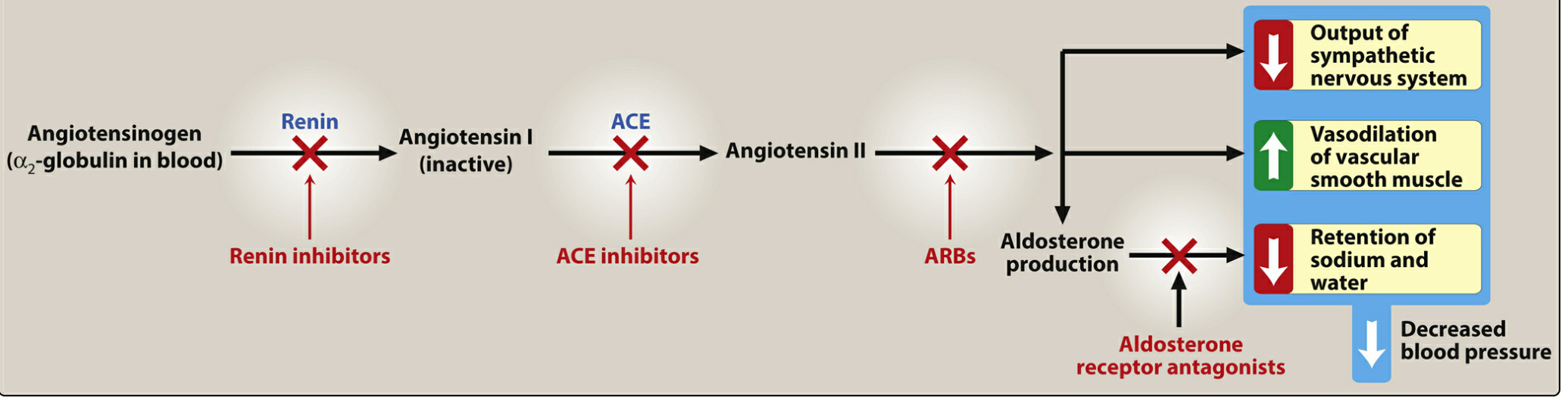
First-Line Drug Classes and the Renin-Angiotensin System
The four main first-line drug classes:
- ACE inhibitors (ACEi) - e.g., ramipril, lisinopril, enalapril
- Angiotensin Receptor Blockers (ARBs) - e.g., losartan, valsartan, irbesartan
- Calcium Channel Blockers (CCBs) - e.g., amlodipine, nifedipine (DHP); diltiazem, verapamil (non-DHP)
- Thiazide diuretics - e.g., hydrochlorothiazide (HCTZ), chlorthalidone, indapamide
Compelling Indications - The Most Tested MCCQE Content
This is where the MCCQE loves to test. Know the preferred drug class for each condition cold:
| Condition | Preferred Drug | Avoid |
|---|
| Diabetes + microalbuminuria/proteinuria | ACEi or ARB (renoprotective, reduces albuminuria) | - |
| CKD with proteinuria | ACEi or ARB | NSAIDs |
| Post-MI / CAD | Beta-blocker + ACEi | - |
| Heart failure with reduced EF (HFrEF) | ACEi (or ARB) + beta-blocker + MRA (spironolactone) | CCBs (avoid verapamil/diltiazem) |
| Black patients | CCB or thiazide (ACEi less effective as monotherapy) | ACEi alone as monotherapy |
| Pregnancy | Methyldopa (safest, longest safety record), labetalol, nifedipine | ACEi, ARBs, aliskiren (ALL TERATOGENIC) |
| Isolated systolic HTN in elderly | Thiazide diuretic, long-acting DHP-CCB (amlodipine) | - |
| Angina | Beta-blocker, amlodipine | Direct vasodilators (cause reflex tachycardia) |
| Atrial fibrillation (rate control) | Non-DHP CCB (diltiazem/verapamil) or beta-blocker | - |
| Osteoporosis | Thiazide diuretic (reduces urinary calcium loss, maintains bone density) | - |
| BPH | Alpha-blocker (doxazosin, prazosin) - also helps BPH symptoms | - |
| Bilateral renal artery stenosis | AVOID ACEi/ARBs (will cause acute kidney injury) | ACEi, ARB |
| Hyperkalemia or Cr rise >30% with ACEi | Switch to CCB or thiazide | ACEi, ARB |
⚠️ IMG trap: ACEi and ARBs are contraindicated in pregnancy (cause fetal renal agenesis, oligohydramnios, skull defects). The MCCQE will test this. Methyldopa is safe.
⚠️ IMG trap: Never combine ACEi + ARB (dual RAAS blockade) - increases risk of acute kidney injury and hyperkalemia without added benefit.
Key Drug Side Effects to Know
| Drug Class | Classic Side Effect | Mechanism |
|---|
| ACEi | Dry cough (in up to 10%, more in women), angioedema | Bradykinin accumulation |
| ARB | Less cough than ACEi, still risk of angioedema | Block AT1 receptor |
| Thiazide | Hyponatremia, hypokalemia, hyperuricemia (gout), hyperglycemia, hypercalcemia | Multiple |
| Loop diuretics | Hypokalemia, hyponatremia, ototoxicity, hyperuricemia | - |
| Beta-blockers | Bradycardia, bronchospasm (avoid in asthma), sexual dysfunction, mask hypoglycemia symptoms | - |
| Non-DHP CCB (diltiazem/verapamil) | Bradycardia, AV block, constipation, negative inotropy | - |
| DHP CCB (amlodipine) | Peripheral edema, flushing, reflex tachycardia | Peripheral vasodilation |
| Spironolactone (MRA) | Gynecomastia, hyperkalemia, menstrual irregularities | Anti-androgen effect |
| Hydralazine | Reflex tachycardia, lupus-like syndrome (high doses), headache | Direct vasodilation |
| Clonidine | Rebound hypertension on abrupt withdrawal, sedation, dry mouth | Central alpha-2 agonist |
| Methyldopa | Sedation, positive Coombs test, hemolytic anemia | Central alpha-2 agonist |
Resistant Hypertension
- Defined as BP above goal on 3 optimally dosed drugs including a diuretic
- Common causes: poor adherence (most common), OSA, excess alcohol/sodium, obesity, secondary causes (especially primary aldosteronism), medications (NSAIDs, stimulants)
- Add spironolactone (MRA) as 4th agent if no contraindication
- Refer to nephrology
PART 6: HYPERTENSIVE URGENCY vs EMERGENCY
This is extremely high-yield for the MCCQE - tested repeatedly.
| Feature | Urgency | Emergency |
|---|
| BP | SBP ≥180 or DBP ≥120 | SBP ≥180 or DBP ≥120 |
| Target organ damage | ABSENT | PRESENT |
| Symptoms | Headache, anxiety, nausea (non-specific) | Confusion, chest pain, dyspnea, visual loss, focal neuro deficits, oliguria |
| Treatment setting | Outpatient (oral) | ICU/hospital (IV) |
| Route | Oral antihypertensives | IV antihypertensives |
| Goal of BP reduction | Lower gradually over 24-48h | Reduce MAP by no more than 25% in the first hour, then cautiously over 24-48h |
Why not lower BP too fast? Organs adapt to high BP; rapid reduction causes ischemia (coronary, cerebral, renal autoregulation is reset).
Target Organ Damage in Hypertensive Emergency
- Brain: Hypertensive encephalopathy, acute ischemic stroke, hemorrhagic stroke, subarachnoid hemorrhage
- Heart: Acute MI, acute LV failure, pulmonary edema, aortic dissection
- Kidneys: Acute hypertensive nephropathy, hematuria, oliguria
- Eyes: Papilledema (Grade IV retinopathy), retinal hemorrhage
IV Drugs for Hypertensive Emergency
| Drug | Best For |
|---|
| Labetalol (alpha + beta blocker) | Most emergencies; aortic dissection, pregnancy |
| Nicardipine (IV DHP-CCB) | Most emergencies; stroke |
| Clevidipine (IV DHP-CCB) | Perioperative, cardiac surgery |
| Esmolol (short-acting beta-blocker) | Aortic dissection, perioperative |
| Hydralazine (IV) | Hypertension in pregnancy, post-partum |
| Nitroprusside (nitric oxide vasodilator) | Severe emergencies; caution: cyanide toxicity with prolonged use |
| Nitroglycerin (nitric oxide vasodilator) | Acute coronary syndrome, pulmonary edema |
| Phentolamine (alpha-blocker) | Pheochromocytoma crisis, cocaine-induced HTN |
| Fenoldopam (dopamine agonist) | Preserves renal function; useful in renal impairment |
🇨🇦 Specific emergency scenarios:
- Aortic dissection: Lower HR and BP rapidly - use labetalol or esmolol + nitroprusside. Target SBP <120 within 20 min.
- Ischemic stroke: Only treat BP if >185/110 AND thrombolysis is planned (don't lower BP in ischemic stroke otherwise - it worsens penumbra ischemia)
- Hemorrhagic stroke: Lower SBP to <140 mmHg rapidly
- Acute MI/ACS: Nitroglycerin + beta-blocker; avoid hydralazine (reflex tachycardia)
- Pheo crisis: Phentolamine first (alpha-block) THEN add beta-blocker. Never give beta-blocker first (causes unopposed alpha stimulation = BP crisis)
PART 7: HYPERTENSION IN SPECIAL POPULATIONS
Hypertension in Pregnancy
(Source: Braunwald's Heart Disease 15th Edition / ACOG Classification)
| Type | Timing | Key Feature |
|---|
| Chronic HTN | Present before pregnancy OR before 20 weeks | Pre-existing |
| Gestational HTN | New onset after 20 weeks, NO proteinuria or end-organ damage | Resolves postpartum |
| Preeclampsia | After 20 weeks: HTN + proteinuria (>0.3g/24h or dipstick 2+) OR end-organ damage | See below |
| Eclampsia | Preeclampsia + seizures | Medical emergency |
| HELLP syndrome | Hemolysis + Elevated Liver enzymes + Low Platelets | Variant of severe preeclampsia |
| Chronic HTN + superimposed preeclampsia | Chronic HTN + new-onset proteinuria/end-organ damage | Highest risk |
Preeclampsia severe features (any one = severe preeclampsia):
- SBP ≥160 or DBP ≥110 on 2 readings ≥4h apart
- Platelets <100 × 10⁹/L
- Serum creatinine >1.1 mg/dL or doubling of baseline
- Liver enzymes ≥2x upper limit of normal + severe RUQ/epigastric pain
- Pulmonary edema
- New severe headache unresponsive to analgesics
- Visual disturbances
Management of HTN in Pregnancy:
- Mild-moderate HTN (140-159/90-109): methyldopa (safest), labetalol, nifedipine
- Severe HTN (≥160/110): IV labetalol or hydralazine; oral nifedipine (short-acting)
- Seizure prophylaxis/treatment: IV magnesium sulfate (in preeclampsia with severe features and eclampsia)
- Definitive treatment of preeclampsia: delivery (at ≥37 weeks for non-severe; earlier if severe or fetal compromise)
- AVOID: ACEi, ARBs (teratogenic), aliskiren
Hypertension in Children
- Suspect secondary causes first (renovascular disease is most common in children)
- Workup: BMP, lipid panel, urinalysis, renal Doppler USS, echo
- 4-limb BPs to exclude coarctation
Hypertension in Elderly (≥65 years)
- Isolated systolic hypertension is most common type
- Start low, go slow with medications
- Fall risk with aggressive treatment - target <140 systolic is reasonable for frail elderly
- Thiazides and long-acting CCBs (amlodipine) preferred
- Monitor for orthostatic hypotension
PART 8: PSYCHOSOCIAL & ADHERENCE (MCC Objective)
The MCCQE will test the "collaborative" and "communicator" CanMEDS roles here:
- Discuss lifelong medication reality with patients - address concerns about side effects, cost
- Cost: Many antihypertensives are generic and low cost, but ARBs and newer agents can be expensive. Thiazides and older ACEi (ramipril, lisinopril) are inexpensive.
- Adherence barriers: Multiple pills per day, side effects (cough from ACEi is common reason patients stop), cost, perceived lack of symptoms ("I feel fine")
- Consider once-daily dosing agents for better adherence
- Consider fixed-dose combination pills if >1 drug needed
- Regular follow-up (every 1-3 months until controlled, then every 6-12 months)
- Home BP monitoring improves adherence and provides better data
PART 9: WHEN TO REFER
| Specialist | Reason |
|---|
| Nephrology | CKD, resistant hypertension, suspected renal parenchymal/renovascular disease |
| Endocrinology | Suspected pheochromocytoma, Cushing's, primary aldosteronism |
| Cardiology | Suspected aortic coarctation, HF, significant LVH, aortic dissection |
| High-risk obstetrics (MFM) | Hypertension in pregnancy, especially preeclampsia/eclampsia |
| Pediatrics/Pediatric nephrology | Hypertension in children |
| Sleep medicine | OSA workup |
QUICK-REFERENCE SUMMARY TABLE
| Scenario | Key Answer |
|---|
| BP threshold for diagnosis in adults | ≥130/80 (Stage 1) on ≥2 readings, ≥2 occasions |
| Most common cause of secondary HTN | Obstructive sleep apnea |
| Most common surgically correctable cause | Primary aldosteronism |
| Triad of pheochromocytoma | Headache + Sweating + Palpitations |
| Best test for pheochromocytoma | Plasma or 24h urine metanephrines |
| First-line drug in CKD + proteinuria | ACEi or ARB |
| First-line drug in Black patients | CCB or thiazide (not ACEi monotherapy) |
| Safest antihypertensive in pregnancy | Methyldopa |
| Drugs contraindicated in pregnancy | ACEi, ARBs, aliskiren |
| Hypertensive emergency definition | BP ≥180/120 + target organ damage |
| Goal BP reduction in emergency | No more than 25% of MAP in first hour |
| Drug for HTN in pheo crisis | Phentolamine (never beta-blocker first) |
| Seizure prevention in preeclampsia | Magnesium sulfate |
| Definitive treatment of preeclampsia | Delivery |
| ACEi side effects | Dry cough (bradykinin), angioedema, hyperkalemia |
| Why avoid ACEi in bilateral RAS | ACEi dilates efferent arteriole → acute renal failure |
| Resistant HTN: add as 4th agent | Spironolactone (MRA) |
| Ischemic stroke: treat BP when? | Only if BP >185/110 AND giving thrombolytics |
PRACTICE MCQs (MCCQE Style)
Q1. A 34-year-old woman presents with a 3-month history of headaches and BP of 168/96. She has no family history of hypertension. Labs show K 3.0 mEq/L (not on diuretics), Na 143. What is the most appropriate next investigation?
- A) 24h urine catecholamines
- B) Aldosterone:renin ratio
- C) Renal Doppler ultrasound
- D) Overnight dexamethasone suppression test
- E) Polysomnography
(Answer: B - spontaneous hypokalemia without diuretics strongly suggests primary aldosteronism; ARR is first-line screening test)
Q2. A 28-year-old pregnant woman at 32 weeks presents with BP 162/108, headache, and visual blurring. Urinalysis shows 3+ protein. Platelets are 88 × 10⁹/L. What is the first medication to give?
- A) IV labetalol
- B) Oral methyldopa
- C) IV magnesium sulfate
- D) Nifedipine
- E) Furosemide
(Answer: C - she has severe preeclampsia with platelets <100 × 10⁹/L, severe BP, symptoms. Magnesium sulfate to prevent seizures is the FIRST priority. Then IV labetalol/hydralazine to lower BP.)
Q3. A 62-year-old man with type 2 diabetes and BP 148/92 is started on medication. Three weeks later he has a new persistent dry cough. Which drug was most likely started?
- A) Amlodipine
- B) Atenolol
- C) Hydrochlorothiazide
- D) Lisinopril
- E) Losartan
(Answer: D - ACEi cause dry cough due to bradykinin accumulation. Switch to ARB like losartan, which does not cause cough.)
Q4. A patient with hypertension is found to have BP 210/126 with papilledema on fundoscopy. BP should be reduced by what amount within the first hour?
- A) Normalize to <120/80 immediately
- B) Lower by 50% within 30 minutes
- C) Lower MAP by no more than 25%
- D) Lower to 160/100 within 5 minutes
- E) No treatment needed until cause is found
(Answer: C - the rule for hypertensive emergency is ≤25% MAP reduction in the first hour. Rapid normalization causes ischemia in autoregulation-adapted organs.)
Q5. A 55-year-old man has BP 170/95 despite being on ramipril 10mg and amlodipine 10mg. He snores heavily and his wife reports witnessed apneas. What is the most likely diagnosis and next step?
- A) Add spironolactone - resistant hypertension
- B) Arrange polysomnography - obstructive sleep apnea
- C) Add losartan - inadequate RAAS blockade
- D) Refer for renal artery imaging
- E) Start hydralazine
(Answer: B - clinical picture strongly suggests OSA, the most common cause of secondary/resistant hypertension. Treat the underlying cause first.)
That covers every enabling objective from the MCC document you pasted. Ask me to go deeper on any subsection, give more MCQs, or move to another topic!