
from Guyton and Hall Textbook of Medical Physiology (4th South Asia Edition), 3 mark short note on cushing's syndrome
Reading File
Finding Sources
Finding Sources
Finding Sources
Finding Sources
Reading File
Reading File
Loading Image
I now have all the content needed from Guyton and Hall. Here is the 3-mark short note:
Cushing Syndrome
(Guyton and Hall Textbook of Medical Physiology, p. 958)
Definition: Cushing syndrome is a complex cascade of hormone effects resulting from hypersecretion by the adrenal cortex, predominantly excess cortisol (hypercortisolism).
Causes
- ACTH-secreting pituitary adenoma - the most common cause; causes bilateral adrenal hyperplasia and excess cortisol. When specifically due to a pituitary adenoma, it is termed Cushing disease.
- Hypothalamic dysfunction - excess CRH drives excess ACTH release.
- Ectopic ACTH secretion - by a non-pituitary tumor (e.g., lung carcinoma).
- Primary adrenal adenoma - accounts for about 20-25% of cases; associated with low/undetectable ACTH due to cortisol feedback inhibition.
- Iatrogenic - prolonged exogenous glucocorticoid therapy (e.g., for rheumatoid arthritis).
Clinical Features
Fat redistribution:
- Mobilization of fat from the lower body with deposition in the thoracic and upper abdominal regions - "buffalo hump" torso
- Edematous, rounded "moon face"
- Acne and hirsutism from androgenic effects
Metabolic effects:
- Hyperglycemia (blood glucose can reach ~200 mg/dL after meals) due to enhanced gluconeogenesis and decreased glucose utilization
- Hypertension in ~80% of patients (mineralocorticoid effects of cortisol)
Protein catabolism:
- Severe muscle weakness from muscle protein loss
- Immunosuppression from reduced lymphoid tissue protein synthesis, increasing infection susceptibility
- Subcutaneous tissue tearing leading to large purplish striae
- Osteoporosis from diminished bone protein deposition
Diagnosis
The dexamethasone suppression test is the first step in differential diagnosis:
- Low-dose dexamethasone does not suppress ACTH in pituitary adenoma (ACTH-dependent) cases
- High-dose dexamethasone eventually suppresses ACTH in Cushing disease, but not in ectopic ACTH-secreting tumors
- ACTH-independent (primary adrenal) Cushing syndrome shows low/undetectable ACTH levels
Treatment
- Surgical removal of an adrenal tumor if it is the cause
- Pituitary surgery or radiation for ACTH-secreting pituitary adenoma
- Steroidogenesis inhibitors: metyrapone, ketoconazole, aminoglutethimide
- ACTH secretion inhibitors: serotonin antagonists, GABA-transaminase inhibitors
- Bilateral partial or total adrenalectomy (last resort), followed by steroid replacement
Figure 78.11 from Guyton and Hall shows the characteristic "moon face" in Cushing syndrome (left) and resolution after subtotal adrenalectomy (right):
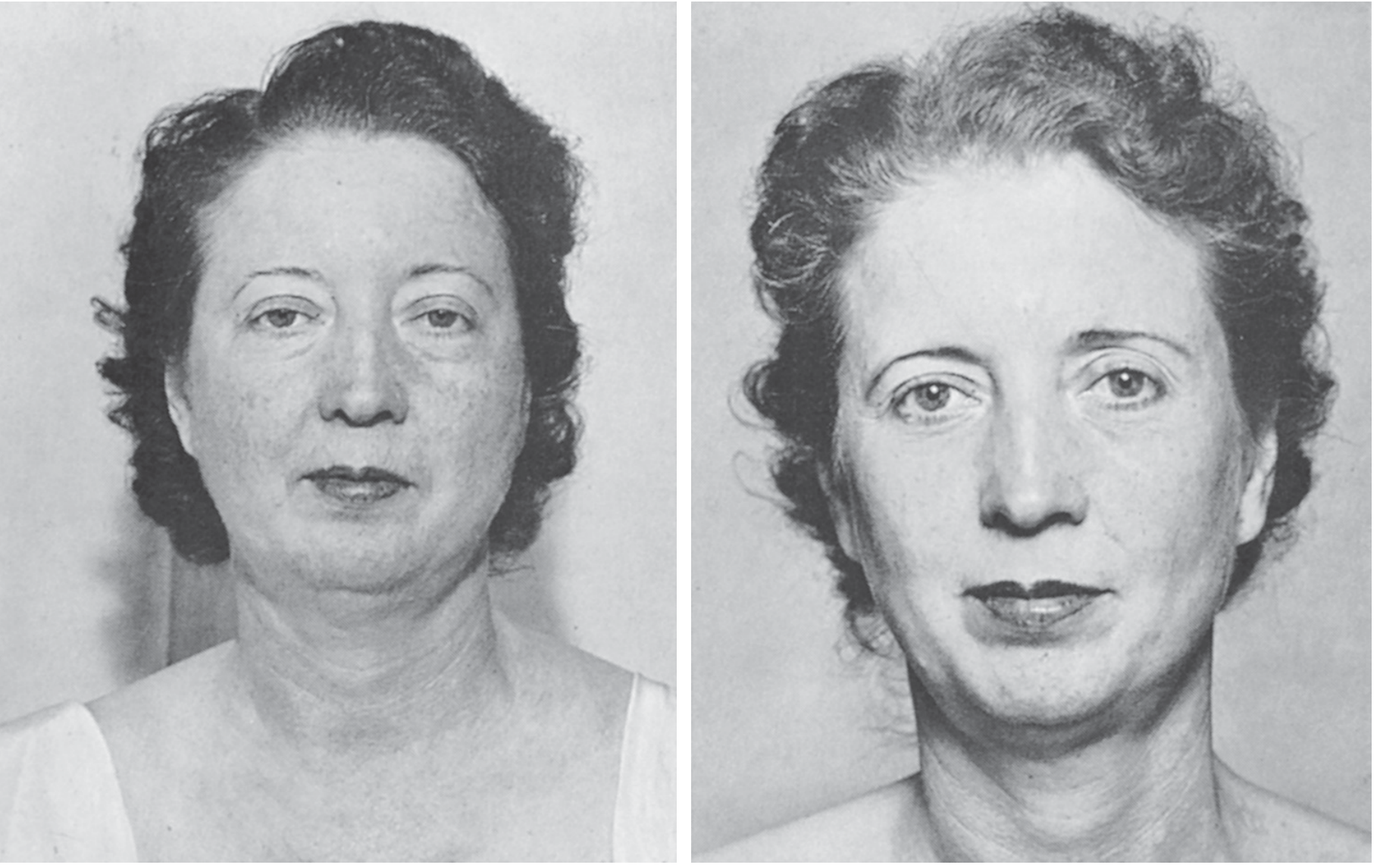
Source: Guyton and Hall Textbook of Medical Physiology, 4th South Asia Edition - Chapter 78 (Adrenocortical Hormones), pp. 957-958
This is a shared conversation. Sign in to Orris to start your own chat.