

17841312400123028285637401200199.jpg
What is this on my skin?
analyse_media
Reading File
Finding Sources
Searching PubMed
"fixed drug eruption" diagnosis clinical features
Reading File
Reading File
Reading File
Loading Image
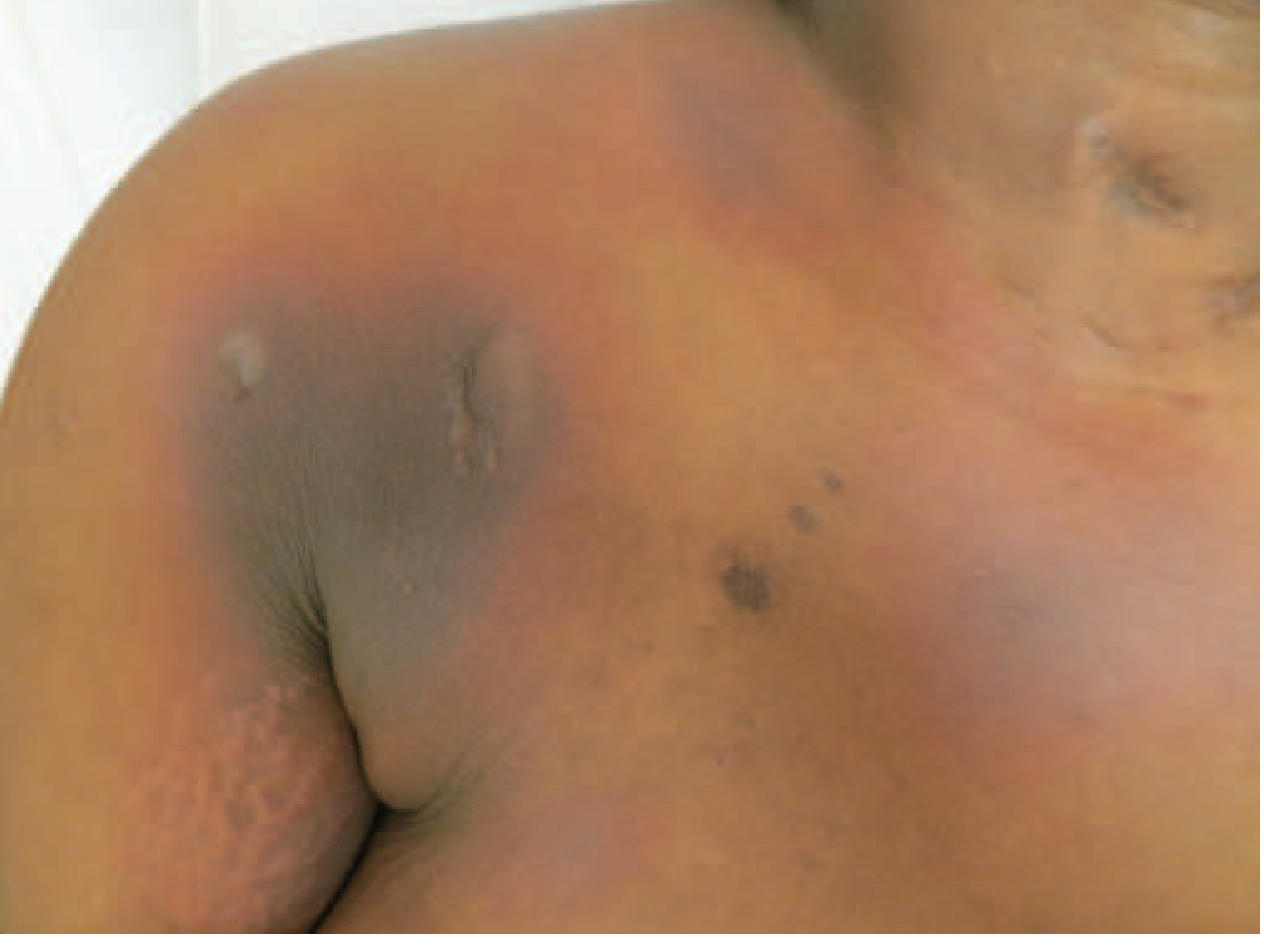
Based on the image analysis and textbook sources, here is what this lesion most likely is:
Most Likely: Fixed Drug Eruption (FDE)
Your lesion shows the classic features of a fixed drug eruption - one of the most recognizable drug-related skin reactions:
- Well-demarcated, round-to-oval shape with sharp borders
- Dusky violaceous (purplish-red) to red-brown color with a slightly darker center
- Fine surface scaling suggesting mild epidermal involvement
- Approximately 2-4 cm on what appears to be a limb
This matches almost exactly what Harrison's Principles of Internal Medicine (2025) describes: "sharply demarcated, dull red-to-brown lesions, sometimes with central dusky violaceous erythema... hyperpigmentation during healing is characteristic."
Here is the textbook reference image for comparison:
What is a Fixed Drug Eruption?
It is a skin reaction to a medication that:
- Appears in the same spot every time you take the offending drug (hence "fixed")
- Causes a burning sensation at the site
- Leaves dark post-inflammatory pigmentation as it resolves
- Commonly triggered by: NSAIDs (ibuprofen, naproxen), paracetamol/acetaminophen, sulfonamide antibiotics, tetracyclines, fluconazole, pseudoephedrine (in cold medicines), and barbiturates
Other possibilities to consider
| Condition | How it fits / doesn't fit |
|---|---|
| Resolving bruise (hematoma) | Similar color, but bruises typically have irregular borders and follow trauma |
| Erythema multiforme | Target-lesion appearance is similar, but EM is usually multiple widespread lesions |
| Tinea corporis (ringworm) | Usually has central clearing and an active scaly border ring |
Key questions to ask yourself
- Did you recently take any medication - even over-the-counter painkillers, cold & flu tablets, or antibiotics?
- Have you had a similar spot in this exact same location before? (This is the hallmark of FDE)
- Is it itchy or burning? (FDE often causes a burning sensation)
What to do
- Do not self-diagnose - see a dermatologist or your GP for proper evaluation, especially if the lesion is spreading, painful, blistering, or you develop fever.
- If you suspect a medication trigger, note what you have taken in the past 1-2 weeks and bring that list to your appointment.
- A skin biopsy can confirm the diagnosis if needed.
Disclaimer: This is an educational assessment based on a photograph and cannot replace an in-person clinical examination. Please consult a healthcare professional for a definitive diagnosis and treatment.
Yes I am taking argine ed as medicine..
"Argine ED" likely refers to an L-arginine supplement used for erectile dysfunction or cardiovascular support. L-arginine is an amino acid that can occasionally cause skin reactions.
Searching sources...
Searching PubMed
L-arginine adverse effects skin reaction
Searching the Web
Argine ED L-arginine supplement skin rash fixed drug eruption side effects
Finding Sources
This is very helpful context. Here is what the evidence says:
L-Arginine (Argine ED) and Your Skin Lesion
Yes, L-arginine supplements can cause skin reactions, and your lesion is consistent with a drug-related skin eruption from this medication.
How L-Arginine Can Cause This
L-arginine supplements (including ED formulations) are known to cause:
- Hives, itching, and skin rash - listed as recognized side effects by Drugs.com and Cleveland Clinic
- Allergic hypersensitivity reactions - ranging from mild rash to serious systemic reactions
- Skin discoloration - blistering, burning, and discoloration of skin are listed reactions
The dusky, violaceous, well-demarcated round patch you have fits the pattern of a fixed drug eruption (FDE) - where a specific drug triggers a reaction that appears in the same spot every time you take it.
What You Should Do
| Action | Details |
|---|---|
| Stop taking Argine ED | At least temporarily, until you can speak to a doctor |
| Note when the lesion appeared | Did it appear or worsen after taking the supplement? |
| See a doctor/dermatologist | They can confirm the diagnosis and advise whether you can restart the supplement |
| Do not re-challenge | Do not take the supplement again to "test" if it recurs - this can make the reaction worse |
One Important Warning
L-arginine can also worsen herpes virus outbreaks (cold sores, genital herpes) since the virus uses arginine to replicate. If there is any possibility of a herpes-related lesion in that area, this is another reason to see a doctor promptly.
When to seek urgent care
Go to an emergency room immediately if you develop:
- Difficulty breathing or chest tightness
- Swelling of the face, lips, or throat
- Rapid heartbeat or dizziness
- The lesion starts blistering or spreading rapidly
Bottom line: Your skin lesion is very likely a reaction to Argine ED. Stop the supplement and see a dermatologist or GP to confirm. Once identified and the drug stopped, FDE lesions typically fade over 1-2 weeks, though some dark pigmentation can linger for months.
Disclaimer: This is educational information only and not a substitute for in-person medical evaluation. Please consult a healthcare professional.
This is a shared conversation. Sign in to Orris to start your own chat.