
difference between central and lateral incisors
Reading File
Finding Sources
Finding Sources
Reading File
Reading File
Finding Sources
Reading File
Reading File
Loading Image
Loading Image
Searching the Web
central incisor vs lateral incisor differences morphology size shape
Here is a comprehensive comparison of central and lateral incisors:
Central vs. Lateral Incisors
Both are "front teeth" with a chisel-shaped crown and a single root that function to cut food. They sit in the anterior part of each dental arch — the central incisors are the two teeth immediately on either side of the midline, and the lateral incisors are the next teeth outward from them.
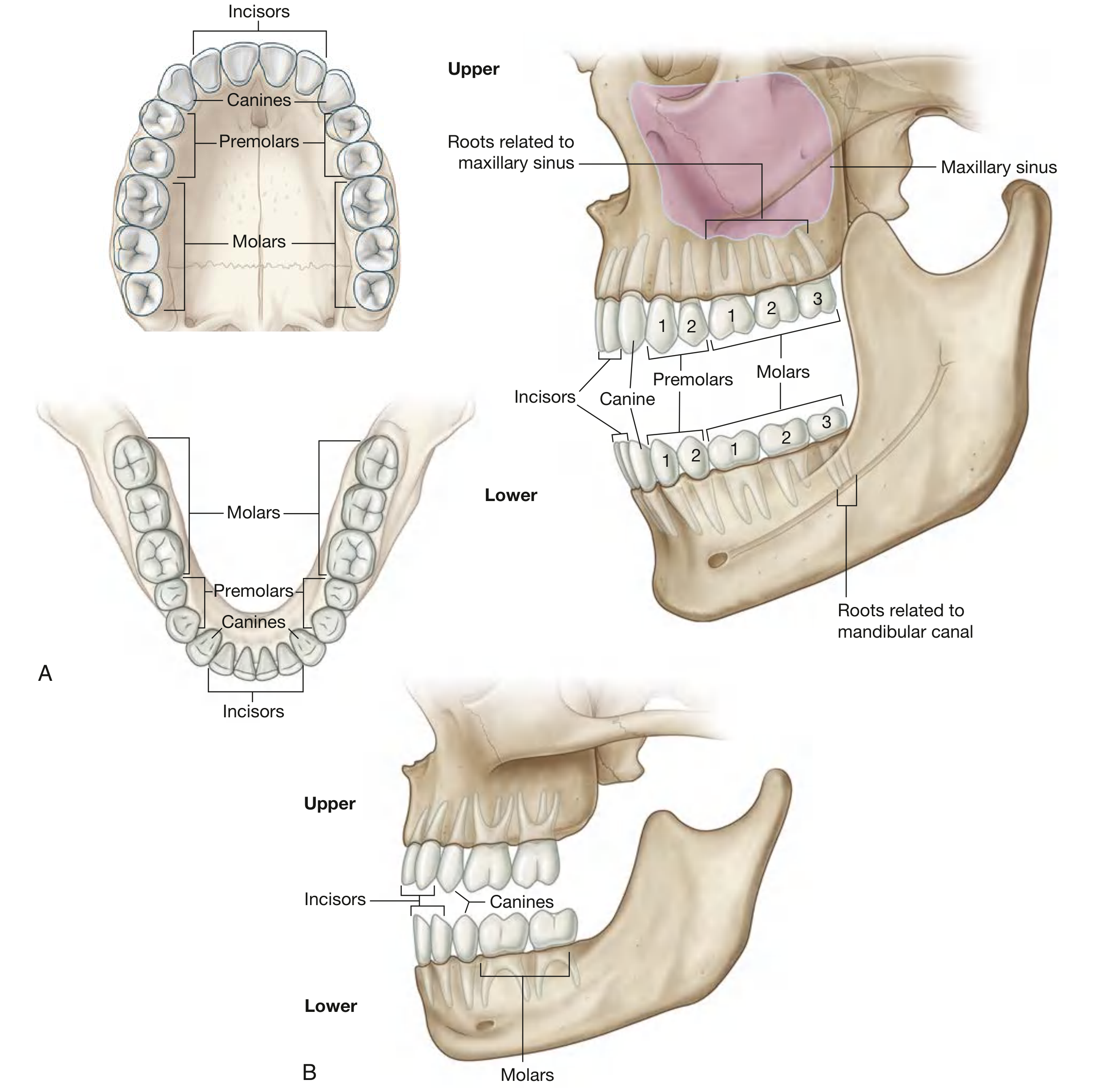
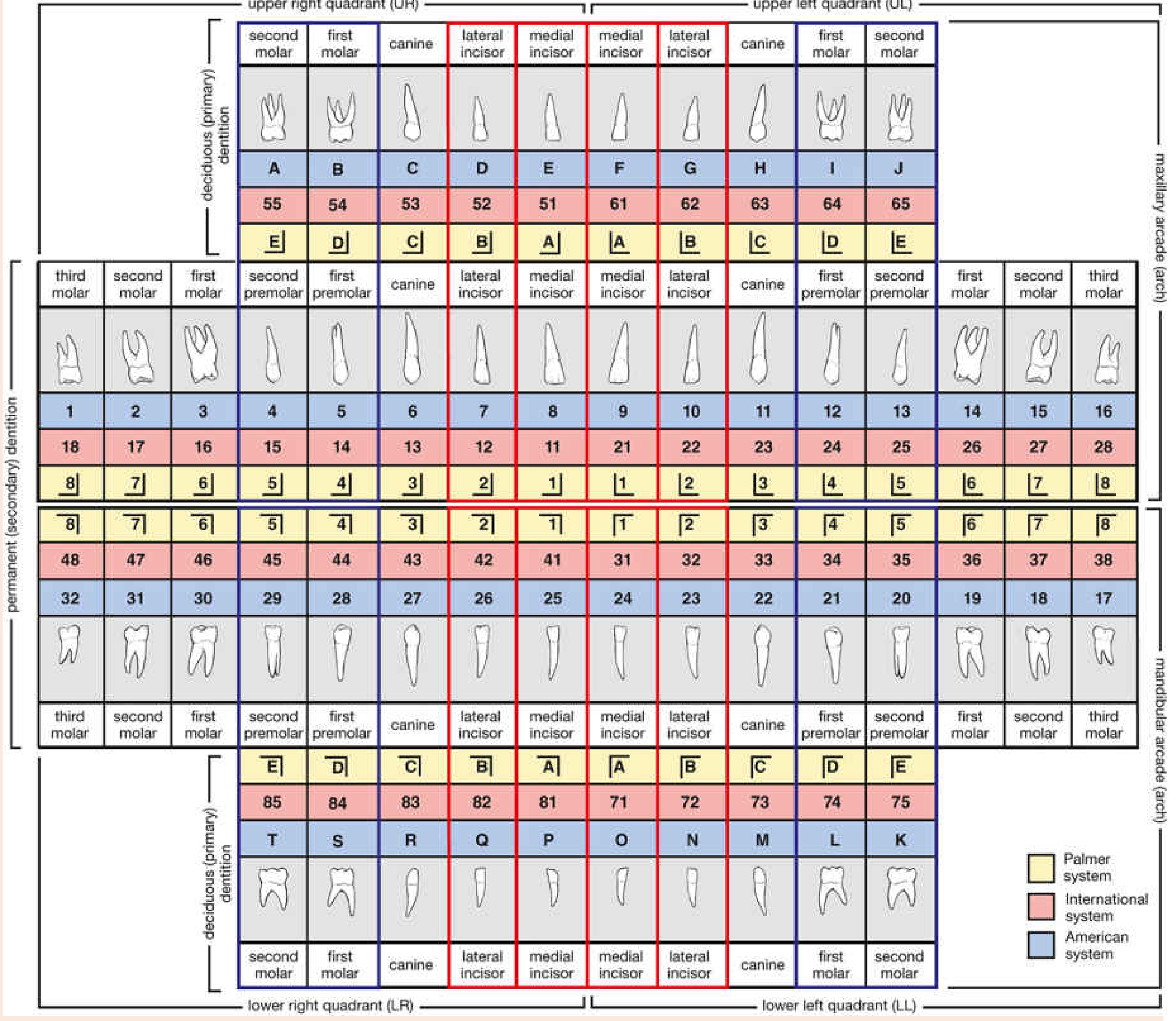
Position & Numbering
| Feature | Central Incisor | Lateral Incisor |
|---|---|---|
| Position from midline | 1st (closest) | 2nd |
| Universal (US) numbering – maxillary | #8 (right), #9 (left) | #7 (right), #10 (left) |
| Universal (US) numbering – mandibular | #24 (left), #25 (right) | #23 (left), #26 (right) |
Eruption Times
| Central Incisor | Lateral Incisor | |
|---|---|---|
| Deciduous | ~6 months (first tooth to erupt; usually mandibular) | ~8 months |
| Permanent | Age 7–8 | Age 8–9 |
— Histology: A Text and Atlas (Wheater's), Folder 16.2
Size & Morphology (Maxillary / Upper)
The maxillary central incisor is the largest of the incisors:
| Dimension | Maxillary Central | Maxillary Lateral |
|---|---|---|
| Crown length | ~11.2 mm | ~9.8 mm |
| Crown width (mesiodistal) | ~8.6 mm | ~6.6 mm |
| Root length | ~13.0 mm | ~13.4 mm |
| Overall length | ~23.6 mm | ~22.5 mm |
The maxillary lateral incisor crown is narrower and shorter than the central, with more rounded angles and a more pronounced curvature on the distal margin. Its lingual surface has a more prominent cingulum and deeper fossa.
Size & Morphology (Mandibular / Lower)
The mandibular arch is the exception: here the lateral is slightly larger than the central in all dimensions.
| Dimension | Mandibular Central | Mandibular Lateral |
|---|---|---|
| Crown length | ~8.8 mm | ~9.4 mm |
| Crown width (mesiodistal) | ~5.3 mm (narrowest adult crown) | ~5.7 mm |
| Root length | ~12.6 mm | ~13.5 mm |
Key Morphological Differences
Maxillary central incisor:
- Largest and most prominent incisor; roughly rectangular crown
- Relatively flat labial surface
- Mesioincisal angle is nearly a right angle; distoincisal angle is more rounded
- Symmetrical crown outline from the labial view
Maxillary lateral incisor:
- Smaller and more rounded crown than the central
- More variable in form — most subject to developmental anomalies (e.g., peg-shaped "peg lateral," dens invaginatus)
- Deeper lingual fossa; cingulum more prominent
- Both incisal angles more rounded than the central's
Mandibular central incisor:
- Narrowest crown in the entire mouth
- Nearly perfectly symmetrical from the labial view (mesial = distal); this bilateral symmetry is a defining trait
- Very straight root
Mandibular lateral incisor:
- Slightly wider and longer than the mandibular central
- Crown is asymmetrical — the distoincisal angle is more rounded and the crown tip tilts distally
- Root twists slightly distally
Clinical Notes
- The lower central incisor is the first permanent tooth to erupt (~age 6–7), often before the maxillary centrals.
- Diastema: as upper canines erupt, pressure can close a central incisor diastema < 3 mm spontaneously. — Cummings Otolaryngology
- The maxillary lateral is the most likely tooth to be congenitally missing (after third molars) and the most prone to morphological anomalies such as peg shape, gemination, or dens invaginatus. — The Developing Human
- When documenting dental trauma, tooth #8 = right maxillary central incisor; tooth #7 = right maxillary lateral incisor.
Sources: Gray's Anatomy for Students; Histology: A Text and Atlas (Wheater's); Rosen's Emergency Medicine; The Developing Human: Clinically Oriented Embryology
.
Your credits are exhausted. Your daily credits reset tomorrow, or you can purchase a top-up for more.
This is a shared conversation. Sign in to Orris to start your own chat.