
Therapeutics 2 : synopsis 1. Basic principles of cancer chemotherapeutic agents 2. General introduction of cancer chemotherapeutic agents ( classification, basic moa , indications and common adrs )
Reading File
Finding Sources
Finding Sources
The key sources are Katzung Chapter 54 and Goodman & Gilman. Let me read the main chemotherapy chapter from Katzung and the principles section from Goodman & Gilman in parallel.
Reading File
Finding Sources
Reading File
Reading File
Excellent data retrieved. I now have the full classification, drug tables, principles, and mechanisms. Let me read the next block for antimetabolites, natural products, and targeted agents.
Reading File
Reading File
I now have comprehensive data from Katzung covering all major drug classes. Let me compile the complete synopsis.---
Therapeutics 2 — Cancer Chemotherapy Synopsis
PART 1: BASIC PRINCIPLES OF CANCER CHEMOTHERAPY
1.1 The Nature of Cancer
Cancer is a disease of defective control mechanisms governing cell survival, proliferation, and differentiation. Key features include:
- Expression of abnormal cell-surface antigens (often fetal-type)
- Chromosomal abnormalities: translocations, fusions, gene amplifications
- Tumor stem cells: clonogenic cells capable of metastasis
- Genetic instability → progressive selection of drug-resistant subclones
- Resistance may develop to radiotherapy, cytotoxic chemo, targeted therapy, and immunotherapy
— Katzung's Basic and Clinical Pharmacology, 16th Edition, p. 1475
1.2 Cell Cycle & Drug Classification
The cell cycle is central to understanding chemotherapy. Drugs are classified by their interaction with it:
| Cell Cycle Phase | Activity |
|---|---|
| G₀ | Resting / quiescent phase |
| G₁ | RNA & protein synthesis |
| S | DNA synthesis |
| G₂ | Pre-mitotic (tubulin synthesis) |
| M | Mitosis |
Two major categories:
A. Cell Cycle–Specific (CCS) Agents
Act only on cells actively traversing a specific phase. Efficacy is schedule-dependent (prolonged exposure = more cells exposed during sensitive phase).
| Phase | Drug Class | Examples |
|---|---|---|
| S phase | Antimetabolites | Methotrexate, 5-FU, Cytarabine, Gemcitabine |
| G₁–S | Topoisomerase II inhibitors | Etoposide |
| G₂–M | Topoisomerase I inhibitors | Irinotecan, Topotecan |
| M phase | Vinca alkaloids | Vincristine, Vinblastine |
| M phase | Taxanes | Paclitaxel, Docetaxel |
| G₂–M | Antitumor antibiotics | Bleomycin |
B. Cell Cycle–Nonspecific (CCNS) Agents
Kill cells regardless of cell cycle phase. Useful for slow-growing, low-growth-fraction tumors. Dose–response follows first-order kinetics (a fixed fraction of cells killed per dose).
| Class | Examples |
|---|---|
| Alkylating agents | Cyclophosphamide, Cisplatin, Melphalan |
| Antitumor antibiotics | Doxorubicin, Dactinomycin, Mitomycin |
| Nitrosoureas | Carmustine (BCNU), Lomustine (CCNU) |
1.3 Log-Kill Hypothesis & Tumor Burden
- Chemotherapy kills a fixed proportion (log fraction) of tumor cells per cycle, not a fixed number
- A drug that kills 99.9% (3-log kill) leaves 10⁵ cells alive in a 10⁸-cell tumor
- Implication: Multiple cycles are required to reduce tumor burden to zero or to levels controllable by the immune system
- Gompertzian growth: Tumors grow rapidly when small; growth slows as size increases. Small tumors respond better to chemo (higher growth fraction)
1.4 Principles of Combination Chemotherapy (Rationale)
Most regimens use drug combinations. The principles:
- Each drug should have activity as a single agent against the tumor
- Non-overlapping toxicities — allows full dosing of each agent
- Different mechanisms of action — additive/synergistic kill
- Different resistance mechanisms — minimizes cross-resistance
- Optimal scheduling — cell cycle–specific agents given after CCNS debulking
Classic examples: CHOP (lymphoma), FOLFOX (colorectal), ABVD (Hodgkin), CMF (breast)
1.5 Drug Resistance
Two types:
- Primary (intrinsic): Pre-existing resistant clones selected during treatment
- Acquired: Develops during therapy via mutations or epigenetic change
Mechanisms of resistance:
| Mechanism | Example |
|---|---|
| Decreased drug uptake | Reduced folate carrier loss (methotrexate) |
| Increased drug efflux | P-glycoprotein overexpression (MDR1) |
| Altered drug target | Bcr-Abl mutations (imatinib resistance) |
| Increased DNA repair | Platinum resistance |
| Altered metabolism | Dihydropyrimidine dehydrogenase (5-FU) |
| Amplified target | DHFR amplification (methotrexate) |
1.6 Goals of Therapy
| Goal | Definition |
|---|---|
| Cure | Eradication of all tumor cells (e.g., leukemia, testicular cancer) |
| Control | Limit tumor growth, extend survival |
| Palliation | Relieve symptoms when cure is not possible |
Types by timing:
- Adjuvant chemotherapy: After surgery/radiation, to eliminate micrometastases
- Neoadjuvant chemotherapy: Before surgery, to shrink tumor (improve resectability)
- Induction chemotherapy: Intensive initial therapy to achieve remission
1.7 General Principles of Toxicity
Most chemotherapy targets rapidly dividing cells, causing predictable toxicities in:
| Tissue | Manifestation |
|---|---|
| Bone marrow | Myelosuppression → infections, bleeding, anemia |
| GI mucosa | Mucositis, diarrhea, nausea/vomiting |
| Hair follicles | Alopecia |
| Gonads | Infertility, amenorrhea |
| General | Secondary malignancy (esp. AML with alkylating agents) |
PART 2: CLASSIFICATION OF CANCER CHEMOTHERAPEUTIC AGENTS
CLASS 1: ALKYLATING AGENTS
Mechanism of Action:
Form covalent bonds with DNA by alkylating nucleophilic sites (primarily the N-7 position of guanine). This results in:
- Interstrand and intrastrand DNA cross-links
- Inhibition of DNA replication and transcription
- Cell cycle–nonspecific (though maximal effect in late G₁ and S phase)
1a. Nitrogen Mustards
| Drug | Indications | Key ADRs |
|---|---|---|
| Mechlorethamine | Hodgkin lymphoma, non-Hodgkin lymphoma | N&V, bone marrow suppression, vesicant |
| Cyclophosphamide | Breast cancer, ovarian cancer, NHL, CLL, neuroblastoma, Wilms tumor | Alopecia, hemorrhagic cystitis (acrolein metabolite → prevent with hydration/MESNA), myelosuppression |
| Chlorambucil | CLL, non-Hodgkin lymphoma | Myelosuppression (slow onset) |
| Melphalan | Multiple myeloma, ovarian cancer | Myelosuppression, N&V |
| Bendamustine | CLL, indolent NHL | Myelosuppression, N&V |
Cyclophosphamide note: Prodrug — activated in liver by CYP450 to 4-hydroxycyclophosphamide → aldophosphamide → phosphoramide mustard (active) + acrolein (bladder toxin).
1b. Nitrosoureas
| Drug | Indications | Key ADRs |
|---|---|---|
| Carmustine (BCNU) | Brain tumors, Hodgkin lymphoma, melanoma | Delayed myelosuppression (4–6 wks), pulmonary fibrosis |
| Lomustine (CCNU) | Brain tumors, Hodgkin lymphoma | Same as BCNU |
| Temozolomide | Glioblastoma, melanoma | Myelosuppression, N&V |
Key feature: Highly lipophilic → crosses blood–brain barrier → used for CNS tumors.
1c. Platinum Analogs (Platinum Coordination Complexes)
| Drug | Indications | Key ADRs |
|---|---|---|
| Cisplatin | Testicular, ovarian, bladder, lung, head & neck cancer | Nephrotoxicity, neurotoxicity, ototoxicity, N&V (highly emetogenic) |
| Carboplatin | Ovarian, lung, head & neck | Myelosuppression (dose-limiting), less nephrotoxic |
| Oxaliplatin | Colorectal cancer (FOLFOX) | Peripheral neuropathy (cold-induced dysesthesias), myelosuppression |
MOA: Form intra- and interstrand DNA cross-links at N-7 guanine; inhibit DNA replication.
1d. Other Alkylating Agents
| Drug | Indications | Notes |
|---|---|---|
| Busulfan | CML, conditioning for bone marrow transplant | Pulmonary fibrosis, hyperpigmentation, Addison-like syndrome |
| Dacarbazine (DTIC) | Melanoma, Hodgkin lymphoma | Prodrug; activated in liver |
| Thiotepa | Bladder cancer instillation, conditioning regimens | — |
CLASS 2: ANTIMETABOLITES
Mechanism: Structural analogs of normal metabolites. Interfere with nucleotide synthesis or incorporation into DNA/RNA. Cell cycle–specific (S phase).
2a. Folate Antagonists
| Drug | MOA | Indications | Key ADRs |
|---|---|---|---|
| Methotrexate (MTX) | Inhibits DHFR (dihydrofolate reductase) → ↓ THF → inhibits purine & thymidylate synthesis | ALL, NHL, osteosarcoma, choriocarcinoma, RA, psoriasis | Myelosuppression, mucositis, hepatotoxicity, renal toxicity (at high doses) |
| Pralatrexate | Same as MTX; higher affinity for DHFR | Peripheral T-cell lymphoma | Mucositis, myelosuppression |
Leucovorin rescue: Folinic acid given after high-dose MTX to rescue normal cells (preferentially taken up by normal cells).
2b. Pyrimidine Analogs
| Drug | MOA | Indications | Key ADRs |
|---|---|---|---|
| 5-Fluorouracil (5-FU) | Inhibits thymidylate synthase → ↓ TMP; also incorporated into RNA | Colorectal, breast, head & neck, gastric cancer | Myelosuppression, mucositis/diarrhea, hand-foot syndrome, DPD deficiency → severe toxicity |
| Capecitabine | Oral prodrug → converted to 5-FU in tumor tissue | Colorectal, breast cancer | Same as 5-FU + hand-foot syndrome |
| Cytarabine (Ara-C) | Incorporated into DNA → chain termination; inhibits DNA polymerase | AML, CML (blast crisis), meningeal leukemia | Myelosuppression, cerebellar toxicity (high dose), "Ara-C syndrome" |
| Gemcitabine | Incorporated into DNA → chain termination; inhibits ribonucleotide reductase | Pancreatic, NSCLC, bladder, ovarian cancer | Myelosuppression, flu-like syndrome, hemolytic-uremic syndrome |
2c. Purine Analogs
| Drug | MOA | Indications | Key ADRs |
|---|---|---|---|
| 6-Mercaptopurine (6-MP) | Inhibits purine de novo synthesis; incorporated into DNA | ALL, AML | Myelosuppression; xanthine oxidase metabolizes it → increased toxicity with allopurinol (reduce dose by 75%) |
| 6-Thioguanine (6-TG) | Same as 6-MP | AML, CML | Myelosuppression, hepatotoxicity |
| Fludarabine | Inhibits DNA polymerase α; incorporated into DNA; induces apoptosis | CLL, low-grade NHL | Immunosuppression, opportunistic infections, neurotoxicity (high dose) |
| Cladribine | Phosphorylated → triphosphate inhibits DNA polymerase α and β | Hairy cell leukemia, CLL, low-grade NHL | Transient myelosuppression, ↓ CD4/CD8 (>1 year) |
CLASS 3: NATURAL PRODUCTS
3a. Vinca Alkaloids (M phase — CCS)
MOA: Inhibit tubulin polymerization → disrupt mitotic spindle assembly → metaphase arrest → cell death.
Derived from Vinca rosea (periwinkle). Hepatically metabolized (CYP450); excreted via hepatobiliary route (dose-reduce in liver dysfunction). Potent vesicants.
| Drug | Indications | Key ADRs |
|---|---|---|
| Vincristine | ALL, Hodgkin lymphoma, Wilms tumor, neuroblastoma | Peripheral neuropathy (dose-limiting), minimal myelosuppression, SIADH, fatal if given intrathecally |
| Vinblastine | Hodgkin lymphoma, breast cancer, germ cell tumors | Myelosuppression (dose-limiting), N&V, neuropathy, vesicant |
| Vinorelbine | NSCLC, breast cancer | Myelosuppression, neuropathy |
3b. Taxanes (M phase — CCS)
MOA: Opposite to vincas — stabilize tubulin polymerization → prevent microtubule depolymerization → mitotic spindle dysfunction → cell death (arrest in G₂/M).
| Drug | Indications | Key ADRs |
|---|---|---|
| Paclitaxel | Ovarian, breast, NSCLC, Kaposi sarcoma | Myelosuppression, peripheral neuropathy, hypersensitivity (Cremophor-EL vehicle → premedicate with steroids/antihistamines), alopecia |
| Docetaxel | Breast, NSCLC, prostate, gastric cancer | Same + fluid retention, nail changes |
| Nab-paclitaxel | Pancreatic, breast, NSCLC | Neuropathy; no hypersensitivity (no Cremophor) |
| Cabazitaxel | Prostate cancer (docetaxel-resistant) | Myelosuppression, diarrhea |
3c. Topoisomerase Inhibitors
Topoisomerase II Inhibitors (Epipodophyllotoxins)
MOA: Inhibit Topoisomerase II → prevent DNA strand relegation → DNA double-strand breaks. G₁–S phase specific.
| Drug | Indications | Key ADRs |
|---|---|---|
| Etoposide (VP-16) | Testicular cancer, NSCLC, Hodgkin lymphoma, small cell lung cancer | Myelosuppression, secondary AML/MDS (with long-term use), alopecia, N&V |
| Teniposide | ALL | Myelosuppression |
Topoisomerase I Inhibitors (Camptothecins)
MOA: Inhibit Topoisomerase I → stabilize DNA–enzyme complex → single-strand DNA breaks → replication fork collision → cell death. G₂–M phase specific.
| Drug | Indications | Key ADRs |
|---|---|---|
| Irinotecan (CPT-11) | Colorectal cancer, gastric cancer | Diarrhea (early: cholinergic; late: secretory — treat with loperamide), myelosuppression |
| Topotecan | Ovarian, small cell lung cancer | Myelosuppression, diarrhea |
3d. Antitumor Antibiotics
MOA: Intercalate into DNA, generate free radicals causing strand breaks, inhibit topoisomerase II.
| Drug | MOA | Indications | Key ADRs |
|---|---|---|---|
| Doxorubicin (Adriamycin) | DNA intercalation + Topo II inhibition + free radicals | Breast, ovarian, lymphomas, sarcomas, AML | Cardiomyopathy (cumulative dose >550 mg/m²), myelosuppression, alopecia, mucositis, vesicant |
| Daunorubicin | Same as doxorubicin | AML, ALL | Cardiotoxicity, myelosuppression |
| Epirubicin | Same | Breast cancer | Less cardiotoxic than doxorubicin |
| Idarubicin | Same | AML | Myelosuppression |
| Bleomycin | O₂ free radicals → DNA single- and double-strand breaks | Hodgkin lymphoma, germ cell tumors, head & neck | Pulmonary fibrosis (dose-limiting), skin toxicity, fever/chills, minimal myelosuppression |
| Dactinomycin | DNA intercalation | Wilms tumor, rhabdomyosarcoma, gestational trophoblastic disease | Myelosuppression, mucositis, alopecia, vesicant |
| Mitomycin C | Alkylates DNA after reduction (bioreductive alkylation) | Gastric, anal, bladder cancer | Myelosuppression (delayed), hemolytic-uremic syndrome |
| Mitoxantrone | DNA intercalation + Topo II inhibition | AML, prostate cancer, MS | Myelosuppression, cardiotoxicity (less than doxorubicin) |
CLASS 4: TARGETED THERAPY
4a. Tyrosine Kinase Inhibitors (TKIs)
MOA: Inhibit specific intracellular tyrosine kinases that drive tumor cell proliferation and survival.
BCR-ABL Inhibitors (for CML / Ph+ ALL)
| Drug | Generation | Unique Feature | Key ADRs |
|---|---|---|---|
| Imatinib | 1st | First TKI; inhibits Bcr-Abl, PDGFR, c-kit | Edema, N&V, myalgia, hepatotoxicity |
| Dasatinib | 2nd | Active + inactive Abl conformation; overcomes imatinib resistance | Pleural effusion, myelosuppression |
| Nilotinib | 2nd | 20–50× greater Abl affinity than imatinib | QT prolongation, peripheral arterial occlusive disease |
| Bosutinib | 2nd | Retains activity in 16/18 imatinib-resistant mutations | Diarrhea, hepatotoxicity |
| Ponatinib | 3rd | Inhibits T315I "gatekeeper" mutation; broadest TKI coverage | Arterial thrombosis, hepatotoxicity |
| Asciminib | 3rd/allosteric | Targets myristoyl pocket (not ATP-binding site) → less off-target | Myelosuppression, pancreatitis |
All BCR-ABL TKIs: Metabolized by CYP3A4 → avoid CYP3A4 inhibitors/inducers; avoid grapefruit products.
EGFR Inhibitors (NSCLC, colorectal)
| Drug | Type | Indications | Key ADRs |
|---|---|---|---|
| Erlotinib, Gefitinib | Reversible TKI | NSCLC (EGFR-mutated) | Acneiform rash (correlates with response), diarrhea, ILD |
| Osimertinib | 3rd gen, irreversible | NSCLC with T790M mutation | Rash, ILD, QT prolongation |
| Cetuximab | Monoclonal Ab (anti-EGFR) | Colorectal, head & neck cancer | Infusion reactions, acneiform rash |
Other Notable TKIs
| Drug | Target | Indication | Key ADR |
|---|---|---|---|
| Sorafenib | VEGFR, PDGFR, Raf | Hepatocellular, renal cell carcinoma | Hand-foot syndrome, HTN |
| Sunitinib | VEGFR, PDGFR, c-kit | GIST, renal cell carcinoma | HTN, hand-foot syndrome, hypothyroidism |
| Lapatinib | HER2/EGFR | HER2+ breast cancer | Diarrhea, hepatotoxicity |
| Alectinib, Crizotinib | ALK | NSCLC (ALK+) | Visual disturbances, hepatotoxicity |
| Ibrutinib | BTK | CLL, mantle cell lymphoma | Bleeding, atrial fibrillation, infections |
| Venetoclax | BCL-2 | CLL, AML | Tumor lysis syndrome, myelosuppression |
4b. Monoclonal Antibodies
MOA: Bind to tumor-associated antigens or growth factor receptors → ADCC, CDC, signal blockade, or drug delivery.
| Drug | Target | Indications | Key ADRs |
|---|---|---|---|
| Trastuzumab (Herceptin) | HER2 | HER2+ breast, gastric cancer | Cardiotoxicity (reversible), infusion reactions |
| Bevacizumab | VEGF-A | Colorectal, NSCLC, ovarian, glioblastoma | Hypertension, wound healing impairment, GI perforation, thrombosis |
| Rituximab | CD20 | B-cell NHL, CLL | Infusion reaction, PML (JC virus reactivation), myelosuppression |
| Cetuximab | EGFR | Colorectal, head & neck | Acneiform rash, infusion reaction |
| Pembrolizumab / Nivolumab | PD-1 | Multiple cancers | Immune-related AEs: colitis, pneumonitis, thyroiditis, adrenal insufficiency |
| Atezolizumab | PD-L1 | NSCLC, urothelial, TNBC | Immune-related AEs |
| Ipilimumab | CTLA-4 | Melanoma | Colitis, hepatitis, hypophysitis (immune-related) |
4c. Antibody-Drug Conjugates (ADCs)
MOA: Monoclonal Ab linked to cytotoxic payload → targeted delivery to cancer cells.
| Drug | Target + Payload | Indication |
|---|---|---|
| Trastuzumab emtansine (T-DM1) | HER2 + microtubule inhibitor | HER2+ breast cancer |
| Brentuximab vedotin | CD30 + MMAE (microtubule inhibitor) | Hodgkin lymphoma, ALCL |
| Inotuzumab ozogamicin | CD22 + calicheamicin | B-cell ALL |
CLASS 5: HORMONAL AGENTS
MOA: Exploit hormone dependence of certain cancers; block hormone synthesis or receptor.
| Drug | MOA | Indications | Key ADRs |
|---|---|---|---|
| Tamoxifen | Selective estrogen receptor modulator (SERM); blocks ER in breast | ER+ breast cancer (pre/postmenopausal) | Hot flashes, endometrial cancer, DVT/PE, cataracts |
| Fulvestrant | Selective ER downregulator (SERD); degrades ER | ER+ breast cancer (postmenopausal) | Injection site reactions, hot flashes |
| Anastrozole, Letrozole (AIs) | Inhibit aromatase → ↓ estrogen synthesis | ER+ breast cancer (postmenopausal) | Arthralgia, osteoporosis, hot flashes |
| Exemestane | Irreversible aromatase inhibitor (steroidal) | ER+ breast cancer | Same as above |
| Leuprolide, Goserelin (GnRH agonists) | Continuous stimulation → downregulate LH/FSH → castrate levels | Prostate cancer, breast cancer, endometriosis | Hot flashes, osteoporosis, gynecomastia |
| Enzalutamide, Abiraterone | Block androgen receptor / inhibit androgen synthesis | Castration-resistant prostate cancer | HTN, fatigue, hepatotoxicity (abiraterone) |
| Prednisone/Dexamethasone | Glucocorticoid → lympholytic | ALL, CLL, lymphoma, myeloma | Hyperglycemia, immunosuppression, osteoporosis |
CLASS 6: MISCELLANEOUS AGENTS
| Drug | MOA | Indications | Key ADRs |
|---|---|---|---|
| Hydroxyurea | Inhibits ribonucleotide reductase → ↓ dNTP synthesis | CML, sickle cell disease, polycythemia vera | Myelosuppression, skin ulcers |
| L-Asparaginase | Depletes plasma asparagine → starves ALL cells (which lack asparagine synthetase) | ALL | Hypersensitivity, pancreatitis, coagulopathy, hepatotoxicity |
| Thalidomide / Lenalidomide | Immunomodulatory; anti-angiogenic; degrade CRL4-CRBN substrates (Ikaros, Aiolos) | Multiple myeloma, MDS | Teratogenicity, DVT/PE, peripheral neuropathy, myelosuppression |
| Bortezomib / Carfilzomib | Proteasome inhibitors → accumulation of misfolded proteins → apoptosis | Multiple myeloma, MCL | Peripheral neuropathy, myelosuppression, infections |
| PARP inhibitors (Olaparib, Rucaparib) | Inhibit PARP → synthetic lethality in BRCA-mutated tumors | Ovarian, breast, prostate cancer (BRCA+) | Myelosuppression, N&V |
| mTOR inhibitors (Everolimus, Temsirolimus) | Block mTOR → ↓ cell proliferation and angiogenesis | Renal cell carcinoma, breast cancer, neuroendocrine tumors | Hyperglycemia, dyslipidemia, stomatitis, infections |
QUICK REFERENCE: COMMON ADR ASSOCIATIONS
| ADR | Key Drugs |
|---|---|
| Cardiotoxicity | Doxorubicin, Daunorubicin, Trastuzumab, Cyclophosphamide (high dose) |
| Pulmonary fibrosis | Bleomycin, Busulfan, Carmustine/BCNU |
| Hemorrhagic cystitis | Cyclophosphamide, Ifosfamide (prevent with MESNA + hydration) |
| Peripheral neuropathy | Vincristine, Cisplatin, Paclitaxel, Oxaliplatin |
| Nephrotoxicity | Cisplatin, Methotrexate (high dose) |
| Secondary AML | Alkylating agents, Etoposide |
| Severe diarrhea | Irinotecan, Capecitabine, 5-FU |
| Mucositis | Methotrexate, 5-FU, Doxorubicin |
| Hand-foot syndrome | 5-FU/Capecitabine, Sorafenib, Sunitinib |
| Hypersensitivity | Paclitaxel (Cremophor vehicle), L-Asparaginase |
| QT prolongation | Nilotinib, Osimertinib, Vandetanib |
| Teratogenicity | Thalidomide, Methotrexate, Alkylating agents |
SUMMARY CLASSIFICATION TABLE
| Class | MOA | CCS/CCNS | Key Examples |
|---|---|---|---|
| Alkylating agents | DNA cross-linking | CCNS | Cyclophosphamide, Cisplatin, Carmustine |
| Antimetabolites | Nucleotide synthesis inhibition | CCS (S) | MTX, 5-FU, Cytarabine, Gemcitabine |
| Vinca alkaloids | Inhibit tubulin polymerization | CCS (M) | Vincristine, Vinblastine |
| Taxanes | Stabilize tubulin | CCS (M) | Paclitaxel, Docetaxel |
| Topo II inhibitors | DNA strand breaks | CCS (G₁–S) | Etoposide |
| Topo I inhibitors | DNA strand breaks | CCS (G₂–M) | Irinotecan, Topotecan |
| Antitumor antibiotics | Intercalation + free radicals | CCNS (mostly) | Doxorubicin, Bleomycin, Dactinomycin |
| TKIs | Inhibit oncogenic kinases | N/A (targeted) | Imatinib, Erlotinib, Ibrutinib |
| Monoclonal Abs | Surface antigen/receptor targeting | N/A | Trastuzumab, Rituximab, Pembrolizumab |
| Hormonal agents | Block hormonal tumor drive | N/A | Tamoxifen, Letrozole, Leuprolide |
| Miscellaneous | Various | Various | Bortezomib, Lenalidomide, Olaparib |
Sources: Katzung's Basic and Clinical Pharmacology, 16th Edition, Chapter 54 (pp. 1475–1524); Goodman & Gilman's The Pharmacological Basis of TherapeuticsThis synopsis covers both topics comprehensively. Here's a quick orientation to what's included:
What this synopsis covers:
Part 1 — Basic Principles:
- Nature of cancer and tumor biology
- Cell cycle phases and CCS vs. CCNS drug classification
- Log-kill hypothesis and Gompertzian tumor growth
- Rationale for combination chemotherapy (with classic regimen examples)
- Mechanisms of drug resistance (including P-glycoprotein, target mutations)
- Goals of therapy: curative, control, palliative; adjuvant vs. neoadjuvant vs. induction
- General toxicity profile (bone marrow, GI, gonads, secondary malignancies)
Part 2 — Drug Classes (with MOA, Indications, ADRs):
- Alkylating agents — nitrogen mustards, nitrosoureas, platinum analogs
- Antimetabolites — folate antagonists, pyrimidine analogs, purine analogs
- Natural products — vinca alkaloids, taxanes, topoisomerase I & II inhibitors, antitumor antibiotics
- Targeted therapy — BCR-ABL TKIs (all generations), EGFR inhibitors, checkpoint inhibitors (PD-1/CTLA-4), ADCs
- Hormonal agents — SERMs, AIs, GnRH agonists, androgen-axis blockade
- Miscellaneous — proteasome inhibitors, PARP inhibitors, mTOR inhibitors, IMiDs
The Quick Reference ADR table at the end is especially useful for exams — it groups the most high-yield toxicities by drug.
Gout
Reading File
Finding Sources
Finding Sources
Finding Sources
Reading File
Reading File
Reading File
Finding Sources
Reading File
Finding Sources
Finding Sources
Reading File
Reading File
Reading File
Reading File
I now have comprehensive data from Robbins (pathology), Katzung, and Lippincott (pharmacology). I have all I need to write a thorough synopsis.
Gout — Comprehensive Synopsis
1. DEFINITION
Gout is a metabolic disorder characterized by recurrent episodes of acute arthritis caused by deposition of monosodium urate (MSU) crystals in joints, cartilage, and soft tissues, occurring in the setting of hyperuricemia (plasma urate > 6.8 mg/dL).
— Robbins & Kumar Basic Pathology, p. 4380; Katzung's Basic and Clinical Pharmacology, 16th Ed., p. 1028
2. EPIDEMIOLOGY
- Most common in men (95% of cases); women typically affected postmenopause
- Men typically develop gout in their 4th–6th decades
- Asymptomatic hyperuricemia is common (~19% of the US population), but only 1 in 8 patients with urate levels of 7–8 mg/dL develop clinical gout over 14 years
- Risk rises significantly with urate >9 mg/dL or in the presence of comorbidities (CKD, cardiovascular disease, obesity, diabetes)
3. PATHOPHYSIOLOGY
3.1 Uric Acid Metabolism
Uric acid is the end product of purine catabolism in humans (unlike most mammals, which possess uricase to convert uric acid to the more soluble allantoin). Two pathways produce purines:
| Pathway | Description |
|---|---|
| De novo synthesis | Purine nucleotides built from non-purine precursors |
| Salvage pathway | Free purines recycled via HGPRT (hypoxanthine-guanine phosphoribosyltransferase) |
Purines → Hypoxanthine → Xanthine → Uric acid (catalyzed by xanthine oxidase)
3.2 Causes of Hyperuricemia
| Mechanism | Causes |
|---|---|
| Overproduction (10%) | HGPRT deficiency (Lesch-Nyhan syndrome, partial), PRPP synthetase overactivity, tumor lysis syndrome, hemolytic anemia, myeloproliferative disorders |
| Underexcretion (90%) | Idiopathic (most primary gout), chronic kidney disease, drugs (thiazides, loop diuretics, low-dose aspirin, cyclosporine), alcohol, metabolic syndrome |
| Mixed | Alcohol excess, obesity |
Primary gout (90%): Reduced uric acid excretion of unknown cause
Secondary gout: Identifiable cause — drugs, disease states, enzymatic defects
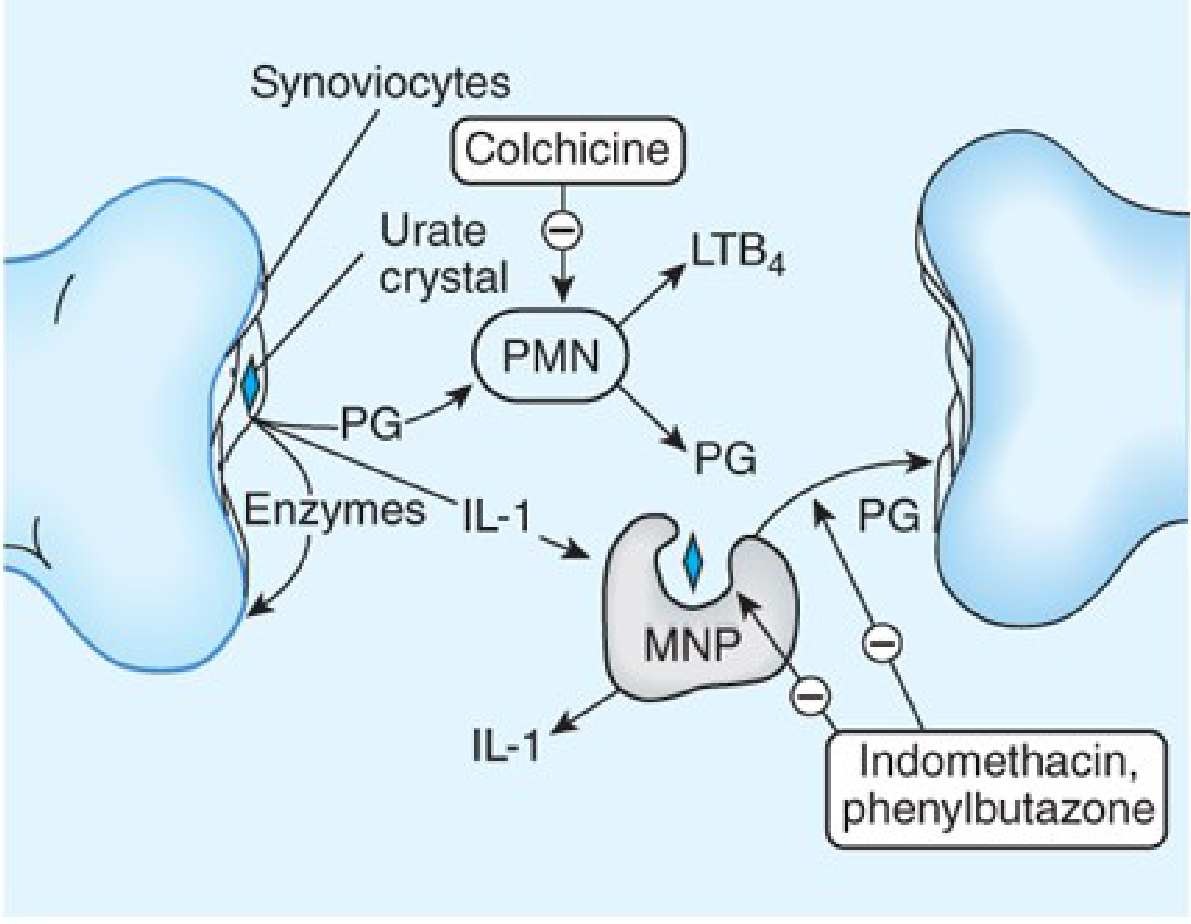
3.3 Crystal-Induced Inflammation
MSU crystals deposited in joints → NLRP3 inflammasome activation → cascade:
- Synoviocytes phagocytose urate crystals → release prostaglandins, IL-1, LTB₂
- Neutrophils recruited into joint space → amplify inflammation (release free radicals, lysosomal enzymes)
- Macrophages appear later → ingest crystals → release further cytokines
- IL-1β is the central mediator: NLRP3 activates caspase-1 → cleaves pro-IL-1β to active IL-1β
- Crystal-induced lysosomal membrane damage → enzyme leakage → tissue injury
— Katzung's Basic and Clinical Pharmacology, 16th Ed., p. 1028
4. CLINICAL STAGES
| Stage | Features |
|---|---|
| Asymptomatic hyperuricemia | Elevated uric acid; no symptoms; most never progress to gout |
| Acute intermittent gout | Sudden, severe monoarticular arthritis; first MTP joint (podagra, ~50%); also ankle, knee, wrist; erythema, warmth, swelling; resolves spontaneously in days–weeks |
| Intercritical gout | Symptom-free periods between attacks |
| Chronic tophaceous gout | Persistent arthritis; tophi (aggregates of MSU crystals + inflammatory tissue) in joints, periarticular tissue, cartilage (helix of ear), tendons; cartilage destruction; joint deformity |
Associations: Uric acid renal calculi, interstitial nephritis, adverse cardiovascular outcomes
5. DIAGNOSIS
5.1 Synovial Fluid Analysis (Gold Standard)
- Needle-shaped MSU crystals that are negatively birefringent under polarized light (yellow when parallel to slow ray of compensator)
- Intracellular crystals in neutrophils during acute attack
5.2 Serum Uric Acid
- Hyperuricemia (>6.8 mg/dL) is necessary but not sufficient
- May be normal during acute attack (crystals precipitate as uric acid drops)
5.3 Imaging
| Modality | Finding |
|---|---|
| X-ray (plain) | "Punched-out" juxta-articular erosions with overhanging edges (late); periarticular soft-tissue swelling (tophi) |
| Ultrasound | "Double contour sign" (urate deposition on cartilage); hyperechoic foci in effusion; tophi as irregular soft-tissue thickening; cortical erosions |
| CT / DECT | Dual-energy CT can directly identify urate deposits |
— Grainger & Allison's Diagnostic Radiology, p. 1125
6. TREATMENT
6.1 Treatment Goals
- Relieve acute gouty attacks rapidly
- Prevent recurrent attacks with prophylactic therapy
- Prevent complications — tophi, nephrolithiasis, nephropathy, joint damage
- Lower serum uric acid to target <6 mg/dL (symptomatic patients)
Indications for urate-lowering therapy:
- ≥2 gouty attacks/year
- Presence of tophi
- Chronic kidney disease
- Uric acid nephrolithiasis
6.2 TREATMENT OF ACUTE GOUT
Three first-line options; choose based on patient comorbidities:
A. NSAIDs
- Indomethacin is the classic choice (50 mg TID × 5–7 days), though all NSAIDs are likely effective
- MOA: Inhibit COX-1/COX-2 → ↓ prostaglandin synthesis → reduce inflammation
- Avoid in: Peptic ulcer, renal impairment, anticoagulation, heart failure
- Start within 24–48 hours of onset for best effect
B. Colchicine
- Plant alkaloid from Colchicum autumnale
- MOA: Binds tubulin → depolymerizes microtubules → impairs neutrophil motility and migration into the inflamed joint; also blocks mitotic spindle (cell division)
- Must be given within 36 hours of attack onset to be effective
- Relieves pain typically within 12 hours
- Dose: Low-dose colchicine (1.2 mg then 0.6 mg one hour later) is as effective as high-dose with fewer GI side effects
- ADRs:
- Acute: Nausea, vomiting, abdominal pain, diarrhea (most common; dose-dependent)
- Chronic: Myopathy, neutropenia, aplastic anemia, alopecia
- Avoid in: Pregnancy; caution with hepatic/renal/cardiovascular disease
- Drug interactions: Metabolized by CYP3A4 and is a P-gp substrate → increased toxicity with CYP3A4 inhibitors (clarithromycin, itraconazole) and P-gp inhibitors (amiodarone, verapamil)
C. Corticosteroids
- Used when NSAIDs and colchicine are contraindicated (e.g., renal impairment)
- Intra-articular corticosteroids when 1–2 joints involved
- Systemic (oral prednisone, IV methylprednisolone) for polyarticular or severe gout
- ADR: Rebound flare on tapering → taper slowly over 2–3 weeks
6.3 URATE-LOWERING THERAPY (CHRONIC GOUT MANAGEMENT)
Important note: Initiating urate-lowering therapy can precipitate an acute attack due to rapid changes in serum urate. Always co-prescribe prophylactic low-dose colchicine or NSAID for ≥6 months when starting these agents.
A. Xanthine Oxidase Inhibitors (First-line)
1. Allopurinol
| Parameter | Detail |
|---|---|
| MOA | Purine analogue (isomer of hypoxanthine); inhibits xanthine oxidase → ↓ conversion of xanthine/hypoxanthine to uric acid → ↓ urate synthesis; substrates (xanthine, hypoxanthine) accumulate but are more soluble |
| Dose | Start 100 mg/day; titrate by 50–100 mg every 2–4 weeks to target uric acid <6 mg/dL; max 800 mg/day |
| Renal dosing | Required — dose-reduce with CKD (oxypurinol metabolite accumulates) |
| ADRs | Rash (common), allopurinol hypersensitivity syndrome (rare but severe: fever, eosinophilia, hepatitis, exfoliative dermatitis/TEN), GI upset |
| Drug interaction | Azathioprine + allopurinol = life-threatening myelosuppression (xanthine oxidase metabolizes azathioprine → inhibition → ↑ azathioprine levels; reduce azathioprine dose by 75%) |
| Also interaction | 6-Mercaptopurine (same interaction as azathioprine) |
2. Febuxostat
| Parameter | Detail |
|---|---|
| MOA | Non-purine xanthine oxidase inhibitor — inhibits both oxidized and reduced forms of the enzyme |
| Dose | 40 or 80 mg/day; no renal dose adjustment needed (unlike allopurinol) |
| Use | Allopurinol-intolerant patients (e.g., allergy, intolerance) |
| ADRs | GI upset, liver function abnormalities, gout flares |
| Cardiovascular warning | A large RCT (CARES trial) showed higher all-cause and CV mortality with febuxostat vs. allopurinol in patients with pre-existing major CVD → avoid in high-CV-risk patients |
| Drug interaction | Same azathioprine/6-MP interaction as allopurinol |
B. Uricosuric Agents
MOA: Inhibit renal tubular reabsorption of urate → ↑ urinary excretion of uric acid
| Drug | Details |
|---|---|
| Probenecid | Inhibits URAT1 transporter in proximal tubule; ensure adequate hydration (prevents uric acid stones); contraindicated in nephrolithiasis; avoid with low-dose aspirin (which competes for excretion); initially may precipitate acute attack |
| Lesinurad | Selective URAT1/OAT4 inhibitor; used as add-on to allopurinol when goal uric acid not achieved |
| Benzbromarone | Used in Europe; potent uricosuric; risk of hepatotoxicity |
C. Recombinant Uricase (Pegloticase)
| Parameter | Detail |
|---|---|
| MOA | Recombinant pegylated uricase → converts uric acid to allantoin (more soluble, readily excreted) — the reaction humans cannot perform |
| Use | Refractory chronic gout unresponsive to conventional therapy |
| FDA approval | 2010 |
| ADRs | Infusion reactions, gout flares (esp. first 3–6 months; prophylaxis with NSAIDs/colchicine required), anti-pegloticase antibodies → loss of efficacy |
| Monitoring | Check serum uric acid before each infusion; if >6 mg/dL, antibodies likely → discontinue |
6.4 IL-1 INHIBITORS (Emerging/Refractory Cases)
- Anakinra (IL-1Ra), Canakinumab (anti-IL-1β monoclonal Ab), Rilonacept (IL-1 trap)
- Used in patients with contraindications to all standard therapies or refractory gout
- MOA: Block IL-1β, the central inflammatory mediator in the gouty cascade
7. DRUG SUMMARY TABLE
| Drug | Class | MOA | Use | Key ADRs |
|---|---|---|---|---|
| Indomethacin | NSAID | COX-1/2 inhibition | Acute gout | GI ulceration, renal impairment |
| Colchicine | Alkaloid | Tubulin depolymerization → ↓ neutrophil migration | Acute + prophylaxis | Diarrhea, N&V, myopathy (chronic) |
| Prednisone | Corticosteroid | Anti-inflammatory | Acute (when NSAID/colchicine contraindicated) | Hyperglycemia, rebound flare |
| Allopurinol | XO inhibitor | ↓ uric acid synthesis | Chronic (1st line) | Hypersensitivity syndrome, azathioprine interaction |
| Febuxostat | XO inhibitor (non-purine) | ↓ uric acid synthesis | Chronic (allopurinol-intolerant) | ↑ CV mortality in high-risk patients |
| Probenecid | Uricosuric | URAT1 inhibition → ↑ urate excretion | Chronic (underexcreters) | Nephrolithiasis, drug interactions |
| Pegloticase | Recombinant uricase | Converts uric acid → allantoin | Refractory gout | Infusion reactions, antibody formation |
| Canakinumab | IL-1β monoclonal Ab | Blocks IL-1β | Refractory/contraindications | Infections, cost |
8. KEY HIGH-YIELD FACTS
| Fact | Detail |
|---|---|
| Crystal appearance | Needle-shaped; negatively birefringent (yellow parallel to slow ray) |
| Classic first joint | First metatarsophalangeal joint (podagra) — 50% of acute attacks |
| Normal urate level | <6.8 mg/dL (treatment target: <6 mg/dL) |
| Primary gout mechanism | Underexcretion (90% of cases) |
| HGPRT deficiency | Partial → secondary gout; Complete → Lesch-Nyhan syndrome (gout + neurologic disease) |
| Colchicine window | Must give within 36 hours of attack onset |
| Allopurinol + azathioprine | Reduce azathioprine dose by 75% or switch to mycophenolate |
| Febuxostat warning | Avoid in patients with major pre-existing cardiovascular disease |
| Diuretics and gout | Thiazides and loop diuretics → ↑ urate reabsorption → precipitate gout |
| Aspirin (low-dose) | Paradoxically raises uric acid (competes with urate excretion) |
| Beer/alcohol | Purine-rich + inhibits renal urate excretion → both mechanisms |
| Starting ULT | Always co-prescribe colchicine/NSAID prophylaxis for ≥6 months to prevent flares |
Sources: Robbins & Kumar Basic Pathology; Katzung's Basic and Clinical Pharmacology, 16th Ed., Chapter 36; Lippincott Illustrated Reviews: Pharmacology; Grainger & Allison's Diagnostic Radiology; Comprehensive Clinical Nephrology, 7th Ed.
Etiology
Finding Sources
Finding Sources
Finding Sources
Finding Sources
Reading File
Reading File
Reading File
Reading File
Finding Sources
Reading File
In short
Based on the sources already in context, here is the concise answer:
Etiology of Gout — In Short
Gout results from hyperuricemia (serum urate >6.8 mg/dL), caused by either underexcretion or overproduction of uric acid.
1. Underexcretion (>90% of cases)
Primary: Idiopathic — defective renal tubular handling of urate (most common)
Secondary:
- Chronic kidney disease (↓ GFR)
- Hypertension, obesity, metabolic syndrome
- Lead nephropathy (saturnine gout)
- Hyperparathyroidism, hypothyroidism
- Lactic acidosis / ketoacidosis (lactate/ketones compete with urate at URAT1 transporter)
Drugs that reduce urate excretion:
| Drug | Mechanism |
|---|---|
| Thiazide & loop diuretics | ↑ tubular reabsorption |
| Low-dose aspirin (<3 g/day) | Competes with urate secretion |
| Cyclosporine / Tacrolimus | Impair tubular secretion |
| Nicotinic acid (niacin) | ↓ renal urate clearance |
| Ethambutol, Pyrazinamide | Compete with urate secretion |
| Levodopa, ACE inhibitors, β-blockers | ↓ renal urate clearance |
| Alcohol (ethanol) | ↑ lactate → ↑ urate reabsorption |
2. Overproduction (<10% of cases)
Primary (genetic enzyme defects):
| Defect | Effect |
|---|---|
| HGPRT deficiency (partial) | ↓ purine salvage → ↑ de novo synthesis → ↑ uric acid |
| HGPRT deficiency (complete) | Lesch-Nyhan syndrome — gout + intellectual disability + self-mutilation |
| PRPP synthetase overactivity | ↑ PRPP → ↑ purine synthesis → ↑ uric acid |
| Glucose-6-phosphatase deficiency (von Gierke disease) | Both overproduction + underexcretion |
Secondary (increased cell turnover → ↑ nucleotide catabolism):
- Myeloproliferative / lymphoproliferative disorders
- Haemolytic anaemia
- Psoriasis
- Tumour lysis syndrome (chemotherapy)
Dietary:
- Red meat, organ meat, shellfish (purine-rich)
- Beer and alcohol (purine content + ↑ lactate)
- High-fructose corn syrup (↑ purine nucleotide catabolism)
Summary
| Mechanism | Proportion | Key Causes |
|---|---|---|
| Underexcretion | ~90% | CKD, diuretics, cyclosporine, aspirin, alcohol, idiopathic |
| Overproduction | ~10% | HGPRT/PRPP defects, haematologic malignancies, tumour lysis, diet |
— Goldman-Cecil Medicine; Fitzpatrick's Dermatology; Lippincott Biochemistry, 8th Ed.; Washington Manual of Medical Therapeutics
This is a shared conversation. Sign in to Orris to start your own chat.