
Tell me everything about organophosphate poisoning Treatment workup diagnosis pathology treatment short term ling term effects physio to pathology medicine
Topic map
-
Physiology and toxic mechanism
- Normal acetylcholine signaling
- Acetylcholinesterase inhibition
- “Aging” of the enzyme-pesticide complex
- Muscarinic, nicotinic, and central nervous system effects
-
Pathology and clinical features
- Cholinergic toxidrome
- Respiratory, neurologic, cardiovascular, gastrointestinal, and eye findings
- Intermediate syndrome and delayed neuropathy
-
Diagnosis and workup
- Exposure history and examination
- Differential diagnosis
- Cholinesterase testing and its limitations
- Blood tests, ECG, imaging, and monitoring
-
Emergency treatment
- Scene safety and decontamination
- Airway, oxygenation, ventilation
- Atropine titration and endpoints
- Oxime treatment such as pralidoxime
- Benzodiazepines for seizures/agitation
- ICU monitoring and complications
-
Short-term effects and prognosis
- Acute respiratory failure, aspiration, arrhythmias, shock
- Intermediate syndrome
- Complications of intensive care and ventilation
-
Long-term effects
- Organophosphate-induced delayed neuropathy
- Neuropsychiatric, cognitive, and motor symptoms
- Rehabilitation and follow-up
High-level overview
- Physiology to pathology
- Diagnosis and workup
- Emergency treatment protocol
- Short-term and long-term effects
- A complete exam-style clinical note, delivered in sections
All of them
Choose how you want the complete coverage delivered.
Topic map
-
Physiology and toxic mechanism
- Normal acetylcholine signaling
- Acetylcholinesterase inhibition
- “Aging” of the enzyme-pesticide complex
- Muscarinic, nicotinic, and central nervous system effects
-
Pathology and clinical features
- Cholinergic toxidrome
- Respiratory, neurologic, cardiovascular, gastrointestinal, and eye findings
- Intermediate syndrome and delayed neuropathy
-
Diagnosis and workup
- Exposure history and examination
- Differential diagnosis
- Cholinesterase testing and its limitations
- Blood tests, ECG, imaging, and monitoring
-
Emergency treatment
- Scene safety and decontamination
- Airway, oxygenation, ventilation
- Atropine titration and endpoints
- Oxime treatment such as pralidoxime
- Benzodiazepines for seizures/agitation
- ICU monitoring and complications
-
Short-term effects and prognosis
- Acute respiratory failure, aspiration, arrhythmias, shock
- Intermediate syndrome
- Complications of intensive care and ventilation
-
Long-term effects
- Organophosphate-induced delayed neuropathy
- Neuropsychiatric, cognitive, and motor symptoms
- Rehabilitation and follow-up
High-level overview
- Physiology to pathology
- Diagnosis and workup
- Emergency treatment protocol
- Short-term and long-term effects
- A complete exam-style clinical note, delivered in sectionsA full note on all six areas is best delivered as sequential sections rather than a single unsafe-to-skim dump. I can start with the mechanism and acute emergency management, then continue through diagnosis, pathology, and long-term sequelae.
organophosphate poisoning treatment
organophosphate poisoning clinical guidance atropine pralidoxime WHO
https://wwwn.cdc.gov/TSp/MMG/MMGDetails.aspx?mmgid=1140&toxi…
diagram organophosphate poisoning acetylcholinesterase inhibition cholinergic toxidrome
Organophosphate poisoning
1. Physiology to pathology
Normal physiology
- Parasympathetic postganglionic nerve endings
- Autonomic ganglia
- Neuromuscular junctions
- Sweat glands
- Multiple central nervous system synapses
Core toxic mechanism
- Muscarinic overstimulation: secretions, bronchospasm, miosis, bradycardia, vomiting, diarrhea.
- Nicotinic overstimulation: early fasciculations and hypertension/tachycardia, followed by receptor desensitization, weakness, paralysis, and respiratory-muscle failure.
- CNS effects: anxiety, confusion, seizures, coma, central respiratory depression.
Why respiratory failure occurs
- Bronchorrhea: massive lower-airway secretions
- Bronchospasm
- Respiratory muscle paralysis
- Central respiratory depression
- Aspiration, pulmonary edema, or pneumonia may worsen gas exchange.
2. Clinical features and pathology
Acute cholinergic syndrome
- Diarrhea and defecation
- Urination
- Miosis, blurred vision
- Bronchorrhea and bronchospasm
- Emesis
- Lacrimation
- Salivation and sweating
| System | Findings |
|---|---|
| Eyes | Miosis, blurred vision, lacrimation |
| Airways/lungs | Wheeze, bronchorrhea, hypoxia, respiratory distress |
| Heart/vessels | Often bradycardia and hypotension, but nicotine-receptor effects can produce tachycardia/hypertension |
| GI/GU | Nausea, vomiting, abdominal cramps, diarrhea, urinary incontinence |
| Skeletal muscle | Fasciculations, cramping, weakness, hyporeflexia, paralysis |
| CNS | Headache, agitation, confusion, ataxia, seizures, coma |
| Skin | Diaphoresis; pesticide formulation may cause dermatitis |
Pathologic phases
A. Acute cholinergic crisis
B. Intermediate syndrome
- Proximal limb and neck-flexor weakness
- Cranial-nerve weakness: dysphagia, dysarthria, facial weakness
- Reduced reflexes
- Respiratory-muscle weakness or paralysis
C. Organophosphate-induced delayed neuropathy, OPIDN
- Burning feet, paresthesia, calf cramps
- Symmetric distal motor weakness, often beginning in legs
- Foot drop, gait difficulty, loss of ankle reflexes
- Sensorimotor axonopathy on nerve-conduction/electromyographic testing
- Severe cases: ascending weakness, spasticity or upper motor neuron findings, functional disability
3. Diagnosis
Exposure history
- Product container, label, trade name, active ingredients, concentration
- Time and route: ingestion, inhalation, dermal, ocular
- Amount potentially involved
- Co-ingestants, especially alcohol, hydrocarbons, solvents, other pesticides
- Occupation: spraying, mixing, field re-entry, agricultural work
- Intentional versus accidental exposure
- Whether other people or responders became symptomatic
Examination
- Airway secretions, wheeze, oxygenation, work of breathing
- Mental status and seizures
- Pupils, diaphoresis, bowel sounds
- Bradycardia/hypotension or dysrhythmia
- Fasciculations, muscle power, reflexes, bulbar weakness
- Skin/eye contamination
Laboratory workup
- Bedside glucose
- Continuous ECG and pulse oximetry
- Blood gas or venous gas, lactate if ill
- CBC, electrolytes, renal function, liver tests
- Creatine kinase if seizures, prolonged immobilization, or rhabdomyolysis is possible
- Chest radiograph if hypoxemia, aspiration, pulmonary edema, or pneumonia is suspected
- Pregnancy test when applicable
- Toxicology testing when it affects management
Cholinesterase tests
-
Red-blood-cell acetylcholinesterase (RBC AChE, “true” cholinesterase)
- More closely reflects synaptic AChE inhibition
- More specific and may correlate with severity
- Useful for confirmation and trend monitoring if available promptly
-
Plasma butyrylcholinesterase or pseudocholinesterase
- More readily available in some settings and may be sensitive to exposure
- Less specific and may be low due to liver disease, malnutrition, genetic variants, pregnancy, or other conditions
Differential diagnosis
- Carbamate poisoning: same cholinergic toxidrome but inhibition is generally reversible and shorter-lived
- Nicotinic mushroom poisoning
- Nerve-agent exposure
- Cholinergic medication overdose: physostigmine, pyridostigmine, donepezil
- Opioid poisoning: miosis and reduced consciousness, but typically dry lungs and absent cholinergic GI/secretory syndrome
- Clonidine toxicity
- Sepsis, asthma/COPD exacerbation, pulmonary edema
- Botulism or myasthenic crisis: weakness but typically not bronchorrhea, miosis, diarrhea, and diaphoresis
4. Emergency treatment
A. Protect staff and prevent secondary contamination
- Use gloves, gown, eye protection, and suitable respiratory protection if contamination is significant.
- Remove clothing and double-bag it.
- Wash skin and hair thoroughly with soap and water.
- Irrigate eyes copiously if exposed.
- Do not allow contaminated clothing, vomitus, or secretions to expose staff or family.
B. ABCs: airway, breathing, circulation
-
Airway
- Suction secretions aggressively.
- Early intubation is often safer when there is declining consciousness, persistent hypoxia, major secretions, respiratory fatigue, severe bronchospasm, or neuromuscular weakness.
-
Breathing
- High-flow oxygen and assisted ventilation as needed.
- Mechanical ventilation may be required for acute poisoning or intermediate syndrome.
-
Circulation
- IV access, cardiac monitoring, fluid resuscitation if hypotensive.
- Treat persistent shock with vasopressors under critical-care guidance.
C. Atropine: first-line antidote for life-threatening muscarinic toxicity
- Start atropine 1 to 3 mg IV in a significantly symptomatic adult.
- Reassess within about 3 to 5 minutes.
- Double the dose repeatedly until airway secretions markedly diminish and ventilation/oxygenation improve.
- Once atropinized, continue an infusion or repeated boluses, titrated to recurrent bronchorrhea or bronchospasm.
- Chest becomes dry or substantially less wet on auscultation
- Bronchial secretions manageable with suctioning
- Improved oxygenation and ventilation
- Reduced bronchospasm and work of breathing
- Adequate blood pressure/perfusion
D. Pralidoxime, 2-PAM
- Adults: 1 to 2 g IV over 15 to 30 minutes, then repeat doses or continuous infusion according to the local toxicology protocol.
- Children: commonly 20 to 40 mg/kg IV over 15 to 30 minutes, followed by specialist-directed repeat dosing or infusion.
E. Seizures, agitation, and CNS toxicity
- Treat seizures with a benzodiazepine, such as diazepam or midazolam, following emergency protocols.
- Correct hypoxia, hypoglycemia, and hyperthermia.
- Continuous monitoring is needed after seizures or coma.
F. Gastrointestinal decontamination
- Activated charcoal may be considered for a recent, potentially toxic ingestion only after the airway is protected and after poison-center/toxicology advice.
- Gastric lavage is not routine and is only considered in very selected life-threatening ingestions with a protected airway.
- Never induce vomiting.
G. Therapies generally not useful
- Hemodialysis and other enhanced-elimination procedures do not remove OPs effectively and have no routine role. Rosen’s Emergency Medicine, section “Enhanced Elimination.”
- Do not rely on antihistamines, bronchodilators, or antibiotics as substitutes for atropine and ventilatory management. Bronchodilators may be an adjunct for persistent bronchospasm.
- Avoid routine use of beta-blockers in unstable severe poisoning unless guided by a specialist.
5. Short-term complications
- Hypoxemic or hypercapnic respiratory failure
- Aspiration pneumonitis/pneumonia
- Noncardiogenic pulmonary edema
- Seizures and coma
- Bradyarrhythmias, tachyarrhythmias, QT abnormalities
- Hypotension/shock
- Rhabdomyolysis and acute kidney injury
- Pancreatitis, reported in significant OP poisoning
- Recurrence of secretions after premature atropine reduction
- Intermediate syndrome and delayed respiratory weakness
6. Long-term effects and follow-up
After recovery from acute toxicity
- Residual weakness, exercise intolerance, dysphagia, dyspnea
- Neuropathic symptoms, gait impairment, foot drop
- Cognitive symptoms: poor attention, memory difficulties
- Mood symptoms, sleep disturbance, anxiety, depression, post-traumatic stress
- Suicide-risk assessment and mental-health care after deliberate ingestion
- Occupational assessment and prevention of re-exposure
OPIDN treatment and rehabilitation
- Neurology referral
- Nerve-conduction studies/EMG if weakness or neuropathy persists
- Physiotherapy, occupational therapy, gait and fall-risk assessment
- Orthoses for foot drop when required
- Neuropathic-pain treatment when indicated
- Vocational and workplace-exposure assessment
High-yield exam summary
- Mechanism: irreversible AChE inhibition by phosphorylation, causing ACh accumulation.
- Toxidrome: “wet” patient with miosis, salivation, lacrimation, bronchorrhea, bronchospasm, diarrhea, urination, bradycardia, fasciculations, weakness, seizures.
- Main cause of death: respiratory failure from secretions, bronchospasm, CNS depression, and muscle paralysis.
- Diagnosis: clinical exposure plus cholinergic toxidrome; RBC AChE supports diagnosis but do not wait for it.
- First priorities: rescuer protection, decontamination, suction, oxygen, ventilation, early intubation when indicated.
- Atropine: titrate rapidly to dry lungs/improved ventilation, not pupil size.
- Pralidoxime: give early after atropine for meaningful suspected OP toxicity, especially weakness/fasciculations.
- Seizures: benzodiazepines.
- Delayed complications: intermediate syndrome at 1 to 4 days, OPIDN at roughly 1 to 3 weeks.
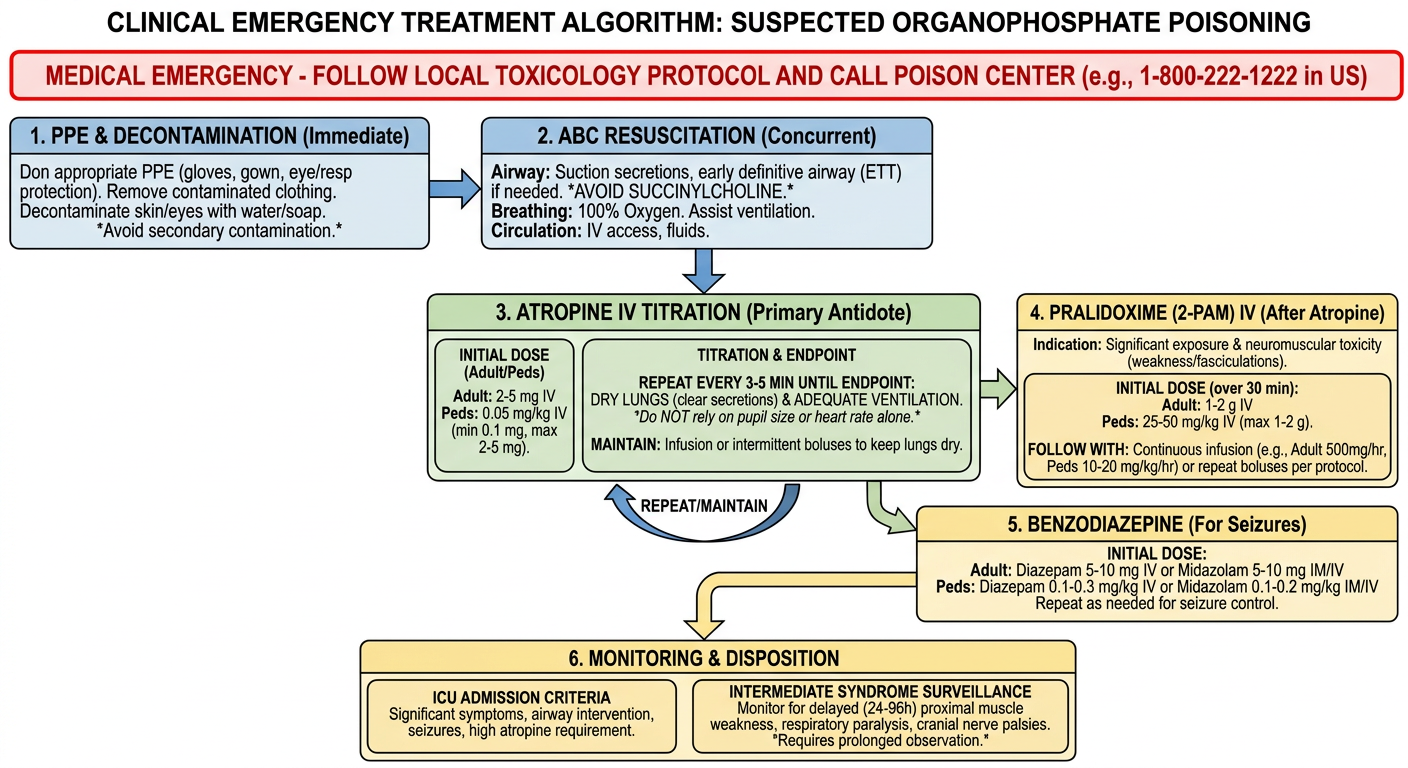
Create a one-page emergency treatment algorithm
One-page clinical emergency treatment algorithm for suspected organophosphate poisoning. Include a prominent warning: Medical emergency - follow local toxicology protocol and call poison center. Use a readable flowchart that covers: PPE and decontamination; ABC resuscitation with suction, oxygen, early airway control and avoid succinylcholine; atropine IV titration for bronchorrhea/bronchospasm with endpoint of dry lungs and adequate ventilation rather than pupil size; pralidoxime after atropine for significant exposure and neuromuscular toxicity; benzodiazepine for seizures; monitoring, ICU admission criteria, and intermediate syndrome surveillance. Include adult and pediatric initial doses consistent with standard guidance. Make all text legible.
CDC ATSDR organophosphate poisoning emergency atropine pralidoxime medical management guidelines
organophosphate poisoning treatment
Suspected Organophosphate Poisoning: Emergency Treatment Algorithm
Key safety notes
- Atropine endpoint: clear/drying airway secretions, reduced bronchospasm, and adequate oxygenation/ventilation. Do not titrate to pupil size or heart rate alone.
- Pralidoxime: administer early after atropine for significant suspected OP exposure, particularly with fasciculations, weakness, or respiratory-muscle involvement. Dosing and infusion protocols differ by region and agent.
- Airway: suction aggressively; intubate early for hypoxia, failing ventilation, depressed consciousness, severe bronchorrhea, or weakness. Avoid succinylcholine where feasible because paralysis may be prolonged.
- Monitoring: observe closely for recurrent cholinergic toxicity and intermediate syndrome, which may cause delayed proximal, cranial, and respiratory muscle weakness over the next 1 to 4 days.