
Congenital anomalies of female reproductive tract detailed description in post graduate level
Reading File
Now let me search the library comprehensively for congenital anomalies of the female reproductive tract.
Finding Sources
Finding Sources
Searching PubMed
"congenital uterine anomalies" AND "classification"
Finding Sources
Finding Sources
Finding Sources
Finding Sources
Finding Sources
Finding Sources
Finding Sources
I found Berek & Novak's Gynecology. Now let me search for congenital anomalies content specifically.
Finding Sources
Excellent! Found the key sections. Let me now read both blocks in parallel.
Reading File
Reading File
I found excellent content in block10 starting at line 2884. Let me read the full section on congenital anomalies from block10.
Reading File
Reading File
Now let me get the full content on the specific types - block9 has the detailed descriptions of anomalies. Let me read earlier in block9 to find the classification and each anomaly type.
Reading File
Reading File
Now I have excellent content. Let me read the specific Mullerian anomalies section (outflow tract) more carefully.
Reading File
Now let me read the outflow and Mullerian anomalies section specifically (should be earlier in block 9):
Reading File
I now have comprehensive content from Berek & Novak's Gynecology. Let me compile this into a detailed postgraduate-level answer.
Congenital Anomalies of the Female Reproductive Tract
Based on Berek & Novak's Gynecology (9th ed.) - Postgraduate Level
1. Embryological Basis
The female reproductive tract develops from the paired paramesonephric (Mullerian) ducts. During embryogenesis:
- The Mullerian ducts elongate toward the midline
- They fuse in the midline
- The intervening septum undergoes resorption
This process, complete by week 20 of gestation, forms (from caudal to cranial):
- Upper vagina
- Cervix
- Uterine corpus
- Fallopian tubes
Because the Mullerian ducts lie in proximity to the mesonephric (Wolffian) system, renal anomalies frequently coexist with Mullerian anomalies. Urologic imaging is mandatory whenever a Mullerian anomaly is diagnosed.
2. Classification and Prevalence
Overall prevalence: 3-4% of all women
- Rises to 5-10% in women with early pregnancy loss
- Up to 25% in women with second and third trimester pregnancy losses
Uterine anomalies are more closely associated with pregnancy wastage and poor obstetric outcomes than with infertility per se - prevalence of congenital uterine defects is generally similar among fertile and infertile women.
AFS/ASRM Classification (American Fertility Society)
| Class | Anomaly | Embryological Defect |
|---|---|---|
| I | Hypoplasia / Agenesis | Failure of Mullerian duct development |
| II | Unicornuate uterus | Failure of one duct to develop |
| III | Uterus didelphys | Failure of lateral fusion |
| IV | Bicornuate uterus | Incomplete fusion at fundus |
| V | Septate uterus | Failure of resorption of midline septum |
| VI | Arcuate uterus | Near-complete resorption (mildest) |
| VII | DES-related | In utero diethylstilbestrol exposure |
3. Outflow Tract Anomalies (Transverse Blockages)
Any transverse blockage of the Mullerian system will cause amenorrhea. In adolescents, transverse blockage with an intact endometrium causes cyclic pain without menstrual bleeding, and can result in:
- Hematocolpos (blood in vagina)
- Hematometra (blood in uterus)
- Hemoperitoneum
- Endometriosis (retrograde flow)
3.1 Imperforate Hymen
- The most distal outflow obstruction
- Most are not diagnosed until hematocolpos forms
- Clinically: bluish bulging membrane at introitus, cyclic pelvic pain, primary amenorrhea
- Treatment: Cruciate incision to open the vaginal orifice
- Caution: Do NOT place a needle into a hematocolpos without completely removing the obstruction - a pyocolpos may result
3.2 Transverse Vaginal Septum
- Results from failure of canalisation between the Mullerian tubercle and the sinovaginal bulb
- Distribution: 46% in the upper third vagina; 40% in the middle third
- Clinical features: same obstructive picture as imperforate hymen
- Treatment: Surgical removal of the septum; vaginal dilators must be used post-operatively to prevent adhesions and re-obstruction
- Prognosis: Patients with repaired transverse septum in middle/upper vagina may have increased infertility risk, but some studies show normal conception rates after surgical repair
3.3 Absent/Hypoplastic Cervix
- Rare, difficult to treat
- Previously required hysterectomy
- Current first-line: Conservative laparoscopic uterovaginal anastomosis
- Endometriosis is a common finding
- If hysterectomy is required, ovaries should be retained (for IVF/gestational carrier option)
4. Vaginal Anomalies
4.1 Vaginal Agenesis - MRKH Syndrome
(Mayer-Rokitansky-Kuster-Hauser Syndrome)
- Karyotype: 46,XX (normal female)
- Accounts for 10-15% of all cases of primary amenorrhea
- Features: vaginal agenesis with variable uterine development
Two subtypes:
- Type I (Isolated): Mullerian aplasia only - absent or rudimentary uterus and upper vagina
- Type II (MURCS association): Mullerian anomaly + associated anomalies:
- Renal malformations (absent, pelvic, horseshoe, or double collecting system)
- Skeletal abnormalities
- Congenital heart defects
- Hearing impairment
Molecular genetics: Exact cause largely unknown; low prevalence of mutations in WNT4 and HNF1B genes; copy number variants (CNVs) in certain chromosomal regions may be involved
Management of absent/short vagina:
- Progressive dilation (Frank's/McIndoe dilators) - successful in most cases
- If dilation fails: McIndoe split-thickness skin graft technique, Vecchietti procedure, or other surgical approaches
- Post-surgical dilators are mandatory to maintain vaginal patency
5. Uterine Anomalies
5.1 Mullerian Agenesis (Class I)
- Absent uterus with variable development
- Only anomaly closely associated with infertility - affected women can have genetically related children only through IVF + gestational carrier
5.2 Unicornuate Uterus (Class II)
- One Mullerian duct fails to develop
- Banana-shaped uterus
- May have a rudimentary horn (communicating or non-communicating)
- Non-communicating rudimentary horn with functioning endometrium: Risk of:
- Hematometra
- Endometriosis
- Ectopic pregnancy within the horn (life-threatening)
- Management: Rudimentary uterine horns require removal on diagnosis (laparoscopic excision)
5.3 Uterus Didelphys (Class III)
- Complete failure of lateral fusion - two separate uteri, two cervices, often two vaginas (with longitudinal septum)
- Associated with obstructed hemivagina + ipsilateral renal agenesis (Herlyn-Werner-Wunderlich syndrome / OHVIRA)
- Generally best obstetric outcomes among fusion defects
- Surgical unification (Strassman metroplasty) rarely indicated
5.4 Bicornuate Uterus (Class IV)
- Incomplete fusion at the fundal level
- Two uterine horns joined at the lower uterine segment/cervix
- Bicollis (two cervices) or unicollis (one cervix)
- Associated with: recurrent pregnancy loss (especially second trimester), preterm delivery
- Metroplasty (Strassman procedure via laparotomy) for recurrent losses - though evidence is debated
5.5 Septate Uterus (Class V) - Most Common Anomaly
- Commonest Mullerian anomaly (accounts for ~35% of all uterine anomalies)
- Results from failure of resorption of the midline septum after fusion
- Septum can be partial (subseptate) or complete
- Associated with highest rate of reproductive failure - early pregnancy loss (up to 60-65%), preterm labor
- External uterine contour is normal (differentiates from bicornuate on MRI)
- Treatment: Hysteroscopic metroplasty - significantly reduces rates of pregnancy loss (but not infertility). This is the standard of care - straightforward, minimally invasive
- Diagnosis: 3D transvaginal ultrasound or MRI (gold standard)
5.6 Arcuate Uterus (Class VI)
- Mildest anomaly - near-complete septal resorption with only a fundal indentation
- Generally: live birth rates comparable to women with normal uteri
- Often considered a normal variant
5.7 DES-Related Anomaly (Class VII)
- In utero exposure to diethylstilbestrol (DES)
- DES was banned in 1971 - number of affected reproductive-age patients is declining
- Associated with: T-shaped uterus, hypoplastic uterus, uterine anomalies
- Higher rates of: ectopic pregnancy, preterm labor, miscarriage, cervical incompetence
- Women whose mothers (not the women themselves) were exposed to DES have higher rates of these malformations
6. Diagnosis and Imaging
| Modality | Role | Notes |
|---|---|---|
| Pelvic MRI | Gold standard for uterine anomalies | Best for rudimentary horns; best sensitivity and specificity |
| 3D Transvaginal Ultrasound | Excellent for classification | Good for septate vs. bicornuate; increasingly used first-line |
| Sonohysterography (SIS) | Combined with 3D, excellent for uterine contour | 77.8% sensitivity vs. hysteroscopy for congenital anomalies |
| Hysteroscopy | Gold standard for uterine cavity evaluation | 72% sensitivity for cavity abnormalities vs. operative hysteroscopy |
| HSG (Hysterosalpingogram) | Shows general uterine cavity configuration | 50% sensitivity for uterine malformations; also assesses tubes |
| 2D Transvaginal US | Limited - only 44% sensitivity for malformations | Inadequate as sole diagnostic tool |
Key imaging principle: MRI is particularly superior for:
- Differentiating septate (normal external contour) from bicornuate (heart-shaped external contour) uterus
- Characterizing rudimentary horns
- Evaluating renal anomalies simultaneously
7. Androgen Insensitivity Syndrome (Structural Mimicker)
Though not a Mullerian anomaly, AIS can present similarly:
- Complete AIS: 46,XY with absent Mullerian structures (Mullerian regression by AMH from testes), absent Wolffian structures (androgen insensitivity), female phenotype, absent uterus and upper vagina, blind vaginal pouch
- Presents as primary amenorrhea with normal breast development
- Axillary and pubic hair absent/sparse
- Gonads (testes) in inguinal canal or labia
- Management: Gonadectomy after pubertal development (to prevent malignant degeneration - ~14% develop gonadoblastoma, ~50% of which are malignant dysgerminomas)
8. Associated Anomalies
Due to proximity of Mullerian and mesonephric systems in embryogenesis:
- Renal anomalies: Renal agenesis (especially with didelphys + obstructed hemivagina), pelvic kidney, horseshoe kidney, duplex collecting system
- Skeletal anomalies (in MRKH Type II)
- Cardiac anomalies (in MRKH Type II)
- Auditory defects (in MRKH Type II)
9. Obstetric Implications
| Anomaly | Main Reproductive Risk |
|---|---|
| Mullerian agenesis | Infertility (requires gestational carrier) |
| Unicornuate with rudimentary horn | Ectopic pregnancy, preterm birth |
| Uterus didelphys | Relatively better outcomes; obstructed hemivagina |
| Bicornuate | Second trimester loss, preterm delivery |
| Septate | Highest pregnancy loss rate (60-65%) |
| Arcuate | Normal or near-normal |
| DES-exposed | Ectopic, preterm, cervical incompetence |
10. Summary of Surgical Management
| Anomaly | Surgery | Evidence Level |
|---|---|---|
| Imperforate hymen | Cruciate incision | Standard of care |
| Transverse vaginal septum | Surgical excision + dilators | Standard |
| Cervical agenesis | Laparoscopic uterovaginal anastomosis | First-line |
| Vaginal agenesis (MRKH) | Progressive dilation (first-line); McIndoe/Vecchietti if failed | Standard |
| Rudimentary uterine horn | Laparoscopic excision on diagnosis | Mandatory |
| Septate uterus | Hysteroscopic metroplasty | Reduces pregnancy loss; Grade A |
| Bicornuate uterus | Strassman metroplasty | Controversial |
| Didelphys | Usually no surgery needed | Conservative |
Recent Evidence Updates
Recent systematic reviews (2024-2025) are refining diagnostic accuracy:
- A 2025 meta-analysis (PMID 40628082) found that 3D transvaginal ultrasound performs comparably to MRI for diagnosing and classifying congenital uterine anomalies, potentially positioning 3D TVS as the preferred first-line modality
- ART outcomes in women with uterine anomalies continue to be studied - a 2024 systematic review (PMID 39227392) evaluates IVF outcomes in this population
Source: Berek & Novak's Gynecology, 9th edition, pp. 2063-2064 & Chapter 34 (Amenorrhea)
Detailed description of congenital uterine anomalies with diagrammatic representations clinical features investigations and management
Reading File
Finding Sources
Finding Sources
Searching PubMed
"congenital uterine anomalies" AND "management"
Excellent - found key sections. Let me now read all relevant blocks in parallel.
Reading File
Reading File
Reading File
Searching PubMed
"uterine anomalies" AND "reproductive outcome"
Found the key diagram. Let me fetch it and also read the classification table in block2.
Loading Image
Reading File
Searching PubMed
"septate uterus" AND "hysteroscopic metroplasty"
Excellent - got the key anatomical diagram. Now let me get the AFS classification table and HSG images, plus read the detailed clinical content.
Loading Image
Reading File
Finding Sources
Searching PubMed
"uterine anomalies" AND "MRI" AND "diagnosis"
I found a RCOG Scientific Impact Paper (PMID 39915100) from 2025 specifically on congenital uterine anomalies management. Let me get its abstract and also search for more detailed content from the textbooks.
Reading Article
PMID: 39915100
Finding Sources
Finding Sources
I now have all the key content and images needed. Let me compile the comprehensive postgraduate answer.Here is a comprehensive postgraduate-level account of congenital uterine anomalies, incorporating textbook content from Berek & Novak's Gynecology with actual textbook illustrations.
Congenital Uterine Anomalies - Postgraduate Level
Sources: Berek & Novak's Gynecology 9e; Creasy & Resnik's Maternal-Fetal Medicine; RCOG Scientific Impact Paper No. 62 (2025)
1. Embryological Basis
The uterus, cervix, and upper vagina develop from the paired paramesonephric (Mullerian) ducts. Normal uterine formation requires three sequential steps:
STEP 1: Organogenesis
Mullerian ducts form lateral to Wolffian ducts (weeks 6-9)
         ↓
STEP 2: Lateral Fusion (Canalization)
Both ducts elongate caudally and fuse in the midline (weeks 9-12)
         ↓
STEP 3: Septal Resorption
Intervening septum resorbs to give single cavity (by week 20)
Defects at each step produce a specific anomaly class:
- Failure of organogenesis → Agenesis/Hypoplasia (Class I)
- Failure of one duct to form → Unicornuate (Class II)
- Failure of lateral fusion → Didelphys (Class III) or Bicornuate (Class IV)
- Failure of septal resorption → Septate (Class V) or Arcuate (Class VI)
- Drug-induced disruption → DES-related (Class VII)
2. Classification Systems
2.1 AFS/ASRM Classification (Buttram & Gibbons, 1979 - most widely used clinically)
| Class | Anomaly | Sub-types |
|---|---|---|
| I | Segmental Mullerian Agenesis/Hypoplasia | A: Vaginal; B: Cervical; C: Fundal; D: Tubal; E: Combined |
| II | Unicornuate Uterus | A1: Rudimentary horn with communicating cavity; A2: Non-communicating cavity; A3: No cavity; B: No rudimentary horn |
| III | Uterus Didelphys | Two complete uteri, two cervices |
| IV | Bicornuate Uterus | A: Complete (to internal os); B: Partial; C: Incomplete |
| V | Septate Uterus | A: Complete septum; B: Incomplete septum |
| VI | Arcuate Uterus (internal luminal changes) | Mildest variant |
| VII | DES-related anomalies | T-shaped uterus |
2.2 ESHRE/ESGE Classification (2013 - newer, more detailed)
| Class | Name | Definition |
|---|---|---|
| U0 | Normal | - |
| U1 | Dysmorphic | Abnormal uterine shape (T-shaped, infantilis) without normal outline change |
| U2 | Septate | Normal outline, internal indentation >50% of uterine wall thickness |
| U3 | Bicorporeal | Abnormal fundal outline, external indentation >50% of uterine wall |
| U4 | Hemi-uterus (Unicornuate) | One-sided uterine development |
| U5 | Aplastic | Absence or rudimentary development of bilateral/unilateral Mullerian structures |
| U6 | Unclassified | - |
Cervix and vagina are sub-classified separately (C0-C2, V0-V2)
3. Diagrammatic Representations
Types of Congenital Uterine Anomalies
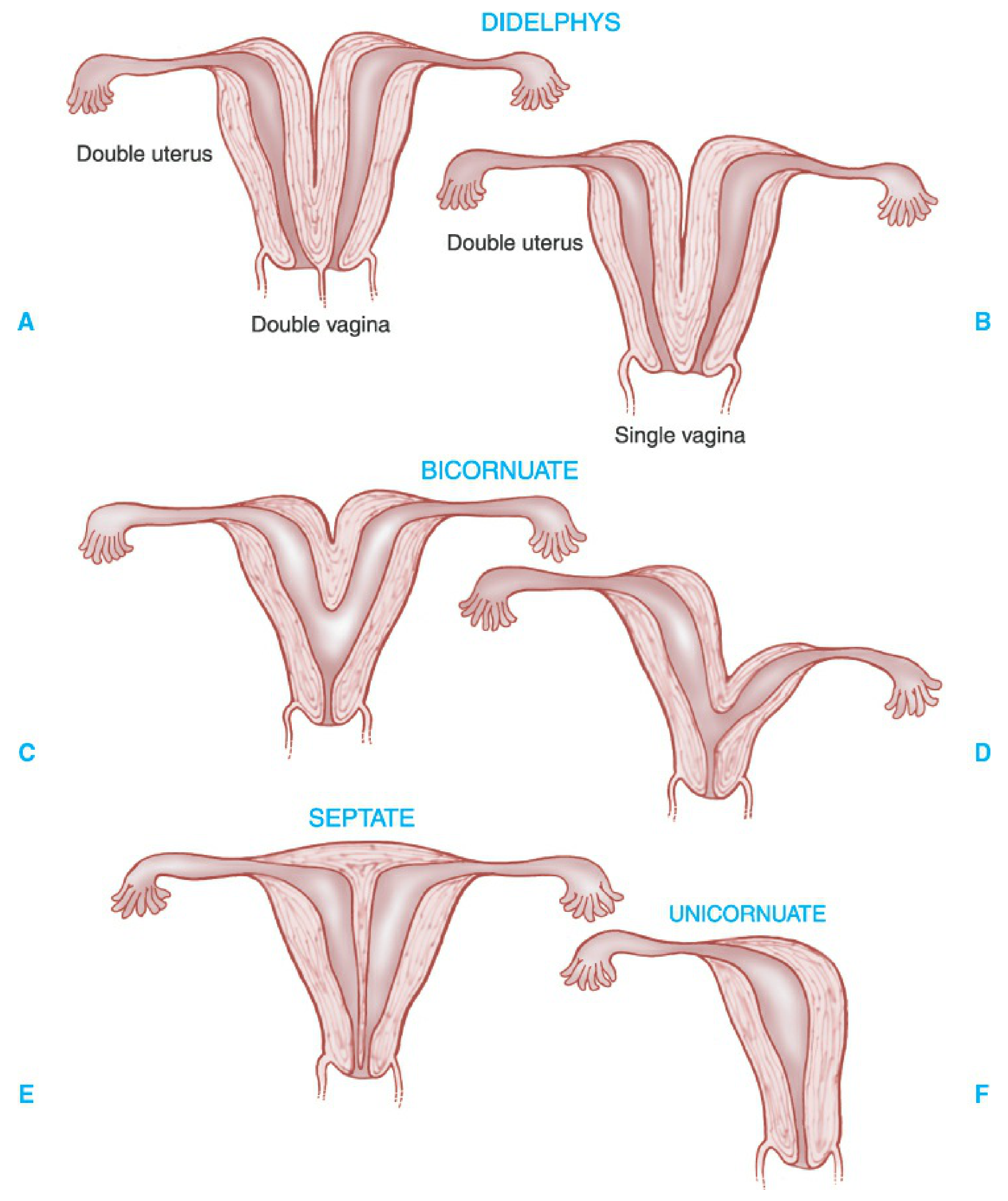
FIGURE 1 - Types of congenital uterine abnormalities:
- A: Uterus didelphys with double vagina
- B: Uterus didelphys with single vagina
- C: Bicornuate uterus (two horns)
- D: Bicornuate uterus with rudimentary left horn
- E: Septate uterus (normal external contour, internal division)
- F: Unicornuate uterus (banana-shaped, one horn)
(Berek & Novak's Gynecology, Figure 5-4)
Hysterosalpingogram Appearances
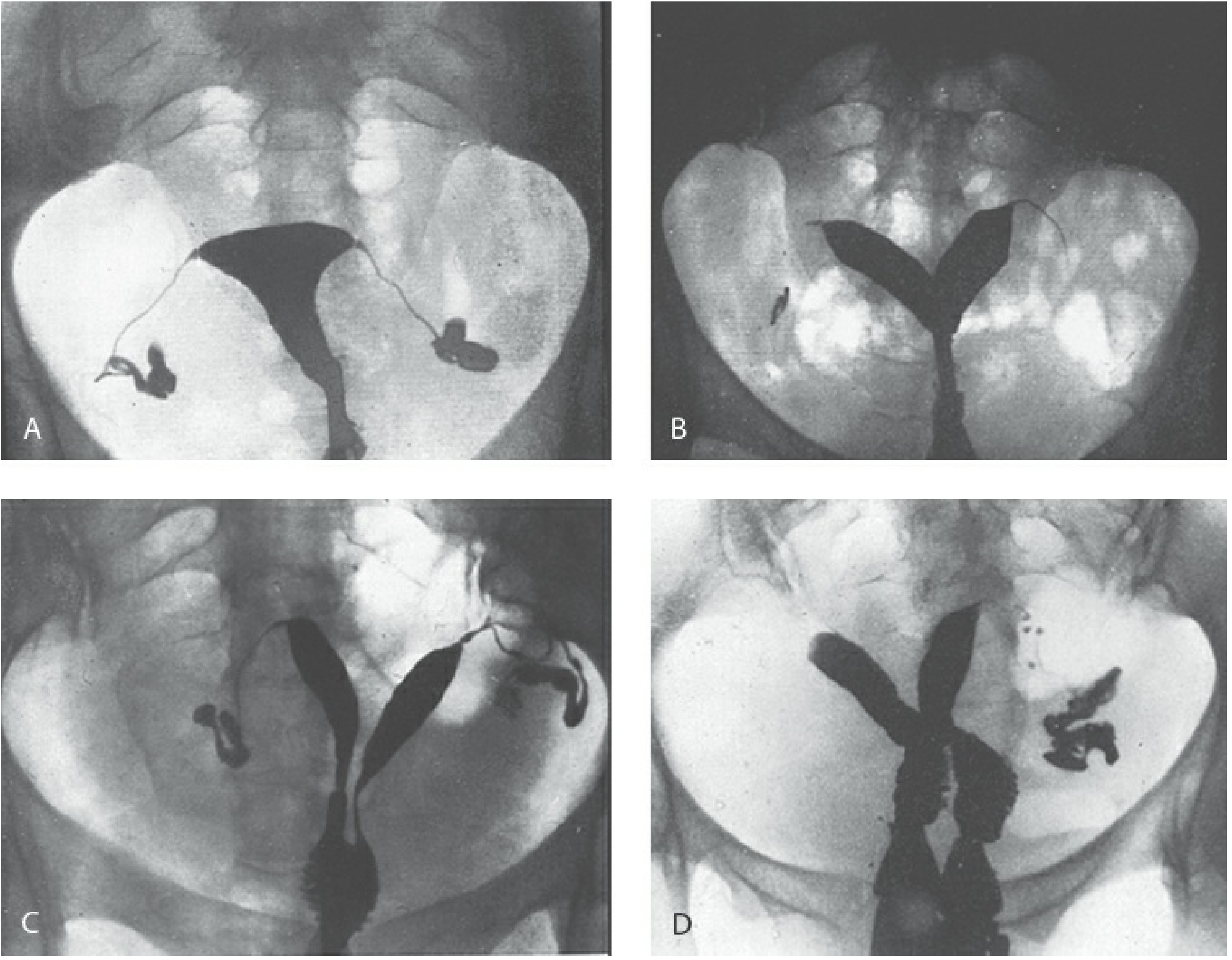
FIGURE 2 - Hysterosalpingograms:
- A: Normal uterine cavity with bilateral tubal spill
- B: Bicornuate uterus - two horns with wide intercornual angle
- C: Uterus didelphys - two completely separate uterine cavities
- D: Uterus didelphys with double vagina
(Berek & Novak's Gynecology, Figure 8-8)
4. Individual Anomalies - Detailed Description
CLASS I: Mullerian Agenesis / MRKH Syndrome
Embryological defect: Complete or partial failure of Mullerian duct organogenesis
Anatomy:
- Absent uterus (or rudimentary uterine remnants)
- Absent upper two-thirds of vagina
- Normal fallopian tubes and ovaries (ovaries are of mesonephric origin - unaffected)
Subtypes:
- Type I (Isolated/Classic MRKH): Uterovaginal aplasia alone
- Type II (MRKH + MURCS Association): With renal anomalies (absent, pelvic, horseshoe kidney), skeletal anomalies, cardiac defects, hearing impairment
Genetics: 46,XX karyotype; WNT4, HNF1B mutations identified in some cases; CNVs on chromosomes 1p, 16p, 17q implicated
Clinical Features:
- Primary amenorrhea
- Normal breast development, normal pubic/axillary hair (estrogen from normal ovaries)
- Absent or short (2-3 cm) vaginal dimple on examination
- No uterus on pelvic imaging
- Normal secondary sexual characteristics
- Cyclic pelvic pain if any functioning uterine tissue present
Investigations:
- Karyotype: 46,XX (rules out AIS which is 46,XY)
- Pelvic MRI: confirms absent uterus, characterises any remnants
- Renal USS: horseshoe kidney, renal agenesis in ~30%
- FSH, LH, estradiol: normal
- Testosterone: normal female range (distinguishes from complete AIS where T is male-range)
- Bone survey for skeletal anomalies (in suspected MURCS)
Management:
- Vaginal creation (primary goal - no curative surgery exists for the uterus):
- Frank's progressive dilation: First-line; 80-90% success; 10-20 minutes daily with graduated dilators over 3-6 months
- McIndoe vaginoplasty: Split-thickness skin graft over mold if dilation fails
- Vecchietti procedure: Laparoscopic traction-based elongation of vaginal dimple - faster (1-2 weeks)
- Davydov procedure: Laparoscopic creation using peritoneum
- Fertility: IVF with oocyte retrieval from own ovaries + gestational surrogate (own genetic child possible)
- Uterus transplantation: Experimental; first live births reported - may become viable option
CLASS II: Unicornuate Uterus
Embryological defect: One Mullerian duct fails to develop (or develops incompletely)
Anatomy: Single uterine horn; may or may not have a rudimentary contralateral horn. The rudimentary horn may be:
- Communicating (with endometrial cavity connected to main uterus)
- Non-communicating with endometrium (most dangerous - can cause ectopic pregnancy or hematometra)
- Non-communicating without endometrium (solid remnant - least problematic)
- Absent (pure unicornuate)
Clinical Features:
- Often asymptomatic and discovered incidentally
- Cyclic dysmenorrhea if rudimentary horn has non-communicating functional endometrium
- Hematometra in non-communicating horn with endometrium
- Ectopic pregnancy within rudimentary horn (life-threatening - rupture at 10-20 weeks due to greater distensibility than fallopian tube)
- Recurrent miscarriage, preterm birth
- Banana-shaped uterine cavity on HSG or MRI
Associated anomalies: Ipsilateral renal agenesis in 40% of cases (rule out on every diagnosis)
Investigations:
- MRI (gold standard): characterises the rudimentary horn precisely
- 3D transvaginal USS
- HSG: shows single banana-shaped cavity (cannot visualise non-communicating horn)
- Laparoscopy: confirms external morphology
- Renal USS mandatory
Obstetric risks:
- Miscarriage rate ~36%
- Preterm delivery ~20%
- IUGR, malpresentation
- Rudimentary horn ectopic: extremely dangerous rupture
Management:
- Rudimentary horn with endometrium (communicating or non-communicating): MUST be excised laparoscopically on diagnosis - risk of ectopic pregnancy and hematometra
- Rudimentary horn without endometrium: excision optional (to confirm diagnosis and prevent torsion)
- Pure unicornuate: conservative management; enhanced antenatal surveillance for preterm birth
- Cervical cerclage: may be considered for cervical incompetence
- No surgical unification available for the main uterine horn
CLASS III: Uterus Didelphys
Embryological defect: Complete failure of lateral Mullerian duct fusion - no fusion at all
Anatomy:
- Two complete, separate uterine bodies
- Two separate cervices (bicollis)
- Often two vaginas (divided by a longitudinal septum)
Clinical Features:
- Often asymptomatic - discovered incidentally
- Dyspareunia if longitudinal vaginal septum present
- Two cervical os on speculum examination
- May present with obstructed hemivagina in Herlyn-Werner-Wunderlich (OHVIRA) syndrome:
- Uterus didelphys + obstructed hemivagina + ipsilateral renal agenesis
- Presents at menarche with cyclic pain but apparent normal menstruation (from non-obstructed side)
- Hematocolpos on obstructed side
Investigations:
- Pelvic MRI or 3D USS: two complete uterine bodies, two cervices
- HSG: shows two completely separate cavities
- Renal USS (especially if OHVIRA suspected)
Obstetric outcome: Relatively better than other fusion anomalies. Miscarriage rate ~32%, preterm birth ~28%
Management:
- Unification surgery (Strassman metroplasty) is NOT recommended for didelphys - outcomes do not improve and risks are significant
- Longitudinal vaginal septum: Excision if causing dyspareunia or obstructed delivery - otherwise can be left
- OHVIRA syndrome: Surgical excision of vaginal septum/drainage of obstructed hemivagina urgently (to prevent pyocolpos, endometriosis, retrograde flow)
- Enhanced antenatal surveillance for preterm birth
CLASS IV: Bicornuate Uterus
Embryological defect: Incomplete (partial) fusion of Mullerian ducts at the fundal level; the ducts fuse at the lower segment but not at the fundus
Anatomy:
- Two uterine horns joined at the lower uterine segment/cervix
- Single or double cervix (bicollis or unicollis)
- External fundal indentation/cleft >1 cm on laparoscopy/MRI
BICORNUATE                  SEPTATE
   __  __                   ________
  /  \/  \                 /        \
 |    /\  |               |   /\    |
  \__/  \__/               \__/  \__/
Indented fundus          Normal/convex fundus
Two cavities             Two cavities
Differentiating Bicornuate from Septate - Key Distinction:
| Feature | Bicornuate | Septate |
|---|---|---|
| External uterine contour | Heart-shaped, fundal cleft >1 cm | Normal/convex |
| Internal division | Myometrial tissue | Fibrous/fibromuscular septum |
| Intercornual angle | >105° | <75° |
| MRI T2 | Myometrium (intermediate signal) | Low signal (fibrous) |
| Treatment | Strassman (controversial) | Hysteroscopic septum resection |
Clinical Features:
- Recurrent miscarriage (particularly second trimester)
- Preterm delivery
- Abnormal fetal presentation at term
- Cervical incompetence
Investigations:
- MRI (gold standard): Fundal contour + internal morphology; T2-weighted images distinguish myometrium from fibrous septum
- 3D transvaginal USS: Comparable to MRI, emerging first-line
- HSG: shows two cavities but cannot characterise external contour
- Combined laparoscopy + hysteroscopy: traditional gold standard; visualises external fundal contour and internal cavity simultaneously
Obstetric risks:
- Miscarriage ~36%, preterm birth ~23%, malpresentation ~40%
Management:
- Strassman metroplasty (abdominal unification of the two horns): Controversial; evidence for improved outcomes is limited and surgery carries risk of uterine rupture in subsequent pregnancies
- Most recent evidence (RCOG 2025): Surgical treatment for bicornuate uterus is not usually recommended - risks outweigh potential benefits
- Enhanced antenatal surveillance
- Cervical cerclage if recurrent second trimester loss
- Progesterone supplementation for recurrent miscarriage
CLASS V: Septate Uterus (Most Common Clinically Significant Anomaly)
Embryological defect: Failure of resorption of the midline septum after complete Mullerian duct fusion. External uterine contour is normal.
Types:
- Complete septum: Extends from fundus to internal or external cervical os (may divide cervix too)
- Partial/Subseptate: Extends from fundus but does not reach internal os
- Very rarely: Complete cervicovaginal septum as well
Clinical Features:
- Highest rate of reproductive failure of all uterine anomalies
- Recurrent first trimester miscarriage (the predominant presentation)
- Infertility (less common - may be discovered on workup)
- Second trimester loss
- Preterm labour
- Malpresentation
- Often entirely asymptomatic until reproductive failure occurs
Why does septum cause miscarriage?
The septum is avascular fibrous/fibromuscular tissue with poor blood supply. Implantation of embryo onto the septum leads to inadequate vascularisation, uteroplacental insufficiency, and early pregnancy loss.
Investigations:
- 3D transvaginal USS: Best initial investigation - normal external contour with internal division
- MRI: Confirms normal external contour; T2 shows low signal fibrous septum vs. intermediate myometrial signal in bicornuate
- Sonohysterography (SIS + 3D): Excellent for delineating septum
- HSG: Shows two cavities with acute angle between them; cannot characterise external contour
- Hysteroscopy: Visualises septum directly; gold standard for cavity assessment
- Combined laparoscopy + hysteroscopy: To confirm normal external contour if doubt remains
Measurement criteria for septum (ESHRE/ESGE):
- Septum depth >50% of uterine wall thickness on 3D USS
- Fundal internal indentation >10 mm (AFS criterion)
Management: Hysteroscopic Metroplasty (Tompkins/Jones operation - now done hysteroscopically)
This is the treatment of choice:
- Hysteroscopic septal incision using scissors, monopolar/bipolar electrosurgery, or Holmium:YAG laser
- No uterine wall incision; outpatient or day procedure
- Recovery within days; pregnancy allowed after 1-3 menstrual cycles
- Concomitant laparoscopy may be done to confirm normal external contour
Outcomes (Berek & Novak):
- Hysteroscopic metroplasty significantly reduces rates of pregnancy loss in septate uterus
- Does NOT significantly improve infertility rates
- Post-operative miscarriage rate drops from ~60% to ~10-15%
RCOG 2025 note: Evidence from RCTs is still inconclusive and conflicting; women should be counselled that while surgery reduces miscarriage risk, live birth improvement is not definitively proven. Large RCTs ongoing (SEPTUM trial).
CLASS VI: Arcuate Uterus
Embryological defect: Near-complete septal resorption - only a small fundal indentation remains
Anatomy: Single uterine cavity with a smooth fundal indentation/saddle deformity <1 cm
Clinical Features:
- Usually clinically insignificant
- Live birth rates comparable to women with normal uteri
- May be a normal variant - considered borderline between normal and abnormal
- Some studies suggest mild increase in second trimester loss (controversial)
Management: Generally no treatment required. Reassurance and expectant management.
CLASS VII: DES-Related Anomaly (Diethylstilbestrol)
Background: DES was used in USA/Europe (1940s-1971) to prevent miscarriage. Now banned.
Mechanism: In utero DES exposure disrupts Mullerian duct development via anti-estrogenic effects on developing tissue.
Uterine appearances:
- T-shaped uterus (characteristic)
- Hypoplastic uterine cavity
- Constriction rings
- Irregular contour
Clinical Features:
- Infertility
- Recurrent miscarriage
- Ectopic pregnancy (7-fold increased risk)
- Second trimester loss
- Cervical incompetence
- Preterm labour
- Clear cell adenocarcinoma of vagina/cervix (daughters of DES-exposed mothers)
Note: Number of affected reproductive-age women declining rapidly as DES was banned in 1971.
5. Prevalence and Reproductive Impact Summary
| Anomaly | Overall Prevalence | Miscarriage Rate | Preterm Birth Rate | Infertility |
|---|---|---|---|---|
| Normal | Reference | ~10-15% | ~5-8% | - |
| Agenesis (MRKH) | 1:4,000-5,000 | N/A | N/A | 100% |
| Unicornuate | 0.1-0.5% | ~36% | ~20% | Mild increase |
| Didelphys | 0.1-0.3% | ~32% | ~28% | Minimal |
| Bicornuate | 0.1-0.5% | ~36% | ~23% | Mild |
| Septate | 0.5-1% | ~60-65% | ~20% | Mild |
| Arcuate | 2-4% | ~15% | ~8% | None |
Overall prevalence of uterine anomalies: 3-4% (general); 5-10% (recurrent miscarriage); up to 25% (late pregnancy loss)
6. Investigations - Systematic Approach
Step 1: Clinical Evaluation
- History: menstrual pattern, obstetric history (recurrent miscarriage, preterm birth), pain
- Examination: cervical os assessment (single or double), vaginal assessment
Step 2: Imaging
ALGORITHM FOR DIAGNOSIS:

2D Transvaginal USS
(sensitivity only 44% for malformations - limited)
         ↓ If abnormality suspected
3D Transvaginal Ultrasound
(first-line confirmatory - comparable to MRI, non-invasive)
         ↓ If complex anomaly or doubt
Pelvic MRI (Gold standard overall)
• Distinguishes septate vs. bicornuate
• Characterises rudimentary horns
• Evaluates renal anatomy simultaneously
         ↓ For cavity evaluation
Hysteroscopy (gold standard for cavity)
         ↓ If combined external + internal characterisation needed
Laparoscopy + Hysteroscopy combined
Step 3: Mandatory Associated Investigations
- Renal USS (mandatory for any Mullerian anomaly - renal agenesis in 30-40%)
- Karyotype (if primary amenorrhea - to exclude AIS, Turner syndrome)
- Hormonal profile: FSH, LH, E2, AMH (assess ovarian reserve)
- HSG: useful for tubal assessment concomitantly
Imaging Comparison Table
| Modality | Sensitivity for CUA | Advantage | Limitation |
|---|---|---|---|
| 2D TVS | ~44% | Readily available | Misses most anomalies |
| HSG | ~50% | Tubal assessment | Radiation; no external contour |
| Sonohysterography (SIS) | ~78% | Better than HSG | Fluid needed |
| 3D TVS | ~90% | Non-invasive, best first-line | Operator-dependent |
| MRI | >90% | Gold standard; tissue characterisation | Cost, availability |
| Hysteroscopy | 72-100% | Direct cavity visualisation | Invasive; no external contour |
| Laparoscopy + Hysteroscopy | >95% | Both contour + cavity | Surgical; general anaesthesia |
2025 evidence: A meta-analysis (PMID 40628082) confirms 3D TVS performs comparably to MRI for diagnosing and classifying congenital uterine anomalies - positioning it as the preferred non-invasive first-line confirmatory test.
7. Management Overview
Conservative (Most Anomalies)
- Reassurance
- Enhanced antenatal surveillance (preterm birth risk)
- Progesterone supplementation in recurrent miscarriage
- Cervical cerclage for mid-trimester losses with cervical insufficiency
Surgical Indications and Procedures
| Anomaly | Indication for Surgery | Procedure | Evidence |
|---|---|---|---|
| Septate uterus | Recurrent miscarriage | Hysteroscopic metroplasty | Reduces miscarriage; RCTs ongoing |
| Unicornuate + rudimentary horn (with endometrium) | All cases on diagnosis | Laparoscopic horn excision | Mandatory |
| MRKH (vaginal agenesis) | Primary amenorrhea/sexual function | Progressive dilation → McIndoe/Vecchietti | Standard of care |
| OHVIRA syndrome | Obstructed hemivagina | Vaginal septum excision | Urgent |
| Bicornuate uterus | Usually NOT recommended | Strassman metroplasty | Insufficient evidence |
| Didelphys | Usually NOT recommended | Unification surgery | Insufficient evidence |
| DES-related | Usually NOT recommended | No proven surgical option | Supportive management |
RCOG 2025 Key Guidance (Scientific Impact Paper No. 62):
- Surgical treatment may be considered for septate uterus with recurrent miscarriage
- Evidence is inconclusive and conflicting for improved live birth rates - counsel women accordingly
- Surgical treatment for other CUAs is not usually recommended - risks outweigh benefits
- All women with CUAs should receive preterm birth surveillance protocols
- Women with CUAs should be screened for renal anomalies
8. Obstetric Complications and Antenatal Care
Regardless of anomaly type, women with uterine anomalies are at increased risk of:
- Recurrent first/second trimester miscarriage
- Preterm premature rupture of membranes (PPROM)
- Preterm birth (even after surgical correction of septate uterus)
- IUGR and fetal growth restriction
- Pre-eclampsia
- Fetal malpresentation (especially breech) - increased caesarean rate
- Placenta praevia, placenta accreta
- Retained placenta, postpartum haemorrhage
- Uterine rupture (particularly with rudimentary horn pregnancy)
Antenatal Surveillance Protocol:
- Early USS to confirm intrauterine location and viability (exclude ectopic)
- Serial cervical length monitoring from 16 weeks (preterm risk)
- Serial fetal growth scans from 24 weeks
- Presentation assessment from 36 weeks
- Delivery planning: vaginal delivery possible in most; caesarean if malpresentation or uterine rupture risk
9. Key Differentiating Points (Exam Focus)
| Feature | Septate | Bicornuate |
|---|---|---|
| External uterine contour | Normal | Abnormal (heart-shaped) |
| Fundal indentation | <1 cm | >1 cm |
| Intercornual angle | <75° | >105° |
| Septal tissue | Fibrous (T2 low signal) | Myometrial (T2 intermediate) |
| Treatment | Hysteroscopic incision | Surgery not usually recommended |
| Most common cause of | Recurrent 1st trimester loss | 2nd trimester loss |
| Feature | MRKH | Complete AIS |
|---|---|---|
| Karyotype | 46,XX | 46,XY |
| Ovaries | Present, normal | Absent (testes in inguinal canal) |
| Pubic/axillary hair | Normal | Absent/sparse |
| Testosterone | Female range | Male range |
| FSH/LH | Normal | Elevated LH |
| Vagina | Absent/short | Absent/short |
| Uterus | Absent | Absent |
| Treatment | Vaginal creation; IVF + surrogate | Vaginal creation; gonadectomy after puberty |
*Sources: Berek & Novak's Gynecology, 9th ed. pp. 145-147, 325-329, 2063-2064; RCOG Scientific Impact Paper No. 62 (Akhtar et al., BJOG 2025, PMID 39915100)*This is the most comprehensive postgraduate-level account of congenital uterine anomalies, drawing directly from Berek & Novak's Gynecology (9th ed.) with actual textbook illustrations and the latest RCOG 2025 guidance. Here is a summary of what was covered:
What Was Covered
Embryology - The three sequential steps of Mullerian duct development (organogenesis → lateral fusion → septal resorption) and how failure at each step produces a specific class of anomaly.
Two Classification Systems:
- The widely-used AFS/ASRM (Buttram & Gibbons) Classes I-VII
- The newer ESHRE/ESGE U0-U6 system with cervical/vaginal sub-classification
Diagrammatic representations - Two actual textbook illustrations showing anatomical types and their HSG appearances.
Each anomaly (Classes I-VII) was covered with:
- Embryological defect
- Anatomy and sub-types
- Clinical features
- Associations (especially renal anomalies)
- Investigations with an algorithmic approach
- Obstetric risks with data
- Management (including when surgery is/is not indicated)
Critical diagnostic distinction: Septate vs. bicornuate uterus (the most tested exam topic) - external contour, MRI signal, intercornual angle, and clinical consequences.
2025 RCOG guidance (PMID 39915100): Hysteroscopic metroplasty for septate uterus has inconclusive evidence for live birth improvement; surgical treatment for other CUA types is not routinely recommended; preterm surveillance is mandatory for all.
This is a shared conversation. Sign in to Orris to start your own chat.