
Explain Difference between Tinea curies, incognito and vesicolor with images. Also prepare a poster with images with handwritten font.
Tinea cruris groin ringworm clinical appearance
Tinea incognito steroid modified ringworm skin lesion
Tinea versicolor pityriasis versicolor hypopigmented patches skin
ls /home/daytona/workspace/ 2>/dev/null && mkdir -p /home/daytona/workspace/tinea-poster
node /home/daytona/skills/shared/scripts/fetch_images.js \ "https://cdn.orris.care/cdss_images/DermNetNZ_1760031403560_72365f46-a8b9-4f2b-ac71-30080f844b56.jpg" \ "https://cdn.orris.care/cdss_images/DermNetNZ_1760028992886_0a213c1e-28fc-412f-96c5-63fe585ccd61.jpg" \ "https://cdn.orris.care/cdss_images/pmc_clinical_VQA_7bcdaf0adacbb3a84248ccf38bf5d082e643073344029d2be94a3e0c9f1b11b1.jpg" \ "https://cdn.orris.care/cdss_images/DermNetNZ_1760034292852_87fc2230-22b9-44ed-a0b3-1ae5917b024c.jpg" \ "https://cdn.orris.care/cdss_images/DermNetNZ_1760034289590_4c8b3b32-b3cb-4312-a4fa-a1c48d071623.jpg" \ 2>/dev/null | node -e "const d=require('fs').readFileSync('/dev/stdin','utf8'); const arr=JSON.parse(d); arr.forEach((x,i)=>{ if(!x.error && x.base64){ const b=x.base64.split(',')[1]||x.base64; require('fs').writeFileSync('/home/daytona/workspace/tinea-poster/img'+i+'.b64', x.base64); console.log('img'+i+': ok, len='+x.base64.length); } else { console.log('img'+i+': ERROR '+x.error); } });"
~/tinea-poster/create_poster.js
const pptxgen = require("pptxgenjs");
const fs = require("fs");

// Load base64 images
function loadImg(idx) {
  return fs.readFileSync(`/home/daytona/workspace/tinea-poster/img${idx}.b64`, 'utf8').trim();
}

const imgCruris   = loadImg(0); // Tinea cruris (DermNet)
const imgIncog1   = loadImg(1); // Tinea incognito face (DermNet)
const imgIncog2   = loadImg(2); // Tinea incognito axilla (PMC)
const imgVersi1   = loadImg(3); // Tinea versicolor back (DermNet)
const imgVersi2   = loadImg(4); // Tinea versicolor forearm (DermNet)

let pres = new pptxgen();
pres.layout = 'LAYOUT_WIDE'; // 13.3" x 7.5"
pres.title = 'Tinea Comparison Poster';

// ─── Color palette ───────────────────────────────────────────────────────────
const BG      = "1A1A2E";   // deep navy background
const PANEL1  = "16213E";   // panel bg 1
const PANEL2  = "0F3460";   // panel bg 2
const PANEL3  = "533483";   // panel bg 3
const ACCENT1 = "E94560";   // red-pink accent (cruris)
const ACCENT2 = "F5A623";   // amber accent (incognito)
const ACCENT3 = "00B4D8";   // cyan accent (versicolor)
const WHITE   = "FFFFFF";
const LTGRAY  = "D0D0D0";

// Handwritten-style font fallback chain
const HW = "Segoe Print";  // Segoe Print is available on most systems; feels handwritten

// ─── SLIDE 1: TITLE SLIDE ────────────────────────────────────────────────────
let slide0 = pres.addSlide();

// Full background
slide0.addShape(pres.ShapeType.rect, {
  x: 0, y: 0, w: 13.3, h: 7.5,
  fill: { color: BG }
});

// Decorative top band
slide0.addShape(pres.ShapeType.rect, {
  x: 0, y: 0, w: 13.3, h: 0.55,
  fill: { color: ACCENT1 }
});

// Decorative bottom band
slide0.addShape(pres.ShapeType.rect, {
  x: 0, y: 7.1, w: 13.3, h: 0.4,
  fill: { color: ACCENT3 }
});

// Three color blocks for preview
slide0.addShape(pres.ShapeType.rect, { x: 0, y: 0.55, w: 4.43, h: 0.3, fill: { color: ACCENT1 } });
slide0.addShape(pres.ShapeType.rect, { x: 4.43, y: 0.55, w: 4.44, h: 0.3, fill: { color: ACCENT2 } });
slide0.addShape(pres.ShapeType.rect, { x: 8.87, y: 0.55, w: 4.43, h: 0.3, fill: { color: ACCENT3 } });

// Main title
slide0.addText("Superficial Fungal Infections", {
  x: 0.5, y: 1.2, w: 12.3, h: 1.1,
  fontSize: 42, fontFace: HW, bold: true,
  color: WHITE, align: "center"
});

// Subtitle
slide0.addText("A Comparative Study", {
  x: 0.5, y: 2.2, w: 12.3, h: 0.7,
  fontSize: 24, fontFace: HW, italic: true,
  color: LTGRAY, align: "center"
});

// Three disease name panels
const panelData = [
  { label: "Tinea Cruris", sub: '"Jock Itch"', color: ACCENT1, x: 1.0 },
  { label: "Tinea Incognito", sub: '"Steroid-Modified Tinea"', color: ACCENT2, x: 5.15 },
  { label: "Tinea Versicolor", sub: '"Pityriasis Versicolor"', color: ACCENT3, x: 9.0 },
];

panelData.forEach(p => {
  slide0.addShape(pres.ShapeType.roundRect, {
    x: p.x, y: 3.2, w: 3.7, h: 2.5,
    fill: { color: "222240" },
    line: { color: p.color, width: 3 },
    rectRadius: 0.15
  });
  slide0.addText(p.label, {
    x: p.x + 0.1, y: 3.35, w: 3.5, h: 0.7,
    fontSize: 18, fontFace: HW, bold: true,
    color: p.color, align: "center"
  });
  slide0.addText(p.sub, {
    x: p.x + 0.1, y: 3.95, w: 3.5, h: 0.55,
    fontSize: 13, fontFace: HW, italic: true,
    color: LTGRAY, align: "center"
  });
});

// Images on title slide
try {
  slide0.addImage({ data: imgCruris,  x: 1.1, y: 4.55, w: 3.3, h: 2.2, sizing: { type: 'cover', w: 3.3, h: 2.2 } });
  slide0.addImage({ data: imgIncog1,  x: 5.25, y: 4.55, w: 3.3, h: 2.2, sizing: { type: 'cover', w: 3.3, h: 2.2 } });
  slide0.addImage({ data: imgVersi1,  x: 9.1,  y: 4.55, w: 3.3, h: 2.2, sizing: { type: 'cover', w: 3.3, h: 2.2 } });
} catch(e) { console.error('Image error title', e.message); }

// Footer
slide0.addText("Dermatology Reference | Medical Education", {
  x: 0, y: 7.12, w: 13.3, h: 0.35,
  fontSize: 10, fontFace: HW, color: LTGRAY, align: "center"
});


// ─── SLIDE 2: TINEA CRURIS ────────────────────────────────────────────────────
let slide1 = pres.addSlide();

slide1.addShape(pres.ShapeType.rect, { x: 0, y: 0, w: 13.3, h: 7.5, fill: { color: BG } });
// Left accent bar
slide1.addShape(pres.ShapeType.rect, { x: 0, y: 0, w: 0.18, h: 7.5, fill: { color: ACCENT1 } });
// Header band
slide1.addShape(pres.ShapeType.rect, { x: 0.18, y: 0, w: 13.12, h: 1.0, fill: { color: "24243e" } });

slide1.addText("1", { x: 0.25, y: 0.08, w: 0.5, h: 0.5, fontSize: 22, fontFace: HW, bold: true, color: ACCENT1 });
slide1.addText("Tinea Cruris", {
  x: 0.8, y: 0.08, w: 8, h: 0.55,
  fontSize: 32, fontFace: HW, bold: true, color: ACCENT1
});
slide1.addText('"Jock Itch" — Dermatophyte Infection of the Groin', {
  x: 0.8, y: 0.6, w: 9, h: 0.38,
  fontSize: 14, fontFace: HW, italic: true, color: LTGRAY
});

// Image panel (right)
try {
  slide1.addImage({ data: imgCruris, x: 8.8, y: 1.1, w: 4.2, h: 4.5,
    sizing: { type: 'contain', w: 4.2, h: 4.5 } });
} catch(e) {}

slide1.addText("Clinical Photo: Tinea Cruris", {
  x: 8.8, y: 5.65, w: 4.2, h: 0.3,
  fontSize: 9, fontFace: HW, italic: true, color: LTGRAY, align: "center"
});

// Content boxes
const sections1 = [
  { title: "Causative Organism", icon: "🦠", color: ACCENT1,
    body: "Dermatophytes: T. rubrum (most common), T. mentagrophytes, Epidermophyton floccosum" },
  { title: "Site of Infection", icon: "📍", color: ACCENT1,
    body: "Groin, proximal medial thighs, buttocks, lower abdomen. Scrotum typically SPARED." },
  { title: "Classic Features", icon: "🔍", color: ACCENT1,
    body: "Annular erythematous plaque • Well-defined scaly advancing border • Central clearing • Pruritus & burning" },
  { title: "Predisposing Factors", icon: "⚠️", color: ACCENT1,
    body: "High heat & humidity • Tight/wet clothing • Obesity • Frequently co-exists with tinea pedis" },
  { title: "Diagnosis & Treatment", icon: "💊", color: ACCENT1,
    body: "KOH prep shows hyphae • Topical azole/allylamine (1st line) • Oral fluconazole 150 mg weekly if extensive" },
];

sections1.forEach((s, i) => {
  const yPos = 1.1 + i * 1.22;
  slide1.addShape(pres.ShapeType.roundRect, {
    x: 0.3, y: yPos, w: 8.2, h: 1.1,
    fill: { color: "1e1e3a" }, line: { color: s.color, width: 2 }, rectRadius: 0.1
  });
  slide1.addText(`${s.icon} ${s.title}`, {
    x: 0.45, y: yPos + 0.06, w: 7.9, h: 0.32,
    fontSize: 13, fontFace: HW, bold: true, color: s.color
  });
  slide1.addText(s.body, {
    x: 0.45, y: yPos + 0.38, w: 7.9, h: 0.62,
    fontSize: 11.5, fontFace: HW, color: LTGRAY, wrap: true
  });
});

// Footer
slide1.addShape(pres.ShapeType.rect, { x: 0, y: 7.2, w: 13.3, h: 0.3, fill: { color: "0d0d1a" } });
slide1.addText("Textbook of Family Medicine 9e • Fitzpatrick's Dermatology • Red Book 2021", {
  x: 0.3, y: 7.22, w: 12.7, h: 0.26, fontSize: 8, fontFace: HW, color: "777777", align: "center"
});


// ─── SLIDE 3: TINEA INCOGNITO ─────────────────────────────────────────────────
let slide2 = pres.addSlide();

slide2.addShape(pres.ShapeType.rect, { x: 0, y: 0, w: 13.3, h: 7.5, fill: { color: BG } });
slide2.addShape(pres.ShapeType.rect, { x: 0, y: 0, w: 0.18, h: 7.5, fill: { color: ACCENT2 } });
slide2.addShape(pres.ShapeType.rect, { x: 0.18, y: 0, w: 13.12, h: 1.0, fill: { color: "24243e" } });

slide2.addText("2", { x: 0.25, y: 0.08, w: 0.5, h: 0.5, fontSize: 22, fontFace: HW, bold: true, color: ACCENT2 });
slide2.addText("Tinea Incognito", {
  x: 0.8, y: 0.08, w: 8, h: 0.55,
  fontSize: 32, fontFace: HW, bold: true, color: ACCENT2
});
slide2.addText('"Steroid-Masked Tinea" — Corticosteroid-Modified Dermatophytosis', {
  x: 0.8, y: 0.6, w: 9, h: 0.38,
  fontSize: 14, fontFace: HW, italic: true, color: LTGRAY
});

// Two images side by side
try {
  slide2.addImage({ data: imgIncog1, x: 8.6, y: 1.1, w: 2.3, h: 2.8,
    sizing: { type: 'contain', w: 2.3, h: 2.8 } });
  slide2.addImage({ data: imgIncog2, x: 11.0, y: 1.1, w: 2.1, h: 2.8,
    sizing: { type: 'contain', w: 2.1, h: 2.8 } });
} catch(e) {}

slide2.addText("Tinea incognito: face & axilla", {
  x: 8.6, y: 3.95, w: 4.5, h: 0.3,
  fontSize: 9, fontFace: HW, italic: true, color: LTGRAY, align: "center"
});

// Key concept box
slide2.addShape(pres.ShapeType.roundRect, {
  x: 0.3, y: 1.05, w: 8.1, h: 0.95,
  fill: { color: "3a2a00" }, line: { color: ACCENT2, width: 2.5 }, rectRadius: 0.1
});
slide2.addText("⚠️  Key Concept", {
  x: 0.45, y: 1.1, w: 7.8, h: 0.3,
  fontSize: 13, fontFace: HW, bold: true, color: ACCENT2
});
slide2.addText("Tinea incognito is NOT a distinct fungal species — it is any tinea infection whose classic appearance has been MASKED by incorrect topical corticosteroid use, making it unrecognizable.", {
  x: 0.45, y: 1.38, w: 7.8, h: 0.52,
  fontSize: 10.5, fontFace: HW, color: WHITE, wrap: true
});

const sections2 = [
  { title: "Causative Organism", icon: "🦠", color: ACCENT2,
    body: "Trichophyton rubrum (most common). Can be any dermatophyte — same organisms as tinea corporis/cruris/capitis." },
  { title: "How It Occurs", icon: "💉", color: ACCENT2,
    body: "Topical corticosteroids suppress inflammation → erythema diminishes, scaling border disappears → classical ring shape lost." },
  { title: "Clinical Appearance", icon: "👁️", color: ACCENT2,
    body: "Diffuse ill-defined erythematous patch • Loss of annular border • May show concentric vesicular rings (T. rubrum) • Fine scale may be present on KOH" },
  { title: "Complications", icon: "☠️", color: ACCENT2,
    body: "Majocchi granuloma — fungi invade hair shaft & dermis → granulomatous reaction extending into subcutaneous fat. Requires oral antifungals." },
  { title: "Diagnosis & Treatment", icon: "💊", color: ACCENT2,
    body: "KOH prep: numerous hyphae despite atypical appearance • STOP corticosteroids • Topical/oral antifungal depending on extent • Oral therapy mandatory for Majocchi granuloma" },
];

sections2.forEach((s, i) => {
  const yPos = 2.1 + i * 1.05;
  slide2.addShape(pres.ShapeType.roundRect, {
    x: 0.3, y: yPos, w: 8.1, h: 0.98,
    fill: { color: "1e1e3a" }, line: { color: s.color, width: 2 }, rectRadius: 0.1
  });
  slide2.addText(`${s.icon} ${s.title}`, {
    x: 0.45, y: yPos + 0.05, w: 7.8, h: 0.3,
    fontSize: 12, fontFace: HW, bold: true, color: s.color
  });
  slide2.addText(s.body, {
    x: 0.45, y: yPos + 0.35, w: 7.8, h: 0.55,
    fontSize: 10.5, fontFace: HW, color: LTGRAY, wrap: true
  });
});

slide2.addShape(pres.ShapeType.rect, { x: 0, y: 7.2, w: 13.3, h: 0.3, fill: { color: "0d0d1a" } });
slide2.addText("Dermatology 5e (Elsevier) • Fitzpatrick's Dermatology • Red Book 2021", {
  x: 0.3, y: 7.22, w: 12.7, h: 0.26, fontSize: 8, fontFace: HW, color: "777777", align: "center"
});


// ─── SLIDE 4: TINEA VERSICOLOR ───────────────────────────────────────────────
let slide3 = pres.addSlide();

slide3.addShape(pres.ShapeType.rect, { x: 0, y: 0, w: 13.3, h: 7.5, fill: { color: BG } });
slide3.addShape(pres.ShapeType.rect, { x: 0, y: 0, w: 0.18, h: 7.5, fill: { color: ACCENT3 } });
slide3.addShape(pres.ShapeType.rect, { x: 0.18, y: 0, w: 13.12, h: 1.0, fill: { color: "24243e" } });

slide3.addText("3", { x: 0.25, y: 0.08, w: 0.5, h: 0.5, fontSize: 22, fontFace: HW, bold: true, color: ACCENT3 });
slide3.addText("Tinea Versicolor", {
  x: 0.8, y: 0.08, w: 8, h: 0.55,
  fontSize: 32, fontFace: HW, bold: true, color: ACCENT3
});
slide3.addText('"Pityriasis Versicolor" — Malassezia Yeast Overgrowth', {
  x: 0.8, y: 0.6, w: 9, h: 0.38,
  fontSize: 14, fontFace: HW, italic: true, color: LTGRAY
});

try {
  slide3.addImage({ data: imgVersi1, x: 8.8, y: 1.1, w: 2.2, h: 3.0,
    sizing: { type: 'contain', w: 2.2, h: 3.0 } });
  slide3.addImage({ data: imgVersi2, x: 11.1, y: 1.1, w: 2.0, h: 3.0,
    sizing: { type: 'contain', w: 2.0, h: 3.0 } });
} catch(e) {}

slide3.addText("Hypopigmented patches: back & forearm", {
  x: 8.8, y: 4.15, w: 4.3, h: 0.3,
  fontSize: 9, fontFace: HW, italic: true, color: LTGRAY, align: "center"
});

// Key concept box
slide3.addShape(pres.ShapeType.roundRect, {
  x: 0.3, y: 1.05, w: 8.1, h: 0.95,
  fill: { color: "001a25" }, line: { color: ACCENT3, width: 2.5 }, rectRadius: 0.1
});
slide3.addText("🔑  Key Concept", {
  x: 0.45, y: 1.1, w: 7.8, h: 0.3,
  fontSize: 13, fontFace: HW, bold: true, color: ACCENT3
});
slide3.addText("Unlike true tinea, Tinea versicolor is caused by Malassezia furfur — a YEAST (not a dermatophyte). It produces azelaic acid which blocks tyrosinase → hypopigmentation.", {
  x: 0.45, y: 1.38, w: 7.8, h: 0.52,
  fontSize: 10.5, fontFace: HW, color: WHITE, wrap: true
});

const sections3 = [
  { title: "Causative Organism", icon: "🦠", color: ACCENT3,
    body: "Malassezia furfur (Pityrosporum ovale) — a lipophilic dimorphic yeast that is normal skin flora. NOT a dermatophyte." },
  { title: "Site of Infection", icon: "📍", color: ACCENT3,
    body: 'Sebaceous areas: chest, back, upper arms, abdomen — "cape-like" distribution. May involve face in adolescents.' },
  { title: "Clinical Appearance", icon: "👁️", color: ACCENT3,
    body: "Hypo-/hyperpigmented OR pink/brown macules & patches with fine bran-like (pityriasiform) scale. 'Versicolor' = varied colors." },
  { title: "Diagnosis", icon: "🔬", color: ACCENT3,
    body: 'KOH prep: classic "spaghetti & meatballs" (short hyphae + clustered yeast). Wood\'s lamp: yellow-green fluorescence. Scrapings diagnostic.' },
  { title: "Treatment", icon: "💊", color: ACCENT3,
    body: "Selenium sulfide 2.5% or ketoconazole 2% shampoo daily × 1 wk • Single-dose oral fluconazole/ketoconazole 400 mg • Oral itraconazole 200 mg BID × 1d/month prophylaxis. Pigment recovers slowly." },
];

sections3.forEach((s, i) => {
  const yPos = 2.1 + i * 1.05;
  slide3.addShape(pres.ShapeType.roundRect, {
    x: 0.3, y: yPos, w: 8.1, h: 0.98,
    fill: { color: "1e1e3a" }, line: { color: s.color, width: 2 }, rectRadius: 0.1
  });
  slide3.addText(`${s.icon} ${s.title}`, {
    x: 0.45, y: yPos + 0.05, w: 7.8, h: 0.3,
    fontSize: 12, fontFace: HW, bold: true, color: s.color
  });
  slide3.addText(s.body, {
    x: 0.45, y: yPos + 0.35, w: 7.8, h: 0.55,
    fontSize: 10.5, fontFace: HW, color: LTGRAY, wrap: true
  });
});

slide3.addShape(pres.ShapeType.rect, { x: 0, y: 7.2, w: 13.3, h: 0.3, fill: { color: "0d0d1a" } });
slide3.addText("Textbook of Family Medicine 9e • Rosen's Emergency Medicine • Henry's Clinical Pathology", {
  x: 0.3, y: 7.22, w: 12.7, h: 0.26, fontSize: 8, fontFace: HW, color: "777777", align: "center"
});


// ─── SLIDE 5: COMPARISON TABLE ────────────────────────────────────────────────
let slide4 = pres.addSlide();

slide4.addShape(pres.ShapeType.rect, { x: 0, y: 0, w: 13.3, h: 7.5, fill: { color: BG } });
slide4.addShape(pres.ShapeType.rect, { x: 0, y: 0, w: 13.3, h: 0.95, fill: { color: "24243e" } });

slide4.addText("Side-by-Side Comparison", {
  x: 0.4, y: 0.12, w: 12.5, h: 0.65,
  fontSize: 30, fontFace: HW, bold: true, color: WHITE, align: "center"
});

// Column headers
const colX = [0.15, 3.05, 6.5, 9.95];
const colW = [2.85, 3.4, 3.4, 3.2];

const headerColors = ["555580", ACCENT1, ACCENT2, ACCENT3];
const headerLabels = ["Feature", "Tinea Cruris", "Tinea Incognito", "Tinea Versicolor"];
headerColors.forEach((c, i) => {
  slide4.addShape(pres.ShapeType.rect, {
    x: colX[i], y: 1.0, w: colW[i], h: 0.55,
    fill: { color: c }
  });
  slide4.addText(headerLabels[i], {
    x: colX[i] + 0.05, y: 1.0, w: colW[i] - 0.05, h: 0.55,
    fontSize: 13, fontFace: HW, bold: true, color: WHITE, align: "center", valign: "middle"
  });
});

// Table rows
const rows = [
  ["Organism",         "Dermatophyte\n(T. rubrum, E. floccosum)",    "Dermatophyte\n(T. rubrum — same as tinea)",     "Malassezia furfur\n(Yeast — NOT a dermatophyte)"],
  ["Site",             "Groin, inner thigh\n(scrotum spared)",        "Any tinea site\n(usually tinea corporis/cruris)",  "Chest, back, arms\n(sebaceous areas — 'cape')"],
  ["Morphology",       "Annular, well-defined\nscaly raised border",  "Ill-defined, blurred\nLoss of annular ring",       "Hypo/hyperpigmented\nmacules, fine bran scale"],
  ["Cause of atypical\nappearance", "—",                              "Topical corticosteroid\nmisuse masks inflammation", "Normal Malassezia\novergrowth → azelaic acid"],
  ["KOH Prep",        "Hyphae (dermatophyte)",                       "Numerous hyphae\n(despite atypical look!)",        "Spaghetti & meatballs\n(hyphae + clustered yeast)"],
  ["Wood's Lamp",     "Negative",                                    "Negative",                                         "Yellow-green fluorescence"],
  ["Treatment",       "Topical azole/allylamine;\noral if extensive", "STOP steroid + antifungals;\noral if Majocchi",    "Selenium sulfide 2.5%,\nketoconazole shampoo, oral azoles"],
];

const rowColors = ["1a1a35", "1f1f3d", "1a1a35", "1f1f3d", "1a1a35", "1f1f3d", "1a1a35"];
const textColors3 = [LTGRAY, LTGRAY, LTGRAY];

rows.forEach((row, rIdx) => {
  const yRow = 1.6 + rIdx * 0.83;
  row.forEach((cell, cIdx) => {
    slide4.addShape(pres.ShapeType.rect, {
      x: colX[cIdx], y: yRow, w: colW[cIdx], h: 0.82,
      fill: { color: cIdx === 0 ? "222244" : rowColors[rIdx] },
      line: { color: "333366", width: 0.5 }
    });
    const textColor = cIdx === 0 ? LTGRAY : (cIdx === 1 ? "ffbbcc" : cIdx === 2 ? "ffe090" : "90e8f5");
    slide4.addText(cell, {
      x: colX[cIdx] + 0.07, y: yRow + 0.04, w: colW[cIdx] - 0.1, h: 0.74,
      fontSize: cIdx === 0 ? 11 : 10.5, fontFace: HW,
      bold: cIdx === 0, color: textColor,
      align: cIdx === 0 ? "left" : "center", valign: "middle", wrap: true
    });
  });
});

slide4.addShape(pres.ShapeType.rect, { x: 0, y: 7.2, w: 13.3, h: 0.3, fill: { color: "0d0d1a" } });
slide4.addText("Sources: Fitzpatrick's Dermatology • Textbook of Family Medicine 9e • Dermatology 5e • Red Book 2021", {
  x: 0.3, y: 7.22, w: 12.7, h: 0.26, fontSize: 8, fontFace: HW, color: "777777", align: "center"
});


// ─── WRITE FILE ───────────────────────────────────────────────────────────────
pres.writeFile({ fileName: "/home/daytona/workspace/tinea-poster/Tinea_Comparison_Poster.pptx" })
  .then(() => console.log("✅ Poster saved successfully!"))
  .catch(e => { console.error("❌ Error:", e.message); process.exit(1); });
cd /home/daytona/workspace/tinea-poster && node create_poster.js 2>&1
ls -lh /home/daytona/workspace/tinea-poster/Tinea_Comparison_Poster.pptx
Tinea Cruris vs Tinea Incognito vs Tinea Versicolor
1. 🔴 Tinea Cruris ("Jock Itch")
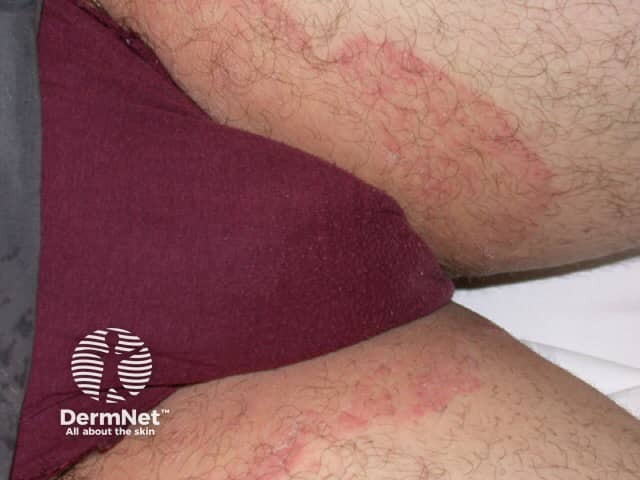
- Well-defined, annular (ring-shaped) erythematous plaque
- Raised scaly advancing border with central clearing
- Active pustules may appear within the border
- Symptoms: burning and pruritus
- KOH prep: branching hyphae
- First line: topical allylamines (terbinafine, naftifine) or topical azoles
- If spread beyond groin: oral fluconazole 150 mg weekly × 2–4 weeks
2. 🟡 Tinea Incognito ("Steroid-Masked Tinea")
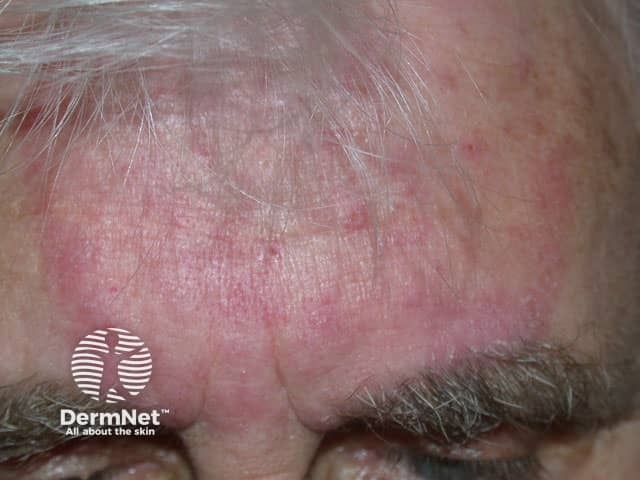
Tinea incognito is NOT a separate species. It is any tinea (usually tinea corporis/cruris) whose classic appearance has been obliterated by the incorrect application of topical corticosteroids.
- Ill-defined, diffuse erythematous patch — no clear annular border
- Diminished scaling
- T. rubrum may produce concentric vesicular rings
- KOH still shows numerous hyphae despite the atypical look
- STOP topical corticosteroids immediately
- Topical or oral antifungals depending on extent
- Oral therapy mandatory for Majocchi granuloma
3. 🔵 Tinea Versicolor ("Pityriasis Versicolor")
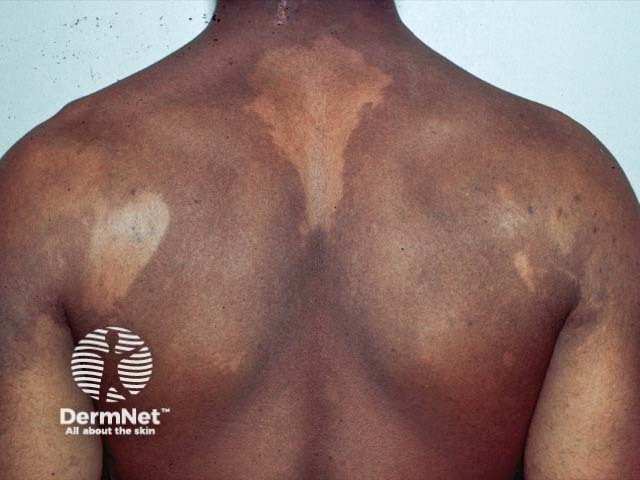
Critical distinction: Tinea versicolor is caused by a YEAST (Malassezia furfur), NOT a dermatophyte. The "tinea" name is a misnomer — it is more accurately called pityriasis versicolor.
- Hypo- or hyperpigmented macules and patches
- "Versicolor" = varied colors (pink, tan, white, brown)
- Fine bran-like (pityriasiform) scale — "pityriasis" comes from Greek for "bran"
- Usually asymptomatic; mild pruritus in some
- KOH prep: classic "spaghetti and meatballs" pattern — short hyphae ("spaghetti") + clustered round yeast cells ("meatballs")
- Wood's lamp: yellow-green fluorescence
- Selenium sulfide 2.5% lotion/shampoo daily × 1 week
- Ketoconazole 2% shampoo daily × 3 days
- Single oral dose of fluconazole or ketoconazole 400 mg
- Prophylaxis: oral itraconazole 200 mg BID × 1 day/month
Quick Comparison Table
| Feature | Tinea Cruris | Tinea Incognito | Tinea Versicolor |
|---|---|---|---|
| Organism | Dermatophyte (T. rubrum) | Dermatophyte (T. rubrum) | Yeast (Malassezia furfur) |
| Site | Groin (scrotum spared) | Any tinea site | Chest/back/arms ("cape") |
| Morphology | Annular, scaly, well-defined | Ill-defined, no ring | Hypo/hyperpigmented macules |
| Atypical cause | — | Topical steroid misuse | Normal yeast overgrowth |
| KOH | Hyphae | Numerous hyphae | "Spaghetti & meatballs" |
| Wood's Lamp | Negative | Negative | Yellow-green fluorescence |
| Treatment | Topical azole/allylamine | Stop steroid + antifungal | Selenium sulfide / azoles |
📥 Download Your Poster
Tinea Comparison Poster
Presentation · PPTX