
My sister is has gained weight
My sister is obese and she has a dark patch at backside of her neck,and she is recently growing moustache. Show feels lazy most of the time what might be the cause
polycystic ovary syndrome PCOS hirsutism
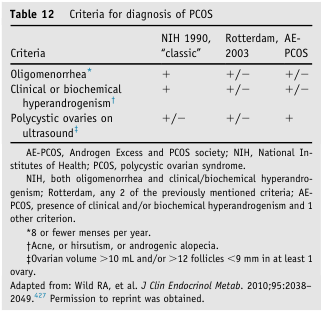
Table 12 Criteria for diagnosis of PCOS
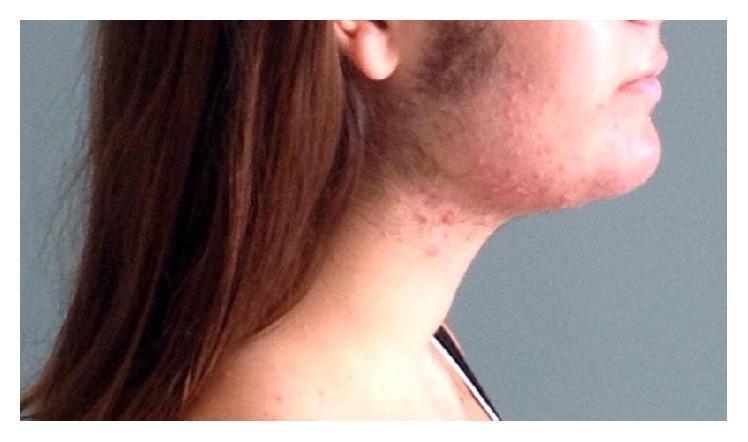
A clinical photograph of a female patient's face and neck in a lateral profile view, demonstrating clinical signs of hyperandrogenism and virilization. The image reveals prominent hirsutism, characterized by coarse, dark hair growth in an androgen-dependent distribution, specifically involving the preauricular (sideburn) area, cheeks, and along the mandibular jawline. Accompanying these findings is an inflammatory acneiform eruption, presenting as erythematous papules and pustules clustered around the jaw and upper neck. This combination of acne and hirsutism is highly suggestive of an underlying hyperandrogenic state. The educational focus of this image is the recognition of physical manifestations of excessive androgen levels in female patients, which may be associated with conditions such as polycystic ovary syndrome (PCOS) or, in this clinical context, pregnancy-related luteoma.
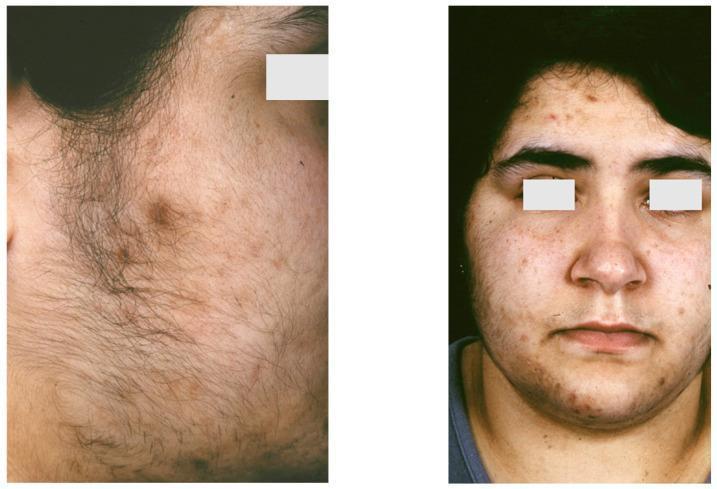
Clinical photograph of an 18-year-old female patient demonstrating the classic cutaneous triad of SAHA syndrome (HAIRAN variant): seborrhoea, acne, and hirsutism. The image consists of two panels: a close-up profile of the lower face and jawline (left) and a frontal view (right). The skin exhibits inflammatory acne vulgaris characterized by erythematous papules, pustules, and scattered comedones on the forehead, cheeks, and chin. Significant hirsutism is visible, featuring the growth of coarse, dark terminal hairs in a male-pattern distribution along the jawline, chin, and sideburn areas. Evidence of post-inflammatory hyperpigmentation and uneven skin texture suggestive of seborrhoea is also present. These findings are clinically associated with hyperandrogenism and insulin resistance, common in endocrine disorders such as Polycystic Ovary Syndrome (PCOS) or SAHA syndrome. The visual material is intended for medical education regarding the dermatological manifestations of endocrine dysfunction and androgen excess in female patients.
Your Sister's Symptoms Point to PCOS + Insulin Resistance
| Symptom | Medical Term | What It Signals |
|---|---|---|
| Weight gain / obesity | Adiposity | Insulin resistance, metabolic syndrome |
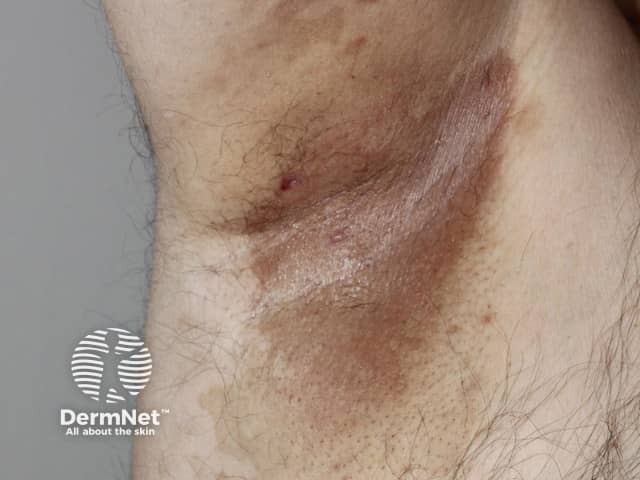
| Dark velvety patch on back of neck | Acanthosis nigricans | Insulin resistance / high insulin levels |
| Growing moustache / facial hair | Hirsutism | Excess androgens (male hormones) |
| Constant fatigue / laziness | Fatigue | Hormonal imbalance, insulin dysregulation |
Most Likely Diagnosis: PCOS (Polycystic Ovary Syndrome)
How It Works - The Chain Reaction:
- The body becomes resistant to insulin, so the pancreas pumps out more and more insulin
- High insulin stimulates the ovaries to produce excess testosterone (androgens)
- Androgens cause hirsutism (moustache, chin hair, body hair in a male pattern)
- High insulin also signals skin cells to overgrow, creating the dark, velvety patch (acanthosis nigricans) at the neck, armpits, and skin folds
- The hormonal chaos causes fatigue, weight gain, and often irregular periods
The Dark Neck Patch - Acanthosis Nigricans
The Facial Hair (Hirsutism)
Could It Be Something Else?
| Condition | What Overlaps |
|---|---|
| Hypothyroidism (underactive thyroid) | Weight gain, fatigue, sluggishness - but usually no hirsutism |
| Cushing's Syndrome (excess cortisol) | Weight gain, fatigue, facial hair - but look for "buffalo hump," stretch marks, moon face |
| Congenital Adrenal Hyperplasia | Hirsutism and obesity - rare but possible |
| Type 2 Diabetes | Insulin resistance driving the dark neck patch |
What Tests Should She Get?
- Blood sugar + insulin levels (fasting glucose, HbA1c, fasting insulin) - to confirm insulin resistance
- Hormonal panel: LH, FSH, testosterone, DHEA-S, prolactin
- Thyroid function: TSH, Free T4
- Pelvic ultrasound: to look for multiple small cysts on the ovaries
- Lipid profile: PCOS increases cardiovascular risk
What Can Be Done?
- Lifestyle changes are first-line: Even a 5-10% weight loss significantly reduces insulin resistance and can restore hormonal balance, reduce facial hair, and improve energy levels
- Metformin: Reduces insulin resistance (often the first medication prescribed)
- Oral contraceptive pills: Regulate periods and suppress androgen-driven hirsutism
- Spironolactone: Anti-androgen medication to reduce facial/body hair
- Diet: Low glycemic index diet is especially helpful in PCOS
Important: This is for educational awareness only - not a medical diagnosis. Please take your sister to a doctor promptly. The combination of obesity + acanthosis nigricans + hirsutism is a classic triad that warrants proper blood tests and professional evaluation. Early treatment prevents progression to type 2 diabetes and protects long-term fertility. - Textbook of Family Medicine 9e, Fitzpatrick's Dermatology 5e, Berek & Novak's Gynecology
What diet changes help reverse PCOS and insulin resistance?
"polycystic ovary syndrome" AND diet AND "insulin resistance"
best diet for PCOS insulin resistance reversal 2025 evidence
PMID: 38388374
PMID: 36099162
Diet Changes to Reverse PCOS and Insulin Resistance
The #1 Best Diet: DASH Diet
"The DASH diet was the most effective dietary intervention for treating PCOS" - reducing insulin resistance (HOMA-IR), fasting blood glucose, fasting insulin, and triglycerides better than any other diet tested, including low-carb diets.
- High in fruits, vegetables, whole grains, legumes, low-fat dairy
- Rich in potassium, magnesium, calcium, and fiber
- Low in sodium, added sugars, red meat, and saturated fats
- Moderate lean protein (chicken, fish, beans)
Key Dietary Principles (Evidence-Based)
1. Go Low-Glycemic Index (Low-GI)
| ✅ EAT (Low GI) | ❌ LIMIT (High GI) |
|---|---|
| Oats, quinoa, brown rice | White bread, white rice |
| Lentils, chickpeas, beans | Sugary cereals, pastries |
| Sweet potato | Regular potato (especially mashed/fried) |
| Berries, apples, pears | Fruit juice, watermelon |
| Non-starchy vegetables | Packaged snacks, biscuits |
2. Prioritize Protein at Every Meal
- Slows digestion and blunts glucose spikes
- Keeps you full longer, reducing overeating
- Supports muscle mass, which burns glucose
3. Load Up on Fiber
- Vegetables: broccoli, spinach, ladies finger (okra), carrots
- Fruits: guava, pear, apple (with skin)
- Whole grains: jowar, bajra, oats, whole wheat roti
- Legumes: moong dal, rajma, chana
4. Choose Healthy Fats (Anti-Inflammatory)
- Eat: Fatty fish (salmon, mackerel, sardines), walnuts, flaxseeds, chia seeds, olive oil
- Limit: Refined vegetable oils, vanaspati, fried foods, trans fats
5. Cut Added Sugar Aggressively
- Soft drinks, packaged juices, energy drinks
- Sweets, mithai, chocolate bars
- White sugar in tea/coffee (use cinnamon instead - it has mild insulin-sensitizing properties)
Supplements with Strong Evidence
| Supplement | Benefit | Evidence Level |
|---|---|---|
| Omega-3 / Fish oil | Reduces fasting insulin, HOMA-IR, triglycerides; raises adiponectin | High certainty |
| Probiotics / Synbiotics | Reduces fasting glucose, insulin, HOMA-IR, and total testosterone | Moderate-High certainty |
| Inositol (myo-inositol) | Improves insulin sensitivity, stimulates ovulation | Moderate certainty |
| Vitamin D | Reduces fasting insulin (many PCOS women are deficient) | Moderate certainty |
| Curcumin (turmeric) | Reduces fasting glucose, insulin, HOMA-IR | Moderate certainty |
What About Keto Diet?
- It is harder to sustain long-term
- It can cause nutrient deficiencies
- The DASH diet is ranked higher overall for insulin resistance specifically
- Keto may suit some women short-term but is not the first choice
Practical Daily Meal Structure
Lifestyle Additions That Multiply the Diet Effect
- 30 min of brisk walking or exercise daily - muscle contraction improves glucose uptake independent of insulin
- Sleep 7-8 hours - sleep deprivation directly worsens insulin resistance
- Stress management - cortisol from chronic stress raises blood sugar
- Target 5-10% body weight loss - even this modest reduction is enough to restore ovulation and reduce androgens in many PCOS women
Bottom line: No single perfect PCOS diet exists, but the DASH diet pattern - whole foods, high fiber, low sugar, lean protein, healthy fats - has the strongest evidence for reversing insulin resistance in PCOS. Combine it with omega-3 supplementation, myo-inositol, and daily exercise. Sustainable gradual changes work far better than extreme restriction. A registered dietitian or endocrinologist can tailor the plan to your sister's specific needs.