
Web causation and uses in prevention
Asking for Preferences
Could you clarify what you mean by 'Web causation and uses in prevention'?
The Web of Causation is an epidemiological model proposed by Brian MacMahon and Thomas Pugh (1960) that depicts disease as the result of a complex network of interacting factors rather than a single cause. It moves beyond the simple germ theory "one cause - one disease" model.
Searching sources...
Reading File
Searching the Web
web of causation epidemiology MacMahon Pugh model disease prevention
Finding Sources
Reading File
I can see there's a diagram. Let me fetch it and also search for more context on uses in prevention.
Loading Image
Finding Sources
Reading File
Finding Sources
Reading File
Loading Image
I now have all the information needed for a thorough answer. Here is a complete explanation of the Web of Causation.
Web of Causation
Definition and Origin
The Web of Causation is an epidemiological model of disease causation proposed by Brian MacMahon and Thomas Pugh (along with Johannes Ipsen) in their textbook "Epidemiologic Principles and Methods" (1960). It is the foundation of what is called "multiple causation" - the core canon of modern epidemiology.
The model was developed because the older epidemiological triad (agent - host - environment triangle) worked reasonably well for infectious diseases but failed to explain chronic, non-communicable diseases where no single identifiable agent is responsible.
Core Concept
The web of causation holds that no disease has a single cause. Instead, every disease is the end result of a complex network of interacting factors - biological, behavioral, social, environmental, and genetic. These factors interrelate and lead through chains of causation to the final disease outcome.
As stated in Park's Textbook of Preventive and Social Medicine:
"The 'web of causation' considers all the predisposing factors of any type and their complex interrelationship with each other."
Classic Example: Web of Causation for Myocardial Infarction
The diagram below (Fig. 7 from Park's) illustrates the web for myocardial infarction - note how multiple upstream factors converge through several pathways to a single disease outcome:
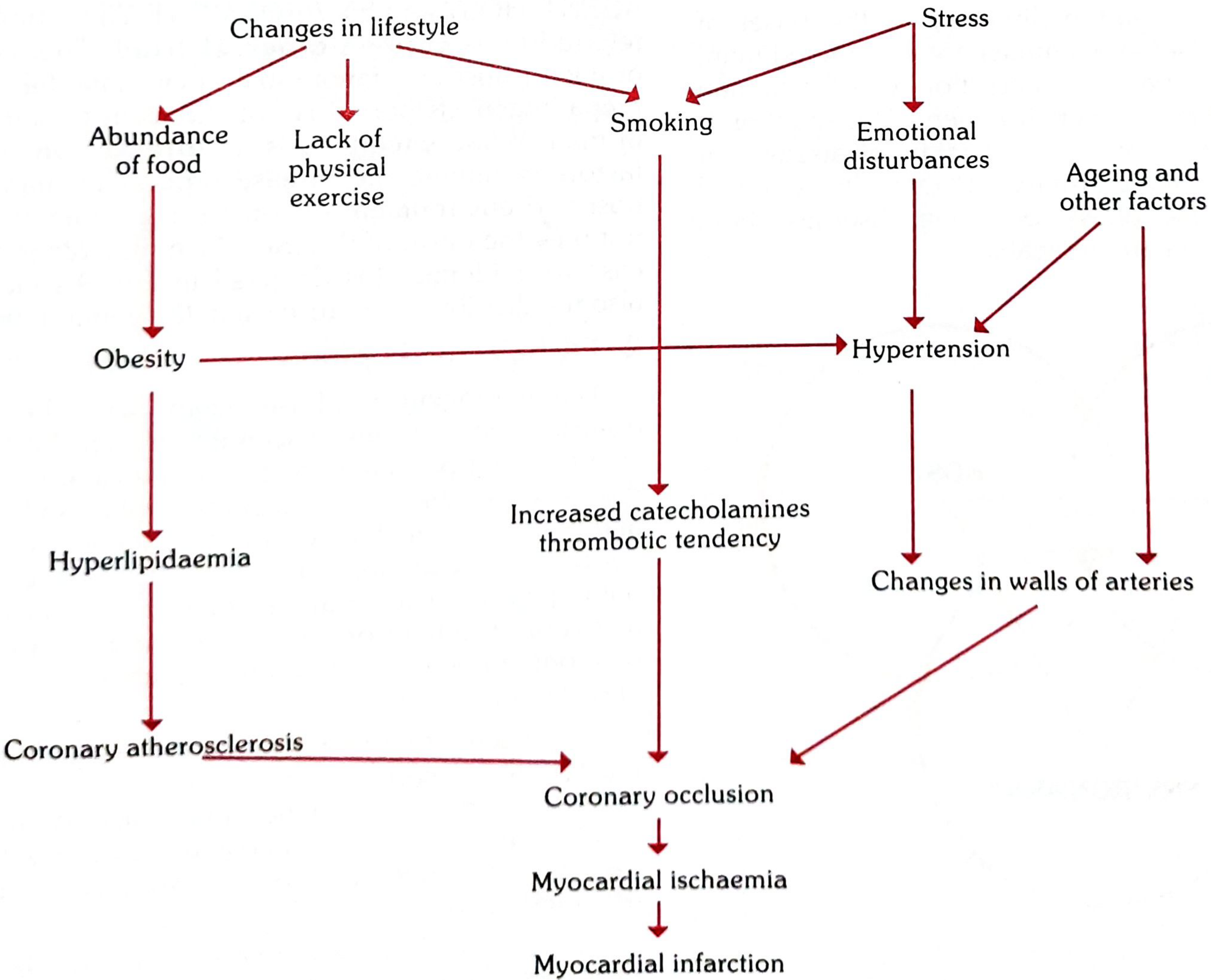
Reading this web:
- Changes in lifestyle → abundance of food + lack of exercise → Obesity → Hyperlipidaemia → Coronary atherosclerosis
- Stress → Smoking + Emotional disturbances → Hypertension → Changes in arterial walls
- Ageing contributes to hypertension
- Obesity also contributes directly to Hypertension
- Smoking raises catecholamines and thrombotic tendency
- Multiple paths converge on Coronary occlusion → Myocardial ischaemia → Myocardial infarction
Key Principles of the Web
| Principle | Explanation |
|---|---|
| Multiple causation | Disease results from many factors acting together, not one single cause |
| Interrelationship | Factors in the web influence each other; it is not a linear chain |
| Unequal weighting | Individual factors in the web are NOT all of equal importance; their relative importance is measured by relative risk |
| Partial control is possible | You do NOT need to remove ALL links to control disease - eliminating just one sufficiently important link may be enough to prevent disease |
| Probabilistic, not deterministic | Exposure to a risk factor raises the probability of disease; it does not guarantee it |
Uses in Prevention
This is arguably the greatest practical value of the web model. Because the web maps all points of intervention, it allows planners to identify where in the causal chain prevention is possible.
1. Identifying Multiple Entry Points for Intervention
The web reveals that you can interrupt disease at many different points. In the MI example above:
- Upstream (distal) factors: address lifestyle changes, stress, food abundance (social/policy interventions)
- Intermediate factors: manage obesity, smoking cessation, treat hypertension (clinical + public health)
- Proximal factors: anti-thrombotic therapy, statins (medical management)
2. Efficient Disease Control Without Eliminating All Causes
As Park's textbook explicitly states:
"Sometimes removal or elimination of just one link or chain may be sufficient to control disease, provided that link is sufficiently important in the pathogenetic process."
This means, for example, that tobacco control alone can substantially reduce cardiovascular disease, even without addressing all other causal factors.
3. Prioritizing Interventions by Relative Risk
Since factors in the web have different weights (measured by relative risk), health planners can focus resources on the most impactful modifiable risk factors - e.g., hypertension and smoking carry greater relative risk for MI than stress alone.
4. Multisectoral Prevention Strategies
The web reveals that disease prevention is not purely a medical function. Upstream nodes (poverty, lifestyle changes, food availability) require intersectoral action - public policy, urban planning, education, and social welfare. This is the basis for the modern concept of social determinants of health.
5. Levels of Prevention
When viewed alongside the natural history of disease, the web supports all three levels of prevention:
- Primary prevention: Interrupt upstream nodes before the disease process starts (e.g., promote physical activity, reduce dietary fat to prevent obesity/hyperlipidaemia)
- Secondary prevention: Detect and manage intermediate states early (e.g., screen for hypertension, treat dyslipidaemia)
- Tertiary prevention: Reduce disability once disease is established (e.g., cardiac rehabilitation after MI)
6. Applications to Chronic Disease Research
In multifactorial diseases like coronary heart disease, psychiatric disorders, malnutrition, and rheumatological conditions, the web model guides researchers to study clusters of causes and how they interact - rather than hunting for a single pathogen.
Limitations of the Web of Causation
- Does not identify the spider - A noted critique by epidemiologist Nancy Krieger (1994, Social Science & Medicine) is that the web describes interacting factors but does not ask who or what structures the web - ignoring social, political, and economic root causes.
- Can become unwieldy - A fully drawn web is enormously complex and practically difficult to use.
- Biomedical bias - The original web tended toward individual biological and behavioral risk factors, underweighting structural/social determinants.
- Does not replace causal criteria - The web does not itself prove causation; Bradford Hill's criteria or similar frameworks are still needed to establish which associations in the web are truly causal.
Summary
The Web of Causation is a practical and conceptually rich model that:
- Replaces single-cause thinking with multifactorial, networked causation
- Is ideally suited to chronic non-communicable diseases
- Provides a map of all possible intervention points for prevention
- Recognizes that even partial disruption of the web can prevent disease
- Underpins modern approaches to public health planning and health promotion
Source: Park's Textbook of Preventive and Social Medicine, pp. 45-46; Association and Causation, p. 100
Iceberg phenomenon
The Iceberg Phenomenon in epidemiology refers to the concept that clinically apparent (diagnosed) disease represents only the visible "tip" of the iceberg, while a much larger mass of undiagnosed, subclinical, or latent disease exists below the surface in the community.
Searching sources...
Finding Sources
Searching the Web
iceberg phenomenon epidemiology disease prevention significance
Reading File
Now let me get the iceberg diagram that is referenced on page 46.
Finding Sources
Reading File
Loading Image
Finding Sources
I now have everything needed for a thorough answer.
Iceberg Phenomenon of Disease
The Concept
The iceberg phenomenon of disease is a fundamental concept in epidemiology that draws an analogy between disease in a community and a floating iceberg. Just as only a small fraction of an iceberg is visible above the waterline while the vast bulk lies submerged, only a small fraction of disease in a community is clinically apparent - the rest remains hidden, undiagnosed, and unknown.
The concept is closely linked to, and represents a natural extension of, the spectrum of disease.
The Iceberg Diagram (Park's Textbook of Preventive and Social Medicine)
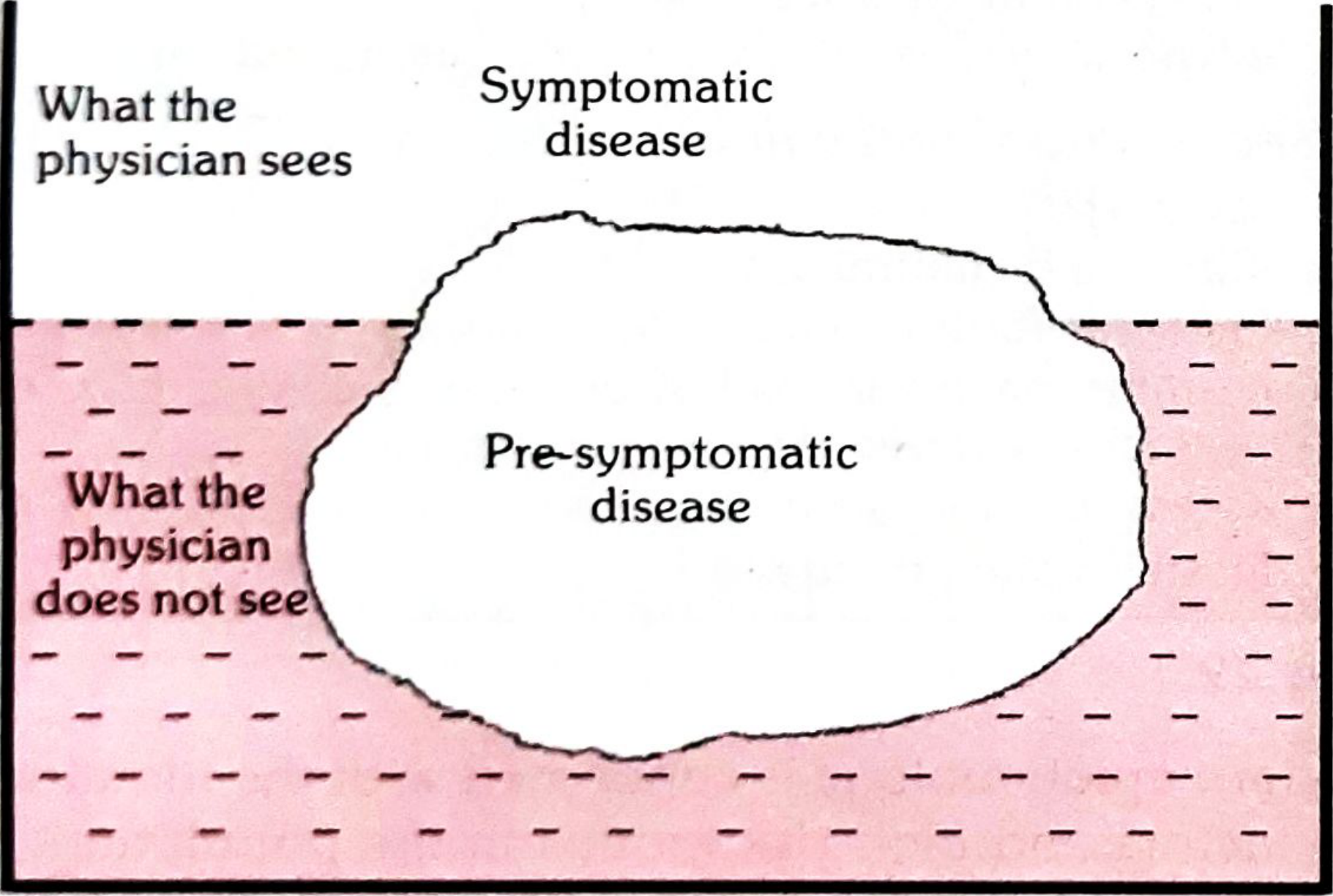
Fig. 10 - The Iceberg of Disease
Structure of the Disease Iceberg
| Zone | What it Represents | Who Sees It |
|---|---|---|
| Tip (above waterline) | Symptomatic, clinically diagnosed cases | Physician / hospital |
| Waterline | The demarcation between apparent and inapparent disease | - |
| Submerged mass | Latent cases, sub-clinical cases, presymptomatic cases, undiagnosed cases, and carriers | Hidden from the healthcare system |
The waterline is the key dividing line. Everything above it is what the physician sees in clinical practice; everything below constitutes the hidden reservoir of disease in the community.
Components of the Submerged Portion
The submerged part of the iceberg includes:
- Sub-clinical (inapparent) cases - infection or disease is present but produces no symptoms detectable by the patient
- Presymptomatic cases - disease has begun pathologically but symptoms have not yet appeared
- Latent cases - organism is present but disease is dormant (e.g., latent TB infection)
- Carriers - individuals who harbor and may transmit a pathogen without showing disease themselves (e.g., typhoid carriers)
- Undiagnosed cases - symptomatic individuals who have not yet sought or received medical care
Examples Where the Submerged Portion is Large
In several diseases, the hidden morbidity far exceeds the known morbidity:
| Disease | Iceberg Significance |
|---|---|
| Hypertension | Majority of hypertensives are unaware of their condition - the "silent killer" |
| Diabetes mellitus | Large numbers have impaired fasting glucose or undiagnosed T2DM |
| Anaemia | Widespread sub-clinical iron deficiency, especially in children and women |
| Malnutrition | Subclinical deficiency states outnumber overt kwashiorkor/marasmus cases |
| Mental illness | Most psychiatric morbidity in the community goes untreated or unrecognized |
| Tuberculosis | Latent TB infection is vastly more prevalent than active clinical TB |
| Poliomyelitis | For every paralytic case, hundreds of sub-clinical infections occur |
| Hepatitis B | Chronic carrier state with no overt symptoms is very common |
Factors Determining the Size and Shape of the Iceberg
The size of the submerged (hidden) portion depends on:
- Agent factors: virulence, pathogenicity, and infectivity of the organism
- Host factors: immunity, nutritional status, age, genetic susceptibility
- Environmental factors: sanitation, access to healthcare, population density
- Healthcare access: availability and quality of diagnostic services determines how much of the iceberg gets detected
Significance and Uses in Preventive Medicine
The iceberg concept has profound practical implications:
1. Reveals the True Burden of Disease
Statistics based only on hospital records or notified cases massively underestimate the true disease burden. The iceberg reminds planners that official figures represent only the tip.
2. Basis for Screening Programmes
The primary public health response to the iceberg phenomenon is screening - the active search for disease in apparently healthy people. The iceberg directly justifies the need to look below the waterline rather than wait for symptomatic patients to present.
As Park's textbook states: "The active search for disease among apparently healthy people is a fundamental aspect of prevention."
3. Detects Hidden Reservoirs of Infection
The submerged portion - especially carriers and sub-clinical cases - represents a reservoir of infection that can sustain transmission chains even when clinical cases appear to be controlled. Detecting and managing this hidden reservoir is essential for eradication programmes (e.g., smallpox, polio).
4. Guides Resource Allocation and Health Planning
Understanding that the visible caseload is only a fraction of true morbidity allows health planners to forecast the actual need for healthcare services, drugs, and personnel more accurately.
5. Advances Understanding of Disease Pathogenesis
Studying sub-clinical and presymptomatic cases gives insight into the natural history and progression of disease - what triggers transition from the submerged to the visible portion of the iceberg.
6. Challenge to Preventive Medicine
As noted in Park's Textbook:
"One of the major deterrents in the study of chronic diseases of unknown aetiology is the absence of methods to detect the subclinical state - the bottom of the iceberg."
Developing better biomarkers, screening tools, and population surveillance methods is therefore a continuing challenge driven by the iceberg concept.
Relationship to Spectrum of Disease
The iceberg phenomenon and the spectrum of disease are closely related concepts:
- The spectrum of disease describes the range of manifestations - from subclinical infection at one end to severe disease and death at the other.
- The iceberg gives a spatial/visual representation of how those stages are distributed in the community - the majority being sub-clinical (submerged), the minority being clinical (visible).
Together they help explain why:
- Not everyone exposed to a pathogen becomes sick
- Herd immunity thresholds matter
- Clinical experience alone gives a distorted picture of a disease
Source: Park's Textbook of Preventive and Social Medicine, pp. 46 & 100
How does screening help detect cases below the waterline?
Screening is the primary tool for detecting disease in the submerged portion of the iceberg - it actively goes into the community to find people who have no symptoms and would never present to a doctor on their own.
Searching sources...
Finding Sources
Finding Sources
Finding Sources
Reading File
Reading File
Reading File
Reading File
Reading File
Loading Image
Loading Image
Excellent - I now have all the textbook content and diagrams needed for a complete, well-illustrated answer.
How Screening Detects Cases Below the Waterline
The Core Mechanism
The iceberg waterline separates symptomatic disease (what the physician sees) from pre-symptomatic and sub-clinical disease (what remains hidden). The fundamental problem is that people below the waterline have no symptoms, so they will never seek care on their own. Screening solves this by reversing the usual patient-doctor dynamic: instead of waiting for sick people to come in, health workers go out to apparently healthy people and apply tests to find hidden disease.
"The active search for disease among apparently healthy people is a fundamental aspect of prevention."
- Park's Textbook of Preventive and Social Medicine
Screening is formally defined as:
"The search for unrecognized disease or defect by means of rapidly applied tests, examinations or other procedures in apparently healthy individuals."
The Mechanism: How It Works Step-by-Step
1. Targeting the Apparently Healthy
Screening is applied to people who feel well and are not seeking care. This is what fundamentally distinguishes it from diagnosis (which only happens when a patient presents with complaints). The initiative comes from the investigator or public health agency, not the patient.
2. A Rapid, Simple First Test Sorts the Population
Screening tests are designed to be:
- Wide-application - applicable to large numbers quickly
- Inexpensive - so whole populations can be tested
- Low physician-time - technicians can administer them; the physician only interprets
This allows the hidden, sub-clinical mass of disease to be systematically sorted from those who are truly disease-free.
3. Outcomes of Screening
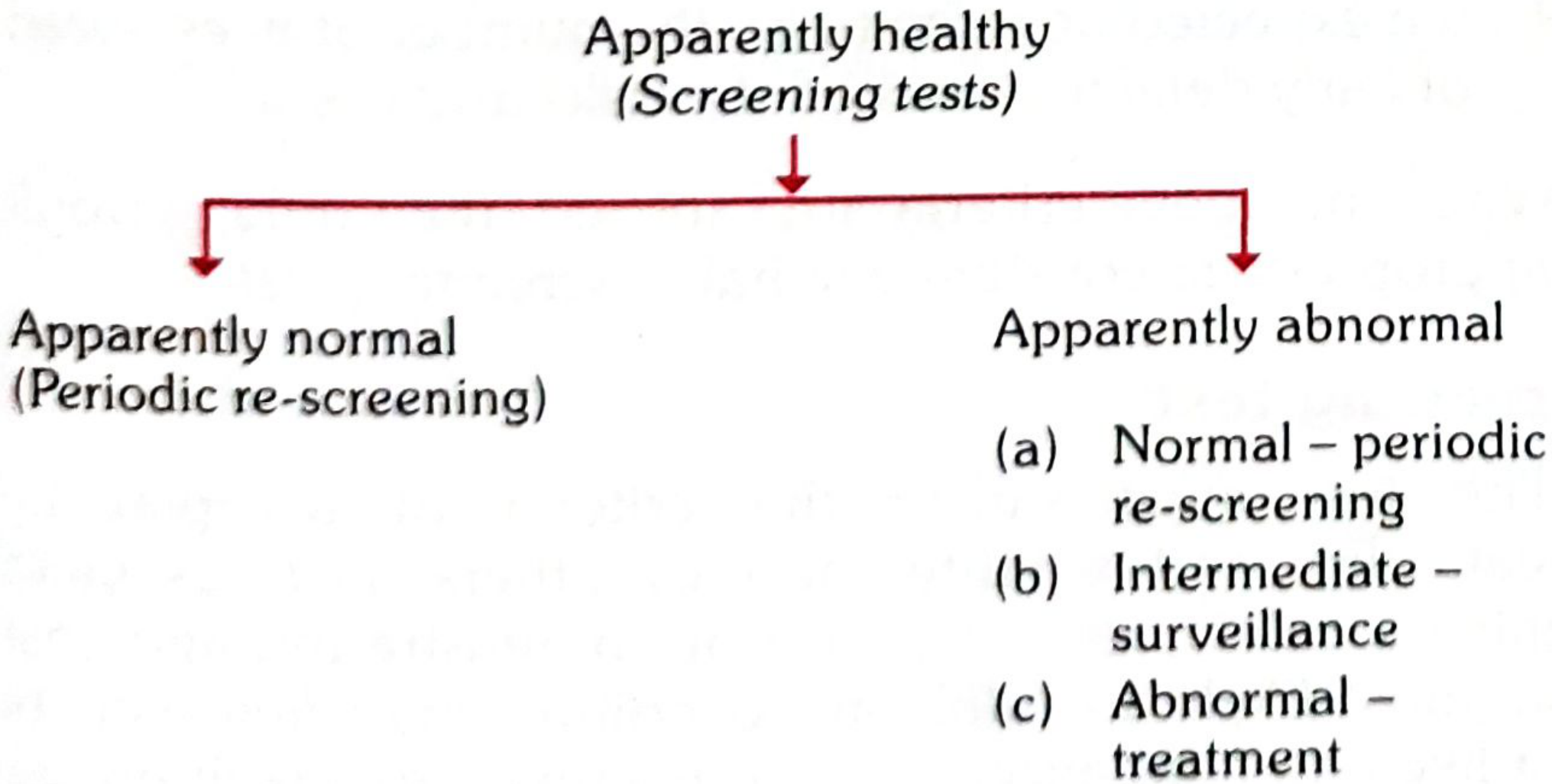
Fig. 2 - Possible outcomes of screening
From the apparently healthy population, screening produces three outcomes:
- Apparently normal → return for periodic re-screening
- Apparently abnormal - Normal → periodic surveillance
- Apparently abnormal - Abnormal → referred for full diagnostic work-up and treatment
This is key: a positive screening test does not diagnose. It identifies people who need further evaluation - "lifting" them from the submerged iceberg for the first time.
4. Confirmation by Diagnostic Tests
Once a person screens positive, they are referred for full clinical and laboratory diagnosis. Only at this point does a formal diagnosis occur and treatment begin. Screening is thus the first gate through which submerged cases pass before entering the visible (diagnosed) portion of the iceberg.
The Concept of "Lead Time" - Why Early Detection Matters
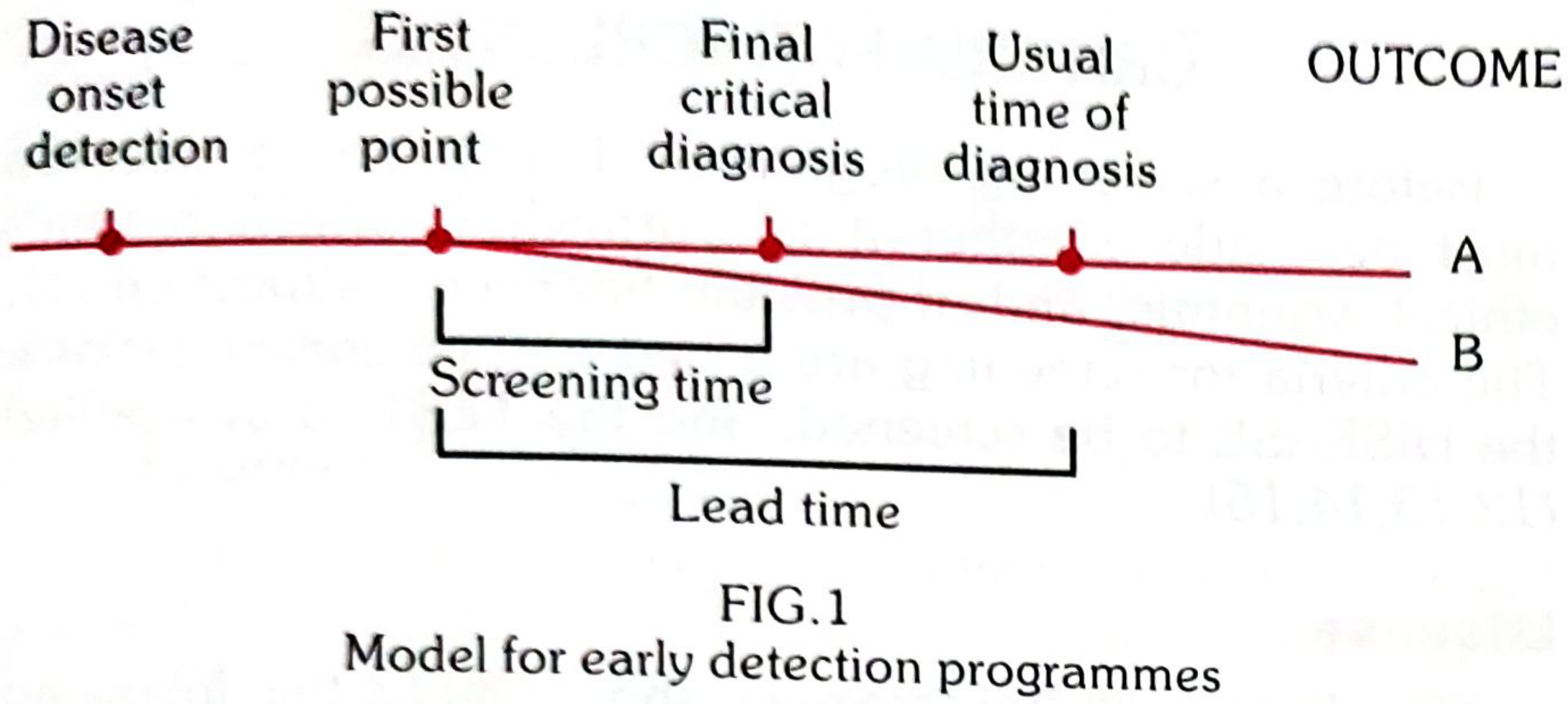
Fig. 1 - Model for early detection programmes
Lead time is the advantage gained by screening - the period between:
- Diagnosis by early detection (screening picks up disease in the sub-clinical stage)
- Diagnosis by usual means (patient presents symptomatically)
In the diagram:
- Line A = the usual disease course without screening (diagnosis happens late)
- Line B = disease course with screening (diagnosis happens earlier, outcome is better)
- The benefit = B - A (the improvement in outcome attributable to early detection)
For lead time to matter, disease must be caught before the final critical point - the stage beyond which treatment cannot reverse permanent damage or prevent death. This is why screening is only worthwhile for diseases that have a recognizable latent or early asymptomatic stage with enough time to intervene effectively.
Four Uses of Screening in Detecting Below-Waterline Cases
| Use | Also Called | What It Does | Example |
|---|---|---|---|
| Case detection | Prescriptive screening | Finds unrecognized disease for the individual's own benefit | Neonatal PKU screening, breast cancer screening |
| Control of disease | Prospective screening | Finds cases to protect others from infection | TB screening of immigrants, STD screening |
| Research | - | Maps natural history; generates prevalence and incidence data | Hypertension surveys, cancer registries |
| Education | - | Creates public and professional awareness | Diabetes awareness camps |
Three Types of Screening - How They Reach Different Parts of the Iceberg
a. Mass Screening
The whole population (or a large sub-group) is screened regardless of individual risk. This is the broadest net - e.g., mass chest X-ray for tuberculosis. However, indiscriminate mass screening is only justified when backed by effective treatment that changes outcomes.
b. High-Risk (Selective) Screening
More efficient - applied only to epidemiologically defined high-risk groups. For example:
- Screening for cervical cancer in lower socioeconomic groups
- Screening family members of a known diabetic or hypertensive
- Screening for risk factors (e.g., elevated serum cholesterol) before disease develops
This approach also extends to screening for risk factors themselves - catching people at the very deepest level of the iceberg, before pathological change has even begun.
c. Multiphasic Screening
Multiple tests applied simultaneously in a single session - a blood test, urine test, lung function, audiometry, and visual acuity all in one visit. This maximizes the yield of hidden disease per person screened. However, randomized studies in the UK and USA have shown it does not consistently reduce mortality and raises costs without clear benefit, so its use is now questioned.
Criteria That Make Screening Work for Below-Waterline Cases
Not every disease can be usefully screened for. For screening to successfully detect sub-clinical cases, the disease must meet these conditions:
- Must be an important health problem (high enough prevalence to justify the effort)
- Must have a recognizable latent or early asymptomatic stage (something to detect below the waterline)
- Natural history must be understood well enough to know when the disease becomes irreversible
- A test must exist that can detect the disease before signs and symptoms appear
- Facilities for confirmatory diagnosis must be available
- Effective treatment must exist - there is no point detecting disease if nothing can be done
- Early treatment must demonstrably reduce morbidity and mortality compared to late treatment
- Expected benefits must exceed the risks and costs
The test itself must be: acceptable, repeatable, valid (sensitive and specific), simple, safe, rapid, and affordable.
Screening vs. Diagnostic Testing - The Key Distinction
| Feature | Screening Test | Diagnostic Test |
|---|---|---|
| Applied to | Apparently healthy people | Sick or symptomatic patients |
| Applied to | Groups | Individual patients |
| Accuracy | Less accurate | More accurate |
| Cost | Less expensive | More expensive |
| Basis for treatment? | No - only triggers further investigation | Yes |
| Who initiates? | Investigator/public health agency | Patient with a complaint |
This contrast makes clear why screening is the uniquely appropriate tool for the iceberg: it is designed precisely to operate in the population below the waterline, where no complaint exists to bring someone to a doctor.
Summary
Screening detects below-waterline cases by:
- Proactively going to asymptomatic people rather than waiting for symptoms
- Applying rapid, low-cost tests that can process large populations
- Gaining lead time - catching disease before the point of no return
- Sorting people into those needing further diagnosis and treatment vs. those needing re-screening
- Targeting high-risk groups or risk factors to reach even the deepest sub-clinical levels
Without screening, the submerged iceberg remains invisible, diseases progress unchecked, and the community bears a hidden burden of preventable morbidity and mortality.
Source: Park's Textbook of Preventive and Social Medicine, pp. 155-157
Define prevention and how medical officer at Phc can practise primary prevention
Prevention refers to measures taken to forestall the onset of disease, arrest its progress, or reduce its consequences. It operates at multiple levels - primary (before disease begins), secondary (early detection), and tertiary (limiting disability). A PHC Medical Officer is ideally placed to practice primary prevention through health promotion and specific protection activities.
Searching sources...
Finding Sources
Finding Sources
Finding Sources
Finding Sources
Finding Sources
Reading File
Finding Sources
Finding Sources
Reading File
Reading File
Finding Sources
Reading File
Reading File
I now have rich, comprehensive textbook material. Let me compile the full answer.
Definition of Prevention and Primary Prevention at the PHC
Definition of Prevention
Prevention is defined as measures applied to forestall the onset of disease, arrest its progress, or reduce its consequences. In the words of Park's Textbook:
"Prevention implies anticipatory action taken to reduce the possibility of a disease or disorder affecting man, or to counter the worsening of the condition, if present."
Three levels of prevention are classically described (Leavell and Clark), and modern epidemiology adds a fourth:
| Level | Timing | Target | Aim |
|---|---|---|---|
| Primordial | Before risk factors emerge | General population, especially children | Prevent risk factors from developing at all |
| Primary | Pre-pathogenesis phase | Healthy individuals | Prevent the disease from ever occurring |
| Secondary | Early pathogenesis | Presymptomatic or early disease | Early diagnosis and prompt treatment |
| Tertiary | Established disease | Sick patients | Limit disability; rehabilitate |
"Three levels of prevention are now recognized: primary, intended to prevent disease among healthy people; secondary, directed towards those in whom the disease has already developed; and tertiary, to reduce the prevalence of chronic disability consequent to disease."
- Park's Textbook of Preventive and Social Medicine, p. 37
The cornerstone of preventive medicine is primary prevention.
Definition of Primary Prevention
"Primary prevention can be defined as action taken prior to the onset of disease, which removes the possibility that a disease will ever occur."
- Park's Textbook of Preventive and Social Medicine, p. 52
It intervenes in the pre-pathogenesis phase - before any pathological change has begun - using two broad approaches:
1. Health Promotion
General measures that improve overall health and resistance without targeting any specific disease. These raise the level of health of the whole individual and community.
2. Specific Protection
Measures directed against specific diseases or their causative agents (e.g., immunization against polio, use of insecticide-treated nets against malaria).
Primary prevention goes beyond merely averting disease. It encompasses positive health - enabling every individual to lead a socially and economically productive life.
How a Medical Officer at the PHC Can Practise Primary Prevention
The Medical Officer at the PHC is described in Park's as the "captain of the health team" - planner, promoter, supervisor, coordinator, and evaluator. The PHC covers a population of approximately 30,000 (20,000 in hilly/tribal areas), making the MO uniquely positioned to reach the community before disease occurs.
Primary prevention activities at the PHC fall under two categories:
A. Health Promotion Activities
These address the host by improving general health, resistance, and awareness.
1. Health Education
- Conduct health education sessions for communities on lifestyle modification - diet, exercise, tobacco avoidance, alcohol use, personal hygiene
- Educate mothers on infant feeding, complementary feeding, and child nutrition
- Create public awareness on sanitation, safe water use, and prevention of vector breeding
- Educating schoolchildren via regular school visits - the MO is mandated to visit schools regularly and organize medical check-ups alongside health talks
2. Maternal and Child Health (MCH) Services
- Antenatal care - ensures proper nutrition, iron/folic acid supplementation, and tetanus toxoid in pregnancy
- Promotion of institutional delivery and postnatal care
- Promotion of exclusive breastfeeding for the first 6 months
- Monitoring child growth and nutrition through growth monitoring
3. Nutrition Interventions
- Identify and address malnutrition through supplementary nutrition programmes
- Vitamin A supplementation to prevent nutritional blindness
- Iron and folic acid supplementation to prevent anaemia
- Iodine supplementation to prevent iodine deficiency disorders
4. Family Planning
- The MO organizes and conducts tubectomy and vasectomy camps
- Provides family planning counselling and contraceptive services to promote planned parenthood - itself a form of primary prevention (averts complications of unsafe abortion, maternal mortality, etc.)
5. Environmental Health
- Sanitation improvement - safe disposal of human waste, control of open defecation
- Safe drinking water supply - chlorination monitoring, testing of water sources
- Solid and liquid waste management
- Vector control - surveillance for mosquito breeding, use of larvicides
B. Specific Protection Activities
These are directed at particular diseases or agents.
1. Immunization - Universal Immunization Programme (UIP)
This is one of the most impactful primary prevention activities at the PHC. The MO is specifically tasked with:
- Planning and implementing UIP as per national guidelines
- Ensuring maximum population coverage
- Maintaining proper cold chain equipment and vaccine storage
- Ensuring adequate vaccine supplies
Vaccines under UIP provide specific protection against: BCG (TB), OPV (polio), DPT, hepatitis B, measles-rubella, typhoid, and others.
2. Chemoprophylaxis
- Malaria - seasonal chemoprophylaxis in endemic areas; mass drug administration (e.g., DEC for lymphatic filariasis)
- Iron and folic acid supplementation in pregnancy as prophylaxis against anaemia
- INH prophylaxis for household contacts of open TB cases
3. Protection Against Environmental and Occupational Hazards
- Enforcing safe food handling practices
- Surveillance of water quality
- Advising on protection from occupational hazards in agricultural communities (e.g., pesticide safety)
4. IMNCI (Integrated Management of Neonatal and Childhood Illness)
The MO ensures proper implementation of IMNCI guidelines - addressing the leading causes of child mortality through a preventive and promotive package at the community and facility level.
5. Vector Control
- Spraying of insecticides (indoor residual spraying for malaria)
- Distribution of insecticide-treated bed nets
- Source reduction measures - elimination of stagnant water
6. National Health Programme Implementation
The MO ensures that all national health programmes are being implemented in the PHC area, including:
- National Vector Borne Disease Control Programme (NVBDCP)
- National Tuberculosis Elimination Programme (NTEP)
- National Programme for Control of Blindness (NPCB)
- Reproductive and Child Health Programme (RCHP)
- National Non-Communicable Disease (NCD) Prevention Programme
C. Leadership and Team Coordination
Primary prevention at the PHC is a team effort led by the MO:
- Trains and supervises field health workers - ASHAs, ANMs, Anganwadi workers, Dais
- Visits each sub-centre regularly on fixed days to provide guidance
- Conducts monthly staff meetings to review progress of health activities
- Coordinates with anganwadi centres, schools, panchayats, and community leaders
- Uses community participation to sustain preventive programmes
"The success of a primary health centre depends largely on the team leadership which the medical officer is able to provide. The medical officer must be the planner, the promoter, the director, the supervisor, the coordinator as well as the evaluator."
- Park's Textbook of Preventive and Social Medicine, p. 1009
Summary Table: Primary Prevention at the PHC
| Approach | Activity | Example at PHC |
|---|---|---|
| Health promotion | Health education | Community talks on diet, hygiene, tobacco |
| Health promotion | Nutrition | Iron/folic acid, Vitamin A supplementation |
| Health promotion | MCH | Antenatal care, breastfeeding promotion |
| Health promotion | Environmental sanitation | Safe water, sanitation monitoring |
| Specific protection | Immunization (UIP) | BCG, OPV, DPT, measles vaccines |
| Specific protection | Chemoprophylaxis | INH prophylaxis, antimalarials |
| Specific protection | Vector control | IRS, bed net distribution |
| Specific protection | Family planning | Vasectomy/tubectomy camps |
| Leadership | Programme implementation | NTEP, NVBDCP, NCD prevention |
| Leadership | Team supervision | Training ASHAs, ANMs, Anganwadi workers |
Source: Park's Textbook of Preventive and Social Medicine, pp. 52-54 & 1009
Level of prevention
The levels of prevention describe the stages at which medical and public health interventions can interrupt the natural history of disease - from before risk factors develop all the way through to rehabilitation.
Searching sources...
Reading File
Reading File
Reading File
Finding Sources
Reading File
Reading File
Now let me fetch the key diagram that shows levels of prevention in relation to the natural history of disease.
Finding Sources
Reading File
Reading File
Now let me fetch the Fig. 9 diagram showing modes of intervention alongside natural history of disease.
Reading File
I now have all the content. Let me compile the complete, thorough answer.
Levels of Prevention
The concept of prevention has evolved from a simple "avoid disease" notion into a broad, structured framework corresponding to every stage of the natural history of disease. Modern epidemiology recognizes four levels:
- Primordial prevention
- Primary prevention
- Secondary prevention
- Tertiary prevention
These are linked to five modes of intervention described by Leavell and Clark.
Summary Table (Park's Table 10)
| Level | Phase of Disease | Aim | Actions | Target |
|---|---|---|---|---|
| Primordial | Underlying socioeconomic and environmental conditions leading to causation | Establish conditions that minimize hazards to health | Inhibit emergence of environmental, economic, social and behavioural risk conditions | Total population; achieved through public health policy and health promotion |
| Primary | Specific causal factors (pre-pathogenesis) | Reduce the incidence of disease | Health promotion + specific protection (immunization, environmental risk elimination, nutrition) | Total population, high-risk groups; achieved through public health programmes |
| Secondary | Early stage of disease (early pathogenesis) | Reduce prevalence by shortening duration | Early detection and prompt intervention - screening, case-finding, treatment | Individuals with early/established disease; achieved through early diagnosis and treatment |
| Tertiary | Late stage of disease | Reduce complications and disability | Minimize suffering; limit disability; maximize useful years of life | Patients with advanced disease; achieved through rehabilitation |
1. Primordial Prevention
A newer concept, primordial prevention receives particular attention in chronic disease prevention. It is primary prevention in its purest sense:
"Prevention of the emergence or development of risk factors in countries or population groups in which they have not yet appeared."
Rationale: Many adult diseases (e.g., obesity, hypertension, coronary heart disease) have their origins in childhood, because this is when lifestyles - eating patterns, smoking, physical activity habits - are first formed.
Target: Prevent risk factors from developing at all, especially in children and young people.
Main intervention: Individual and mass education
Examples:
- Discouraging children from taking up smoking
- Promoting physical activity in schools
- National policies against junk food advertising to children
- Encouraging healthy dietary habits in families before obesity develops
2. Primary Prevention
"Action taken prior to the onset of disease, which removes the possibility that a disease will ever occur."
It intervenes in the pre-pathogenesis phase - before any pathological process begins in the host.
Primary prevention goes beyond just preventing disease. It encompasses positive health: achieving and maintaining "an acceptable level of health that will enable every individual to lead a socially and economically productive life."
Two Major Modes of Primary Prevention:
A. Health Promotion
Not directed at any specific disease - strengthens overall host resistance through:
| Intervention | Examples |
|---|---|
| Health education | Educating communities about diet, hygiene, tobacco, alcohol |
| Environmental modification | Safe water supply, sanitary latrines, insect control, improved housing |
| Nutritional interventions | Food fortification, supplementary feeding, nutrition education |
| Lifestyle and behavioural changes | Promoting physical activity, smoking cessation, stress management |
B. Specific Protection
Directed at specific agents or diseases:
- Immunization (BCG, OPV, DPT, measles, hepatitis B)
- Chemoprophylaxis (antimalarials, INH for TB contacts)
- Use of specific nutrients (iodized salt for goitre, vitamin A for xerophthalmia)
- Protection against occupational hazards (PPE, safe work practices)
- Protection from carcinogens and allergens
- Control of environmental hazards (air/water pollution, noise control)
- Protection against accidents (road safety, workplace safety)
Two Strategies for Primary Prevention in Chronic Disease (WHO):
| Strategy | Description | Example |
|---|---|---|
| Population (mass) strategy | Directed at the whole population regardless of individual risk | Reduce dietary salt in the entire population to lower average blood pressure |
| High-risk strategy | Targets individuals identified as being at high risk through clinical screening | Screen and treat those with high serum cholesterol to prevent coronary heart disease |
"Fundamental public health measures such as sanitation, infection control, immunization, protection of food, milk, and water supplies, environmental protection, and protection against occupational hazards and accidents are all basic to primary prevention."
- Park's Textbook
3. Secondary Prevention
"Action which halts the progress of a disease at its incipient stage and prevents complications."
Secondary prevention operates in the early pathogenesis phase, after the disease process has started but before it produces overt symptoms or irreversible damage.
Two Key Interventions:
a. Early Diagnosis
- Screening of apparently healthy individuals
- Case-finding in those already attending health facilities
- Biochemical and morphological detection before symptoms appear
"A WHO Expert Committee defined early detection of health impairment as 'the detection of disturbances of homeostatic and compensatory mechanisms while biochemical, morphological, and functional changes are still reversible.'"
b. Adequate Treatment
- Prompt treatment arrests disease and prevents complications
- Reduces communicability of infectious diseases (protects the community simultaneously)
- Reduces duration of illness, thereby reducing prevalence
Like stamping out a spark rather than calling the fire brigade.
Limitations of secondary prevention:
- The patient has already experienced pain, anguish, and loss of productivity
- More expensive and less effective than primary prevention
- Often an imperfect tool in controlling disease transmission
Examples:
- Pap smear for early detection of cervical cancer
- Blood pressure screening for hypertension
- Sputum examination for TB in chest symptomatics
- Blood glucose testing for early diabetes
- Neonatal heel-prick test (PKU, hypothyroidism)
4. Tertiary Prevention
When disease has advanced into its late pathogenesis phase, the mode of intervention shifts to tertiary prevention.
"All measures available to reduce or limit impairments and disabilities, minimize suffering caused by existing departures from good health and to promote the patient's adjustment to irremediable conditions."
Tertiary prevention works along the sequence:
Disease → Impairment → Disability → Handicap
The goal is to interrupt this chain at as early a point as possible.
Concepts:
- Impairment: Any loss or abnormality of psychological, physiological or anatomical structure or function (e.g., loss of a limb, defective vision)
- Disability: Restriction or inability to perform activities considered normal for one's age and sex
- Handicap: Social disadvantage resulting from impairment or disability - inability to discharge obligations expected in society
Two Modes of Tertiary Prevention:
a. Disability Limitation
- Prevents the transition from impairment to disability
- Achieved through adequate treatment when a patient presents late
- Examples: Treating diabetic neuropathy to prevent foot ulcers/amputation; cataract surgery to restore vision; deformity-correcting surgery in leprosy
b. Rehabilitation
"The combined and coordinated use of medical, social, educational and vocational measures for training and retraining the individual to the highest possible level of functional ability."
Four components:
| Component | Aim |
|---|---|
| Medical rehabilitation | Restoration of function (physiotherapy, occupational therapy) |
| Vocational rehabilitation | Restoration of capacity to earn a livelihood |
| Social rehabilitation | Restoration of family and social relationships |
| Psychological rehabilitation | Restoration of personal dignity and confidence |
Examples: Schools for the blind, provision of prosthetic limbs, reconstructive surgery in leprosy, graded exercises in neurological disorders, speech therapy after stroke.
"The patient must be restored and retrained 'to live and work within the limits of his disability but to the hilt of his capacity'."
The Five Modes of Intervention (Leavell and Clark)
These five modes map the levels of prevention onto the natural history of disease as a continuous spectrum:
| Mode | Level of Prevention | Phase |
|---|---|---|
| 1. Health promotion | Primary | Pre-pathogenesis |
| 2. Specific protection | Primary | Pre-pathogenesis |
| 3. Early diagnosis and treatment | Secondary | Early pathogenesis |
| 4. Disability limitation | Tertiary | Late pathogenesis |
| 5. Rehabilitation | Tertiary | Late pathogenesis |
Key Principle
The four levels of prevention are not mutually exclusive. They form a continuous spectrum. For example, supplying food supplements to a family could be primary prevention for some members (who are well nourished) and secondary prevention (curative) for others who are already malnourished. The boundaries are more semantic than substantive.
Primary prevention remains the ideal - it is the safest, most cost-effective, and causes no patient suffering. Interventions at earlier stages are always more feasible, yield better results, and are less demanding of resources than attempting to rehabilitate established disease.
Source: Park's Textbook of Preventive and Social Medicine, pp. 52-54
Create a prevention framework for a specific disease like TB or diabetes
Let me clarify your preference before diving in.
Asking for Preferences
Which disease should the prevention framework cover?
Searching sources...
Finding Sources
Finding Sources
Reading File
Reading File
Reading File
Finding Sources
Reading File
Reading File
Reading File
I now have all the content needed. Let me also quickly pull the risk factor section for completeness.
Finding Sources
I now have everything needed. Here is the complete prevention framework.
Prevention Framework for Type 2 Diabetes Mellitus
Type 2 Diabetes Mellitus (T2DM) is an ideal model for a prevention framework because it is a multifactorial, largely preventable chronic disease with a well-understood natural history, modifiable risk factors, and interventions available at every level.
Natural History of T2DM (Basis of the Framework)
Understanding where to intervene requires understanding the disease progression:
Normal glucose tolerance
↓
Risk factor accumulation (obesity, sedentary lifestyle, poor diet)
↓
Insulin resistance (pre-clinical)
↓
Impaired Fasting Glucose (IFG) / Impaired Glucose Tolerance (IGT) ← DETECTABLE
↓
Overt Type 2 Diabetes (asymptomatic phase) ← SCREENABLE
↓
Symptomatic Diabetes
↓
Complications: retinopathy, nephropathy, neuropathy, CVD, foot disease
↓
Disability (blindness, renal failure, amputation) → Death
Each stage of this progression is the target of one level of prevention.
LEVEL 0 - Primordial Prevention
Phase: Before any risk factors have emerged
Goal: Prevent risk factors from developing in the population, especially in children and young adults
This is the deepest and most cost-effective level. Many adult risk factors for T2DM begin to form in childhood through lifestyle habits.
| Intervention | Action |
|---|---|
| Mass health education | Promote healthy diets (high fibre, low refined sugar/fat) at population level through schools, media, community programmes |
| Physical activity promotion | Integrate physical exercise into school curricula; build parks, cycling paths; workplace activity breaks |
| Food environment policy | Restrict junk food advertising to children; tax sugar-sweetened beverages; promote food labelling |
| Maternal nutrition | Prevent malnutrition and gestational diabetes - linked to offspring metabolic risk |
| Anti-tobacco and anti-alcohol policies | Alcohol promotes obesity and pancreatic damage; tobacco worsens insulin resistance |
"There is pressing need for primordial prevention - that is, prevention of the emergence of risk factors in countries in which they have not yet appeared."
- Park's Textbook
LEVEL 1 - Primary Prevention
Phase: Pre-pathogenesis (risk factors present but disease not yet started)
Goal: Reduce incidence of T2DM
Key Risk Factors to Target:
| Modifiable | Non-Modifiable (inform screening) |
|---|---|
| Obesity (esp. abdominal) | Age ≥45 years |
| Sedentary lifestyle | Family history of diabetes |
| Unhealthy diet (high fat, refined sugar) | Ethnicity (South Asian, African, Latino) |
| Alcohol excess | Gestational diabetes history |
| Diabetogenic drugs (e.g., steroids, OCP) | Polycystic ovary syndrome (PCOS) |
| Stress | Prior IGT or IFG |
| Hypertension, dyslipidaemia | Low birth weight |
Two Strategies (WHO Recommended):
A. Population (Mass) Strategy
Directed at the entire community regardless of individual risk:
- Community-wide dietary counselling: adequate protein, high dietary fibre, avoidance of sweet/processed foods
- Promotion of daily physical activity (at least 30 minutes of moderate exercise, 5 days/week)
- Environmental modifications: safe walking and cycling infrastructure
- Mass media campaigns on healthy weight
- Integration with NCD prevention programmes (NPCDCS in India)
B. High-Risk Strategy
Targeted at individuals already identified at elevated risk:
- Correct obesity - maintain BMI within normal range (18.5-24.9 kg/m²)
- Weight loss of 5-10% in overweight individuals reduces T2DM risk by 35-58%
- Structured exercise programme
- Dietary modification: replace saturated fat with monounsaturated fat; increase fibre
- Avoid diabetogenic drugs (oral contraceptives where possible)
- Treat hypertension and dyslipidaemia (reduce atherosclerosis risk)
- Abstinence from alcohol and smoking cessation
- Metformin in very high-risk individuals (IGT) - reduces incidence by 25-31%
Evidence of Benefit (Table 4, Park's):
| Intervention | Reduction in T2DM Incidence |
|---|---|
| Lifestyle intervention in high-risk persons | 35-58% |
| Metformin in high-risk persons | 25-31% |
LEVEL 2 - Secondary Prevention
Phase: Early pathogenesis - disease present but asymptomatic or early symptomatic
Goal: Reduce prevalence by shortening duration; prevent complications
A. Screening (Detecting the Submerged Iceberg)
T2DM is a classic iceberg disease - a large proportion of diabetics are undiagnosed in the community. Screening brings these cases to the surface.
Who to screen (high-risk groups):
- All adults ≥45 years
- Adults <45 years with: obesity (BMI ≥25), family history, sedentary lifestyle, prior IGT/IFG, gestational diabetes, hypertension, dyslipidaemia, PCOS
Screening tools:
| Test | Cut-off for Diagnosis |
|---|---|
| Fasting plasma glucose | ≥7.0 mmol/L (126 mg/dL) |
| 2-hour post-load plasma glucose (OGTT) | ≥11.1 mmol/L (200 mg/dL) |
| Random plasma glucose | ≥11.1 mmol/L (200 mg/dL) |
| HbA1c | ≥6.5% (48 mmol/mol) |
Under NPCDCS (India's National Programme), opportunistic screening of all persons above 30 years of age is conducted at sub-centres and community health centres.
B. Adequate Treatment (Halting Disease Progression)
Once diagnosed, aims are:
- Maintain blood glucose as close to normal as practicable
- Maintain ideal body weight
Treatment modalities:
- Diet alone (small, balanced, frequent meals)
- Diet + oral antidiabetic drugs (metformin, sulphonylureas, DPP-4 inhibitors)
- Diet + insulin
Monitoring for complications:
| Parameter | Frequency |
|---|---|
| Blood glucose (fasting + post-prandial) | Regular (self-monitoring at home) |
| HbA1c | Every 6 months (reflects 2-3 month glucose control) |
| Blood pressure | Every visit |
| Urine for protein and ketones | Periodically |
| Fundus examination (retinopathy) | Annually |
| Foot examination (neuropathy, circulation) | Each visit |
| Renal function (creatinine, eGFR) | Annually |
| Lipid profile | Annually |
Self-care is a pillar of secondary prevention:
- Adherence to diet and drug regimens
- Home blood glucose monitoring
- Self-administration of insulin
- Carrying a diabetic identification card
- Recognition of hypoglycaemia symptoms
Evidence-based benefits of secondary prevention:
| Intervention | Benefit |
|---|---|
| Glycaemic control (HbA1c >9%) | 30% reduction in microvascular disease per 1% drop in HbA1c |
| BP control (>130/80 mmHg) | 35% reduction in macrovascular + microvascular disease per 10 mmHg drop |
| Annual eye examinations | 60-70% reduction in serious vision loss |
| Foot care in high-risk patients | 50-60% reduction in serious foot disease |
| ACE inhibitor use | 42% reduction in nephropathy; 22% drop in cardiovascular disease |
LEVEL 3 - Tertiary Prevention
Phase: Established complications causing disability
Goal: Limit disability; maximize function; rehabilitate
A. Disability Limitation
Prevent established complications from causing irreversible harm:
| Complication | Disability Limitation Measure |
|---|---|
| Diabetic retinopathy | Laser photocoagulation to prevent blindness; intravitreal injections |
| Diabetic nephropathy | ACE inhibitor/ARB therapy; dialysis when indicated |
| Diabetic neuropathy | Foot care clinics; padded footwear; pain management |
| Diabetic foot | Wound care; debridement; vascular surgery to prevent amputation |
| Cardiovascular disease | Antiplatelet therapy, statins, cardiac rehabilitation |
| Diabetic ketoacidosis | Prompt insulin therapy and hydration to prevent death |
B. Rehabilitation
For patients with established disability from diabetic complications:
| Disability | Rehabilitation |
|---|---|
| Blindness | Training in use of Braille, white cane; vocational retraining |
| Amputation | Prosthetic limb fitting; physiotherapy; vocational rehabilitation |
| Renal failure | Renal transplant; dialysis; dietary adaptation |
| Stroke from diabetic CVD | Physiotherapy, speech therapy, occupational therapy |
| Psychological impact | Counselling, diabetes support groups, mental health referral |
C. Specialized Diabetic Clinics
The tertiary level is organized through dedicated diabetic clinics providing:
- High-order diagnostic and management skills
- Subspecialty referrals (ophthalmology, nephrology, vascular surgery)
- Diabetic registries (local and national) for epidemiological surveillance
- Research into pathogenesis and new treatments
Complete Framework at a Glance
┌────────────────────────────────────────────────────────────────────────┐
│ PREVENTION FRAMEWORK: TYPE 2 DIABETES MELLITUS │
├──────────────┬──────────────────────┬────────────────┬─────────────────┤
│ LEVEL │ TARGET │ MODE │ KEY ACTIONS │
├──────────────┼──────────────────────┼────────────────┼─────────────────┤
│ PRIMORDIAL │ Healthy population │ Mass education │ Healthy diet, │
│ │ (esp. children) │ Policy change │ active living, │
│ │ │ │ food policy │
├──────────────┼──────────────────────┼────────────────┼─────────────────┤
│ PRIMARY │ Population + │ Health promo │ Weight control, │
│ │ High-risk groups │ Specific prot. │ exercise, │
│ │ (obese, IGT, family │ (Metformin for │ dietary change, │
│ │ hx, sedentary) │ very high risk)│ avoid risk drugs│
├──────────────┼──────────────────────┼────────────────┼─────────────────┤
│ SECONDARY │ Undiagnosed + │ Screening │ OGTT/FBS/HbA1c, │
│ │ Newly diagnosed │ Early treatment│ glucose control,│
│ │ diabetics │ Self-care │ HbA1c, BP, ACEi │
├──────────────┼──────────────────────┼────────────────┼─────────────────┤
│ TERTIARY │ Diabetics with │ Disability │ Eye/foot/kidney │
│ │ complications │ limitation + │ care, laser Rx, │
│ │ │ Rehabilitation │ dialysis, physio│
└──────────────┴──────────────────────┴────────────────┴─────────────────┘
National Programme: NPCDCS (India)
The National Programme for Prevention and Control of Cancer, Diabetes, CVDs and Stroke (NPCDCS) implements this framework at scale:
- Primordial/Primary: Mass health education; healthy lifestyle promotion through media
- Secondary: Opportunistic screening of all persons >30 years at sub-centres and CHCs; NCD clinics at CHC and district levels
- Tertiary: Strengthening of district hospitals and tertiary facilities; training of doctors and paramedics
The programme covers all districts of India and is integrated into the primary health care system.
Source: Park's Textbook of Preventive and Social Medicine, pp. 443-447 & 875-877
Create a similar prevention framework for TB (infectious disease)
Searching sources...
Finding Sources
Finding Sources
Finding Sources
Finding Sources
Reading File
Reading File
Reading File
Reading File
Reading File
Reading File
Reading File
Finding Sources
Finding Sources
Finding Sources
Finding Sources
Reading File
Reading File
I now have comprehensive textbook material across all levels. Here is the complete framework.
Prevention Framework for Tuberculosis (TB) - An Infectious Disease
TB is a model infectious disease for a prevention framework. Unlike T2DM (where the focus is primarily on lifestyle modification), TB prevention has a distinct infectious disease logic: break the chain of transmission at every possible point - from the environment, to the host, to the infected case.
Natural History of TB (Basis of the Framework)
Mycobacterium tuberculosis in the environment
↓
Exposure via airborne droplet nuclei from an infectious source
↓
Primary infection (90% contained by immune system)
↓
LATENT TB INFECTION (LTBI) ← asymptomatic, non-infectious, Mantoux +ve
↓ [10% lifetime reactivation risk; 5% in first 2 years]
↓ [Higher risk with HIV, malnutrition, DM, silicosis, immunosuppression]
Active Pulmonary TB (sputum smear +ve) ← INFECTIOUS - 10-15 secondary cases/year
↓
Progressive disease → cavitation, haemoptysis, respiratory failure
↓
Extra-pulmonary TB (miliary, meningitis, spine, abdomen)
↓
Disability (destroyed lung, Pott's disease, paralysis) → Death
Each stage is the target of a prevention level. Critically, one smear-positive untreated case infects an estimated 10-15 people per year - making the infectious case the engine of the epidemic.
LEVEL 0 - Primordial Prevention
Phase: Before any risk factors or social conditions favouring TB emerge
Goal: Prevent the social, environmental, and host conditions that make populations vulnerable to TB
TB is fundamentally a disease of poverty. Its determinants are social, not just microbiological.
| Intervention | Action |
|---|---|
| Poverty alleviation | Improve income, employment, and social equity - poor nutrition and overcrowding are the deepest drivers of TB burden |
| Improved housing | Reduce overcrowding; increase ventilation; reduce indoor air pollution - all reduce the density of infectious droplet nuclei |
| Nutritional improvement | Malnutrition impairs cell-mediated immunity, the primary defence against M. tuberculosis; ensure adequate protein, calories, and micronutrients |
| Tobacco and alcohol control | Smoking damages airways and impairs mucociliary clearance; alcohol causes immunosuppression - both increase TB risk |
| Reduce HIV prevalence | HIV is the most powerful risk factor for reactivation of LTBI; HIV control is primordial prevention for TB |
| Mass health education | Educate communities about TB transmission, symptoms, stigma reduction, and the importance of early presentation |
LEVEL 1 - Primary Prevention
Phase: Susceptible host in an environment where M. tuberculosis is present
Goal: Prevent TB infection (exposure prevention) and prevent disease in those exposed (host protection)
Primary prevention in TB has two components: environmental/source control and host protection via BCG vaccination and chemoprophylaxis.
A. Environmental and Source Reduction
| Measure | Detail |
|---|---|
| Ventilation | Adequate air exchange in homes, hospitals, clinics, prisons, and congregate settings dilutes infectious aerosol concentration |
| Natural light and UV exposure | UV radiation kills M. tuberculosis; sunlit, well-ventilated environments reduce transmission |
| Airborne infection control (AIC) | In healthcare settings: negative-pressure isolation rooms; N95 respirators for healthcare workers; UV germicidal irradiation |
| Infection control in high-risk settings | Prisons, homeless shelters, mining communities, hospitals - all require specific AIC guidelines |
| Pasteurization and boiling of milk | Controls bovine TB (M. bovis) transmitted via infected milk |
B. BCG Vaccination (Specific Protection)
BCG is the only vaccine against TB and one of the most widely administered vaccines in the world, given under India's Universal Immunization Programme.
| Feature | Detail |
|---|---|
| Vaccine | Live attenuated M. bovis (Bacille Calmette-Guérin); Danish 1331 strain (used in India) |
| Aim | Induce artificial primary infection → stimulate acquired resistance → reduce morbidity and mortality from primary TB in those most at risk |
| Route | Intradermal (ID), left deltoid region |
| Dose | 0.1 mg in 0.1 ml for children >4 weeks; 0.05 ml for newborns <4 weeks |
| Schedule | At birth (or as soon as possible after) - under UIP |
| Who benefits most | Children under 5 - BCG protects powerfully against severe disseminated forms (miliary TB, TB meningitis); less effective against adult pulmonary TB |
| Contraindications | Active TB, immunocompromised states (HIV with low CD4), high-dose steroids |
"The aim of BCG vaccination is to induce a benign, artificial primary infection which will stimulate an acquired resistance to possible subsequent infection with virulent tubercle bacilli, and thus reduce the morbidity and mortality from primary tuberculosis among those most at risk."
- Park's Textbook
C. Chemoprophylaxis - Preventive Treatment of Latent TB (LTBI)
Not everyone with LTBI needs treatment - but high-risk groups do.
Priority target groups for LTBI treatment:
| High-risk Group | Reason |
|---|---|
| Children <5 years, household contacts of smear+ve case | Underdeveloped immunity; rapid progression to disease |
| PLHIV (People Living with HIV) | Most powerful reactivation risk factor - 20-30x higher |
| People with silicosis | Impaired lung clearance |
| People with diabetes mellitus | Impaired immune function; 3x higher TB risk |
| People with chronic renal failure | Immunosuppressed |
| Prisoners, homeless, illicit drug users | High transmission settings |
| Immigrants from high-burden to low-burden countries | |
| Recent close contacts of infectious cases |
Recommended LTBI treatment regimens (WHO):
| Regimen | Duration |
|---|---|
| Isoniazid (INH) daily | 9 months (preferred) |
| INH + Rifapentine once weekly | 12 weeks |
| Rifampicin daily | 4 months (better tolerability than INH) |
| INH + Rifampicin daily | 3-4 months |
LEVEL 2 - Secondary Prevention
Phase: Active TB disease present - symptomatic or pre-symptomatic
Goal: Early case detection and prompt treatment to cure the patient AND interrupt transmission (protecting the community = primary prevention for contacts)
"Effective anti-microbial treatment reduces infectivity by 90 per cent within 48 hours."
This is the most powerful component of TB control:
"The most powerful weapon, however, is the combination of case-finding and treatment."
- Park's Textbook
A. Case Detection (Finding the Submerged Iceberg)
1. Passive Case Finding
- Over 60% of pulmonary TB patients develop symptoms (persistent cough, fever, haemoptysis, night sweats, weight loss) and seek care on their own
- All chest symptomatics presenting at any health facility are tested for TB
- This is the main strategy in high-burden countries - maximally cost-effective
2. Intensified/Active Case Finding (ICF)
Provider-initiated, targeted at vulnerable groups who may not seek care:
| Strategy | How |
|---|---|
| Community screening | Door-to-door visits; mobile screening vans; targeted invitation of contacts |
| Institutional screening | Systematic active screening in hospitals, prisons, homeless shelters, mines |
| Contact tracing | All household and close contacts of smear-positive cases screened |
3. Case-Finding Tools
| Tool | Use |
|---|---|
| Sputum Smear Microscopy (ZN/fluorescent) | First-line; rapid; detects smear-positive cases |
| CBNAAT/NAAT (CB-NAAT, TrueNat) | Rapid molecular diagnosis; detects M.TB + rifampicin resistance in 2 hours; preferred for children, PLHIV, extrapulmonary TB |
| Culture (LJ medium / MGIT) | Gold standard; 2-8 weeks; used for drug-resistant TB follow-up |
| Line Probe Assay (LPA) | Detects drug resistance to RIF, INH (FL-LPA) and fluoroquinolones (SL-LPA) |
| Chest X-ray | Useful for smear-negative PTB, children, miliary TB; not routine for smear+ve |
| Tuberculin Skin Test (Mantoux) | Detects infection (LTBI); 1 TU PPD-RT 23 used in India |
| IGRA | Interferon-gamma release assay; detects LTBI; unaffected by BCG |
B. Treatment - DOTS (Directly Observed Treatment Short-course)
Adequate treatment cures TB and eliminates the patient as a source of infection.
DOTS Strategy - 5 Components (NTEP/RNTCP):
- Political will and administrative commitment - sustained government support
- Quality-assured sputum smear microscopy - diagnosis before treatment
- Adequate supply of quality-assured short-course chemotherapy drugs - free of cost
- Directly Observed Treatment (DOT) - a DOT provider watches every dose (ensures adherence, prevents resistance)
- Systematic monitoring and accountability - case registers, outcome tracking
Standard treatment regimens:
| Category | Regimen | Duration |
|---|---|---|
| New DS-TB cases | 2HRZE / 4HRE | 6 months (2 intensive + 4 continuation) |
| Previously treated | Based on DST | Per drug sensitivity result |
| MDR-TB | Bedaquiline + longer regimen | 18-24 months |
H = Isoniazid, R = Rifampicin, Z = Pyrazinamide, E = Ethambutol
Why DOTS works:
- Reduces infectivity within 48 hours of starting treatment
- Prevents emergence of drug resistance
- Achieves >85% cure rates
- Protects the community by eliminating the infectious source
C. Contact Investigation
Every identified case triggers investigation of household and close contacts:
- Screen all contacts for symptoms, Mantoux test, CBNAAT
- Children <5 and PLHIV contacts → offer preventive treatment (LTBI regimen)
- Identify secondary cases early before further spread
LEVEL 3 - Tertiary Prevention
Phase: Established TB with complications or disability
Goal: Limit disability; prevent sequelae; rehabilitate patients to productive life
A. Disability Limitation
| Complication | Intervention |
|---|---|
| Drug-resistant TB (MDR/XDR) | Regimens based on drug sensitivity testing; longer-course regimens; newer drugs (bedaquiline, delamanid) |
| TB meningitis | Corticosteroids + anti-TB therapy; reduces mortality and neurological sequelae |
| Pott's disease (spinal TB) | Bracing, spinal surgery for deformity/cord compression |
| Haemoptysis | Bronchoscopy, embolization; surgical resection if needed |
| Pleural/pericardial complications | Aspiration, drainage; pericardectomy for constrictive pericarditis |
| Miliary TB | Intensive anti-TB treatment with steroids |
| TB and HIV co-infection | Concurrent ART + anti-TB treatment; careful drug interaction management |
B. Rehabilitation
With effective chemotherapy, the proportion needing formal rehabilitation has greatly reduced. Groups still requiring it:
| Need | Intervention |
|---|---|
| Destroyed lung / respiratory disability | Pulmonary rehabilitation - graded exercise, breathing techniques, oxygen therapy |
| Post-surgical lung resection | Physical and vocational rehabilitation |
| Chronically ill, still sputum-positive | Sheltered accommodation; nutritional support; continued treatment supervision |
| Pott's disease with paralysis | Physiotherapy, orthotics, vocational retraining |
| Psychological impact | Counselling; TB support groups; addressing stigma |
| Nutritional rehabilitation | Supplementary nutrition programmes (Nikshay Poshan Yojana in India - ₹500/month) |
C. Surveillance and Programme Monitoring
"Surveillance is an integral part of any effective tuberculosis programme."
Two aspects:
- Epidemiological surveillance: annual infection rates (ARI); incidence and mortality trends - shows whether the TB problem is static, increasing or decreasing
- Programme surveillance: BCG coverage rates; treatment success rates; cure rates; default rates; drug resistance patterns
National Programme: NTEP (India)
The National Tuberculosis Elimination Programme (previously RNTCP), aligned with WHO's END TB Strategy (target: eliminate TB by 2025 in India):
- Vision: Zero deaths, disease, and suffering due to TB
- Built on 5-component DOTS, expanded under STOP TB and End TB frameworks
- Nikshay portal: Digital TB notification and patient tracking system
- Nikshay Poshan Yojana: Nutritional support ₹500/month for all TB patients
- Target: 80% reduction in TB incidence and 90% reduction in TB deaths by 2030 (vs 2015 baseline)
Complete Framework at a Glance
┌────────────────────────────────────────────────────────────────────────────┐
│ PREVENTION FRAMEWORK: TUBERCULOSIS │
├──────────────┬────────────────────┬──────────────────┬─────────────────────┤
│ LEVEL │ TARGET │ MODE │ KEY ACTIONS │
├──────────────┼────────────────────┼──────────────────┼─────────────────────┤
│ PRIMORDIAL │ Population - │ Social policy │ Poverty reduction, │
│ │ social conditions │ Education │ better housing, │
│ │ │ │ nutrition, HIV ctrl │
├──────────────┼────────────────────┼──────────────────┼─────────────────────┤
│ PRIMARY │ Susceptible host │ BCG vaccine │ BCG at birth (UIP) │
│ │ Environment │ Chemoprophylaxis │ INH/RIF for LTBI │
│ │ │ AIC measures │ Ventilation, UV, │
│ │ │ │ isolation rooms │
├──────────────┼────────────────────┼──────────────────┼─────────────────────┤
│ SECONDARY │ Active TB cases │ Case detection │ Sputum microscopy, │
│ │ Contacts │ DOTS treatment │ CBNAAT, ICF, DOTS │
│ │ │ Contact tracing │ 6-month regimen │
├──────────────┼────────────────────┼──────────────────┼─────────────────────┤
│ TERTIARY │ Complicated/ │ Disability limit.│ MDR-TB treatment, │
│ │ Disabled TB │ Rehabilitation │ surgery, physio, │
│ │ │ Surveillance │ nutrition support │
└──────────────┴────────────────────┴──────────────────┴─────────────────────┘
Key Difference: TB vs T2DM Prevention Frameworks
| Feature | TB (Infectious) | T2DM (Chronic NCD) |
|---|---|---|
| Main driver | Infectious agent (M. tuberculosis) | Lifestyle risk factors |
| Primordial focus | Social determinants (poverty, housing) | Lifestyle habits (diet, activity) |
| Primary prevention | BCG vaccine + source control + chemoprophylaxis | Lifestyle modification + Metformin |
| Secondary prevention | Case-finding + DOTS (curing cases = preventing new infections) | Screening + glycaemic control |
| Secondary benefit | Curing one patient prevents 10-15 new infections | Controlling one patient mainly benefits that individual |
| Tertiary | Rehabilitation; MDR-TB management | Diabetic clinic; complication management |
| Programme | NTEP (End TB) | NPCDCS |
Source: Park's Textbook of Preventive and Social Medicine, pp. 214-234 & 481-485
This is a shared conversation. Sign in to Orris to start your own chat.