
Spinal cord
Reading File
The query "Spinal cord" is broad. Let me clarify what aspect you need before diving in.
Asking for Preferences
What aspect of the spinal cord are you interested in?
Searching sources...
Finding Sources
Finding Sources
Reading File
Reading File
Reading File
Reading File
Finding Sources
Loading Image
Loading Image
Reading File
Finding Sources
Loading Image
Reading File
Loading Image
Here is a comprehensive overview of the anatomy and structure of the spinal cord, drawn from multiple authoritative neuroscience and anatomy textbooks.
Spinal Cord - Anatomy & Structure
1. Overview and Position
The spinal cord is the cylindrical extension of the brain that runs within the vertebral canal. In adults, it is shorter than the vertebral column, terminating at the level of the L1-L2 vertebra as the conus medullaris (in neonates it extends to ~L3). Below the conus, a fibrous extension called the filum terminale tethers the cord to the first coccygeal segment.
The cord gives off 31 pairs of spinal nerves: 8 cervical, 12 thoracic, 5 lumbar, 5 sacral, and 1 coccygeal.
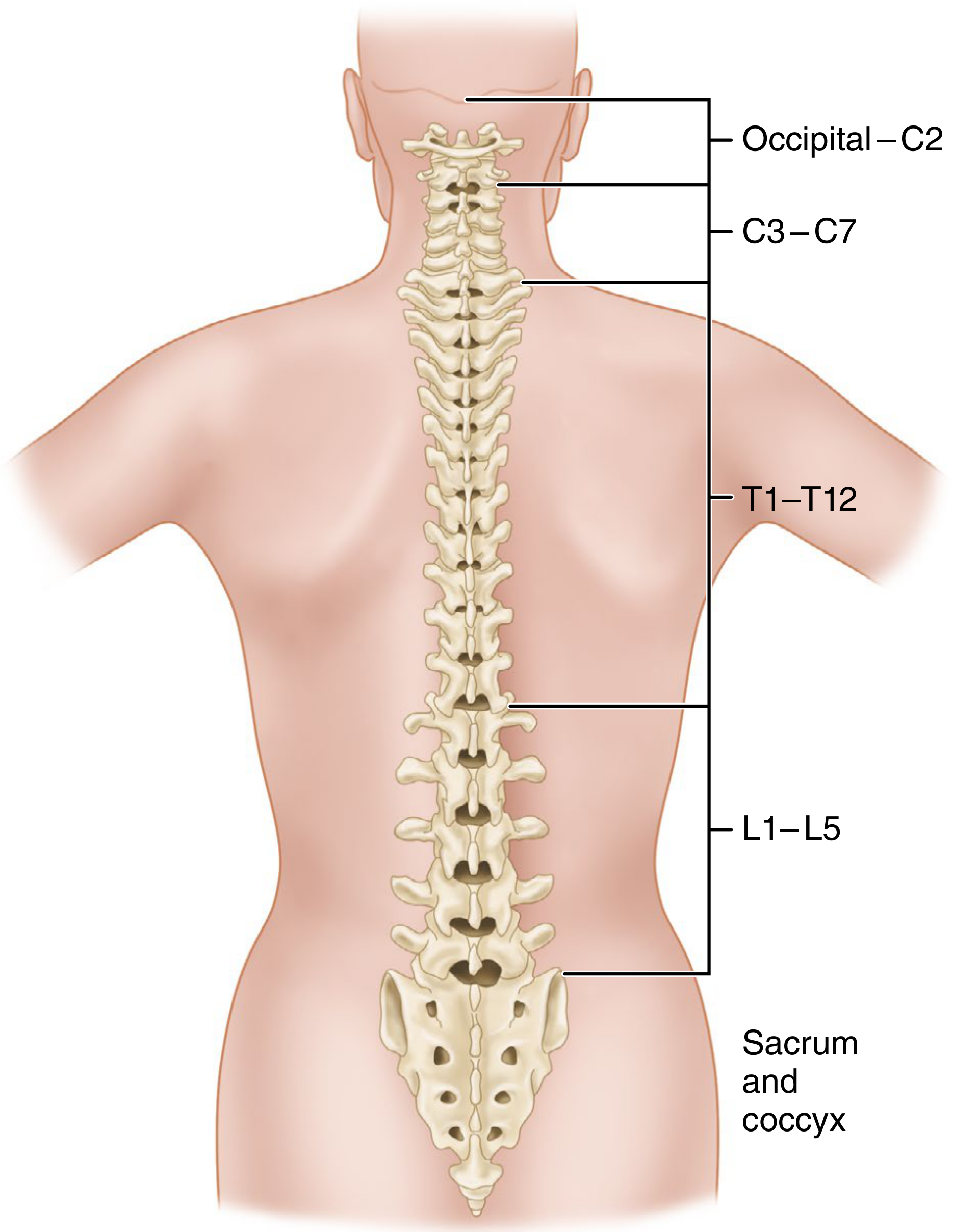
2. Meningeal Coverings
The spinal cord is surrounded by three protective membranes (meninges):
| Layer | Notes |
|---|---|
| Pia mater | Innermost; closely adherent to the cord surface |
| Arachnoid mater | Middle layer |
| Dura mater | Outermost; tough fibrous sheath |
The space between the pia and arachnoid is the subarachnoid space, which contains cerebrospinal fluid (CSF). The epidural space (between dura and vertebral canal) contains a valveless venous plexus known as Batson's plexus, which communicates freely with abdominal and pelvic veins.
3. Spinal Cord Enlargements
The cord is not uniform in diameter. It has two enlargements corresponding to the nerve plexuses for the limbs:
- Cervical enlargement (C5-T1): supplies the upper limbs via the brachial plexus
- Lumbosacral enlargement (L1-S3): supplies the lower limbs via the lumbar and sacral plexuses
These enlargements contain more gray matter (especially in the ventral horns) than the thoracic cord.
4. Cross-Sectional Anatomy
The classic "butterfly" or H-shaped gray matter is surrounded by white matter:
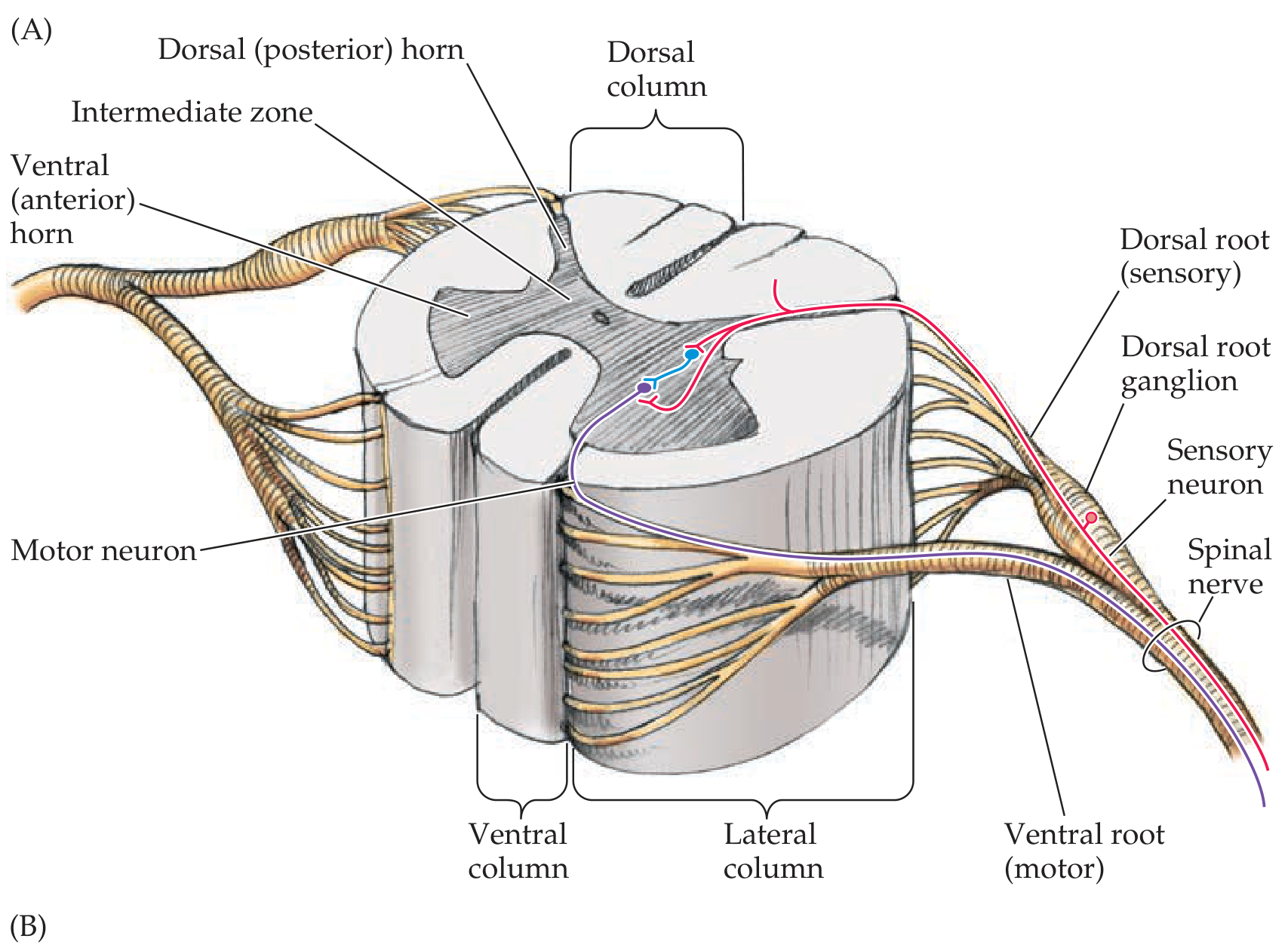
Gray Matter Horns
| Horn | Function |
|---|---|
| Dorsal (posterior) horn | Sensory processing - receives afferent input from dorsal roots |
| Ventral (anterior) horn | Contains lower motor neurons (alpha and gamma) that send axons via ventral roots |
| Lateral horn (T1-L2 only) | Preganglionic sympathetic neurons (intermediolateral cell column) |
| Intermediate zone | Interneurons; Clarke's nucleus (T1-L2); sacral parasympathetics (S2-4) |
White Matter Columns (Funiculi)
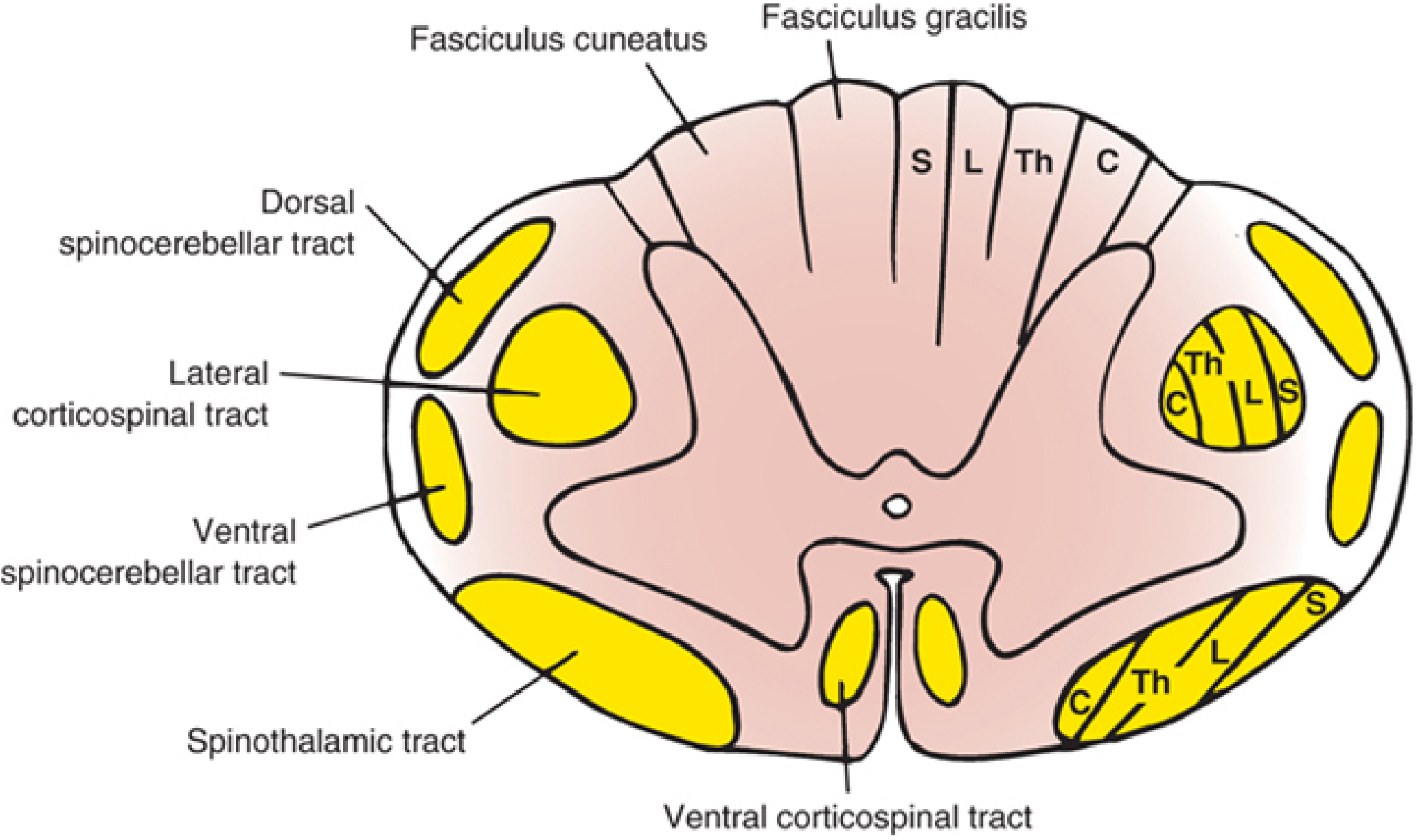
Three pairs of white matter columns carry the ascending (sensory) and descending (motor) tracts:
| Column | Key Tracts |
|---|---|
| Dorsal (posterior) | Fasciculus gracilis + fasciculus cuneatus (fine touch, vibration, proprioception) |
| Lateral | Lateral corticospinal tract (voluntary motor); spinothalamic tract; spinocerebellar tracts |
| Ventral (anterior) | Ventral corticospinal tract; spinothalamic fibers |
5. Rexed's Laminae
The gray matter is subdivided into 10 laminae (named by Swedish anatomist Bror Rexed), each with distinct functions:
| Lamina | Region | Key Nucleus/Function |
|---|---|---|
| I | Dorsal horn | Marginal zone (posterior marginal nucleus) - pain/temperature |
| II | Dorsal horn | Substantia gelatinosa of Rolando - pain modulation |
| III, IV | Dorsal horn | Nucleus proprius - sensory processing |
| V | Dorsal horn | Neck of dorsal horn (nucleus reticularis) |
| VI | Dorsal horn | Base of dorsal horn |
| VII | Intermediate zone | Clarke's nucleus, intermediolateral nucleus (sympathetics) |
| VIII | Ventral horn | Commissural nucleus |
| IX | Ventral horn | Alpha and gamma motor neurons (medial = axial; lateral = limb muscles) |
| X | Central gray | Surrounds the central canal (gray commissure) |
The zone of Lissauer (posterolateral tract) separates the dorsal gray horn from the surface and carries pain/temperature fibers one or two levels before synapsing.
6. Regional Variation by Level
The cord looks different at each level - shown here in myelin-stained cross sections:
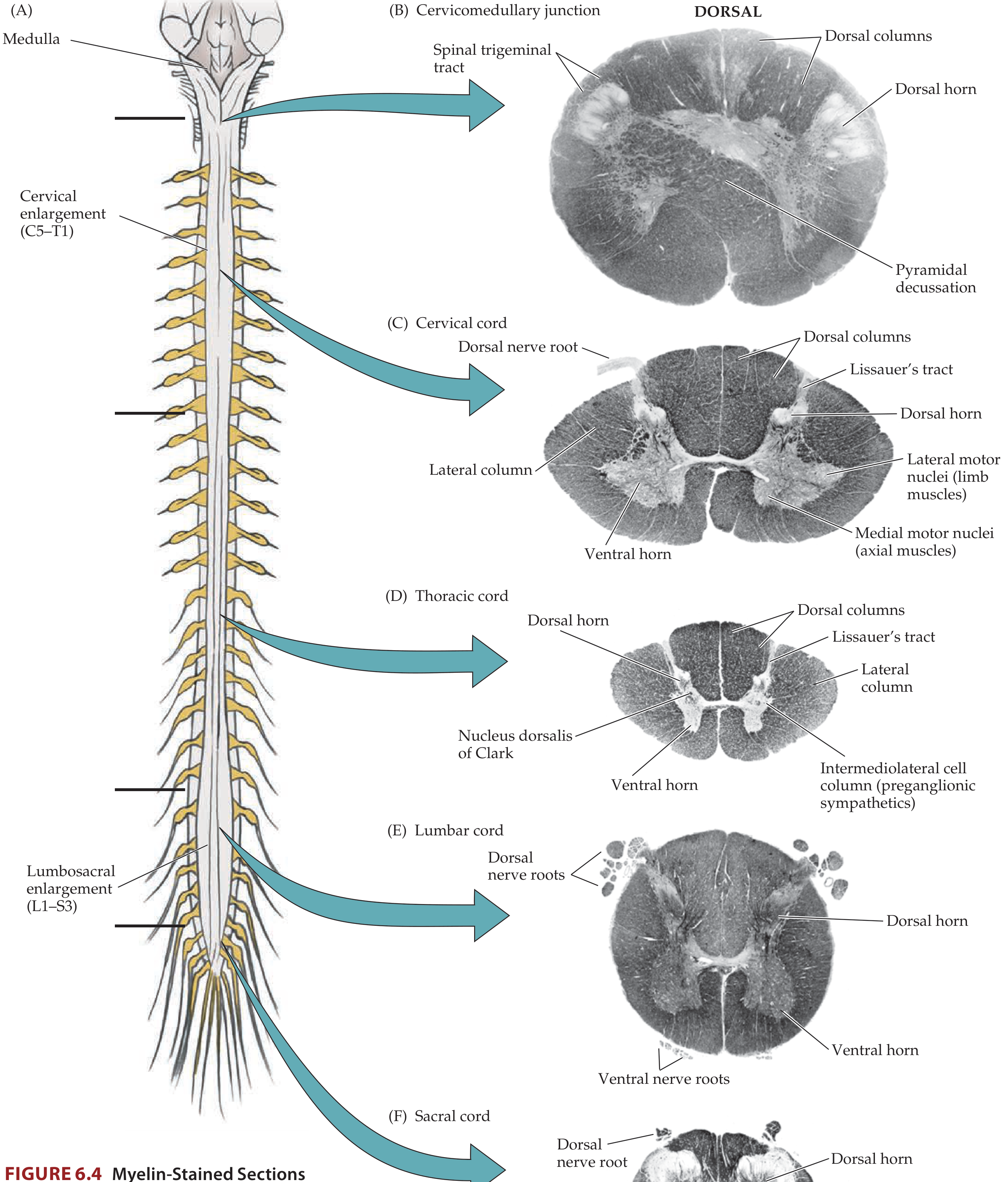
- Cervical cord: most white matter (all ascending fibers present + all descending yet to terminate); large gray matter at enlargement
- Thoracic cord: smaller; lateral horn present; Nucleus dorsalis of Clarke present (T1-L2)
- Lumbar cord: large ventral and dorsal horns; little white matter
- Sacral cord: mostly gray matter; sacral parasympathetic nucleus
7. Spinal Nerve Formation
At each spinal level:
- Dorsal (sensory) root: carries afferent fibers from peripheral sensory neurons whose cell bodies are in the dorsal root ganglion (DRG), located near the intervertebral foramen
- Ventral (motor) root: carries efferent fibers (mainly motor) from ventral horn neurons
- These unite to form the mixed spinal nerve
Exit level rules:
- C1-C7: nerve exits above the correspondingly numbered vertebra
- C8: exits between C7 and T1
- T1 and below: all nerves exit below the correspondingly numbered vertebra
Because the cord is shorter than the column, lumbar and sacral nerve roots travel a long distance within the canal before exiting - this bundle of roots below the conus is the cauda equina ("horse's tail").
8. Vascular Supply
| Artery | Territory |
|---|---|
| Anterior spinal artery (1 vessel, from vertebral arteries) | Anterior 2/3 of cord: anterior horns, lateral and anterior white matter columns |
| Posterior spinal arteries (2 vessels, from PICA or vertebral arteries) | Posterior 1/3: dorsal columns, part of dorsal horns |
| Artery of Adamkiewicz (great radicular artery, usually left T9-T12) | Major supply to lower thoracic and lumbar/sacral cord |
The mid-thoracic region (T4-T8) is a watershed zone with relatively reduced perfusion, making it most vulnerable to infarction (e.g., during aortic surgery).
Venous drainage flows into the epidural venous plexus (Batson's plexus) - valveless, which allows retrograde spread of pelvic infections or metastases (e.g., prostate cancer) to the vertebral column.
Sources: Neuroanatomy through Clinical Cases, 3rd Ed. | Localization in Clinical Neurology, 8th Ed. | Campbell's Operative Orthopaedics, 15th Ed. | Neuroscience: Exploring the Brain, 5th Ed.
This is a shared conversation. Sign in to Orris to start your own chat.