Tomorrow my viva practical bsc nursing Ist year abvmu inc

Asking for Preferences

Nursing foundation

Reading File
Searching the Web

BSc Nursing 1st year Nursing Foundation practical viva questions ABVMU INC important topics

Finding Sources
Reading Web Page

https://www.pw.live/nursing/exams/bsc-nursing-1st-semester-iโ€ฆ

Finding Sources
Searching the Web

BSc Nursing Foundation practical viva questions bed making vital signs injection technique hand washing steps

Here is your complete Nursing Foundation Viva Preparation Guide for BSc Nursing 1st Year (INC/ABVMU) - covering all the most commonly asked practical viva topics. Study this tonight!

๐Ÿฅ Nursing Foundation Viva - BSc Nursing 1st Year

ABVMU / INC Syllabus - Complete Revision Guide


1. HAND WASHING (Most Common Viva Topic)

Definition: Hand washing is the process of removing transient microorganisms from hands using soap and water.
WHO 5 Moments of Hand Hygiene:
  1. Before touching a patient
  2. Before a clean/aseptic procedure
  3. After body fluid exposure risk
  4. After touching a patient
  5. After touching patient surroundings
Steps of Hand Washing (6-step technique):
  1. Wet hands with water, apply soap
  2. Palm to palm - rub together
  3. Right palm over left dorsum, interlaced fingers (and vice versa)
  4. Palm to palm fingers interlaced
  5. Backs of fingers to opposing palms (interlocked)
  6. Rotational rubbing of left thumb clasped in right palm (and vice versa)
  7. Rotational rubbing with clasped fingers of right hand in left palm
  8. Rinse with water, dry with disposable towel, turn off tap with towel
Duration: 40-60 seconds with soap and water; 20-30 seconds with alcohol-based hand rub
Types: Medical (social) hand wash, Surgical (sterile) hand wash, Hand rub
Q: When do you NOT use alcohol-based hand rub? A: When hands are visibly soiled, after using toilet, suspected C. diff or norovirus

2. VITAL SIGNS (Temperature, Pulse, Respiration, Blood Pressure)

Temperature

RouteNormal RangeDuration
Oral97.6 - 99.6ยฐF (36.4 - 37.6ยฐC)3-5 min
Axillary96.6 - 98.6ยฐF (36 - 37ยฐC)10 min
Rectal98.6 - 100.6ยฐF (37 - 38ยฐC)3 min
Tympanic98.6ยฐF (37ยฐC)Seconds
Fever grades:
  • Low grade: 37.2 - 38ยฐC
  • Moderate: 38 - 39ยฐC
  • High grade: 39 - 40ยฐC
  • Hyperpyrexia: >40ยฐC
  • Hypothermia: <35ยฐC

Pulse

  • Normal rate: 60-100 bpm (adults)
  • Sites: Radial (most common), Carotid (emergency), Apical, Brachial, Femoral, Pedal, Temporal
  • Characteristics: Rate, Rhythm, Volume/Amplitude, Tension
  • Tachycardia: >100 bpm | Bradycardia: <60 bpm

Respiration

  • Normal rate: 12-20 breaths/min (adults)
  • Types of abnormal breathing: Tachypnoea (>20), Bradypnoea (<12), Apnoea (absent), Dyspnoea (difficulty), Cheyne-Stokes, Kussmaul

Blood Pressure

  • Normal: 120/80 mmHg
  • Hypertension: >140/90 mmHg
  • Hypotension: <90/60 mmHg
  • Korotkoff sounds: 5 phases - you MUST know these
  • Pulse pressure = Systolic - Diastolic (normal: 40 mmHg)
Q: What is the 5th vital sign? A: Pain (also accepted: oxygen saturation)

3. BED MAKING (Very Frequently Asked)

Types of Beds:

TypePurpose
Closed bedFor unoccupied room, new admission
Open bedFor ambulant patient (top sheet folded back)
Occupied bedPatient is in bed, cannot be moved
Post-operative (Anaesthetic/Surgical) bedReceiving post-op patient - fan-folded to one side
Cardiac bedFor cardiac patients, head elevated 45ยฐ
Fracture bedFor fracture patients, firm mattress, fracture board
Amputation bedStump bandages, cradle used
Principles of Bed Making:
  • Work from one side to the other to save time and energy
  • Never shake linen (spreads microorganisms)
  • Soiled linen directly into linen bag (never on floor)
  • Use body mechanics - face direction of work
  • Mitre/envelope corners for security

4. NURSING PROCESS (5 Steps - ADPIE)

StepFull NameWhat it involves
AAssessmentData collection - subjective & objective
DDiagnosisIdentify nursing problems (NANDA)
PPlanningSet goals, prioritize (Maslow's)
IImplementationCarry out nursing orders
EEvaluationAssess if goals met
Q: Difference between medical diagnosis and nursing diagnosis? A: Medical diagnosis - identifies disease (made by doctor). Nursing diagnosis - identifies patient's response to health problem (made by nurse).

5. INFECTION CONTROL & ASEPSIS

Medical Asepsis: Clean technique - reduces/prevents spread of microorganisms (e.g., hand washing, using clean gloves)
Surgical Asepsis: Sterile technique - completely destroys all organisms (e.g., wound dressing, catheterization)
Chain of Infection (6 links):
  1. Infectious Agent
  2. Reservoir
  3. Portal of Exit
  4. Mode of Transmission
  5. Portal of Entry
  6. Susceptible Host
Modes of Transmission: Contact (direct/indirect), Droplet, Airborne, Vehicle (food/water), Vector-borne
PPE (Personal Protective Equipment): Gloves, Gown, Mask, Goggles - don/doff sequence is important
Isolation types: Strict, Respiratory, Enteric, Wound/skin, Protective (reverse isolation)

6. INJECTIONS / MEDICATION ADMINISTRATION

Routes of Injection:

RouteAngleSiteVolume
Intradermal (ID)5-15ยฐInner forearm0.1-0.5 mL
Subcutaneous (SC)45ยฐ (or 90ยฐ if obese)Abdomen, outer arm, thigh0.5-1 mL
Intramuscular (IM)90ยฐDeltoid, Vastus lateralis, Ventrogluteal, DorsoglutealUp to 5 mL
Intravenous (IV)15-30ยฐCubital fossa, back of handAs ordered
Z-track technique: Used for IM injections with irritating medications (e.g., iron) - pulls skin 2.5-3.5 cm laterally before injecting
Q: Why aspirate before IM injection? A: To confirm needle is not in a blood vessel (though current evidence for routine aspiration is debated - check with your examiner's preference)

7. ORAL CARE / HYGIENE NEEDS

  • Oral care in unconscious patient - position head to side, use padded tongue depressor, suction available
  • Denture care - remove, clean with brush, store in labeled container with water
  • Frequency: at least twice daily; unconscious patients every 2 hours

8. NASOGASTRIC (NG) TUBE FEEDING

Purpose: Feeding, medication administration, gastric decompression, gastric lavage
Length to insert: Measure from tip of nose โ†’ earlobe โ†’ xiphisternum
Steps to confirm placement:
  1. Aspirate gastric contents and test pH (<5.5 = gastric)
  2. X-ray (gold standard)
  3. Inject air and auscultate (not recommended alone)
Types: Ryle's tube, Levin tube, Salem sump tube

9. URINARY CATHETERIZATION

Types:
  • Intermittent (in-out) catheter
  • Indwelling (Foley) catheter - balloon inflated with 5-10 mL sterile water
  • Supra-pubic catheter
Female vs Male: Female urethra = 4 cm; Male urethra = 20 cm
Catheter sizes: Measured in French (Fr) - each Fr = 0.33 mm
CAUTI Prevention (Catheter-Associated UTI): Strict asepsis, closed drainage system, daily perineal care, secure catheter to thigh, keep bag below bladder level

10. ENEMA

Definition: Introduction of fluid into the rectum and colon
Types:
TypePurposeSolution
Cleansing/EvacuantBefore surgery, bowel proceduresSoap water, normal saline
CarminativeRelieve flatulenceTurpentine/soap water
RetentionMedication/nutrition absorptionOil, drugs
Return-flow/Harris flushExpel flatusPlain water
Position: Left lateral (Sims' position) - why? Follows sigmoid colon anatomy

11. HOT & COLD APPLICATIONS

Hot ApplicationCold Application
PurposeRelaxes muscles, increases circulation, promotes healingReduces inflammation, bleeding, pain, fever
ExamplesHot water bag, fomentation, sitz bathIce bag, cold compress
Temperature40-46ยฐC10-18ยฐC
Time limit20-30 minutes15-20 minutes
ContraindicationAcute inflammation, bleedingPeripheral vascular disease
Counter-irritation (Revulsion): Heat applied to distant site to relieve pain at affected site

12. FLORENCE NIGHTINGALE & HISTORY OF NURSING

  • Born: 12 May 1820 (International Nurses Day) - Florence, Italy
  • Died: 1910
  • "Lady with the Lamp" - Crimean War (1853-1856) at Scutari hospital
  • Reduced mortality from 42% to 2% in Crimean War
  • Founded first nursing school: St. Thomas' Hospital, London (1860)
  • Wrote "Notes on Nursing" (1859)
  • Established nursing as a profession based on scientific principles

13. HEALTH CONCEPTS (Frequently Asked Definitions)

  • Health (WHO): "A state of complete physical, mental and social well-being and not merely the absence of disease or infirmity."
  • Illness: Deviation from normal health state with physical and/or psychological symptoms
  • Wellness: Dynamic process of becoming aware of and making choices toward a healthy life
  • Maslow's Hierarchy of Needs (bottom to top): Physiological โ†’ Safety โ†’ Love/Belonging โ†’ Esteem โ†’ Self-actualization

14. QUICK VIVA TIPS

TopicKey Number to Remember
Normal urine output30 mL/hour or 1500 mL/day
Normal blood sugar70-110 mg/dL (fasting)
SpO2 normal95-100%
Normal IV flow rateAs ordered; infusion set delivers 15-20 drops/mL
Decubitus ulcer stagingStage I to IV (know each)

TOP 10 MOST LIKELY VIVA QUESTIONS TOMORROW:

  1. Demonstrate/explain hand washing steps - Know all 6-7 steps
  2. What are normal vital signs? - Temperature, Pulse, BP, RR ranges
  3. Types of beds and when they are used
  4. What is surgical vs medical asepsis?
  5. Steps of the nursing process (ADPIE)
  6. How do you confirm NG tube placement?
  7. What is Florence Nightingale's contribution to nursing?
  8. What is the WHO definition of health?
  9. Sites and angles for injections
  10. Chain of infection with examples

Best of luck tomorrow! Stay calm, speak clearly, and always mention patient safety and asepsis principles in every procedure answer - examiners love that. You've got this! ๐Ÿ’™

I give you some important topics give detailed information related to this

Go ahead! Share the important topics you want detailed information on. I'll cover each one thoroughly for your viva tomorrow. ๐Ÿ“

What is Polyuria. Health Nursing Step of Hand washing. Remove and add of gloves.

Finding Sources
Finding Sources
Finding Sources
Finding Sources
Reading File
Reading File
Reading File
Reading File
Reading File
Finding Sources
Loading Image
Loading Image
Loading Image
Loading Image
Loading Image
Loading Image
Loading Image
Loading Image
Here is your complete, detailed viva guide for all 4 topics! ๐ŸŽฏ

๐Ÿ“š DETAILED VIVA NOTES - Nursing Foundation

BSc Nursing 1st Year | ABVMU / INC


1. ๐Ÿ”ด POLYURIA

Definition

Polyuria is defined as urine volume in excess of 2.5 litres per day. (Henry's Clinical Diagnosis and Management by Laboratory Methods)
  • Normal urine output = 1000-1500 mL/day (or 30 mL/hour minimum)
  • Polyuria = >2500 mL/day (>2.5 L/day)

Types of Polyuria

Type 1 - Osmotic Diuresis

  • Caused by excessive solute excretion (>60 mOsm/hour)
  • Urine osmolality is usually greater than plasma
  • Common causes:
    • Glucose (Diabetes Mellitus - most common!)
    • Urea (high protein diet, renal disease)
    • Mannitol (IV infusion)
    • NaCl
    • Radiopaque dye (after contrast procedures)

Type 2 - Water Diuresis

  • Excretion of large volume of dilute urine
  • Caused by reduced water reabsorption in the collecting duct
  • Two main reasons:
    • Lack of ADH (Anti-Diuretic Hormone)
    • Kidney unresponsive to ADH

Causes of Polyuria - Important for Viva!

CauseMechanismType
Diabetes MellitusGlucosuria โ†’ osmotic diuresisOsmotic
Diabetes Insipidus (Central)No ADH produced (pituitary/hypothalamus damage)Water
Diabetes Insipidus (Nephrogenic)Kidney doesn't respond to ADHWater
Primary PolydipsiaExcessive drinking โ†’ suppresses ADHWater
HypercalcemiaImpairs ADH action on kidneyWater
HypokalemiaImpairs concentrating abilityWater
Lithium toxicityNephrogenic DIWater
PregnancyVasopressinase breaks down ADHWater
Chronic Renal FailureLoss of concentrating abilityWater
Diuretics (furosemide)NaCl excretionOsmotic

Key Terms for Viva

TermMeaning
ADH / VasopressinHormone from posterior pituitary - causes water retention
PolydipsiaExcessive thirst (accompanies polyuria)
Central DIADH not produced - lesion in hypothalamus/pituitary
Nephrogenic DIKidney doesn't respond to ADH
NocturiaUrinating 2+ times at night (can be due to nocturnal polyuria)
OliguriaUrine output <400 mL/day
AnuriaUrine output <100 mL/day

Nursing Assessment of Polyuria

  • Measure and record Intake & Output (I&O) strictly
  • Check urine colour, specific gravity
  • Monitor for dehydration (dry mucous membranes, poor skin turgor, sunken eyes)
  • Blood sugar monitoring
  • Report if output >2500 mL/day or <400 mL/day

2. ๐ŸŸข HEALTH - Definition & Concepts

WHO Definition of Health (Most Important!)

"Health is a state of complete physical, mental and social well-being and not merely the absence of disease or infirmity."
  • World Health Organization, 1948

Dimensions of Health (Extended WHO Concept)

DimensionMeaning
PhysicalFunctioning of the body - organs, systems
MentalEmotional stability, clear thinking
SocialAbility to interact with society
SpiritualSense of purpose, values, beliefs
EmotionalAbility to express feelings appropriately
VocationalAbility to work productively

Other Definitions

  • Illness: "A condition characterized by a deviation from normal health state manifested by physical and psychological symptoms." - Kozier
  • Disease: A specific pathological process with a defined cause and set of signs/symptoms
  • Wellness: A dynamic process of becoming aware of and making choices toward a healthy and fulfilling life
  • Well-being: Positive state of physical, mental, social health

Levels of Prevention (Nursing Focus)

LevelTypeExample
PrimaryBefore disease occursVaccination, health education
SecondaryEarly detectionScreening, early treatment
TertiaryPrevent complicationsRehabilitation, disability limitation

Maslow's Hierarchy of Needs (Health Related)

        Self-Actualization
           Esteem Needs
        Love & Belonging
          Safety & Security
    โ—„ Physiological Needs โ–บ (Most Basic - Air, Water, Food, Sleep)
  • In nursing, physiological needs are always prioritized FIRST

3. ๐Ÿ”ต STEPS OF HAND WASHING

(WHO 7-Step Technique - Park's Textbook of Preventive & Social Medicine)

Purpose

  • Remove transient microorganisms from hands
  • Prevent cross-infection between patients
  • Break the chain of infection

Types of Hand Washing

TypeAlso CalledWhen Used
Social/RoutineMedical asepsisBefore/after routine patient contact
AntisepticClinical hand washBefore invasive procedures
SurgicalSurgical scrubBefore surgery (3-5 min, up to elbow)

WHO 5 Moments for Hand Hygiene

  1. Before touching a patient
  2. Before a clean/aseptic procedure
  3. After body fluid exposure risk
  4. After touching a patient
  5. After touching patient surroundings

7 Steps of Hand Washing (WITH IMAGES from textbook)

Duration: 40-60 seconds with soap and water

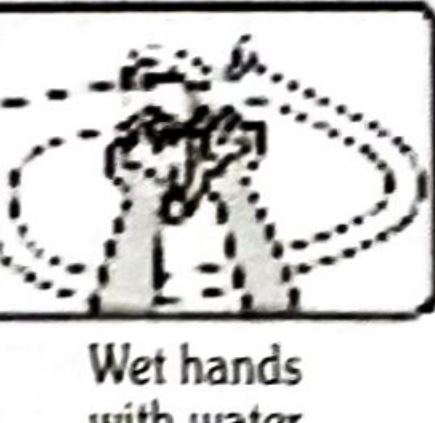
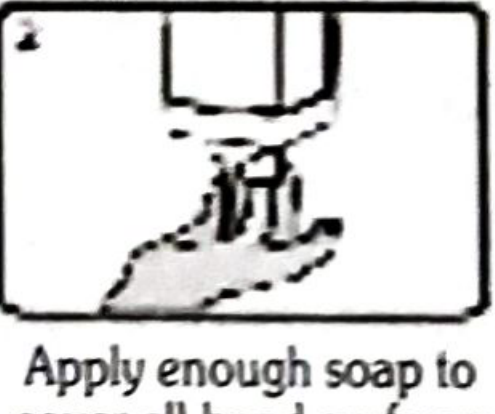
Step 1 - Wet hands
Wet hands with water
Wet hands with running water, apply enough soap to cover all surfaces.

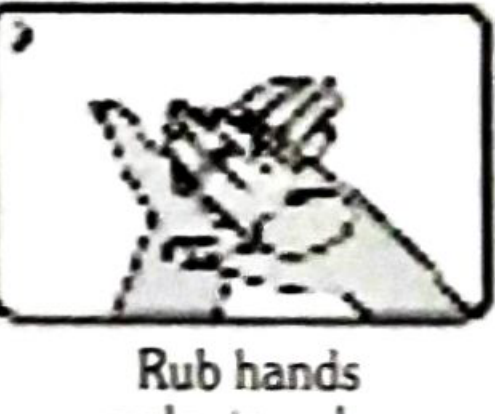
Step 2 - Palm to Palm
Rub hands palm to palm
Rub hands palm to palm vigorously.

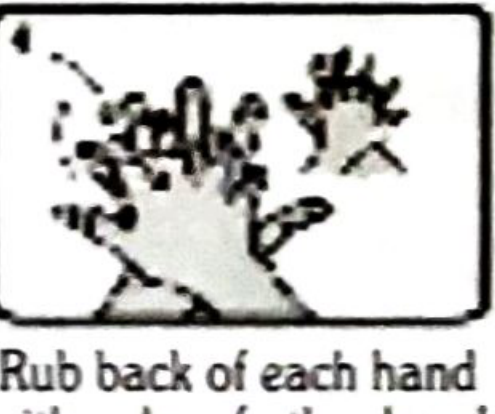
Step 3 - Back of Hands
Rub back of each hand
Rub back of each hand with palm of the other hand, fingers interlocked.

Step 4 - Between Fingers
Rub palm to palm with fingers interlocked - clean between all fingers.

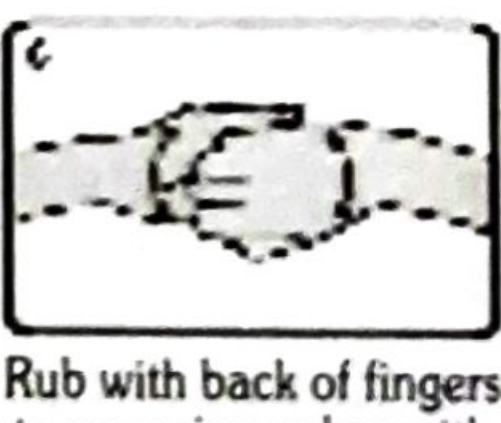
Step 5 - Back of Fingers
Rub with back of fingers
Rub back of fingers to opposing palms with fingers interlocked (knuckles).

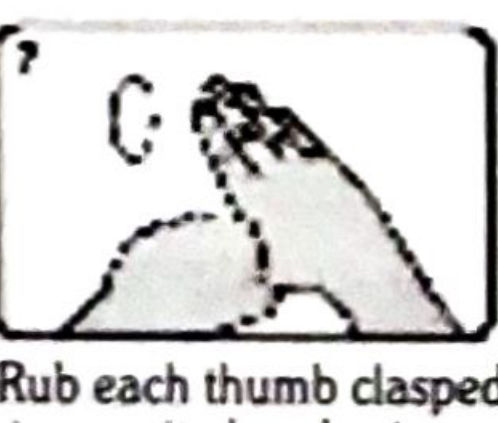
Step 6 - Thumbs
Rub each thumb clasped
Rub each thumb clasped in opposite hand using a rotational movement.

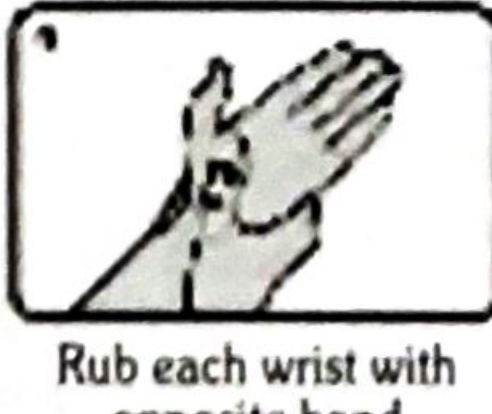
Step 7 - Fingertips + Wrists
Rub tips of fingers in opposite palm in a circular motion (nails included).
Rub each wrist
Rub each wrist with the opposite hand.

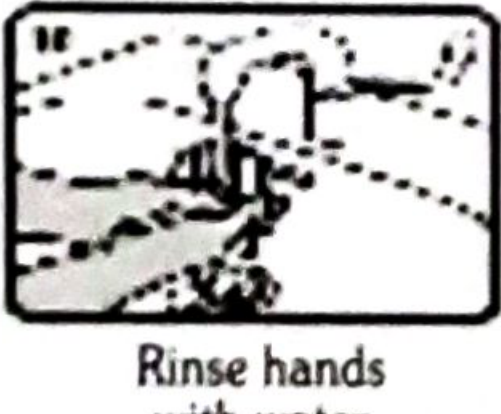
Rinse & Dry
Rinse hands with water
Rinse hands thoroughly with water.
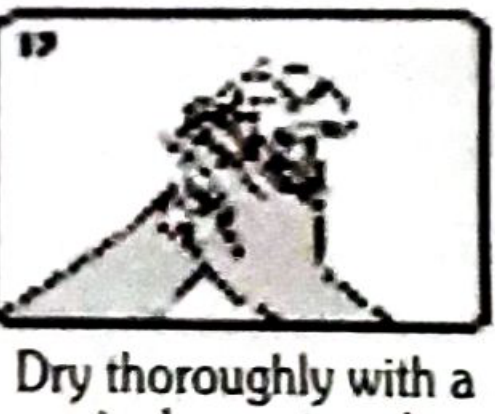
Dry thoroughly
Dry thoroughly with a single-use towel. Use elbow to turn off tap (not bare hand).
Total time: 40-60 seconds

Key Points Examiners Love

  • Never shake hands in air to dry - spreads microorganisms
  • Turn off tap with elbow or towel - not bare hands (re-contamination!)
  • Surgical hand wash goes up to 2 inches above elbow
  • Use alcohol-based hand rub (ABHR) when hands are not visibly dirty - takes 20-30 seconds
  • Soap and water is MANDATORY when hands are visibly soiled, after toilet, suspected C. diff

4. ๐ŸŸก DONNING (ADDING) AND DOFFING (REMOVING) GLOVES

Purpose of Gloves

  • Protect patients from nurse's microorganisms
  • Protect nurse from patient's blood/body fluids
  • Reduce cross-contamination

Types of Gloves

TypeUse
Clean/Non-sterile glovesGeneral patient care, body fluid contact
Sterile glovesWound dressing, catheterization, surgery
Examination glovesAssessment, routine care

DONNING (PUTTING ON) GLOVES

Non-Sterile Gloves - Steps:

  1. Perform hand hygiene first
  2. Select correct glove size
  3. Inspect gloves for tears or holes
  4. Pick up first glove by the cuff (outside)
  5. Slide hand in, then repeat for second glove
  6. Adjust fit, ensure no gaps at wrists

Sterile Gloves - Steps (Open/Closed Method):

  1. Perform surgical hand wash
  2. Open sterile glove package on clean surface
  3. Pick up first glove by the folded cuff (inside surface only - do NOT touch outside)
  4. Slide dominant hand in - do not touch outside of glove
  5. With gloved dominant hand, pick up second glove by sliding fingers under the cuff (outside)
  6. Slide non-dominant hand in
  7. Adjust both gloves - touching only outside (sterile) surfaces
KEY RULE for Sterile Gloves: Sterile touches sterile. Unsterile touches unsterile.

DOFFING (REMOVING) GLOVES

The GOLDEN Rule: "Dirty touches dirty. Clean touches clean."

This is the most important technique - prevents contamination of hands!

Steps to Remove Gloves (Non-Sterile):

Step 1: Pinch the outside of one glove near the wrist with the other gloved hand
Step 1 - Pinch outside
Pull it off, turning it inside out - hold it in the gloved hand
Step 2: Slide 2 bare fingers under the cuff of the remaining glove (touching only the inside)
Step 3: Peel it off, turning it inside out over the first glove
Step 4: Both gloves end up inside out, one inside the other - dispose in clinical waste bin
Step 5: Perform hand hygiene immediately after removing gloves

Key Points for Viva:

PointDetail
Never snap glovesAerosol of contaminated particles
Dispose in yellow bagInfectious/clinical waste
Always perform hand hygiene afterGloves are not 100% protective
Do not reuse glovesSingle-use only
Gloves do NOT replace hand washingBoth are needed

For Full PPE (Gown + Gloves + Mask) - DOFFING ORDER:

  1. Remove outer gloves first (most contaminated)
  2. Remove gown (roll inside out away from body)
  3. Disinfect inner gloves
  4. Remove face mask (hold by straps, do NOT touch front)
  5. Remove inner gloves
  6. Perform hand hygiene โœ“
(Source: Roberts and Hedges' Clinical Procedures in Emergency Medicine)

Quick Viva Summary Table

TopicKey Answer
Polyuria definitionUrine >2.5 L/day
Most common cause of polyuriaDiabetes Mellitus (glucosuria)
WHO definition of healthComplete physical, mental, social well-being
Hand wash duration (soap)40-60 seconds
Hand wash duration (ABHR)20-30 seconds
WHO moments of hand hygiene5 moments
Hand washing steps7 steps (WHO technique)
Golden rule of glove removalDirty touches dirty; clean touches clean
After removing gloves, do what?Hand hygiene immediately

All the best for tomorrow! You're well-prepared now. ๐Ÿ’ช๐Ÿผ
attachment
attachment
attachment
attachment
attachment
attachment
attachment
attachment
attachment
attachment
attachment
attachment

Give information as I uploaded in photo

Finding Sources
Finding Sources
Finding Sources
Finding Sources
Finding Sources
Finding Sources
I've read all 6 photos. Here is the complete detailed answer for every topic shown in your screenshots!

๐Ÿ“‹ COMPLETE VIVA GUIDE - All Topics from Your Photos

BSc Nursing 1st Year | Nursing Foundation


๐Ÿ“ธ PHOTO 1 - Vital Signs (Normal Values)

โœ… VITAL SIGNS - All Normal Values

Vital SignNormal ValueAbnormal Terms
Pulse Rate60-100 beats/min (adult)Tachycardia >100, Bradycardia <60
Blood Pressure120/80 mmHgHypertension >140/90, Hypotension <90/60
Oxygen Level (SpO2)95-100%Hypoxia <90%
Breathing Rate (Respiration)12-20 breaths/minTachypnoea >20, Bradypnoea <12
Temperature98.6ยฐF / 37ยฐC (oral)Fever >37.2ยฐC, Hypothermia <35ยฐC

Pulse Rate by Age:

AgeNormal Pulse
Newborn120-160 bpm
Infant (1yr)80-140 bpm
Child (2-10 yr)70-120 bpm
Adult60-100 bpm
ElderlyMay be slightly lower

Blood Pressure Classification:

CategorySystolicDiastolic
Normal<120<80
Elevated120-129<80
Hypertension Stage 1130-13980-89
Hypertension Stage 2โ‰ฅ140โ‰ฅ90
Hypertensive Crisis>180>120

Temperature Routes:

RouteNormalDuration
Oral97.6-99.6ยฐF (36.4-37.6ยฐC)3-5 min
Axillary96.6-98.6ยฐF (36-37ยฐC)10 min
Rectal98.6-100.6ยฐF (37-38ยฐC)3 min
5 Vital Signs: Temperature, Pulse, Respiration, Blood Pressure + Pain (5th vital sign)

๐Ÿ“ธ PHOTO 2 - Pulse Sites, Types of Fluids, Admission, Fluid & Electrolyte Balance, Positions

โœ… 1. PULSE SITES (Names) - 9 Sites

#SiteLocationUsed When
1RadialWrist (thumb side)Routine check - most common
2CarotidNeck (beside larynx)Emergency/cardiac arrest
3BrachialInner elbow (antecubital fossa)BP measurement, infants
4FemoralGroinCardiac arrest, leg circulation
5PoplitealBehind kneeLeg circulation check
6Dorsalis PedisTop of footFoot/peripheral circulation
7Posterior TibialBehind inner anklePeripheral vascular disease
8TemporalTemple (side of head)Children
9ApicalLeft 5th intercostal space, MCLHeart rate directly
Viva Tip: Most common site = Radial. Emergency site = Carotid. Infants = Brachial or Apical.

โœ… 2. TYPES OF IV FLUIDS

A. Crystalloids (most commonly used)

TypeTonicityExamplesUse
IsotonicSame as blood (280-310 mOsm/L)Normal Saline (0.9% NaCl), Ringer's Lactate, 5% DextroseVolume replacement, dehydration
HypotonicLess than blood0.45% NaCl (Half Normal Saline)Cellular dehydration, hypernatremia
HypertonicMore than blood3% NaCl, 10% Dextrose, 50% DextroseHyponatremia, cerebral edema

B. Colloids

SolutionExampleUse
Blood productsWhole blood, Packed RBCs, FFP, PlateletsBlood loss, clotting disorders
Albumin5%, 25% AlbuminBurns, hypoalbuminemia
SyntheticDextran, GelatinVolume expansion

Common IV Fluids for Viva:

  • DNS (Dextrose Normal Saline) = 5% Dextrose + 0.9% NaCl
  • Ringer's Lactate = Na, K, Ca, Cl, Lactate - most physiological
  • Normal Saline = 0.9% NaCl - most common
  • 5% Dextrose (D5W) = becomes hypotonic after glucose is metabolized

โœ… 3. TYPES OF HOSPITAL ADMISSION

TypeDescriptionExample
Elective/PlannedScheduled in advanceSurgery planned weeks ahead
EmergencyImmediate life-threateningRoad accident, heart attack
UrgentNeeds care within hoursSevere infection
Direct AdmissionDoctor refers directly to wardFrom OPD
TransferFrom another hospital/wardICU to general ward
VoluntaryPatient decides to comePsychiatry
InvoluntaryAgainst patient's will (legal)Mental health law

Admission Process Steps (Viva):

  1. Receive patient warmly
  2. Check admission order/form
  3. Allot bed
  4. Introduce patient to ward
  5. Take nursing history
  6. Physical assessment
  7. Orientation to hospital environment
  8. Document all findings
  9. Inform doctor

โœ… 4. FACTORS AFFECTING FLUID AND ELECTROLYTE BALANCE

Body Fluid Basics:

  • Total body water = 60% of body weight in adults
  • Intracellular fluid (ICF) = 40% of body weight
  • Extracellular fluid (ECF) = 20% of body weight
    • Intravascular (plasma) = 5%
    • Interstitial = 15%

Factors That Affect Fluid & Electrolyte Balance:

FactorEffect
AgeInfants have higher water % (70-80%); elderly have less
GenderMales have more body water than females
Body fatFat cells have less water; obese people have less % water
DietPoor diet causes electrolyte imbalance
IllnessFever, vomiting, diarrhea, burns cause fluid loss
SurgeryBlood/fluid loss, NPO (nil by mouth)
MedicationsDiuretics increase fluid loss; steroids cause retention
Climate/TemperatureHot climate โ†’ excessive sweating โ†’ fluid loss
StressHormonal changes affect fluid balance
Kidney functionControls excretion of water and electrolytes

Key Electrolytes:

ElectrolyteNormal RangeMain Function
Sodium (Na+)135-145 mEq/LControls ECF volume
Potassium (K+)3.5-5.0 mEq/LControls ICF, heart rhythm
Calcium (Ca++)8.5-10.5 mg/dLBones, muscle contraction
Chloride (Cl-)96-106 mEq/LAcid-base balance

โœ… 5. TYPES OF PATIENT POSITIONS (Names)

PositionDescriptionUsed For
Supine (Dorsal recumbent)Lying flat on backGeneral examination, post-op
ProneLying face downBack surgery, unconscious airway management
Lateral (Side-lying)On side, Sims' positionEnema, rectal exam, unconscious patients
Fowler'sHead raised 45-60ยฐBreathing difficulty, feeding, NG tube
Semi-Fowler'sHead raised 30-45ยฐPost-op, cardiac patients
High Fowler'sHead raised 90ยฐSevere dyspnoea
TrendelenburgHead down, feet upShock, hypotension
Reverse TrendelenburgHead up, feet downHead injury, GERD
LithotomyOn back, legs in stirrupsGynaecological/urological procedures
Knee-chest (Genupectoral)On knees and chestRectal, vaginal examination
Orthopnoeic (Tripod)Leaning forward on armsSevere COPD, breathing difficulty

๐Ÿ“ธ PHOTO 3 - Anemia, Cardiac Monitor, Thermometer, Machines, Jaundice, Fever

โœ… 1. ANEMIA (Anaemia)

Definition:

Anemia is a condition in which the number of red blood cells (RBCs) or the hemoglobin concentration is lower than normal, resulting in reduced oxygen-carrying capacity of the blood.

Normal Hemoglobin Values:

GroupNormal Hb
Adult Male13.5-17.5 g/dL
Adult Female12.0-15.5 g/dL
Pregnant woman>11 g/dL
Child11-16 g/dL

Classification/Types of Anemia:

By Cause:
TypeCauseExample
DeficiencyNutritional lackIron deficiency, B12 deficiency, Folic acid deficiency
HemolyticRBC destructionSickle cell, Thalassemia, G6PD
AplasticBone marrow failureRadiation, drugs, autoimmune
Blood lossAcute or chronic bleedingSurgery, GI bleeding
By RBC Size (Morphology) - Easy to Remember:
TypeMCVCause
Microcytic (small RBC)<80 fLIron deficiency, Thalassemia
Normocytic (normal RBC)80-100 fLAplastic anemia, acute blood loss
Macrocytic (large RBC)>100 fLB12/Folate deficiency

Signs & Symptoms of Anemia:

  • Pallor (pale skin, conjunctiva, nail beds)
  • Fatigue, weakness
  • Dyspnoea (shortness of breath)
  • Tachycardia (fast heart rate)
  • Headache, dizziness
  • Koilonychia (spoon-shaped nails) - in iron deficiency
  • Jaundice - in hemolytic anemia

Nursing Care:

  • Monitor Hb levels
  • Encourage iron-rich foods (green leafy vegetables, meat, beans)
  • Administer iron/B12/folate as prescribed
  • Educate patient about diet
  • Monitor for blood transfusion reactions

โœ… 2. CARDIAC MONITOR - Use

What is a Cardiac Monitor?

A cardiac monitor (ECG monitor / Bedside monitor) continuously displays the electrical activity of the heart.

Uses:

  1. Continuous ECG monitoring - detects arrhythmias (irregular heartbeats)
  2. Monitor heart rate - continuous display of pulse rate
  3. Blood pressure monitoring (with NIBP cuff attached)
  4. SpO2 monitoring (oxygen saturation)
  5. Respiratory rate monitoring
  6. Temperature monitoring
  7. Detection of critical events - alerts nurse via alarms
  8. Used in ICU, CCU, OT, Emergency, post-operative wards

Components:

  • ECG leads/electrodes (3-lead or 5-lead)
  • Display screen
  • Alarm system
  • Printer (for ECG strip)
  • Blood pressure cuff
  • SpO2 probe

Normal ECG waves to know:

  • P wave = Atrial depolarization
  • QRS complex = Ventricular depolarization
  • T wave = Ventricular repolarization

โœ… 3. THERMOMETER - Types & Uses

Types of Thermometers:

TypeHow it worksAccuracyUsed For
Mercury (Clinical)Mercury expands with heatVery accurateOral, rectal, axillary
DigitalElectronic sensorAccurate, fastAll routes
Infrared TympanicDetects ear canal heatFast (1 sec)Quick reading, children
Temporal ArteryScans foreheadFast, non-contactScreening
DisposableChemical dots change colorModerateSingle-use, infection control

Normal Temperature Readings:

  • Oral: 98.6ยฐF (37ยฐC)
  • Axillary: 0.5ยฐF lower than oral
  • Rectal: 0.5ยฐF higher than oral
  • Tympanic: Same as rectal

Nursing Points:

  • Mercury thermometers are now banned in many hospitals (environmental hazard)
  • Digital/infrared are preferred
  • Clean thermometer before and after use
  • Wait 15-30 min after eating/drinking hot/cold before oral temp

โœ… 4. GENERAL MACHINES AND THEIR USES

MachineUse
BP Apparatus (Sphygmomanometer)Measures blood pressure
StethoscopeListens to heart, lung, bowel sounds
Pulse OximeterMeasures SpO2 and pulse rate
ECG Machine (Electrocardiograph)Records heart's electrical activity
Cardiac MonitorContinuous ECG, BP, SpO2 monitoring
GlucometerMeasures blood glucose (sugar) level
ThermometerMeasures body temperature
Weighing ScaleMeasures body weight
NebulizerDelivers medicine as mist to lungs
Suction MachineRemoves secretions from airway
Infusion PumpControls IV fluid/drug delivery rate
Oxygen Cylinder + FlowmeterDelivers supplemental oxygen
VentilatorMechanical breathing support
DefibrillatorRestores normal heart rhythm (cardiac arrest)
UrometerMeasures urine output
Ambu bag (BVM)Manual ventilation in emergencies

โœ… 5. JAUNDICE

Definition:

Jaundice is a yellowish discoloration of the skin, sclera (whites of eyes), and mucous membranes caused by increased bilirubin levels in the blood (hyperbilirubinemia).
  • Normal bilirubin: 0.3-1.0 mg/dL
  • Jaundice visible when bilirubin: >2-3 mg/dL

Types of Jaundice (3 Types):

TypeAlso CalledCauseBilirubin
Pre-hepaticHemolyticRBC destruction - too much bilirubin producedUnconjugated โ†‘
Hepatic (Hepatocellular)Liver jaundiceLiver cell damage (hepatitis, cirrhosis)Both โ†‘
Post-hepaticObstructive/CholestaticBile duct blocked (gallstone, tumor)Conjugated โ†‘

Clinical Features:

  • Yellow skin and eyes (icterus)
  • Dark urine ("tea-colored")
  • Pale/clay-colored stools (in obstructive jaundice)
  • Itching (pruritus) - in obstructive
  • Fatigue, nausea
  • In newborns - physiological jaundice (normal in first week)

Nursing Care for Jaundice:

  • Monitor skin color, urine and stool color
  • Check bilirubin levels
  • Liver function tests (LFT)
  • Low fat diet
  • Adequate hydration
  • Newborn jaundice: Phototherapy (blue light)
  • Educate about avoiding alcohol

โœ… 6. FIRST TREATMENT OF FEVER (Nursing Management)

Definition of Fever:

Body temperature above 37.2ยฐC (99ยฐF) oral / 37.8ยฐC in general

Grades of Fever:

GradeTemperature
Low grade37.2-38ยฐC
Moderate38-39ยฐC
High grade39-40ยฐC
Hyperpyrexia>40ยฐC

First Nursing Treatment of Fever (PRIORITY ORDER):

1. Assess - Take temperature, check vital signs, note onset and pattern
2. Physical Cooling Measures:
  • Remove excess clothing and blankets
  • Tepid sponging (lukewarm water - NOT cold water, as it causes shivering)
  • Apply cold/ice compress to forehead, axilla, groin
  • Increase air circulation (fan)
  • Encourage fluids (prevents dehydration)
3. Medications (as ordered):
  • Antipyretics: Paracetamol (Acetaminophen) - first choice
  • Aspirin - NOT given to children (Reye's syndrome risk)
  • Ibuprofen - for adults
4. Monitor:
  • Vital signs every 1-4 hours
  • Intake & Output chart
  • Signs of febrile convulsions (especially in children)
5. Treat the Cause:
  • Blood cultures, urine culture
  • Antibiotics if bacterial infection
Viva Answer to "First treatment of fever": Remove excess clothing โ†’ tepid sponging โ†’ increase fluid intake โ†’ administer prescribed antipyretic โ†’ monitor vital signs โ†’ report if >40ยฐC or persisting.

๐Ÿ“ธ PHOTO 4 - PPE (Personal Protective Equipment)

โœ… PERSONAL PROTECTIVE EQUIPMENT (PPE)

Definition:

PPE is specialized clothing or equipment worn by healthcare workers for protection against infectious material, chemical, or physical hazards.

Complete List of PPE:

PPE ItemProtects AgainstUsed When
GlovesBlood, body fluids on handsAny patient contact
Mask (Surgical)Droplets, splashesDroplet precautions
N95 RespiratorAirborne particlesTB, COVID, measles
Face Shield / GogglesSplashes to eyesProcedures with splash risk
Gown / ApronContamination of clothesContact precautions
Hair Cover (Cap)Contamination of hairSurgery, sterile procedures
Shoe Cover (Boot cover)Contamination of shoesOT, ICU, isolation rooms
Full Body Suit (Coverall)Total body protectionEbola, hazmat situations

Donning Order (PUT ON - Clean to Less Clean):

  1. Hand hygiene
  2. Gown
  3. Mask/Respirator
  4. Goggles/Face shield
  5. Gloves (last)

Doffing Order (REMOVE - Most Contaminated First):

  1. Gloves (most contaminated)
  2. Goggles/Face shield
  3. Gown
  4. Mask (least contaminated - hold by straps)
  5. Hand hygiene (always last!)
Memory tip for Doffing: G-G-G-M-H = Gloves โ†’ Goggles โ†’ Gown โ†’ Mask โ†’ Hand hygiene

๐Ÿ“ธ PHOTO 5 - Types of Fluids, Admission, Positions, Pulse Sites (covered above in Photo 2)


๐Ÿ“ธ PHOTO 6 - Pulse Sites, Surgery Patient Questions, Daily Water Intake, Surgical/Medical Handwashing

โœ… 1. PATIENT COMING 10 YEARS AFTER SURGERY - What will you ask?

(Nursing History / Assessment of Post-op Patient)
This is a scenario question. The examiner wants to test your nursing assessment skills. Here's what to ask:

History Taking Questions:

About the Surgery:
  • What surgery was done? When and where?
  • Why was surgery done? (original diagnosis)
  • Any complications after surgery?
  • Was there any hospital readmission after surgery?
Current Complaints:
  • What is the problem now? (Chief complaint)
  • When did it start? How long?
  • Is there pain? Describe - location, type, severity (1-10 scale)
  • Any swelling, discharge from surgical site?
Vital Signs Assessment:
  • Temperature, Pulse, BP, Respiration, SpO2
Past Medical/Surgical History:
  • Any other diseases (Diabetes, Hypertension, Heart disease)?
  • Any medications currently taking?
  • Allergies?
Functional Assessment:
  • Able to do daily activities?
  • Diet and appetite?
  • Sleep pattern?
  • Elimination (urine and stool normal?)
Psychosocial:
  • Emotional status - any anxiety, depression?
  • Family support?
In viva, say: "I will do a complete head-to-toe assessment using SAMPLE history: Signs & Symptoms, Allergies, Medications, Past history, Last meal, Events leading to current visit."

โœ… 2. DAILY WATER INTAKE (เคเค• เคฆเคฟเคจ เคฎเฅ‡เค‚ เคฎเคพเคจเคต เค•เคฟเคคเคจเคพ เคชเคพเคจเฅ€ เคชเฅ€เคคเคพ เคนเฅˆ?)

PersonDaily Water Need
Normal adult2000-2500 mL/day (2-2.5 litres)
Active adult / hot climateUp to 3000 mL/day
Child1000-1500 mL/day

Daily Fluid Balance:

Input:
  • Oral fluids: ~1500 mL
  • Water in food: ~700 mL
  • Metabolic water: ~300 mL
  • Total input: ~2500 mL/day
Output:
  • Urine: ~1500 mL
  • Stool: ~200 mL
  • Perspiration: ~500 mL
  • Respiratory (breathing): ~300 mL
  • Total output: ~2500 mL/day
Normal urine output = 1-1.5 L/day = minimum 30 mL/hour

โœ… 3. SURGICAL vs MEDICAL HANDWASHING

FeatureMedical Hand WashSurgical Hand Wash (Scrub)
Also calledRoutine/Social hand washSurgical scrub, Sterile hand wash
PurposeRemove transient organismsRemove all organisms (transient + resident)
Duration40-60 seconds3-5 minutes
Area washedHands and wristsHands up to 2 inches above elbow
Solution usedSoap & water / ABHRAntiseptic (Chlorhexidine, Povidone-iodine)
Nail brushNot usedUsed - clean under nails
When usedRoutine patient careBefore surgery, sterile procedures
DryingDisposable towelSterile towel (from elbow to fingertips)
After dryingDoneDon sterile gloves

Surgical Scrub Steps:

  1. Remove jewelry, watches
  2. Wet hands and arms to elbows
  3. Apply antiseptic solution
  4. Clean nails with nail brush (1 min)
  5. Scrub fingers, hands, wrists, forearms (3 min per arm)
  6. Rinse with hands held upward (water flows elbow to fingertips - away from clean hands)
  7. Dry with sterile towel (from fingers to elbow)
  8. Don sterile gown and gloves
Key difference: In surgical scrub - keep hands ABOVE elbows during rinsing so contaminated water flows downward away from hands.

๐ŸŽฏ MASTER QUICK REFERENCE TABLE

TopicAnswer
Normal Pulse60-100 bpm
Normal BP120/80 mmHg
Normal SpO295-100%
Normal Breathing12-20/min
Normal Temp (oral)98.6ยฐF / 37ยฐC
Daily water intake2000-2500 mL
Normal urine output1500 mL/day / 30 mL/hr
Anemia Hb in women<12 g/dL
Anemia Hb in men<13.5 g/dL
Jaundice visible at bilirubin>2-3 mg/dL
Fever definition>37.2ยฐC oral
Hyperpyrexia>40ยฐC
Medical hand wash time40-60 sec
Surgical scrub time3-5 min
PPE doffing: first itemGloves
PPE doffing: last actionHand hygiene
Pulse sites9 sites - Radial most common

All the best tomorrow! ๐ŸŒŸ You have everything you need. Stay calm, speak confidently, and always mention patient safety in every answer!

And some topics are

Please share the remaining topics! ๐Ÿ˜Š
Send them as text or photos โ€” I'll cover each one in full detail for your viva tomorrow. ๐Ÿ“

Needle, Stethoscope, sphygmomanometer,ORS Ambubag,Urobag,IVset, Cannula,Betadine, general surgical instruments on viva table name and identification,and capline bandage procedure

Great topics! These are exactly what appears on a practical viva table. Let me give you complete identification + use for every instrument.

๐Ÿฅ INSTRUMENT IDENTIFICATION & VIVA GUIDE

BSc Nursing 1st Year - Practical Viva Table


1. ๐Ÿ’‰ NEEDLE (Hypodermic Needle)

Identification:

  • A hollow, sharp-pointed metal tube attached to a syringe hub
  • Has a bevel (slanted tip), shaft (body), and hub (connects to syringe)
  • Color coded by gauge (size)

Parts of a Needle:

PartDescription
BevelSlanted sharp tip - cuts into tissue
ShaftLong hollow body
HubConnects to syringe (usually colored)
LumenHollow inside channel

Needle Gauge & Size Chart:

GaugeColorUse
18GPinkBlood transfusion, thick fluids
20GYellowIV fluids, blood collection
21GGreenGeneral IV, blood collection
22GBlue/BlackAdults - IM injection
23GBlueChildren - IM injection
24GYellowInfants, fragile veins
25GOrangeIntradermal, subcutaneous
26GBrownInsulin injection
Important: Higher gauge number = thinner needle. Lower gauge = thicker needle.

Injection Routes & Needle Angles:

RouteAngleNeedle LengthVolume
Intradermal (ID)5-15ยฐShort (3/8")0.1-0.5 mL
Subcutaneous (SC)45ยฐ5/8"0.5-1 mL
Intramuscular (IM)90ยฐ1-1.5"Up to 5 mL
Intravenous (IV)15-25ยฐVariableAs ordered

Safety Rules:

  • Never recap needle with two hands (needle stick injury risk)
  • Use one-hand scoop method if recapping needed
  • Dispose in puncture-proof sharps container (yellow)
  • Never bend or break needle by hand

2. ๐Ÿ”Š STETHOSCOPE

Identification:

  • Acoustic medical instrument used to listen to internal sounds of the body
  • Has two earpieces connected by tubing to a chest piece

Parts:

PartFunction
Earpieces (Ear tips)Fit into ears - angled forward
Ear tubes (Binaurals)Metal tubes connecting to chest piece
TubingFlexible rubber tube transmitting sound
Chest piecePlaced on patient's body
DiaphragmFlat side - listens to high-pitched sounds (breath, normal heart sounds, bowel sounds)
BellCup side - listens to low-pitched sounds (murmurs, S3, S4 heart sounds)

Uses of Stethoscope:

  1. Auscultation of heart sounds - S1 ("lub"), S2 ("dub")
  2. Lung/breath sounds - normal, wheezing, crackles, rhonchi
  3. Blood pressure measurement - listen for Korotkoff sounds
  4. Bowel sounds - intestinal activity
  5. Carotid/femoral bruits
  6. Fetal heart sounds (Pinard/Doppler for fetus)

Korotkoff Sounds (for BP):

PhaseSoundReading
Phase 1First tapping sound= Systolic BP
Phase 2-4Muffled sounds-
Phase 5Sound disappears= Diastolic BP

Care of Stethoscope:

  • Clean earpieces and diaphragm with alcohol wipe between patients
  • Do not submerge in water
  • Store away from extreme heat/cold

3. ๐Ÿฉบ SPHYGMOMANOMETER (BP Apparatus)

Identification:

  • Instrument used to measure blood pressure
  • "Sphygmo" = pulse, "manometer" = pressure measuring device

Types:

TypeDescriptionAccuracy
MercuryUses mercury columnMost accurate (gold standard) - now banned in many places
AneroidDial gauge with needlePortable, common in wards
Digital (Electronic)Automatic, digital displayEasy to use, for home/screening

Parts of Sphygmomanometer:

PartFunction
ManometerMeasures pressure (mmHg)
Cuff (Bladder)Inflatable bag that compresses artery
Velcro/clipsHolds cuff in place
Bulb (Pump)Inflates the cuff
Control valve/ScrewControls air release
TubingConnects cuff to manometer

Cuff Sizes (Important for Viva!):

SizeUsed For
Small (Pediatric)Children
Standard AdultNormal adults
Large AdultObese patients
Thigh cuffWhen arm unavailable
Too small cuff = falsely HIGH reading. Too large cuff = falsely LOW reading.

Steps to Measure BP:

  1. Patient seated/supine, rest 5 min
  2. Bare arm at heart level
  3. Wrap cuff 2-3 cm above antecubital fossa
  4. Palpate radial pulse, inflate to 30 mmHg above where pulse disappears
  5. Place stethoscope on brachial artery
  6. Deflate slowly (2-3 mmHg/sec)
  7. First sound = Systolic, sound disappears = Diastolic
  8. Record: e.g., 120/80 mmHg, which arm, position

4. ๐Ÿงƒ ORS (Oral Rehydration Solution)

Identification:

  • A powder/liquid solution used to replace fluids and electrolytes lost due to diarrhea/vomiting
  • Available as sachet (powder), pre-made liquid, or homemade solution

WHO ORS Composition (Standard):

ComponentAmount per litre
Sodium chloride (NaCl)2.6 g
Glucose (Dextrose)13.5 g
Potassium chloride (KCl)1.5 g
Trisodium citrate2.9 g
Water1 litre
Osmolarity245 mOsm/L (low osmolarity ORS)

Homemade ORS (Sugar-Salt Solution):

  • 1 litre clean water + 6 teaspoons sugar + ยฝ teaspoon salt

Uses:

  • Dehydration from diarrhea and vomiting
  • Cholera management
  • Heat exhaustion
  • Post-exercise rehydration
  • Children with acute gastroenteritis

Administration:

  • Small, frequent sips - not large amounts at once
  • Adults: 200-400 mL after each loose stool
  • Children: 50-100 mL after each loose stool
  • Continue until diarrhea stops

Signs of Dehydration (Assess Before Giving ORS):

  • Dry mouth, sunken eyes
  • Decreased skin turgor
  • Reduced urine output
  • Rapid weak pulse

5. ๐Ÿซ AMBU BAG (BVM - Bag Valve Mask)

Identification:

  • BVM = Bag-Valve-Mask
  • A self-inflating resuscitation device used for manual artificial ventilation
  • Used in emergencies when patient is not breathing

Parts:

PartFunction
Face MaskSeals over patient's mouth and nose
Self-inflating BagSqueezed to deliver breath
Valve (One-way)Prevents exhaled air re-entering bag
Oxygen inletConnects to oxygen supply
Reservoir bagStores oxygen for 100% O2 delivery
Pressure relief valvePrevents over-inflation of lungs

Uses:

  1. Cardiac/respiratory arrest - before intubation
  2. Apnoea (stopped breathing)
  3. Conscious sedation procedures
  4. Transport of ventilated patients
  5. Pre-oxygenation before intubation

How to Use (EC Clamp Technique):

  • E fingers = 3 fingers hold jaw upward (open airway)
  • C fingers = thumb and index finger hold mask to face
  • Squeeze bag with other hand - one breath every 5-6 seconds
  • Adult tidal volume: 500-600 mL (squeeze bag one-third to one-half)

Sizes:

SizePatient
NeonatalNewborns
PediatricChildren
AdultAdults

Important Points:

  • Delivers 21% O2 without oxygen supply
  • With oxygen reservoir: delivers 90-100% O2
  • Always check mask seal before use
  • Bag must be checked regularly for cracks/leaks

6. ๐Ÿซ™ UROBAG (Urinary Drainage Bag)

Identification:

  • A transparent graduated collection bag that collects urine from a urinary catheter
  • Connected to the catheter by drainage tubing
  • Has measurement markings on the side

Parts:

PartFunction
Collection bagStores urine
Drainage tubeConnects catheter to bag
Anti-reflux valvePrevents urine flowing back (prevents UTI)
Drainage port (tap)Empties the bag
Hanger hookHangs bag on bed frame
Measurement scaleMeasures urine output in mL

Uses:

  • Connected to indwelling (Foley) catheter
  • Measures urine output (I&O monitoring)
  • Post-operative monitoring
  • Unconscious/immobile patients
  • Urological conditions

Types:

TypeCapacityUsed For
Leg bag500 mLAmbulant patients (attach to leg)
Bedside/Night bag2000 mLBed-ridden patients
Urometer500 mL with hourly measurementICU/critical care accurate monitoring

Nursing Care Points (CAUTI Prevention):

  • Always keep bag below bladder level (prevents backflow)
  • Never let bag touch floor
  • Empty when 2/3 full or every 8 hours
  • Maintain closed drainage system - never disconnect unless necessary
  • Secure catheter to inner thigh to prevent pulling
  • Daily perineal care
  • Document urine color, amount, odor

7. ๐Ÿ’ง IV SET (Intravenous Infusion Set)

Identification:

  • A sterile, disposable plastic tubing set used to deliver IV fluids from a bottle/bag into a patient's vein

Types:

TypeDrop factorUse
Macro drip set15 or 20 drops/mLRoutine IV fluids
Micro drip set (Burette)60 drops/mLPrecise dosing, children, critical drugs
Blood transfusion set15 drops/mL with filterBlood/blood products

Parts of IV Set:

PartFunction
Spike/Piercing pinInserted into IV bottle/bag
Drip chamberCount drops to calculate flow rate
Roller clampControls flow rate
TubingCarries fluid
Injection port (Y-site)For adding drugs to line
Needle adapter/Luer lockConnects to cannula
FilterIn blood sets - removes clots/debris
Air ventIn glass bottle sets - allows air in

Flow Rate Calculation Formula:

Drops per minute = (Volume in mL ร— Drop factor) รท Time in minutes
Example: 500 mL over 4 hours, drop factor 20: = (500 ร— 20) รท (4 ร— 60) = 10000 รท 240 = 41-42 drops/min

Steps to Set Up IV:

  1. Check IV fluid (name, expiry, clarity, leaks)
  2. Wash hands, wear gloves
  3. Spike the bag/bottle aseptically
  4. Squeeze drip chamber - fill half way
  5. Prime (flush) the tubing - remove all air
  6. Clamp and connect to cannula
  7. Adjust flow rate as ordered
  8. Label with date, time, nurse's name

8. ๐Ÿ”ด CANNULA (IV Cannula / Peripheral IV Catheter)

Identification:

  • A short, flexible plastic catheter inserted into a peripheral vein for IV access
  • Has a metal needle (stylet) inside during insertion - removed after placing
  • Color coded by size (gauge)

Parts:

PartFunction
Catheter (plastic tube)Remains in vein
Stylet (needle)Sharp metal guide - removed after insertion
Hub/Flashback chamberBlood appears here confirming vein entry
WingsHold and tape cannula to skin
Injection port (cap)For giving drugs, flushing

Color Code & Gauge:

ColorGaugeFlow RateUse
Orange14GFastestMajor trauma, surgery
Grey16GVery fastBlood transfusion, surgery
White17GFastBlood transfusion
Green18GFastBlood transfusion, rapid fluids
Pink20GModerateStandard IV fluids
Blue22GSlowChildren, elderly, fragile veins
Yellow24GSlowestNeonates, very fragile veins
Memory: Think of it like water pipes - wider pipe (lower gauge) = faster flow.

Common IV Sites:

  • Dorsum of hand (most common)
  • Cubital fossa (antecubital)
  • Forearm veins
  • Cephalic vein
  • Basilic vein

Insertion Steps:

  1. Explain procedure to patient
  2. Hand hygiene, wear gloves
  3. Select site, apply tourniquet 10-15 cm above site
  4. Clean skin with alcohol swab (70%) - circular motion, dry 30 sec
  5. Insert cannula at 15-30ยฐ angle, bevel up
  6. Watch for blood flashback in chamber
  7. Advance catheter, withdraw stylet
  8. Release tourniquet
  9. Secure with transparent dressing/tape
  10. Flush with normal saline to confirm patency
  11. Document - site, gauge, date, time

Complications:

  • Infiltration - fluid into tissues (swelling, pain)
  • Phlebitis - vein inflammation (redness, warmth along vein)
  • Infection - change site every 72-96 hours
  • Hematoma, air embolism

9. ๐ŸŸค BETADINE (Povidone-Iodine)

Identification:

  • Dark brown/amber colored antiseptic solution
  • Contains 10% Povidone-Iodine (releases free iodine)
  • Available as solution, scrub, ointment, spray

Mechanism of Action:

  • Releases free iodine which disrupts microbial cell membranes and proteins
  • Kills bacteria, fungi, viruses, spores, protozoa

Uses in Nursing:

UseFormHow Used
Wound cleaning10% solutionClean wounds, ulcers
Pre-surgical skin prepScrub + solutionApplied before surgery
Surgical hand scrubScrub (7.5%)3-5 minute scrub
Catheter careDiluted solutionPerineal cleaning
Throat gargleDiluted (1%)Throat infections
Oral careDilutedMouth rinse
Wound dressingOintmentMinor wounds

Important Points:

  • Do NOT use on thyroid patients - iodine absorbed systemically
  • Do NOT use on newborns for prolonged periods
  • Allergy check - some patients are allergic to iodine
  • Color (brown staining) does not mean wound is still dirty
  • Dilute before use on mucous membranes
  • Povidone-iodine vs Tincture of iodine: Betadine (povidone) is safer, less irritating

10. ๐Ÿ”ช GENERAL SURGICAL INSTRUMENTS (Viva Table)

Identification & Uses:

InstrumentIdentificationUse
Scalpel (Surgical knife)Handle with detachable blade; blade has sharp edgeCutting tissue, making incisions
Scissors (Metzenbaum)Long, fine, curved scissorsDissecting delicate tissue
Scissors (Mayo)Heavier, curved or straightCutting tough tissue, sutures
Forceps (Tissue)Toothed or non-toothed, tweezer-likeHolding tissue
Artery Forceps (Hemostat)Locking clamp (ratchet), curved or straightClamping blood vessels to stop bleeding
Needle Holder (Driver)Looks like scissors but blunt ends with grooveHolding suture needle during stitching
Retractor (Langenbeck)L-shaped or hook-shaped flat bladeHolding wound edges open
Towel ClipSpring-loaded clip with sharp teethHolding surgical drapes in position
Sponge Holding ForcepsLong, ring-handled, oval ring at endHolding swabs/sponges for cleaning surgical site
ProbeLong thin blunt-ended rodExploring wound depth, sinus tracts
Trocar & CannulaSharp hollow instrumentMaking holes for drainage
Kocher's ForcepsTooth at tip, heavyHolding tough tissue
Allis ForcepsMultiple interlocking teethGrasping tough tissue (fascia)

Key Points for Instrument Identification:

  • Ratchet (locking mechanism) = artery forceps, needle holder, towel clips
  • Teeth at tip = tissue forceps, Allis, Kocher
  • No teeth, smooth = plain forceps (atraumatic)
  • Ring handles = scissors, needle holder, forceps
  • Curved vs Straight - note which type when identifying

11. ๐Ÿฉน CAPELINE BANDAGE (Recurrent/Cap Bandage)

What is Capeline Bandage?

A capeline (cap) bandage is a figure-of-8 type bandage applied to cover the head or stump completely, resembling a cap.

Also Called:

  • Recurrent bandage (for stumps)
  • Cap bandage / Calvaria bandage (for head)

Uses:

  • Head injuries - to cover scalp wounds, post-neurosurgery
  • Stump bandaging - after amputation (finger, toe, limb)
  • Securing dressings on round/bulgy surfaces

Types of Capeline:

1. For HEAD (Two-roll method):

2. For STUMP/FINGER (Single roll - Recurrent method)


PROCEDURE - Capeline Bandage for HEAD:

Articles Required:

  • 2 bandage rolls (8 cm width for head)
  • Safety pins or clips
  • Scissors
  • Dressing tray (if wound underneath)

Steps:

Step 1 - Preparation:
  • Explain procedure to patient
  • Position: sitting or supine
  • Perform hand hygiene, wear gloves if wound present
Step 2 - First Anchor Turn:
  • Start with a circular anchor turn around the forehead and back of head (just above eyebrows and ears)
  • Make 2 anchor turns to secure the bandage
Step 3 - First Longitudinal Strip:
  • From the front anchor turn, bring bandage over the top of the head (sagittal direction) to the back
  • Hold with one finger or an assistant holds
Step 4 - Locking Turn:
  • Make a circular locking turn at the back of the head
  • Come back over the top to the front - slightly overlapping the first strip
Step 5 - Continue Alternating:
  • Alternate between longitudinal strips over the crown and circular locking turns at the sides
  • Each longitudinal strip overlaps the previous by half its width
  • Cover progressively from center to sides
Step 6 - Covering the Sides:
  • Continue until entire scalp/top of head is covered
  • Each circular turn locks the longitudinal strips
Step 7 - Final Anchor:
  • End with 2-3 circular turns around the forehead/head
  • Secure with safety pin, clip, or tape (never on wound)

PROCEDURE - Capeline Bandage for FINGER/STUMP (Recurrent):

Step 1: Anchor turn around wrist/proximal part of stump
Step 2: Bring bandage forward over the tip of the finger/stump - this is the recurrent turn
Step 3: Bring back to anchor point
Step 4: Repeat - each recurrent turn overlaps the previous by half width
Step 5: Once tip is covered with recurrent turns, lock with spiral turns from tip toward base
Step 6: Secure with tape/pin

Principles of Good Bandaging (Examiner Favorite):

  1. Work from distal to proximal (tip to base)
  2. Each turn should overlap previous by 1/3 to 1/2
  3. Apply with even, firm pressure - not too tight (cuts circulation), not too loose (falls off)
  4. Leave fingertips/toes exposed to check circulation (color, sensation, temperature)
  5. Secure ends with pin, clip, or tape - never on wound or bony prominence
  6. Check circulation after application: 5 P's - Pain, Pallor, Pulselessness, Paraesthesia, Paralysis (signs of too-tight bandage)

๐ŸŽฏ QUICK VIVA IDENTIFICATION TABLE

Item Placed on TableSay This
Needle"This is a [gauge]G hypodermic needle used for [ID/SC/IM] injection"
Stethoscope"Used for auscultation of heart, lungs, BP measurement"
BP apparatus"Sphygmomanometer - measures blood pressure"
ORS sachet"Oral Rehydration Solution - for dehydration in diarrhea"
Ambu bag"BVM - Bag Valve Mask - for manual artificial ventilation in emergencies"
Urobag"Urinary drainage bag - collects urine from catheter, measures output"
IV set"Intravenous infusion set - delivers IV fluids; drip factor 20 drops/mL"
Cannula"IV cannula/peripheral catheter - [color] = [gauge] gauge - for IV access"
Betadine"Povidone-iodine 10% - antiseptic for wound care and surgical skin prep"
Artery forceps"Spencer Wells / Mosquito forceps - used to clamp blood vessels"
Needle holder"Mathieu/Mayo-Hegar needle holder - holds suture needle during stitching"

You're fully prepared now! ๐Ÿ’ช Best of luck for tomorrow's viva! Remember: Speak with confidence, mention purpose + parts + safety points for every instrument! ๐ŸŒŸ

Make a pdf of whole conversation only including answers of my asked questions

Reading File
Running Command

mkdir -p /home/daytona/workspace/nursing-viva && echo "Directory created"

Make a pdf of whole conversation, including only answers asked by me , including every single line and word as it is

Writing File

~/nursing-viva/generate_pdf.py

from reportlab.lib.pagesizes import A4
from reportlab.lib.styles import getSampleStyleSheet, ParagraphStyle
from reportlab.lib.units import cm
from reportlab.lib import colors
from reportlab.platypus import SimpleDocTemplate, Paragraph, Spacer, Table, TableStyle, HRFlowable, PageBreak
from reportlab.lib.enums import TA_CENTER, TA_LEFT, TA_JUSTIFY
from reportlab.platypus import KeepTogether

OUTPUT = "/home/daytona/workspace/nursing-viva/Nursing_Foundation_Viva_Guide.pdf"

doc = SimpleDocTemplate(
    OUTPUT,
    pagesize=A4,
    rightMargin=1.8*cm,
    leftMargin=1.8*cm,
    topMargin=2*cm,
    bottomMargin=2*cm,
    title="Nursing Foundation Viva Guide - BSc Nursing 1st Year",
    author="Orris AI"
)

styles = getSampleStyleSheet()

# Custom styles
title_style = ParagraphStyle(
    'MainTitle', parent=styles['Title'],
    fontSize=22, textColor=colors.HexColor('#1a3a6b'),
    spaceAfter=6, alignment=TA_CENTER, fontName='Helvetica-Bold'
)
subtitle_style = ParagraphStyle(
    'Subtitle', parent=styles['Normal'],
    fontSize=12, textColor=colors.HexColor('#2c5f8a'),
    spaceAfter=4, alignment=TA_CENTER, fontName='Helvetica'
)
h1_style = ParagraphStyle(
    'H1', parent=styles['Heading1'],
    fontSize=16, textColor=colors.white,
    spaceBefore=14, spaceAfter=6,
    fontName='Helvetica-Bold',
    backColor=colors.HexColor('#1a3a6b'),
    borderPad=6, leftIndent=-4, rightIndent=-4
)
h2_style = ParagraphStyle(
    'H2', parent=styles['Heading2'],
    fontSize=13, textColor=colors.white,
    spaceBefore=10, spaceAfter=4,
    fontName='Helvetica-Bold',
    backColor=colors.HexColor('#2c7bb6'),
    borderPad=4, leftIndent=0
)
h3_style = ParagraphStyle(
    'H3', parent=styles['Heading3'],
    fontSize=11, textColor=colors.HexColor('#1a3a6b'),
    spaceBefore=8, spaceAfter=3,
    fontName='Helvetica-Bold',
    borderPad=2
)
body_style = ParagraphStyle(
    'Body', parent=styles['Normal'],
    fontSize=9.5, textColor=colors.HexColor('#222222'),
    spaceAfter=3, leading=14, fontName='Helvetica'
)
bullet_style = ParagraphStyle(
    'Bullet', parent=styles['Normal'],
    fontSize=9.5, textColor=colors.HexColor('#222222'),
    spaceAfter=2, leading=13, leftIndent=14,
    bulletIndent=4, fontName='Helvetica'
)
note_style = ParagraphStyle(
    'Note', parent=styles['Normal'],
    fontSize=9, textColor=colors.HexColor('#7b3f00'),
    spaceAfter=3, leading=13, leftIndent=8,
    fontName='Helvetica-Oblique',
    backColor=colors.HexColor('#fff8e7'),
    borderPad=4
)
important_style = ParagraphStyle(
    'Important', parent=styles['Normal'],
    fontSize=10, textColor=colors.HexColor('#b30000'),
    spaceAfter=3, leading=13,
    fontName='Helvetica-Bold'
)

def table_style_default():
    return TableStyle([
        ('BACKGROUND', (0,0), (-1,0), colors.HexColor('#1a3a6b')),
        ('TEXTCOLOR', (0,0), (-1,0), colors.white),
        ('FONTNAME', (0,0), (-1,0), 'Helvetica-Bold'),
        ('FONTSIZE', (0,0), (-1,0), 9),
        ('ALIGN', (0,0), (-1,-1), 'LEFT'),
        ('VALIGN', (0,0), (-1,-1), 'MIDDLE'),
        ('FONTNAME', (0,1), (-1,-1), 'Helvetica'),
        ('FONTSIZE', (0,1), (-1,-1), 8.5),
        ('ROWBACKGROUNDS', (0,1), (-1,-1), [colors.HexColor('#eaf3fb'), colors.white]),
        ('GRID', (0,0), (-1,-1), 0.5, colors.HexColor('#aacce4')),
        ('TOPPADDING', (0,0), (-1,-1), 4),
        ('BOTTOMPADDING', (0,0), (-1,-1), 4),
        ('LEFTPADDING', (0,0), (-1,-1), 5),
        ('RIGHTPADDING', (0,0), (-1,-1), 5),
        ('ROWBACKGROUNDS', (0,1), (-1,-1), [colors.HexColor('#eaf3fb'), colors.white]),
    ])

def make_table(headers, rows, col_widths=None):
    data = [headers] + rows
    t = Table(data, colWidths=col_widths, repeatRows=1)
    t.setStyle(table_style_default())
    return t

def bp(text):
    return Paragraph(text, body_style)

def bul(text):
    return Paragraph(f"โ€ข {text}", bullet_style)

def h1(text):
    return Paragraph(text, h1_style)

def h2(text):
    return Paragraph(text, h2_style)

def h3(text):
    return Paragraph(text, h3_style)

def note(text):
    return Paragraph(text, note_style)

def imp(text):
    return Paragraph(text, important_style)

def sp(n=1):
    return Spacer(1, n*0.25*cm)

def hr():
    return HRFlowable(width="100%", thickness=1, color=colors.HexColor('#2c7bb6'), spaceAfter=4)

story = []

# โ”€โ”€โ”€ COVER PAGE โ”€โ”€โ”€โ”€โ”€โ”€โ”€โ”€โ”€โ”€โ”€โ”€โ”€โ”€โ”€โ”€โ”€โ”€โ”€โ”€โ”€โ”€โ”€โ”€โ”€โ”€โ”€โ”€โ”€โ”€โ”€โ”€โ”€โ”€โ”€โ”€โ”€โ”€โ”€โ”€โ”€โ”€โ”€โ”€โ”€โ”€โ”€โ”€โ”€โ”€โ”€โ”€โ”€โ”€โ”€โ”€โ”€โ”€โ”€โ”€โ”€โ”€โ”€
story.append(Spacer(1, 3*cm))
story.append(Paragraph("๐Ÿฅ NURSING FOUNDATION", title_style))
story.append(Paragraph("VIVA EXAMINATION GUIDE", title_style))
story.append(sp(2))
story.append(Paragraph("BSc Nursing 1st Year | ABVMU / INC Syllabus", subtitle_style))
story.append(sp(1))
story.append(hr())
story.append(sp(1))
story.append(Paragraph("Complete Answers for Practical Viva", subtitle_style))
story.append(sp(4))
story.append(Paragraph("Prepared: July 12, 2026", subtitle_style))
story.append(PageBreak())

# โ”€โ”€โ”€ SECTION 1: POLYURIA โ”€โ”€โ”€โ”€โ”€โ”€โ”€โ”€โ”€โ”€โ”€โ”€โ”€โ”€โ”€โ”€โ”€โ”€โ”€โ”€โ”€โ”€โ”€โ”€โ”€โ”€โ”€โ”€โ”€โ”€โ”€โ”€โ”€โ”€โ”€โ”€โ”€โ”€โ”€โ”€โ”€โ”€โ”€โ”€โ”€โ”€โ”€โ”€โ”€โ”€โ”€โ”€โ”€โ”€
story.append(h1("1. WHAT IS POLYURIA"))
story.append(sp())
story.append(h2("Definition"))
story.append(bp("<b>Polyuria is defined as urine volume in excess of 2.5 litres (2500 mL) per day.</b>"))
story.append(bul("Normal urine output = 1000โ€“1500 mL/day (30 mL/hour minimum)"))
story.append(bul("Polyuria = more than 2500 mL/day"))
story.append(sp())

story.append(h2("Types of Polyuria"))
story.append(h3("1. Osmotic Diuresis"))
story.append(bp("Caused by excessive solute excretion (>60 mOsm/hour). Urine osmolality is usually greater than plasma."))
story.append(bp("<b>Common solutes responsible:</b> Glucose (Diabetes Mellitus), Urea, Mannitol, NaCl, Radiopaque dye, Diuretics (furosemide)"))
story.append(sp())
story.append(h3("2. Water Diuresis"))
story.append(bp("Excretion of large volume of dilute urine due to reduced water reabsorption in the collecting duct."))
story.append(bp("<b>Reasons:</b> Lack of ADH (Anti-Diuretic Hormone) OR Kidney unresponsive to ADH (Nephrogenic Diabetes Insipidus)"))
story.append(sp())

story.append(h2("Causes of Polyuria"))
t = make_table(
    ["Cause", "Mechanism", "Type"],
    [
        ["Diabetes Mellitus", "Glucosuria โ†’ osmotic diuresis", "Osmotic"],
        ["Diabetes Insipidus (Central)", "No ADH produced (pituitary/hypothalamus)", "Water"],
        ["Diabetes Insipidus (Nephrogenic)", "Kidney doesn't respond to ADH", "Water"],
        ["Primary Polydipsia", "Excessive drinking โ†’ suppresses ADH", "Water"],
        ["Hypercalcemia", "Impairs ADH action on kidney", "Water"],
        ["Hypokalemia", "Impairs concentrating ability", "Water"],
        ["Lithium toxicity", "Nephrogenic DI", "Water"],
        ["Pregnancy", "Vasopressinase breaks down ADH", "Water"],
        ["Chronic Renal Failure", "Loss of concentrating ability", "Water"],
        ["Diuretics (furosemide)", "NaCl excretion", "Osmotic"],
    ],
    col_widths=[6*cm, 7*cm, 4*cm]
)
story.append(t)
story.append(sp())

story.append(h2("Key Terms"))
t2 = make_table(
    ["Term", "Meaning"],
    [
        ["ADH / Vasopressin", "Hormone from posterior pituitary โ€“ causes water retention"],
        ["Polydipsia", "Excessive thirst (accompanies polyuria)"],
        ["Central DI", "ADH not produced โ€“ lesion in hypothalamus/pituitary"],
        ["Nephrogenic DI", "Kidney doesn't respond to ADH"],
        ["Nocturia", "Urinating 2+ times at night"],
        ["Oliguria", "Urine output <400 mL/day"],
        ["Anuria", "Urine output <100 mL/day"],
    ],
    col_widths=[5*cm, 12*cm]
)
story.append(t2)
story.append(sp())

story.append(h2("Nursing Assessment of Polyuria"))
story.append(bul("Measure and record Intake & Output (I&O) strictly"))
story.append(bul("Check urine colour, specific gravity"))
story.append(bul("Monitor for dehydration (dry mucous membranes, poor skin turgor, sunken eyes)"))
story.append(bul("Blood sugar monitoring"))
story.append(bul("Report if output >2500 mL/day or <400 mL/day"))
story.append(PageBreak())

# โ”€โ”€โ”€ SECTION 2: HEALTH โ”€โ”€โ”€โ”€โ”€โ”€โ”€โ”€โ”€โ”€โ”€โ”€โ”€โ”€โ”€โ”€โ”€โ”€โ”€โ”€โ”€โ”€โ”€โ”€โ”€โ”€โ”€โ”€โ”€โ”€โ”€โ”€โ”€โ”€โ”€โ”€โ”€โ”€โ”€โ”€โ”€โ”€โ”€โ”€โ”€โ”€โ”€โ”€โ”€โ”€โ”€โ”€โ”€โ”€โ”€โ”€
story.append(h1("2. HEALTH โ€“ DEFINITION & CONCEPTS"))
story.append(sp())
story.append(h2("WHO Definition of Health"))
story.append(note('"Health is a state of complete physical, mental and social well-being and not merely the absence of disease or infirmity." โ€” World Health Organization, 1948'))
story.append(sp())

story.append(h2("Dimensions of Health"))
t = make_table(
    ["Dimension", "Meaning"],
    [
        ["Physical", "Functioning of the body โ€“ organs, systems"],
        ["Mental", "Emotional stability, clear thinking"],
        ["Social", "Ability to interact with society"],
        ["Spiritual", "Sense of purpose, values, beliefs"],
        ["Emotional", "Ability to express feelings appropriately"],
        ["Vocational", "Ability to work productively"],
    ],
    col_widths=[5*cm, 12*cm]
)
story.append(t)
story.append(sp())

story.append(h2("Other Definitions"))
story.append(bul('<b>Illness:</b> "A condition characterized by a deviation from normal health state manifested by physical and psychological symptoms." โ€“ Kozier'))
story.append(bul("<b>Disease:</b> A specific pathological process with a defined cause and set of signs/symptoms"))
story.append(bul("<b>Wellness:</b> A dynamic process of becoming aware of and making choices toward a healthy and fulfilling life"))
story.append(sp())

story.append(h2("Levels of Prevention"))
t = make_table(
    ["Level", "Type", "Example"],
    [
        ["Primary", "Before disease occurs", "Vaccination, health education"],
        ["Secondary", "Early detection", "Screening, early treatment"],
        ["Tertiary", "Prevent complications", "Rehabilitation, disability limitation"],
    ],
    col_widths=[4*cm, 5*cm, 8*cm]
)
story.append(t)
story.append(sp())

story.append(h2("Maslow's Hierarchy of Needs"))
story.append(bp("(Bottom to Top โ€“ most basic to highest)"))
story.append(bul("Physiological Needs โ€“ Air, Water, Food, Sleep (MOST BASIC โ€“ prioritized first in nursing)"))
story.append(bul("Safety & Security"))
story.append(bul("Love & Belonging"))
story.append(bul("Esteem Needs"))
story.append(bul("Self-Actualization (highest)"))
story.append(PageBreak())

# โ”€โ”€โ”€ SECTION 3: NURSING (DEFINITION) โ”€โ”€โ”€โ”€โ”€โ”€โ”€โ”€โ”€โ”€โ”€โ”€โ”€โ”€โ”€โ”€โ”€โ”€โ”€โ”€โ”€โ”€โ”€โ”€โ”€โ”€โ”€โ”€โ”€โ”€โ”€โ”€โ”€โ”€โ”€โ”€โ”€โ”€โ”€โ”€โ”€
story.append(h1("3. NURSING โ€“ DEFINITION & CONCEPTS"))
story.append(sp())
story.append(h2("Definition of Nursing"))
story.append(note('"Nursing encompasses autonomous and collaborative care of individuals of all ages, families, groups and communities, sick or well and in all settings. It includes the promotion of health, prevention of illness, and care of ill, disabled and dying people." โ€” ICN (International Council of Nurses)'))
story.append(sp())
story.append(note('"The unique function of the nurse is to assist the individual, sick or well, in the performance of those activities contributing to health or its recovery that he would perform unaided if he had the necessary strength, will or knowledge." โ€” Virginia Henderson'))
story.append(sp())

story.append(h2("Nursing Process โ€“ ADPIE"))
t = make_table(
    ["Step", "Full Name", "What it involves"],
    [
        ["A", "Assessment", "Data collection โ€“ subjective & objective"],
        ["D", "Diagnosis", "Identify nursing problems (NANDA)"],
        ["P", "Planning", "Set goals, prioritize (Maslow's)"],
        ["I", "Implementation", "Carry out nursing orders"],
        ["E", "Evaluation", "Assess if goals met"],
    ],
    col_widths=[2*cm, 5*cm, 10*cm]
)
story.append(t)
story.append(sp())
story.append(note("Medical diagnosis: identifies disease (made by doctor). Nursing diagnosis: identifies patient's response to health problem (made by nurse)."))
story.append(PageBreak())

# โ”€โ”€โ”€ SECTION 4: HAND WASHING โ”€โ”€โ”€โ”€โ”€โ”€โ”€โ”€โ”€โ”€โ”€โ”€โ”€โ”€โ”€โ”€โ”€โ”€โ”€โ”€โ”€โ”€โ”€โ”€โ”€โ”€โ”€โ”€โ”€โ”€โ”€โ”€โ”€โ”€โ”€โ”€โ”€โ”€โ”€โ”€โ”€โ”€โ”€โ”€โ”€โ”€โ”€โ”€โ”€โ”€
story.append(h1("4. STEPS OF HAND WASHING"))
story.append(sp())
story.append(h2("Purpose"))
story.append(bul("Remove transient microorganisms from hands"))
story.append(bul("Prevent cross-infection between patients"))
story.append(bul("Break the chain of infection"))
story.append(sp())

story.append(h2("Types of Hand Washing"))
t = make_table(
    ["Type", "Also Called", "When Used"],
    [
        ["Social/Routine", "Medical asepsis", "Before/after routine patient contact"],
        ["Antiseptic", "Clinical hand wash", "Before invasive procedures"],
        ["Surgical", "Surgical scrub", "Before surgery (3โ€“5 min, up to elbow)"],
    ],
    col_widths=[4*cm, 5*cm, 8*cm]
)
story.append(t)
story.append(sp())

story.append(h2("WHO 5 Moments for Hand Hygiene"))
story.append(bul("1. BEFORE touching a patient"))
story.append(bul("2. BEFORE a clean/aseptic procedure"))
story.append(bul("3. AFTER body fluid exposure risk"))
story.append(bul("4. AFTER touching a patient"))
story.append(bul("5. AFTER touching patient surroundings"))
story.append(sp())

story.append(h2("WHO 7-Step Hand Washing Technique"))
story.append(imp("Duration: 40โ€“60 seconds with soap and water"))
story.append(sp())
steps = [
    ("Step 1", "Wet hands with running water. Apply enough soap to cover all surfaces."),
    ("Step 2", "Rub hands PALM TO PALM vigorously."),
    ("Step 3", "Rub BACK OF EACH HAND with palm of the other hand, fingers interlocked."),
    ("Step 4", "Rub PALM TO PALM with fingers interlocked (between fingers)."),
    ("Step 5", "Rub BACK OF FINGERS to opposing palms with fingers interlocked (knuckles)."),
    ("Step 6", "Rub EACH THUMB clasped in opposite hand using a rotational movement."),
    ("Step 7", "Rub TIPS OF FINGERS in opposite palm in circular motion. Then rub each WRIST with opposite hand."),
    ("Final", "RINSE hands with running water. DRY thoroughly with single-use towel. Use ELBOW to turn off tap."),
]
t = make_table(
    ["Step", "Action"],
    steps,
    col_widths=[3*cm, 14*cm]
)
story.append(t)
story.append(sp())
story.append(note("Alcohol-based hand rub (ABHR): 20โ€“30 seconds. Use soap & water when hands are visibly soiled, after toilet, suspected C.diff/norovirus."))
story.append(sp())

story.append(h2("Surgical vs Medical Hand Washing"))
t = make_table(
    ["Feature", "Medical Hand Wash", "Surgical Scrub"],
    [
        ["Also called", "Routine/Social hand wash", "Surgical scrub, Sterile hand wash"],
        ["Purpose", "Remove transient organisms", "Remove ALL organisms (transient + resident)"],
        ["Duration", "40โ€“60 seconds", "3โ€“5 minutes"],
        ["Area washed", "Hands and wrists", "Hands up to 2 inches above elbow"],
        ["Solution used", "Soap & water / ABHR", "Antiseptic (Chlorhexidine, Povidone-iodine)"],
        ["Nail brush", "Not used", "Used โ€“ clean under nails"],
        ["When used", "Routine patient care", "Before surgery, sterile procedures"],
        ["Drying", "Disposable towel", "Sterile towel (elbow to fingertips)"],
        ["After drying", "Done", "Don sterile gown and gloves"],
    ],
    col_widths=[4*cm, 6*cm, 7*cm]
)
story.append(t)
story.append(PageBreak())

# โ”€โ”€โ”€ SECTION 5: GLOVES โ”€โ”€โ”€โ”€โ”€โ”€โ”€โ”€โ”€โ”€โ”€โ”€โ”€โ”€โ”€โ”€โ”€โ”€โ”€โ”€โ”€โ”€โ”€โ”€โ”€โ”€โ”€โ”€โ”€โ”€โ”€โ”€โ”€โ”€โ”€โ”€โ”€โ”€โ”€โ”€โ”€โ”€โ”€โ”€โ”€โ”€โ”€โ”€โ”€โ”€โ”€โ”€โ”€โ”€โ”€โ”€
story.append(h1("5. DONNING (ADDING) AND DOFFING (REMOVING) GLOVES"))
story.append(sp())
story.append(h2("Purpose of Gloves"))
story.append(bul("Protect patients from nurse's microorganisms"))
story.append(bul("Protect nurse from patient's blood/body fluids"))
story.append(bul("Reduce cross-contamination"))
story.append(sp())

story.append(h2("Types of Gloves"))
t = make_table(
    ["Type", "Use"],
    [
        ["Clean/Non-sterile gloves", "General patient care, body fluid contact"],
        ["Sterile gloves", "Wound dressing, catheterization, surgery"],
        ["Examination gloves", "Assessment, routine care"],
    ],
    col_widths=[6*cm, 11*cm]
)
story.append(t)
story.append(sp())

story.append(h2("DONNING โ€“ Putting On Non-Sterile Gloves"))
story.append(bul("1. Perform HAND HYGIENE first"))
story.append(bul("2. Select correct glove SIZE"))
story.append(bul("3. Inspect gloves for tears or holes"))
story.append(bul("4. Pick up first glove by the cuff (outside)"))
story.append(bul("5. Slide hand in, then repeat for second glove"))
story.append(bul("6. Adjust fit, ensure no gaps at wrists"))
story.append(sp())

story.append(h2("DONNING โ€“ Putting On Sterile Gloves"))
story.append(bul("1. Perform surgical hand wash"))
story.append(bul("2. Open sterile glove package on clean surface"))
story.append(bul("3. Pick up FIRST glove by the folded cuff (inside surface only โ€“ do NOT touch outside)"))
story.append(bul("4. Slide dominant hand in โ€“ do not touch outside of glove"))
story.append(bul("5. With gloved dominant hand, pick up SECOND glove by sliding fingers under the cuff (outside)"))
story.append(bul("6. Slide non-dominant hand in"))
story.append(bul("7. Adjust both gloves โ€“ touching only outside (sterile) surfaces"))
story.append(note("KEY RULE for Sterile Gloves: Sterile touches sterile. Unsterile touches unsterile."))
story.append(sp())

story.append(h2("DOFFING โ€“ Removing Gloves"))
story.append(imp("GOLDEN RULE: Dirty touches dirty. Clean touches clean."))
story.append(sp())
story.append(bul("Step 1: Pinch the OUTSIDE of one glove near the wrist with the OTHER GLOVED HAND. Pull it off, turning it INSIDE OUT. Hold it in the still-gloved hand."))
story.append(bul("Step 2: Slide 2 BARE FINGERS under the cuff of the remaining glove (touching only the INSIDE)."))
story.append(bul("Step 3: Peel it off, turning it INSIDE OUT over the first glove."))
story.append(bul("Step 4: Both gloves end up inside out, one inside the other โ€“ dispose in CLINICAL WASTE BIN (yellow)."))
story.append(bul("Step 5: Perform HAND HYGIENE immediately after removing gloves."))
story.append(sp())

story.append(h2("For Full PPE โ€“ Doffing Order"))
story.append(bul("1. Remove OUTER GLOVES first (most contaminated)"))
story.append(bul("2. Remove GOWN (roll inside out away from body)"))
story.append(bul("3. Disinfect INNER GLOVES"))
story.append(bul("4. Remove FACE MASK (hold by straps, do NOT touch front)"))
story.append(bul("5. Remove INNER GLOVES"))
story.append(bul("6. Perform HAND HYGIENE โœ“"))
story.append(note("Memory tip for Doffing: G-G-G-M-H = Gloves โ†’ Goggles โ†’ Gown โ†’ Mask โ†’ Hand hygiene"))
story.append(PageBreak())

# โ”€โ”€โ”€ SECTION 6: VITAL SIGNS โ”€โ”€โ”€โ”€โ”€โ”€โ”€โ”€โ”€โ”€โ”€โ”€โ”€โ”€โ”€โ”€โ”€โ”€โ”€โ”€โ”€โ”€โ”€โ”€โ”€โ”€โ”€โ”€โ”€โ”€โ”€โ”€โ”€โ”€โ”€โ”€โ”€โ”€โ”€โ”€โ”€โ”€โ”€โ”€โ”€โ”€โ”€โ”€โ”€โ”€โ”€
story.append(h1("6. VITAL SIGNS โ€“ ALL NORMAL VALUES"))
story.append(sp())
t = make_table(
    ["Vital Sign", "Normal Value", "Abnormal Terms"],
    [
        ["Pulse Rate", "60โ€“100 beats/min (adult)", "Tachycardia >100, Bradycardia <60"],
        ["Blood Pressure", "120/80 mmHg", "Hypertension >140/90, Hypotension <90/60"],
        ["Oxygen Level (SpO2)", "95โ€“100%", "Hypoxia <90%"],
        ["Breathing Rate", "12โ€“20 breaths/min", "Tachypnoea >20, Bradypnoea <12"],
        ["Temperature (oral)", "98.6ยฐF / 37ยฐC", "Fever >37.2ยฐC, Hypothermia <35ยฐC"],
    ],
    col_widths=[4.5*cm, 5*cm, 7.5*cm]
)
story.append(t)
story.append(sp())

story.append(h2("Pulse Rate by Age"))
t = make_table(
    ["Age Group", "Normal Pulse (bpm)"],
    [
        ["Newborn", "120โ€“160"],
        ["Infant (1 year)", "80โ€“140"],
        ["Child (2โ€“10 years)", "70โ€“120"],
        ["Adult", "60โ€“100"],
    ],
    col_widths=[8*cm, 9*cm]
)
story.append(t)
story.append(sp())

story.append(h2("Blood Pressure Classification"))
t = make_table(
    ["Category", "Systolic (mmHg)", "Diastolic (mmHg)"],
    [
        ["Normal", "<120", "<80"],
        ["Elevated", "120โ€“129", "<80"],
        ["Hypertension Stage 1", "130โ€“139", "80โ€“89"],
        ["Hypertension Stage 2", "โ‰ฅ140", "โ‰ฅ90"],
        ["Hypertensive Crisis", ">180", ">120"],
    ],
    col_widths=[6*cm, 5*cm, 6*cm]
)
story.append(t)
story.append(sp())

story.append(h2("Temperature Routes"))
t = make_table(
    ["Route", "Normal Range", "Duration"],
    [
        ["Oral", "97.6โ€“99.6ยฐF (36.4โ€“37.6ยฐC)", "3โ€“5 min"],
        ["Axillary", "96.6โ€“98.6ยฐF (36โ€“37ยฐC)", "10 min"],
        ["Rectal", "98.6โ€“100.6ยฐF (37โ€“38ยฐC)", "3 min"],
        ["Tympanic", "Same as rectal (37ยฐC)", "Seconds"],
    ],
    col_widths=[4*cm, 7*cm, 6*cm]
)
story.append(t)
story.append(note("5 Vital Signs: Temperature, Pulse, Respiration, Blood Pressure + Pain (5th vital sign)"))
story.append(PageBreak())

# โ”€โ”€โ”€ SECTION 7: PULSE SITES โ”€โ”€โ”€โ”€โ”€โ”€โ”€โ”€โ”€โ”€โ”€โ”€โ”€โ”€โ”€โ”€โ”€โ”€โ”€โ”€โ”€โ”€โ”€โ”€โ”€โ”€โ”€โ”€โ”€โ”€โ”€โ”€โ”€โ”€โ”€โ”€โ”€โ”€โ”€โ”€โ”€โ”€โ”€โ”€โ”€โ”€โ”€โ”€โ”€โ”€โ”€
story.append(h1("7. PULSE SITES โ€“ 9 SITES"))
story.append(sp())
t = make_table(
    ["#", "Site", "Location", "Used When"],
    [
        ["1", "Radial", "Wrist (thumb side)", "Routine check โ€“ MOST COMMON"],
        ["2", "Carotid", "Neck (beside larynx)", "Emergency / cardiac arrest"],
        ["3", "Brachial", "Inner elbow (antecubital)", "BP measurement, infants"],
        ["4", "Femoral", "Groin", "Cardiac arrest, leg circulation"],
        ["5", "Popliteal", "Behind knee", "Leg circulation check"],
        ["6", "Dorsalis Pedis", "Top of foot", "Foot/peripheral circulation"],
        ["7", "Posterior Tibial", "Behind inner ankle", "Peripheral vascular disease"],
        ["8", "Temporal", "Temple (side of head)", "Children"],
        ["9", "Apical", "Left 5th intercostal space, MCL", "Heart rate directly"],
    ],
    col_widths=[1.2*cm, 3.5*cm, 5.5*cm, 6.8*cm]
)
story.append(t)
story.append(note("Most common site = Radial. Emergency site = Carotid. Infants = Brachial or Apical."))
story.append(PageBreak())

# โ”€โ”€โ”€ SECTION 8: TYPES OF FLUIDS โ”€โ”€โ”€โ”€โ”€โ”€โ”€โ”€โ”€โ”€โ”€โ”€โ”€โ”€โ”€โ”€โ”€โ”€โ”€โ”€โ”€โ”€โ”€โ”€โ”€โ”€โ”€โ”€โ”€โ”€โ”€โ”€โ”€โ”€โ”€โ”€โ”€โ”€โ”€โ”€โ”€โ”€โ”€โ”€โ”€โ”€โ”€
story.append(h1("8. TYPES OF IV FLUIDS"))
story.append(sp())
story.append(h2("A. Crystalloids"))
t = make_table(
    ["Type", "Tonicity", "Examples", "Use"],
    [
        ["Isotonic", "Same as blood (280โ€“310 mOsm/L)", "Normal Saline 0.9%, Ringer's Lactate, 5% Dextrose", "Volume replacement, dehydration"],
        ["Hypotonic", "Less than blood", "0.45% NaCl (Half Normal Saline)", "Cellular dehydration, hypernatremia"],
        ["Hypertonic", "More than blood", "3% NaCl, 10% Dextrose, 50% Dextrose", "Hyponatremia, cerebral edema"],
    ],
    col_widths=[3*cm, 4.5*cm, 5.5*cm, 4*cm]
)
story.append(t)
story.append(sp())

story.append(h2("B. Colloids"))
t = make_table(
    ["Solution", "Example", "Use"],
    [
        ["Blood products", "Whole blood, Packed RBCs, FFP, Platelets", "Blood loss, clotting disorders"],
        ["Albumin", "5%, 25% Albumin", "Burns, hypoalbuminemia"],
        ["Synthetic", "Dextran, Gelatin", "Volume expansion"],
    ],
    col_widths=[4*cm, 7*cm, 6*cm]
)
story.append(t)
story.append(sp())
story.append(note("DNS = 5% Dextrose + 0.9% NaCl | Ringer's Lactate = most physiological | Normal Saline = most common"))
story.append(PageBreak())

# โ”€โ”€โ”€ SECTION 9: TYPES OF ADMISSION โ”€โ”€โ”€โ”€โ”€โ”€โ”€โ”€โ”€โ”€โ”€โ”€โ”€โ”€โ”€โ”€โ”€โ”€โ”€โ”€โ”€โ”€โ”€โ”€โ”€โ”€โ”€โ”€โ”€โ”€โ”€โ”€โ”€โ”€โ”€โ”€โ”€โ”€โ”€โ”€โ”€โ”€โ”€
story.append(h1("9. TYPES OF HOSPITAL ADMISSION"))
story.append(sp())
t = make_table(
    ["Type", "Description", "Example"],
    [
        ["Elective/Planned", "Scheduled in advance", "Surgery planned weeks ahead"],
        ["Emergency", "Immediate life-threatening", "Road accident, heart attack"],
        ["Urgent", "Needs care within hours", "Severe infection"],
        ["Direct Admission", "Doctor refers directly to ward", "From OPD"],
        ["Transfer", "From another hospital/ward", "ICU to general ward"],
        ["Voluntary", "Patient decides to come", "Psychiatry"],
        ["Involuntary", "Against patient's will (legal)", "Mental health law"],
    ],
    col_widths=[4*cm, 6*cm, 7*cm]
)
story.append(t)
story.append(sp())
story.append(h2("Admission Process Steps"))
for i,s in enumerate(["Receive patient warmly","Check admission order/form","Allot bed","Introduce patient to ward","Take nursing history","Physical assessment","Orientation to hospital environment","Document all findings","Inform doctor"],1):
    story.append(bul(f"{i}. {s}"))
story.append(PageBreak())

# โ”€โ”€โ”€ SECTION 10: FLUID & ELECTROLYTE BALANCE โ”€โ”€โ”€โ”€โ”€โ”€โ”€โ”€โ”€โ”€โ”€โ”€โ”€โ”€โ”€โ”€โ”€โ”€โ”€โ”€โ”€โ”€โ”€โ”€โ”€โ”€โ”€โ”€โ”€โ”€โ”€โ”€โ”€โ”€
story.append(h1("10. FACTORS AFFECTING FLUID & ELECTROLYTE BALANCE"))
story.append(sp())
story.append(h2("Body Fluid Basics"))
story.append(bul("Total body water = 60% of body weight in adults"))
story.append(bul("Intracellular fluid (ICF) = 40% of body weight"))
story.append(bul("Extracellular fluid (ECF) = 20% of body weight (Intravascular 5% + Interstitial 15%)"))
story.append(sp())

story.append(h2("Factors Affecting Fluid & Electrolyte Balance"))
t = make_table(
    ["Factor", "Effect"],
    [
        ["Age", "Infants have higher water % (70โ€“80%); elderly have less"],
        ["Gender", "Males have more body water than females"],
        ["Body fat", "Fat cells have less water; obese people have less % water"],
        ["Diet", "Poor diet causes electrolyte imbalance"],
        ["Illness", "Fever, vomiting, diarrhea, burns cause fluid loss"],
        ["Surgery", "Blood/fluid loss, NPO (nil by mouth)"],
        ["Medications", "Diuretics increase fluid loss; steroids cause retention"],
        ["Climate/Temperature", "Hot climate โ†’ excessive sweating โ†’ fluid loss"],
        ["Stress", "Hormonal changes affect fluid balance"],
        ["Kidney function", "Controls excretion of water and electrolytes"],
    ],
    col_widths=[5*cm, 12*cm]
)
story.append(t)
story.append(sp())

story.append(h2("Key Electrolytes"))
t = make_table(
    ["Electrolyte", "Normal Range", "Main Function"],
    [
        ["Sodium (Na+)", "135โ€“145 mEq/L", "Controls ECF volume"],
        ["Potassium (K+)", "3.5โ€“5.0 mEq/L", "Controls ICF, heart rhythm"],
        ["Calcium (Ca++)", "8.5โ€“10.5 mg/dL", "Bones, muscle contraction"],
        ["Chloride (Cl-)", "96โ€“106 mEq/L", "Acid-base balance"],
    ],
    col_widths=[5*cm, 5*cm, 7*cm]
)
story.append(t)
story.append(PageBreak())

# โ”€โ”€โ”€ SECTION 11: TYPES OF POSITIONS โ”€โ”€โ”€โ”€โ”€โ”€โ”€โ”€โ”€โ”€โ”€โ”€โ”€โ”€โ”€โ”€โ”€โ”€โ”€โ”€โ”€โ”€โ”€โ”€โ”€โ”€โ”€โ”€โ”€โ”€โ”€โ”€โ”€โ”€โ”€โ”€โ”€โ”€โ”€โ”€โ”€โ”€
story.append(h1("11. TYPES OF PATIENT POSITIONS"))
story.append(sp())
t = make_table(
    ["Position", "Description", "Used For"],
    [
        ["Supine (Dorsal recumbent)", "Lying flat on back", "General examination, post-op"],
        ["Prone", "Lying face down", "Back surgery, unconscious airway management"],
        ["Lateral (Side-lying / Sims')", "On side", "Enema, rectal exam, unconscious patients"],
        ["Fowler's", "Head raised 45โ€“60ยฐ", "Breathing difficulty, feeding, NG tube"],
        ["Semi-Fowler's", "Head raised 30โ€“45ยฐ", "Post-op, cardiac patients"],
        ["High Fowler's", "Head raised 90ยฐ", "Severe dyspnoea"],
        ["Trendelenburg", "Head down, feet up", "Shock, hypotension"],
        ["Reverse Trendelenburg", "Head up, feet down", "Head injury, GERD"],
        ["Lithotomy", "On back, legs in stirrups", "Gynaecological/urological procedures"],
        ["Knee-chest (Genupectoral)", "On knees and chest", "Rectal, vaginal examination"],
        ["Orthopnoeic (Tripod)", "Leaning forward on arms", "Severe COPD, breathing difficulty"],
    ],
    col_widths=[5*cm, 5*cm, 7*cm]
)
story.append(t)
story.append(PageBreak())

# โ”€โ”€โ”€ SECTION 12: ANEMIA โ”€โ”€โ”€โ”€โ”€โ”€โ”€โ”€โ”€โ”€โ”€โ”€โ”€โ”€โ”€โ”€โ”€โ”€โ”€โ”€โ”€โ”€โ”€โ”€โ”€โ”€โ”€โ”€โ”€โ”€โ”€โ”€โ”€โ”€โ”€โ”€โ”€โ”€โ”€โ”€โ”€โ”€โ”€โ”€โ”€โ”€โ”€โ”€โ”€โ”€โ”€โ”€โ”€โ”€โ”€
story.append(h1("12. ANEMIA"))
story.append(sp())
story.append(h2("Definition"))
story.append(bp("<b>Anemia is a condition in which the number of RBCs or the hemoglobin concentration is lower than normal, resulting in reduced oxygen-carrying capacity of the blood.</b>"))
story.append(sp())

story.append(h2("Normal Hemoglobin Values"))
t = make_table(
    ["Group", "Normal Hb"],
    [
        ["Adult Male", "13.5โ€“17.5 g/dL"],
        ["Adult Female", "12.0โ€“15.5 g/dL"],
        ["Pregnant woman", ">11 g/dL"],
        ["Child", "11โ€“16 g/dL"],
    ],
    col_widths=[8*cm, 9*cm]
)
story.append(t)
story.append(sp())

story.append(h2("Types of Anemia โ€“ By Cause"))
t = make_table(
    ["Type", "Cause", "Example"],
    [
        ["Deficiency", "Nutritional lack", "Iron deficiency, B12 deficiency, Folic acid deficiency"],
        ["Hemolytic", "RBC destruction", "Sickle cell, Thalassemia, G6PD"],
        ["Aplastic", "Bone marrow failure", "Radiation, drugs, autoimmune"],
        ["Blood loss", "Acute or chronic bleeding", "Surgery, GI bleeding"],
    ],
    col_widths=[4*cm, 5*cm, 8*cm]
)
story.append(t)
story.append(sp())

story.append(h2("Types by RBC Size (Morphology)"))
t = make_table(
    ["Type", "MCV", "Cause"],
    [
        ["Microcytic (small RBC)", "<80 fL", "Iron deficiency, Thalassemia"],
        ["Normocytic (normal RBC)", "80โ€“100 fL", "Aplastic anemia, acute blood loss"],
        ["Macrocytic (large RBC)", ">100 fL", "B12/Folate deficiency"],
    ],
    col_widths=[6*cm, 4*cm, 7*cm]
)
story.append(t)
story.append(sp())

story.append(h2("Signs & Symptoms"))
for s in ["Pallor (pale skin, conjunctiva, nail beds)","Fatigue, weakness","Dyspnoea (shortness of breath)","Tachycardia (fast heart rate)","Headache, dizziness","Koilonychia (spoon-shaped nails) โ€“ iron deficiency","Jaundice โ€“ in hemolytic anemia"]:
    story.append(bul(s))
story.append(PageBreak())

# โ”€โ”€โ”€ SECTION 13: CARDIAC MONITOR โ”€โ”€โ”€โ”€โ”€โ”€โ”€โ”€โ”€โ”€โ”€โ”€โ”€โ”€โ”€โ”€โ”€โ”€โ”€โ”€โ”€โ”€โ”€โ”€โ”€โ”€โ”€โ”€โ”€โ”€โ”€โ”€โ”€โ”€โ”€โ”€โ”€โ”€โ”€โ”€โ”€โ”€โ”€โ”€โ”€โ”€
story.append(h1("13. CARDIAC MONITOR โ€“ USES"))
story.append(sp())
story.append(bp("A cardiac monitor continuously displays the electrical activity of the heart. Used in ICU, CCU, OT, Emergency, post-operative wards."))
story.append(sp())
story.append(h2("Uses"))
for s in ["Continuous ECG monitoring โ€“ detects arrhythmias","Monitor heart rate continuously","Blood pressure monitoring (NIBP cuff)","SpO2 (oxygen saturation) monitoring","Respiratory rate monitoring","Temperature monitoring","Detection of critical events โ€“ alarm system"]:
    story.append(bul(s))
story.append(sp())
story.append(h2("ECG Waves to Know"))
t = make_table(
    ["Wave", "Meaning"],
    [
        ["P wave", "Atrial depolarization"],
        ["QRS complex", "Ventricular depolarization"],
        ["T wave", "Ventrogluteal repolarization"],
    ],
    col_widths=[5*cm, 12*cm]
)
story.append(t)
story.append(PageBreak())

# โ”€โ”€โ”€ SECTION 14: THERMOMETER โ”€โ”€โ”€โ”€โ”€โ”€โ”€โ”€โ”€โ”€โ”€โ”€โ”€โ”€โ”€โ”€โ”€โ”€โ”€โ”€โ”€โ”€โ”€โ”€โ”€โ”€โ”€โ”€โ”€โ”€โ”€โ”€โ”€โ”€โ”€โ”€โ”€โ”€โ”€โ”€โ”€โ”€โ”€โ”€โ”€โ”€โ”€โ”€โ”€โ”€
story.append(h1("14. THERMOMETER โ€“ TYPES & USES"))
story.append(sp())
t = make_table(
    ["Type", "How it works", "Used For"],
    [
        ["Mercury (Clinical)", "Mercury expands with heat", "Oral, rectal, axillary"],
        ["Digital", "Electronic sensor", "All routes โ€“ accurate, fast"],
        ["Infrared Tympanic", "Detects ear canal heat", "Quick reading, children (1 second)"],
        ["Temporal Artery", "Scans forehead", "Screening, non-contact"],
        ["Disposable", "Chemical dots change color", "Single-use, infection control"],
    ],
    col_widths=[4.5*cm, 5*cm, 7.5*cm]
)
story.append(t)
story.append(sp())
story.append(note("Mercury thermometers are now banned in many hospitals (environmental hazard). Digital/infrared preferred."))
story.append(note("Axillary temperature = 0.5ยฐF LOWER than oral. Rectal = 0.5ยฐF HIGHER than oral."))
story.append(PageBreak())

# โ”€โ”€โ”€ SECTION 15: GENERAL MACHINES โ”€โ”€โ”€โ”€โ”€โ”€โ”€โ”€โ”€โ”€โ”€โ”€โ”€โ”€โ”€โ”€โ”€โ”€โ”€โ”€โ”€โ”€โ”€โ”€โ”€โ”€โ”€โ”€โ”€โ”€โ”€โ”€โ”€โ”€โ”€โ”€โ”€โ”€โ”€โ”€โ”€โ”€โ”€โ”€
story.append(h1("15. GENERAL MACHINES & THEIR USES"))
story.append(sp())
t = make_table(
    ["Machine", "Use"],
    [
        ["BP Apparatus (Sphygmomanometer)", "Measures blood pressure"],
        ["Stethoscope", "Listens to heart, lung, bowel sounds"],
        ["Pulse Oximeter", "Measures SpO2 and pulse rate"],
        ["ECG Machine", "Records heart's electrical activity"],
        ["Cardiac Monitor", "Continuous ECG, BP, SpO2 monitoring"],
        ["Glucometer", "Measures blood glucose (sugar) level"],
        ["Thermometer", "Measures body temperature"],
        ["Weighing Scale", "Measures body weight"],
        ["Nebulizer", "Delivers medicine as mist to lungs"],
        ["Suction Machine", "Removes secretions from airway"],
        ["Infusion Pump", "Controls IV fluid/drug delivery rate"],
        ["Oxygen Cylinder + Flowmeter", "Delivers supplemental oxygen"],
        ["Ventilator", "Mechanical breathing support"],
        ["Defibrillator", "Restores normal heart rhythm (cardiac arrest)"],
        ["Urometer", "Measures urine output accurately"],
        ["Ambu Bag (BVM)", "Manual ventilation in emergencies"],
    ],
    col_widths=[7*cm, 10*cm]
)
story.append(t)
story.append(PageBreak())

# โ”€โ”€โ”€ SECTION 16: JAUNDICE โ”€โ”€โ”€โ”€โ”€โ”€โ”€โ”€โ”€โ”€โ”€โ”€โ”€โ”€โ”€โ”€โ”€โ”€โ”€โ”€โ”€โ”€โ”€โ”€โ”€โ”€โ”€โ”€โ”€โ”€โ”€โ”€โ”€โ”€โ”€โ”€โ”€โ”€โ”€โ”€โ”€โ”€โ”€โ”€โ”€โ”€โ”€โ”€โ”€โ”€โ”€โ”€
story.append(h1("16. JAUNDICE"))
story.append(sp())
story.append(h2("Definition"))
story.append(bp("<b>Jaundice is a yellowish discoloration of the skin, sclera (whites of eyes), and mucous membranes caused by increased bilirubin levels in the blood (hyperbilirubinemia).</b>"))
story.append(bul("Normal bilirubin: 0.3โ€“1.0 mg/dL"))
story.append(bul("Jaundice visible when bilirubin: >2โ€“3 mg/dL"))
story.append(sp())

story.append(h2("3 Types of Jaundice"))
t = make_table(
    ["Type", "Also Called", "Cause", "Bilirubin"],
    [
        ["Pre-hepatic", "Hemolytic jaundice", "RBC destruction โ€“ too much bilirubin produced", "Unconjugated โ†‘"],
        ["Hepatic", "Hepatocellular jaundice", "Liver cell damage (hepatitis, cirrhosis)", "Both โ†‘"],
        ["Post-hepatic", "Obstructive/Cholestatic", "Bile duct blocked (gallstone, tumor)", "Conjugated โ†‘"],
    ],
    col_widths=[3.5*cm, 4*cm, 6*cm, 3.5*cm]
)
story.append(t)
story.append(sp())

story.append(h2("Clinical Features"))
for s in ["Yellow skin and eyes (icterus)","Dark urine (tea-colored)","Pale/clay-colored stools (obstructive jaundice)","Itching (pruritus) โ€“ in obstructive","Fatigue, nausea","In newborns โ€“ physiological jaundice (normal in first week)"]:
    story.append(bul(s))
story.append(sp())
story.append(h2("Nursing Care"))
for s in ["Monitor skin color, urine and stool color","Check bilirubin levels โ€“ Liver Function Tests (LFT)","Low fat diet, adequate hydration","Newborn jaundice: Phototherapy (blue light)","Educate about avoiding alcohol"]:
    story.append(bul(s))
story.append(PageBreak())

# โ”€โ”€โ”€ SECTION 17: FEVER FIRST TREATMENT โ”€โ”€โ”€โ”€โ”€โ”€โ”€โ”€โ”€โ”€โ”€โ”€โ”€โ”€โ”€โ”€โ”€โ”€โ”€โ”€โ”€โ”€โ”€โ”€โ”€โ”€โ”€โ”€โ”€โ”€โ”€โ”€โ”€โ”€โ”€โ”€โ”€โ”€โ”€
story.append(h1("17. FIRST TREATMENT OF FEVER"))
story.append(sp())
story.append(h2("Definition & Grades"))
t = make_table(
    ["Grade", "Temperature"],
    [
        ["Low grade", "37.2โ€“38ยฐC"],
        ["Moderate", "38โ€“39ยฐC"],
        ["High grade", "39โ€“40ยฐC"],
        ["Hyperpyrexia", ">40ยฐC"],
        ["Hypothermia", "<35ยฐC"],
    ],
    col_widths=[7*cm, 10*cm]
)
story.append(t)
story.append(sp())
story.append(h2("First Nursing Treatment (Priority Order)"))
story.append(bul("1. ASSESS โ€“ Take temperature, check vital signs, note onset and pattern"))
story.append(bul("2. Remove EXCESS CLOTHING and blankets"))
story.append(bul("3. TEPID SPONGING (lukewarm water โ€“ NOT cold, causes shivering) โ€“ sponge forehead, axilla, groin"))
story.append(bul("4. Apply cool/ice compress to forehead"))
story.append(bul("5. Increase AIR CIRCULATION (fan)"))
story.append(bul("6. Encourage FLUIDS (prevents dehydration โ€“ at least 2โ€“3 litres/day)"))
story.append(bul("7. ANTIPYRETICS as ordered: Paracetamol (first choice). Aspirin โ€“ NOT in children (Reye's syndrome risk)"))
story.append(bul("8. MONITOR vital signs every 1โ€“4 hours, Intake & Output"))
story.append(bul("9. Watch for FEBRILE CONVULSIONS (especially in children)"))
story.append(bul("10. TREAT THE CAUSE โ€“ blood cultures, urine culture, antibiotics if bacterial"))
story.append(note("Report immediately if temperature >40ยฐC or persisting despite treatment."))
story.append(PageBreak())

# โ”€โ”€โ”€ SECTION 18: PPE โ”€โ”€โ”€โ”€โ”€โ”€โ”€โ”€โ”€โ”€โ”€โ”€โ”€โ”€โ”€โ”€โ”€โ”€โ”€โ”€โ”€โ”€โ”€โ”€โ”€โ”€โ”€โ”€โ”€โ”€โ”€โ”€โ”€โ”€โ”€โ”€โ”€โ”€โ”€โ”€โ”€โ”€โ”€โ”€โ”€โ”€โ”€โ”€โ”€โ”€โ”€โ”€โ”€โ”€โ”€โ”€โ”€โ”€
story.append(h1("18. PERSONAL PROTECTIVE EQUIPMENT (PPE)"))
story.append(sp())
story.append(bp("<b>Definition:</b> PPE is specialized clothing or equipment worn by healthcare workers for protection against infectious material, chemical, or physical hazards."))
story.append(sp())
t = make_table(
    ["PPE Item", "Protects Against", "Used When"],
    [
        ["Gloves", "Blood, body fluids on hands", "Any patient contact"],
        ["Surgical Mask", "Droplets, splashes", "Droplet precautions"],
        ["N95 Respirator", "Airborne particles", "TB, COVID, measles"],
        ["Face Shield / Goggles", "Splashes to eyes", "Procedures with splash risk"],
        ["Gown / Apron", "Contamination of clothes", "Contact precautions"],
        ["Hair Cover (Cap)", "Contamination of hair", "Surgery, sterile procedures"],
        ["Shoe Cover (Boot cover)", "Contamination of shoes", "OT, ICU, isolation rooms"],
        ["Full Body Suit (Coverall)", "Total body protection", "Ebola, hazmat situations"],
    ],
    col_widths=[4.5*cm, 5.5*cm, 7*cm]
)
story.append(t)
story.append(sp())
story.append(h2("Donning Order (PUT ON) โ€“ Clean to Less Clean"))
story.append(bul("1. Hand hygiene  2. Gown  3. Mask/Respirator  4. Goggles/Face shield  5. Gloves (LAST)"))
story.append(sp())
story.append(h2("Doffing Order (REMOVE) โ€“ Most Contaminated First"))
story.append(bul("1. Gloves  2. Goggles/Face shield  3. Gown  4. Mask  5. Hand hygiene (ALWAYS LAST)"))
story.append(note("Memory: G-G-G-M-H = Gloves โ†’ Goggles โ†’ Gown โ†’ Mask โ†’ Hand hygiene"))
story.append(PageBreak())

# โ”€โ”€โ”€ SECTION 19: DAILY WATER INTAKE + POST-SURGERY PATIENT โ”€โ”€โ”€โ”€โ”€โ”€โ”€โ”€โ”€โ”€โ”€โ”€โ”€โ”€โ”€โ”€โ”€โ”€โ”€
story.append(h1("19. DAILY WATER INTAKE"))
story.append(sp())
t = make_table(
    ["Person", "Daily Water Need"],
    [
        ["Normal adult", "2000โ€“2500 mL/day (2โ€“2.5 litres)"],
        ["Active adult / hot climate", "Up to 3000 mL/day"],
        ["Child", "1000โ€“1500 mL/day"],
    ],
    col_widths=[7*cm, 10*cm]
)
story.append(t)
story.append(sp())
story.append(h2("Daily Fluid Balance"))
story.append(bp("<b>Input (~2500 mL):</b> Oral fluids ~1500 mL + Water in food ~700 mL + Metabolic water ~300 mL"))
story.append(bp("<b>Output (~2500 mL):</b> Urine ~1500 mL + Stool ~200 mL + Perspiration ~500 mL + Breathing ~300 mL"))
story.append(note("Normal urine output = 1โ€“1.5 L/day = minimum 30 mL/hour"))
story.append(sp())

story.append(h1("20. PATIENT AFTER SURGERY 10 YEARS โ€“ WHAT WILL YOU ASK?"))
story.append(sp())
story.append(bp("This is a nursing history/assessment scenario. Use SAMPLE history:"))
story.append(note("S โ€“ Signs & Symptoms | A โ€“ Allergies | M โ€“ Medications | P โ€“ Past history | L โ€“ Last meal | E โ€“ Events leading to current visit"))
story.append(sp())
story.append(h2("Questions to Ask"))
story.append(bul("What surgery was done? When and where?"))
story.append(bul("Why was surgery done? (original diagnosis)"))
story.append(bul("Any complications after surgery? Any hospital readmissions?"))
story.append(bul("Current complaint โ€“ what is the problem now?"))
story.append(bul("When did it start? Pain โ€“ location, type, severity (1โ€“10 scale)?"))
story.append(bul("Any swelling or discharge from surgical site?"))
story.append(bul("Other diseases: Diabetes, Hypertension, Heart disease?"))
story.append(bul("Medications currently taking? Any allergies?"))
story.append(bul("Functional assessment: daily activities, diet, sleep, elimination"))
story.append(bul("Emotional status โ€“ anxiety, depression? Family support?"))
story.append(bul("Vital signs: Temperature, Pulse, BP, Respiration, SpO2"))
story.append(PageBreak())

# โ”€โ”€โ”€ SECTION 20: NEEDLE โ”€โ”€โ”€โ”€โ”€โ”€โ”€โ”€โ”€โ”€โ”€โ”€โ”€โ”€โ”€โ”€โ”€โ”€โ”€โ”€โ”€โ”€โ”€โ”€โ”€โ”€โ”€โ”€โ”€โ”€โ”€โ”€โ”€โ”€โ”€โ”€โ”€โ”€โ”€โ”€โ”€โ”€โ”€โ”€โ”€โ”€โ”€โ”€โ”€โ”€โ”€โ”€โ”€โ”€
story.append(h1("21. NEEDLE (HYPODERMIC NEEDLE)"))
story.append(sp())
story.append(h2("Parts of a Needle"))
t = make_table(
    ["Part", "Description"],
    [
        ["Bevel", "Slanted sharp tip โ€“ cuts into tissue"],
        ["Shaft", "Long hollow body"],
        ["Hub", "Connects to syringe (usually colored)"],
        ["Lumen", "Hollow inside channel"],
    ],
    col_widths=[5*cm, 12*cm]
)
story.append(t)
story.append(sp())

story.append(h2("Needle Gauge & Size Chart"))
t = make_table(
    ["Gauge", "Color", "Use"],
    [
        ["18G", "Pink", "Blood transfusion, thick fluids"],
        ["20G", "Yellow", "IV fluids, blood collection"],
        ["21G", "Green", "General IV, blood collection"],
        ["22G", "Blue/Black", "Adults โ€“ IM injection"],
        ["23G", "Blue", "Children โ€“ IM injection"],
        ["24G", "Yellow", "Infants, fragile veins"],
        ["25G", "Orange", "Intradermal, subcutaneous"],
        ["26G", "Brown", "Insulin injection"],
    ],
    col_widths=[3*cm, 4*cm, 10*cm]
)
story.append(t)
story.append(note("Higher gauge number = THINNER needle. Lower gauge = THICKER needle."))
story.append(sp())

story.append(h2("Injection Routes & Angles"))
t = make_table(
    ["Route", "Angle", "Needle Length", "Volume"],
    [
        ["Intradermal (ID)", "5โ€“15ยฐ", "Short (3/8\")", "0.1โ€“0.5 mL"],
        ["Subcutaneous (SC)", "45ยฐ", "5/8\"", "0.5โ€“1 mL"],
        ["Intramuscular (IM)", "90ยฐ", "1โ€“1.5\"", "Up to 5 mL"],
        ["Intravenous (IV)", "15โ€“25ยฐ", "Variable", "As ordered"],
    ],
    col_widths=[5*cm, 3*cm, 4*cm, 5*cm]
)
story.append(t)
story.append(note("NEVER recap needle with two hands. Dispose in YELLOW sharps container. Never bend or break by hand."))
story.append(PageBreak())

# โ”€โ”€โ”€ SECTION 21: STETHOSCOPE โ”€โ”€โ”€โ”€โ”€โ”€โ”€โ”€โ”€โ”€โ”€โ”€โ”€โ”€โ”€โ”€โ”€โ”€โ”€โ”€โ”€โ”€โ”€โ”€โ”€โ”€โ”€โ”€โ”€โ”€โ”€โ”€โ”€โ”€โ”€โ”€โ”€โ”€โ”€โ”€โ”€โ”€โ”€โ”€โ”€โ”€โ”€โ”€โ”€
story.append(h1("22. STETHOSCOPE"))
story.append(sp())
story.append(h2("Parts & Functions"))
t = make_table(
    ["Part", "Function"],
    [
        ["Earpieces (Ear tips)", "Fit into ears โ€“ angled forward"],
        ["Ear tubes (Binaurals)", "Metal tubes connecting to chest piece"],
        ["Tubing", "Flexible rubber tube transmitting sound"],
        ["Diaphragm (flat side)", "Listens to HIGH-pitched sounds (breath, normal heart sounds, bowel sounds)"],
        ["Bell (cup side)", "Listens to LOW-pitched sounds (murmurs, S3, S4 heart sounds)"],
    ],
    col_widths=[5*cm, 12*cm]
)
story.append(t)
story.append(sp())
story.append(h2("Uses"))
for s in ["Heart sounds โ€“ S1 (lub), S2 (dub)","Lung/breath sounds โ€“ normal, wheezing, crackles, rhonchi","Blood pressure measurement โ€“ listen for Korotkoff sounds","Bowel sounds โ€“ intestinal activity","Carotid/femoral bruits"]:
    story.append(bul(s))
story.append(sp())
story.append(h2("Korotkoff Sounds (for BP)"))
t = make_table(
    ["Phase", "Sound", "Reading"],
    [
        ["Phase 1", "First tapping sound", "= SYSTOLIC BP"],
        ["Phase 2โ€“4", "Muffled sounds", "โ€“"],
        ["Phase 5", "Sound disappears", "= DIASTOLIC BP"],
    ],
    col_widths=[4*cm, 6*cm, 7*cm]
)
story.append(t)
story.append(PageBreak())

# โ”€โ”€โ”€ SECTION 22: SPHYGMOMANOMETER โ”€โ”€โ”€โ”€โ”€โ”€โ”€โ”€โ”€โ”€โ”€โ”€โ”€โ”€โ”€โ”€โ”€โ”€โ”€โ”€โ”€โ”€โ”€โ”€โ”€โ”€โ”€โ”€โ”€โ”€โ”€โ”€โ”€โ”€โ”€โ”€โ”€โ”€โ”€โ”€โ”€โ”€โ”€
story.append(h1("23. SPHYGMOMANOMETER (BP APPARATUS)"))
story.append(sp())
story.append(h2("Types"))
t = make_table(
    ["Type", "Description", "Accuracy"],
    [
        ["Mercury", "Uses mercury column", "Most accurate (gold standard) โ€“ now banned in many places"],
        ["Aneroid", "Dial gauge with needle", "Portable, common in wards"],
        ["Digital (Electronic)", "Automatic, digital display", "Easy to use, for home/screening"],
    ],
    col_widths=[4*cm, 5*cm, 8*cm]
)
story.append(t)
story.append(sp())
story.append(h2("Parts"))
t = make_table(
    ["Part", "Function"],
    [
        ["Manometer", "Measures pressure (mmHg)"],
        ["Cuff (Bladder)", "Inflatable bag that compresses artery"],
        ["Velcro/clips", "Holds cuff in place"],
        ["Bulb (Pump)", "Inflates the cuff"],
        ["Control valve/Screw", "Controls air release speed"],
        ["Tubing", "Connects cuff to manometer"],
    ],
    col_widths=[5*cm, 12*cm]
)
story.append(t)
story.append(note("Too small cuff = falsely HIGH reading. Too large cuff = falsely LOW reading."))
story.append(sp())
story.append(h2("Steps to Measure BP"))
for i,s in enumerate(["Patient seated/supine, rest 5 min","Bare arm at heart level","Wrap cuff 2โ€“3 cm above antecubital fossa","Palpate radial pulse, inflate to 30 mmHg above where pulse disappears","Place stethoscope on BRACHIAL ARTERY","Deflate slowly (2โ€“3 mmHg/sec)","FIRST SOUND = Systolic BP; SOUND DISAPPEARS = Diastolic BP","Record: e.g., 120/80 mmHg, which arm, position"],1):
    story.append(bul(f"{i}. {s}"))
story.append(PageBreak())

# โ”€โ”€โ”€ SECTION 23: ORS โ”€โ”€โ”€โ”€โ”€โ”€โ”€โ”€โ”€โ”€โ”€โ”€โ”€โ”€โ”€โ”€โ”€โ”€โ”€โ”€โ”€โ”€โ”€โ”€โ”€โ”€โ”€โ”€โ”€โ”€โ”€โ”€โ”€โ”€โ”€โ”€โ”€โ”€โ”€โ”€โ”€โ”€โ”€โ”€โ”€โ”€โ”€โ”€โ”€โ”€โ”€โ”€โ”€โ”€โ”€โ”€โ”€
story.append(h1("24. ORS (ORAL REHYDRATION SOLUTION)"))
story.append(sp())
story.append(h2("WHO ORS Composition (per litre)"))
t = make_table(
    ["Component", "Amount"],
    [
        ["Sodium chloride (NaCl)", "2.6 g"],
        ["Glucose (Dextrose)", "13.5 g"],
        ["Potassium chloride (KCl)", "1.5 g"],
        ["Trisodium citrate", "2.9 g"],
        ["Water", "1 litre"],
        ["Osmolarity", "245 mOsm/L (low osmolarity ORS)"],
    ],
    col_widths=[8*cm, 9*cm]
)
story.append(t)
story.append(sp())
story.append(note("Homemade ORS: 1 litre clean water + 6 teaspoons sugar + ยฝ teaspoon salt"))
story.append(sp())
story.append(h2("Uses"))
for s in ["Dehydration from diarrhea and vomiting","Cholera management","Heat exhaustion","Post-exercise rehydration","Children with acute gastroenteritis"]:
    story.append(bul(s))
story.append(sp())
story.append(h2("Administration"))
story.append(bul("Small, frequent sips โ€“ not large amounts at once"))
story.append(bul("Adults: 200โ€“400 mL after each loose stool"))
story.append(bul("Children: 50โ€“100 mL after each loose stool"))
story.append(bul("Continue until diarrhea stops"))
story.append(PageBreak())

# โ”€โ”€โ”€ SECTION 24: AMBU BAG โ”€โ”€โ”€โ”€โ”€โ”€โ”€โ”€โ”€โ”€โ”€โ”€โ”€โ”€โ”€โ”€โ”€โ”€โ”€โ”€โ”€โ”€โ”€โ”€โ”€โ”€โ”€โ”€โ”€โ”€โ”€โ”€โ”€โ”€โ”€โ”€โ”€โ”€โ”€โ”€โ”€โ”€โ”€โ”€โ”€โ”€โ”€โ”€โ”€โ”€โ”€โ”€
story.append(h1("25. AMBU BAG (BVM โ€“ BAG VALVE MASK)"))
story.append(sp())
story.append(bp("<b>BVM = Bag-Valve-Mask.</b> A self-inflating resuscitation device used for MANUAL ARTIFICIAL VENTILATION in emergencies."))
story.append(sp())
story.append(h2("Parts"))
t = make_table(
    ["Part", "Function"],
    [
        ["Face Mask", "Seals over patient's mouth and nose"],
        ["Self-inflating Bag", "Squeezed to deliver breath"],
        ["One-way Valve", "Prevents exhaled air re-entering bag"],
        ["Oxygen inlet", "Connects to oxygen supply"],
        ["Reservoir bag", "Stores oxygen for 100% O2 delivery"],
        ["Pressure relief valve", "Prevents over-inflation of lungs"],
    ],
    col_widths=[5*cm, 12*cm]
)
story.append(t)
story.append(sp())
story.append(h2("Uses"))
for s in ["Cardiac/respiratory arrest โ€“ before intubation","Apnoea (stopped breathing)","Conscious sedation procedures","Transport of ventilated patients","Pre-oxygenation before intubation"]:
    story.append(bul(s))
story.append(sp())
story.append(h2("EC Clamp Technique"))
story.append(bul("E fingers = 3 fingers hold jaw upward (open airway)"))
story.append(bul("C fingers = thumb and index finger hold mask to face"))
story.append(bul("Squeeze bag with other hand โ€“ one breath every 5โ€“6 seconds"))
story.append(bul("Adult tidal volume: 500โ€“600 mL (squeeze bag one-third to one-half)"))
story.append(note("Without O2 supply = delivers 21% O2. With oxygen reservoir = delivers 90โ€“100% O2."))
story.append(PageBreak())

# โ”€โ”€โ”€ SECTION 25: UROBAG โ”€โ”€โ”€โ”€โ”€โ”€โ”€โ”€โ”€โ”€โ”€โ”€โ”€โ”€โ”€โ”€โ”€โ”€โ”€โ”€โ”€โ”€โ”€โ”€โ”€โ”€โ”€โ”€โ”€โ”€โ”€โ”€โ”€โ”€โ”€โ”€โ”€โ”€โ”€โ”€โ”€โ”€โ”€โ”€โ”€โ”€โ”€โ”€โ”€โ”€โ”€โ”€โ”€โ”€
story.append(h1("26. UROBAG (URINARY DRAINAGE BAG)"))
story.append(sp())
story.append(h2("Parts"))
t = make_table(
    ["Part", "Function"],
    [
        ["Collection bag", "Stores urine"],
        ["Drainage tube", "Connects catheter to bag"],
        ["Anti-reflux valve", "Prevents urine flowing back (prevents UTI)"],
        ["Drainage port (tap)", "Empties the bag"],
        ["Hanger hook", "Hangs bag on bed frame"],
        ["Measurement scale", "Measures urine output in mL"],
    ],
    col_widths=[5*cm, 12*cm]
)
story.append(t)
story.append(sp())
story.append(h2("Types"))
t = make_table(
    ["Type", "Capacity", "Used For"],
    [
        ["Leg bag", "500 mL", "Ambulant patients (attach to leg)"],
        ["Bedside/Night bag", "2000 mL", "Bed-ridden patients"],
        ["Urometer", "500 mL with hourly measurement", "ICU/critical care accurate monitoring"],
    ],
    col_widths=[4*cm, 4*cm, 9*cm]
)
story.append(t)
story.append(sp())
story.append(h2("Nursing Care โ€“ CAUTI Prevention"))
for s in ["Always keep bag BELOW bladder level (prevents backflow)","Never let bag touch floor","Empty when 2/3 full or every 8 hours","Maintain CLOSED drainage system","Secure catheter to inner thigh to prevent pulling","Daily perineal care","Document urine color, amount, odor"]:
    story.append(bul(s))
story.append(PageBreak())

# โ”€โ”€โ”€ SECTION 26: IV SET โ”€โ”€โ”€โ”€โ”€โ”€โ”€โ”€โ”€โ”€โ”€โ”€โ”€โ”€โ”€โ”€โ”€โ”€โ”€โ”€โ”€โ”€โ”€โ”€โ”€โ”€โ”€โ”€โ”€โ”€โ”€โ”€โ”€โ”€โ”€โ”€โ”€โ”€โ”€โ”€โ”€โ”€โ”€โ”€โ”€โ”€โ”€โ”€โ”€โ”€โ”€โ”€โ”€โ”€
story.append(h1("27. IV SET (INTRAVENOUS INFUSION SET)"))
story.append(sp())
story.append(h2("Types"))
t = make_table(
    ["Type", "Drop Factor", "Use"],
    [
        ["Macro drip set", "15 or 20 drops/mL", "Routine IV fluids"],
        ["Micro drip set (Burette)", "60 drops/mL", "Precise dosing, children, critical drugs"],
        ["Blood transfusion set", "15 drops/mL with filter", "Blood/blood products"],
    ],
    col_widths=[5*cm, 4.5*cm, 7.5*cm]
)
story.append(t)
story.append(sp())
story.append(h2("Parts of IV Set"))
t = make_table(
    ["Part", "Function"],
    [
        ["Spike/Piercing pin", "Inserted into IV bottle/bag"],
        ["Drip chamber", "Count drops to calculate flow rate"],
        ["Roller clamp", "Controls flow rate"],
        ["Tubing", "Carries fluid"],
        ["Injection port (Y-site)", "For adding drugs to line"],
        ["Needle adapter/Luer lock", "Connects to cannula"],
        ["Filter (in blood sets)", "Removes clots/debris"],
        ["Air vent (glass bottle sets)", "Allows air in"],
    ],
    col_widths=[5.5*cm, 11.5*cm]
)
story.append(t)
story.append(sp())
story.append(imp("Flow Rate Formula: Drops per minute = (Volume in mL ร— Drop factor) รท Time in minutes"))
story.append(note("Example: 500 mL over 4 hours, drop factor 20 = (500ร—20)รท(4ร—60) = 41โ€“42 drops/min"))
story.append(PageBreak())

# โ”€โ”€โ”€ SECTION 27: CANNULA โ”€โ”€โ”€โ”€โ”€โ”€โ”€โ”€โ”€โ”€โ”€โ”€โ”€โ”€โ”€โ”€โ”€โ”€โ”€โ”€โ”€โ”€โ”€โ”€โ”€โ”€โ”€โ”€โ”€โ”€โ”€โ”€โ”€โ”€โ”€โ”€โ”€โ”€โ”€โ”€โ”€โ”€โ”€โ”€โ”€โ”€โ”€โ”€โ”€โ”€โ”€โ”€โ”€
story.append(h1("28. CANNULA (IV CANNULA / PERIPHERAL IV CATHETER)"))
story.append(sp())
story.append(h2("Color Code & Gauge"))
t = make_table(
    ["Color", "Gauge", "Flow Rate", "Use"],
    [
        ["Orange", "14G", "Fastest", "Major trauma, surgery"],
        ["Grey", "16G", "Very fast", "Blood transfusion, surgery"],
        ["Green", "18G", "Fast", "Blood transfusion, rapid fluids"],
        ["Pink", "20G", "Moderate", "Standard IV fluids"],
        ["Blue", "22G", "Slow", "Children, elderly, fragile veins"],
        ["Yellow", "24G", "Slowest", "Neonates, very fragile veins"],
    ],
    col_widths=[3*cm, 3*cm, 3.5*cm, 7.5*cm]
)
story.append(t)
story.append(note("Wider pipe (lower gauge) = faster flow. Higher gauge = thinner needle."))
story.append(sp())
story.append(h2("Insertion Steps"))
for i,s in enumerate(["Explain procedure to patient","Hand hygiene, wear gloves","Select site, apply tourniquet 10โ€“15 cm above site","Clean skin with alcohol swab (70%) โ€“ circular motion, dry 30 sec","Insert cannula at 15โ€“30ยฐ angle, bevel up","Watch for BLOOD FLASHBACK in chamber","Advance catheter, withdraw stylet","Release tourniquet","Secure with transparent dressing/tape","Flush with normal saline to confirm patency","Document โ€“ site, gauge, date, time"],1):
    story.append(bul(f"{i}. {s}"))
story.append(sp())
story.append(h2("Complications"))
story.append(bul("Infiltration โ€“ fluid into tissues (swelling, pain)"))
story.append(bul("Phlebitis โ€“ vein inflammation (redness, warmth along vein)"))
story.append(bul("Infection โ€“ change site every 72โ€“96 hours"))
story.append(PageBreak())

# โ”€โ”€โ”€ SECTION 28: BETADINE โ”€โ”€โ”€โ”€โ”€โ”€โ”€โ”€โ”€โ”€โ”€โ”€โ”€โ”€โ”€โ”€โ”€โ”€โ”€โ”€โ”€โ”€โ”€โ”€โ”€โ”€โ”€โ”€โ”€โ”€โ”€โ”€โ”€โ”€โ”€โ”€โ”€โ”€โ”€โ”€โ”€โ”€โ”€โ”€โ”€โ”€โ”€โ”€โ”€โ”€โ”€โ”€
story.append(h1("29. BETADINE (POVIDONE-IODINE)"))
story.append(sp())
story.append(bp("<b>Contains 10% Povidone-Iodine.</b> Dark brown/amber colored antiseptic solution. Releases free iodine which kills bacteria, fungi, viruses, spores, protozoa."))
story.append(sp())
story.append(h2("Uses in Nursing"))
t = make_table(
    ["Use", "Form", "How Used"],
    [
        ["Wound cleaning", "10% solution", "Clean wounds, ulcers"],
        ["Pre-surgical skin prep", "Scrub + solution", "Applied before surgery"],
        ["Surgical hand scrub", "Scrub (7.5%)", "3โ€“5 minute scrub"],
        ["Catheter care", "Diluted solution", "Perineal cleaning"],
        ["Throat gargle", "Diluted (1%)", "Throat infections"],
        ["Wound dressing", "Ointment", "Minor wounds"],
    ],
    col_widths=[5*cm, 4*cm, 8*cm]
)
story.append(t)
story.append(sp())
story.append(note("Do NOT use on thyroid patients โ€“ iodine absorbed systemically. Check for iodine allergy before use. Mercury thermometers banned; similarly povidone is safer than Tincture of Iodine."))
story.append(PageBreak())

# โ”€โ”€โ”€ SECTION 29: SURGICAL INSTRUMENTS โ”€โ”€โ”€โ”€โ”€โ”€โ”€โ”€โ”€โ”€โ”€โ”€โ”€โ”€โ”€โ”€โ”€โ”€โ”€โ”€โ”€โ”€โ”€โ”€โ”€โ”€โ”€โ”€โ”€โ”€โ”€โ”€โ”€โ”€โ”€โ”€โ”€โ”€โ”€โ”€
story.append(h1("30. GENERAL SURGICAL INSTRUMENTS โ€“ IDENTIFICATION"))
story.append(sp())
t = make_table(
    ["Instrument", "Identification", "Use"],
    [
        ["Scalpel (Surgical knife)", "Handle with detachable blade; blade has sharp edge", "Cutting tissue, making incisions"],
        ["Scissors (Metzenbaum)", "Long, fine, curved scissors", "Dissecting delicate tissue"],
        ["Scissors (Mayo)", "Heavier, curved or straight", "Cutting tough tissue, sutures"],
        ["Tissue Forceps", "Toothed or non-toothed, tweezer-like", "Holding tissue"],
        ["Artery Forceps (Hemostat/Spencer Wells)", "Locking clamp (ratchet), curved or straight", "Clamping blood vessels to stop bleeding"],
        ["Needle Holder (Driver)", "Looks like scissors but blunt ends with groove", "Holding suture needle during stitching"],
        ["Retractor (Langenbeck)", "L-shaped or hook-shaped flat blade", "Holding wound edges open"],
        ["Towel Clip", "Spring-loaded clip with sharp teeth", "Holding surgical drapes in position"],
        ["Sponge Holding Forceps", "Long, ring-handled, oval ring at end", "Holding swabs for cleaning surgical site"],
        ["Probe", "Long thin blunt-ended rod", "Exploring wound depth, sinus tracts"],
        ["Kocher's Forceps", "Tooth at tip, heavy", "Holding tough tissue"],
        ["Allis Forceps", "Multiple interlocking teeth", "Grasping tough tissue (fascia)"],
    ],
    col_widths=[4.5*cm, 5.5*cm, 7*cm]
)
story.append(t)
story.append(sp())
story.append(note("Key identification tips: RATCHET (locking) = artery forceps, needle holder, towel clips | TEETH at tip = tissue forceps, Allis, Kocher | RING handles = scissors, needle holder, forceps"))
story.append(PageBreak())

# โ”€โ”€โ”€ SECTION 30: CAPELINE BANDAGE โ”€โ”€โ”€โ”€โ”€โ”€โ”€โ”€โ”€โ”€โ”€โ”€โ”€โ”€โ”€โ”€โ”€โ”€โ”€โ”€โ”€โ”€โ”€โ”€โ”€โ”€โ”€โ”€โ”€โ”€โ”€โ”€โ”€โ”€โ”€โ”€โ”€โ”€โ”€โ”€โ”€โ”€โ”€โ”€
story.append(h1("31. CAPELINE BANDAGE โ€“ PROCEDURE"))
story.append(sp())
story.append(h2("Definition"))
story.append(bp("<b>A capeline (cap) bandage is a figure-of-8 type bandage applied to cover the HEAD or STUMP completely, resembling a cap.</b>"))
story.append(bul("Also called: Recurrent bandage (stumps), Cap bandage / Calvaria bandage (head)"))
story.append(sp())
story.append(h2("Uses"))
story.append(bul("Head injuries โ€“ to cover scalp wounds, post-neurosurgery"))
story.append(bul("Stump bandaging โ€“ after amputation (finger, toe, limb)"))
story.append(bul("Securing dressings on round/bulgy surfaces"))
story.append(sp())

story.append(h2("Articles Required"))
story.append(bul("2 bandage rolls (8 cm width for head)"))
story.append(bul("Safety pins or clips"))
story.append(bul("Scissors"))
story.append(bul("Dressing tray (if wound underneath)"))
story.append(sp())

story.append(h2("PROCEDURE โ€“ Capeline Bandage for HEAD"))
steps_cap = [
    ("Step 1 โ€“ Preparation", "Explain procedure to patient. Position: sitting or supine. Perform hand hygiene, wear gloves if wound present."),
    ("Step 2 โ€“ First Anchor Turn", "Start with a CIRCULAR ANCHOR TURN around the forehead and back of head (just above eyebrows and ears). Make 2 anchor turns to secure."),
    ("Step 3 โ€“ First Longitudinal Strip", "From the front anchor turn, bring bandage OVER THE TOP OF THE HEAD (sagittal direction) to the back. Hold with one finger or assistant holds."),
    ("Step 4 โ€“ Locking Turn", "Make a CIRCULAR LOCKING TURN at the back of the head. Come back over the top to the front โ€“ slightly overlapping the first strip."),
    ("Step 5 โ€“ Continue Alternating", "Alternate between LONGITUDINAL STRIPS over the crown and CIRCULAR LOCKING TURNS at the sides. Each longitudinal strip overlaps the previous by half its width. Cover progressively from center to sides."),
    ("Step 6 โ€“ Covering the Sides", "Continue until entire scalp/top of head is covered. Each circular turn locks the longitudinal strips."),
    ("Step 7 โ€“ Final Anchor", "End with 2โ€“3 CIRCULAR TURNS around the forehead/head. Secure with safety pin, clip, or tape (NEVER on wound)."),
]
t = make_table(
    ["Step", "Action"],
    steps_cap,
    col_widths=[4.5*cm, 12.5*cm]
)
story.append(t)
story.append(sp())

story.append(h2("PROCEDURE โ€“ Capeline Bandage for FINGER/STUMP (Recurrent)"))
for s in [
    "Anchor turn around wrist/proximal part of stump",
    "Bring bandage forward over the TIP of the finger/stump โ€“ this is the RECURRENT TURN",
    "Bring back to anchor point",
    "Repeat โ€“ each recurrent turn overlaps the previous by half width",
    "Once tip is covered with recurrent turns, lock with SPIRAL TURNS from tip toward base",
    "Secure with tape/pin"
]:
    story.append(bul(s))
story.append(sp())

story.append(h2("Principles of Good Bandaging"))
t = make_table(
    ["Principle", "Detail"],
    [
        ["Direction", "Work from DISTAL to PROXIMAL (tip to base)"],
        ["Overlap", "Each turn should overlap previous by 1/3 to 1/2"],
        ["Pressure", "Even, firm pressure โ€“ not too tight (cuts circulation), not too loose (falls off)"],
        ["Exposed tips", "Leave fingertips/toes EXPOSED to check circulation"],
        ["Securing ends", "Pin, clip, or tape โ€“ NEVER on wound or bony prominence"],
        ["5 P's check", "Pain, Pallor, Pulselessness, Paraesthesia, Paralysis โ€“ signs of too-tight bandage"],
    ],
    col_widths=[5*cm, 12*cm]
)
story.append(t)
story.append(PageBreak())

# โ”€โ”€โ”€ FINAL QUICK REFERENCE TABLE โ”€โ”€โ”€โ”€โ”€โ”€โ”€โ”€โ”€โ”€โ”€โ”€โ”€โ”€โ”€โ”€โ”€โ”€โ”€โ”€โ”€โ”€โ”€โ”€โ”€โ”€โ”€โ”€โ”€โ”€โ”€โ”€โ”€โ”€โ”€โ”€โ”€โ”€โ”€โ”€โ”€โ”€โ”€โ”€โ”€
story.append(h1("MASTER QUICK REFERENCE โ€“ ALL KEY VALUES"))
story.append(sp())
t = make_table(
    ["Topic", "Key Answer"],
    [
        ["Polyuria definition", "Urine >2.5 L/day"],
        ["Most common cause of polyuria", "Diabetes Mellitus (glucosuria)"],
        ["WHO definition of health", "Complete physical, mental, social well-being"],
        ["Normal Pulse", "60โ€“100 bpm"],
        ["Normal BP", "120/80 mmHg"],
        ["Normal SpO2", "95โ€“100%"],
        ["Normal Breathing", "12โ€“20/min"],
        ["Normal Temp (oral)", "98.6ยฐF / 37ยฐC"],
        ["Daily water intake", "2000โ€“2500 mL"],
        ["Normal urine output", "1500 mL/day / 30 mL/hour minimum"],
        ["Anemia Hb in women", "<12 g/dL"],
        ["Anemia Hb in men", "<13.5 g/dL"],
        ["Jaundice visible at bilirubin", ">2โ€“3 mg/dL"],
        ["Fever definition", ">37.2ยฐC oral"],
        ["Hyperpyrexia", ">40ยฐC"],
        ["Medical hand wash time", "40โ€“60 seconds"],
        ["Surgical scrub time", "3โ€“5 minutes"],
        ["PPE doffing: first item", "Gloves (most contaminated)"],
        ["PPE doffing: last action", "Hand hygiene"],
        ["Pulse sites total", "9 sites โ€“ Radial most common"],
        ["Isotonic IV fluid examples", "Normal Saline 0.9%, Ringer's Lactate, 5% Dextrose"],
        ["IV drip macro set drop factor", "20 drops/mL"],
        ["IV drip micro set drop factor", "60 drops/mL"],
        ["Cannula โ€“ widest/fastest", "Orange 14G"],
        ["Cannula โ€“ standard adult", "Pink 20G"],
        ["Betadine composition", "10% Povidone-Iodine"],
        ["Ambu bag tidal volume (adult)", "500โ€“600 mL"],
        ["Urobag โ€“ when to empty", "When 2/3 full or every 8 hours"],
        ["5th Vital Sign", "Pain"],
        ["Nursing process acronym", "ADPIE โ€“ Assess, Diagnose, Plan, Implement, Evaluate"],
    ],
    col_widths=[8*cm, 9*cm]
)
story.append(t)
story.append(sp(2))
story.append(Paragraph("All the best for your Viva tomorrow! You are well prepared! ๐Ÿ’ช", subtitle_style))

# Build PDF
doc.build(story)
print(f"PDF created: {OUTPUT}")
Your credits are exhausted. You can purchase a top-up or subscribe to a plan to continue using Orris. If you're already subscribed, your daily credits will reset tomorrow.
This is a shared conversation. Sign in to Orris to start your own chat.