
Lymphadenitis defination, epidemiology, etiology, risk factors, complications, diagnosis, pathophysiology, non pharmacological therapy and pharmacological therapy
"lymphadenitis"[MeSH Terms] AND treatment
lymphadenitis epidemiology global incidence risk factors 2024
Lymphadenitis — Comprehensive Overview
1. Definition
- Acute — rapid onset, usually bacterial or viral; nodes are tender and swollen
- Chronic — persistent or recurrent; often associated with mycobacterial infection, fungi, parasites, or autoimmune disease
- Nonspecific reactive — stereotypical response to local or systemic antigenic stimulation
- Specific/granulomatous — characteristic morphologic patterns (e.g., TB, cat-scratch disease, sarcoidosis)
Robbins, Cotran & Kumar Pathologic Basis of Disease — Lymph nodes are activated by antigenic stimulation, producing morphologic changes; "trivial injuries and infections induce subtle changes, while more significant infections inevitably produce nodal enlargement and sometimes leave residual scarring."
2. Epidemiology
- Acute bacterial lymphadenitis is common in all age groups; cervical lymphadenitis is especially prevalent in children and adolescents following upper respiratory tract infections.
- Tuberculous lymphadenitis (scrofula) is the most common form of extrapulmonary TB globally; it more commonly affects young women and children. In the United States, it is more often caused by non-tuberculous mycobacteria (NTM) than M. tuberculosis.
- Filarial lymphadenitis (Wuchereria bancrofti, Brugia spp.) is the leading cause of lymphadenitis in tropical endemic areas; episodic lymphadenitis most commonly affects adolescents.
- Mesenteric lymphadenitis is a common cause of acute abdominal pain in children, often mimicking appendicitis.
- Lymphadenitis is seen across all geographic regions; in developing countries, TB and filariasis dominate; in developed countries, bacterial and viral (EBV, CMV) causes are most common.
- Patients co-infected with HIV frequently develop generalized lymphadenitis.
ROSEN's Emergency Medicine; Goldman-Cecil Medicine; Bailey and Love's Surgery
3. Etiology
Bacterial
| Organism | Setting |
|---|---|
| Staphylococcus aureus (including MRSA) | Most common cause of unilateral acute cervical lymphadenitis |
| Streptococcus pyogenes (Group A Strep) | Pharyngitis/tonsillitis-associated cervical lymphadenitis |
| Mycobacterium tuberculosis | Scrofula (TB lymphadenitis) |
| Non-tuberculous mycobacteria (NTM) | Cervical lymphadenitis in children (most common cause in US) |
| Bartonella henselae | Cat-scratch disease — chronic lymphadenitis |
| Anaerobes | Dental abscess, periodontitis-related nodes |
Viral
- Epstein-Barr virus (EBV) — infectious mononucleosis (extensive cervical lymphadenitis)
- Cytomegalovirus (CMV)
- HIV — generalized lymphadenopathy
- Other systemic viral infections (especially in children)
Parasitic / Fungal
- Wuchereria bancrofti, Brugia malayi — filarial lymphadenitis
- Toxoplasma gondii — toxoplasmic lymphadenitis
- Histoplasma capsulatum, Cryptococcus — in immunocompromised patients
Other
- Sarcoidosis — noncaseating granulomatous lymphadenitis
- Kikuchi-Fujimoto disease — histiocytic necrotizing lymphadenitis
- Reactive/nonspecific — following any local or systemic inflammation
Bailey and Love's Surgery; Harriet Lane Handbook; Textbook of Family Medicine
4. Risk Factors
- Age: Children and young adults are disproportionately affected
- Immunosuppression: HIV/AIDS, organ transplantation, chemotherapy — predispose to atypical and opportunistic infections
- Geographic exposure: Residence in or travel to TB-endemic or filarial-endemic regions
- Animal exposure: Cat contact (Bartonella), livestock (Brucella)
- Poor dental hygiene: Dental abscesses → cervical lymphadenitis
- Recurrent tonsillitis/pharyngitis: Persistent drainage to cervical nodes
- Skin breaks/wounds: Portal of entry for bacteria (axillary, inguinal lymphadenitis following limb infections)
- Malnutrition: Impaired immune response
- Occupational exposure: Healthcare workers, farmers (TB, Brucella)
- Intravenous drug use: Bloodstream bacteremia → generalized lymphadenitis
5. Pathophysiology
- Antigenic stimulation: Microorganisms or their products are transported via afferent lymphatics to regional lymph nodes.
- Immune activation: Resident macrophages and dendritic cells present antigens to lymphocytes. Within days, primary follicles enlarge and develop pale-staining germinal centers (secondary follicles) — sites of B-cell proliferation and antibody affinity maturation.
- Follicular hyperplasia: Germinal centers show a dark zone (proliferating centroblasts) and light zone (centrocytes), with interspersed macrophages (tangible-body macrophages) clearing apoptotic cells. Paracortical T-cell zones may also expand.
- Neutrophil infiltration (pyogenic bacteria): When pyogenic organisms (e.g., S. aureus) are causative, neutrophils infiltrate follicles → follicular necrosis → liquefaction → abscess formation (entire node may convert to pus).
- Sinus histiocytosis: Endothelial cells lining sinuses become activated and enlarge.
- Abscess/sinus tract formation: Suppurative infection may penetrate the nodal capsule, track to overlying skin → draining sinuses. Healing leaves fibrous scarring.
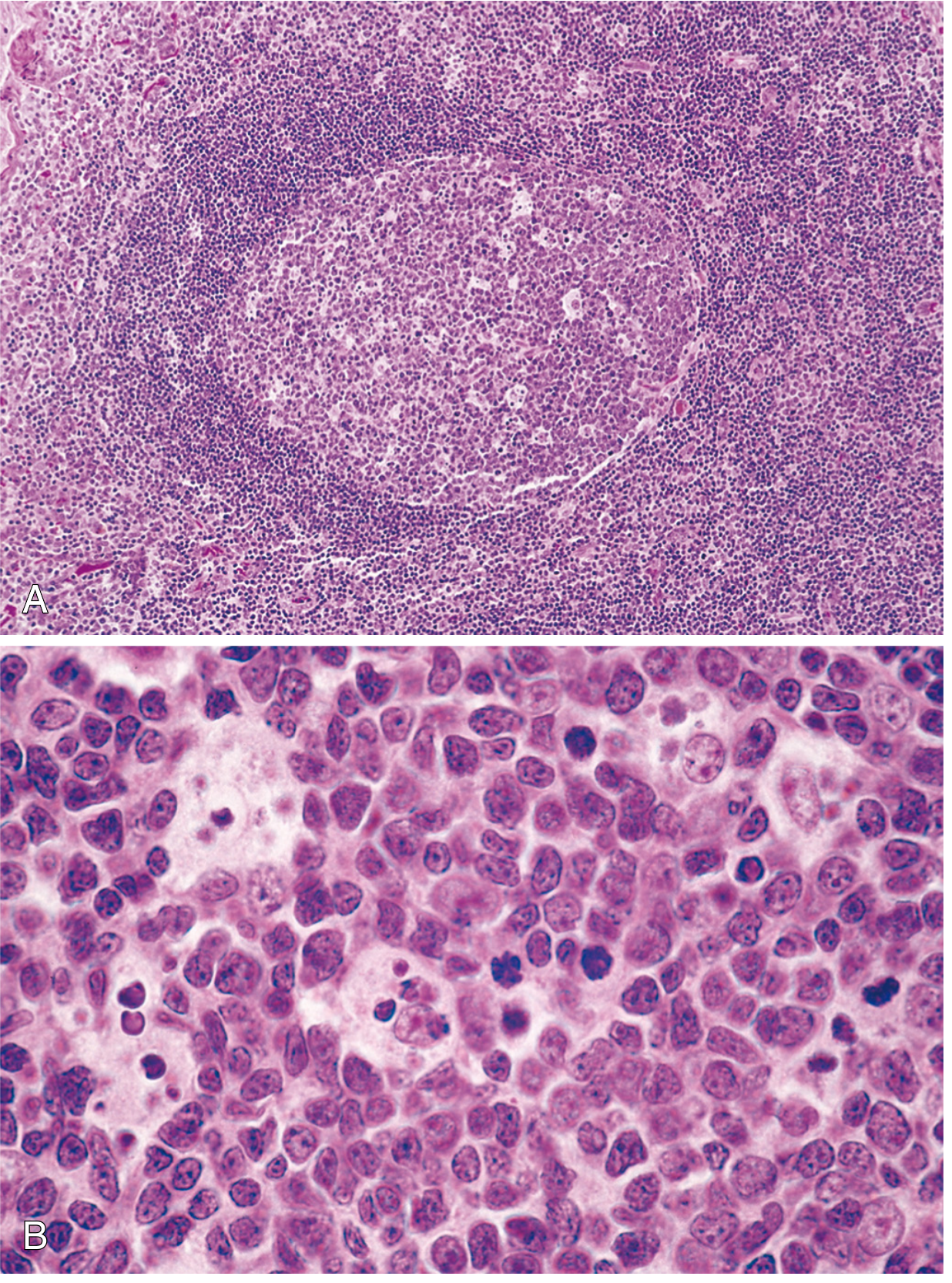
Robbins, Cotran & Kumar Pathologic Basis of Disease, pp. 551–552
6. Clinical Features & Diagnosis
History & Physical Examination
- Acute lymphadenitis: Tender, enlarged, warm, erythematous nodes; constitutional symptoms (fever, malaise, anorexia); may become fluctuant (abscess)
- Chronic lymphadenitis: Painless, rubbery, or matted nodes; may have sinus tracts (TB); bilateral vs. unilateral patterns help narrow etiology
- Identify the primary focus: tonsillitis (cervical), skin infection (axillary/inguinal), dental abscess (submandibular), bowel inflammation (mesenteric)
Investigations
| Test | Indication |
|---|---|
| CBC with differential + CRP/ESR | Distinguish inflammatory vs. non-inflammatory; assess severity |
| Blood culture | If systemic sepsis suspected |
| Throat swab / RADT | Streptococcal pharyngitis as primary source |
| Monospot / EBV serology | Infectious mononucleosis (extensive cervical lymphadenitis + pharyngitis + fever) |
| Ultrasound | First-line imaging — distinguishes solid from suppurated/abscess nodes; guides drainage |
| CT scan | Deep-space abscesses, retropharyngeal/mediastinal involvement |
| Tuberculin skin test (TST) / IGRA | Suspected TB or NTM (especially if ≥2 weeks' duration) |
| Fine-needle aspiration (FNA) | No improvement after 48–72 h; AFB smear/culture, cytology (sensitivity 77%, specificity 93% for TB) |
| Bartonella henselae serology | Cat-scratch disease |
| Excisional biopsy | Atypical mycobacteria (NTM); indeterminate FNA; suspected lymphoma |
| Thick blood smear / filarial antigen card test | Filarial lymphadenitis in endemic areas |
Harriet Lane Handbook; ROSEN's Emergency Medicine; Textbook of Family Medicine
7. Complications
| Complication | Mechanism |
|---|---|
| Abscess formation | Suppurative necrosis — fluctuant, pus-filled node |
| Cellulitis | Spread of infection to overlying and surrounding soft tissue |
| Draining sinus/fistula | Suppurative infection penetrates capsule and tracks to skin (especially TB, NTM — incision/drainage contraindicated as it causes chronic fistulization) |
| Septicemia / bacteremia | Seeding of bloodstream from infected nodes |
| Airway obstruction | Massive cervical or intrathoracic lymphadenopathy (particularly TB) causing bronchial compression or upper airway narrowing |
| Chronic lymphedema / elephantiasis | Repeated filarial lymphadenitis → lymphatic dilation → woody edema of extremities, genitalia, breasts |
| Scarring and fibrosis | Healed suppurative lymphadenitis → fibrous tissue deposition |
| Chylothorax / chylous ascites | Disruption of thoracic or abdominal lymphatics by intrathoracic/intraabdominal nodes (TB) |
| Epididymitis / orchitis | Inguinal lymphadenitis in men (especially filarial) |
| Missed malignancy | Failure to biopsy persistently enlarged nodes → delayed diagnosis of lymphoma or metastatic carcinoma |
Goldman-Cecil Medicine; Robbins Pathologic Basis of Disease; Goldman-Cecil Medicine (Filariasis chapter)
8. Non-Pharmacological Therapy
- Treat the primary source of infection: Lymphadenitis resolves when the underlying cause (tonsillitis, dental abscess, skin wound) is addressed. This is the cornerstone of initial management.
- Warm compresses: Applied to swollen, tender nodes to promote comfort and local circulation; may facilitate spontaneous drainage.
- Rest and adequate hydration: Supportive care, especially in febrile illness.
- Incision and drainage (I&D): Indicated for fluctuant abscess that has failed to respond to antibiotics or requires expedited decompression. Exceptions:
- TB lymphadenitis: I&D is contraindicated — causes permanent sinuses and prolonged drainage; surgical excision is preferred if medical therapy fails.
- NTM (atypical mycobacteria): I&D is contraindicated — causes chronic fistulization; excisional biopsy is curative management.
- Surgical excision:
- NTM lymphadenitis: Curative first-line procedure
- TB lymphadenitis: Reserved for failed medical therapy or unclear diagnosis
- Persistent nodes (4–6 weeks) not responding to antibiotics: Refer for excisional biopsy to rule out malignancy
- Needle aspiration (FNA): For diagnostic purposes (culture, cytology) and symptomatic relief in cat-scratch disease (self-limited; resolves 2–4 months)
- Observation: Self-limited causes (cat-scratch disease, viral lymphadenitis) — watchful waiting is appropriate; no intervention needed unless complicated
- Dietary and lifestyle measures: Reduce immunosuppressive risk factors (nutrition, smoking cessation, glucose control in diabetes)
9. Pharmacological Therapy
Empirical Antibiotic Therapy (Bacterial Lymphadenitis)
| Setting | Drug of Choice | Alternative |
|---|---|---|
| Mild–moderate (outpatient) | Cephalexin PO × 7–14 days OR Amoxicillin/clavulanate PO × 7–14 days | Clindamycin (if penicillin allergy or MRSA concern) |
| Severe / no response to oral | Cefazolin IV OR Clindamycin IV | Vancomycin IV (for confirmed/suspected MRSA) |
| MRSA suspected/confirmed | Vancomycin IV (inpatient) or TMP-SMX / Clindamycin PO (outpatient) | Linezolid |
Specific/Organism-Directed Therapy
| Causative Agent | Treatment |
|---|---|
| TB lymphadenitis (scrofula) | Standard 4-drug anti-TB regimen: Isoniazid + Rifampicin + Pyrazinamide + Ethambutol × 2 months (intensive phase), then Isoniazid + Rifampicin × 4 months (continuation phase) |
| NTM lymphadenitis | If incomplete surgical excision or recurrence: Macrolide (clarithromycin/azithromycin) + Rifampicin |
| Cat-scratch disease (Bartonella henselae) | Azithromycin × 5 days (mild benefit; disease is self-limited) |
| Infectious mononucleosis (EBV) | Supportive; avoid amoxicillin/ampicillin (risk of maculopapular rash); steroids if airway compromise |
| Filarial lymphadenitis | Diethylcarbamazine (DEC) ± Albendazole (kills microfilariae and some adult worms) |
| Toxoplasmosis | Pyrimethamine + Sulfadiazine + Folinic acid (immunocompetent: usually self-limited, treat only if symptomatic) |
| HIV-associated lymphadenitis | Antiretroviral therapy (ART) is the cornerstone |
| Sarcoid lymphadenitis | Corticosteroids (prednisone) for symptomatic disease |
Analgesics / Anti-inflammatory
- NSAIDs (ibuprofen, naproxen): Reduce pain and fever in mild-to-moderate disease
- Paracetamol (acetaminophen): Antipyretic and analgesic, especially in children
Harriet Lane Handbook; Textbook of Family Medicine 9e; ROSEN's Emergency Medicine; Goldman-Cecil Medicine
Summary Table
| Domain | Key Points |
|---|---|
| Definition | Inflammation of lymph nodes — acute, chronic, specific, or nonspecific |
| Most common cause | S. aureus and S. pyogenes (bacterial); EBV (viral) |
| Pathophysiology | Germinal center hyperplasia → neutrophil infiltration → follicular necrosis → abscess |
| Diagnosis | Clinical + CBC/CRP + ultrasound ± FNA; TB test if chronic |
| Pharmacological | Empirical β-lactam/cephalosporin PO; escalate to IV or vancomycin for MRSA/severe disease; disease-specific regimens (anti-TB, DEC, azithromycin for Bartonella) |
| Non-pharmacological | Treat primary source; warm compresses; I&D for abscess; excision for NTM/TB failure; I&D contraindicated in TB/NTM |
| Critical complication | Abscess, draining sinus, airway obstruction, septicemia, elephantiasis (filarial) |
- Robbins, Cotran & Kumar Pathologic Basis of Disease (pp. 551–552)
- ROSEN's Emergency Medicine: Concepts and Clinical Practice
- Goldman-Cecil Medicine, International Edition
- Bailey and Love's Short Practice of Surgery, 28th Ed.
- Textbook of Family Medicine, 9th Ed.
- Harriet Lane Handbook, 23rd Ed.
SmD1 positive
"anti-SmD1" OR "anti-Sm D1" AND "systemic lupus erythematosus"
"anti-Sm" AND "lupus nephritis" AND "clinical significance"
Anti-SmD1 (Anti-Sm D1 Antibody) - Complete Clinical Guide
What is SmD1?
Molecular Structure of the Sm Antigen
- B/B' (27/28 kDa)
- D1, D2, D3 (~14 kDa each)
- E, F, G (smaller)
Tietz Textbook of Laboratory Medicine, 7th Ed.
What Makes SmD1 the Most Specific Sm Epitope?
A glycine-arginine-glycine (Gly-Arg-Gly) motif containing symmetrical dimethylarginine residues on the D1, D2, D3, and B/B' proteins.
Tietz Textbook of Laboratory Medicine, 7th Ed., pp. 3295-3297
Clinical Significance
1. Diagnostic Marker for SLE
| Parameter | Value |
|---|---|
| Disease association | Systemic Lupus Erythematosus (SLE) |
| Specificity for SLE | Very high - "virtually diagnostic" |
| Prevalence in SLE | 15-30% (varies by ethnicity and assay) |
| Racial variation | More prevalent in individuals of African descent (up to 30%) vs. other populations (~5-10%) |
"A positive anti-ds-DNA or anti-Sm essentially rules in SLE."
"Antibodies to double-stranded DNA and the Smith (Sm) antigen are virtually diagnostic [of SLE]."
2. Association with Specific Clinical Manifestations
| Manifestation | Evidence |
|---|---|
| Lupus nephritis | Anti-Sm antibodies associated with renal disease; immune complex deposition in glomeruli involves anti-Sm |
| Neuropsychiatric lupus (NPSLE) | Some studies associate anti-Sm (particularly anti-SmD1) with CNS manifestations |
| Higher disease activity | Anti-Sm levels may correlate with SLE disease activity scores |
| Anti-dsDNA co-positivity | Frequently co-occurs with anti-dsDNA antibodies |
| Anti-U1-RNP co-positivity | Anti-Sm is frequently associated with anti-RNP antibodies |
Henry's Clinical Diagnosis and Management by Laboratory Methods
3. Differentiation from Anti-U1-RNP
| Feature | Anti-Sm (incl. SmD1) | Anti-U1-RNP |
|---|---|---|
| Disease association | SLE-specific | SLE + MCTD (Mixed Connective Tissue Disease) |
| If isolated high titer | SLE | Diagnostic for MCTD |
| Renal disease frequency | Higher | Lower |
| Anti-dsDNA co-positivity | Common | Less common |
| Raynaud phenomenon | Not specifically associated | Associated |
Anti-SmD1 vs. Broad Anti-Sm Assays
| Assay | Antigen Used | Specificity | Notes |
|---|---|---|---|
| Traditional (immunodiffusion) | Whole Sm complex (B/B', D, E...) | High | Cannot differentiate specific epitopes |
| ELISA / Line immunoassay | B/B' peptide | Moderate-High | Some cross-reactivity with anti-RNP |
| Anti-SmD1 (ELISA) | SmD1 peptide (dimethylated Arg) | Highest | Most SLE-specific; preferred in modern panels |
| Dot blot / ALBIA | Mixed Sm antigens | Variable | Depends on which proteins included |
Tietz Textbook of Laboratory Medicine, 7th Ed.
How Anti-Sm Antibodies are Pathogenic
- Immune complex formation - Anti-SmD1/anti-snRNP antibodies form immune complexes that deposit in tissues (especially glomeruli in lupus nephritis), activating complement and triggering inflammation.
- Nucleosome/snRNP release - Apoptotic cells release Sm antigens from the nucleus; in SLE, defective clearance allows these antigens to stimulate autoantibody production.
- Toll-like receptor activation - snRNA components of Sm particles activate TLR7/TLR8 on dendritic cells, amplifying the autoimmune response.
- Direct tissue injury - Anti-Sm antibodies may cross-react with cell-surface or intracellular proteins in target organs (especially brain tissue in NPSLE).
Robbins, Cotran & Kumar Pathologic Basis of Disease; Comprehensive Clinical Nephrology, 7th Ed.
Detection Methods
- ELISA (Enzyme-Linked Immunosorbent Assay) - Most widely used; can use SmD1 peptide specifically
- Line immunoassay (LIA) / dot blot - Simultaneous detection of multiple ENA antibodies
- Addressable laser bead immunoassay (ALBIA/Luminex) - High-throughput multiplex; can detect SmD1 specifically
- Immunodiffusion (Ouchterlony) - Historical gold standard; detects whole Sm antigen; less sensitive for low-titer antibodies
- Counterimmunoelectrophoresis - Historical; less commonly used now
- The specific antigen used (SmD1 peptide vs. whole Sm complex vs. B/B' peptide)
- The detection method (ELISA vs. immunodiffusion)
- The patient's ethnicity
- Whether the patient is in an active or quiescent phase (anti-Sm levels can fluctuate over time)
Summary: Key Points on Anti-SmD1 Positivity
| Point | Detail |
|---|---|
| What it means | Antibody against D1 polypeptide of spliceosomal Sm antigen |
| Disease | SLE - highly specific marker |
| Prevalence | 15-30% of SLE patients |
| Why it matters | High specificity; helps confirm SLE diagnosis |
| Clinical associations | Lupus nephritis, neuropsychiatric lupus, disease activity |
| Key molecular feature | Dimethylarginine on Gly-Arg-Gly motif = most SLE-specific Sm epitope |
| Assay consideration | SmD1-specific assays are more specific than assays using whole Sm or B/B' alone |
| Fluctuation | Levels can vary over time; serial monitoring may be clinically useful |
| Co-positivity | Frequently co-occurs with anti-dsDNA and anti-U1-RNP |
- Tietz Textbook of Laboratory Medicine, 7th Ed. (pp. 3292-3297)
- Henry's Clinical Diagnosis and Management by Laboratory Methods (Antibodies to Sm and Nuclear Ribonucleoprotein section)
- Robbins, Cotran & Kumar Pathologic Basis of Disease (Table 6.10)
- Robbins & Kumar Basic Pathology (Spectrum of Autoantibodies in SLE)
- Symptom to Diagnosis: An Evidence-Based Guide, 4th Ed.
- Comprehensive Clinical Nephrology, 7th Ed.
SmD1 - positive +++ SS-A/Ro60 - POSITIVE ++ SS-A/Ro52 - Positive ++ U1-snRNP - Positive++
Serologic Profile Interpretation
The Panel at a Glance
| Antibody | Result | Specificity |
|---|---|---|
| Anti-SmD1 | +++ (Strong Positive) | Highly specific for SLE |
| Anti-SS-A/Ro60 | ++ (Positive) | SLE, Sjögren, neonatal lupus |
| Anti-SS-A/Ro52 (TRIM21) | ++ (Positive) | SLE, Sjögren, myositis, scleroderma overlap |
| Anti-U1-snRNP | ++ (Positive) | SLE overlap, MCTD |
Interpretation: What This Profile Means
1. Diagnosis: SLE With Overlap Features
"Anti-Smith (anti-Sm) antibodies are the most common anti-RBP, present in ~30% of patients, and are highly specific for SLE (55–100%). Given their high specificity, both anti-dsDNA and anti-Sm antibodies are the only ANA subtypes included in the current EULAR/ACR criteria."
2. Anti-SmD1 +++ — What Strong Positivity Signals
- Highly specific for SLE — a strong positive essentially rules in the diagnosis
- Associated with lupus nephritis (renal immune complex deposition)
- Associated with neuropsychiatric SLE (NPSLE) — cognitive dysfunction, seizures, psychosis
- Anti-Sm and anti-U1-RNP are "linked" antibodies — they frequently co-occur (a phenomenon called linkage); the co-positivity here is typical
- Strong SmD1 positivity reflects active autoimmune drive against the spliceosomal snRNP complex
Goldman-Cecil Medicine: "Anti-Sm and anti-RNP antibodies are related antibodies that commonly occur together in SLE, a phenomenon called linkage."
3. Anti-SS-A/Ro60 ++ AND Anti-SS-A/Ro52 ++ — Distinct and Additive Risks
Anti-Ro60 (classic SS-A):
- Associated with subacute cutaneous lupus erythematosus (SCLE) — annular or papulosquamous photosensitive rash
- Associated with ANA-negative SLE (Ro antibodies can be the only positive in ~5% of SLE)
- Associated with lupus nephritis, vasculitis, lymphadenopathy, photosensitivity, leukopenia
- Neonatal lupus and congenital heart block (CHB) — critically important if patient is female of childbearing age
- Associated with sicca syndrome (dry eyes, dry mouth)
- Associated with complement deficiency states (homozygous C2/C4 deficiency)
Anti-Ro52 (TRIM21) — Separate Significance:
- Must be tested separately from Ro60 (up to 20% of sera show masked reactivities when both antigens are in the same ELISA well)
- Anti-Ro52 alone (without Ro60) is seen in scleroderma and myositis overlap
- Anti-Ro52 + anti-Ro60 together: seen in primary Sjögren syndrome and SLE with systemic features
- Anti-Ro52 is frequently co-detected with myositis-specific antibodies (e.g., anti-Jo-1) and is a myositis-associated antibody (MAA)
- In the context of this panel: the Ro52 positivity may represent an additional overlap with inflammatory myopathy or scleroderma spectrum
Henry's Clinical Diagnosis and Management by Laboratory Methods: "Different clinical associations for each system... anti-Ro52/TRIM21 alone is also associated with scleroderma and myositis."
4. Anti-U1-snRNP ++ — Overlap and Pulmonary Risk
- Anti-U1-RNP (U1-snRNP) in isolation at high titer is diagnostic for Mixed Connective Tissue Disease (MCTD)
- Here it co-occurs with anti-Sm — in this context it does not define MCTD as a standalone diagnosis; instead it signals an SLE-dominant overlap syndrome
- However, anti-RNP raises specific clinical risks:
- Pulmonary arterial hypertension (PAH) — a serious, potentially life-threatening complication
- Raynaud's phenomenon
- Musculoskeletal involvement (arthritis, myositis, puffy fingers)
- Esophageal dysmotility
- Elevated type I interferon gene signature — contributes to disease severity
"Anti-RNP: Not SLE-specific. Associated with overlap syndromes and increased risk for pulmonary hypertension. Correlates with high interferon gene signature."
Goldman-Cecil Medicine: "In the absence of anti-Sm, anti-RNP antibodies may characterize patients with overlap syndromes, including a specific entity termed mixed connective tissue disease."
Consolidated Clinical Risk Map
| System | Risk Driven By | Clinical Feature to Screen For |
|---|---|---|
| Kidney | SmD1 +++, Ro60 ++ | Lupus nephritis — urinalysis (proteinuria, casts), eGFR, UPCR |
| Neuropsychiatric | SmD1 +++ | Cognitive dysfunction, seizures, psychosis, headache |
| Skin | Ro60 ++ | SCLE — annular/papulosquamous rash; photosensitivity; discoid rash |
| Eyes/Mouth | Ro60 ++, Ro52 ++ | Sicca syndrome (dry eyes, dry mouth) — Sjögren overlap |
| Lungs | U1-snRNP ++, Ro52 ++ | Pulmonary arterial hypertension, interstitial lung disease (ILD), pleuritis |
| Heart (fetal) | Ro60 ++, Ro52 ++ | Congenital heart block — critical if pregnant or planning pregnancy |
| Vascular | U1-snRNP ++ | Raynaud's phenomenon; pulmonary hypertension |
| Musculoskeletal | U1-snRNP ++, Ro52 ++ | Arthritis, myositis, puffy fingers, Jaccoud deformity |
| Hematologic | SmD1 +++, Ro60 ++ | Leukopenia, lymphopenia, hemolytic anemia, thrombocytopenia |
| Vasculitis | Ro60 ++ | Cutaneous vasculitis, purpura |
Special Situations Requiring Immediate Action
If Patient is Female and Pregnant (or Planning Pregnancy):
- Neonatal lupus — transient cutaneous rash, thrombocytopenia, liver abnormalities in the neonate
- Congenital heart block (CHB) — potentially permanent, life-threatening fetal 2nd-3rd degree AV block
- Refer to high-risk obstetrics
- Fetal echocardiography starting at 16-18 weeks gestation, every 1-2 weeks until 26 weeks (peak risk window)
- Hydroxychloroquine (HCQ) during pregnancy significantly reduces CHB risk in women with prior affected fetus
- If 1st or 2nd degree CHB detected on fetal echo: fluorinated steroids (dexamethasone) may be considered
Harrison's Principles of Internal Medicine: "The presence of Ro antibodies, particularly in high titer, should prompt referral to high-risk obstetricians who can perform fetal echocardiography... HCQ in pregnancy significantly reduces the risk of congenital heart block."
Summary Diagnosis
| Interpretation | Confidence |
|---|---|
| SLE | Very High (SmD1 +++ is virtually diagnostic; meets EULAR/ACR immunologic criterion) |
| SLE-Sjögren overlap | High (Ro60 ++ + Ro52 ++ with sicca symptoms if present) |
| SLE-MCTD/undifferentiated overlap | Moderate (U1-snRNP ++ without isolately high titer; co-occurs with anti-Sm, pointing to SLE-dominant overlap rather than pure MCTD) |
| Myositis overlap | Possible (Ro52 alone is a myositis-associated antibody — check CK, aldolase, muscle symptoms) |
Recommended Next Steps
- Complete SLE workup: anti-dsDNA, C3, C4, CBC with differential, urinalysis + UPCR, eGFR, LFTs
- Antiphospholipid antibodies: anticardiolipin IgG/IgM, anti-β2GP-I, lupus anticoagulant (~50% of SLE patients co-positive)
- Renal assessment: 24-hour urine protein or UPCR to screen for lupus nephritis
- Pulmonary: Echocardiogram (PAH screen given U1-snRNP), HRCT chest if respiratory symptoms (ILD)
- Sicca workup: Schirmer's test, unstimulated salivary flow, lip biopsy if Sjögren overlap suspected
- Muscle enzymes: CK, aldolase, LDH (Ro52 + U1-snRNP overlap = myositis screen)
- Pregnancy counseling if applicable (anti-Ro60 ++ mandates fetal cardiac surveillance)
- Complement levels (C3, C4): Low complement supports active immune complex disease / nephritis activity
- Harrison's Principles of Internal Medicine, 22nd Ed. — Table 366-2 (Autoantibodies in SLE), Neonatal Lupus section
- Goldman-Cecil Medicine, International Ed. — Other Antinuclear Antibodies, Table 237-1
- Henry's Clinical Diagnosis and Management by Laboratory Methods — Antibodies to SS-A/Ro and SS-B/La; Clinical Subsets of SLE
- Tietz Textbook of Laboratory Medicine, 7th Ed. — Anti-Sm, Anti-Ro sections
- Robbins, Cotran & Kumar Pathologic Basis of Disease
Valvular hear disease ( moderate MR/AR/ AS) Degenerative etiology
"valvular heart disease" AND "multivalvular" AND management
Valvular Heart Disease: Moderate MR / AR / AS — Degenerative Etiology
Overview: Why This Combination Matters
- Each lesion individually at moderate stage is below surgical intervention thresholds — but together they compound hemodynamic load on the left ventricle
- The degenerative etiology is the same underlying mechanism: progressive fibrocalcific degeneration driven by aging, inflammation, and atherosclerotic risk factors
- Moderate disease is the critical surveillance window — the stage where close monitoring and risk factor control can delay or prevent progression to severe disease requiring intervention
1. Degenerative Etiology — Shared Pathophysiology
The degenerative process involves proliferative and inflammatory changes with lipid accumulation, infiltration of macrophages and T lymphocytes, followed by fibrosis and calcification. Risk factors are identical to those for atherosclerosis: elevated LDL, diabetes, hypertension, and smoking. — Mulholland and Greenfield's Surgery, 7th Ed.
| Lesion | Degenerative Mechanism |
|---|---|
| Degenerative AS | Fibrocalcific deposits on aortic leaflet bases → progressive leaflet immobility. Begins at leaflet base, extends to annulus and ascending aorta. Prevalence 2% in >65 yrs |
| Degenerative AR | Calcification and fibrosis of the aortic root and leaflets; age-related aortic root dilation → leaflet coaptation failure; calcific extension from AS into leaflet tips |
| Degenerative MR | Myxomatous degeneration → leaflet prolapse; mitral annular calcification (MAC) → restricted/prolapsing leaflets; age-related annular dilation |
2. Classification of Moderate Severity (Echocardiographic Criteria)
Aortic Stenosis — Moderate
| Parameter | Mild | Moderate | Severe |
|---|---|---|---|
| Jet velocity (m/s) | 2.0–2.9 | 3.0–3.9 | ≥4.0 |
| Mean gradient (mmHg) | <20 | 20–39 | ≥40 |
| Valve area (cm²) | >1.5 | 1.0–1.5 | <1.0 |
| Indexed valve area | — | — | <0.6 cm²/m² |
Aortic Regurgitation — Moderate
- Moderate AR: regurgitant volume >30 but <60 mL/beat; EROA >10 but <30 mm²
- Vena contracta width: 3–6 mm
- Holodiastolic flow reversal: partial (descending aorta)
- AR fraction: 30–50%
Mitral Regurgitation — Moderate
- Vena contracta width: 3–6.9 mm
- EROA (PISA): 0.20–0.39 cm²
- Regurgitant volume: 30–59 mL/beat
- Regurgitant fraction: 30–49%
- LA and LV size: mildly enlarged
3. Pathophysiology of Each Lesion
Aortic Stenosis (AS) — Pressure Overload
- Fixed outflow obstruction → increased LV systolic pressure (pressure overload)
- Compensatory LV hypertrophy (concentric) → increased wall thickness
- Stiff, non-compliant ventricle → diastolic dysfunction (impaired relaxation and filling)
- Increased myocardial O₂ demand (hypertrophy + elevated wall tension + prolonged ejection time) + decreased perfusion → subendocardial ischemia → fibrosis
- Symptoms emerge in sequence: angina → syncope → heart failure (mean survival 5, 3, 2 years respectively once each symptom appears)
- Moderate AS: ~0.1 cm² reduction in valve area per year — progression to severe is eventual in most patients
Aortic Regurgitation (AR) — Volume Overload
- Regurgitant jet during diastole → LV receives both normal preload + regurgitant volume → LV volume overload
- Eccentric LV hypertrophy (dilation + wall thickening) — LV adapts via Frank-Starling mechanism
- Increased preload sustains stroke volume; effective forward flow maintained in early chronic AR
- Over time: LV becomes progressively dilated → systolic dysfunction
- Reduced diastolic aortic pressure + elevated LV diastolic pressure → wide pulse pressure → bounding peripheral pulses (Corrigan's, de Musset's, Quincke's signs)
- In moderate AR: asymptomatic for many years; 10-year survival 94% (mild) vs. 69% (severe)
Mitral Regurgitation (MR) — Volume Overload + Left Atrial Pressure
- Systolic regurgitation into LA → LA volume and pressure overload
- LV compensates with eccentric hypertrophy (volume overload state)
- Increased LA pressure → pulmonary venous hypertension → dyspnea
- Chronic LA dilation → atrial fibrillation (MR's most common complication)
- In degenerative MR (myxomatous/prolapse): leaflet billowing into LA during systole → regurgitant jet
- Mitral annular calcification (MAC) — a degenerative variant; causes restriction ± regurgitation; associated with systemic atherosclerosis and poor cardiovascular prognosis
4. Clinical Presentation
Symptoms (typically appear late, overlap between lesions)
| Symptom | AS | AR | MR |
|---|---|---|---|
| Exertional dyspnea | ✓✓ | ✓✓ | ✓✓ |
| Angina | ✓✓✓ (30–50%) | ✓ | - |
| Syncope/presyncope | ✓✓ (15%) | - | - |
| Palpitations / AF | ✓ | ✓ | ✓✓✓ |
| Fatigue | ✓✓ | ✓✓ | ✓✓ |
| Orthopnea/PND | ✓ (advanced) | ✓ | ✓✓ |
Physical Examination Findings
| Sign | Lesion |
|---|---|
| Systolic ejection murmur (crescendo-decrescendo) radiating to neck, ± thrill | AS |
| Pulsus parvus et tardus (weak, slow-rising pulse) | AS |
| Early diastolic murmur (high-pitched, decrescendo) at left sternal border, leaning forward in expiration | AR |
| Wide pulse pressure (>80 mmHg), bounding/Corrigan's pulse | AR |
| Holosystolic murmur at apex radiating to axilla | MR |
| Displaced, hyperdynamic apex | MR, AR |
| S3 gallop | MR (volume overload) |
5. Diagnosis
Echocardiography (Gold Standard for All Three)
- TTE (transthoracic echo) is first-line: assesses valve morphology, severity by Doppler, LV size and function (EF, dimensions), LA size, pulmonary artery pressure
- TEE: if TTE is inconclusive; detailed mitral valve anatomy for repair planning
- 3D echocardiography: PISA and vena contracta measurement for MR; optimal for surgical/transcatheter planning
- Dobutamine stress echo: if moderate AS with low EF (to distinguish true severe AS from pseudo-severe AS in low-flow/low-gradient states)
Cardiac MRI (CMR)
- Definitive measurement of regurgitant fraction and volumes in AR and MR
- Useful when echo is inconclusive or discordant with clinical findings
- Assessment of aortic root dimensions in AR
- LV fibrosis quantification (late gadolinium enhancement)
ECG
- AS: LV hypertrophy pattern (Sokolow-Lyon criteria); ST-T changes
- AR: LV hypertrophy + dilation pattern; prolonged QRS
- MR: LA enlargement (P-mitrale, P >120 ms, bifid); AF; LV hypertrophy
Chest X-Ray
- AS: LV hypertrophy (rounded apex), aortic valve calcification, post-stenotic aortic dilation
- AR: cardiomegaly (LV dilation), aortic root dilation
- MR: cardiomegaly, LA enlargement (double density sign, elevation of left main bronchus), pulmonary vascular congestion
Exercise Stress Testing
- Useful in moderate AS: to unmask symptoms in ostensibly asymptomatic patients; should be supervised by a cardiologist
- Contraindicated in symptomatic severe valvular disease
Cardiac Catheterization
- Reserved for preoperative coronary artery disease assessment in patients >40 years or with risk factors
- No longer used for routine AS/AR/MR severity assessment (replaced by echo)
6. Management of Moderate Degenerative Multi-Valve Disease
General Principles
- Moderate severity = below guideline thresholds for surgical intervention for any individual lesion
- However, multi-valve moderate disease compounds hemodynamic stress — lower threshold for referral and closer surveillance is warranted
- All three lesions share the same risk factor profile as atherosclerosis — aggressive risk factor control is the cornerstone of non-pharmacological management
Non-Pharmacological Therapy
| Intervention | Rationale | Specifics |
|---|---|---|
| Salt restriction | Reduce preload and pulmonary congestion | <2g Na/day if symptomatic or EF borderline |
| Fluid restriction | Avoid volume overload | Particularly important if LV dysfunction present |
| Weight management | Reduces cardiac workload; atherosclerotic RF control | Target BMI <25 |
| Smoking cessation | Slows degenerative calcific progression | One of few modifiable risk factors proven to affect progression |
| Lipid management (lifestyle) | Shares same RF as AS; though statins not proven to halt AS progression, overall CV risk reduction is important | Mediterranean diet, low saturated fat |
| Glycemic control | Diabetes accelerates calcific degeneration | Target HbA1c <7% |
| Hypertension control | Critical — HTN worsens AR (increases afterload), worsens MR (increases regurgitant gradient) | Target <130/80 mmHg |
| Exercise | Moderate aerobic exercise permitted in asymptomatic moderate disease | Avoid competitive sports and strenuous exercise in AR with LV dilation or reduced reserve; supervised exercise preferred |
| Endocarditis prophylaxis | Not routinely recommended for degenerative valvular disease (no longer indicated for most native valve disease per AHA) | Maintain good dental hygiene |
| Regular serial echocardiography | Surveillance for progression to severe disease | See schedule below |
| Avoid volume depletion | Dehydration poorly tolerated with fixed-orifice stenosis (AS) | Caution with diuretics and in hot weather |
"Patients with mild to moderate AR and those with severe AR with a normal LVEF and only mild ventricular dilation may engage in aerobic forms of exercise. However, patients with AR who have limitations of cardiac reserve and/or evidence of declining LV function should not engage in competitive sports or strenuous activities."
Pharmacological Therapy
A. Aortic Stenosis (Moderate)
| Drug Class | Role | Notes |
|---|---|---|
| No proven disease-modifying pharmacotherapy | AS has no effective medical therapy that alters natural history | Statins initially promising but trials (SALTIRE, SEAS, ASTRONOMER) failed to show halted progression |
| Diuretics (furosemide, thiazides) | Symptomatic relief of pulmonary congestion | Use cautiously — preload reduction may reduce CO across fixed obstruction |
| Treat hypertension | ACE inhibitors or ARBs preferred | Start at low dose, titrate carefully — avoid abrupt BP reduction |
| Avoid | Strong vasodilators (nitrates, CCBs), negative inotropes (beta-blockers in decompensation) | Risk of hypotension with fixed outflow obstruction |
| Atrial fibrillation | Rate control, anticoagulation if AF develops | AF poorly tolerated in AS (loss of atrial kick) |
B. Aortic Regurgitation (Moderate)
| Drug Class | Role | Indication |
|---|---|---|
| ACE inhibitors / ARBs | Afterload reduction → reduce regurgitant volume | Indicated if hypertension present at any AR severity; also in severe AR with symptoms/LV dysfunction as bridge to surgery |
| Not indicated in asymptomatic, normotensive patients with mild-to-moderate AR and normal LV function | ||
| Dihydropyridine CCBs (nifedipine, amlodipine) | Vasodilation + afterload reduction | Alternative to ACE inhibitors for hypertension management in AR |
| Beta-blockers | Uncertain role in chronic AR | Prolong diastole → may increase regurgitation time; not routinely recommended; useful for coexisting HTN or CAD |
| Diuretics | Symptomatic congestion | If volume overload symptoms present |
C. Mitral Regurgitation (Moderate)
| Drug Class | Role | Notes |
|---|---|---|
| ACE inhibitors / ARBs | Afterload reduction, reduce regurgitant fraction | Particularly useful if LV dysfunction present (EF <60%) or hypertension co-exists |
| Beta-blockers | Rate control if AF develops; reduce RAAS activation | Standard HF doses if EF reduced |
| Diuretics | Symptomatic pulmonary congestion relief | Furosemide if symptomatic |
| Aldosterone antagonists | If secondary MR with HF (EF <40%) | Spironolactone/eplerenone |
| Anticoagulation | If AF develops (CHA₂DS₂-VASc ≥2) | DOAC preferred over warfarin for AF with MR (native valve) |
| Digoxin | Rate control in AF with MR, or low EF | Secondary role |
"Pregnancy in patients with mild or moderate mitral regurgitation can be managed very safely with a conservative regimen of reduced physical activity, salt restriction, and low doses of a diuretic."
Surveillance Schedule (Echocardiographic Monitoring)
| Lesion | Moderate Severity — Recommended Follow-up |
|---|---|
| Moderate AS | Echo every 1–2 years; sooner if symptoms develop |
| Moderate AR (asymptomatic, normal EF) | Echo every 12–24 months (Braunwald's: "every 12 or 24 months") |
| Moderate MR (asymptomatic, normal EF) | Echo every 1–2 years; clinical review every 6–12 months |
| Any new symptom | Immediate repeat echo + clinical review regardless of scheduled interval |
Intervention Thresholds (When Moderate Becomes an Indication)
| Trigger | AS | AR | MR |
|---|---|---|---|
| Progression to severe | ✓ (SAVR/TAVR) | ✓ (AVR) | ✓ (MVR/repair) |
| Symptoms develop (dyspnea, angina, syncope) | ✓✓ (class I indication) | ✓ | ✓ |
| LV dysfunction (EF <50% for AR; EF <60% for MR) | ✓ | ✓ | ✓ |
| LV dilation (LVESD >50mm for AR; LVESD >40mm or LVEDD >65mm for MR) | — | ✓ | ✓ |
| Concurrent cardiac surgery needed for other reason | ✓ (moderate AS → replace at time of surgery) | ✓ | ✓ |
| New-onset AF | — | — | ✓ (may lower threshold) |
| Pulmonary hypertension (sPAP >50 mmHg) | — | — | ✓ |
"AVR is also indicated in patients with moderate AS requiring cardiac surgery for other indications." — This is particularly relevant here: if MR surgery becomes necessary, concurrent AVR for moderate AS should be performed at the same operative sitting.
7. Special Considerations in Multi-Valve Disease
-
Compounded LV burden: Moderate MR (volume overload) + moderate AS (pressure overload) + moderate AR (volume overload) = triple hemodynamic challenge on the LV. The LV EF may remain falsely preserved (EF normal despite impaired contractility) due to MR/AR offloading the ventricle. A falling EF even within normal range (e.g., 60% → 55%) is a red flag.
-
Cascade of AF: Left atrial dilation (from MR/AR) predisposes to AF. AF, in turn, worsens MR (annular dilation with rate-related changes) and poorly tolerated in AS (loss of atrial contribution to filling of hypertrophied LV). Atrial fibrillation in this multi-valve context should prompt urgent cardiology review.
-
Coronary disease co-assessment: Degenerative valvular disease shares risk factors with CAD. Coronary angiography is needed preoperatively (>40 years or risk factors). Concurrent CAD further reduces the ischemic threshold in AS.
-
TAVR/TAVI consideration: For high-surgical-risk elderly patients who progress to severe AS, TAVR is increasingly preferred. Mild-moderate AR after TAVR (30–50%) is a known complication to monitor.
-
Endocarditis risk: While prophylaxis is not routinely recommended for native degenerative valvular disease (AHA 2007/2021 guidelines), any dental or invasive procedure should be preceded by good oral hygiene maintenance. The presence of multiple diseased valves means endocarditis would be catastrophic.
8. Summary Management Algorithm
Moderate MR + Moderate AR + Moderate AS (Degenerative)
                        │
         ┌──────────────┼──────────────┐
    Asymptomatic     Early symptoms    Significant symptoms
    Normal LV EF     (mild dyspnea)    (NYHA II-III / syncope)
         │                 │                    │
   Serial echo         Optimize meds +     Cardiology referral
   q 12-24 months      echo q 6-12m        Stress test / CMR
         │                 │                    │
   Risk factor         Re-assess for        Consider if any
   control             progression to       lesion now severe
   (BP, lipids,        severe disease       → Surgical/TAVR
   DM, smoking)                              planning
Sources
- Braunwald's Heart Disease: A Textbook of Cardiovascular Medicine, 2-Volume Set (Chapters 73, 76, 77)
- Mulholland and Greenfield's Surgery: Scientific Principles and Practice, 7th Ed. (Chapter 82 — Degenerative Calcific Aortic Stenosis)
- Textbook of Clinical Echocardiography (MR/AR quantitation sections)
- Symptom to Diagnosis: An Evidence-Based Guide, 4th Ed. (Aortic Regurgitation treatment summary)
- Creasy & Resnik's Maternal-Fetal Medicine (Moderate MR in pregnancy)
- Harrison's Principles of Internal Medicine, 22nd Ed.
Definition
Definitions: Valvular Heart Disease (Moderate MR / AR / AS) — Degenerative Etiology
1. Valvular Heart Disease (VHD) — General Definition
- Stenosis — pathological narrowing of a valve orifice, obstructing forward flow
- Regurgitation (insufficiency/incompetence) — failure of a valve to close completely, allowing backward (retrograde) flow
- Or both (mixed lesion)
2. Degenerative Valve Disease — Definition
"Degenerative valve disease is a term used to describe changes that affect the integrity of valvular extracellular matrix (ECM). These diseases are probably an inevitable aspect of aging, related to the repetitive mechanical stresses to which valves are subjected — 40 million beats per year, with each normal opening and closing requiring substantial valve deformation." — Robbins & Kumar Basic Pathology
| Process | Description | Primary Valve Affected |
|---|---|---|
| Calcific / fibrocalcific degeneration | Lipid accumulation → local inflammation → progressive fibrosis and calcification of valve leaflets or annulus | Aortic valve (AS), Mitral annulus (MAC) |
| Myxomatous degeneration | Thinning of the fibrosa layer + expansion of the spongiosa layer due to mucoid/proteoglycan deposition → leaflet redundancy, billowing, chordal elongation/rupture | Mitral valve (MR/prolapse) |
Risk factors mirror atherosclerosis: male sex, elevated LDL, hypertension, diabetes, and smoking — all of which promote endothelial injury, lipid deposition, and calcification. — Robbins & Kumar Basic Pathology
3. Mitral Regurgitation (MR) — Definition
In Degenerative MR:
- Myxomatous/mitral valve prolapse (MVP): One or both mitral leaflets balloon back ("prolapse") into the left atrium during systole due to myxomatous thickening (thinned fibrosa, expanded mucoid spongiosa), elongated or ruptured chordae → regurgitant jet
- Mitral annular calcification (MAC): Calcific deposits in the mitral annulus restrict normal annular contraction and/or cause leaflet restriction → regurgitation (and occasionally stenosis)
- Fibroelastic deficiency: Age-related reduction in collagen, elastin, and proteoglycans → thin, translucent leaflets with chordal rupture → acute or chronic MR
Degree — Moderate MR:
4. Aortic Regurgitation (AR) — Definition
- Intrinsic cusp disease — degenerative fibrocalcific changes that stiffen and retract cusps, preventing normal coaptation
- Aortic root/annular dilation — even structurally normal cusps cannot coapt if the annulus is too wide (age-related aortic root dilation, hypertension)
Degree — Moderate AR:
5. Aortic Stenosis (AS) — Definition
"Aortic stenosis (AS) is a narrowing of the aortic valve that can result in chest pain, dyspnea, presyncope or syncope, fatigue, and palpitations." — Kaplan & Sadock's Comprehensive Textbook
In Degenerative (Calcific) AS:
"Calcific aortic degeneration is the most common cause of aortic stenosis... the hallmark is heaped-up calcified masses on the outflow side of the cusps, protruding into the sinuses of Valsalva and mechanically impeding valve opening. Commissural fusion is NOT a typical feature — distinguishing it from rheumatic AS." — Robbins & Kumar Basic Pathology
- Endothelial injury (from mechanical stress, hypertension, lipid deposition) → lipid accumulation → macrophage and T-lymphocyte infiltration → fibrosis → progressive calcification immobilizing leaflets
- Calcific deposits begin at the base of leaflets and extend toward the tips
- The process shares the pathobiology of atherosclerosis — hence the identical risk factor profile
Degree — Moderate AS:
Summary Definition Table
| Entity | Core Definition | Degenerative Mechanism | Hemodynamic Consequence |
|---|---|---|---|
| VHD (general) | Structural/functional valve abnormality causing stenosis, regurgitation, or both | — | Abnormal pressure/volume load on cardiac chambers |
| Degenerative VHD | Age-related ECM disruption from chronic mechanical stress → fibrocalcific or myxomatous changes | Calcification (AS, MAC) or myxomatous degeneration (MR) | Progressive valve dysfunction over years–decades |
| Moderate MR | Systolic backflow LV→LA through incompetent mitral valve; regurgitant volume 30–59 mL/beat | Myxomatous degeneration / MVP / MAC | LV + LA volume overload; pulmonary venous hypertension |
| Moderate AR | Diastolic backflow Aorta→LV through incompetent aortic valve; regurgitant volume 30–59 mL/beat | Cusp calcification / aortic root dilation | LV eccentric hypertrophy; wide pulse pressure |
| Moderate AS | Narrowing of aortic valve orifice; mean gradient 20–39 mmHg, AVA 1.0–1.5 cm² | Fibrocalcific deposits on cusps (heaped-up, outflow side) | LV concentric hypertrophy; pressure overload |
- Robbins & Kumar Basic Pathology (Robbins Pathology) — Degenerative Valve Disease section (pp. 854–892)
- Braunwald's Heart Disease, 2-Volume Set — Chapters 72, 73, 76
- Kaplan & Sadock's Comprehensive Textbook — Aortic Valve Disease
- Mulholland and Greenfield's Surgery, 7th Ed. — Degenerative Calcific Aortic Stenosis (Table 82.1)
- Fuster and Hurst's The Heart, 15th Ed.
Valvular hear disease ( moderate MR/AR/ AS) Degenerative etiology
Which section(s) would you like me to cover for Valvular Heart Disease (Moderate MR/AR/AS, Degenerative)?