
Cor pulmonale
Reading File
Finding Sources
Finding Sources
Searching Images
cor pulmonale right ventricular hypertrophy chest x-ray
Searching PubMed
"cor pulmonale"[MeSH Terms]
Searching the Web
cor pulmonale definition causes management 2024
Reading File
Reading File
Cor Pulmonale
Definition
Cor pulmonale is right ventricular (RV) hypertrophy and/or dilation, frequently accompanied by right-sided heart failure, that results from pulmonary hypertension caused by disorders of the lung parenchyma or pulmonary vasculature. RV enlargement secondary to left-sided heart disease or congenital heart disease is specifically excluded from this definition - pulmonary hypertension driven by a primary lung/pulmonary vascular problem is the defining requirement (Robbins & Kumar Basic Pathology, p. 326; Robbins, Cotran & Kumar Pathologic Basis of Disease, p. 505).
Pathophysiology
The common pathway is loss of pulmonary vascular surface area and/or impaired gas exchange from airway obstruction, lung fibrosis, or both. This produces hypoxemia (with or without hypercapnia), which is a potent stimulus for pulmonary vasoconstriction and vascular remodeling. Hypoxia-driven polycythemia increases blood viscosity, further raising pulmonary vascular resistance. The resulting rise in pulmonary artery pressure imposes pressure (and eventually volume) overload on the right ventricle, driving hypertrophy, dilation, and ultimately failure (Fuster and Hurst's The Heart, 15th ed., "Cor Pulmonale: The Heart in Structural Lung Disease," p. 1773-1778).
Acute vs. Chronic
- Acute cor pulmonale: sudden increase in pulmonary vascular resistance, most commonly from massive pulmonary embolism, also ARDS or pneumonia. The RV typically shows only dilation without time to hypertrophy - in fatal embolism, the heart may even appear grossly normal in size (Robbins & Kumar Basic Pathology, p. 326).
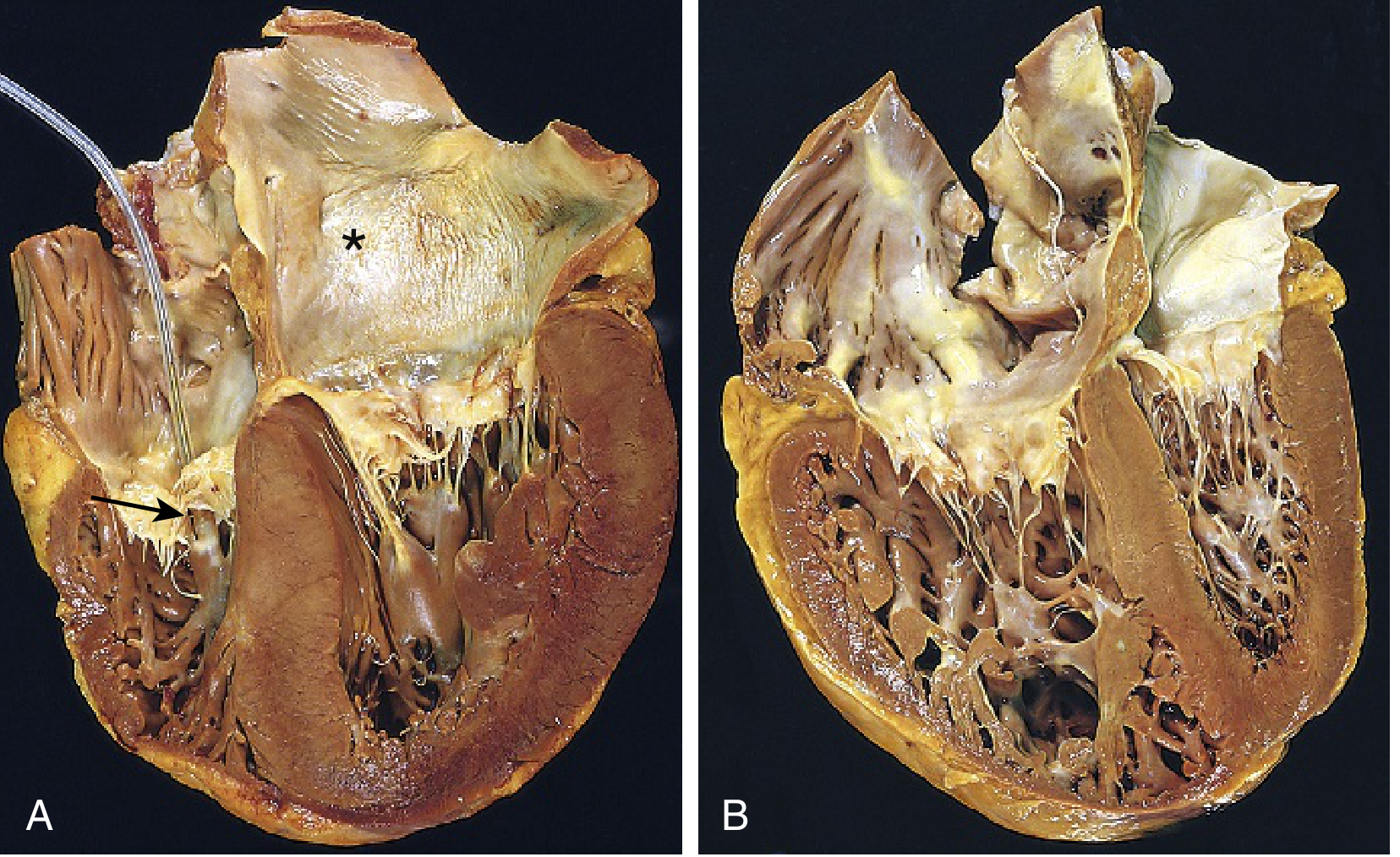
- Chronic cor pulmonale: develops insidiously from prolonged pressure overload. Characterized by RV (and often right atrial) hypertrophy; in severe cases RV wall thickness can rival or exceed the left ventricle. The enlarged right ventricle can distort left ventricular shape and volume. Pulmonary arteries often show intimal thickening from the underlying pulmonary hypertension (Robbins & Kumar Basic Pathology, p. 326).
Common Causes
- COPD - the most common cause of chronic cor pulmonale; severity correlates with degree of hypoxemia, hypercapnia, and airflow obstruction (usually with only mild pulmonary hypertension, mean PAP ≤40 mmHg)
- Interstitial lung disease / pulmonary fibrosis
- Obstructive sleep apnea (chronic hypoxia)
- Chronic pulmonary thromboembolism
- Primary pulmonary vascular disease (pulmonary arterial hypertension)
- Acute massive pulmonary embolism (acute form)
Clinical Features
Signs relate to right heart failure and the underlying lung disease: dyspnea, fatigue, exertional syncope, elevated jugular venous pressure, hepatomegaly, peripheral/dependent edema and ascites (right-sided congestion), a loud pulmonic component of S2, right-sided S3/S4, tricuspid regurgitation murmur, and cyanosis or clubbing from chronic hypoxemia. The "Edema in Cor Pulmonale" section of Fuster and Hurst's notes that fluid retention in this setting is multifactorial, involving neurohormonal activation and hypoxia-driven renal effects, not just simple RV pump failure.
Diagnosis
- ECG: right axis deviation, P pulmonale, RV hypertrophy pattern
- Echocardiography: RV dilation/hypertrophy, estimated pulmonary artery systolic pressure, septal flattening/paradoxical motion, tricuspid regurgitation
- Chest imaging (radiograph, CT): enlarged pulmonary arteries, RV enlargement, underlying lung pathology
- Right heart catheterization: gold standard for confirming pulmonary hypertension and hemodynamics, and for exercise testing when disproportionate pulmonary hypertension is suspected
Below is a gross pathology image showing chronic cor pulmonale compared with left-sided hypertensive heart disease:
Management
Treatment targets the underlying lung/pulmonary vascular disease and correcting the drivers of pulmonary vasoconstriction:
- Oxygen therapy - correcting hypoxemia is central; long-term oxygen (≥15 h/day, target PaO2 >60 mmHg) improves survival in COPD-related cor pulmonale
- Treat the underlying disease: bronchodilators/anti-inflammatory therapy for COPD, anticoagulation (and consideration of thrombolysis/thrombectomy) for pulmonary embolism, treatment of OSA, pulmonary vasodilator therapy in select PAH cases
- Diuretics for volume overload/edema, used cautiously to avoid reducing RV preload excessively
- Digoxin only if concurrent atrial fibrillation
- Acute cor pulmonale (e.g., massive PE): management focuses on reducing RV afterload acutely, hemodynamic support, and reperfusion therapy when indicated - the 2024 European Society of Cardiology Association for Acute CardioVascular Care consensus statement addresses diagnosis and treatment of acute RV failure from acutely increased RV afterload
Prognosis depends heavily on the reversibility and control of the underlying pulmonary disease; uncontrolled progression leads to right heart failure and poor outcomes.
A recent PubMed search (last 3 years, systematic reviews/meta-analyses) did not return studies specifically updating core cor pulmonale management guidance - the retrieved results were on unrelated COPD comorbidity topics (H. pylori, immunotherapy-related pneumonitis), so no contradicting recent evidence was found. The most relevant recent practice update is the 2024 ESC/ACVC consensus statement on acute RV failure/acute cor pulonale management referenced above (Arrigo et al., Eur Heart J Acute Cardiovasc Care, 2024).
This is a shared conversation. Sign in to Orris to start your own chat.