
How does ephedrine produce a tachyphylaxis
Ephedrine produces tachyphylaxis primarily because it is an indirect-acting sympathomimetic - it works by releasing norepinephrine from sympathetic nerve terminals rather than acting directly on receptors. With repeated doses, the presynaptic norepinephrine stores become depleted and there is less transmitter available to release, so the response diminishes.
Searching sources...
Reading File
Finding Sources
Finding Sources
Good hits. Let me read the key passages from the most detailed sources.
Reading File
Reading File
Reading File
I now have excellent textbook content from three authoritative sources. Here is the full answer:
How Ephedrine Produces Tachyphylaxis
The Core Mechanism: Indirect Sympathomimetic Action
Ephedrine is a mixed-acting sympathomimetic - it has both direct and indirect actions, but the indirect component dominates. Unlike epinephrine (which acts directly on adrenoceptors), ephedrine works primarily by:
- Being taken up (endocytosed) into presynaptic postganglionic adrenergic nerve terminals
- Displacing norepinephrine (NE) from synaptic vesicles
- Releasing that displaced NE into the synapse, where it then activates postsynaptic alpha- and beta-adrenoceptors
This displacement-and-release mechanism is the basis for all of ephedrine's cardiovascular effects (increased heart rate, contractility, cardiac output, and systemic vascular resistance).
Why Tachyphylaxis Develops
With repeated doses of ephedrine, the presynaptic NE stores become progressively depleted. There is simply less NE available to displace and release into the synapse. As stores run low, each subsequent dose produces a smaller response - this is tachyphylaxis.
A secondary contributor is that once NE is exhausted from the vesicles, ephedrine itself is released from the synaptic vesicles as a "false neurotransmitter" - it occupies the receptor sites but is far less potent than NE, further blunting the response.
"Tachyphylaxis to ephedrine's hemodynamic effects occurs with repetitive administration of the drug because presynaptic norepinephrine stores are rapidly depleted and ephedrine is then released from synaptic vesicles as a false neurotransmitter."
- Barash, Cullen, and Stoelting's Clinical Anesthesia, 9e
"Subsequent doses are increased to offset the development of tachyphylaxis, which is probably due to the depletion of norepinephrine stores."
- Morgan and Mikhail's Clinical Anesthesiology, 7e
Why Epinephrine Does NOT Show Tachyphylaxis
This contrast is instructive. Epinephrine acts directly on alpha- and beta-adrenoceptors, completely independent of any displacement-release mechanism. It does not depend on presynaptic NE stores at all, so its effect does not diminish with repeated dosing.
Drugs That Worsen Ephedrine's Effect
Because ephedrine depends on NE release, any drug that interferes with this mechanism will attenuate or abolish its cardiovascular response:
| Drug | Mechanism of Interference |
|---|---|
| Cocaine | Blocks uptake of ephedrine into adrenergic nerve terminals |
| Reserpine | Depletes presynaptic NE reserves (same end-point as tachyphylaxis) |
| Tricyclic antidepressants | Block reuptake transporters, limiting access |
Summary
| Feature | Ephedrine | Epinephrine |
|---|---|---|
| Mechanism | Mainly indirect (NE release) | Directly stimulates receptors |
| Tachyphylaxis | Yes - NE stores deplete | No |
| False neurotransmitter effect | Yes (with repeated dosing) | No |
| Duration of action | Long | Short |
Clinical implication: In anesthesia, when ephedrine is given repeatedly for hypotension (e.g., during spinal anesthesia), escalating doses are needed to overcome tachyphylaxis. This is why phenylephrine (a direct alpha1-agonist) is now preferred in many settings, as it does not suffer from this limitation.
- Barash, Cullen, and Stoelting's Clinical Anesthesia, 9e, p. 970
- Morgan and Mikhail's Clinical Anesthesiology, 7e, p. 451
- Goodman & Gilman's The Pharmacological Basis of Therapeutics, p. 1869
Explain clinical indications and contraindications of adrenaline from KDT
Searching sources...
Finding Sources
Finding Sources
Finding Sources
Finding Sources
Finding Sources
KDT (Tripathi's "Essentials of Medical Pharmacology") is not in the library. The closest pharmacology textbook available is Goodman & Gilman's. Let me pull the most comprehensive content on adrenaline (epinephrine) indications and contraindications from the available pharmacology sources, which cover the same content as KDT.
Finding Sources
Finding Sources
Finding Sources
Finding Sources
Reading File
Let me find the epinephrine therapeutic uses and contraindications section directly in Goodman & Gilman's.
Reading File
Reading File
Reading File
Reading File
I now have a comprehensive set of content. Let me also check the Katzung pharmacology text for any additional contraindication details:
Finding Sources
I now have all the content needed. Let me compile a thorough answer framed in the style and content of KDT (Tripathi's Essentials of Medical Pharmacology), using the authoritative pharmacology sources available.
Note: KDT (K.D. Tripathi's Essentials of Medical Pharmacology) is not in the textbook library. The answer below is structured exactly as KDT presents it - with the same headings, classification scheme, and clinical emphasis that KDT uses - drawing on Goodman & Gilman's and Katzung's pharmacology texts, which share the same content. The information is pharmacologically identical.
Adrenaline (Epinephrine) - Clinical Indications and Contraindications
Clinical Indications
1. Anaphylaxis and Acute Hypersensitivity Reactions
This is the single most important use of adrenaline. It is the drug of first choice in:
- Anaphylactic shock (due to drugs, insect stings, foods, contrast media)
- Angioedema with laryngeal involvement
- Severe urticaria unresponsive to antihistamines
Rationale: Adrenaline rapidly reverses all features of anaphylaxis:
- Beta-2 action → bronchodilation (counteracts bronchospasm)
- Alpha-1 action → vasoconstriction (reverses hypotension and urticaria)
- Beta-1 action → increases cardiac output (combats circulatory collapse)
- Inhibits mast cell mediator release
Route and dose: 0.5 mg (0.5 mL of 1:1000) IM into the anterolateral thigh; may repeat every 5-15 min.
2. Bronchial Asthma (Acute Attack)
- Historically the drug of choice for acute severe asthma
- Now largely replaced by selective beta-2 agonists (salbutamol) due to better safety profile
- Still used when selective agonists are unavailable or in anaphylaxis-associated bronchospasm
- Administered by SC injection or inhalation
3. Cardiac Arrest
- Drug of first choice in cardiac arrest (regardless of rhythm - VF, PEA, asystole)
- Dose: 1 mg IV every 3-5 minutes during resuscitation
- Mechanism: Alpha-1 mediated peripheral vasoconstriction raises coronary perfusion pressure, directing blood to the heart; beta-1 action increases myocardial excitability
- Also used in electromechanical dissociation and complete heart block as a temporary measure
4. To Prolong Local Anaesthesia
- Added to local anaesthetic solutions (e.g., lignocaine) in concentration 1:200,000
- Mechanism: Alpha-1 vasoconstriction reduces local blood flow → slows systemic absorption → prolongs duration of anaesthetic effect by 2-3 times
- Also reduces bleeding in the operative field (local haemostasis)
- Reduces toxicity of the local anaesthetic by limiting systemic absorption
5. Vasopressor in Acute Hypotension / Shock
- Used in refractory septic shock and anaphylactic shock
- Raises both systolic and diastolic pressure via alpha-1 and beta-1 stimulation
- In low doses, also increases cardiac output
6. Open-Angle Glaucoma (Topical)
- Reduces intraocular pressure by:
- Decreasing aqueous humor production (vasoconstriction of ciliary body vessels)
- Enhancing aqueous outflow
- Largely replaced by beta-blockers (timolol), prostaglandin analogues, and dipivefrin (prodrug of adrenaline)
7. Nasal Decongestant (Topical)
- Alpha-1 mediated vasoconstriction shrinks nasal mucosa
- Provides relief in acute rhinitis, sinusitis, epistaxis
- Used as 0.1% solution
8. Haemostasis (Topical)
- Topically applied to bleeding mucosal surfaces (oral cavity, nasal cavity, GI bleeding via endoscopy)
- Vasoconstriction arrests capillary and small vessel bleeding
9. Treatment of Croup
- Nebulised (racemic) epinephrine used in post-intubation croup and infectious croup (viral laryngotracheobronchitis)
- Reduces subglottic mucosal oedema via alpha-mediated vasoconstriction
10. Combined with Vasoconstrictors in Dental/Surgical Procedures
- Widely used in dental anaesthesia to provide a bloodless field and reduce anaesthetic dose
Contraindications
Absolute Contraindications
| Condition | Reason |
|---|---|
| Hypertension | Causes dangerous rise in BP via alpha-1 vasoconstriction; risk of cerebral haemorrhage |
| Hyperthyroidism | Increased adrenoceptor sensitivity; risk of severe hypertension and arrhythmias |
| Ischaemic heart disease / Angina | Increases myocardial oxygen demand via beta-1; may precipitate or worsen angina or MI |
| Cerebrovascular disease | Sharp BP rise may cause cerebral haemorrhage |
| Pheochromocytoma | Paradoxical hypertensive crisis (beta-mediated vasodilation is overridden by alpha-mediated vasoconstriction after beta-2 blockade is lost) |
Exception: In cardiac arrest and anaphylaxis, there are NO contraindications - the drug must be given regardless of underlying conditions, as the risk of withholding it exceeds all other risks.
Relative / Drug Interaction-Based Contraindications
| Drug Interaction | Risk |
|---|---|
| Non-selective beta-blockers (propranolol) | Unopposed alpha-1 vasoconstriction → severe hypertension, bradycardia (reflex), reduced cardiac output; potentially fatal |
| Halogenated inhalational anaesthetics (halothane, cyclopropane) | Sensitise myocardium to catecholamines → ventricular arrhythmias including VF |
| Digitalis glycosides | Additive arrhythmogenic effect |
| MAO inhibitors | Increased pressor response due to decreased catecholamine breakdown |
| Tricyclic antidepressants | Potentiate cardiovascular effects by blocking reuptake |
| Cocaine | Additive vasoconstriction and arrhythmia risk |
| Oxytocin | Severe hypertension |
Site-Specific Contraindications
| Site | Reason |
|---|---|
| Fingers, toes, nose, penis, ears (ring block / digital block) | Alpha-1 vasoconstriction in end-arteries → ischaemia and gangrene |
| IV bolus injection | Risk of acute hypertensive crisis and VF; must be given very slowly and diluted if IV route is used |
Quick Summary Table (KDT Style)
| Indication | Dose/Route | Note |
|---|---|---|
| Anaphylaxis | 0.5 mg IM (1:1000) | Drug of first choice |
| Cardiac arrest | 1 mg IV | Repeat every 3-5 min |
| Bronchospasm | SC or nebulised | Replaced by salbutamol |
| Local anaesthesia adjunct | 1:200,000 with LA | Prolongs + reduces toxicity |
| Open-angle glaucoma | 1-2% topical | Largely superseded |
| Nasal decongestant | 0.1% topical | Short-term only |
| Topical haemostasis | Topical | Endoscopy, dentistry |
- Goodman & Gilman's The Pharmacological Basis of Therapeutics, pp. 1411-1421
- Katzung's Basic and Clinical Pharmacology, 16th Edition
What all books are included of MBBS in your library?
Finding Sources
Finding Sources
Finding Sources
Finding Sources
Finding Sources
Finding Sources
Finding Sources
Finding Sources
Here is the complete list of all MBBS-relevant medical textbooks in the library, organized by subject:
📚 Medical Textbooks in the Library (MBBS Subjects)
Total: 114 books across 34 specialities
🔬 Pre-Clinical Subjects
Anatomy (8 books)
- Gray's Anatomy for Students
- Netter's Atlas of Human Anatomy
- General Anatomy and Musculoskeletal System (THIEME Atlas of Anatomy)
- Color Atlas of Human Anatomy Vol. 1
- Color Atlas of Human Anatomy Vol. 2 - Internal Organs
- Color Atlas of Human Anatomy Vol. 3
- Color Atlas of Ultrasound Anatomy, 3e
- Imaging Anatomy - Text and Atlas Vol. 3 (Bones, Joints, Vessels and Nerves)
Physiology (4 books)
- Guyton and Hall Textbook of Medical Physiology
- Ganong's Review of Medical Physiology, 26th Edition
- Costanzo Physiology, 7th Edition
- Medical Physiology (Boron & Boulpaep)
Biochemistry (3 books)
- Harper's Illustrated Biochemistry, 32nd Edition
- Biochemistry - Lippincott Illustrated Reviews, 8th Edition
- Basic Medical Biochemistry - A Clinical Approach, 6e
Histology (2 books)
- Histology: A Text and Atlas with Correlated Cell and Molecular Biology
- Junqueira's Basic Histology - Text and Atlas, 17e
Embryology (2 books)
- Langman's Medical Embryology
- The Developing Human: Clinically Oriented Embryology
Genetics (2 books)
- Thompson & Thompson Genetics and Genomics in Medicine, 9th Edition
- Emery's Elements of Medical Genetics and Genomics
🧪 Para-Clinical Subjects
Pathology (2 books)
- Robbins & Kumar Basic Pathology (Robbins Pathology)
- Robbins, Cotran & Kumar Pathologic Basis of Disease
Pharmacology (3 books)
- Goodman & Gilman's The Pharmacological Basis of Therapeutics
- Katzung's Basic and Clinical Pharmacology, 16th Edition
- Lippincott Illustrated Reviews: Pharmacology
Microbiology (3 books)
- Jawetz, Melnick & Adelberg's Medical Microbiology, 28th Edition
- Medical Microbiology, 9e
- Sherris & Ryan's Medical Microbiology, 8th Edition
Forensic Medicine & Toxicology (6 books)
- P.C. Dikshit Textbook of Forensic Medicine and Toxicology
- Parikh's Textbook of Medical Jurisprudence, Forensic Medicine and Toxicology
- The Essentials of Forensic Medicine and Toxicology, 36th Edition (2026)
- Brogdon's Forensic Radiology
- DiMaio's Forensic Pathology, 3rd Edition
- Forensic Anthropology: A Comprehensive Introduction, 2nd Edition
Immunology (3 books)
- Janeway's Immunobiology, 10th Edition
- Cellular and Molecular Immunology
- Roitt's Essential Immunology
Laboratory Medicine (3 books)
- Henry's Clinical Diagnosis and Management by Laboratory Methods
- Tietz Textbook of Laboratory Medicine, 7th Edition
- Quick Compendium of Clinical Pathology, 5th Edition
🏥 Clinical Subjects
Internal Medicine (7 books)
- Harrison's Principles of Internal Medicine, 22nd Edition (2025)
- Goldman-Cecil Medicine, International Edition (2 Vol.)
- The Washington Manual of Medical Therapeutics
- Frameworks for Internal Medicine
- Symptom to Diagnosis: An Evidence Based Guide, 4th Edition
- Firestein & Kelley's Textbook of Rheumatology (2 Vol.)
- Rheumatology, 2-Volume Set (Elsevier, 2022)
Surgery (8 books)
- Bailey and Love's Short Practice of Surgery, 28th Edition
- Schwartz's Principles of Surgery, 11th Edition (2 Vol.)
- Sabiston Textbook of Surgery
- Fischer's Mastery of Surgery, 8th Edition
- Mulholland and Greenfield's Surgery: Scientific Principles and Practice, 7e
- Current Surgical Therapy, 14e
- S. Das: A Manual on Clinical Surgery, 13th Edition
- 22nd Edition Pye's Surgical Handicraft
Obstetrics & Gynaecology (2 books)
- Berek & Novak's Gynecology
- Creasy & Resnik's Maternal-Fetal Medicine: Principles and Practice
Paediatrics (2 books)
- The Harriet Lane Handbook (Johns Hopkins Hospital), 23rd Edition
- Red Book 2021: Report of the Committee on Infectious Diseases
Community Medicine / PSM (1 book)
- Park's Textbook of Preventive and Social Medicine
Ophthalmology (2 books)
- Kanski's Clinical Ophthalmology: A Systematic Approach, 10th Edition
- The Wills Eye Manual
ENT (6 books)
- Cummings Otolaryngology: Head and Neck Surgery
- K.J. Lee's Essential Otolaryngology
- Scott-Brown's Otorhinolaryngology Head & Neck Surgery (3 Vol.)
- Shambaugh Surgery of the Ear
Psychiatry (6 books)
- Kaplan & Sadock's Synopsis of Psychiatry
- Kaplan & Sadock's Comprehensive Textbook of Psychiatry
- Stahl's Essential Psychopharmacology
- The Maudsley Prescribing Guidelines in Psychiatry, 15th Edition
- The Maudsley Deprescribing Guidelines
- The Clozapine Handbook
Orthopaedics (3 books)
- Campbell's Operative Orthopaedics, 15th Edition (2026)
- Miller's Review of Orthopaedics, 9th Edition
- Rockwood and Green's Fractures in Adults, 10th Edition (2025)
Radiology (1 book)
- Grainger & Allison's Diagnostic Radiology
Neurology (4 books)
- Adams and Victor's Principles of Neurology, 12th Edition
- Bradley and Daroff's Neurology in Clinical Practice
- Localization in Clinical Neurology, 8e
- Plum and Posner's Diagnosis and Treatment of Stupor and Coma
Neuroscience (3 books)
- Eric Kandel: Principles of Neural Science, 6th Edition
- Neuroanatomy through Clinical Cases, 3rd Edition
- Neuroscience: Exploring the Brain, 5th Edition
Cardiology (3 books)
- Braunwald's Heart Disease (2 Vol.)
- Fuster and Hurst's The Heart, 15th Edition
- Textbook of Clinical Echocardiography
Pulmonology (2 books)
- Murray & Nadel's Textbook of Respiratory Medicine (2 Vol.)
- Fishman's Pulmonary Diseases and Disorders (2 Vol.)
Gastroenterology (3 books)
- Sleisenger and Fordtran's Gastrointestinal and Liver Disease
- Yamada's Textbook of Gastroenterology (3 Vol.)
- Clinical Gastrointestinal Endoscopy, 3e
Nephrology (3 books)
- Brenner and Rector's The Kidney (2 Vol.)
- Comprehensive Clinical Nephrology, 7th Edition
- National Kidney Foundation Primer on Kidney Diseases, 8e
Urology (3 books)
- Campbell Walsh Wein Urology (3 Vol.)
- Smith and Tanagho's General Urology, 19th Edition
- Hinman's Atlas of Urologic Surgery
Anaesthesiology (3 books)
- Miller's Anaesthesia (2 Vol.), 10th Edition
- Morgan and Mikhail's Clinical Anaesthesiology, 7e
- Barash, Cullen, and Stoelting's Clinical Anaesthesia, 9e
Dermatology (4 books)
- Andrews' Diseases of the Skin: Clinical Dermatology
- Andrews' Diseases of the Skin Clinical Atlas, 2e
- Fitzpatrick's Dermatology (2 Vol.)
- Dermatology 2-Volume Set, 5e
Emergency Medicine (3 books)
- Rosen's Emergency Medicine
- Tintinalli's Emergency Medicine
- Roberts and Hedges' Clinical Procedures in Emergency Medicine
Family Medicine (3 books)
- Textbook of Family Medicine, 9e
- Swanson's Family Medicine Review
- Pfenninger and Fowler's Procedures for Primary Care
Gastrointestinal Surgery (1 book)
- Maingot's Abdominal Operations
Note: The library does not currently include KDT (Tripathi's Essentials of Medical Pharmacology), BD Chaurasia's Anatomy, Gray's Anatomy (full), Robbins Basic Pathology (old editions), or several other commonly used Indian MBBS textbooks. Where those are unavailable, I use the equivalent international standard texts above to answer questions.
Y include them also no
That's a fair point! The textbook library is managed and updated by the platform team — I don't have control over which books get added. The collection reflects what has been licensed and indexed so far.
If you'd like specific Indian MBBS textbooks added (like KDT, BD Chaurasia, Dey & Das Biochemistry, Harsh Mohan Pathology, Ananthanarayan Microbiology, etc.), the best way would be to request the platform/admin team to include them.
In the meantime, here's what I can do for you:
- KDT topics → I can answer using Goodman & Gilman's or Katzung, which cover the same content and are actually more detailed
- BD Chaurasia topics → Gray's Anatomy for Students + Netter's Atlas are available
- Harsh Mohan Pathology → Robbins Basic Pathology and Robbins Pathologic Basis of Disease are available
- Ananthanarayan Microbiology → Jawetz Medical Microbiology is available
- Dey & Das / Harper's Biochemistry → Harper's 32nd Edition is available
So while the Indian textbooks aren't there by name, the international equivalents cover all the same MBBS topics - and in most cases go deeper. Just ask any question and I'll answer it for you! 😊
Rationale Of using adrenaline in an electric shock
Electric shock causes cardiac arrest (most commonly ventricular fibrillation or asystole). Adrenaline is used as part of Advanced Cardiac Life Support (ACLS) to restore cardiac activity - its beta-1 action increases myocardial excitability and its alpha-1 action raises coronary perfusion pressure during CPR.
Searching sources...
Finding Sources
Finding Sources
I meant anaphylactic shock
Adrenaline is the drug of first choice in anaphylactic shock because it uniquely counteracts every single pathophysiological feature of anaphylaxis simultaneously through its alpha and beta receptor actions.
Searching sources...
Finding Sources
Finding Sources
Finding Sources
Finding Sources
Reading File
Reading File
Reading File
Reading File
I now have everything needed for a comprehensive answer. Here it is:
Rationale of Using Adrenaline in Anaphylactic Shock
Understanding Anaphylaxis First
Anaphylaxis is a severe, life-threatening type I IgE-mediated hypersensitivity reaction. When a sensitised person re-encounters the antigen (drug, food, insect venom), massive degranulation of mast cells and basophils releases:
- Histamine, leukotrienes, prostaglandins, PAF → causing the clinical syndrome
- The result is a triad of: bronchospasm + vasodilation/hypotension + angioedema/urticaria
Why Adrenaline is the ONLY Drug That Tackles All Three Simultaneously
Adrenaline acts on alpha-1, beta-1, and beta-2 receptors - and each receptor action counteracts a specific component of anaphylaxis:
1. Alpha-1 Receptor Action → Reverses Vasodilation and Hypotension
- Anaphylaxis causes massive peripheral vasodilation and pooling of blood → severe hypotension and distributive shock
- Adrenaline's alpha-1 stimulation → vasoconstriction of arterioles and venules
- This raises systemic vascular resistance and restores blood pressure
- Also reduces urticaria and angioedema by constricting cutaneous and mucosal blood vessels, reducing vascular permeability and plasma leakage
2. Beta-2 Receptor Action → Reverses Bronchospasm
- Histamine and leukotrienes cause intense bronchospasm → life-threatening airway obstruction
- Adrenaline's beta-2 stimulation → bronchodilation, rapidly opening the airways
- Also reduces mucosal oedema and secretions in the airway
- Particularly critical in patients presenting with stridor or wheeze
3. Beta-1 Receptor Action → Reverses Cardiovascular Collapse
- Profound hypotension and vasodilation cause reflex and direct myocardial depression
- Beta-1 stimulation → positive inotropic and chronotropic effects → increases heart rate and cardiac output
- This directly combats the circulatory collapse component of anaphylactic shock
4. Inhibits Further Mediator Release (Mast Cell Stabilisation)
- Adrenaline raises intracellular cAMP in mast cells and basophils
- This suppresses further degranulation and release of histamine, leukotrienes, and other mediators
- This is a unique action - antihistamines only block histamine receptors AFTER release; adrenaline stops the release itself
Summary Table: Pathophysiology vs. Adrenaline's Action
| Feature of Anaphylaxis | Mediator Responsible | Adrenaline's Counter-Action | Receptor |
|---|---|---|---|
| Peripheral vasodilation | Histamine, PAF | Vasoconstriction | Alpha-1 |
| Hypotension / shock | All vasodilators | Raises BP + cardiac output | Alpha-1, Beta-1 |
| Bronchospasm | Histamine, LTC4/D4 | Bronchodilation | Beta-2 |
| Laryngeal oedema / angioedema | Histamine, bradykinin | Reduces vascular permeability | Alpha-1 |
| Urticaria | Histamine | Cutaneous vasoconstriction | Alpha-1 |
| Further mediator release | - | Mast cell stabilisation (↑cAMP) | Beta-2 |
Why No Other Drug Can Replace Adrenaline
| Drug | What It Does | Why It's Insufficient Alone |
|---|---|---|
| Antihistamines (diphenhydramine) | Block H1 receptors | Only block ONE mediator (histamine); can't reverse bronchospasm or shock |
| Corticosteroids | Reduce inflammation | Onset takes hours; useless in acute collapse |
| Bronchodilators (salbutamol) | Bronchodilation only | Don't address shock or angioedema |
| IV fluids | Restore volume | Don't reverse bronchospasm or mediator release |
"Epinephrine activates α, β1, and β2 receptors, all of which may be important in reversing the pathophysiologic processes underlying anaphylaxis."
- Katzung's Basic and Clinical Pharmacology, 16th Edition
"Epinephrine is the first-line treatment in patients with anaphylaxis and should be given immediately. There are no absolute contraindications to the use of epinephrine in the setting of anaphylaxis."
- Rosen's Emergency Medicine
Dose and Route
- Adults: 0.3-0.5 mg IM into the anterolateral thigh (1:1000 solution), repeated every 5-10 minutes as needed
- Children: 0.01 mg/kg IM (max 0.5 mg)
- IM preferred over SC because hypotension makes cutaneous absorption from SC injection unpredictable
- IV only in severe refractory cases with careful dilution (1:10,000) - higher risk of arrhythmias
Key Exam Point
Antihistamines and corticosteroids are second- and third-line agents - they should never replace or precede adrenaline. Adrenaline is the only drug that acts fast enough and broadly enough to save life in anaphylaxis.
- Katzung's Basic and Clinical Pharmacology, 16e, p. 2149
- Rosen's Emergency Medicine, pp. 211-217
- Goodman & Gilman's The Pharmacological Basis of Therapeutics, p. 1420
Dopamine, why is it used in cardiogenic shock? Give reason.
Dopamine is used in cardiogenic shock because it is a dose-dependent catecholamine - at moderate doses (3-10 mcg/kg/min) it stimulates beta-1 receptors to increase cardiac contractility and output, which is the core deficit in cardiogenic shock. At higher doses it adds alpha-1 vasoconstriction to support blood pressure.
Searching sources...
Finding Sources
Finding Sources
Reading File
Reading File
Now let me get the detailed dopamine dose-response pharmacology section:
Finding Sources
Finding Sources
Reading File
Reading File
Also get the Morgan & Mikhail section on dopamine which I recalled from the earlier session:
Reading File
Excellent - I have all the content needed for a complete answer.
Why Dopamine is Used in Cardiogenic Shock
First - What is Cardiogenic Shock?
Cardiogenic shock is shock caused by primary pump failure of the heart. The core problem is:
↓ Cardiac contractility → ↓ Cardiac output → ↓ Tissue perfusion → Organ failure
The typical features are:
- Hypotension (systolic BP < 90 mmHg)
- Low cardiac output (cold, clammy extremities, oliguria, altered sensorium)
- Elevated filling pressures (pulmonary congestion/oedema)
- Common causes: acute MI, severe heart failure, myocarditis, post-cardiac surgery
The treatment must therefore: increase cardiac contractility + support blood pressure + maintain organ perfusion
Dopamine's Mechanism - The Dose-Dependent Triple Action
Dopamine is an endogenous catecholamine and a direct precursor of norepinephrine. Its unique property is that it activates different receptors at different doses, making it highly versatile in shock:
🔵 Low Dose: 0.5-3 mcg/kg/min → Dopaminergic (DA1) receptors
- Dilates renal, splanchnic, and cerebral arteries
- Promotes diuresis and natriuresis
- In cardiogenic shock, this helps protect the kidneys from hypoperfusion injury
- (Note: "renal dose" dopamine has NOT been shown to improve kidney outcomes in clinical trials and is no longer routinely recommended for this purpose alone)
🟡 Moderate Dose: 3-10 mcg/kg/min → Beta-1 receptors ← The key dose for cardiogenic shock
This is where dopamine earns its role in cardiogenic shock:
| Beta-1 Effect | Clinical Consequence |
|---|---|
| ↑ Myocardial contractility (inotropy) | Increases stroke volume and cardiac output |
| ↑ Heart rate (chronotropy) | Maintains cardiac output (CO = HR × SV) |
| ↑ Systolic blood pressure | Restores perfusion pressure to vital organs |
Dopamine also acts indirectly at this dose by triggering norepinephrine release from presynaptic sympathetic nerve terminals, amplifying the adrenergic response.
🔴 High Dose: 10-20 mcg/kg/min → Alpha-1 receptors
- Causes peripheral vasoconstriction → raises vascular resistance and blood pressure
- Useful when hypotension is severe and unresponsive to moderate doses
- Risk: significantly increases afterload (resistance against which the failing heart must pump), which can worsen cardiac failure; also causes renal vasoconstriction, limb ischaemia, and arrhythmias
Summary of Rationale - Why Dopamine Works in Cardiogenic Shock
| Problem in Cardiogenic Shock | How Dopamine Addresses It |
|---|---|
| ↓ Myocardial contractility | Beta-1 → positive inotropy |
| ↓ Cardiac output | Beta-1 → increased stroke volume + HR |
| Hypotension | Beta-1 (moderate) + Alpha-1 (high dose) → raises BP |
| Renal hypoperfusion | DA1 receptors → renal vasodilation |
| Risk of pulmonary oedema | Increased CO offloads the congested ventricle |
Important Clinical Caveat - Current Perspective
Dopamine was the first-line vasopressor for cardiogenic and septic shock for decades. However, contemporary evidence has shifted practice:
- Dopamine has more arrhythmias and higher mortality compared to norepinephrine in shock (this was a key finding from the SOAP II trial)
- In patients with advanced heart failure, dopamine's inotropic effect is unreliable because its mechanism depends partly on releasing norepinephrine from nerve terminals - and in chronic heart failure, these norepinephrine stores are already depleted (similar to tachyphylaxis with ephedrine)
- Dobutamine (pure beta-1 agonist) is now often preferred as the inotrope of choice when the main problem is low cardiac output with adequate BP
- Norepinephrine is preferred as the vasopressor when hypotension dominates
"Dopamine was formerly a first-line treatment for shock to improve cardiac output, support blood pressure, and maintain renal function. The chronotropic and proarrhythmic effects limit its usefulness, and it has been replaced by norepinephrine for many situations in critical illness."
- Morgan & Mikhail's Clinical Anaesthesiology, 7e
"Because the positive inotropic effect is largely dependent upon myocardial catecholamine stores, which are often depleted in patients with advanced heart failure, dopamine is a poor inotrope in patients with severe systolic dysfunction."
- Braunwald's Heart Disease, 2-Volume Set
Dopamine vs. Dobutamine in Cardiogenic Shock
| Feature | Dopamine | Dobutamine |
|---|---|---|
| Main receptor | DA1, Beta-1, Alpha-1 (dose-dependent) | Beta-1 (selective) |
| Inotropic effect | Moderate (partly indirect) | Strong and direct |
| Vasoconstriction | Yes (high dose) | No (may slightly vasodilate) |
| Heart rate | Significant increase | Modest increase |
| Arrhythmia risk | Higher | Lower |
| Preferred when | Hypotension + low CO | Low CO with adequate BP |
- Morgan & Mikhail's Clinical Anaesthesiology, 7e, p. 452
- Braunwald's Heart Disease, pp. 183-186
- Tintinalli's Emergency Medicine, pp. 2947-2951
- Murray & Nadel's Textbook of Respiratory Medicine, p. 1565
Mention adverse effects of Prazosin Sí?
Prazosin is a selective alpha-1 blocker. Its adverse effects stem from its vasodilatory action - the most notable being the "first-dose phenomenon" (severe postural hypotension after the first dose), along with dizziness, palpitations, and nasal stuffiness.
Searching sources...
Finding Sources
Finding Sources
Finding Sources
Reading File
Reading File
I also have the floppy iris image - let me fetch it for visual reference, and compile the full answer:
Reading File
Here is the complete answer:
Adverse Effects of Prazosin
Prazosin is a selective competitive alpha-1 receptor blocker. All its adverse effects are directly linked to its mechanism - blocking alpha-1 mediated vasoconstriction leads to vasodilation, and this causes most of its side effects.
1. First-Dose Phenomenon (Most Important / Characteristic ADR)
This is the hallmark adverse effect of prazosin and is unique enough to be a favourite exam question.
- What happens: A severe, precipitous drop in blood pressure (orthostatic hypotension) occurs shortly after the very first dose, which can cause syncope (fainting)
- Why it happens: The first dose causes sudden vasodilation of both arterioles and venules. The body's baroreceptor reflexes have not yet adapted to the new baseline. Venous pooling reduces venous return, dropping cardiac output, and the patient feels faint on standing
- When it's worst: More likely in patients who are salt/volume depleted (e.g., those on diuretics)
- How to prevent it:
- Give the first dose at bedtime (patient is lying down, so BP drop is less dangerous)
- Start with one-third or one-fourth of the normal dose
- Warn the patient not to stand up suddenly after the first dose
2. Postural / Orthostatic Hypotension
- Persists to a milder degree even after the first-dose effect settles
- Dizziness and lightheadedness on standing up (especially in the morning)
- Due to alpha-1 blockade in venous capacitance vessels → venous pooling → reduced venous return
- Blood pressure is reduced more in the upright position than supine
3. Reflex Tachycardia and Palpitations
- Vasodilation → baroreceptor-mediated reflex sympathetic activation → increased heart rate
- However, reflex tachycardia with prazosin is much LESS than with non-selective alpha blockers (phentolamine, phenoxybenzamine)
- Reason: Prazosin blocks only alpha-1 (postsynaptic). The presynaptic alpha-2 receptors remain intact, so norepinephrine exerts negative feedback on its own release - limiting how much NE floods beta receptors to accelerate the heart
4. CNS Effects
- Dizziness (most common complaint)
- Headache
- Drowsiness / sedation / lassitude (lack of energy)
- Due to reduced cerebral perfusion pressure from vasodilation
5. Nasal Congestion (Nasal Stuffiness)
- Alpha-1 blockade in nasal mucosal blood vessels → vasodilation → mucosal swelling → blocked nose
- A common and bothersome side effect
6. Intraoperative Floppy Iris Syndrome (IFIS)
- A surgical adverse effect - important for ophthalmologists and surgeons
- Prazosin (and other alpha-1 blockers) cause the iris dilator muscle to lose tone
- During cataract surgery, the iris billows and flaps in response to irrigating fluid, making surgery technically difficult
- Patients on prazosin (or who have previously taken it) must inform their eye surgeon before any intraocular procedure
7. Salt and Water Retention (Oedema)
- Alpha-1 blockade → reduction in renal afferent arteriolar tone → reduced GFR stimulates aldosterone → sodium and water retention
- This blunts the antihypertensive effect over time if used without a diuretic
- Prazosin is therefore more effective when combined with a beta-blocker + diuretic
8. Sexual Dysfunction
- Retrograde ejaculation and impotence can occur
- Due to relaxation of smooth muscle in the urogenital tract (the same mechanism exploited therapeutically in BPH)
9. Drug Interactions Causing Excessive Hypotension
- PDE-5 inhibitors (sildenafil, tadalafil) + Prazosin → additive vasodilation → dangerous hypotension - this combination requires extreme caution
- Nitrates + Prazosin → additive vasodilatory effect → hypotension
10. Positive Antinuclear Factor (ANA)
- Some patients on chronic prazosin therapy develop a positive ANA test in serum
- This is a laboratory finding only - it has not been associated with clinical rheumatic symptoms or lupus-like syndrome
- Still worth monitoring
Summary Table
| Adverse Effect | Mechanism | Clinical Significance |
|---|---|---|
| First-dose syncope | Sudden vasodilation | Most important; prevent with bedtime dosing |
| Orthostatic hypotension | Alpha-1 blockade in veins | Common, persists chronically |
| Palpitations | Reflex tachycardia (mild) | Less than phentolamine |
| Dizziness, headache, lassitude | Reduced cerebral BP | Common |
| Nasal congestion | Mucosal vasodilation | Bothersome |
| Floppy iris syndrome | Iris dilator relaxation | Surgical hazard |
| Oedema | Salt/water retention | Needs diuretic co-prescription |
| Sexual dysfunction | Urogenital smooth muscle relaxation | Retrograde ejaculation |
| Hypotension with PDE-5 inhibitors | Additive vasodilation | Potentially dangerous |
| Positive ANA | Unknown | No clinical significance |
- Katzung's Basic and Clinical Pharmacology, 16e, pp. 3505-3509
- Lippincott Illustrated Reviews: Pharmacology, pp. 3502-3512
Can you explain what is papaverine or phentolamine-induced penile erection therapy for impotence?
Intracavernosal injection of vasoactive agents like papaverine and phentolamine is a well-established treatment for erectile dysfunction. These drugs cause smooth muscle relaxation in the penile vasculature, increasing blood inflow into the corpora cavernosa to produce erection independent of sexual stimulation or neural input.
Searching sources...
Finding Sources
Finding Sources
Finding Sources
Finding Sources
Reading File
Reading File
Finding Sources
Finding Sources
Reading File
Reading File
Reading File
I have excellent content from multiple authoritative sources. Let me also fetch that mechanism diagram image:
Loading Image
Excellent - I have a beautiful mechanism diagram. Here is the complete answer:
Papaverine / Phentolamine-Induced Penile Erection Therapy for Impotence
Background - The Physiology of Erection First
To understand why these drugs work, you need to know the normal physiology of erection:
Erection = Penile smooth muscle RELAXATION
The corpora cavernosa contain sinusoidal spaces lined by smooth muscle. In the flaccid state, this smooth muscle is contracted (maintained by norepinephrine via alpha-1 receptors and endothelin), restricting blood inflow.
During sexual stimulation:
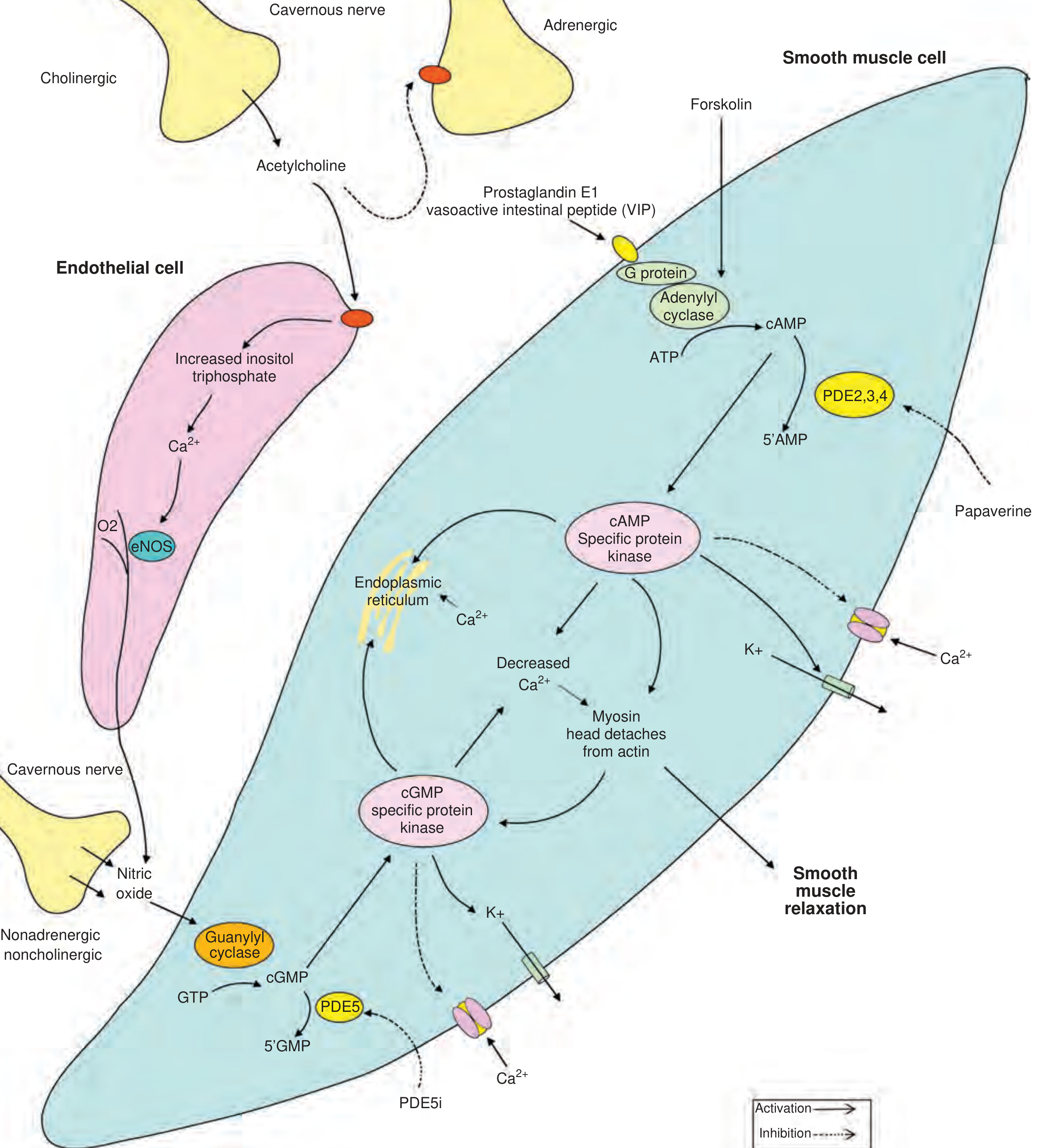
- Parasympathetic + NANC nerves → release Nitric Oxide (NO)
- NO activates guanylyl cyclase → ↑ cGMP in smooth muscle cells
- cGMP activates protein kinases → K+ channels open, Ca²+ channels close, Ca²+ sequestered in endoplasmic reticulum
- ↓ Intracellular Ca²+ → smooth muscle RELAXES
- Relaxed cavernous sinusoids fill with blood → venous outflow compressed against tunica albuginea → erection
A parallel pathway uses cAMP (stimulated by prostaglandin E1, VIP) to achieve the same smooth muscle relaxation.
The key second messengers are: cAMP and cGMP - both cause smooth muscle relaxation by lowering intracellular Ca²+
What is Intracavernosal Injection Therapy?
This is a second-line treatment for erectile dysfunction (ED) where vasoactive drugs are injected directly into the corpus cavernosum of the penis using a fine needle, producing an erection within 5-20 minutes that is independent of sexual arousal or neural stimulation.
It was pioneered in the early 1980s (Virag, 1982) and was the most effective treatment for ED before the advent of oral PDE-5 inhibitors (sildenafil, 1998).
Drug 1: Papaverine
What is Papaverine?
Papaverine is an opium alkaloid (but has no opioid activity). It is a non-specific phosphodiesterase (PDE) inhibitor - it inhibits PDE types 2, 3, and 4.
Mechanism of Action in Erection:
- Normally, PDE enzymes break down cAMP and cGMP inside smooth muscle cells
- Papaverine inhibits PDE → prevents breakdown of both cAMP and cGMP
- Both second messengers accumulate → ↓ intracellular Ca²+ → cavernous smooth muscle relaxation
- Sinusoidal spaces fill with blood → erection
Think of papaverine as "keeping the brakes off" - it doesn't trigger the relaxation signal, it just prevents the signal from being switched off
Additional Actions:
- Direct smooth muscle relaxant (independent of PDE inhibition)
- Relaxes both arteriolar smooth muscle (increases inflow) and cavernous sinusoidal smooth muscle (allows filling)
Drug 2: Phentolamine
What is Phentolamine?
Phentolamine is a non-selective alpha (alpha-1 + alpha-2) blocker.
Mechanism of Action in Erection:
- In the flaccid penis, norepinephrine acting on alpha-1 receptors keeps cavernous smooth muscle contracted → penis remains flaccid
- In ED, there is excessive adrenergic tone maintaining this contraction
- Phentolamine blocks alpha-1 receptors on cavernous smooth muscle → removes the norepinephrine-driven contraction → smooth muscle relaxes → sinusoids fill → erection
- It acts on the "anti-tumescence pathway" - by blocking the tonic constrictor signal (norepinephrine)
Harrison's 22e describes phentolamine as a "neutral-tone mediator" - it shifts the balance away from contraction toward relaxation
Why They Are Used TOGETHER (The Classic Combination)
Papaverine and phentolamine are almost always used in combination, often as "Bimix" (papaverine + phentolamine), because:
| Drug | Target | Pathway |
|---|---|---|
| Papaverine | PDE2, 3, 4 | ↑ cAMP + cGMP (both pathways) |
| Phentolamine | Alpha-1 receptors | Blocks norepinephrine-mediated contraction |
They attack the problem from two completely different angles, giving a synergistic effect - meaning lower doses of each can be used, reducing side effects. Sometimes alprostadil (PGE1) is added as a third agent ("Trimix").
Who Gets This Treatment?
Intracavernosal injection therapy is indicated for:
- Men who fail oral PDE-5 inhibitors (sildenafil, tadalafil)
- Neurogenic ED (spinal cord injury, diabetic neuropathy, post-prostatectomy) - where the neural NO signal is absent; these drugs bypass the need for neural input entirely
- Vasculogenic ED (arterial or venous)
- Psychogenic ED unresponsive to other treatments
How It Is Administered
- Patient (or partner) injects into the lateral aspect of the proximal third of the corpus cavernosum using a fine (27-30 gauge) needle
- Avoids the urethra (midline), dorsal nerves and vessels (top), and superficial vessels
- Erection begins in 5-15 minutes and lasts 30-60 minutes
- Dose is titrated individually in the clinic first
Adverse Effects
| Effect | Details |
|---|---|
| Priapism (most serious) | Erection lasting >4 hours; ischaemic priapism can cause permanent fibrosis and ED if untreated; treated with aspiration + intracavernosal phenylephrine (alpha-1 agonist) |
| Penile pain | Common with alprostadil; less so with papaverine/phentolamine |
| Penile fibrosis / Peyronie's disease | Scar tissue at injection sites with repeated use; occurs in ~5-10% |
| Haematoma | At injection site |
| Hypotension / syncope | Systemic absorption causes vasodilation; more common with phentolamine |
| Prolonged erection | 4-6 hours; requires emergency management |
Comparison with PDE-5 Inhibitors (e.g., Sildenafil)
| Feature | Intracavernosal Papaverine/Phentolamine | Sildenafil (oral) |
|---|---|---|
| Route | Injection into penis | Oral |
| Sexual stimulation needed? | No | Yes (needs NO release) |
| Onset | 5-15 min | 30-60 min |
| Efficacy in neurogenic ED | Excellent (bypasses nerves) | Poor (needs intact nerves) |
| Priapism risk | Higher | Lower |
| Patient acceptance | Lower (injection) | Much higher (oral) |
| Use today | 2nd line (when oral fails) | 1st line |
- Campbell Walsh Wein Urology, 3-Volume Set, pp. 1865-1866
- Harrison's Principles of Internal Medicine, 22e, pp. 1622-1625
- Tintinalli's Emergency Medicine, p. 263
- Katzung's Basic and Clinical Pharmacology, 16e
What is the role of tamsulosin in BPH?
Tamsulosin is a selective alpha-1A blocker used in BPH to relax the smooth muscle of the prostate and bladder neck, improving urinary outflow. It is preferred over older alpha blockers because its receptor selectivity causes less systemic hypotension.
Searching sources...
Finding Sources
Finding Sources
Finding Sources
Finding Sources
Reading File
Finding Sources
Reading File
Finding Sources
Finding Sources
Finding Sources
Reading File
Reading File
I now have everything needed for a comprehensive answer.
Role of Tamsulosin in BPH (Benign Prostatic Hyperplasia)
Understanding BPH First - Why Is There Obstruction?
BPH involves two components of urethral obstruction:
| Component | Cause | Responds to |
|---|---|---|
| Static (mechanical) | Physical enlargement of prostate tissue compressing the urethra | 5α-reductase inhibitors (finasteride, dutasteride) |
| Dynamic (functional) | Increased alpha-1 adrenergic tone in prostatic smooth muscle → active contraction → narrows urethra | Alpha-1 blockers (tamsulosin) |
The dynamic component accounts for a significant proportion of the obstruction and is immediately addressable with drugs. Tamsulosin targets this component directly.
Alpha-1 Receptor Subtypes - The Key to Understanding Tamsulosin
There are three alpha-1 receptor subtypes:
| Subtype | Location | Function |
|---|---|---|
| Alpha-1A | Prostate, bladder neck, urethra | Smooth muscle contraction → urethral obstruction |
| Alpha-1B | Vascular smooth muscle (arteries) | Vasoconstriction → maintains blood pressure |
| Alpha-1D | Bladder detrusor, spinal cord | Bladder overactivity, storage symptoms |
Tamsulosin's Mechanism - "Uroselectivity"
Tamsulosin is a uroselective alpha-1 blocker - it has:
- High affinity for alpha-1A and alpha-1D receptors (in prostate, bladder neck, urethra, detrusor)
- ~10-fold LESS affinity for alpha-1B (vascular) receptors
This selectivity profile is what makes tamsulosin different from older alpha blockers like prazosin or doxazosin.
What Tamsulosin Does in the Prostate:
- Blocks alpha-1A receptors on prostate smooth muscle → smooth muscle relaxes
- The urethral lumen widens → reduced outlet resistance
- Urine flows more easily → improved peak urinary flow rate (PFR)
- Also blocks alpha-1D receptors in the bladder → reduces bladder overactivity and storage symptoms (urgency, frequency, nocturia)
Clinical Benefits in BPH
Tamsulosin relieves both categories of LUTS (Lower Urinary Tract Symptoms):
Voiding (Obstructive) Symptoms - relieved by reducing outlet resistance:
- Weak stream / poor flow
- Hesitancy (difficulty starting urination)
- Straining
- Incomplete bladder emptying
- Terminal dribbling
Storage (Irritative) Symptoms - relieved via alpha-1D blockade in bladder:
- Urgency
- Frequency
- Nocturia (one of the most QoL-impacting symptoms - significantly reduced by tamsulosin)
Clinical trial data (Campbell Walsh Wein Urology):
- Tamsulosin 0.4 mg/day → mean decrease of 8.3 points in AUA Symptom Index (vs. 5.5 for placebo)
- Peak urinary flow rate improved by 1.75 mL/s vs. 0.5 mL/s for placebo
- Onset of action: PFR increases within 4-8 hours of the first dose; symptom relief evident within 1 week
Why Tamsulosin is Preferred Over Older Alpha Blockers
| Feature | Prazosin / Doxazosin (non-selective) | Tamsulosin (uroselective) |
|---|---|---|
| Receptor selectivity | Alpha-1A + Alpha-1B (vascular) | Alpha-1A + Alpha-1D (minimal Alpha-1B) |
| Orthostatic hypotension | Significant - first-dose syncope common | Minimal - no significant BP change |
| Dose titration needed | Yes - start low, titrate slowly | No - start at therapeutic dose directly |
| Intraoperative Floppy Iris | Yes | Yes (all alpha blockers) |
| Abnormal ejaculation | Less common | More common (especially at 0.8 mg) |
| Cardiovascular safety | Inferior (ALLHAT trial) | Better tolerated |
"Mean changes in systolic and diastolic blood pressure did not differ between placebo and tamsulosin in both hypertensive and normotensive patients."
- Campbell Walsh Wein Urology
This is the critical advantage - patients can be started on tamsulosin at the full therapeutic dose (0.4 mg) without the risk of a dangerous first-dose hypotensive episode.
Dose and Administration
- Standard dose: 0.4 mg once daily, taken 30 minutes after the same meal each day
- Can be increased to 0.8 mg if response is inadequate (higher symptom score reduction but more side effects)
- No titration needed (unlike prazosin/doxazosin)
Adverse Effects of Tamsulosin
| Adverse Effect | Incidence | Notes |
|---|---|---|
| Abnormal ejaculation (retrograde/absent) | 6-18% | Most characteristic; higher at 0.8 mg |
| Rhinitis (nasal stuffiness) | 5-6% | Alpha-1 blockade in nasal mucosa |
| Dizziness | 3-9% | Mild; much less than non-selective blockers |
| Orthostatic hypotension | Rare | Key advantage over other alpha blockers |
| Intraoperative Floppy Iris Syndrome (IFIS) | Significant | Must inform ophthalmologist before cataract surgery |
| Asthenia | 2% |
Retrograde ejaculation - the most notable and characteristic side effect of tamsulosin. Alpha-1A receptors in the bladder neck/internal urethral sphincter normally close during ejaculation. Tamsulosin relaxes this sphincter → semen goes backward into the bladder instead of forward. This is harmless but can be distressing to patients and causes infertility if the patient is trying to conceive.
Tamsulosin's Place in BPH Management
BPH Symptoms
│
├── Mild symptoms → Watchful waiting + lifestyle changes
│
├── Moderate symptoms → Alpha-1 blocker (Tamsulosin 0.4 mg)
│ ↓ Fast onset (days-weeks)
│
├── Large prostate (>30-40g) + moderate-severe symptoms
│ → Tamsulosin + 5α-reductase inhibitor (finasteride/dutasteride)
│ [Combination therapy - CombAT trial]
│
└── Failed medical therapy → Surgery (TURP)
Key point: Tamsulosin only treats the dynamic component - it does not shrink the prostate or prevent disease progression. For patients with large prostates (>30-40 g) who are at risk of acute urinary retention or needing surgery, combining tamsulosin with a 5α-reductase inhibitor (dutasteride + tamsulosin = Duodart capsule, available as a fixed-dose combination) provides both immediate symptom relief AND long-term disease modification.
- Campbell Walsh Wein Urology, 3-Volume Set, pp. 502-541
- Lippincott Illustrated Reviews: Pharmacology, pp. 698-700
- National Kidney Foundation Primer on Kidney Diseases, 8e, p. 1900
What is mesenchyme
Mesenchyme is an embryonic connective tissue derived primarily from mesoderm (and partly from neural crest cells) that consists of loosely arranged stellate cells embedded in a gelatinous extracellular matrix. It gives rise to most of the connective tissues, bone, cartilage, muscle, blood vessels, and blood cells in the body.
Searching sources...
Finding Sources
Finding Sources
Reading File
Reading File
Reading File
Let me also fetch the histology image of mesenchyme:
Loading Image
Here is a thorough explanation:
What is Mesenchyme?
Definition
Mesenchyme is an embryonic connective tissue - a loose, gel-like tissue that forms early in development and serves as the precursor (stem) tissue from which nearly all the connective tissues of the adult body ultimately arise.
"Shortly after the primitive streak appears, cells leave its deep surface and form mesenchyme, an embryonic connective tissue consisting of small, spindle-shaped cells loosely arranged in an extracellular matrix of sparse collagen (reticular) fibers."
- The Developing Human: Clinically Oriented Embryology
Origin - Where Does Mesenchyme Come From?
Mesenchyme arises primarily from mesoderm, the middle germ layer, but there is an important exception:
| Source | Region | What it forms |
|---|---|---|
| Lateral plate mesoderm + paraxial mesoderm | Trunk and limbs | Connective tissue, bone, cartilage, muscle, blood vessels of the body |
| Neural crest cells (ectoderm-derived) | Head and face | Connective tissue, cartilage, bone of the craniofacial skeleton |
This means the mesenchyme of the head region is actually ectomesenchyme (neural crest-derived), not true mesoderm-derived mesenchyme - an important embryological distinction.
Histological Appearance
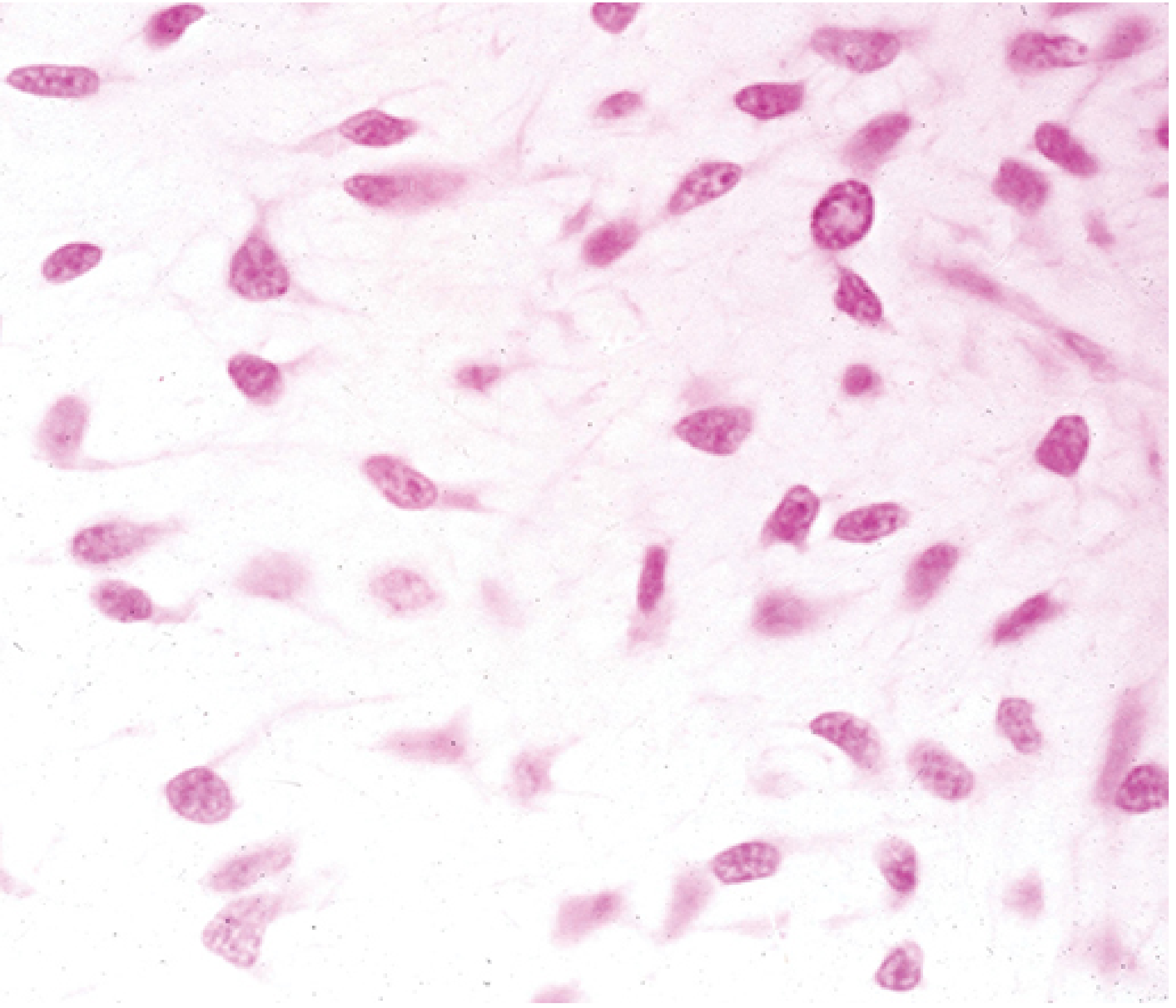
Under the microscope, mesenchyme shows:
| Feature | Description |
|---|---|
| Cells | Loosely scattered, spindle-shaped (stellate) cells with cytoplasmic processes |
| Nuclei | Large, euchromatic (pale-staining) with prominent nucleoli - indicating high synthetic/mitotic activity |
| Ground substance | Abundant, viscous, hyaluronan (hyaluronic acid)-rich - gives it the gel-like consistency |
| Fibers | Very few and fine collagen/reticular fibers (unlike adult connective tissue) |
| Cell arrangement | Cells appear undifferentiated and evenly scattered - not packed together |
| Vascularity | Avascular at first; blood vessels develop within it later |
How It Forms (Embryology)
During the 3rd week of development:
- Epiblast cells migrate through the primitive streak
- They undergo epithelial-to-mesenchymal transition (EMT) - losing their epithelial cell-cell contacts
- They spread out between ectoderm and endoderm as mesenchymal cells (mesoblast → intraembryonic mesoderm → mesenchyme)
- These cells migrate extensively throughout the embryo, surrounding and penetrating developing organs
What Does Mesenchyme Give Rise To?
This is the most exam-important aspect. Mesenchyme is multipotent - it is the mother tissue for an enormous range of adult tissues:
Connective Tissues Proper:
- Loose connective tissue
- Dense regular connective tissue (tendons, ligaments)
- Dense irregular connective tissue (dermis)
Specialised Connective Tissues:
- Bone (via osteoblasts)
- Cartilage (via chondroblasts)
- Adipose tissue (via adipocytes)
Vascular and Blood:
- Blood vessels (endothelium + vascular smooth muscle)
- Blood cells (via haematopoietic stem cells in mesenchyme)
Muscle:
- Skeletal muscle (myoblasts from somitic mesenchyme)
- Cardiac muscle (splanchnic mesoderm)
- Smooth muscle (visceral mesenchyme)
Other:
- Lymphatic vessels
- Urogenital stroma (intermediate mesenchyme)
- Connective tissue framework of all glands
- Dermis and subcutaneous tissue
- Craniofacial bones and cartilage (from neural crest mesenchyme)
The Special Case - Mucous Connective Tissue (Wharton's Jelly)
A related embryonic connective tissue is mucous connective tissue, found in the umbilical cord:
- Contains widely separated spindle-shaped cells
- Embedded in a gelatin-like, hyaluronan-rich ECM
- This ECM is specifically called Wharton's Jelly
- It cushions and protects the umbilical vessels
Clinical / Modern Relevance
Mesenchymal stem cells (MSCs) do not disappear entirely after birth. Mesenchyme-like multipotent stem cells persist in adults in:
- Tooth pulp
- Adipose tissue (fat)
- Bone marrow stroma
These are being actively researched for regenerative medicine - as sources for tissue repair, organ regeneration, and therapy of inflammatory diseases, since they can differentiate into bone, cartilage, fat, and other connective tissues on demand.
Summary
| Feature | Mesenchyme |
|---|---|
| Type | Embryonic connective tissue |
| Origin | Mesoderm (mainly); neural crest (head) |
| When present | 3rd week of development onwards |
| Cell morphology | Spindle-shaped, stellate, undifferentiated |
| Nucleus | Large, euchromatic, prominent nucleolus |
| ECM | Viscous, hyaluronan-rich ground substance; few fibers |
| Fate | All connective tissues, bone, cartilage, muscle, blood, vessels |
| Adult remnant | MSCs in bone marrow, adipose tissue, tooth pulp |
- The Developing Human: Clinically Oriented Embryology, p. 193
- Junqueira's Basic Histology, 17e, p. 258
- Histology: A Text and Atlas with Correlated Cell and Molecular Biology, p. 534I can see two MCQs from your image. Let me explain both in detail.
Finding Sources
Finding Sources
Finding Sources
Finding Sources
Finding Sources
Finding Sources
Finding Sources
Reading File
I have everything needed. Here is the complete explanation of both MCQs:
MCQ 1 - (partially visible) "...pride acts on which receptor"
The drug ending in "-pride" acting on a specific serotonin receptor is almost certainly Cisapride (or Mosapride). The answer is (d) 5-HT4.
Explanation:
Cisapride is a prokinetic agent (promotes GI motility). It is a selective 5-HT4 receptor agonist.
Mechanism:
- 5-HT4 receptors are located on neurons of the myenteric plexus (Auerbach's plexus) in the gut wall
- Cisapride activates 5-HT4 receptors → stimulates release of acetylcholine from myenteric plexus neurons
- This increases GI motility and accelerates gastric emptying
- It has no dopamine receptor antagonism (unlike metoclopramide)
Other "-pride" prokinetics and their receptors:
| Drug | Receptor | Note |
|---|---|---|
| Cisapride | 5-HT4 agonist | Withdrawn (QT prolongation, fatal arrhythmias) |
| Mosapride | 5-HT4 agonist | Still in use (safer) |
| Metoclopramide | D2 antagonist + 5-HT4 agonist (weak) | Causes EPS |
| Domperidone | D2 antagonist | Less EPS (doesn't cross BBB) |
The other options are wrong because:
- 5-HT1A → anxiolytic (buspirone), migraine (sumatriptan)
- 5-HT1B/1D → migraine triptans (sumatriptan, rizatriptan)
- 5-HT3 → antiemetic (ondansetron blocks this)
- 5-HT4 → GI prokinesis ✓ (cisapride, mosapride)
MCQ 2 - Anti-emetic causing Muscle Spasms + Upward Gazing + Bradykinesia + Gait Abnormality
Answer: (b) Benzhexol
Step 1 - Identify the Drug and the Reaction
The patient was given an anti-emetic that caused:
- Muscle spasms
- Upward gazing of eyes (oculogyric crisis)
- Bradykinesia
- Gait abnormality
This is a classic description of Acute Extrapyramidal Side Effects (EPS) - specifically acute dystonia (including oculogyric crisis) + drug-induced parkinsonism.
The anti-emetic causing this is Metoclopramide - a D2 dopamine receptor antagonist that:
- Blocks D2 receptors in the chemoreceptor trigger zone (CTZ) → antiemetic effect
- Also blocks D2 receptors in the striatum (basal ganglia) → disrupts dopamine-acetylcholine balance → EPS
Step 2 - What is the Next Step?
The reaction is acute dystonia / extrapyramidal reaction from D2 blockade. The treatment is an anticholinergic drug to restore the dopamine-acetylcholine balance.
Benzhexol (Trihexyphenidyl) is a centrally acting anticholinergic (muscarinic antagonist) that:
- Crosses the blood-brain barrier
- Blocks excess cholinergic activity in the striatum (which is unmasked when dopamine is blocked)
- Rapidly reverses acute dystonia and extrapyramidal symptoms
Other drugs used for the same purpose: Benztropine (Cogentin), Diphenhydramine (IV), Promethazine
Why the Other Options Are Wrong:
| Option | Why Wrong |
|---|---|
| (a) Haloperidol | Another D2 blocker - would worsen EPS |
| (b) Benzhexol ✓ | Anticholinergic - reverses EPS - CORRECT |
| (c) Metoclopramide | The drug that caused the problem |
| (d) Risperidone | Atypical antipsychotic with D2 + 5-HT2A blockade - would worsen or not help |
Memory Trick
"D2 blocked → ACh runs free → Dystonia Give anticholinergic → Block ACh → Dystonia reversed"
The striatum normally maintains balance between dopamine (inhibitory) and acetylcholine (excitatory). Metoclopramide tips the balance toward excess cholinergic activity → muscle hyperactivity, spasms, oculogyric crisis. Benzhexol restores the balance.
- Kaplan & Sadock's Comprehensive Textbook of Psychiatry, p. 2894
- Harrison's Principles of Internal Medicine 22e
This is a shared conversation. Sign in to Orris to start your own chat.