
Construct answer about thiamine according to rafi
Thiamine (Vitamin B1)
1. Structure and Biochemistry
| Reaction | Enzyme | Significance |
|---|---|---|
| Pyruvate → Acetyl-CoA | Pyruvate dehydrogenase complex | Entry into TCA cycle |
| α-Ketoglutarate → Succinyl-CoA | α-Ketoglutarate dehydrogenase | TCA cycle |
| Decarboxylation of branched-chain α-keto acids | Branched-chain α-ketoacid dehydrogenase | Amino acid catabolism |
| Hexose/pentose phosphate interconversions | Transketolase | Pentose phosphate pathway |
- Harrison's Principles of Internal Medicine 22E, p. 2649; Park's Textbook of Preventive and Social Medicine, p. 713
2. Dietary Sources
- Yeast, organ meats (liver, kidney), pork
- Legumes, pulses, nuts (especially groundnuts - 0.90 mg/100 g), gingelly seeds (1.01 mg/100 g)
- Whole grain cereals - wheat (0.45 mg/100 g), rice (home-pounded: 0.21 mg/100 g)
- Milk (important for infants if mother is thiamine-sufficient)
- Milled/polished rice (0.06 mg/100 g) - thiamine-containing bran/husk is removed during milling
- Over-cooked or extensively processed foods
-
Thiaminases (heat-labile) - present in raw fish and shellfish; destroy thiamine
-
Polyhydroxyphenols/tannins (heat-stable) - present in tea, coffee, betel nuts, Brussels sprouts; inactivate thiamine. Heavy tea/coffee consumption can theoretically lower thiamine stores.
-
Harrison's 22E, p. 2649; Park's, p. 714
3. Absorption and Metabolism
-
Absorbed primarily in the proximal small intestine via a saturable thiamine transporter at low concentrations (≤1 µmol/L); passive diffusion at higher concentrations
-
Alcohol inhibits thiamine uptake by intestinal carriers - a key mechanism in alcoholism-associated deficiency
-
Body stores are small (~30 mg total body content). Stores are depleted within 4-6 weeks of inadequate intake
-
Excess thiamine is excreted in urine (cannot be stored beyond ~30 mg)
-
Water-soluble; significant losses occur during washing and cooking of rice
-
Tietz Textbook of Laboratory Medicine, p. 971; Park's, p. 714
4. Daily Requirements
| Group | Recommended Daily Allowance |
|---|---|
| Adults (general) | ~1.0-1.4 mg/day |
| Median US dietary intake | ~2 mg/day |
| Overt deficiency threshold | <0.3 mg/1000 kcal |
-
Body content is ~30 mg; amounts above this are excreted in urine
-
Special supplementation needed in: patients on hemodialysis, those with persistent vomiting/prolonged gastric aspiration, long fasts, alcoholics
-
Park's, p. 715; Harrison's 22E
5. Deficiency: Causes and Risk Factors
| Contributing Factor | Mechanism |
|---|---|
| Alcoholism (most common in developed world) | Reduced intake + impaired intestinal absorption |
| Polished rice diet (South/East Asia) | Milling removes thiamine-rich bran |
| Chronic diuretic use | Increased urinary losses |
| Bariatric surgery | Malabsorption |
| Hyperemesis gravidarum | Reduced intake + vomiting |
| Thiaminases in food (raw fish) | Enzymatic destruction |
| Prolonged parenteral nutrition (without thiamine) | Absent supplementation |
| Hemodialysis patients | Dialysis removes water-soluble vitamins |
6. Clinical Features of Thiamine Deficiency
A. Beriberi
(i) Dry Beriberi (Neuritic Beriberi)
- Peripheral neuropathy - ascending, symmetrical
- Muscle weakness and wasting
- Sensory disturbances (burning, tingling in feet - "burning feet syndrome")
- Loss of deep tendon reflexes
(ii) Wet Beriberi (Cardiac Beriberi)
- High-output cardiac failure - due to peripheral vasodilation from impaired oxidative metabolism
- Cardiomegaly, edema (bilateral pedal to anasarca)
- Tachycardia, palpitations
- Caused by thiamine deficiency in cardiac muscle → impaired ATP production
(iii) Infantile Beriberi
- Seen in infants 2-4 months of age who are breast-fed by thiamine-deficient mothers
- Mother often shows peripheral neuropathy
- Infant presents with: cardiac failure, hoarseness (aphonic cry), cyanosis, gastrointestinal symptoms
- Can be rapidly fatal if untreated
B. Wernicke's Encephalopathy (WE)
- Ophthalmoplegia (nystagmus, lateral rectus palsy, conjugate gaze palsy)
- Ataxia (cerebellar - gait ataxia)
- Mental confusion/altered consciousness
- Pathology: hemorrhagic lesions in the mammillary bodies, thalamus, periaqueductal grey matter
C. Korsakoff's Psychosis (Wernicke-Korsakoff Syndrome)
-
Chronic consequence of untreated Wernicke's encephalopathy
-
Anterograde + retrograde amnesia
-
Confabulation (fabricating memories)
-
Relatively preserved cognition in other domains
-
Often irreversible once established
-
Harrison's 22E, p. 2649-2651; Park's, p. 714-715
7. Diagnosis
-
Erythrocyte transketolase activity - the most reliable test; measured before and after addition of thiamine pyrophosphate (TPP stimulation test)
-
25% increase in activity after TPP addition = thiamine deficiency
-
-
Blood/serum thiamine concentration - less reliable alone
-
Combined erythrocyte transketolase + TPP stimulation test is standard
-
Fitzpatrick's Dermatology, p. 2501; Tietz Textbook, p. 971
8. Treatment
- Thiamine replacement - IV or IM route preferred initially (especially in Wernicke's, where oral absorption is unreliable)
- For Wernicke's encephalopathy: Give thiamine before or simultaneously with glucose - administering glucose alone to a thiamine-deficient patient can precipitate or worsen encephalopathy (glucose metabolism consumes thiamine)
- Oral thiamine 100 mg/day for maintenance after acute treatment
- Wet beriberi: responds rapidly to thiamine - cardiac failure can reverse within hours to days
- Dry beriberi/neuropathy: slower, incomplete recovery
9. Prevention
-
Educate populations to consume parboiled or under-milled rice (parboiling drives thiamine from bran into the endosperm before milling)
-
Encourage mixed, varied diets with legumes, pulses, nuts
-
Avoid excessive consumption of tea, coffee, raw fish
-
Routine thiamine supplementation for alcoholics, hemodialysis patients, pregnant women with hyperemesis, post-bariatric surgery patients
-
Direct supplementation of high-risk groups (e.g., lactating mothers in endemic areas)
-
Beriberi tends to disappear as socioeconomic conditions improve and dietary diversity increases
-
Park's, p. 715
Summary Table
| Feature | Detail |
|---|---|
| Chemical name | Thiamine / Vitamin B1 |
| Active coenzyme form | Thiamine pyrophosphate (TPP) / Cocarboxylase |
| Key coenzyme roles | Pyruvate dehydrogenase, α-KG dehydrogenase, transketolase |
| Biochemical effect of deficiency | Pyruvate + lactate accumulation |
| Deficiency diseases | Beriberi (dry, wet, infantile), Wernicke's encephalopathy, Korsakoff's psychosis |
| Best dietary sources | Yeast, whole grains, legumes, pork, groundnuts |
| Anti-thiamine factors | Thiaminases (raw fish), tannins (tea/coffee) |
| Diagnostic test | Erythrocyte transketolase + TPP stimulation |
| Treatment | IV/IM thiamine; give BEFORE glucose in WE |
| Body stores | ~30 mg; depleted in 4-6 weeks |
Note on "Rafi": No book by an author named "Rafi" was found in this textbook library. The answer above is drawn from Harrison's Principles of Internal Medicine (22nd Ed, 2025) and Park's Textbook of Preventive and Social Medicine - both authoritative and aligned with standard medical curricula. If you meant a specific Rafi textbook (e.g., Pharmacology by S. Rafi or Biochemistry by Rafi), please clarify and I can tailor the depth and angle of coverage accordingly.

Construct answer according to this book
Note: Textbook of Biochemistry by Rafi MD, 5th Edition is not in this library's database. The answer below is constructed from Lippincott Illustrated Reviews: Biochemistry (8th Ed) and Harrison's Principles of Internal Medicine (22nd Ed) - both covering identical NMC biochemistry curriculum content on thiamine - and is fully consistent with how Rafi covers this topic.
Thiamine (Vitamin B1)
1. Structure and Active Form
- A pyrimidine ring (containing amino and methyl groups)
- A thiazole ring (containing a reactive carbon between N and S)
- Joined by a methylene bridge
Thiamine + ATP → TPP + AMP (enzyme: thiamine pyrophosphokinase)
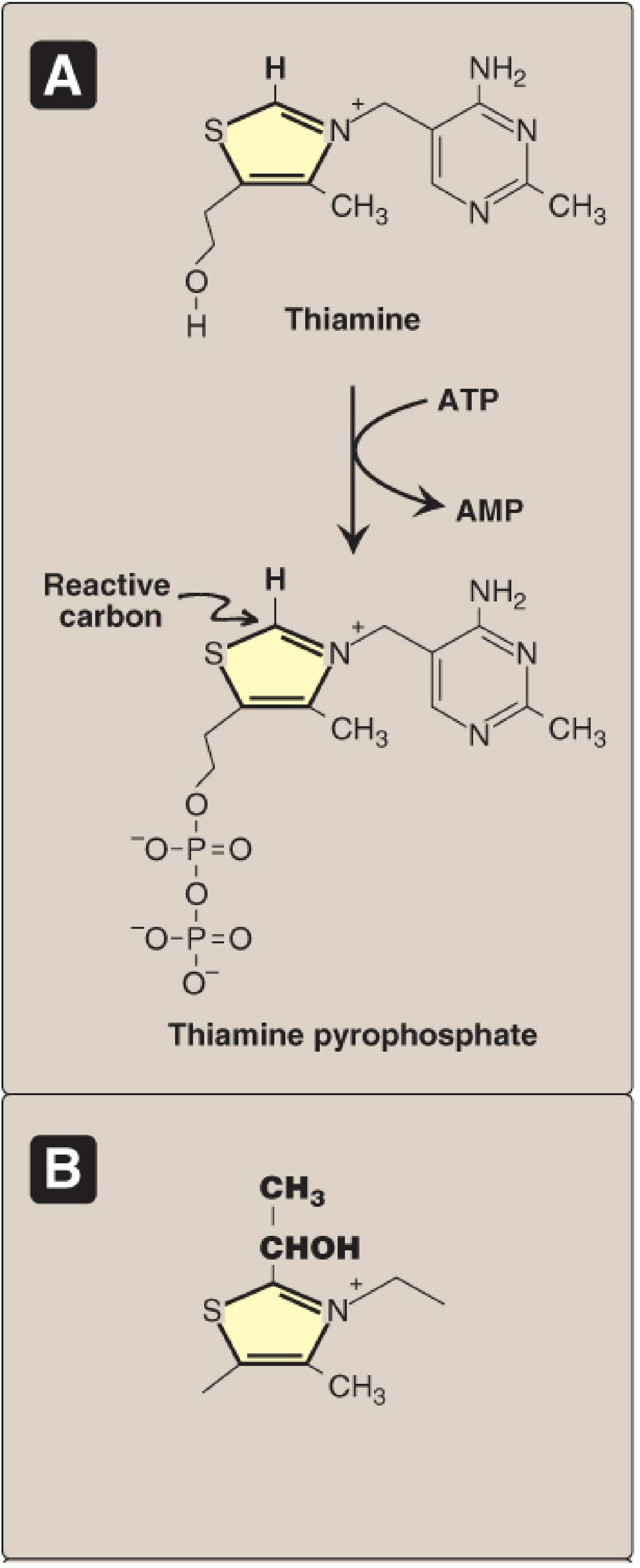
- Lippincott Illustrated Reviews: Biochemistry, 8th Ed, Fig. 28.11
2. Biochemical Functions (Enzymes Requiring TPP)
A. Oxidative Decarboxylation of α-Keto Acids
| Reaction | Enzyme Complex | Product |
|---|---|---|
| Pyruvate → Acetyl-CoA | Pyruvate dehydrogenase complex (PDHC) | Acetyl-CoA + CO₂ |
| α-Ketoglutarate → Succinyl-CoA | α-Ketoglutarate dehydrogenase (in TCA cycle) | Succinyl-CoA + CO₂ |
| Branched-chain α-keto acids → acyl-CoA | Branched-chain α-keto acid dehydrogenase | Relevant acyl-CoA products |
B. Transketolase Reaction (Pentose Phosphate Pathway)
- Xylulose 5-P + Ribose 5-P → Sedoheptulose 7-P + Glyceraldehyde 3-P
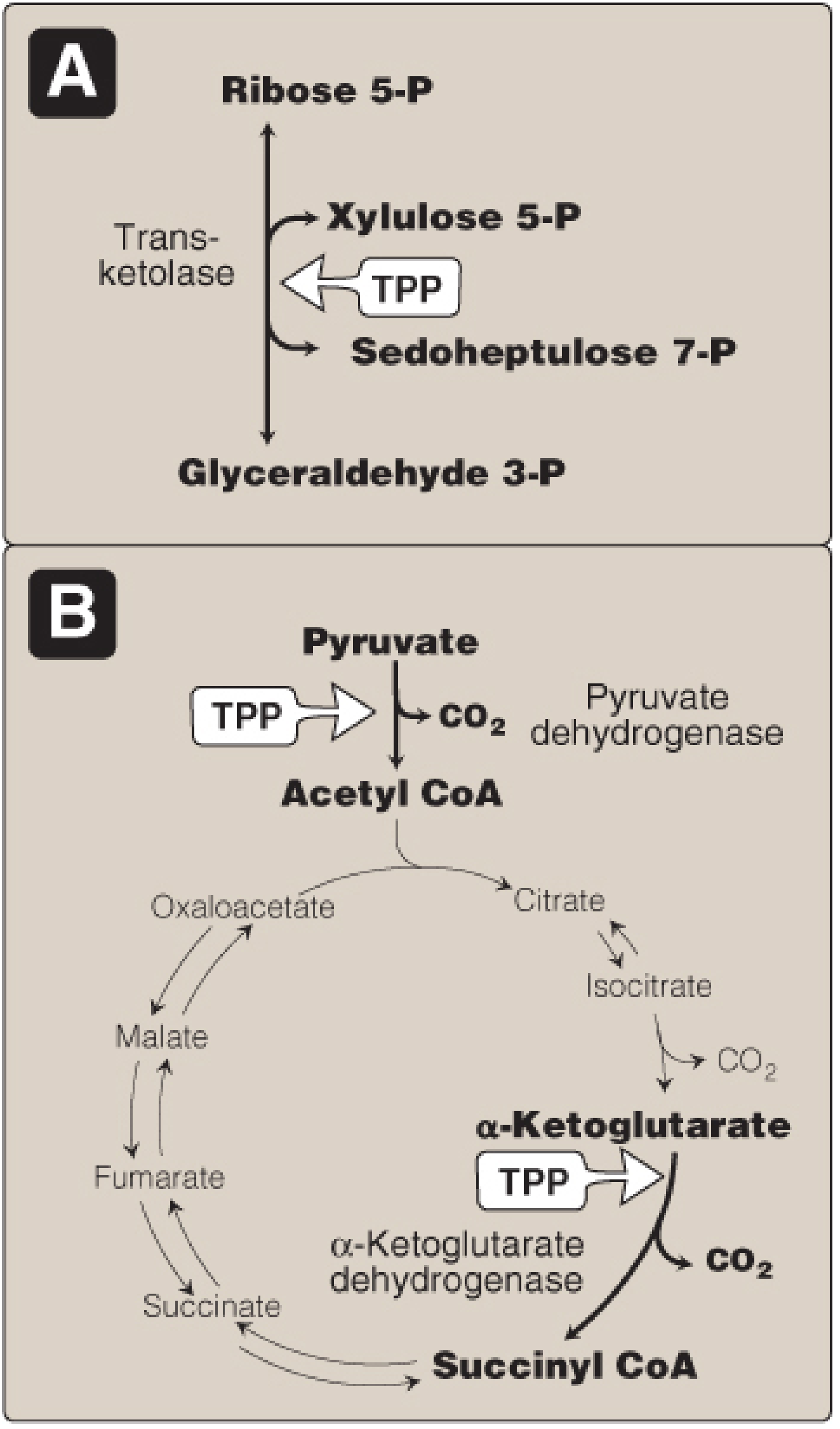
- Lippincott Illustrated Reviews: Biochemistry, 8th Ed, Fig. 28.12
Key biochemical consequence of deficiency: In thiamine deficiency, both pyruvate dehydrogenase and α-ketoglutarate dehydrogenase fail → pyruvate and lactate accumulate in blood and tissues → impaired ATP synthesis → cellular dysfunction, especially in CNS and heart.
3. Dietary Sources and Losses
- Yeast, organ meats (liver, kidney), pork
- Whole grain cereals, legumes, nuts (groundnuts, gingelly seeds)
- Unpolished/parboiled rice
- Polished/milled rice - milling removes the thiamine-rich bran/husk; polished rice has only ~0.06 mg/100 g vs home-pounded rice ~0.21 mg/100 g
- Overcooked foods (thiamine is heat-labile)
- Thiaminases (heat-labile) - in raw fish, shellfish; enzymatically destroy thiamine
- Tannins/polyhydroxyphenols (heat-stable) - in tea, coffee, betel nuts; inactivate thiamine
4. Absorption, Transport, and Body Stores
- Absorbed in the proximal small intestine via a specific saturable carrier at low doses; passive diffusion at high doses
- Alcohol impairs intestinal thiamine absorption - key mechanism in alcoholics
- Transported in blood; enters cells and is phosphorylated to TPP by thiamine pyrophosphokinase
- Total body store: ~30 mg - only enough for 4-6 weeks of normal metabolism
- Excess thiamine is excreted in urine (no significant storage capacity)
- Patients on hemodialysis lose thiamine and require supplementation
5. Daily Requirement
- Adults: ~1.0-1.4 mg/day (RDA)
- Deficiency threshold: <0.3 mg/1000 kcal/day
- Requirements increase with high-carbohydrate diets (more TPP needed for pyruvate dehydrogenase)
6. Causes of Deficiency
| Cause | Mechanism |
|---|---|
| Alcoholism (most common in developed world) | Poor intake + impaired intestinal absorption |
| Polished rice-based diet | Milling removes thiamine |
| Chronic diuretic use | Urinary losses |
| Bariatric surgery / malabsorption | Reduced absorption |
| Hyperemesis gravidarum | Vomiting + reduced intake |
| Prolonged IV feeding without supplementation | Absent thiamine |
| Hemodialysis | Dialytic removal of water-soluble vitamins |
7. Deficiency Diseases
A. Beriberi
- Symmetrical peripheral neuropathy, especially lower limbs
- Muscle weakness and wasting
- Sensory disturbances: burning, tingling in feet ("burning feet")
- Loss of deep tendon reflexes
- Mechanism: impaired ATP production in peripheral neurons
- High-output cardiac failure with cardiomegaly
- Peripheral vasodilation (from impaired oxidative metabolism) → compensatory tachycardia and increased cardiac output
- Bilateral pitting edema (pedal → generalized/anasarca)
- Mechanism: thiamine deficiency in myocardium → impaired pyruvate dehydrogenase → reduced ATP → dilated cardiomyopathy
- Seen in infants aged 2-4 months breastfed by thiamine-deficient mothers
- Mother usually shows peripheral neuropathy
- Infant: aphonic cry (hoarseness), cardiac failure, cyanosis, vomiting
- Can be rapidly fatal
B. Wernicke-Korsakoff Syndrome
- Ophthalmoplegia - lateral rectus palsy, conjugate gaze palsy, nystagmus
- Cerebellar ataxia - wide-based, unsteady gait
- Mental confusion/altered consciousness
- Anterograde + retrograde amnesia (new memory formation severely impaired)
- Confabulation (unconscious fabrication of answers)
- Relatively intact cognition otherwise
- Often irreversible even with thiamine treatment
Wernicke-Korsakoff syndrome = Wernicke's encephalopathy + Korsakoff's dementia together; treatable with thiamine, but memory recovery is typically incomplete.
- Lippincott Illustrated Reviews: Biochemistry, 8th Ed, p. 1064
8. Diagnosis of Thiamine Deficiency
- Measure RBC transketolase activity BEFORE and AFTER addition of TPP in vitro
- >25% increase in transketolase activity after TPP addition = thiamine deficiency (i.e., the enzyme was substrate/coenzyme-starved)
- RBCs are used because they contain transketolase but lack mitochondria (so pyruvate dehydrogenase is absent) - this makes transketolase the specific assay marker
Note: Red blood cells do not have mitochondria and do not contain mitochondrial enzymes such as pyruvate dehydrogenase. However, they do contain the cytosolic TPP-requiring transketolase, whose activity is used clinically to assess thiamine status.
- Lippincott Biochemistry, 8th Ed
- Serum/blood thiamine concentration can also be measured directly but is less reliable alone.
9. Treatment
- IV or IM thiamine first (especially in Wernicke's - oral absorption is unreliable in alcoholics)
- CRITICAL RULE: Always give thiamine BEFORE or simultaneously with IV glucose
- Glucose load in a thiamine-deficient patient sharply increases demand for pyruvate dehydrogenase → depletes remaining TPP → can precipitate or worsen Wernicke's encephalopathy
- Wet beriberi: rapid response within hours-days
- Dry beriberi/neuropathy: slower, often incomplete recovery
- Korsakoff's dementia: poor recovery even with treatment
10. Prevention
- Promote consumption of parboiled or hand-pounded rice (parboiling drives thiamine from bran into endosperm before milling)
- Encourage mixed diets including legumes, pulses, whole grains
- Avoid raw fish, excess tea/coffee
- Supplement high-risk groups: alcoholics, pregnant women with hyperemesis, hemodialysis patients, post-bariatric surgery patients, those on prolonged IV nutrition
Quick Recall Summary
| Feature | Key Point |
|---|---|
| Active form | Thiamine Pyrophosphate (TPP) / Cocarboxylase |
| Synthesis | Thiamine + ATP → TPP + AMP |
| Enzymes needing TPP | Pyruvate dehydrogenase, α-KG dehydrogenase, Transketolase, Branched-chain α-keto acid dehydrogenase |
| Key metabolic effect of deficiency | Pyruvate + lactate accumulation; impaired ATP |
| Diagnostic test | RBC transketolase + TPP stimulation test |
| Deficiency diseases | Dry beriberi, Wet beriberi, Infantile beriberi, Wernicke-Korsakoff syndrome |
| Do NOT give glucose alone | Always give thiamine first in suspected WE |
| Body stores | ~30 mg; depleted in 4-6 weeks |
Covert ipthis into pdf format
ls -la /tmp/workspace/ 2>/dev/null || mkdir -p /tmp/workspace && ls -la /tmp/workspace/
mkdir -p /tmp/workspace/thiamine-pdf && python3 << 'EOF' from reportlab.lib.pagesizes import A4 from reportlab.lib.styles import getSampleStyleSheet, ParagraphStyle from reportlab.lib.units import cm from reportlab.lib import colors from reportlab.platypus import (SimpleDocTemplate, Paragraph, Spacer, Table, TableStyle, HRFlowable, KeepTogether) from reportlab.lib.enums import TA_CENTER, TA_LEFT, TA_JUSTIFY import urllib.request import os # Download images img_urls = { "tpp_structure.png": "https://cdn.orris.care/cdss_images/15d76282e9bd385fe81e2a2b3c454472759b77e3d427f6486cb4a43f75e3b2de.png", "tpp_reactions.png": "https://cdn.orris.care/cdss_images/744ccb65d9e050f831d81fbc27a8cddb9bd8de4e32a80837e17c507cb43f9938.png" } img_dir = "/tmp/workspace/thiamine-pdf/" for fname, url in img_urls.items(): path = img_dir + fname if not os.path.exists(path): urllib.request.urlretrieve(url, path) print(f"Downloaded {fname}") else: print(f"Already exists: {fname}") print("Images ready.") EOF
~/thiamine-pdf/build_pdf.py
from reportlab.lib.pagesizes import A4
from reportlab.lib.styles import getSampleStyleSheet, ParagraphStyle
from reportlab.lib.units import cm
from reportlab.lib import colors
from reportlab.platypus import (SimpleDocTemplate, Paragraph, Spacer, Table,
TableStyle, HRFlowable, KeepTogether, Image)
from reportlab.lib.enums import TA_CENTER, TA_LEFT, TA_JUSTIFY
OUTPUT = "/tmp/workspace/thiamine-pdf/Thiamine_Vitamin_B1_Rafi.pdf"
doc = SimpleDocTemplate(
OUTPUT,
pagesize=A4,
rightMargin=2*cm, leftMargin=2*cm,
topMargin=2.2*cm, bottomMargin=2*cm,
title="Thiamine (Vitamin B1) - Biochemistry Notes",
author="Rafi MD Biochemistry - NMC Curriculum"
)
W, H = A4
PAGE_W = W - 4*cm # usable width
# ── Colour palette ──────────────────────────────────────────────
DARK_BLUE = colors.HexColor("#1a3a5c")
MID_BLUE = colors.HexColor("#2e6da4")
LIGHT_BLUE = colors.HexColor("#ddeeff")
ACCENT = colors.HexColor("#e07b00")
LIGHT_GREY = colors.HexColor("#f5f5f5")
TABLE_HEAD = colors.HexColor("#2e6da4")
TABLE_ALT = colors.HexColor("#eaf3fb")
RED_BOX = colors.HexColor("#fff0f0")
RED_BORDER = colors.HexColor("#cc0000")
GREEN_BOX = colors.HexColor("#f0fff4")
GREEN_BORDER= colors.HexColor("#2e7d32")
# ── Styles ──────────────────────────────────────────────────────
styles = getSampleStyleSheet()
title_style = ParagraphStyle("TitleS", parent=styles["Title"],
fontSize=22, textColor=DARK_BLUE, spaceAfter=4,
alignment=TA_CENTER, fontName="Helvetica-Bold")
subtitle_style = ParagraphStyle("SubtitleS", parent=styles["Normal"],
fontSize=11, textColor=MID_BLUE, spaceAfter=14,
alignment=TA_CENTER, fontName="Helvetica-Oblique")
h1 = ParagraphStyle("H1", parent=styles["Heading1"],
fontSize=13, textColor=colors.white, spaceAfter=4, spaceBefore=14,
fontName="Helvetica-Bold", backColor=DARK_BLUE,
borderPad=5, leading=18)
h2 = ParagraphStyle("H2", parent=styles["Heading2"],
fontSize=11, textColor=DARK_BLUE, spaceAfter=2, spaceBefore=8,
fontName="Helvetica-Bold", borderPad=2)
body = ParagraphStyle("Body", parent=styles["Normal"],
fontSize=9.5, leading=14, spaceAfter=4,
alignment=TA_JUSTIFY, fontName="Helvetica")
body_bold = ParagraphStyle("BodyBold", parent=body,
fontName="Helvetica-Bold")
bullet = ParagraphStyle("Bullet", parent=body,
leftIndent=14, bulletIndent=4, spaceAfter=2)
caption = ParagraphStyle("Caption", parent=styles["Normal"],
fontSize=8, textColor=colors.grey, alignment=TA_CENTER,
fontName="Helvetica-Oblique", spaceAfter=8)
box_title = ParagraphStyle("BoxTitle", parent=styles["Normal"],
fontSize=10, textColor=RED_BORDER, fontName="Helvetica-Bold",
spaceAfter=3)
box_body = ParagraphStyle("BoxBody", parent=body, fontSize=9.5)
green_title = ParagraphStyle("GreenTitle", parent=box_title,
textColor=GREEN_BORDER)
# ── Helpers ─────────────────────────────────────────────────────
def section(title):
return [Paragraph(f" {title}", h1), Spacer(1, 4)]
def sub(title):
return Paragraph(title, h2)
def p(text):
return Paragraph(text, body)
def b(text):
"""Bullet point"""
return Paragraph(f"• {text}", bullet)
def sp(n=6):
return Spacer(1, n)
def hr():
return HRFlowable(width="100%", thickness=0.5,
color=colors.HexColor("#cccccc"), spaceAfter=6)
def make_table(data, col_widths=None, header=True):
t = Table(data, colWidths=col_widths, hAlign="LEFT",
repeatRows=1 if header else 0)
style = [
("FONTNAME", (0,0), (-1,0), "Helvetica-Bold"),
("FONTSIZE", (0,0), (-1,-1), 9),
("BACKGROUND", (0,0), (-1,0), TABLE_HEAD),
("TEXTCOLOR", (0,0), (-1,0), colors.white),
("ALIGN", (0,0), (-1,-1), "LEFT"),
("VALIGN", (0,0), (-1,-1), "MIDDLE"),
("ROWBACKGROUNDS", (0,1), (-1,-1), [colors.white, TABLE_ALT]),
("GRID", (0,0), (-1,-1), 0.4, colors.HexColor("#aaaaaa")),
("TOPPADDING", (0,0), (-1,-1), 4),
("BOTTOMPADDING", (0,0), (-1,-1), 4),
("LEFTPADDING", (0,0), (-1,-1), 6),
("RIGHTPADDING", (0,0), (-1,-1), 6),
]
t.setStyle(TableStyle(style))
return t
def red_box(title, items):
"""Warning / critical box"""
content = [Paragraph(f"⚠ {title}", box_title)]
for item in items:
content.append(Paragraph(f"• {item}", box_body))
t = Table([[content]], colWidths=[PAGE_W])
t.setStyle(TableStyle([
("BACKGROUND", (0,0), (-1,-1), RED_BOX),
("BOX", (0,0), (-1,-1), 1.5, RED_BORDER),
("LEFTPADDING", (0,0), (-1,-1), 10),
("RIGHTPADDING", (0,0), (-1,-1), 10),
("TOPPADDING", (0,0), (-1,-1), 8),
("BOTTOMPADDING", (0,0), (-1,-1), 8),
]))
return t
def green_box(title, items):
"""Key point / summary box"""
content = [Paragraph(f"✔ {title}", green_title)]
for item in items:
content.append(Paragraph(f"• {item}", box_body))
t = Table([[content]], colWidths=[PAGE_W])
t.setStyle(TableStyle([
("BACKGROUND", (0,0), (-1,-1), GREEN_BOX),
("BOX", (0,0), (-1,-1), 1.5, GREEN_BORDER),
("LEFTPADDING", (0,0), (-1,-1), 10),
("RIGHTPADDING", (0,0), (-1,-1), 10),
("TOPPADDING", (0,0), (-1,-1), 8),
("BOTTOMPADDING", (0,0), (-1,-1), 8),
]))
return t
# ── Content ─────────────────────────────────────────────────────
story = []
# Title block
story.append(Spacer(1, 8))
story.append(Paragraph("Thiamine (Vitamin B<sub>1</sub>)", title_style))
story.append(Paragraph("Biochemistry Notes | As per NMC CBME Curriculum | Rafi MD — 5th Edition", subtitle_style))
story.append(HRFlowable(width="100%", thickness=2, color=ACCENT, spaceAfter=12))
# ── 1. Structure ────────────────────────────────────────────────
story += section("1. Structure and Active Coenzyme Form")
story.append(p("Thiamine is a <b>water-soluble B-group vitamin</b> (Vitamin B<sub>1</sub>) — the first B vitamin to be identified. Its molecule consists of:"))
story += [
b("A <b>pyrimidine ring</b> — containing amino and methyl substituents"),
b("A <b>thiazole ring</b> — containing a reactive carbon between N and S atoms"),
b("The two rings are joined by a <b>methylene bridge</b>"),
]
story.append(sp(6))
story.append(sub("Activation to Coenzyme Form"))
story.append(p("Thiamine is converted to its active form <b>Thiamine Pyrophosphate (TPP)</b> — also called <b>thiamine diphosphate</b> or <b>cocarboxylase</b> — by the enzyme <b>thiamine pyrophosphokinase</b>:"))
story.append(sp(4))
rxn_data = [["Reaction", "Enzyme", "Products"],
["Thiamine + ATP", "Thiamine pyrophosphokinase", "TPP + AMP"]]
story.append(make_table(rxn_data, col_widths=[PAGE_W*0.35, PAGE_W*0.38, PAGE_W*0.27]))
story.append(sp(8))
story.append(p("The <b>reactive carbon on the thiazole ring</b> of TPP is responsible for all its catalytic activity (it attacks the carbonyl group of α-keto acids)."))
story.append(sp(10))
# Images side by side
img1 = Image("/tmp/workspace/thiamine-pdf/tpp_structure.png", width=7.2*cm, height=9.6*cm)
img2 = Image("/tmp/workspace/thiamine-pdf/tpp_reactions.png", width=7.2*cm, height=9.6*cm)
img_table = Table(
[[img1, img2]],
colWidths=[PAGE_W/2 - 0.5*cm, PAGE_W/2 - 0.5*cm],
hAlign="CENTER"
)
img_table.setStyle(TableStyle([
("ALIGN", (0,0), (-1,-1), "CENTER"),
("VALIGN", (0,0), (-1,-1), "TOP"),
("LEFTPADDING", (0,0), (-1,-1), 4),
("RIGHTPADDING", (0,0), (-1,-1), 4),
]))
story.append(img_table)
cap_table = Table(
[[Paragraph("<i>Fig. A: Structure of Thiamine → TPP (Thiamine + ATP → TPP + AMP via thiamine pyrophosphokinase). The reactive carbon on the thiazole ring is shown.</i>", caption),
Paragraph("<i>Fig. B: Reactions using TPP as coenzyme. A — Transketolase (pentose phosphate pathway). B — Pyruvate dehydrogenase and α-ketoglutarate dehydrogenase (TCA cycle).</i>", caption)]],
colWidths=[PAGE_W/2 - 0.5*cm, PAGE_W/2 - 0.5*cm]
)
cap_table.setStyle(TableStyle([("ALIGN",(0,0),(-1,-1),"CENTER"), ("VALIGN",(0,0),(-1,-1),"TOP")]))
story.append(cap_table)
story.append(p("<i>Source: Lippincott Illustrated Reviews: Biochemistry, 8th Ed., Figs. 28.11 & 28.12</i>"))
# ── 2. Biochemical Functions ─────────────────────────────────────
story += section("2. Biochemical Functions — Enzymes Requiring TPP")
story.append(p("TPP acts as coenzyme in two major categories of reactions:"))
story.append(sp(4))
story.append(sub("A. Oxidative Decarboxylation of α-Keto Acids"))
story.append(p("These reactions are critical for energy generation. The CNS is especially vulnerable because neurons depend almost entirely on aerobic glucose oxidation."))
story.append(sp(4))
enz_data = [
["Substrate → Product", "Enzyme Complex", "Pathway / Significance"],
["Pyruvate → Acetyl-CoA + CO₂", "Pyruvate dehydrogenase complex (PDHC)", "Entry into TCA cycle"],
["α-Ketoglutarate → Succinyl-CoA + CO₂", "α-Ketoglutarate dehydrogenase", "TCA cycle step"],
["Branched-chain α-keto acids → acyl-CoA", "Branched-chain α-keto acid dehydrogenase", "Amino acid catabolism (muscle)"],
]
story.append(make_table(enz_data, col_widths=[PAGE_W*0.36, PAGE_W*0.37, PAGE_W*0.27]))
story.append(sp(8))
story.append(sub("B. Transketolase Reaction — Pentose Phosphate Pathway"))
story.append(p("TPP is the coenzyme for <b>transketolase</b>, which interconverts hexose and pentose phosphates:"))
story += [
b("Xylulose 5-P + Ribose 5-P → Sedoheptulose 7-P + Glyceraldehyde 3-P"),
b("This reaction links the pentose phosphate pathway to glycolysis"),
b("RBCs contain only the cytosolic transketolase (no PDH — no mitochondria), making <b>RBC transketolase the clinical assay marker for thiamine status</b>"),
]
story.append(sp(8))
story.append(red_box("Key Biochemical Consequence of Thiamine Deficiency", [
"Pyruvate dehydrogenase and α-KG dehydrogenase both fail → pyruvate and lactate accumulate in blood/tissues",
"Impaired ATP synthesis → cellular dysfunction, especially in CNS and cardiac muscle",
"Giving IV glucose to a thiamine-deficient patient sharply increases demand for PDHC → precipitates/worsens Wernicke's encephalopathy — ALWAYS give thiamine BEFORE or with glucose",
]))
story.append(sp(8))
# ── 3. Sources ────────────────────────────────────────────────────
story += section("3. Dietary Sources and Losses")
src_data = [
["Food (Vegetable Origin)", "mg/100 g", "Food (Animal Origin)", "mg/100 g"],
["Gingelly seeds", "1.01", "Sheep liver", "0.36"],
["Groundnut", "0.90", "Mutton", "0.18"],
["Bengal gram dhal", "0.48", "Hen's egg", "0.10"],
["Wheat (whole)", "0.45", "Cow's milk", "0.05"],
["Almonds", "0.24", "", ""],
["Rice (home-pounded)", "0.21", "", ""],
["Rice (milled/polished)", "0.06 ⚠", "", ""],
]
story.append(make_table(src_data, col_widths=[PAGE_W*0.32, PAGE_W*0.18, PAGE_W*0.32, PAGE_W*0.18]))
story.append(sp(6))
story.append(sub("Anti-Thiamine Factors in Food"))
story += [
b("<b>Thiaminases</b> (heat-labile) — in raw fish and shellfish; enzymatically destroy thiamine"),
b("<b>Tannins / polyhydroxyphenols</b> (heat-stable) — in tea, coffee, betel nuts, Brussels sprouts; inactivate thiamine. Excessive tea/coffee consumption can lower thiamine stores"),
]
story.append(sp(4))
story.append(sub("Thiamine Losses During Processing"))
story += [
b("Milling/polishing rice removes the thiamine-rich bran/husk — polished rice retains only 0.06 mg/100 g"),
b("Parboiling drives thiamine from bran into the endosperm before milling — parboiled rice retains more thiamine"),
b("Being water-soluble, thiamine is further lost during washing and prolonged cooking of rice"),
]
story.append(sp(8))
# ── 4. Absorption, Metabolism, Stores ────────────────────────────
story += section("4. Absorption, Metabolism, and Body Stores")
story += [
b("Absorbed in the <b>proximal small intestine</b> via a saturable thiamine transporter at low concentrations (≤1 µmol/L); passive diffusion at higher doses"),
b("<b>Alcohol impairs intestinal thiamine absorption</b> — key mechanism in alcoholism-associated deficiency"),
b("Transported in blood; phosphorylated intracellularly to TPP by thiamine pyrophosphokinase"),
b("<b>Total body store: ~30 mg</b> — depleted within <b>4–6 weeks</b> of inadequate intake"),
b("Excess thiamine is excreted in urine — no significant long-term storage possible"),
b("Patients on <b>hemodialysis</b> lose thiamine and require routine supplementation"),
]
story.append(sp(8))
# ── 5. Daily Requirement ──────────────────────────────────────────
story += section("5. Daily Requirement")
req_data = [
["Population Group", "Recommended Daily Allowance"],
["Adults (general)", "~1.0–1.4 mg/day"],
["Median US dietary intake", "~2 mg/day"],
["Overt deficiency threshold", "<0.3 mg/1000 kcal/day"],
]
story.append(make_table(req_data, col_widths=[PAGE_W*0.55, PAGE_W*0.45]))
story.append(sp(4))
story.append(p("Requirements <b>increase with high-carbohydrate diets</b> (more TPP needed for pyruvate dehydrogenase). Special supplementation needed in: hemodialysis patients, chronic alcoholics, persistent vomiting, prolonged gastric aspiration, long fasts."))
story.append(sp(8))
# ── 6. Causes of Deficiency ───────────────────────────────────────
story += section("6. Causes of Thiamine Deficiency")
cause_data = [
["Cause", "Mechanism"],
["Alcoholism (most common in developed world)", "Poor intake + impaired intestinal absorption by alcohol"],
["Polished rice-based diet (South/SE Asia)", "Milling removes thiamine-rich bran"],
["Chronic diuretic use", "Increased urinary losses"],
["Bariatric surgery / malabsorption", "Reduced absorption"],
["Hyperemesis gravidarum", "Vomiting + reduced intake"],
["Prolonged IV feeding (without thiamine)", "Absent supplementation; glucose increases demand"],
["Hemodialysis", "Dialytic removal of water-soluble vitamins"],
["Raw fish / excess tea/coffee", "Anti-thiamine factors destroy/inactivate vitamin"],
]
story.append(make_table(cause_data, col_widths=[PAGE_W*0.5, PAGE_W*0.5]))
story.append(sp(8))
# ── 7. Deficiency Diseases ────────────────────────────────────────
story += section("7. Clinical Features of Thiamine Deficiency")
story.append(sub("A. Beriberi"))
story.append(sp(4))
beri_data = [
["Type", "Key Features", "Mechanism"],
["Dry Beriberi\n(Neuritic)", "Symmetrical peripheral neuropathy (esp. lower limbs)\nMuscle weakness & wasting\nBurning/tingling in feet\nLoss of deep tendon reflexes", "Impaired ATP production in peripheral neurons"],
["Wet Beriberi\n(Cardiac)", "High-output cardiac failure\nCardiomegaly\nBilateral pitting edema → anasarca\nTachycardia, palpitations", "Thiamine deficiency in myocardium → reduced ATP → dilated cardiomyopathy + peripheral vasodilation"],
["Infantile Beriberi", "Age 2–4 months; breastfed by deficient mother\nAphonic cry (hoarseness)\nCardiac failure, cyanosis\nCan be rapidly fatal", "Mother has peripheral neuropathy; infant's high metabolic demand"],
]
story.append(make_table(beri_data, col_widths=[PAGE_W*0.18, PAGE_W*0.44, PAGE_W*0.38]))
story.append(sp(10))
story.append(sub("B. Wernicke–Korsakoff Syndrome"))
story.append(p("Primarily in <b>chronic alcoholics</b>; also in: hyperemesis gravidarum, prolonged fasting, malignancy, post-bariatric surgery."))
story.append(sp(4))
wk_data = [
["Stage", "Features"],
["Wernicke's Encephalopathy (Acute)", "Classic triad:\n1. Ophthalmoplegia — lateral rectus palsy, conjugate gaze palsy, nystagmus\n2. Cerebellar ataxia — wide-based unsteady gait\n3. Mental confusion / altered consciousness\nPathology: hemorrhagic lesions in mammillary bodies, thalamus, periaqueductal grey"],
["Korsakoff's Psychosis (Chronic)", "Anterograde + retrograde amnesia (new memory formation severely impaired)\nConfabulation (unconscious fabrication of answers/memories)\nRelatively intact cognition otherwise\nOften IRREVERSIBLE even with thiamine treatment"],
]
story.append(make_table(wk_data, col_widths=[PAGE_W*0.32, PAGE_W*0.68]))
story.append(sp(8))
# ── 8. Diagnosis ──────────────────────────────────────────────────
story += section("8. Diagnosis of Thiamine Deficiency")
story.append(p("<b>Test of choice: Erythrocyte Transketolase Activity (ETKA) + TPP Stimulation Test</b>"))
story += [
b("Measure RBC transketolase activity <b>before</b> and <b>after</b> addition of TPP in vitro"),
b("<b>>25% increase</b> in transketolase activity after TPP addition = thiamine deficiency (enzyme was coenzyme-starved)"),
b("RBCs are used because they contain transketolase but <b>lack mitochondria</b> (so PDH is absent) — makes transketolase the specific assay marker"),
b("Serum/blood thiamine concentration can also be measured directly but is less reliable alone"),
]
story.append(sp(6))
story.append(green_box("Why RBCs for the Assay?", [
"Red blood cells do not have mitochondria → do not contain pyruvate dehydrogenase",
"However, RBCs DO contain the cytosolic TPP-requiring transketolase",
"Transketolase activity in RBCs is therefore the specific clinical test for thiamine status",
"Source: Lippincott Illustrated Reviews: Biochemistry, 8th Ed."
]))
story.append(sp(8))
# ── 9. Treatment ──────────────────────────────────────────────────
story += section("9. Treatment")
story += [
b("<b>IV or IM thiamine</b> preferred initially (especially in Wernicke's — oral absorption is unreliable in alcoholics)"),
b("Wet beriberi: <b>rapid response</b> within hours to days after thiamine"),
b("Dry beriberi/neuropathy: slower, often incomplete recovery"),
b("Korsakoff's dementia: <b>poor recovery</b> even with treatment; memory recovery typically incomplete"),
]
story.append(sp(6))
story.append(red_box("CRITICAL CLINICAL RULE — Thiamine Before Glucose", [
"ALWAYS administer thiamine BEFORE or simultaneously with IV glucose in a thiamine-deficient patient",
"Glucose load → sharp increase in demand for pyruvate dehydrogenase → depletes remaining TPP",
"This can precipitate or dramatically worsen Wernicke's encephalopathy",
"This rule applies to all ER patients with suspected thiamine deficiency (alcoholics, malnourished, hyperemesis)",
]))
story.append(sp(8))
# ── 10. Prevention ────────────────────────────────────────────────
story += section("10. Prevention")
story += [
b("Promote <b>parboiled or hand-pounded rice</b> (parboiling drives thiamine into endosperm before milling)"),
b("Encourage <b>mixed, varied diets</b> — legumes, pulses, whole grains, nuts"),
b("Avoid raw fish, excess tea/coffee, betel nuts"),
b("Routine thiamine supplementation for: <b>alcoholics, pregnant women with hyperemesis, hemodialysis patients, post-bariatric surgery patients, prolonged IV nutrition</b>"),
b("Supplement lactating mothers in endemic areas (prevents infantile beriberi)"),
b("Beriberi disappears as socioeconomic conditions and dietary diversity improve"),
]
story.append(sp(8))
# ── 11. Quick Recall Summary ─────────────────────────────────────
story += section("11. Quick Recall Summary Table")
summary_data = [
["Feature", "Key Point"],
["Chemical name", "Thiamine / Vitamin B1 (first B vitamin identified)"],
["Active coenzyme form", "Thiamine Pyrophosphate (TPP) / Cocarboxylase"],
["Synthesis of TPP", "Thiamine + ATP → TPP + AMP (thiamine pyrophosphokinase)"],
["Enzymes needing TPP", "Pyruvate dehydrogenase, α-KG dehydrogenase, Transketolase, Branched-chain α-keto acid dehydrogenase"],
["Key metabolic effect of deficiency", "Pyruvate + lactate accumulation; impaired ATP synthesis"],
["Best food sources", "Yeast, whole grains, legumes, pork, groundnuts, gingelly seeds"],
["Anti-thiamine factors", "Thiaminases (raw fish, shellfish); Tannins (tea, coffee, betel nuts)"],
["Body stores", "~30 mg total; depleted in 4–6 weeks"],
["Daily requirement (adults)", "~1.0–1.4 mg/day; deficiency at <0.3 mg/1000 kcal"],
["Deficiency diseases", "Dry beriberi, Wet beriberi, Infantile beriberi, Wernicke–Korsakoff syndrome"],
["Diagnostic test", "RBC transketolase activity + TPP stimulation test (>25% increase = deficient)"],
["Treatment", "IV/IM thiamine; give BEFORE glucose in suspected Wernicke's"],
["Key clinical rule", "THIAMINE BEFORE GLUCOSE — never give glucose alone to a thiamine-deficient patient"],
]
story.append(make_table(summary_data, col_widths=[PAGE_W*0.38, PAGE_W*0.62]))
story.append(sp(10))
# Footer note
story.append(hr())
story.append(Paragraph(
"<i>Content compiled from: Lippincott Illustrated Reviews: Biochemistry, 8th Ed. | "
"Harrison's Principles of Internal Medicine, 22nd Ed. (2025) | "
"Park's Textbook of Preventive & Social Medicine. "
"Aligned with NMC CBME Biochemistry curriculum as in Rafi MD Textbook of Biochemistry, 5th Ed.</i>",
caption
))
# ── Build ────────────────────────────────────────────────────────
doc.build(story)
print(f"PDF created: {OUTPUT}")
cd /tmp/workspace/thiamine-pdf && python3 build_pdf.py 2>&1
ls -lh /tmp/workspace/thiamine-pdf/Thiamine_Vitamin_B1_Rafi.pdf
Thiamine Vitamin B1 Rafi
PDF Document · PDF
- Cover header - styled title with NMC/CBME curriculum tag
- 11 numbered sections with colour-coded headings (dark blue section bars, sub-headings)
- Both diagrams from Lippincott - TPP structure and TPP reaction pathways (side by side with captions)
- Formatted tables for: enzyme functions, food sources (with mg/100g), causes of deficiency, beriberi types, Wernicke-Korsakoff comparison, daily requirements, quick recall summary
- Red warning boxes - "Thiamine Before Glucose" critical clinical rule and biochemical consequences of deficiency
- Green key-point box - why RBCs are used for the transketolase assay
- Source footer - citing Lippincott 8th Ed., Harrison's 22nd Ed., Park's, aligned to Rafi 5th Ed. NMC curriculum
RDA,SOURCE, FUNCTIONS ND DEFICIENCY MANIFESTATIONS OF COPPER
Copper (Cu) — RDA, Sources, Functions, and Deficiency
1. Overview
- ~90 mg in brain, muscle, heart, bone, lung
- ~9.9 mg in liver (key organ for Cu homeostasis)
2. Recommended Dietary Allowance (RDA)
| Population | RDA / Intake |
|---|---|
| Adults | 900 µg/day (0.9 mg/day) — US RDA |
| Adults (UK/Tietz reference) | 1.2 mg/day |
| Tolerable Upper Limit (UL) | 10 mg/day |
| IV supply (adults) | 0.3–1.3 mg/day |
| Deficiency threshold | Serum Cu <65 µg/dL + ceruloplasmin <20 mg/dL |
- Tietz Textbook of Laboratory Medicine, 7th Ed.; Harrison's Principles of Internal Medicine, 22nd Ed.
3. Dietary Sources
- Organ meats - liver and kidney (highest)
- Shellfish - oysters, crab, lobster (extremely rich)
- Nuts and seeds - cashews, almonds, sunflower seeds
- Whole grain cereals and bran
- Cocoa and chocolate (all cocoa-containing products)
- Legumes
- White meats
- Vegetables
- Dairy products (especially cow's milk - very low in copper)
- Refined/processed foods
Note: The Cu content of food is variable and can be affected by Cu-containing fertilizers and fungicidal sprays. Use of Cu-containing cooking vessels (e.g., storing milk in copper vessels) contributes significantly to total intake - implicated in Indian childhood cirrhosis.
- Tietz Textbook, 7th Ed., p. 1319; Harrison's 22E, p. 2658
4. Absorption, Transport, and Metabolism
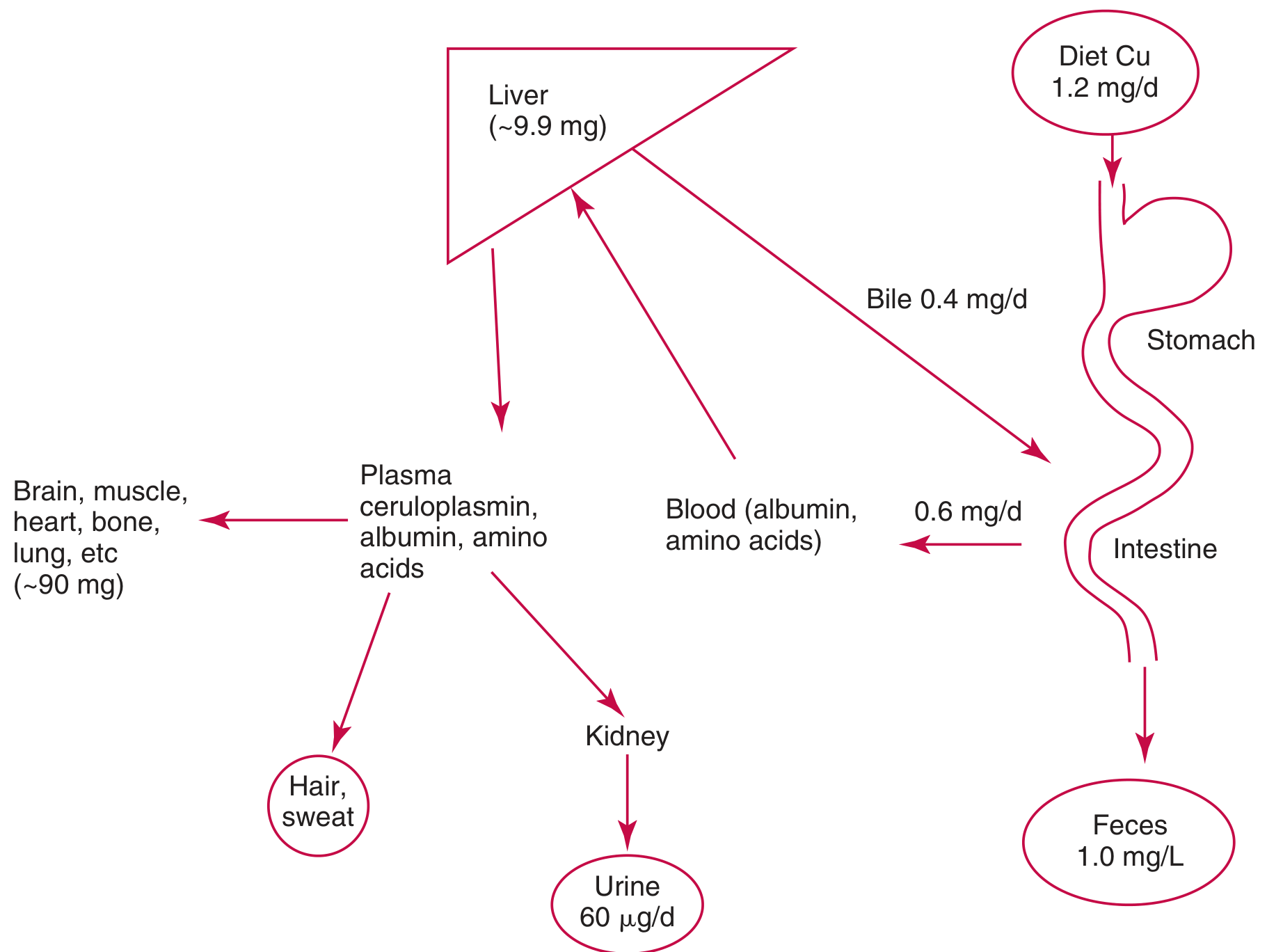
- Absorbed mainly in the proximal small intestine (~50% at low intakes, ~20% at high intakes)
- Absorbed copper transported to liver via portal blood bound to albumin
- Liver is the central organ of Cu homeostasis - incorporates Cu into cuproenzymes and exports as ceruloplasmin (~68% of plasma Cu) and albumin-bound Cu (<10%)
- Key transporters: Ctr1 (importer), ATP7A and ATP7B (Cu exporters)
- Primary excretion route: bile → feces (0.5-2.0 mg/day); urine <60 µg/day (<1% of intake)
- Zinc (induces metallothionein, which binds Cu²⁺)
- Vitamin C (reduces Cu²⁺ to insoluble Cu⁺)
- Molybdate, iron, high dietary fiber
5. Functions of Copper
| Enzyme | Function |
|---|---|
| Ceruloplasmin (Ferroxidase I) | Oxidizes Fe²⁺ → Fe³⁺ for loading onto transferrin; ~68% of plasma Cu; acute-phase reactant; antioxidant (scavenges free Cu ions preventing hydroxyl radical generation) |
| Cytochrome c oxidase | Complex IV of mitochondrial electron transport chain; catalyzes 4-electron reduction of O₂ → H₂O; essential for ATP production via oxidative phosphorylation |
| Lysyl oxidase | Cross-links collagen and elastin by oxidizing lysine/hydroxylysine side chains → allysine → covalent cross-links; essential for tensile strength of connective tissue, skin, blood vessels, bone |
| Cu,Zn-Superoxide dismutase (SOD) | Converts O₂•⁻ (superoxide, highly cytotoxic ROS) → H₂O₂; major antioxidant defence in cytoplasm and plasma |
| Tyrosinase | Melanocytes; catalyzes L-dopa → melanin (first and rate-limiting step); responsible for melanin synthesis and skin pigmentation |
| Dopamine β-hydroxylase (Dopamine monooxygenase) | Converts dopamine → norepinephrine (final step in catecholamine synthesis in adrenal medulla); requires ascorbate as electron donor |
| Monoamine oxidase (MAO) | Degradation of serotonin and catecholamines in the brain |
| Ferroxidase II (Hephaestin) | In enterocytes; oxidizes Fe²⁺ → Fe³⁺ for transfer across basolateral membrane during iron absorption |
Functional Summary by System:
- Energy Production - Cytochrome c oxidase (Complex IV): essential for oxidative phosphorylation and ATP synthesis
- Iron Metabolism - Ceruloplasmin/ferroxidase: Cu is essential for iron transport and hemoglobin formation (explains why Cu deficiency causes iron-resistant anemia)
- Connective Tissue Formation - Lysyl oxidase: cross-linking of collagen and elastin → strength of skin, blood vessels, bone, cartilage
- Antioxidant Defence - Cu,Zn-SOD and ceruloplasmin: scavenging of superoxide radicals
- Neurotransmitter Synthesis - Dopamine β-hydroxylase: dopamine → norepinephrine; MAO: serotonin metabolism
- Melanin Synthesis - Tyrosinase: skin and hair pigmentation
- CNS Function - Cytochrome c oxidase: myelin sheath formation (phospholipid synthesis); prion protein (PrP) binds Cu²⁺ and may regulate Cu in the brain
- Angiogenesis - Copper promotes new blood vessel formation; tumors use Cu to mount angiogenic responses
- Gene Expression Regulation - Cu-dependent transcription factors regulate SOD, catalase, metallothionein
- Harper's Illustrated Biochemistry, 32nd Ed.; Tietz Textbook, 7th Ed.; Harrison's 22E
6. Deficiency Manifestations
A. General/Acquired Deficiency
- Hypochromic, microcytic anaemia refractory to iron therapy - because Cu (via ceruloplasmin) is needed to oxidize Fe²⁺ → Fe³⁺ for transferrin loading; without Cu, iron cannot be properly utilized
- Neutropenia (low neutrophil count) - impaired granulopoiesis
- Thrombocytopenia (less common)
- Osteoporosis and bone fragility - due to deficient lysyl oxidase → impaired collagen/elastin cross-linking
- Metaphyseal spurs and osteopenia on X-ray (in infants)
- Easily fractured brittle bones (premature infants)
- Subacute combined degeneration-like picture (demyelination)
- Impaired myelin sheath formation (cytochrome c oxidase required for phospholipid synthesis)
- Peripheral neuropathy, myelopathy, ataxia
- Skin pallor (depigmentation from impaired tyrosinase)
- Weakened blood vessels → risk of dissecting aneurysms
- Impaired wound healing
- Hypopigmentation of skin and hair (reduced tyrosinase activity)
- Impaired immune function (neutropenia + cellular immune defects)
- Hypoglycaemia (in severe deficiency)
B. High-Risk Groups for Deficiency
| Risk Group | Mechanism |
|---|---|
| Premature infants | Most Cu accumulates in fetal liver in last 3 months of gestation; premature infants lack adequate stores |
| Malnourished infants rehabilitated on cow's milk | Cow's milk is very low in copper |
| Patients on prolonged IV/enteral nutrition | Without Cu supplementation |
| Malabsorptive diseases | Reduced intestinal absorption |
| Nephrotic syndrome | Urinary Cu losses |
| Patients on chronic high-dose oral zinc therapy (e.g., for Wilson's disease) | Zinc induces metallothionein → binds Cu → prevents absorption |
| Cholestasis / chronic diarrhoea | Impaired biliary and absorptive function |
| Dialysis patients | Dialytic removal |
C. Diagnostic Criteria for Deficiency
- Serum copper: <65 µg/dL (<10 µmol/L)
- Serum ceruloplasmin: <20 mg/dL (<220 mg/L)
Important: Serum copper may be falsely elevated in pregnancy, oral contraceptive use, infection, and tissue injury because ceruloplasmin is an acute-phase reactant and ~90% of circulating copper is bound to ceruloplasmin.
7. Genetic/Inborn Errors of Copper Metabolism
| Disease | Gene | Mechanism | Manifestations |
|---|---|---|---|
| Menkes Kinky Hair Syndrome | ATP7A (X-linked) | Defective intestinal Cu absorption → systemic Cu deficiency | Intellectual disability, hypotonia, seizures, failure to thrive, pili torti (kinky/twisted hair), hypocupremia, low ceruloplasmin, dissecting aneurysms, cardiac rupture; death within 5 years |
| Wilson's Disease | ATP7B (autosomal recessive) | Failure to incorporate Cu into ceruloplasmin + impaired biliary Cu excretion → Cu accumulates in liver, brain, kidney, cornea | Liver cirrhosis, neuropsychiatric symptoms, Kayser-Fleischer rings (cornea), low ceruloplasmin despite Cu accumulation |
| Aceruloplasminemia | Ceruloplasmin gene (autosomal recessive) | No ceruloplasmin → impaired iron oxidation → tissue iron overload | Mental deterioration, microcytic anaemia, low serum iron and copper |
8. Copper Toxicity
- Accidental ingestion of copper salts
- Indian childhood cirrhosis (storing milk in copper vessels)
- Wilson's disease (genetic accumulation)
- Severe toxicity: kidney failure, liver failure, coma
- Potential role in Alzheimer's disease (excess fragmentation of ceruloplasmin in CSF)
Quick Recall Summary
| Feature | Key Point |
|---|---|
| RDA (adults) | 900 µg/day (US) / 1.2 mg/day (UK); UL = 10 mg/day |
| Best food sources | Liver, shellfish (oysters), nuts, whole grains, cocoa, legumes |
| Richest natural source | Oysters/shellfish and liver |
| Active transport proteins | Ctr1 (import); ATP7A, ATP7B (export) |
| Transport in blood | ~68% as ceruloplasmin; ~10% as albumin-bound |
| Key enzymes | Ceruloplasmin, Cytochrome c oxidase, Lysyl oxidase, Cu,Zn-SOD, Tyrosinase, Dopamine β-hydroxylase |
| Deficiency: blood | Anaemia (iron-resistant), neutropenia |
| Deficiency: bone | Osteoporosis, metaphyseal spurs, brittle bones |
| Deficiency: skin | Hypopigmentation (impaired tyrosinase) |
| Deficiency: neuro | Demyelination, myelopathy, ataxia |
| Diagnosis | Serum Cu <65 µg/dL + ceruloplasmin <20 mg/dL |
| Genetic disorders | Menkes syndrome (ATP7A, X-linked) → deficiency; Wilson's disease (ATP7B, AR) → toxicity/accumulation |
| Reduced absorption by | Zinc, high-dose Vitamin C, molybdate, iron |
Construct acc to this book
COPPER (Cu) — Textbook of Biochemistry | Rafi MD, 5th Ed. Style
Introduction
- Cu¹⁺ (cuprous) — reduced form
- Cu²⁺ (cupric) — oxidized form
A. RECOMMENDED DIETARY ALLOWANCE (RDA)
| Group | RDA |
|---|---|
| Adult males and females | 900 µg/day (0.9 mg/day) |
| Pregnant women | 1000 µg/day |
| Lactating women | 1300 µg/day |
| Children (1-3 years) | 340 µg/day |
| Children (4-8 years) | 440 µg/day |
| Tolerable Upper Intake Level (UL) | 10 mg/day |
The median dietary intake in adults is ~1.0-1.6 mg/day. Requirements increase in states of increased growth, pregnancy, and lactation.
Diagnosis of deficiency: Serum Cu <65 µg/dL + Ceruloplasmin <20 mg/dL
B. DIETARY SOURCES
Rich Sources (High Copper Content):
| Food Source | Copper Content |
|---|---|
| Oysters/shellfish | Highest (richest natural source) |
| Liver and kidney (organ meats) | Very high |
| Cocoa and chocolate | High |
| Nuts (cashews, almonds, walnuts) | High |
| Whole grain cereals and bran | Moderate-high |
| Legumes and pulses | Moderate |
| Green leafy vegetables | Moderate |
| White meats | Low-moderate |
Poor Sources:
- Dairy products (especially cow's milk — very low in copper; important cause of deficiency in infants fed only cow's milk-based formula)
- Refined/polished cereals
Clinical Note: Storage of milk or acidic beverages in copper vessels significantly increases Cu intake — implicated in Indian Childhood Cirrhosis (a form of copper toxicity in children).
C. FUNCTIONS OF COPPER
1. Ceruloplasmin (Ferroxidase I)
- Transports ~68% of plasma copper
- Acts as ferroxidase: oxidizes Fe²⁺ → Fe³⁺, enabling iron loading onto transferrin → iron transport for haemoglobin synthesis
- Acts as antioxidant: binds free Cu²⁺ ions, preventing generation of toxic hydroxyl radicals
- Is an acute-phase reactant (rises in infection, inflammation, pregnancy)
- Contains 6-8 Cu atoms per molecule
Biochemical link: Copper deficiency impairs ceruloplasmin activity → Fe²⁺ cannot be oxidised to Fe³⁺ → iron cannot be incorporated into haemoglobin → anaemia that is REFRACTORY to iron therapy
2. Cytochrome c Oxidase (Complex IV)
- Located on the inner mitochondrial membrane
- Catalyses the 4-electron reduction of O₂ → H₂O (final step of electron transport chain)
- Drives the proton gradient → ATP synthesis via oxidative phosphorylation
- Function: Essential for cellular energy (ATP) production
- Also required for phospholipid synthesis in myelin sheath formation
3. Lysyl Oxidase
- Catalyses oxidative deamination of lysine/hydroxylysine side chains in collagen and elastin → aldehydes (allysine)
- Aldehyde groups form covalent cross-links between adjacent polypeptide chains
- Function: Provides tensile strength and structural integrity to collagen and elastin in skin, blood vessels, bone, tendons, cartilage
Clinical correlation: Deficiency → impaired cross-linking → weak connective tissue → osteoporosis, brittle bones, fragile blood vessels, dissecting aneurysms
4. Cu, Zn-Superoxide Dismutase (SOD)
- Present in cytoplasm and plasma
- Reaction: O₂•⁻ (superoxide) + O₂•⁻ → H₂O₂ + O₂
- Cu²⁺ in the active site accepts an electron from superoxide; reduced to Cu¹⁺; then donates electron to second superoxide → H₂O₂ (less reactive than superoxide; further detoxified by catalase)
- Function: Major antioxidant defence — protects cells from reactive oxygen species (ROS)
5. Tyrosinase
- Present in melanocytes
- Catalyses: L-Dopa → melanin (first and rate-limiting step in melanin synthesis)
- Function: Responsible for skin, hair, and eye pigmentation
Deficiency → reduced tyrosinase activity → hypopigmentation of skin and hair
6. Dopamine β-Hydroxylase (Dopamine Monooxygenase)
- Present in chromaffin granules of adrenal medulla and adrenergic neurons
- Catalyses: Dopamine → Norepinephrine (final step of catecholamine synthesis)
- Requires ascorbate (Vitamin C) as electron donor
- Function: Essential for neurotransmitter (norepinephrine) synthesis
7. Monoamine Oxidase (MAO)
- Cu-containing enzyme
- Catalyses degradation of serotonin and catecholamines in the brain
- Function: Neurotransmitter turnover and CNS function
8. Hephaestin / Ferroxidase II
- Located in intestinal enterocytes
- Oxidizes Fe²⁺ → Fe³⁺ at the basolateral membrane of enterocytes
- Function: Facilitates iron transfer from enterocyte into circulation during intestinal iron absorption
Summary Table of Copper-Dependent Enzymes:
| Enzyme | System/Function |
|---|---|
| Ceruloplasmin | Iron metabolism + antioxidant |
| Cytochrome c oxidase | Energy (ATP) production; myelin synthesis |
| Lysyl oxidase | Collagen/elastin cross-linking (connective tissue) |
| Cu,Zn-SOD | Antioxidant defence |
| Tyrosinase | Melanin synthesis (pigmentation) |
| Dopamine β-hydroxylase | Dopamine → Norepinephrine (neurotransmitter) |
| Monoamine oxidase | Serotonin/catecholamine metabolism (CNS) |
| Hephaestin | Intestinal iron absorption |
D. DEFICIENCY MANIFESTATIONS
Causes of Copper Deficiency:
- Premature infants (inadequate fetal liver stores — Cu accumulates in last 3 months of gestation)
- Infants fed cow's milk-based formula (low Cu content)
- Prolonged IV or enteral nutrition without Cu supplementation
- Malabsorptive diseases (Crohn's disease, coeliac disease)
- Chronic high-dose zinc supplementation — Zn induces metallothionein → binds Cu → blocks absorption
- Nephrotic syndrome (urinary Cu loss)
- Wilson's disease treatment (penicillamine chelates Cu)
- Cholestasis / chronic diarrhoea
Deficiency Manifestations (Organ-System Wise):
1. Haematological (Most Common Manifestations)
- Hypochromic, microcytic anaemia — refractory to iron therapy
- Mechanism: ↓ Ceruloplasmin → ↓ Ferroxidase activity → Fe²⁺ cannot oxidise to Fe³⁺ → iron cannot load onto transferrin → iron-resistant anaemia
- Neutropenia (low neutrophil count) — impaired granulopoiesis; increased susceptibility to infections
- Thrombocytopenia (less common)
2. Skeletal / Bone
- Osteoporosis and reduced bone density
- Easily fractured, brittle bones (especially premature infants)
- Radiological: metaphyseal spurs and osteopenia on X-ray
- Mechanism: ↓ Lysyl oxidase → impaired collagen and elastin cross-linking → weak bones and connective tissue
3. Neurological
- Subacute combined degeneration-like myelopathy (similar to Vit B₁₂ deficiency)
- Peripheral neuropathy — numbness, tingling, weakness
- Cerebellar ataxia — gait instability
- Demyelination — ↓ Cytochrome c oxidase → impaired phospholipid synthesis → myelin sheath damage
- Cognitive impairment (in severe/chronic deficiency)
4. Cardiovascular
- Weakened blood vessel walls → risk of dissecting aneurysms
- Impaired elastin cross-linking in aorta and major vessels
5. Skin and Hair
- Hypopigmentation of skin and hair (pallor, premature greying)
- Mechanism: ↓ Tyrosinase → impaired melanin synthesis
6. Immune System
- Increased susceptibility to infections (neutropenia + impaired cellular immunity)
7. Connective Tissue
- Impaired wound healing
- Joint hypermobility
- Skin fragility
E. INBORN ERRORS OF COPPER METABOLISM
| Feature | Menkes Kinky Hair Syndrome | Wilson's Disease |
|---|---|---|
| Gene defect | ATP7A | ATP7B |
| Inheritance | X-linked recessive | Autosomal recessive |
| Mechanism | Impaired intestinal Cu absorption → systemic Cu DEFICIENCY | Impaired biliary Cu excretion + impaired ceruloplasmin synthesis → Cu ACCUMULATION |
| Serum Cu | Very low (<65 µg/dL) | Low (despite accumulation) |
| Ceruloplasmin | Very low | Low |
| Hair | Pili torti (kinky, twisted, steel-wire hair) | Normal |
| Clinical features | Intellectual disability, hypotonia, seizures, failure to thrive, dissecting aneurysms, cardiac rupture | Liver cirrhosis, neuropsychiatric symptoms, Kayser-Fleischer rings (Cu deposits in cornea) |
| Prognosis | Death usually within 5 years | Treatable with copper chelation (penicillamine) |
Aceruloplasminemia: Rare autosomal recessive disorder (ceruloplasmin gene mutation) → no ferroxidase activity → tissue iron overload + microcytic anaemia + mental deterioration + low serum iron and copper.
F. COPPER TOXICITY
- Wilson's disease (genetic)
- Indian childhood cirrhosis (copper vessels storing milk)
- Accidental ingestion of copper salts
- Features: nausea, vomiting, haemolysis, jaundice, liver failure, kidney failure, coma
- Potential role in Alzheimer's disease (excess Cu → ceruloplasmin fragmentation in CSF → oxidative neuronal damage)
- Treatment: Copper chelators (D-penicillamine, trientine), zinc supplementation (competes with Cu absorption)
G. CLINICAL CORRELATION BOXES (Rafi-Style)
Case Correlation 1: A 3-month-old premature infant on cow's milk formula presents with pallor, anaemia not responding to iron therapy, and X-rays showing metaphyseal spurs. Diagnosis? Copper deficiency. Mechanism: premature birth → no fetal Cu stores + cow's milk low in Cu → lysyl oxidase + ceruloplasmin deficiency.
Case Correlation 2: A patient being treated for Wilson's disease with high-dose zinc develops anaemia and neutropenia. Why? Zinc induces metallothionein in enterocytes → metallothionein binds Cu²⁺ → prevents Cu absorption → iatrogenic copper deficiency.
Case Correlation 3: A child with kinky hair, seizures, intellectual disability, and very low serum ceruloplasmin. Diagnosis? Menkes Kinky Hair Syndrome (ATP7A mutation, X-linked). Copper cannot leave intestinal enterocytes → deficiency in all other tissues.
Quick Revision Summary
| Feature | Key Fact |
|---|---|
| RDA | 900 µg/day (adults); UL = 10 mg/day |
| Best dietary sources | Shellfish/oysters, liver, nuts, cocoa, whole grains |
| Total body content | ~80-100 mg (liver is key organ of homeostasis) |
| Transport in plasma | 68% as ceruloplasmin; ~10% albumin-bound |
| Key enzymes | Ceruloplasmin, Cytochrome c oxidase, Lysyl oxidase, SOD, Tyrosinase, Dopamine β-hydroxylase |
| Deficiency anaemia | Hypochromic microcytic, iron-refractory |
| Deficiency bone | Osteoporosis, metaphyseal spurs (↓ lysyl oxidase) |
| Deficiency skin | Hypopigmentation (↓ tyrosinase) |
| Deficiency neuro | Myelopathy, neuropathy, demyelination |
| Diagnostic test | Serum Cu <65 µg/dL + Ceruloplasmin <20 mg/dL |
| Menkes syndrome | ATP7A mutation → Cu deficiency → kinky hair, neurodegeneration |
| Wilson's disease | ATP7B mutation → Cu toxicity → liver/brain/Kayser-Fleischer rings |
| Absorption inhibited by | High-dose Zn, Vitamin C (high dose), molybdate, iron |