
Hot potato voice
"Hot potato voice" is a clinical term describing a muffled, thick, or "talking with a mouth full of hot potato" quality of voice. It results from pain or mechanical obstruction in the oropharynx/hypopharynx that prevents normal articulation - the patient holds their mouth and throat in an abnormal position to avoid pain or because of a mass effect.
Searching sources...
Reading File
Searching the Web
hot potato voice clinical causes peritonsillar abscess
Finding Sources
Reading File
Reading File
Loading Image
Reading File
Hot Potato Voice
Hot potato voice describes a muffled, thick, stifled quality of speech - as if the patient is trying to speak while holding a hot potato in their mouth. It is caused by pain or mechanical obstruction in the oropharynx or supraglottis that forces the patient to hold the pharyngeal structures in a rigid, abnormal position.
Mechanism
The voice quality results from a combination of:
- Muffled oral resonance - the mass/swelling alters the resonating chamber of the oropharynx
- Transient velopharyngeal insufficiency - the swelling impairs normal soft palate movement, causing a hyponasal, stifled sound
- Pain prevents the patient from opening the mouth or moving the tongue/palate normally (similar to trismus)
Causes
| Condition | Notes |
|---|---|
| Peritonsillar abscess (PTA) / quinsy | Most classic and common cause. Pus between the tonsillar capsule and superior constrictor muscle. |
| Retropharyngeal abscess | Along with dysphagia, odynophagia, and drooling |
| Parapharyngeal abscess | Deep neck space infection |
| Epiglottitis | Combined with stridor and dysphagia ("tripod position") |
| Supraglottic tumors | Increasing tumor bulk alters phonation; epiglottic tumors classically produce a hot potato voice before hoarseness sets in |
| Peritonsillar cellulitis | Earlier in the disease course before frank abscess forms |
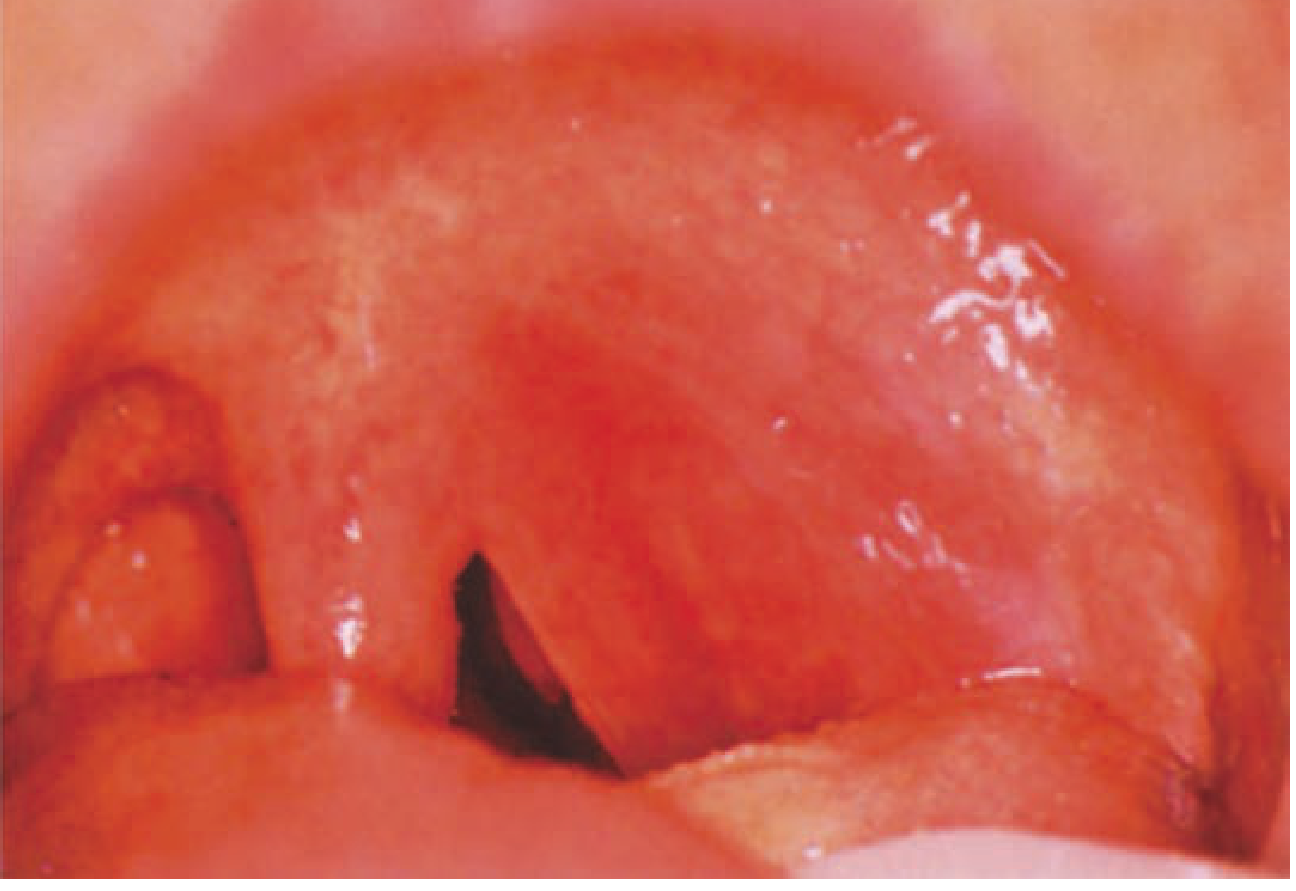
Classic Presentation: Peritonsillar Abscess
The canonical cause. According to multiple textbooks:
- Symptoms: Severe unilateral sore throat ("worst sore throat of my life"), fever, chills, dysphagia, drooling, otalgia (referred ear pain), torticollis
- Voice: Muffled hot potato voice
- Exam: Bulging of the affected tonsil, uvula deviated away from the side of the abscess, soft palate swelling, trismus (spasm of pterygoid muscles from spread of inflammation)
- Microbiology: Polymicrobial - anaerobes, Group A beta-hemolytic streptococci (GABHS), S. aureus, H. influenzae
- Age: Most common in adolescents and young adults; bilateral in <10% of cases
Management (PTA)
- Drainage - needle aspiration or incision and drainage (I&D) in the ED under local anesthesia. Procedural sedation may be needed in young/uncooperative children.
- Empiric antibiotics - to cover polymicrobial flora (typically amoxicillin-clavulanate or clindamycin +/- penicillin)
- Analgesia + hydration
- Tonsillectomy - considered for recurrent PTA or recurrent tonsillitis
Complications if untreated: airway obstruction, spread to parapharyngeal space, Lemierre syndrome (jugular vein thrombosis), mediastinitis, brain abscess, aspiration pneumonia.
Key Exam Differentiator
Hot potato voice + trismus + uvular deviation = peritonsillar abscess until proven otherwise.
Hot potato voice + stridor + drooling + "tripod position" = think epiglottitis (airway emergency).
Hot potato voice without trismus, with posterior pharyngeal wall bulge = think retropharyngeal abscess.
- KJ Lee's Essential Otolaryngology, p. 600-608
- Tintinalli's Emergency Medicine, p. 1878
- Rosen's Emergency Medicine, p. 2899
- Scott-Brown's Otorhinolaryngology Head & Neck Surgery, p. 2762
Pathophysiology of hot potato voice
The hot potato voice arises from two main mechanisms: (1) mechanical distortion of the oropharyngeal resonating chamber by a mass or swelling, and (2) pain-guarding that prevents normal articulator movement. The soft palate and posterior pharyngeal wall cannot move freely, producing a muffled, stifled sound.
Searching sources...
Finding Sources
Searching PubMed
"hot potato voice" pathophysiology velopharyngeal
Searching the Web
hot potato voice pathophysiology mechanism velopharyngeal insufficiency muffled resonance
Reading File
Reading Article
PMID: 8399275
Finding Sources
Finding Sources
Reading File
Reading File
Here is a detailed breakdown of the pathophysiology of hot potato voice, drawn from textbooks and the landmark Finkelstein et al. (1993) study.
Pathophysiology of Hot Potato Voice
The voice quality is not caused by a single event - it results from two simultaneous, overlapping mechanisms acting on the oropharyngeal resonating chamber. These are best understood in the context of a peritonsillar abscess (PTA), the condition where the phenomenon has been most rigorously studied.
Mechanism 1: Transient Velopharyngeal Insufficiency (VPI)
This is the dominant mechanism.
Normal velopharyngeal function:
During speech, the levator veli palatini and palatopharyngeus muscles elevate the soft palate, pressing it against the posterior pharyngeal wall to close off the nasopharynx from the oropharynx. This closure is essential for:
- Building up intraoral air pressure for consonants (p, b, t, d, k, g)
- Directing sound resonance into the oral cavity
- Producing a clean, non-nasal voice
How PTA disrupts this:
The peritonsillar abscess lies between the tonsillar capsule, the superior pharyngeal constrictor, and the palatopharyngeus muscle. Pus accumulating in this space:
- Directly compresses and displaces the soft palate inferiorly and medially
- Causes inflammatory dysfunction of the ipsilateral palatal muscles (particularly levator veli palatini) on the affected side
- Results in asymmetric, incomplete velopharyngeal closure during speech
This transient VPI means the velopharyngeal sphincter cannot seal properly. Sound energy and air escape into the nasopharynx rather than being directed into the oral cavity, producing a stifled, abnormal resonance quality.
"Hot potato voice is the result of an underlying transient velopharyngeal insufficiency combined with muffled oral resonance... The velopharyngeal insufficiency is the result of transient dysfunction of the palatal muscles on the affected side."
- Finkelstein Y et al., Cleft Palate Craniofac J, 1993 [PMID: 8399275]
Mechanism 2: Muffled Oral Resonance (Pharyngeal Cul-de-Sac Effect)
The expanding abscess physically bulges the soft palate and posterior tonsillar pillar into the oropharyngeal lumen. This creates a partial mechanical obstruction of the oral vocal tract.
- Sound resonating in the pharynx cannot exit freely through the mouth
- Energy is partially trapped in the posterior pharynx (a "cul-de-sac" effect)
- The result is a low-volume, muffled, dampened quality to speech - as though talking through a thick partition
This is distinct from VPI: VPI contributes an abnormal nasal/stifled quality; the cul-de-sac effect adds the characteristic muffled, "thick" quality. Together they produce the recognizable hot potato voice.
Mechanism 3: Pain-Guarded Articulation (Secondary Component)
The severe odynophagia and inflammation cause the patient to voluntarily restrict movement of the tongue, soft palate, and jaw. Moving these structures normally to produce speech is painful, so:
- The mouth is held semi-closed
- Tongue movement is minimized
- This further blunts consonant production and clarity
Why Trismus Compounds the Problem
Inflammation spreading to the medial pterygoid muscle (which lies immediately lateral and posterior to the peritonsillar space) causes reflex spasm and trismus. Restricted mouth opening further limits normal oral articulation, worsening the overall voice quality.
"Inflammation in the region of the pterygoid muscles results in pain and trismus."
- Mulholland and Greenfield's Surgery, 7th ed.
Hot Potato Voice in Supraglottic Tumors: A Different Mechanism
In supraglottic cancers (e.g., epiglottic or aryepiglottic fold tumors), the mechanism is purely mechanical:
- Increasing tumor bulk physically obstructs the supraglottic vocal tract
- The epiglottis and aryepiglottic folds cannot move freely during phonation
- This creates a fixed, thick obstruction that muffles sound at the laryngeal inlet level, above the true cords
- As the tumor grows to involve the true cords, hoarseness then supervenes
This contrasts with PTA, where VPI is the primary driver. In tumors, VPI plays no role - it is purely a mass effect on the resonating/voicing chamber.
"As tumour bulk increases, phonation is altered, with a 'hot potato' voice. If tumours extend to the cords, then hoarseness ensues."
- Scott-Brown's Otorhinolaryngology Head & Neck Surgery, p. 2762
Summary Table
| Mechanism | What Happens | Voice Effect |
|---|---|---|
| Transient VPI | Palatal muscle dysfunction on affected side; soft palate cannot seal nasopharynx | Stifled, muffled, incomplete resonance |
| Pharyngeal cul-de-sac | Abscess bulge partially obstructs oropharyngeal lumen | Low-volume, thick, muffled quality |
| Pain-guarded articulation | Patient avoids moving tongue/palate/jaw | Reduced consonant clarity |
| Trismus (pterygoid spasm) | Restricted mouth opening | Worsened articulation overall |
| Supraglottic mass (tumors) | Direct mechanical obstruction above the cords | Muffled voice without hoarseness until cord involvement |
Sources:
- Roberts and Hedges' Clinical Procedures in Emergency Medicine, p. 4224-4226
- Bailey and Love's Short Practice of Surgery, 28th ed., p. 9875
- Finkelstein Y et al. "Peritonsillar abscess as a cause of transient velopharyngeal insufficiency." [Cleft Palate Craniofac J, 1993 - PMID: 8399275]
- Scott-Brown's Otorhinolaryngology Head & Neck Surgery, p. 2762
This is a shared conversation. Sign in to Orris to start your own chat.