
Can you make a downloadable PPT for opioid withdrawal, अ, अ, up to, अ, 10 to 15 slides and include one case also in that and according to the, . According to the subject medicine of addiction.mbbs
WHO opioid withdrawal management clinical guidelines signs treatment
"opioid withdrawal" AND treatment
~/
clinical opiate withdrawal scale COWS assessment signs opioid withdrawal
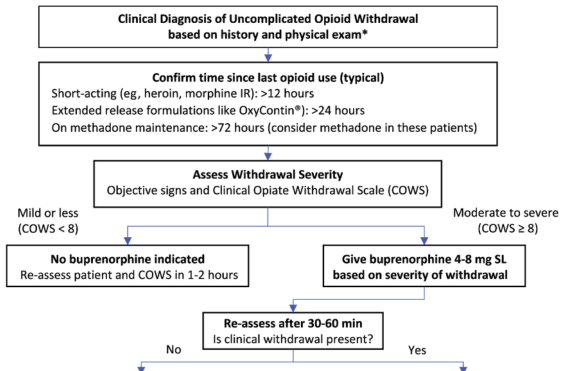
mkdir -p "/tmp/workspace/opioid-withdrawal-ppt/src" "/tmp/workspace/opioid-withdrawal-ppt/output" "/tmp/workspace/opioid-withdrawal-ppt/assets" && python /tmp/skills/shared/scripts/fetch_images.py "https://cdn.orris.care/cdss_images/GLGCA_302247_1763284911265_a88fb44f-5008-442d-9884-2ec306dead0c.png" > "/tmp/workspace/opioid-withdrawal-ppt/assets/downloaded_image.json"
python - <<'PY' import json,base64,os p='/tmp/workspace/opioid-withdrawal-ppt/assets/downloaded_image.json' data=json.load(open(p)) print(data) for item in data: if item.get('base64'): mime,b64=item['base64'].split(',',1) ext='.png' if 'png' in mime else '.jpg' out='/tmp/workspace/opioid-withdrawal-ppt/assets/cows_flowchart'+ext open(out,'wb').write(base64.b64decode(b64)) print(out) PY
python - <<'PY' from PIL import Image p='/tmp/workspace/opioid-withdrawal-ppt/assets/cows_flowchart.jpg' im=Image.open(p) print(im.size, im.format) PY
python - <<'PY' from pptx import Presentation from pptx.util import Inches, Pt from pptx.dml.color import RGBColor from pptx.enum.shapes import MSO_SHAPE from pptx.enum.text import PP_ALIGN, MSO_ANCHOR from pptx.enum.dml import MSO_THEME_COLOR from pptx.enum.shapes import MSO_CONNECTOR from pptx.enum.text import MSO_AUTO_SIZE from pptx.enum.dml import MSO_LINE_DASH_STYLE from pptx.oxml.xmlchemy import OxmlElement from pptx.oxml.ns import qn from PIL import Image import os OUT='/tmp/workspace/opioid-withdrawal-ppt/output/Opioid_Withdrawal_Medicine_of_Addiction_MBBS.pptx' ASSET='/tmp/workspace/opioid-withdrawal-ppt/assets/cows_flowchart.jpg' prs=Presentation(); prs.slide_width=Inches(13.333); prs.slide_height=Inches(7.5) blank=prs.slide_layouts[6] # colors NAVY=RGBColor(18,42,66); BLUE=RGBColor(33,99,146); TEAL=RGBColor(21,135,137) ORANGE=RGBColor(230,129,61); RED=RGBColor(185,62,62); GREEN=RGBColor(37,135,86) CREAM=RGBColor(247,249,250); INK=RGBColor(31,45,58); MUTED=RGBColor(94,111,128); LINE=RGBColor(214,223,230); WHITE=RGBColor(255,255,255) def fill(shape,c): shape.fill.solid(); shape.fill.fore_color.rgb=c def line(shape,c,w=1): shape.line.color.rgb=c; shape.line.width=Pt(w) def add_rect(s,x,y,w,h,c, radius=False): sh=s.shapes.add_shape(MSO_SHAPE.ROUNDED_RECTANGLE if radius else MSO_SHAPE.RECTANGLE, Inches(x), Inches(y), Inches(w), Inches(h)); fill(sh,c); sh.line.fill.background(); return sh def text(s,x,y,w,h,txt,size=20,color=INK,bold=False,align=PP_ALIGN.LEFT, font='Aptos', valign=MSO_ANCHOR.TOP): box=s.shapes.add_textbox(Inches(x),Inches(y),Inches(w), Inches(h)); tf=box.text_frame; tf.clear(); tf.word_wrap=True tf.margin_left=tf.margin_right=Pt(2); tf.margin_top=tf.margin_bottom=Pt(1); tf.vertical_anchor=valign for i,para in enumerate(txt.split('\n')): p=tf.paragraphs[0] if i==0 else tf.add_paragraph(); p.text=para; p.alignment=align; p.space_after=Pt(3) for r in p.runs: r.font.name=font; r.font.size=Pt(size); r.font.bold=bold; r.font.color.rgb=color return box def bullets(s,x,y,w,h,items,size=18,color=INK): box=s.shapes.add_textbox(Inches(x),Inches(y),Inches(w),Inches(h)); tf=box.text_frame; tf.clear(); tf.word_wrap=True tf.margin_left=Pt(5);tf.margin_right=Pt(3);tf.margin_top=Pt(2);tf.margin_bottom=Pt(2) for i,item in enumerate(items): p=tf.paragraphs[0] if i==0 else tf.add_paragraph(); p.text=item; p.level=0; p.font.size=Pt(size); p.font.name='Aptos'; p.font.color.rgb=color; p.space_after=Pt(8); p._p.get_or_add_pPr().insert(0, OxmlElement('a:buChar')) if False else None p.text='• '+item return box def header(s,title,kicker='MEDICINE OF ADDICTION | MBBS'): add_rect(s,0,0,13.333,0.28,NAVY) text(s,0.55,0.42,11.9,0.45,title,28,NAVY,True) text(s,0.57,0.92,8.4,0.25,kicker,9,TEAL,True) add_rect(s,0.55,1.2,12.2,0.025,TEAL) def footer(s,n,source='Teaching deck for MBBS. Use local protocol and supervised clinical care.'): text(s,0.56,7.14,10.9,0.18,source,8,MUTED) text(s,12.1,7.08,0.6,0.22,str(n).zfill(2),10,TEAL,True,PP_ALIGN.RIGHT) def card(s,x,y,w,h,title,body,accent=TEAL,body_size=16): add_rect(s,x,y,w,h,WHITE,True) # thin accent add_rect(s,x,y,0.08,h,accent) text(s,x+0.22,y+0.16,w-0.35,0.28,title,15,accent,True) text(s,x+0.22,y+0.52,w-0.35,h-0.62,body,body_size,INK) def circle(s,x,y,d,label,c,sub=''): sh=s.shapes.add_shape(MSO_SHAPE.OVAL, Inches(x), Inches(y), Inches(d), Inches(d)); fill(sh,c); sh.line.fill.background() text(s,x+0.05,y+d*.22,d-.1,d*.35,label,16,WHITE,True,PP_ALIGN.CENTER,valign=MSO_ANCHOR.MIDDLE) if sub: text(s,x-0.18,y+d+0.08,d+.36,0.4,sub,11,INK,False,PP_ALIGN.CENTER) def bg(s): add_rect(s,0,0,13.333,7.5,CREAM) #1 s=prs.slides.add_slide(blank); bg(s); add_rect(s,0,0,13.333,7.5,NAVY); add_rect(s,0,0,0.25,7.5,TEAL) text(s,0.78,0.92,9.6,0.55,'OPIOID WITHDRAWAL',40,WHITE,True) text(s,0.8,1.56,8.6,0.35,'Medicine of Addiction | MBBS teaching presentation',19,RGBColor(206,228,239)) add_rect(s,0.8,2.25,4.25,0.07,ORANGE) text(s,0.8,2.55,6.5,1.3,'Recognition • assessment • acute management • continuing care',25,WHITE,False) card(s,8.65,1.0,3.75,3.7,'LEARNING FOCUS','A clinically practical, exam-oriented overview including a case-based discussion.',TEAL,20) text(s,0.83,6.75,8,0.25,'Prepared for undergraduate MBBS teaching',11,RGBColor(170,205,220)) #2 s=prs.slides.add_slide(blank); bg(s); header(s,'Learning objectives'); footer(s,2) items=['Define opioid withdrawal and distinguish it from opioid intoxication.','Recognize the characteristic symptom pattern and time course.','Use structured assessment, including the Clinical Opiate Withdrawal Scale (COWS).','Plan safe withdrawal management and linkage to long-term treatment.','Apply the approach to a short clinical case.'] for i,it in enumerate(items): y=1.55+i*0.93; circle(s,0.78,y,0.5,str(i+1),TEAL); text(s,1.48,y+0.03,10.7,0.5,it,20,INK,False,valign=MSO_ANCHOR.MIDDLE) #3 s=prs.slides.add_slide(blank); bg(s); header(s,'What is opioid withdrawal?'); footer(s,3,'Sources: Kaplan & Sadock’s Comprehensive Textbook of Psychiatry, p. 4251; Tintinalli’s Emergency Medicine, p. 1278.') card(s,0.65,1.52,5.95,2.2,'DEFINITION','A syndrome following cessation or marked reduction of heavy, prolonged opioid use. It can also be precipitated by an antagonist or partial agonist in an opioid-dependent patient.',BLUE,18) card(s,6.82,1.52,5.85,2.2,'KEY CONCEPT','Many features are physiologic opposites of opioid intoxication: mydriasis, autonomic activation, diarrhea, insomnia and pain rather than miosis, sedation and constipation.',ORANGE,18) text(s,0.72,4.25,2.4,0.32,'MECHANISM',15,TEAL,True) for i,(a,b,c) in enumerate([('Chronic opioid exposure','Neuroadaptation and reduced endogenous opioid signaling',BLUE),('Abrupt cessation','Unopposed noradrenergic neuronal hyperactivity',ORANGE),('Withdrawal syndrome','Autonomic, GI, musculoskeletal and affective symptoms',RED)]): x=0.75+i*4.1; add_rect(s,x,4.72,3.5,1.2,WHITE,True); text(s,x+.18,4.88,3.1,.28,a,16,c,True,PP_ALIGN.CENTER); text(s,x+.18,5.25,3.1,.48,b,13,INK,False,PP_ALIGN.CENTER) if i<2: text(s,x+3.6,5.0,.35,.3,'→',25,TEAL,True,PP_ALIGN.CENTER) #4 s=prs.slides.add_slide(blank); bg(s); header(s,'Clinical features: a recognizable pattern'); footer(s,4,'Source: Tintinalli’s Emergency Medicine, p. 1278.') card(s,.65,1.45,3.85,4.95,'EARLY','• Anxiety, irritability\n• Drug craving\n• Yawning\n• Lacrimation and rhinorrhea\n• Sweating\n• Myalgia / “aches”',TEAL,18) card(s,4.72,1.45,3.85,4.95,'AUTONOMIC','• Tremor\n• Piloerection\n• Mydriasis\n• Tachycardia and hypertension\n• Restlessness\n• Hot/cold flushes',ORANGE,18) card(s,8.79,1.45,3.85,4.95,'LATE / GI','• Insomnia\n• Muscle spasm\n• Abdominal cramps\n• Nausea and vomiting\n• Diarrhea\n• Dehydration risk',RED,18) #5 s=prs.slides.add_slide(blank); bg(s); header(s,'Time course depends on opioid duration of action'); footer(s,5,'Sources: Kaplan & Sadock’s Comprehensive Textbook of Psychiatry, p. 4251; WHO opioid-dependence guidelines.') text(s,.75,1.52,11.3,.36,'Withdrawal is intensely distressing. It is usually not directly fatal, but dehydration, aspiration, co-intoxication and comorbidity can make it dangerous.',17,INK) # timeline text(s,1.0,2.4,2.1,.3,'SHORT-ACTING\nheroin, morphine, oxycodone',15,BLUE,True) add_rect(s,3.35,2.48,7.7,.14,LINE,False); for x,l in [(3.4,'6-12 h\nonset'),(6.0,'36-72 h\npeak'),(9.0,'5-7 d\nmostly resolves')]: circle(s,x,2.27,.55,'',BLUE); text(s,x-.25,2.93,1.05,.55,l,12,INK,False,PP_ALIGN.CENTER) text(s,1.0,4.4,2.1,.3,'LONG-ACTING\nmethadone, buprenorphine',15,ORANGE,True) add_rect(s,3.35,4.48,7.7,.14,LINE,False) for x,l in [(4.4,'~24 h\nonset'),(7.0,'4-6 d\npeak'),(9.8,'≥2 wk\nmay persist')]: circle(s,x,4.27,.55,'',ORANGE); text(s,x-.25,4.93,1.05,.55,l,12,INK,False,PP_ALIGN.CENTER) text(s,.98,6.25,11.4,.32,'Precipitated withdrawal: sudden and often severe symptoms after naloxone/naltrexone, or buprenorphine introduced before adequate spontaneous withdrawal.',15,RED,True) #6 s=prs.slides.add_slide(blank); bg(s); header(s,'Assessment: stabilize, identify risk, quantify severity'); footer(s,6,'Source: Tintinalli’s Emergency Medicine, p. 1278.') card(s,.65,1.5,3.85,4.95,'1. HISTORY','• Last opioid, route, amount, duration\n• Short versus long acting agent\n• Fentanyl exposure\n• Other substances: alcohol, benzodiazepines, stimulants\n• Medical, psychiatric and pregnancy history',BLUE,16) card(s,4.73,1.5,3.85,4.95,'2. EXAM & TESTS','• Vital signs, hydration, mental status\n• Pupils, sweating, piloerection, GI findings\n• Look for injection-related infection and trauma\n• Test as clinically indicated: pregnancy, glucose, ECG, toxicology',TEAL,16) card(s,8.8,1.5,3.85,4.95,'3. COWS','Clinical Opiate Withdrawal Scale uses 11 observable/reported items.\n\nUse serial scores to document severity, guide induction when appropriate, and assess response.',ORANGE,16) #7 s=prs.slides.add_slide(blank); bg(s); header(s,'COWS-informed approach'); footer(s,7,'Image source: medical image library. COWS is an assessment aid, not a substitute for clinical judgment.') text(s,.7,1.42,5.2,.56,'Use objective signs and patient symptoms together. Reassess after interventions and if the diagnosis is uncertain.',18,INK) card(s,.72,2.35,4.9,2.55,'INTERPRETATION','• 5-12: mild\n• 13-24: moderate\n• 25-36: moderately severe\n• >36: severe\n\nCheck local protocol for medication thresholds.',TEAL,17) # image im=Image.open(ASSET); w,h=im.size s.shapes.add_picture(ASSET, Inches(6.22), Inches(1.48), width=Inches(6.25), height=Inches(4.09)) text(s,6.26,5.76,6.1,.5,'Example pathway: assess timing and withdrawal severity before buprenorphine to reduce the risk of precipitated withdrawal.',13,MUTED) #8 s=prs.slides.add_slide(blank); bg(s); header(s,'Withdrawal management: core principles'); footer(s,8,'Sources: WHO Clinical Guidelines for Withdrawal Management; Kaplan & Sadock’s Comprehensive Textbook of Psychiatry, pp. 4272-4273.') for i,(title,body,c) in enumerate([('Supportive care','Quiet environment, oral/IV fluids as needed, nutrition, sleep support, reassurance, and nonjudgmental communication.',TEAL),('Treat symptoms','Target diarrhea, nausea/vomiting, pain and autonomic symptoms. Monitor blood pressure, pulse, hydration and sedation.',ORANGE),('Medication for OUD','Buprenorphine or methadone can relieve withdrawal and should be coupled with continuing treatment planning.',BLUE),('Avoid unsafe practice','Do not use abrupt “detox alone” as the endpoint. Avoid routine sedative co-prescribing and assess for overdose risk.',RED)]): x=.7+(i%2)*6.1; y=1.55+(i//2)*2.32; card(s,x,y,5.75,1.82,title,body,c,16) #9 s=prs.slides.add_slide(blank); bg(s); header(s,'Medicines: what they do and key cautions'); footer(s,9,'Use institution-specific protocols, contraindications, supervision, and legal requirements. This slide is not a prescribing guide.') card(s,.65,1.5,3.85,4.85,'BUPRENORPHINE','Partial µ-opioid agonist\n\n• Relieves withdrawal and craving\n• Start only when clear withdrawal is present, using local protocol\n• Giving it too early can precipitate withdrawal\n• Supports maintenance treatment',BLUE,16) card(s,4.73,1.5,3.85,4.85,'METHADONE','Full µ-opioid agonist\n\n• Relieves withdrawal and craving\n• Requires careful dose titration and monitoring\n• Consider QT-risk drugs, sedation and respiratory risk\n• Supports maintenance treatment',TEAL,16) card(s,8.8,1.5,3.85,4.85,'α2-AGONISTS + ANCILLARY CARE','Clonidine or lofexidine can reduce autonomic symptoms.\n\n• Monitor hypotension/bradycardia\n• Treat GI symptoms, pain and insomnia symptomatically\n• They do not treat craving or provide opioid agonist maintenance',ORANGE,16) #10 case s=prs.slides.add_slide(blank); bg(s); header(s,'Case vignette: “I cannot stop shaking and vomiting”'); footer(s,10,'Case is fictional for educational use.') card(s,.65,1.42,4.0,4.95,'PRESENTATION','A 24-year-old man presents 14 hours after last heroin use. He has yawning, rhinorrhea, sweating, anxiety, diffuse muscle pain, abdominal cramps and 3 episodes of diarrhea.\n\nPulse 108/min, BP 148/92 mmHg, pupils dilated. He is alert and oriented.',BLUE,16) card(s,4.87,1.42,3.7,4.95,'CLINICAL REASONING','Most likely diagnosis:\nOpioid withdrawal\n\nWhy?\n• Characteristic symptoms\n• Typical timing for short-acting opioid\n• Autonomic activation and mydriasis\n• No altered consciousness',TEAL,16) card(s,8.78,1.42,3.85,4.95,'NEXT STEPS','1. Check ABCs, vitals, hydration, mental status\n2. Ask about fentanyl and other substances\n3. COWS and serial reassessment\n4. Treat symptoms and consider OUD medication per local protocol\n5. Provide overdose prevention and follow-up',ORANGE,16) #11 case discussion s=prs.slides.add_slide(blank); bg(s); header(s,'Case discussion: safe management plan'); footer(s,11,'Source: WHO Clinical Guidelines for Withdrawal Management and Treatment of Drug Dependence in Closed Settings.') text(s,.7,1.42,11.7,.3,'The goal is not merely to make symptoms disappear. It is to initiate a safe pathway out of recurrent withdrawal, relapse and overdose.',18,INK,True) steps=[('A. Immediate care','Hydration assessment; antiemetic/antidiarrheal/analgesic support as clinically appropriate; observe vitals and clinical change.'),('B. Decide setting','Inpatient care if severe medical/psychiatric illness, polysubstance withdrawal, pregnancy, poor social support, or inability to maintain hydration/safety.'),('C. Initiate treatment','When objective withdrawal is established, offer buprenorphine or methadone according to trained-supervisor/local protocol. Do not give buprenorphine prematurely.'),('D. Discharge plan','Naloxone access and overdose education, psychosocial support, infection screening, follow-up appointment and continuing OUD treatment.')] for i,(t,b) in enumerate(steps): card(s,.76,2.08+i*1.08,11.75,.83,t,b,[BLUE,ORANGE,TEAL,GREEN][i],14) #12 s=prs.slides.add_slide(blank); bg(s); header(s,'Take-home messages and references'); footer(s,12,'Educational material only. Consult a trained addiction-medicine clinician and local protocol for patient-specific decisions.') text(s,.68,1.42,5.8,.35,'TAKE-HOME MESSAGES',16,TEAL,True) bullets(s,.74,1.86,5.7,3.8,['Opioid withdrawal has a characteristic autonomic, GI, musculoskeletal and affective pattern.','Timing varies by opioid half-life.','Rule out alternative causes of altered mental status or severe illness.','COWS supports serial assessment and safe medication decisions.','Withdrawal management must link to long-term OUD treatment and overdose prevention.'],17) text(s,6.75,1.42,5.65,.35,'SELECTED REFERENCES',16,TEAL,True) refs=['Kaplan & Sadock’s Comprehensive Textbook of Psychiatry, 11th ed. Opioid Withdrawal, p. 4251; Treatment of Opioid Withdrawal, pp. 4272-4273.','Tintinalli’s Emergency Medicine, 9th ed. Opioid Withdrawal, p. 1278.','World Health Organization. Clinical Guidelines for Withdrawal Management and Treatment of Drug Dependence in Closed Settings (2009).','WHO. Guidelines for the Psychosocially Assisted Pharmacological Treatment of Opioid Dependence (2009).'] for i,r in enumerate(refs): text(s,6.78,1.9+i*.9,5.25,.67,r,13,INK) add_rect(s,.72,6.1,11.8,.53,NAVY,True); text(s,.9,6.2,11.4,.24,'Clinical safety: symptoms are distressing, but relapse after withdrawal carries a major overdose risk because tolerance falls.',14,WHITE,True,PP_ALIGN.CENTER) # Add basic speaker notes? no prs.save(OUT) print(OUT, len(prs.slides), os.path.getsize(OUT)) PY python - <<'PY' from pptx import Presentation p='/tmp/workspace/opioid-withdrawal-ppt/output/Opioid_Withdrawal_Medicine_of_Addiction_MBBS.pptx' prs=Presentation(p) print('slides',len(prs.slides)) for i,s in enumerate(prs.slides,1): texts=[sh.text for sh in s.shapes if getattr(sh,'has_text_frame',False) and sh.text.strip()] print(i, texts[0][:60] if texts else 'NO TEXT') PY
~/opioid-withdrawal-ppt/output
python - <<'PY' from pptx import Presentation from pathlib import Path p=Path('/tmp/workspace/opioid-withdrawal-ppt/output/Opioid_Withdrawal_Medicine_of_Addiction_MBBS.pptx') prs=Presentation(str(p)) assert len(prs.slides)==12 for n,slide in enumerate(prs.slides,1): assert any(getattr(sh,'has_text_frame',False) and sh.text.strip() for sh in slide.shapes), f'empty slide {n}' for sh in slide.shapes: assert sh.left >= 0 and sh.top >= 0, f'negative position slide {n}' assert sh.left+sh.width <= prs.slide_width+1000, f'overflow x slide {n}' assert sh.top+sh.height <= prs.slide_height+1000, f'overflow y slide {n}' print(f'Validated: {len(prs.slides)} slides, {p.stat().st_size:,} bytes') PY
Opioid Withdrawal Medicine of Addiction MBBS
Presentation · PPTX
Yes
Can little bit decrease some matter
~/
opioid withdrawal concise MBBS teaching presentation
~/opioid-withdrawal-ppt/output
python - <<'PY' from pptx import Presentation p='/tmp/workspace/opioid-withdrawal-ppt/output/Opioid_Withdrawal_Medicine_of_Addiction_MBBS.pptx' prs=Presentation(p) for i,slide in enumerate(prs.slides,1): print('\nSLIDE',i) for sh in slide.shapes: if getattr(sh,'has_text_frame',False) and sh.text.strip(): print(sh.text.replace('\n',' | ')[:240]) PY
python - <<'PY' from pptx import Presentation from pathlib import Path src=Path('/tmp/workspace/opioid-withdrawal-ppt/output/Opioid_Withdrawal_Medicine_of_Addiction_MBBS.pptx') out=Path('/tmp/workspace/opioid-withdrawal-ppt/output/Opioid_Withdrawal_Concise_MBBS.pptx') prs=Presentation(str(src)) repls={ # 2 'Define opioid withdrawal and distinguish it from opioid intoxication.':'Define opioid withdrawal.', 'Recognize the characteristic symptom pattern and time course.':'Recognize symptoms and time course.', 'Use structured assessment, including the Clinical Opiate Withdrawal Scale (COWS).':'Assess severity using COWS.', 'Plan safe withdrawal management and linkage to long-term treatment.':'Outline safe management.', 'Apply the approach to a short clinical case.':'Apply learning to a case.', # 3 'A syndrome following cessation or marked reduction of heavy, prolonged opioid use. It can also be precipitated by an antagonist or partial agonist in an opioid-dependent patient.':'Symptoms after stopping or reducing prolonged opioid use. It may be precipitated by an antagonist or partial agonist.', 'Many features are physiologic opposites of opioid intoxication: mydriasis, autonomic activation, diarrhea, insomnia and pain rather than miosis, sedation and constipation.':'Opposite of intoxication: mydriasis, autonomic activation, diarrhea, insomnia and pain.', 'Neuroadaptation and reduced endogenous opioid signaling':'Neuroadaptation', 'Unopposed noradrenergic neuronal hyperactivity':'Noradrenergic hyperactivity', 'Autonomic, GI, musculoskeletal and affective symptoms':'Autonomic, GI and pain symptoms', # 4 '• Anxiety, irritability\n• Drug craving\n• Yawning\n• Lacrimation and rhinorrhea\n• Sweating\n• Myalgia / “aches”':'• Anxiety and craving\n• Yawning\n• Lacrimation/rhinorrhea\n• Sweating and myalgia', '• Tremor\n• Piloerection\n• Mydriasis\n• Tachycardia and hypertension\n• Restlessness\n• Hot/cold flushes':'• Tremor and piloerection\n• Mydriasis\n• Tachycardia/HTN\n• Restlessness', '• Insomnia\n• Muscle spasm\n• Abdominal cramps\n• Nausea and vomiting\n• Diarrhea\n• Dehydration risk':'• Insomnia\n• Abdominal cramps\n• Nausea/vomiting\n• Diarrhea and dehydration', #5 'Withdrawal is intensely distressing. It is usually not directly fatal, but dehydration, aspiration, co-intoxication and comorbidity can make it dangerous.':'Usually not fatal, but dehydration, aspiration and co-intoxication require attention.', 'Precipitated withdrawal: sudden and often severe symptoms after naloxone/naltrexone, or buprenorphine introduced before adequate spontaneous withdrawal.':'Precipitated withdrawal: sudden symptoms after antagonist, or buprenorphine given too early.', #6 '• Last opioid, route, amount, duration\n• Short versus long acting agent\n• Fentanyl exposure\n• Other substances: alcohol, benzodiazepines, stimulants\n• Medical, psychiatric and pregnancy history':'• Last opioid, route and time\n• Short/long-acting or fentanyl\n• Other substances\n• Medical, psychiatric, pregnancy history', '• Vital signs, hydration, mental status\n• Pupils, sweating, piloerection, GI findings\n• Look for injection-related infection and trauma\n• Test as clinically indicated: pregnancy, glucose, ECG, toxicology':'• Vitals, hydration, mental status\n• Pupils, sweating, GI signs\n• Tests only as indicated', 'Clinical Opiate Withdrawal Scale uses 11 observable/reported items.\n\nUse serial scores to document severity, guide induction when appropriate, and assess response.':'11-item scale for withdrawal severity.\n\nUse serial scores to guide and monitor care.', #7 'Use objective signs and patient symptoms together. Reassess after interventions and if the diagnosis is uncertain.':'Combine symptoms with objective signs. Reassess after treatment.', '• 5-12: mild\n• 13-24: moderate\n• 25-36: moderately severe\n• >36: severe\n\nCheck local protocol for medication thresholds.':'• 5-12 mild\n• 13-24 moderate\n• 25-36 moderately severe\n• >36 severe', 'Example pathway: assess timing and withdrawal severity before buprenorphine to reduce the risk of precipitated withdrawal.':'Confirm withdrawal before buprenorphine to reduce precipitated withdrawal.', #8 'Quiet environment, oral/IV fluids as needed, nutrition, sleep support, reassurance, and nonjudgmental communication.':'Fluids, nutrition, sleep support and reassurance.', 'Target diarrhea, nausea/vomiting, pain and autonomic symptoms. Monitor blood pressure, pulse, hydration and sedation.':'Treat GI symptoms, pain and autonomic symptoms. Monitor vitals.', 'Buprenorphine or methadone can relieve withdrawal and should be coupled with continuing treatment planning.':'Buprenorphine or methadone relieve withdrawal and support continuing care.', 'Do not use abrupt “detox alone” as the endpoint. Avoid routine sedative co-prescribing and assess for overdose risk.':'Avoid detoxification as the only endpoint. Plan overdose prevention.', #9 'Partial µ-opioid agonist\n\n• Relieves withdrawal and craving\n• Start only when clear withdrawal is present, using local protocol\n• Giving it too early can precipitate withdrawal\n• Supports maintenance treatment':'Partial µ-agonist\n\n• Relieves withdrawal/craving\n• Start in clear withdrawal\n• Too early may precipitate withdrawal', 'Full µ-opioid agonist\n\n• Relieves withdrawal and craving\n• Requires careful dose titration and monitoring\n• Consider QT-risk drugs, sedation and respiratory risk\n• Supports maintenance treatment':'Full µ-agonist\n\n• Relieves withdrawal/craving\n• Titrate and monitor\n• Consider QT and sedation risk', 'Clonidine or lofexidine can reduce autonomic symptoms.\n\n• Monitor hypotension/bradycardia\n• Treat GI symptoms, pain and insomnia symptomatically\n• They do not treat craving or provide opioid agonist maintenance':'Reduce autonomic symptoms.\n\n• Monitor BP and pulse\n• Give symptom relief\n• Do not treat craving', #10 'A 24-year-old man presents 14 hours after last heroin use. He has yawning, rhinorrhea, sweating, anxiety, diffuse muscle pain, abdominal cramps and 3 episodes of diarrhea.\n\nPulse 108/min, BP 148/92 mmHg, pupils dilated. He is alert and oriented.':'24-year-old man, 14 h after last heroin use: yawning, rhinorrhea, sweating, pain, cramps and diarrhea.\n\nPulse 108/min, BP 148/92 mmHg, dilated pupils; alert.', '• Characteristic symptoms\n• Typical timing for short-acting opioid\n• Autonomic activation and mydriasis\n• No altered consciousness':'• Typical symptoms and timing\n• Autonomic activation/midriasis\n• Alert mental status', '1. Check ABCs, vitals, hydration, mental status\n2. Ask about fentanyl and other substances\n3. COWS and serial reassessment\n4. Treat symptoms and consider OUD medication per local protocol\n5. Provide overdose prevention and follow-up':'1. Check safety and hydration\n2. Ask about other substances\n3. COWS and reassess\n4. Treat and link to OUD care', #11 'The goal is not merely to make symptoms disappear. It is to initiate a safe pathway out of recurrent withdrawal, relapse and overdose.':'Treat symptoms and link the patient to ongoing OUD care and overdose prevention.', 'Hydration assessment; antiemetic/antidiarrheal/analgesic support as clinically appropriate; observe vitals and clinical change.':'Assess hydration; give symptom relief; monitor vitals.', 'Inpatient care if severe medical/psychiatric illness, polysubstance withdrawal, pregnancy, poor social support, or inability to maintain hydration/safety.':'Admit if severe illness, pregnancy, polysubstance withdrawal or safety concerns.', 'When objective withdrawal is established, offer buprenorphine or methadone according to trained-supervisor/local protocol. Do not give buprenorphine prematurely.':'When withdrawal is established, offer buprenorphine or methadone per protocol.', 'Naloxone access and overdose education, psychosocial support, infection screening, follow-up appointment and continuing OUD treatment.':'Provide naloxone, follow-up and continuing OUD treatment.', #12 '• Opioid withdrawal has a characteristic autonomic, GI, musculoskeletal and affective pattern.\n• Timing varies by opioid half-life.\n• Rule out alternative causes of altered mental status or severe illness.\n• COWS supports serial assessment and safe medication decisions.\n• Withdrawal management must link to long-term OUD treatment and overdose prevention.':'• Recognize the typical pattern.\n• Timing depends on opioid half-life.\n• Use COWS for serial assessment.\n• Link care to OUD treatment and naloxone.', 'Clinical safety: symptoms are distressing, but relapse after withdrawal carries a major overdose risk because tolerance falls.':'Safety: relapse after withdrawal can cause overdose because tolerance falls.' } count=0 for slide in prs.slides: for shape in slide.shapes: if getattr(shape,'has_text_frame',False): tf=shape.text_frame current=tf.text if current in repls: # preserve first paragraph style by replacing within runs-style lost is okay. rebuild style roughly from old first run style=None if tf.paragraphs and tf.paragraphs[0].runs: r=tf.paragraphs[0].runs[0]; style=(r.font.name,r.font.size,r.font.bold,r.font.color.type, r.font.color.rgb if r.font.color.type else None) tf.clear() for i,line in enumerate(repls[current].split('\n')): p=tf.paragraphs[0] if i==0 else tf.add_paragraph() p.text=line if style and p.runs: r=p.runs[0]; r.font.name=style[0]; r.font.size=style[1]; r.font.bold=style[2] if style[4]: r.font.color.rgb=style[4] count+=1 prs.save(str(out)) print('saved',out,'replaced',count,'slides',len(prs.slides)) PY python - <<'PY' from pptx import Presentation p='/tmp/workspace/opioid-withdrawal-ppt/output/Opioid_Withdrawal_Concise_MBBS.pptx' prs=Presentation(p) assert len(prs.slides)==12 for i,s in enumerate(prs.slides,1): assert any(getattr(sh,'has_text_frame',False) and sh.text.strip() for sh in s.shapes),i print('validated',len(prs.slides)) PY
Opioid Withdrawal Concise MBBS
Presentation · PPTX
Also add some good pictures
~/opioid-withdrawal-ppt/output
opioid withdrawal clinical signs piloerection mydriasis diagram
opioid receptor brain pathway diagram addiction medicine
opioid withdrawal clinical signs COWS images diagrams
Medical educational illustration for MBBS students showing opioid withdrawal signs in an adult patient: sweating, yawning, dilated pupils, runny nose, tremor, abdominal cramps, and restlessness. Include concise, readable clinical labels for each sign.
Medical educational illustration for MBBS students showing a compassionate clinician assessing opioid withdrawal: checking pulse and pupils, using a Clinical Opiate Withdrawal Scale chart, offering oral fluids, and planning follow-up treatment. Include no patient-identifying details and no readable text.
python /tmp/skills/shared/scripts/fetch_images.py "https://cdn.orris.care/image-gen/98155c1f3ffe4b7aa44f638b47543e9b.png" "https://cdn.orris.care/image-gen/925231b38dd045cca3e74896da9743a4.png" > "/tmp/workspace/opioid-withdrawal-ppt/assets/generated_images.json" && python - <<'PY' import json, base64 from pathlib import Path src=Path('/tmp/workspace/opioid-withdrawal-ppt/assets/generated_images.json') data=json.loads(src.read_text()) outdir=src.parent for idx,item in enumerate(data,1): assert item.get('base64'), item.get('error') header,b64=item['base64'].split(',',1) ext='.png' if 'png' in header else '.jpg' p=outdir/f'generated_{idx}{ext}' p.write_bytes(base64.b64decode(b64)) print(p) PY
python - <<'PY' from pptx import Presentation from pptx.util import Inches, Pt from pptx.enum.shapes import MSO_SHAPE from pptx.enum.text import PP_ALIGN, MSO_ANCHOR from pptx.dml.color import RGBColor from pathlib import Path src=Path('/tmp/workspace/opioid-withdrawal-ppt/output/Opioid_Withdrawal_Concise_MBBS.pptx') out=Path('/tmp/workspace/opioid-withdrawal-ppt/output/Opioid_Withdrawal_Concise_With_Images_MBBS.pptx') img_signs='/tmp/workspace/opioid-withdrawal-ppt/assets/generated_1.jpg' img_assess='/tmp/workspace/opioid-withdrawal-ppt/assets/generated_2.jpg' prs=Presentation(str(src)) NAVY=RGBColor(18,42,66); TEAL=RGBColor(21,135,137); WHITE=RGBColor(255,255,255); INK=RGBColor(31,45,58) def delete(sh): sh._element.getparent().remove(sh._element) def add_text(slide,x,y,w,h,txt,size=14,color=INK,bold=False,align=PP_ALIGN.LEFT): box=slide.shapes.add_textbox(Inches(x), Inches(y), Inches(w), Inches(h)) tf=box.text_frame; tf.clear(); tf.word_wrap=True tf.margin_left=tf.margin_right=Pt(3);tf.margin_top=tf.margin_bottom=Pt(2);tf.vertical_anchor=MSO_ANCHOR.MIDDLE p=tf.paragraphs[0];p.text=txt;p.alignment=align for r in p.runs: r.font.name='Aptos';r.font.size=Pt(size);r.font.bold=bold;r.font.color.rgb=color return box def rect(slide,x,y,w,h,c,round=False): sh=slide.shapes.add_shape(MSO_SHAPE.ROUNDED_RECTANGLE if round else MSO_SHAPE.RECTANGLE, Inches(x),Inches(y),Inches(w),Inches(h)) sh.fill.solid();sh.fill.fore_color.rgb=c;sh.line.fill.background();return sh # Slide 1: replace text-only learning-focus card with clinical-sign illustration. s=prs.slides[0] for sh in list(s.shapes): if (getattr(sh,'has_text_frame',False) and sh.text.strip() in {'LEARNING FOCUS','A clinically practical, exam-oriented overview including a case-based discussion.'}) or (8.5 < sh.left/914400 < 8.8 and .9 < sh.top/914400 < 1.1): delete(sh) s.shapes.add_picture(img_signs, Inches(8.43), Inches(1.05), width=Inches(3.95), height=Inches(3.58)) rect(s,8.43,4.58,3.95,.42,NAVY,True) add_text(s,8.58,4.63,3.65,.24,'Key clinical signs of opioid withdrawal',11,WHITE,True,PP_ALIGN.CENTER) # Slide 4: replace late/GI text card with visual and a concise GI caption. s=prs.slides[3] for sh in list(s.shapes): x=sh.left/914400;y=sh.top/914400 if x>8.65 and 1.35<y<6.5: delete(sh) s.shapes.add_picture(img_signs, Inches(8.82), Inches(1.48), width=Inches(3.68), height=Inches(3.75)) rect(s,8.82,5.3,3.68,.75,WHITE,True) rect(s,8.82,5.3,.08,.75,RGBColor(185,62,62)) add_text(s,9.04,5.37,3.25,.2,'GI FEATURES',13,RGBColor(185,62,62),True) add_text(s,9.04,5.62,3.25,.27,'Cramps • nausea/vomiting • diarrhea',12,INK) # Slide 8: replace one management card with clinician-assessment image. s=prs.slides[7] for sh in list(s.shapes): x=sh.left/914400;y=sh.top/914400 if 6.65<x<12.8 and 3.75<y<5.85: delete(sh) s.shapes.add_picture(img_assess, Inches(6.83), Inches(3.88), width=Inches(5.62), height=Inches(1.9)) rect(s,6.83,5.56,5.62,.38,NAVY,True) add_text(s,7.0,5.60,5.25,.2,'Assessment, supportive care and linkage to follow-up',10,WHITE,True,PP_ALIGN.CENTER) prs.save(str(out)) print(out, len(prs.slides), out.stat().st_size) PY python - <<'PY' from pptx import Presentation from pathlib import Path p=Path('/tmp/workspace/opioid-withdrawal-ppt/output/Opioid_Withdrawal_Concise_With_Images_MBBS.pptx') prs=Presentation(str(p)) assert len(prs.slides)==12 pics=0 for i,s in enumerate(prs.slides,1): assert any(getattr(sh,'has_text_frame',False) and sh.text.strip() for sh in s.shapes),f'no text on {i}' for sh in s.shapes: if sh.shape_type==13: pics+=1 assert sh.left >= 0 and sh.top >= 0 assert sh.left+sh.width <= prs.slide_width+1000 assert sh.top+sh.height <= prs.slide_height+1000 print('validated slides=',len(prs.slides),'pictures=',pics,'bytes=',p.stat().st_size) PY