
Drug case study of atropine Drug Name: Generic Name Brand Name: Drug Classification: Indications: Mechanism of Action:. Dosage: Route of Administration: Contraindications: Side Effects: Nursing Responsibilities Patient Education: Drug Interactions: Conclusion: Biblography:
Reading File
Now let me search the medical library and web simultaneously for comprehensive atropine information.
Finding Sources
Searching the Web
atropine drug case study pharmacology nursing responsibilities 2024
Now let me get the detailed textbook content on atropine from Goodman & Gilman and Lippincott, plus extract the RNpedia nursing info:
Reading File
Reading File
Reading Web Page
https://www.rnpedia.com/nursing-notes/pharmacology-drug-stud…
I now have rich textbook and clinical data. Let me compile the full drug case study:
Drug Case Study: Atropine
Drug Name
Generic Name: Atropine Sulfate
Brand Names: Atropen, AtroPen Auto-Injector, Isopto Atropine (ophthalmic), Donnatal (combination), Duodote (combination with pralidoxime)
Drug Classification
- Anticholinergic / Antimuscarinic Agent
- Parasympatholytic
- Belladonna Alkaloid
- Antidote (for organophosphate/nerve agent poisoning)
- Antiarrhythmic (Class: Vagolytic)
- Diagnostic Agent (ophthalmic preparations)
- Antiparkinsonian (older use)
- Pregnancy Category C
Indications
Systemic Administration:
- Symptomatic sinus bradycardia and bradyarrhythmias
- Preoperative medication to reduce salivary, tracheobronchial, and pharyngeal secretions
- Antidote for organophosphate and nerve agent poisoning (anticholinesterase toxicity)
- Reversal of excessive muscarinic effects of cholinergic drugs (e.g., neostigmine)
- Treatment of peptic ulcer disease and GI spasm (reduces secretions and motility)
- Spastic conditions of the biliary tract
- Cardiac arrest (vagally-induced asystole)
- As part of ACLS protocols for bradycardia
Ophthalmic Use:
- Mydriasis (pupil dilation) for eye examinations
- Cycloplegia (paralysis of accommodation) for refraction
- Treatment of uveitis and iritis
(Goodman & Gilman's Pharmacological Basis of Therapeutics; Lippincott Illustrated Reviews: Pharmacology)
Mechanism of Action
Atropine is a tertiary amine belladonna alkaloid that acts as a competitive, reversible antagonist at muscarinic (cholinergic) receptors - primarily M1, M2, and M3 subtypes. It prevents acetylcholine (ACh) from binding to these receptors at parasympathetic postganglionic neuroeffector junctions.
Key Pharmacological Effects by System:
| System | Effect |
|---|---|
| Heart | Blocks M2 receptors on the SA node → increases heart rate (positive chronotropy), enhances AV conduction |
| Eyes | Blocks M3 → mydriasis (pupil dilation), cycloplegia (loss of accommodation), increased intraocular pressure |
| Respiratory | Bronchodilation, decreased bronchial secretions |
| GI Tract | Decreased motility, reduced gastric and intestinal secretions, relaxes smooth muscle spasm |
| Exocrine Glands | Inhibits salivary, lacrimal, sweat, and bronchial secretions |
| CNS | Crosses the blood-brain barrier (tertiary amine) → can cause CNS stimulation at low doses, CNS depression/delirium at high doses |
| Bladder | Relaxes detrusor muscle → urinary retention |
Because it is a nonpolar tertiary amine, atropine crosses the blood-brain barrier, producing both central and peripheral effects - unlike the quaternary ammonium anticholinergics (e.g., glycopyrrolate) which do not cross into the CNS.
The greatest inhibitory effects are seen in bronchial tissue, salivary and sweat glands, and the heart. (Lippincott Illustrated Reviews: Pharmacology, p.176)
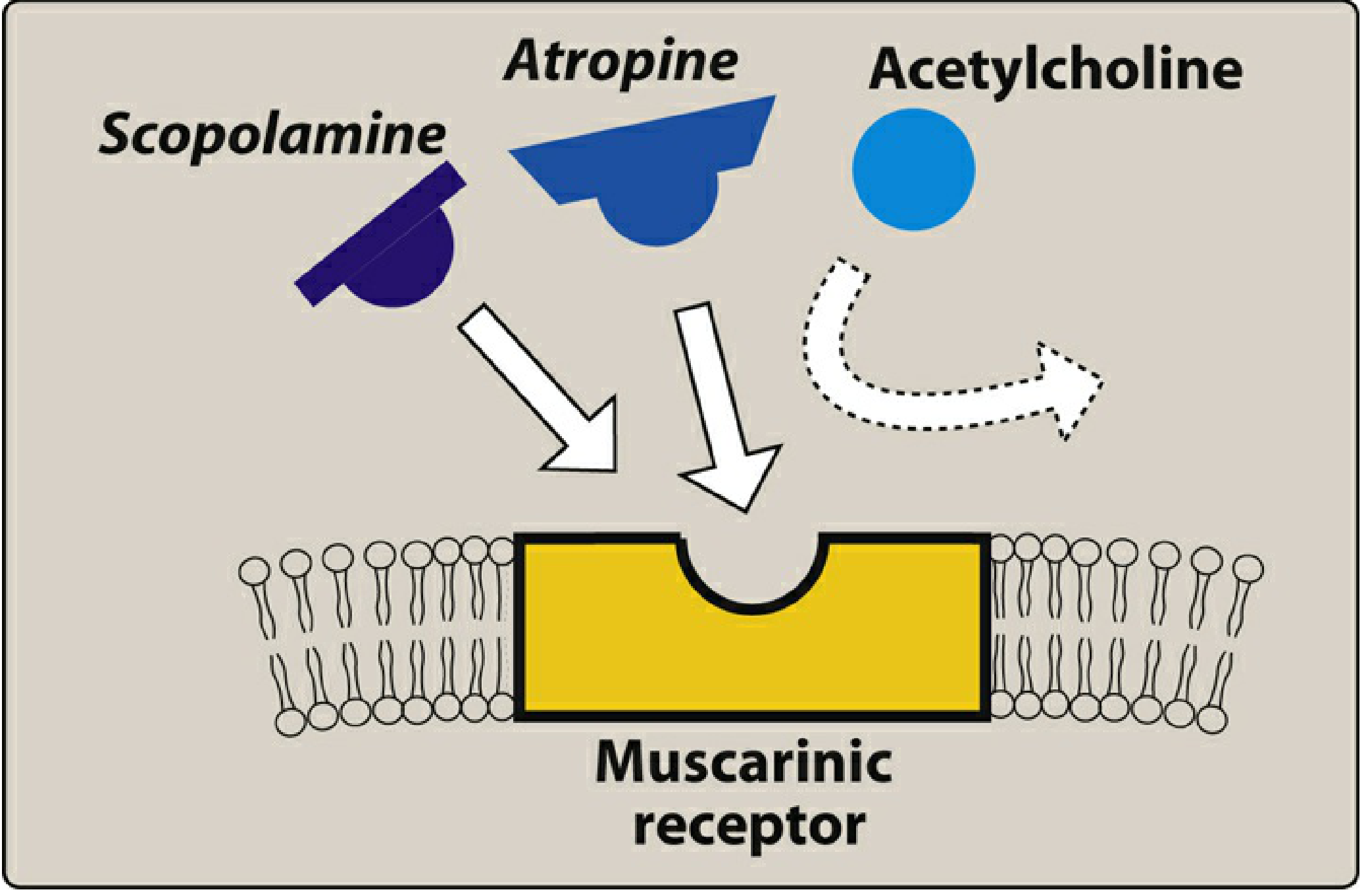
Figure: Atropine competitively blocks muscarinic receptors against acetylcholine (Lippincott Illustrated Reviews: Pharmacology)
Dosage
Adults - Systemic Administration:
| Indication | Dose | Route |
|---|---|---|
| Bradycardia (ACLS) | 0.5 - 1 mg IV, repeat every 3-5 min; max 3 mg | IV |
| Preoperative antisecretory | 0.4 - 0.6 mg | IM/IV/SC/PO |
| Organophosphate poisoning | 2-4 mg IV initially, then 2 mg every 5-10 min until secretions dry | IV/IM |
| General systemic use | 0.4 - 0.6 mg | PO/IM/IV/SC |
Pediatric Patients - Weight-Based Dosing:
| Weight | Dose |
|---|---|
| 3.2 - 7.3 kg (7-16 lb) | 0.1 mg |
| 7.3 - 10.9 kg (16-24 lb) | 0.15 mg |
| 10.9 - 18.1 kg (24-40 lb) | 0.2 mg |
| 18.1 - 29.5 kg (40-65 lb) | 0.3 mg |
| 29.5 - 40.8 kg (65-90 lb) | 0.4 mg |
| > 40.8 kg (> 90 lb) | 0.4 - 0.6 mg |
Note: Minimum dose in children is 0.1 mg; paradoxical bradycardia can occur with doses below 0.1 mg.
Ophthalmic (1% solution): 1-2 drops instilled 1-3 times daily.
Geriatric Patients: Use with caution; even large doses may fail to accelerate the heart in elderly patients. (Goodman & Gilman's, p.2924)
Route of Administration
- Intravenous (IV) - preferred in emergencies (fastest onset)
- Intramuscular (IM) - used when IV access unavailable (2-6 mg for organophosphate poisoning)
- Subcutaneous (SC)
- Oral (PO)
- Ophthalmic (topical)
- Endotracheal (ET) - via tracheal route in cardiac arrest when IV not available (2-2.5x IV dose)
Contraindications
Relative Contraindications (overridden by clinical urgency in unstable patients):
- Glaucoma (angle-closure) - atropine raises intraocular pressure due to mydriasis and can precipitate acute angle-closure crisis
- Myasthenia gravis - may worsen weakness by blocking residual ACh activity
- Obstructive uropathy / benign prostatic hypertrophy (BPH) - risk of acute urinary retention
- Pyloric stenosis / intestinal atony / paralytic ileus - worsens obstruction
- Tachyarrhythmias - increases heart rate; contraindicated in AF/flutter with rapid ventricular response
- Thyrotoxicosis - risk of exacerbating tachycardia
- Hypersensitivity to atropine or belladonna alkaloids
Important: Atropine carries no FDA black box warning and has no absolute contraindications when used in life-threatening emergencies (e.g., organophosphate poisoning, hemodynamically significant bradycardia). Relative contraindications are routinely overridden. (StatPearls, NCBI Bookshelf)
Side Effects
Dose-Dependent Effects (Anticholinergic Toxidrome - "Hot as a hare, Dry as a bone, Red as a beet, Blind as a bat, Mad as a hatter, Full as a flask"):
| System | Side Effects |
|---|---|
| Cardiovascular | Tachycardia, palpitations, paradoxical bradycardia (low doses), hypertension |
| Eyes | Blurred vision, mydriasis, photophobia, cycloplegia, increased IOP |
| GI | Dry mouth (xerostomia), constipation, nausea, bloating, decreased bowel sounds |
| GU | Urinary hesitancy, urinary retention |
| Skin | Flushing ("atropine flush"), dryness, decreased sweating, hyperthermia |
| CNS | Confusion, restlessness, agitation, hallucinations, delirium, drowsiness |
| Respiratory | Decreased bronchial secretions, dry respiratory mucosa |
| Other | Headache, dizziness, hyperthermia (impaired thermoregulation) |
Toxicity/Overdose Signs: High fever, extreme tachycardia, severe confusion, hallucinations, urinary retention, coma.
- Antidote: Physostigmine (a reversible cholinesterase inhibitor that crosses the BBB)
Nursing Responsibilities
Assessment (Before Administration)
- Obtain complete health history including pre-existing conditions: glaucoma, BPH, cardiac arrhythmias, GI obstruction
- Record baseline vital signs: heart rate, blood pressure, respiratory rate, temperature
- Assess current medications for anticholinergic drug interactions
- Review allergy history (especially to belladonna alkaloids)
- Assess pupil size and reaction before ophthalmic use
- Assess bowel sounds and urine output before and after administration
- For cardiac use: attach patient to continuous cardiac monitor; have crash cart/defibrillator accessible
Administration
- IV push: Administer slowly over 1-2 minutes. Slow or diluted IV push can cause paradoxical bradycardia - administer undiluted and briskly for cardiac indications
- Ensure IV patency before administration
- Have emergency equipment (atropine, physostigmine) available when giving high doses
- For ophthalmic use: apply gentle pressure to the lacrimal sac (inner corner of eye) for 1-2 minutes after instillation to minimize systemic absorption
- Ensure minimum pediatric dose of 0.1 mg to avoid paradoxical bradycardia
Monitoring (During and After)
- Monitor heart rate and rhythm continuously (ECG monitoring during IV administration)
- Assess blood pressure every 5-15 minutes
- Monitor urine output - observe for urinary retention (palpate bladder, note last void time)
- Monitor bowel sounds for decreased motility/ileus
- Assess for signs of anticholinergic toxicity: flushing, fever, dry mouth, confusion, tachycardia
- Monitor pupil response and visual changes
- Check temperature frequently - atropine impairs sweating and can cause hyperthermia
- In organophosphate poisoning: reassess secretions, bronchospasm, and pupil size; re-dose until secretions dry
Safety Measures
- Ensure atropine is always stocked in the crash cart, cardiac surgery floor, and OR
- For AtroPen auto-injector: instruct on proper injection technique (outer thigh preferred)
- Document dose, route, time, and patient response accurately
- Keep physostigmine available as antidote in settings of potential overdose
Patient Education
- Dry Mouth: Suck on sugarless candies or ice chips; rinse mouth frequently with water. Avoid alcohol.
- Vision Changes: Do not drive or operate heavy machinery - blurred vision and light sensitivity are expected effects of the drug. Wear sunglasses outdoors.
- Heat Sensitivity: Avoid strenuous activity and hot environments - atropine reduces the ability to sweat, increasing the risk of heat stroke.
- Bowel and Bladder: Report difficulty urinating or severe constipation to the healthcare provider immediately.
- Eye Drops (ophthalmic): Effects on vision may last several days. Blink gently after instillation; press the inner corner of the eye to reduce absorption.
- Report immediately: Rapid or irregular heartbeat, confusion, hallucinations, difficulty urinating, eye pain, or any worsening symptoms.
- Preoperative use: Expect a dry mouth and possible increase in heart rate - these are expected effects.
- Avoid other anticholinergics: Do not take antihistamines, antidepressants (TCAs), or antipsychotics without medical advice while on atropine.
- Auto-injector (AtroPen): Patients at risk for organophosphate exposure (e.g., military, agricultural workers) should be trained on self-injection technique.
Drug Interactions
| Interacting Drug/Class | Effect | Clinical Significance |
|---|---|---|
| Antihistamines (diphenhydramine, hydroxyzine) | Additive anticholinergic effects | Increased dry mouth, urinary retention, tachycardia, confusion |
| Tricyclic Antidepressants (amitriptyline, imipramine) | Additive anticholinergic effects | Risk of paralytic ileus, urinary retention, severe tachycardia |
| Antipsychotics (haloperidol, chlorpromazine, clozapine) | Additive anticholinergic effects | Hyperthermia, confusion, tachycardia |
| Amantadine | Enhanced anticholinergic toxicity | Use with caution |
| Disopyramide | Additive anticholinergic effects | Enhanced urinary retention |
| Metoclopramide | Atropine antagonizes prokinetic effect | Reduces GI motility benefit |
| Phenothiazines | Mutual antagonism of clinical effects | Reduced efficacy of both |
| Potassium chloride (oral) | Reduced GI motility delays KCl transit | Risk of GI mucosal lesions |
| Physostigmine | Direct pharmacological antidote | Reverses atropine toxicity |
| Neostigmine/Pyridostigmine | Antagonistic effects | Atropine used to counteract GI side effects of these drugs |
| Alcohol | CNS depression added to anticholinergic CNS effects | Increased sedation/confusion |
The majority of drug interactions involve drugs with anticholinergic properties, leading to additive toxicity. Clinicians must perform thorough medication reconciliation. (StatPearls, NCBI Bookshelf)
Conclusion
Atropine sulfate is a foundational anticholinergic agent derived from the belladonna alkaloid that has remained clinically relevant across multiple specialties - from emergency and cardiac care to anesthesia and ophthalmology. Its mechanism as a competitive muscarinic receptor antagonist makes it uniquely effective in reversing bradyarrhythmias, combating organophosphate poisoning, reducing secretions perioperatively, and dilating the pupil for diagnostic purposes. Despite its broad therapeutic utility, atropine carries significant risks including tachycardia, urinary retention, hyperthermia, and CNS toxicity, all of which require diligent nursing monitoring. Nurses play a central role in the safe administration of atropine - from baseline assessment and continuous cardiac monitoring to patient education on managing anticholinergic side effects. Its relative lack of absolute contraindications makes it an indispensable lifesaving drug in emergencies, but requires a careful, individualized approach in stable patients.
Bibliography
-
Brunton, L. L., Knollmann, B. C., & Hilal-Dandan, R. (Eds.). (2023). Goodman & Gilman's The Pharmacological Basis of Therapeutics (14th ed.). McGraw-Hill Education.
-
Whalen, K. (Ed.). (2019). Lippincott Illustrated Reviews: Pharmacology (7th ed.). Wolters Kluwer. pp. 175-179.
-
Barash, P. G., Cullen, B. F., Stoelting, R. K., et al. (2022). Barash, Cullen, and Stoelting's Clinical Anesthesia (9th ed.). Wolters Kluwer.
-
Tintinalli, J. E., et al. (2020). Tintinalli's Emergency Medicine: A Comprehensive Study Guide (9th ed.). McGraw-Hill Education.
-
Fishman, A. P., et al. (2023). Fishman's Pulmonary Diseases and Disorders (6th ed.). McGraw-Hill Education.
-
Farzam, K., Kidron, A., & Lakhkar, A. D. (2023). Atropine. In StatPearls [Internet]. Treasure Island (FL): StatPearls Publishing. Retrieved from NCBI Bookshelf.
-
RNpedia. (2024). Atropine Sulfate Nursing Considerations & Management. Retrieved from RNpedia.
This is a shared conversation. Sign in to Orris to start your own chat.